
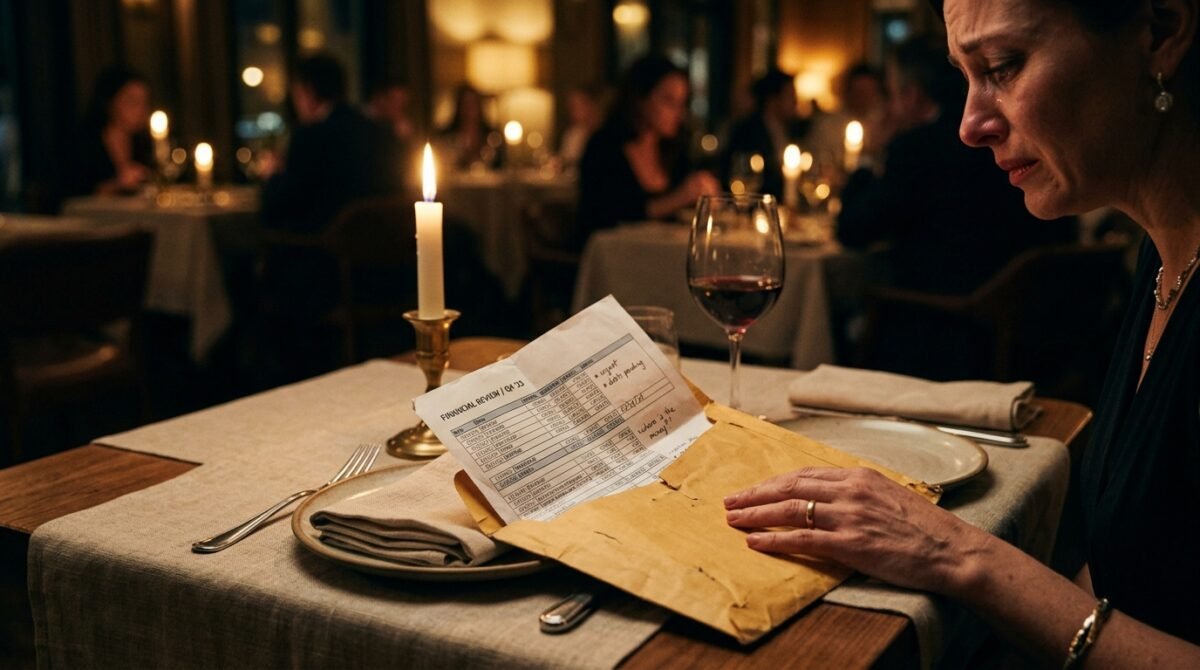
It was supposed to be the pinnacle of our relationship—our seventh anniversary. Seven years of laughter, shared goals, and the quiet, steady comfort of a life built together. We had chosen a small, intimate bistro tucked away in the historic district, the same place where he had first asked me to be his girlfriend back in 2017. I spent weeks picking out the perfect gift, a vintage watch he had been eyeing for months, and I felt a sense of anticipation that I hadn’t felt in years.
When we arrived, the atmosphere was perfect. The jazz was soft, the wine was vintage, and for the first hour, everything felt like a return to form. But when the dessert course arrived, the mood shifted sharply. He didn’t order coffee or cake. Instead, he pulled a thick, white envelope from his blazer pocket. He didn’t slide it across the table with a card; he dropped it with a heavy, deliberate thud that cut through the soft ambient noise of the bistro.
“I’ve been doing some auditing,” he said, his voice devoid of the warmth I had expected. “With the recent discussions about our house savings, I realized we need to be clear about who has contributed what. I’ve gone back through our history. Every date, every movie, every flight. It’s all here, itemized, with interest calculated based on inflation.” I stared at him, paralyzed by the sheer absurdity of the moment. I thought he was joking, perhaps a sick, dark-humored prank he had cooked up as a test.
But as I opened the envelope, the reality hit me like a physical blow. It was an Excel spreadsheet, pages long, meticulously detailing everything from a $4.50 latte in 2018 to the $800 we spent on a weekend getaway in the mountains last winter. My name was at the top, followed by a total that made my stomach turn: $14,230.22. It wasn’t a marriage; it was a debt collection agency, and I was the primary debtor.
The moral dilemma here isn’t just about money. It’s about the fundamental betrayal of the contract of marriage. How can a partner who claims to love you look at seven years of intimacy as a line-item expense? As I sat there, the candlelight reflecting in the paper, I realized that I wasn’t looking at a husband anymore; I was looking at a stranger who had been keeping a tally of my soul, waiting for the right moment to demand payment.
The Itemized Ledger of Our Love

The spreadsheet was a masterclass in petty calculation. Each entry was formatted with surgical precision. Date, Location, Amount, and the dreaded ‘Status’ column, which marked every single expense as ‘Unpaid’ or ‘Partially Remimbursed.’ I scrolled through the rows, my fingers trembling as I recognized the milestones of our relationship being reduced to cold, hard currency.
There was our second date at the cinema, marked at $32.50. There was the time he bought me flowers when I was grieving my grandmother, marked at $45.00, with a note in the margin that read ‘Gift-Optional.’ It felt like I was reading an autopsy report of our romance. How could someone track the flowers given during a funeral? The pettiness was breathtaking, a level of calculation that suggested he hadn’t been present for the moments themselves, but rather, present for the expense incurred by them.
“I thought we were building a life, not a business merger. You actually put a dollar value on the flowers you brought to my grandmother’s funeral? Are you even human?”
I looked up at him, expecting him to apologize, to tell me he was having a breakdown, or that he was just trying to make a point about our budget. Instead, he was drinking his wine, looking at his watch as if he had a meeting to attend later. He was calm, almost bored. It was the calm of someone who believed they were entirely in the right, a righteous accountant settling a ledger.
The sheer gall of it silenced me. I couldn’t breathe. The weight of the paper in my hand felt like a lead brick. I thought about all the times I had covered for him, the times I had bought groceries when he was between jobs, the times I had paid for the Ubers when he had too much to drink. None of that was on the list. According to his calculations, his contributions were the only ones that existed in the universe of our relationship.
I asked him why he chose tonight, our anniversary, to present this. His response was chilling. He told me that our anniversary was the ‘appropriate time to reconcile’ our financial standing before moving into the next fiscal year of our marriage. He didn’t say ‘next year together.’ He said ‘next fiscal year.’ I realized then that I wasn’t a partner; I was an asset that needed to be balanced against his liabilities.
The Walkout and the Silence

I didn’t scream. I didn’t throw the wine in his face, though every fiber of my being wanted to. I stood up, left my purse on the chair, and walked out. I didn’t look back at him. I could hear him calling my name, not with concern, but with the frustration of someone whose presentation had been interrupted. He was worried about the argument, not the woman walking out into the cold night air.
I walked for six blocks before I realized I didn’t have my phone. I had left it on the table. A wave of panic washed over me. I needed to call my sister, to get away, to have a witness to my sanity. I turned back, but the thought of returning to that table, to that man, made me feel physically ill. I found a payphone—a relic of a different time—and used my last few coins to call an Uber. I didn’t go home. I went to my sister’s house, three towns over.
When I finally arrived at her place, I was shaking so violently I could barely speak. She opened the door, saw my face, and didn’t ask questions. She just pulled me inside and locked the door. For the first hour, I couldn’t even explain what had happened. I just sat on her couch, staring at the wall, the image of that spreadsheet burned into my retinas. The sheer, calculated cruelty of it was beyond anything I had ever experienced.
“He itemized the funeral flowers. He put a price on my grief and expected me to pay it back. I am not married to a person; I am married to a calculator with a pulse.”
My sister, bless her heart, waited until I was calm enough to talk. When I told her, she didn’t believe me at first. She laughed, thinking it was a joke. Then, she saw the look in my eyes. The laughter died in her throat. She spent the next three hours helping me draft a list of my own expenses—the gifts, the dinners, the household supplies, the emotional labor, the rent contributions. We created a counter-spreadsheet that made his look like a rounding error.
I spent that night in her guest room, listening to the silence of the house. I realized that my marriage had been over long before he pulled out that envelope. It had been over the moment he started tracking my worth in dollars instead of deeds. The walkout wasn’t the end of a night; it was the start of an extraction. I knew I couldn’t go back to the house, not even to get my things. I had to get a lawyer, and I had to do it quickly.
The Inevitable Digital Paper Trail
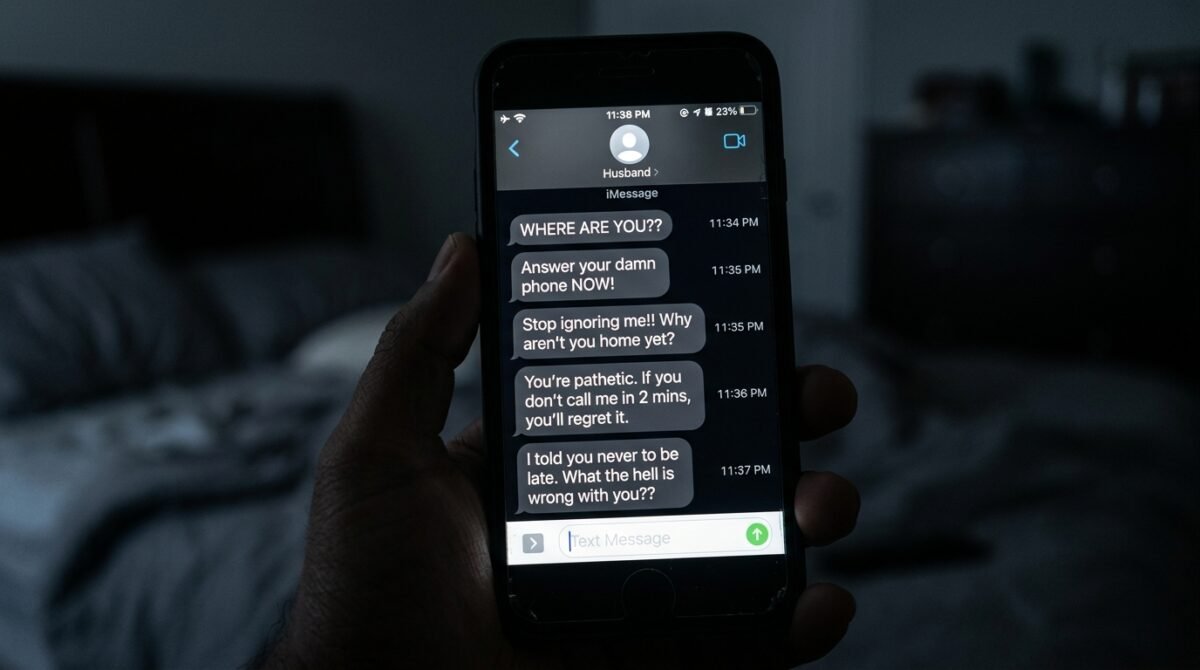
The next morning, my phone started buzzing. I had finally retrieved it from my sister’s place, as my husband had dropped it off in her mailbox with a note. The note was brief: ‘I expect the first installment by Friday. You are being irrational.’ When I opened my phone, the notifications were a torrent of passive-aggressive messages and screenshots. He was treating this like a legal dispute, sending me ‘invoices’ via email and text message.
The digital paper trail was damning. He wasn’t just asking for money; he was trying to coerce me into an admission of debt. By acknowledging the messages, he hoped to create a legal precedent. I didn’t reply to any of them. Instead, I took screenshots of every single message and sent them to my lawyer. The strategy was clear: he was trying to bully me into submission, thinking I would be too embarrassed to share the truth with anyone.
“I’ve sent the invoice to your email. I’ve also calculated the late fees for the first month. If you aren’t home by tonight, I’m adding a surcharge for legal consultation. Don’t be difficult.”
— Text Message from Husband
He even contacted my parents. He told them I had ‘abandoned our financial commitments’ and requested that they talk some sense into me. My father, who has never liked him, responded in a way that I wish I could have heard. He told me later that he threatened to show up at his office if he ever reached out to them again. The audacity of involving my family in his financial abuse was the final nail in the coffin.
I realized then that this wasn’t just about money. It was about control. By framing our marriage as a series of transactions, he was attempting to strip away my autonomy. If I ‘owed’ him, I was in his debt, and therefore, I had to obey his terms. It was a classic tactic of financial abuse, dressed up in the thin veil of fiscal responsibility. He wanted me to feel guilty, to feel like I was the one failing the marriage by not paying up.
Every notification that hit my phone was a reminder of why I had to leave. The sheer absurdity of the amounts—charging for gas for a shared trip, charging for a shared Netflix subscription—was almost comedic if it wasn’t so deeply damaging. I archived everything. Every receipt, every text, every email. I was building a case, not just for a divorce, but for my own peace of mind. I was no longer playing his game.
The Reddit Trial: Community Verdict
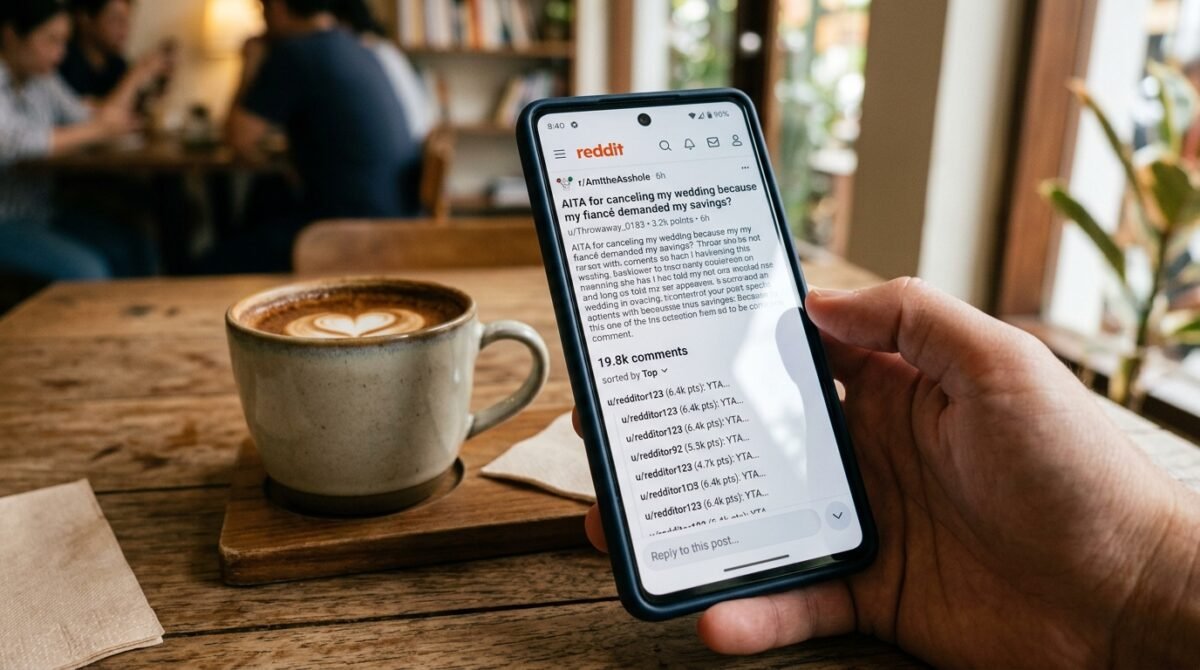
I decided to post my story on Reddit. I didn’t know what else to do. I felt like I was going crazy, and I needed to know if I was truly the problem. The response was immediate and overwhelming. Within an hour, my post had thousands of views and hundreds of comments. The community, usually split on most issues, was unified in their horror. It wasn’t just a matter of ‘AITA’; it was a matter of ‘Run, don’t walk.’
“This is not a marriage. This is a hostage situation with a spreadsheet. Get a lawyer, change your locks, and never look back. He is financially abusing you. This is a massive red flag that screams future coercive control. You are NTA.”
— u/LegalExpertAdvice (Top Comment, 32.4k upvotes)
The comments were a mixture of outrage and shared trauma. Dozens of people reached out to share their own stories of partners who had tried to control them through money. It was validating in a way I hadn’t expected. I wasn’t alone. There were people out there who understood that money in a marriage isn’t just currency; it’s a tool for power. And my husband had weaponized it against me.
Some commenters were curious about the details, asking for the exact breakdown of the spreadsheet. I obliged, sharing a redacted version of the ledger. The community’s analysis was surgical. They pointed out the psychological manipulation inherent in the way he structured the debt. He wasn’t tracking money; he was tracking my life, looking for ways to diminish my independence and keep me reliant on him.
“The fact that he included a category for ’emotional labor’ at a negative rate is the most insane thing I have ever read. He’s essentially charging you for the privilege of being his wife. This is sociopathic behavior.”
— u/PsychEval (18.2k upvotes)
The community’s support was the backbone I needed to get through the next few weeks. They provided me with checklists for divorce, recommendations for therapists, and warnings about what to expect during the separation. They turned my isolation into a shared fight. When I felt weak, I read the comments. When I felt like I was overreacting, I read the comments. They reminded me of the objective reality: I was being treated with cruelty, and I didn’t deserve it.
There were a few outliers, of course, the ‘devils advocates’ who asked if there was a prenup or if we had separate finances, but they were quickly shouted down. This wasn’t about finances; it was about the fundamental nature of love and partnership. You don’t invoice your spouse. You don’t audit your anniversaries. You don’t use a marriage as a ledger. The verdict was clear, and it gave me the strength to proceed.
The Confrontation at the Apartment
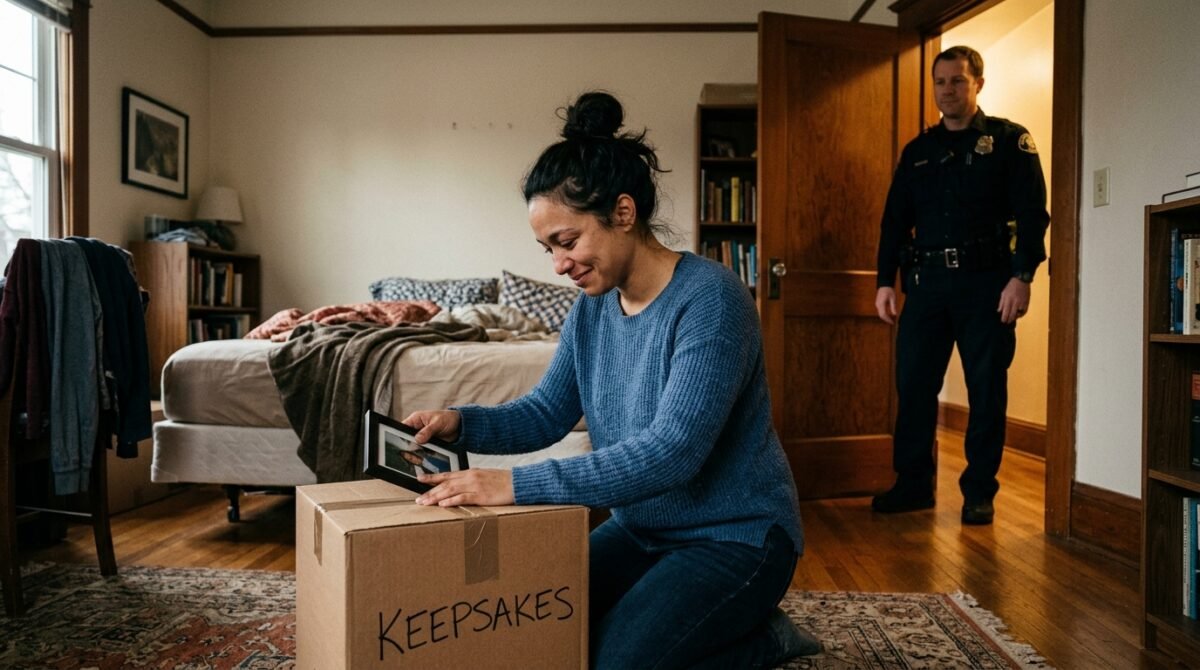
I knew I eventually had to go back to our apartment. I had my things there, my documents, my childhood mementos, things that could never be replaced. I hired a moving company and a police escort for the day of the retrieval. I didn’t want him to have the opportunity to manipulate the situation, to guilt-trip me, or to make me feel small again. I needed a buffer, a physical wall between me and his influence.
When I arrived, he was there, sitting in the living room with the spreadsheet on the coffee table. He looked surprised, not just by my arrival, but by the presence of the police officer standing in the doorway. He stood up, trying to maintain his air of superiority, but his hands were shaking. He tried to speak to me directly, to dismiss the police, to suggest that we could ‘work this out like adults’ if I just apologized.
“Why are you bringing the police into our home? This is a private matter. We have a contract, and I’m just trying to make sure we’re both held accountable for our commitments. Don’t be hysterical.”
I didn’t answer him. I walked past him and into the bedroom. I started packing my clothes, my books, my life. Every item I put in a box felt like a victory. I felt the space in the room opening up, the air becoming easier to breathe. I was reclaiming my life, one object at a time. The police officer stood guard, a silent sentinel who made it impossible for him to try anything.
He followed me to the door of the bedroom, still talking about the spreadsheet, about how he had ‘invested’ in me, about how I was ‘unprepared for the real world’ without his financial guidance. He sounded like a broken record, a man who had lost his audience and couldn’t comprehend why. He was so deeply entrenched in his own reality that he couldn’t see the wreckage he had caused.
When I finished, I looked at him one last time. I didn’t feel anger anymore. I felt pity. A profound, hollow pity for a man who would never know the joy of a selfless act, who would never understand the beauty of a gift given without expectation. I left the apartment, and as the door clicked shut behind me, I knew I would never step foot in that place again. I was free.
Unraveling the Financial Web

The divorce proceedings were a nightmare of bureaucracy. His lawyer, a shark of a man, tried to use the spreadsheet as evidence of a ‘loan agreement.’ It was a desperate attempt to force me into a settlement that would leave me in debt. But my lawyer was better. She systematically deconstructed every line of that spreadsheet, showing it for what it was: a catalogue of mutual expenses that were never intended to be repaid.
We found evidence that he had been double-charging for items, adding ‘interest’ that was entirely fabricated, and even including expenses that he had already been reimbursed for by his own company. It was a fraud, a poorly constructed attempt to embezzle money from the marriage under the guise of an accounting exercise. The look on his face when the judge dismissed the spreadsheet as ‘irrelevant documentation’ was worth every penny of the legal fees.
He tried to argue that I had signed an implied contract by staying in the marriage. My lawyer countered with the reality of our shared lives, our joint bank accounts, and the fact that he had never once asked for payment until the very end. The judge was visibly unimpressed. It was a lesson in the difference between a partnership and a transaction, and he was being schooled in the most public way possible.
“Marriage is not a commercial enterprise. If you wanted to keep accounts, you should have remained single. The court will not recognize these ‘debts’ as anything other than the ordinary expenses of a shared life.”
— Judge presiding over the case
The financial unraveling was a slow, agonizing process. We had to untangle years of shared finances, retirement funds, and property. But every step of the way, I felt lighter. I was losing money, yes, but I was gaining my life back. I was no longer an entry in a ledger. I was a person again, with my own accounts, my own future, and my own agency.
I look back on that time and I realize how close I came to losing myself. If I had stayed, if I had paid even one of those invoices, I would have solidified my status as a subordinate. I would have accepted the terms of my own oppression. By fighting, by walking away, I didn’t just save my money—I saved my soul. I learned that the price of freedom is often high, but the price of remaining in a loveless, transactional marriage is much higher.
The Aftermath: Rebuilding From Zero

Post-divorce, I moved into a small apartment. It was nothing like the house we shared, but it was entirely mine. I painted the walls, chose the furniture, and for the first time in years, I didn’t have to check with anyone before making a decision. The quiet in my home wasn’t the suffocating silence of a failing marriage; it was the peaceful silence of autonomy. I spent my evenings reading, painting, and rediscovering the hobbies I had abandoned to appease his narrow interests.
I started therapy, which was the most important step of my recovery. My therapist helped me understand why I had stayed so long, why I had allowed myself to be diminished, and how to spot the signs of financial manipulation in the future. I learned that I had a pattern of over-accommodating, of trying to be the ‘perfect partner’ to compensate for my insecurities. It was a painful realization, but it was the key to my growth.
“You didn’t fail the marriage. You were the only one who showed up. The failure was his, and it was rooted in his inability to see you as anything other than an extension of himself.”
I also reconnected with my friends, people I had drifted away from because he made them feel unwelcome or because I was too exhausted by his constant monitoring. They welcomed me back with open arms. They didn’t care about my bank account; they cared about me. We spent nights talking, laughing, and building a community that was based on genuine support, not on who owed who for dinner.
I even started dating again, very slowly. It was terrifying at first. Every time a date reached for the check, I felt a phantom tremor of anxiety. Would they invoice me later? Would they keep a tally of the drinks? But I found that I was more attuned to the signs. I could spot the controlling behavior, the subtle attempts to make me feel small, and I was no longer afraid to walk away. I had set my boundaries, and I knew my worth.
My life isn’t perfect, but it is mine. I make my own money, I pay my own bills, and I never, ever have to justify a purchase to someone who treats my life like a business transaction. I am stronger, smarter, and more self-aware than I have ever been. And every time I look at my bank account, I don’t see a ledger of my failures; I see the freedom I bought with my own courage.
Reflecting on the Transactional Heart

The experience changed my view of relationships entirely. I now see the ‘transactional’ nature that many people unknowingly bring into their marriages—the idea that you have to ‘earn’ your partner’s love or that you have to keep score of who does more. But there is a fundamental difference between a balanced partnership and a spreadsheet of grievances. Love is not a balance sheet; it is an investment in someone else’s happiness without the expectation of a return on investment.
When I look back at that spreadsheet, I see it as a monument to his insecurity. He needed to control the narrative of our life because he couldn’t control the intimacy of it. He wanted to ensure that he was always the creditor, always in a position of power. It wasn’t about the money; it was about the fear of being truly vulnerable, of giving without knowing exactly what he would get back.
“If you have to keep track of every cent to feel secure in your marriage, you aren’t in a marriage. You’re in a trap of your own making, and you’re dragging your partner down with you.”
I hope that he eventually realizes the damage he caused. I hope that he learns to give freely, to love without conditions, and to stop looking at people as assets. But I know that’s not my responsibility anymore. I’ve let go of the need for an apology or for him to understand. The truth is, his understanding doesn’t change my reality. My reality is defined by my own choices, not by his failures.
The lesson for everyone reading this is simple: watch the money, but watch the behavior behind the money even more. If your partner starts talking about ‘accounting’ for your life, if they start making you feel like a debt to be managed rather than a person to be loved, get out. Don’t wait for the spreadsheet. Don’t wait for the ‘anniversary’ presentation. Trust your gut. You deserve a partner who celebrates your existence, not one who audits it.
Ultimately, I am grateful for the spreadsheet. It was the catalyst that woke me up, the final absurdity that pushed me to choose myself. It was a hard, painful, and expensive lesson, but it was one that led to the best version of my life. I am free, I am happy, and I am the owner of my own destiny. And that is a price that is worth every single sacrifice.
Conclusion
My story, while unique in its absurdity, touches on a universal truth: a marriage is a sacred trust, not a ledger of liabilities. When my husband chose to turn our seven years of life into a financial audit, he didn’t just break the bank—he broke the very foundation of our bond. I walked away not just to save my dignity, but to reclaim my humanity from the clutches of someone who saw me as an investment rather than a partner.
Looking back, the spreadsheet was never about the money. It was a tool of suppression, a way to keep me in a perpetual state of debt and obligation. Breaking free required more than just leaving; it required unlearning the narrative that my worth was defined by what I contributed to his bottom line. Today, I stand on solid ground, free from the shadow of that itemized list, having learned that the most expensive thing you can ever pay is the cost of your own independence.
I want to hear from you. Have you ever encountered a partner who tried to turn your relationship into a business arrangement, or perhaps a friend who kept a ‘scorecard’ of favors? What does financial transparency look like to you in a healthy, loving partnership? Share your thoughts in the comments below—let’s talk about the fine line between shared goals and financial control.
What's your verdict on this dilemma?
Vote below to contribute to the official community consensus.

Have a Dilemma Keeping You Up at Night?
Share your real-life feud, wedding chaos, or relationship crossroads anonymously with our editorial team.
What do you think ?
0 Comments🛡️ Comments are moderated to protect community integrity. Your comment will appear once approved by the editorial team.