

Professional success is rarely a solitary endeavor. For me, it was the culmination of six years of grueling research, endless late nights at the university, and a singular, unwavering devotion to my mentor, Dr. Aris Thorne. When he announced his retirement, I felt it was my duty—and my privilege—to host the private dinner that would mark his transition into emeritus status. It was supposed to be a night of quiet celebration, academic tribute, and meaningful connection.
Instead, it became the stage for the most humiliating display of narcissism I have ever witnessed. My sister, Clara, has always been the ‘golden child,’ the one who coasted through life on the fumes of our parents’ indulgence. But I never imagined she would cross the line of professional sabotage. I had invited my parents, thinking it would be a nice gesture of family inclusion. I was wrong.
The atmosphere was sophisticated, the guest list consisted of the city’s most respected scholars, and the champagne was perfectly chilled. Then, just as I was preparing to deliver my heartfelt tribute to Dr. Thorne, Clara decided that her life was far more deserving of the audience’s attention. She didn’t just interrupt; she commandeered the microphone.
What followed was not just a breach of etiquette, but a calculated announcement that exposed the depth of my parents’ financial bias. Standing there in a dress that cost more than my first car, she announced that they had purchased her a beachfront loft, effectively using the silence of my career milestone to celebrate her own aimless vanity. The look on Dr. Thorne’s face is something I will never forget.
The Six-Month Campaign for Perfection

Planning the retirement dinner for Dr. Thorne wasn’t just a favor; it was a career-defining moment. I spent months curating the guest list, obsessing over the menu, and ensuring the venue was the pinnacle of understated elegance. Every detail, from the floral arrangements to the seating chart, was designed to honor a man who had guided my academic journey since my sophomore year. I wanted him to feel respected, not just as a mentor, but as a person.
Clara, on the other hand, had spent the last six months complaining about her ‘lack of creative fulfillment.’ She had quit her job in marketing, citing a need to ‘find her purpose,’ which mostly involved traveling to trendy resorts and posting heavily edited photos on social media. My parents, as usual, were bankrolling this spiritual journey. I invited them with trepidation, hoping that for one night, they could be guests rather than facilitators of my sister’s drama.
The week before the dinner, my mother called, her voice dripping with artificial sweetness. She insisted that Clara be allowed to attend because she needed to ‘network with serious people.’ Against my better judgment, I allowed it. I thought, naively, that the setting would force some semblance of decorum upon her. I assumed the weight of the room, filled with PhDs and researchers, would keep her antics in check.
I should have known better. Every time I reached a milestone—my master’s defense, my first publication, my assistant professorship—Clara found a way to redirect the spotlight. It was a pattern, a rhythm of sabotage that I had become far too accustomed to tolerating. But this was my mentor’s night, not mine, and I felt a heavy responsibility to ensure the evening was flawless.
I remember standing in the restaurant that afternoon, checking the place cards for the tenth time. The venue was breathtaking, overlooking the harbor, with the sun setting in a way that made the glass-walled dining room glow. I felt a sense of peace that I was about to ruin by bringing family into the mix. Little did I know that my mother had already been whispering to Clara about how ‘important’ this night would be for her ‘social standing.’
The Cocktail Hour of Hidden Resentment

The dinner began with a cocktail hour that felt like a minefield. Dr. Thorne was surrounded by admirers, and I was busy playing host, ensuring everyone had a drink and was introduced to the right people. Clara, predictably, had arrived wearing a gown that was entirely inappropriate for a faculty-sponsored retirement dinner. It looked like she was heading to a red-carpet event, not an academic gathering.
I watched from across the room as she cornered Dr. Thorne. She was laughing too loudly, waving her drink around in a way that made me cringe. She wasn’t asking him about his research or his upcoming plans; she was talking about her ‘upcoming projects,’ which seemed to involve nothing more than expensive yoga retreats and fashion collaborations. I saw Dr. Thorne’s polite, forced smile—the one he used when he was trying to be kind to a student who was clearly out of their depth.
My parents were hovering nearby, looking far too proud of themselves. When I walked over to join them, my father pulled me aside. ‘Clara is really putting herself out there, you should be happy for her,’ he said, his voice low. ‘She’s finally finding her path. It would be nice if you could support her for once instead of being so territorial about your little dinner party.’
I felt a vein pulsing in my temple. ‘Dad, this is Dr. Thorne’s retirement, not a networking event for Clara’s lifestyle brand. I just want tonight to go well for him.’ I tried to keep my tone neutral, but the frustration was bubbling over. It was always the same. If I wasn’t enabling her, I was being ‘unsupportive.’ There was no middle ground where my own needs or the professional expectations of my guests mattered.
Clara walked up just then, her eyes scanning the room as if she were looking for a stage. She leaned in, whispering, ‘You look so stressed, sis. You know, you really should have picked a trendier spot. This place is so… yesterday.’ I didn’t even respond. I just turned back to the guests, trying to regain my composure. I knew she was looking for a reaction, and I was determined not to give her the satisfaction.
The Moment the Mic Became a Weapon

As we moved to the main course, I stood up to make the first toast. It was meant to be the opening of the official program—short, sweet, and focused on Dr. Thorne. I had written it down, practiced it, and was ready to speak from the heart. I walked toward the front of the room where the small sound system was set up for our brief speeches.
Before I could even reach the podium, Clara had already sprinted past me. She grabbed the microphone with a grace that suggested this wasn’t her first time hijacking a conversation. She tapped on the mic, the feedback whining through the speakers, and let out a bright, artificial laugh. ‘Hi everyone! Sorry to interrupt, but I just have such exciting news that I know my family would want me to share tonight!’
The room went deathly silent. Dr. Thorne blinked in confusion, his wine glass halfway to his mouth. My parents, instead of being horrified, were actually leaning forward, beaming. I stood there, frozen, the paper with my speech clutched in my trembling hand. I could feel the heat rising in my face as the realization hit me: she was going to do it.
She started speaking, her voice projecting that influencer-style cadence that always sounds like a recording. ‘I’ve been working so hard on my new venture, and honestly, I was feeling so stuck. But tonight, I’m just so overwhelmed with gratitude because my amazing parents just made my dream come true. They bought me that gorgeous beachfront loft in the city! It’s going to be the headquarters for my new brand, and I’m just so, so happy!’
She started crying—the fake, performance-art kind of sobbing that she’d perfected since we were teenagers. She looked at our parents, who were nodding and waving back like they were celebrities at a gala. The silence in the room was absolute. It was the kind of silence that happens when people are so shocked by a lack of social awareness that they don’t even know how to react. I looked at the floor, wanting to dissolve into the carpet.
The Aftermath: A Room of Professional Peers

When she finally finished her ‘announcement’ and sat back down, the air in the room had shifted completely. The intellectual, warm atmosphere had been replaced by a cold, awkward tension. People were looking at their plates, clearly trying to avoid making eye contact with me. Dr. Thorne looked at me, his expression unreadable, but I saw the disappointment in his eyes. He wasn’t disappointed in me, but he was clearly uncomfortable with the spectacle.
I walked up to the podium, my hands shaking. I didn’t acknowledge what had happened. I just started my speech, skipping the intro, and focusing entirely on Dr. Thorne. But it felt hollow now. The moment had been stolen, and no amount of eloquent words could bring back the grace of the evening. I finished my toast quickly, sat down, and didn’t speak another word to my family for the rest of the night.
After the dinner, I had to apologize to Dr. Thorne. ‘I am so sorry, Dr. Thorne. I had no idea she would do that.’ He just sighed and placed a hand on my shoulder. ‘Don’t apologize for someone else’s lack of upbringing. But perhaps next time, keep the guest list limited to those who respect the occasion, not just the people who happen to share your blood.’ It was a kind rebuke, but it stung.
My parents, meanwhile, were acting like nothing had happened. ‘You were so rude to ignore her after she made such a lovely announcement,’ my mother whispered to me as we were leaving. ‘It would have been polite to congratulate her.’ I looked at my mother, then at my sister, who was busy taking selfies near the entrance, and I felt something snap inside of me. The exhaustion of a lifetime of being the supporting character in her story had finally reached its limit.
I walked out to my car and sat in the dark for an hour. I wasn’t crying, though. I was too angry for tears. I was thinking about the years of sacrifice, the student loans, the late nights, and the way my family had consistently minimized my achievements to elevate hers. That night wasn’t just about a stolen moment; it was about the final realization that my family would never respect the boundaries I tried to set.
The Group Chat Explosion
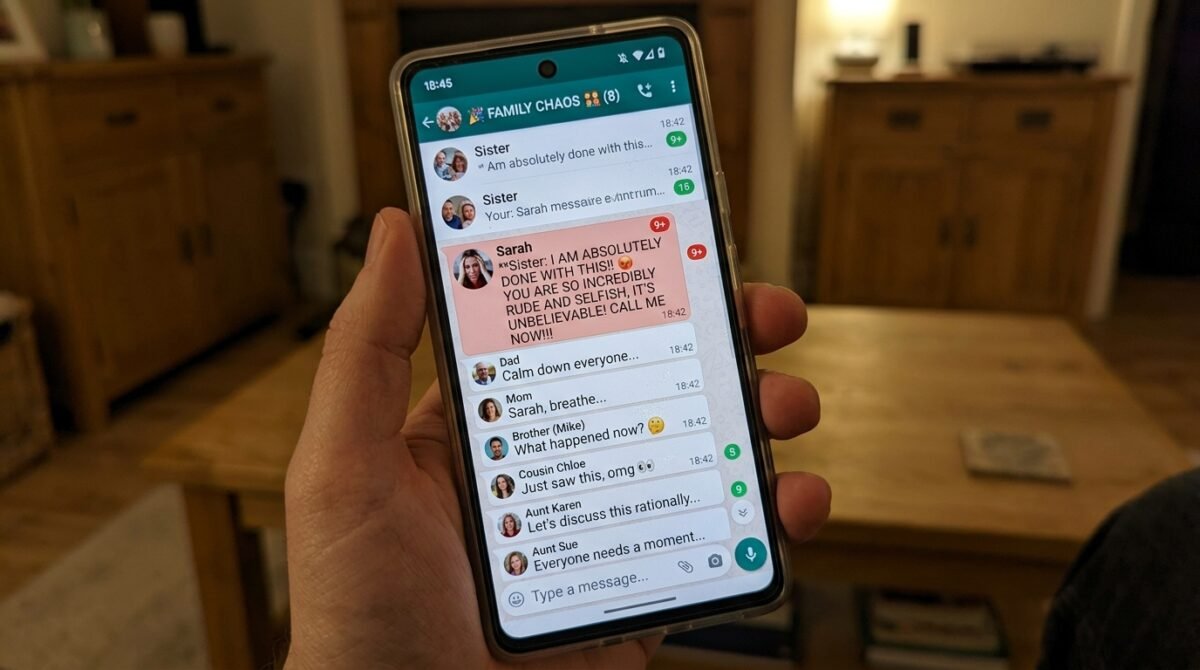
The next morning, the family group chat was already blowing up. My mother had sent a photo of Clara in her new loft, followed by a long paragraph about how ‘blessed’ we were to have such a ‘close-knit family.’ I didn’t reply for hours. When I finally did, I didn’t mince words. I didn’t care about keeping the peace anymore. I was done.
“I want to be very clear about what happened last night. You hijacked a professional event for my mentor to brag about a purchase parents made for you. It was unprofessional, disrespectful, and frankly, embarrassing. I will not be attending any family gatherings for the foreseeable future. Please do not contact me until you understand why this was unacceptable.”
— Sent by OP to the Family Group Chat
The response was immediate. My father called, then my mother, then Clara. My phone was buzzing off the hook. Clara’s texts were particularly venomous. She called me ‘jealous’ and ‘bitter’ and claimed that I was just mad because I hadn’t received a similar ‘gift.’ She honestly couldn’t see the difference between my earned career milestones and her unearned luxury loft.
I blocked all of them. It felt like a physical weight being lifted off my chest. For the first time in my life, I wasn’t waiting for their approval or their validation. I was setting a hard boundary, and the fear I expected to feel just didn’t come. Instead, I felt a sense of clarity that I hadn’t experienced since I started my academic career. I was choosing my own dignity over the toxic cycle of family obligation.
Of course, they didn’t stop. They tried to go through friends, they sent emails to my university account, and my mother even showed up at my apartment building. I had to threaten to involve security before they finally backed off. It was a chaotic, draining week, but it was necessary. I needed to show them that I wasn’t a child anymore and that I wouldn’t be a prop for their family narrative.
It’s strange how people react when you finally stop playing your assigned role. They don’t just accept it; they get angry. They act like you’re the one who’s changing the rules, when all you’re doing is refusing to follow a script that was written for you before you were even born. I spent that week re-evaluating every relationship in my life, filtering out the people who expected me to prioritize my family’s dysfunction over my own mental health.
The Reddit Trial: How the Internet Saw It

I posted my story on a popular subreddit because I needed to know if I was crazy. I needed to see if my anger was justified or if I was being too sensitive, as my parents had always claimed. The response was overwhelming. Within hours, the post had thousands of upvotes and a comment section that validated every feeling I had been suppressing for years.
“NTA. This isn’t just about a stolen microphone moment; it’s about a lifetime of your parents prioritizing the Golden Child. You worked hard for years for that dinner, and she treated it like a promotional event for her lifestyle brand. The fact that your parents enabled it tells you everything you need to know about where you stand in their eyes. Good for you for going NC.”
— u/AcademicObserver (Top Comment, 24.3k upvotes)
Reading the comments was like reading a mirror of my own life. People were sharing their own experiences with ‘golden child’ siblings and narcissistic parents. It was incredibly cathartic. I realized that my family’s behavior wasn’t normal, it wasn’t ‘loving,’ and it definitely wasn’t something I had to endure for the sake of ‘family.’ The community support gave me the strength to stand by my decision to go no-contact.
There were some who suggested I was being too harsh, saying that ‘blood is thicker than water,’ but they were quickly drowned out by the vast majority who understood the concept of toxic boundaries. It was a reminder that while I couldn’t choose my family, I could choose who I surrounded myself with. I felt less alone than I had in years, knowing that there were thousands of people who saw exactly why what Clara did was so deeply violating.
The thread became a repository for all the ways families manipulate their children, and reading those stories helped me identify patterns in my own life that I hadn’t even named yet. I was surprised by how much empathy I felt for others, and how much their support helped me process the hurt. It turned my trauma into a case study, which, in a way, was the most academic thing I could have done.
I also learned a lot about setting boundaries from the commenters. People shared templates for letters, tips on managing emotional responses, and even legal advice for dealing with intrusive parents. I started implementing these strategies immediately. I became more detached, more focused on my work, and more protective of my personal time. The Reddit community didn’t just give me advice; it gave me a roadmap for a healthier life.
Why the Sunday Dinner Table Went Completely Silent
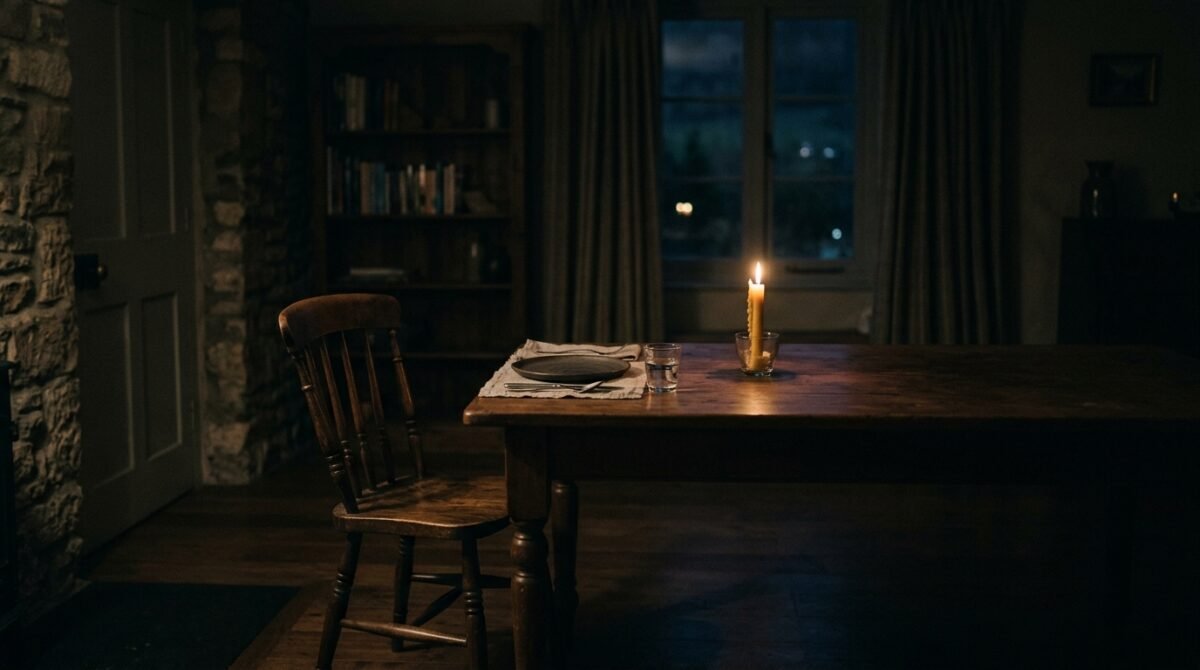
The weeks following the dinner were filled with an eerie silence. I didn’t go home for Sunday dinner, which had been a mandatory ritual for as long as I could remember. It was the first time I had ever missed one, and the absence felt like a void in my life. I spent those Sundays alone in my apartment, working or reading, reclaiming the time that had been stolen from me for years.
I heard through a cousin that my parents were furious. They were telling everyone that I was ‘having a breakdown’ and that I was ‘jealous of my sister’s success.’ It was a classic smear campaign, designed to make me look unstable so that my departure from the family unit seemed like an illness rather than a choice. I didn’t fight it. I didn’t try to correct the record. I knew that the people who really knew me would know the truth.
Clara, meanwhile, was leaning into the narrative. She posted photos of herself looking ‘brave’ and ‘resilient’ in her new loft, with captions about ‘forgiving those who can’t be happy for you.’ It was so transparent that I found it almost funny. She was trying to frame herself as the victim, which was the ultimate irony given that she had turned my mentor’s retirement dinner into a PR launch for her own vanity.
The silence at the dinner table—the one I wasn’t at—must have been heavy. I imagined my parents sitting there, looking at an empty seat, perhaps realizing for the first time that their golden child couldn’t replace the one they had pushed away. Or maybe they didn’t even notice. Maybe they were too busy admiring the new loft to realize that their family was effectively broken.
I stopped checking their social media. I stopped asking my cousin for updates. I had to cut the cord entirely. Every piece of information I got from them felt like a poison dart, feeding into my anxiety and keeping me stuck in the past. I chose to focus on the future, on my research, and on the new, healthier relationships I was building. The silence wasn’t a lack of communication; it was the sound of my own peace returning.
The Certified Letter That Changed Everything

A month later, I received a certified letter from my parents’ lawyer. I honestly laughed when I opened it. It was a formal demand, citing a ‘family agreement’ that I had never signed, demanding that I return the money they had contributed to my graduate tuition. It was a pathetic attempt to use financial leverage to force me back into the fold.
I took the letter to a lawyer of my own. He looked at it for five minutes and laughed, too. ‘This is entirely unenforceable,’ he said. ‘They can’t demand a gift back just because you stopped speaking to them. This is just a scare tactic. Do not respond to them directly; let me handle the communication from here.’
That was the moment the veil really lifted. My parents weren’t just disappointed; they were vindictive. They were willing to use legal threats to control me. It made the decision to go no-contact feel even more justified. I wasn’t just walking away from a toxic sister; I was walking away from a toxic system that viewed their children as investments that could be recalled if they didn’t perform as expected.
My lawyer sent a single, devastating letter back to theirs, outlining the lack of any legal basis for their claim and warning them that any further attempts to harass me would be met with a restraining order. I never heard from them again. The lawyer’s fee was worth every penny just to know that the threat was neutralized. It was the final step in my emancipation.
I realized then that I had been living in a state of perpetual fear—fear of their judgment, fear of their disapproval, fear of their retribution. By facing the threat legally and standing my ground, I had stripped them of their power. They no longer had the ability to hurt me financially or emotionally. I was finally, truly free. It was a profound shift, one that changed the way I approached everything in my life, from my job to my friendships.
The Professional Rebirth: Beyond the Mentor’s Shadow

With the drama of my family behind me, I was able to refocus on my work. Dr. Thorne and I had a long conversation a few weeks after the incident. I apologized again, but he stopped me. ‘You handled it with more grace than I would have,’ he said. ‘And I think you’ve learned a valuable lesson about the importance of curating your inner circle. Your talent is your own; don’t let anyone—not even your family—diminish it.’
His support was the validation I had been seeking from my parents for my entire life. I realized that the mentorship he provided was the only real ‘family’ I needed. I started working on a new project, one that was entirely my own, and it was the most successful research I had done to date. The clarity of mind I had gained from cutting off the toxic ties allowed me to be more creative, more focused, and more ambitious.
I started attending conferences, building a new network of peers who respected my work and my boundaries. I was no longer the ‘little sister’ or the ‘golden child’s sibling’; I was a researcher in my own right. It felt like I had been born again, but this time, I had the benefit of my own experience to guide me. I wasn’t naive anymore; I was battle-tested.
The irony was that by losing my family, I had gained everything else. I had gained my self-respect, my professional identity, and my peace of mind. I was finally able to pursue the life I wanted, without the burden of someone else’s expectations. It was a hard path to walk, but it was the only one that led to true independence. I wouldn’t trade it for anything.
Looking back, I realize that the dinner was the catalyst I needed. If Clara hadn’t hijacked that microphone, I might have spent another decade trying to gain my parents’ approval. I might have remained a supporting character in their play. The humiliation was painful, but it was the necessary spark to ignite my liberation. I am forever grateful that I finally saw them for who they really were.
Reflecting on the Price of Boundary Setting

Going no-contact is not a decision I made lightly. It’s a grieving process, one that involves mourning the family you wished you had while accepting the family you actually have. There are still days when I feel the weight of it—the missing holidays, the absence of shared history, the realization that I am truly on my own. But then I remember the feeling of that night, the cold, suffocating realization that I was merely a prop, and the grief subsides.
I have learned that boundaries are not just about protecting yourself; they are about defining yourself. By setting limits, you are telling the world, and yourself, that you have worth independent of what others want from you. It’s a radical act of self-love, especially when you come from a family that has always taught you that your worth is conditional. I am still learning how to be that person, but I am doing it on my own terms.
My advice to anyone else going through this is to trust your instincts. If a relationship feels toxic, it probably is. If your family makes you feel small, you don’t have to stay small to keep them happy. You have the right to curate your own family, to surround yourself with people who celebrate your achievements rather than trying to steal them. You have the right to be the protagonist in your own story.
I’ve also learned that the fallout is rarely as bad as the fear of it. Yes, there was a legal threat, yes, there was gossip, and yes, there was a lot of pain. But I am still here. I am stronger, I am more resilient, and I am happier than I have ever been. The price of freedom is high, but the price of living a life in the shadow of other people’s expectations is much higher.
If you find yourself in a situation where you feel your boundaries are being crossed, don’t wait for them to change. They won’t. You have to be the one to draw the line. And once you draw it, you have to hold it. It’s the hardest thing you’ll ever do, but it’s also the most rewarding. You are worth more than the role you’ve been assigned in someone else’s life.
Conclusion
This experience taught me that the golden child narrative is a trap for everyone involved—including the ‘golden’ one, who never learns the value of hard work or genuine human connection. My sister and I are living in different worlds now; one built on vanity and parental handouts, the other on professional integrity and self-reliance. I have no desire to bridge that gap.
The debate over family loyalty vs. personal well-being is one that never truly ends, but for me, the answer is clear. You owe it to yourself to be the person you are, not the person your parents need you to be to sustain their fantasy. I am moving forward, one project, one boundary, and one day at a time, towards a future that belongs entirely to me.
What about you? Have you ever had to cut ties with a family member who refused to respect your achievements, or have you ever been forced to draw a line in the sand during a milestone event? Share your thoughts and stories in the comments below—I read them all, and your perspectives have been a vital part of my own healing process.
What's your verdict on this dilemma?
Vote below to contribute to the official community consensus.

Have a Dilemma Keeping You Up at Night?
Share your real-life feud, wedding chaos, or relationship crossroads anonymously with our editorial team.
What do you think ?
0 Comments🛡️ Comments are moderated to protect community integrity. Your comment will appear once approved by the editorial team.