
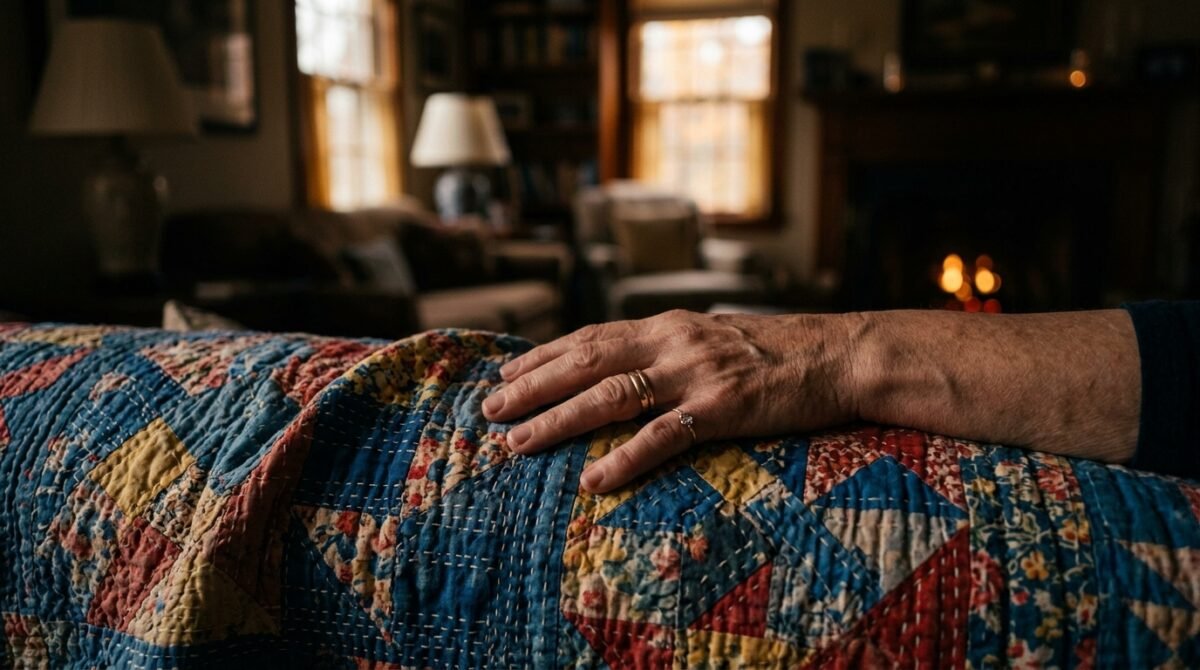
Grief is a silent, suffocating thief. It steals your breath, your concentration, and often, your sense of safety in your own home. For Sarah, the passing of her sister, Maya, was a physical blow that left her reeling in a haze of mourning. Maya had been a vibrant, creative soul—a woman who expressed her love through the intricate patterns of her handmade quilts. Each stitch was a memory; each fabric selection a conversation they’d had over cups of chamomile tea.
When Maya passed away, Sarah’s stepmother, Brenda, stepped in with a false sense of efficiency that would soon curdle into a nightmare. Under the guise of ‘helping Sarah move forward,’ Brenda took it upon herself to purge Sarah’s home, claiming she wanted to clear the space of ‘painful reminders.’ But the reminder wasn’t just a memory; it was a legacy that Brenda had no right to touch.
The violation didn’t hit Sarah immediately. It was a slow-motion car crash. It started with a missing pillowcase, then a stack of books, and finally, the realization that the trunk containing Maya’s unfinished projects and completed quilts—the very essence of her sister—was gone. When Sarah confronted Brenda, the response wasn’t remorse. It was a cold, practiced indifference that suggested Sarah was being ‘dramatic’ about a ‘pile of old rags.’
This is not just a story about a misunderstanding. It is a story about the boundaries of grief, the entitlement of those who view others’ property as their own, and the difficult, often painful, decision to involve the legal system to protect what matters most. For Sarah, the quilts were never about the fabric; they were the last tangible connection to the person who understood her best. And she was determined that no one, not even a stepmother, would be allowed to throw that connection away.
The Empty Trunk and the Manufactured Cleanliness
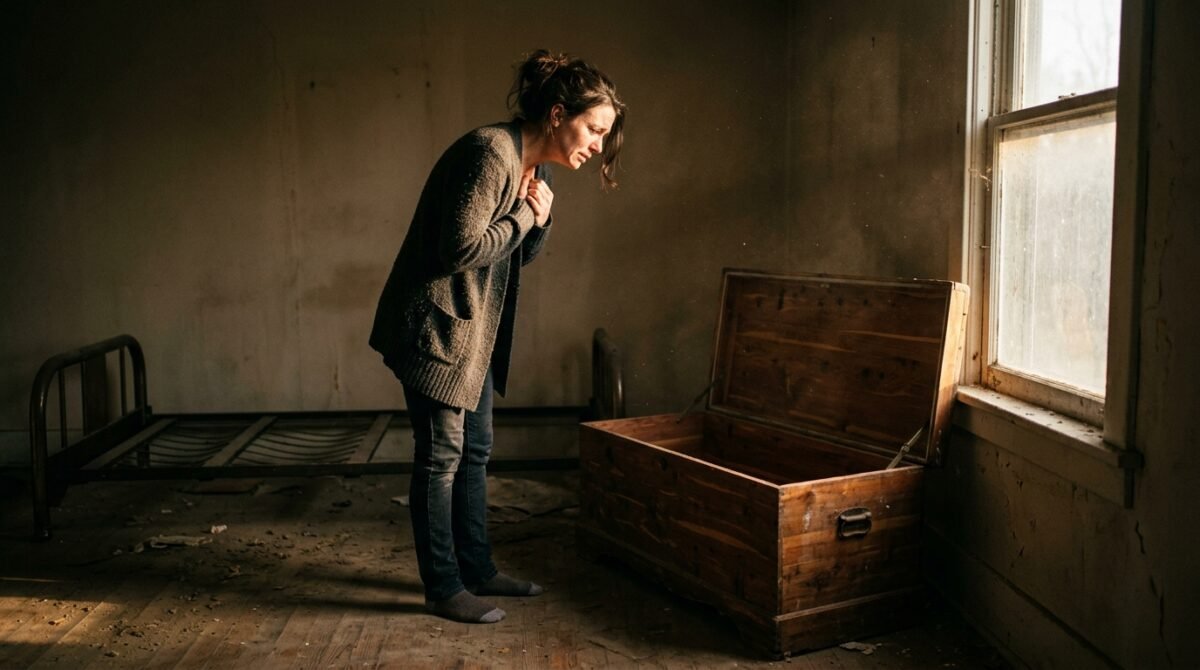
The realization was quiet, almost surgical in its precision. Sarah stood in the center of her spare bedroom, the sunlight streaming through the windows to illuminate dust motes dancing in the air. She had spent the last three days at her father’s house, participating in the exhausting, soul-crushing logistics of estate planning. She had come home looking for the one thing that grounded her: the unfinished quilt top Maya had been working on during her final hospital stay.
She lifted the lid of the cedar chest. It was empty. Not just missing the quilt, but missing everything else—the scraps of vintage fabric, the heavy-duty shears, the spools of variegated thread. Panic, cold and sharp, flooded her chest. She searched the closets, the attic, and the garage, her movements growing more frantic with every passing minute. She called her father, who was still at the funeral home, but he was no help. He sounded distant, distracted by his own mourning.
Then, the text message notification chimed on her phone. It was from Brenda, her stepmother, sent three hours ago. The casual nature of the text made Sarah’s skin crawl. It didn’t mention the chest. It simply noted that the house felt ‘so much lighter and more breathable’ now that she had ‘done a bit of tidying.’ Sarah felt the floor drop out from under her.
“I took the liberty of clearing out that spare room while you were away, sweetie. It was just clutter and dust-collectors. I dropped a few bags off at the Goodwill on the corner. You need to focus on healing, not hoard-gathering.”
— Text message from Brenda
Sarah stared at the screen, her thumbs hovering over the keyboard. Her heart was hammering against her ribs like a trapped bird. This wasn’t ‘tidying.’ This was a erasure. Brenda had never liked Maya, and she had certainly never understood the value of the items she had just dumped into a donation bin as if they were trash. The sheer audacity of the woman, entering a grieving woman’s house without permission, was a bridge crossed that could never be unbuilt.
The Confrontation in the Sunroom

The confrontation happened two days later at the family home. Brenda was sitting on the sunroom patio, sipping iced tea as if the world hadn’t fundamentally changed. Sarah didn’t even sit down. She paced the perimeter of the room, her hands shaking so hard she had to shove them deep into the pockets of her jeans. She brought up the trunk immediately, her voice low and steady, though her eyes were burning with a dangerous fire.
Brenda didn’t even look up from her magazine. She dismissed the quilts as ‘haphazard scraps’ that were attracting mites. The arrogance was palpable. She spoke as if she were a benevolent benefactor helping an ungrateful child. Sarah’s internal monologue was screaming, but she forced herself to keep her voice level, knowing that any display of ‘hysteria’ would only be weaponized against her later by her father.
“You didn’t just clean a room, Brenda. You threw away my sister’s legacy. Those weren’t rags. They were the only things I had left of her voice, her touch, her work. Who gave you the right to enter my house and destroy my property?”
— Sarah to Brenda
“Oh, don’t be so dramatic, Sarah. It’s exactly that kind of fixation that keeps you stuck in the past. I did you a favor. People need those clothes more than you need a pile of dusty fabric. Stop acting like I committed a crime when I was actually trying to help you move forward.”
— Brenda’s response
The disregard for her feelings was absolute. Brenda treated the situation like a minor annoyance, a smudge on her social calendar. She leaned back, crossing her legs, waiting for Sarah to apologize for her tone. That was when Sarah realized that Brenda wasn’t just thoughtless; she was intentionally malicious. She knew exactly what those quilts meant to Sarah, and that was precisely why she had chosen them to discard.
The Goodwill Run and the Digital Paper Trail

Sarah didn’t waste time crying after she left the house. She went straight to the Goodwill center Brenda had mentioned. The manager was sympathetic but firm: the donation had been processed, sorted, and put out onto the floor within 24 hours. The quilts were gone. People had already snatched them up, seeing them as vintage treasures or affordable home decor. The irony was a bitter pill; the things Brenda had labeled ‘junk’ were the first things sold.
Sarah spent the next three hours documenting everything. She took screenshots of the text message from Brenda, timestamped and clear. She drafted a timeline of when she had left for her father’s house and when Brenda had gained entry to her home. She even found a neighbor’s doorbell camera footage that showed Brenda’s car parked in her driveway, filled to the brim with boxes that clearly contained the quilts.
She wasn’t just gathering information; she was building a case. She realized that if she didn’t treat this with the same seriousness as a theft, she would never find closure. She reached out to a friend who practiced civil law, not expecting a miracle, but needing to know if there was any legal recourse for ‘interfering with personal property’ or ‘trespass to chattels.’ The response was a wake-up call.
The legal perspective was clear: because Brenda had entered the property without authorization and disposed of items that were not her own, she was liable for the fair market value of those items, plus potentially punitive damages given the emotional distress. It wasn’t about the money—it was about the principle. Sarah wasn’t going to let this slide. She needed a way to make Brenda understand that actions have consequences, even in the messy landscape of family grief.
The Certified Letter Heard ‘Round the Kitchen
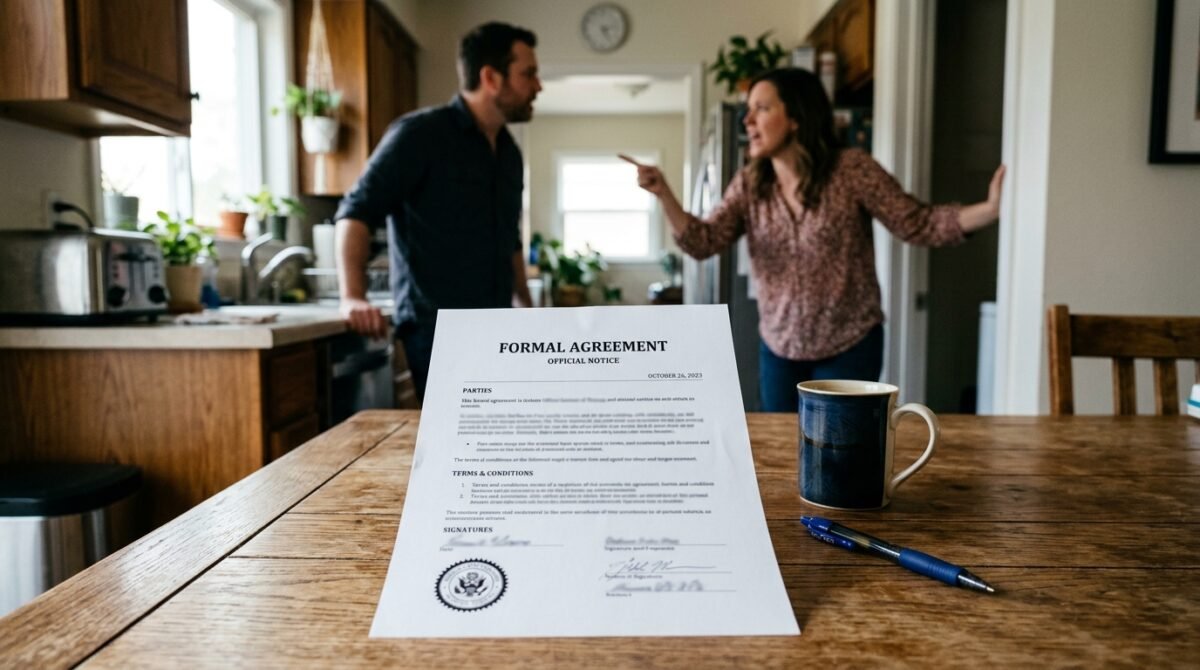
The envelope arrived on a Tuesday morning. It was thick, heavy, and carried the unmistakable weight of legal correspondence. Her father and Brenda were eating breakfast when the mail was delivered. When Brenda opened it and saw the return address of a law firm, the color drained from her face. She thought it was a joke until she started reading the demand for restitution and the list of documented evidence.
The letter didn’t just demand money. It outlined the exact value of the quilts, based on appraisals of Maya’s previous work and the cost of the vintage materials she used. It also included a formal notice of trespass, warning Brenda that any further unauthorized entry into Sarah’s property would be met with a police report for breaking and entering. The kitchen, usually a place of polite, performative peace, became a battlefield.
“Sarah is suing us? Over some old blankets? Tell her she’s insane! I was being helpful! She’s trying to bankrupt us over a misunderstanding!”
— Brenda, shouting into her phone at her husband
The chaos in the family group chat was immediate. Siblings and cousins were tagged, accusations were thrown, and the narrative Brenda had spun—that she was the ‘helpful stepmom’—was challenged by the cold, hard facts of the legal document. Sarah watched the messages roll in, her phone buzzing incessantly on the counter. She didn’t respond to any of them. She let the silence of her non-participation speak for her.
Her father was caught in the middle, as he always was. He sent a private message, begging her to ‘drop it’ for the sake of the family. He didn’t understand that the family had already been broken when Brenda decided her desire for a tidy house was more important than Sarah’s grief. The legal letter wasn’t a wall; it was a boundary line, and for the first time, Sarah was standing firmly on the other side of it.
The Internet Weighs In: A Community Divided

Sarah posted the story to a popular subreddit, keeping the names anonymous but laying out the timeline clearly. She needed to know if she was as ‘crazy’ as Brenda had suggested. The response was overwhelming. Within hours, the post had gained thousands of upvotes and a deluge of comments that ranged from supportive to legally pedantic. It was a digital town hall, and the verdict was loud and clear.
“This isn’t about the quilts. It’s about power. She knew exactly what those meant to you and she wanted to see if she could exert control over your life even after your sister passed. You are NTA (Not The Asshole). Keep the pressure on.”
— u/GriefCounselorPro (12.4k upvotes)
“As a lawyer, I love this. A civil suit for conversion is exactly the right move. You need to show that property rights don’t end just because someone is ‘family.’ If she doesn’t pay up, take her to small claims. It will be the most expensive ‘decluttering’ she’s ever done.”
— u/LegalEagle88 (8.2k upvotes)
Some users played devil’s advocate, suggesting that maybe Sarah was holding onto objects too tightly, but they were quickly drowned out by people who had lost loved ones and understood the sanctity of their belongings. The community validated her rage. It wasn’t a petty grudge; it was a justified reaction to a profound violation. Seeing the support made Sarah realize that she wasn’t alone in her feelings, and that her boundaries were not only normal but necessary.
The Reddit thread became a source of strength. She read stories of people who had similar experiences, and she realized that the ‘stepmom trope’ was often just a manifestation of deeper, unresolved control issues. She wasn’t just fighting for her quilts; she was fighting for the right to be human, to be hurt, and to be respected in her own space. The comments section, usually a cesspool of negativity, became a surprising sanctuary of clarity.
The Mediation Attempt and the Cost of Regret

A month later, a mediation session was arranged. The atmosphere was stifling. Brenda sat across from Sarah, her posture rigid, her face devoid of any genuine empathy. She looked at the mediator and then at Sarah, waiting for the apology she believed she was owed. The mediator, a seasoned professional, kept the conversation focused on the facts: property, value, and the unauthorized entry.
Brenda tried to play the ‘victim of a grieving daughter’ card, but the mediator shut it down immediately. The legal facts were too stark. When the discussion turned to the actual financial value of the quilts, Brenda blanched. She hadn’t realized that the ‘scraps’ she had discarded were worth thousands of dollars in market value, let alone sentimental value. She tried to offer a pathetic apology, something about ‘misunderstanding the situation,’ but it lacked the one thing Sarah needed: an acknowledgment of the harm done.
“I just wanted to make the house look nice for you, Sarah. I didn’t mean to cause all this trouble. Can’t we just put this behind us? It’s just money.”
— Brenda during mediation
“It was never about the money, Brenda. It was about you deciding that your aesthetic preferences were more important than my sister’s memory. That is why we are here, and that is why you are paying.”
— Sarah to Brenda
The settlement was reached, but it felt hollow. Brenda had to pay the appraised value of the quilts, plus Sarah’s legal fees. It was a victory, but the quilts were still gone. No amount of money could bring back the specific, tactile memory of Maya’s hands working on a piece of fabric. The money felt like blood, and Sarah found herself unable to even touch it for weeks.
The Aftermath: A New Kind of Quiet

The family dynamic had been irrevocably altered. Sarah’s father was cold toward her, unable to accept that his wife had been legally held accountable for her actions. He accused Sarah of ‘tearing the family apart’ over ‘material goods.’ The irony was that the family had been torn apart the moment Brenda stepped over the line, but he was too invested in his own comfort to see it.
Sarah took the money and, instead of using it on herself, she established a small foundation in Maya’s name to support local textile arts and quilting workshops for grieving youth. It felt like a way to take the ‘blood money’ and transform it into something that would actually honor her sister’s legacy. It didn’t replace the lost items, but it gave her a sense of purpose that had been missing since the funeral.
She moved to a new apartment, one where she felt secure. She installed a high-quality security system and changed the locks the day she moved in. She set firm, unyielding boundaries with her father, telling him that she wouldn’t see him if Brenda was present, and that she wouldn’t tolerate any ‘family harmony’ lectures. It was a hard road, but it was a path that led to peace.
The silence in her new home wasn’t the suffocating silence of loss; it was the peaceful silence of autonomy. She realized that grief changes you, but it doesn’t have to break you. She had reclaimed her agency, and in doing so, she had honored Maya in the best way she knew how: by standing up for what they both loved and what they both valued. The quilts were gone, but the lesson—and the love—remained.
Reflecting on Boundaries and Family Entitlement

Looking back, the entire ordeal seems almost surreal, a dark comedy of errors that could only happen in a family dynamic where boundaries are treated as suggestions rather than rules. The entitlement that Brenda displayed is a common theme in toxic relationships: the belief that one person’s life, property, and emotions are secondary to the comfort and control of another. Sarah’s experience is a textbook case of how that entitlement can manifest, especially during moments of vulnerability like grief.
It’s easy to dismiss these things as ‘just family drama,’ but when it involves the destruction of personal property and the violation of one’s home, it crosses into something much darker. The legal system, while often impersonal and cold, provided a framework for Sarah to reclaim her agency when her family members refused to acknowledge her reality. It forced Brenda to confront the fact that she was not the matriarch of Sarah’s life.
Many people struggle with the idea of ‘going legal’ against family, fearing the stigma of ‘burning bridges.’ But sometimes, the bridge is already on fire, and the only choice you have is to walk away before you get burned yourself. Sarah learned that the ‘family’ label is not a free pass for abuse or disrespect. She also learned that being the ‘bigger person’ is often just another way of saying ‘the person who gets walked all over.’
The community reaction on Reddit served as a mirror, reflecting that her struggle was valid and that there were thousands of others who had been in similar positions. It highlighted the importance of standing one’s ground, not out of malice, but out of self-respect. In the end, the experience changed her, but it didn’t make her bitter. It made her firm, clear-headed, and deeply protective of her own space, which is perhaps the best gift she could have given herself.
Lessons from the Loss

The biggest lesson Sarah took away was the importance of physical boundaries. She had always been the ‘easygoing’ sibling, the one who accommodated others. She realized that her easygoing nature had been interpreted by Brenda as an invitation to intrude. After the legal battle, she became known as the person who ‘doesn’t play games,’ a label she wore with pride.
She also learned the importance of digital documentation. In a world where so much of our life is lived online, having a record of interactions, threats, and violations is essential. If she hadn’t had the text messages and the neighbor’s camera footage, the legal outcome would have been significantly different. She encourages anyone in a similar position to be meticulous about keeping records, no matter how much they might want to believe the best in people.
Perhaps the most poignant lesson was that grief is not a reason to surrender your autonomy. People often use ‘grieving’ as a way to control someone, claiming that they are ‘too emotional’ to make decisions. Sarah learned that even when you are at your lowest, your judgment is valid, and you have the right to protect your environment, your property, and your memories from those who would diminish them.
Moving forward, Sarah is focused on the foundation and her own peace. She has found that the best way to honor Maya is to live a life that is authentic, firm, and filled with the kind of love that doesn’t need to control others. She still misses the quilts, but she has replaced them with the knowledge that she fought for them—and that she, not Brenda, had the final say in her own life.
Final Thoughts: When Family Isn’t Enough

The story of the handmade quilts is a cautionary tale for families everywhere. It reminds us that just because we share DNA or marriage certificates, it doesn’t grant us ownership over each other’s belongings or emotional lives. The ‘helpful stepmom’ archetype is often just a mask for deep-seated control issues that only come to light when the pressure is on. Sarah’s decision to take legal action was not an act of petty revenge, but an act of self-preservation.
For those currently dealing with family members who cross lines, remember that you are not obligated to accept poor treatment for the sake of ‘keeping the peace.’ Peace that requires you to sacrifice your self-respect and your boundaries is not peace at all; it is silence. And silence, in the face of violation, only serves to empower those who would harm you.
Sarah’s journey from a grieving sister to a woman standing her ground in a courtroom is a testament to the resilience of the human spirit. She didn’t let the loss of her sister’s quilts define her; instead, she used that loss as a catalyst for growth and for the establishment of a life defined by her own terms. It’s a powerful reminder that you have the power to define your own boundaries, and that you are the ultimate guardian of your own history.
What about you? Have you ever had to draw a hard line with family over property or boundaries? Have you ever felt that your grief was being used against you? Let’s talk about it in the comments below. Your stories might be the exact validation someone else needs today.
Conclusion
Sarah’s story serves as a profound reminder that our belongings—especially those touched by the hands of our loved ones—are more than just objects. They are vessels of memory and identity. When Brenda sought to ‘declutter’ these items, she wasn’t just clearing a room; she was attempting to erase a part of Sarah’s reality. The legal path Sarah chose was not an easy one, nor was it without its own emotional costs, but it provided the necessary barrier to stop a cycle of disrespect.
The aftermath of this conflict highlights a recurring issue in many families: the struggle between genuine support and manipulative control. Brenda’s actions, while disguised as ‘help,’ were an attempt to assert dominance. Sarah’s response proved that even in the deepest throes of grief, one’s autonomy remains an non-negotiable right. Her choice to use the settlement to fund a foundation in Maya’s name transformed a narrative of loss into one of legacy.
This story invites us to reflect on our own family dynamics. Are our boundaries clearly defined? Do we allow our family members to overstep simply because of their titles? Sarah’s journey encourages us to be brave enough to hold people accountable, even when they are closest to us. It is a lesson in self-respect, the sanctity of our personal spaces, and the courage required to protect the things that matter most.
What is your take on this situation? Should Sarah have handled it differently, or was the legal action a necessary step? Share your thoughts and experiences in the comments below. Let us build a community of support where we can learn from each other’s struggles and triumphs.
What's your verdict on this dilemma?
Vote below to contribute to the official community consensus.

Have a Dilemma Keeping You Up at Night?
Share your real-life feud, wedding chaos, or relationship crossroads anonymously with our editorial team.
What do you think ?
0 Comments🛡️ Comments are moderated to protect community integrity. Your comment will appear once approved by the editorial team.