

We all have that one family member who treats life like a high-stakes performance, demanding center stage with every whim and manufactured crisis. For me, that person is my sister-in-law, Clara. For years, Clara has maintained a rigid, almost theatrical list of dietary restrictions that she uses to dictate the flow of every family gathering. It started with ‘mild sensitivities’ to gluten, escalated to ‘intolerance’ for dairy, and eventually reached a crescendo with a ‘life-threatening’ allergy to all shellfish.
It was a logistical nightmare. Every holiday, every birthday, and every casual Sunday dinner had to be meticulously curated around Clara’s needs. She would send long, pre-emptive emails to the hosts, detailing the potential for cross-contamination and demanding specialized, expensive ingredients that often required me to shop at three different specialty grocers. She acted as if a stray speck of shrimp paste could send her into immediate anaphylactic shock, turning our casual family time into a high-stress medical triage situation.
But the cracks in her performance began to show during the planning of my brother’s engagement party. Clara, who wasn’t even the bride-to-be, insisted on ‘overseeing’ the menu to ensure my safety, as she put it. She demanded a custom, multi-course meal that required the caterer to buy specialized equipment to avoid any contact with shellfish. The cost was astronomical, adding nearly two thousand dollars to a budget that was already stretched thin.
The situation reached a breaking point on a Tuesday afternoon. I was out for a quick business lunch at a local bistro, trying to hide from the chaos of event planning, when I spotted a familiar figure in a dark corner booth. It was Clara, looking entirely healthy and unbothered, tucking into a massive plate of lobster nachos with a glass of white wine. The sight was like a slap in the face. All the effort, all the stress, and all the money spent accommodating her ‘allergy’ was a blatant, power-tripping lie.
I didn’t confront her right there. Instead, I waited. I knew that if I called her out without proof, I would be labeled the villain. I decided to play her game, but on my terms. I would lure her into a corner where her lie couldn’t survive. This is the story of how I orchestrated a dinner she would never forget, and how the truth finally came crashing down on her carefully constructed house of cards.
The Two-Thousand-Dollar Demands

The engagement party planning was supposed to be a joyous occasion, but Clara turned it into an administrative nightmare. She sent a ten-page document to the caterer titled ‘Safety Protocols for Clara,’ which included requirements for dedicated cookware, separate prep surfaces, and an invoice for high-end organic substitutions.
When I sat her down to discuss the budget, she didn’t even blink. She told me that her life was worth more than a few thousand dollars and that if I couldn’t provide a safe environment, she simply wouldn’t be able to attend. It was a classic manipulation tactic: weaponizing her health to extract resources and compliance from the rest of the family.
“It’s not about the money, it’s about my survival. I shouldn’t have to explain to you that my life is at risk because you want to serve scallops at a party. It’s incredibly selfish of you to even suggest we compromise.”
— Clara, during our heated phone call regarding the menu budget
My brother was completely under her thumb, apologizing to me on her behalf while simultaneously asking me to just ‘pay the extra cost’ to keep the peace. It was infuriating. I felt like a hostage in my own family’s planning process, forced to pay for a lie that made me look like an amateur host.
I kept track of every demand, every receipt, and every ‘medical’ justification she sent. I wanted to see exactly how far she would push the envelope if she thought I was gullible enough to believe her. It was clear that this wasn’t just about food; it was about power. She enjoyed watching me scramble, seeing me stressed out and apologetic for things that weren’t my fault.
I realized then that she didn’t have any actual health concerns. She had a control addiction. Every time I complied, she gained more influence over my decisions. I began to document everything, keeping a ledger of the financial costs and the emotional labor she extracted from the family. It was time to stop being the victim and start being the architect of her downfall.
Caught Red-Handed at the Bistro

The Tuesday discovery changed everything. I was sitting in the booth behind her, shielded by a tall partition, watching her enjoy a meal that should have—according to her—sent her to the emergency room. She wasn’t just having a bite; she was devouring the lobster, laughing with a friend, and showing zero signs of discomfort.
I pulled out my phone and started recording. I didn’t get close, but I got enough. I captured the moment she reached for the plate, the clear view of the shellfish, and her relaxed demeanor. It was the smoking gun I needed. My heart was pounding, not with fear, but with a cold, calculated clarity. The power dynamic had shifted in an instant.
“Oh my god, this lobster is divine. I’m so glad we didn’t go to that other place; they barely put any meat on the shell. I could eat this every single day.”
— Clara, caught on audio while enjoying her ‘deadly’ meal
I left the restaurant quietly, my hands shaking. I didn’t want to make a scene yet. I wanted to make sure that when the truth came out, it was undeniable. I felt a surge of righteous indignation. How many times had I stayed up late worrying about her? How many times had I checked labels until my eyes burned?
I went back to the office and uploaded the file to a secure drive. I started thinking about the upcoming dinner party—the one where she had demanded a custom $200 ‘shellfish-free’ entree. I knew exactly what I was going to do. I was going to give her exactly what she asked for, but with a little ‘added’ information.
I began to reconsider the guest list. If I was going to expose her, I wanted the right audience. I needed people who had been affected by her drama, people who were tired of her constant, high-maintenance antics. The game was no longer about hosting a dinner; it was about staging a grand reveal.
The Menu Design trap
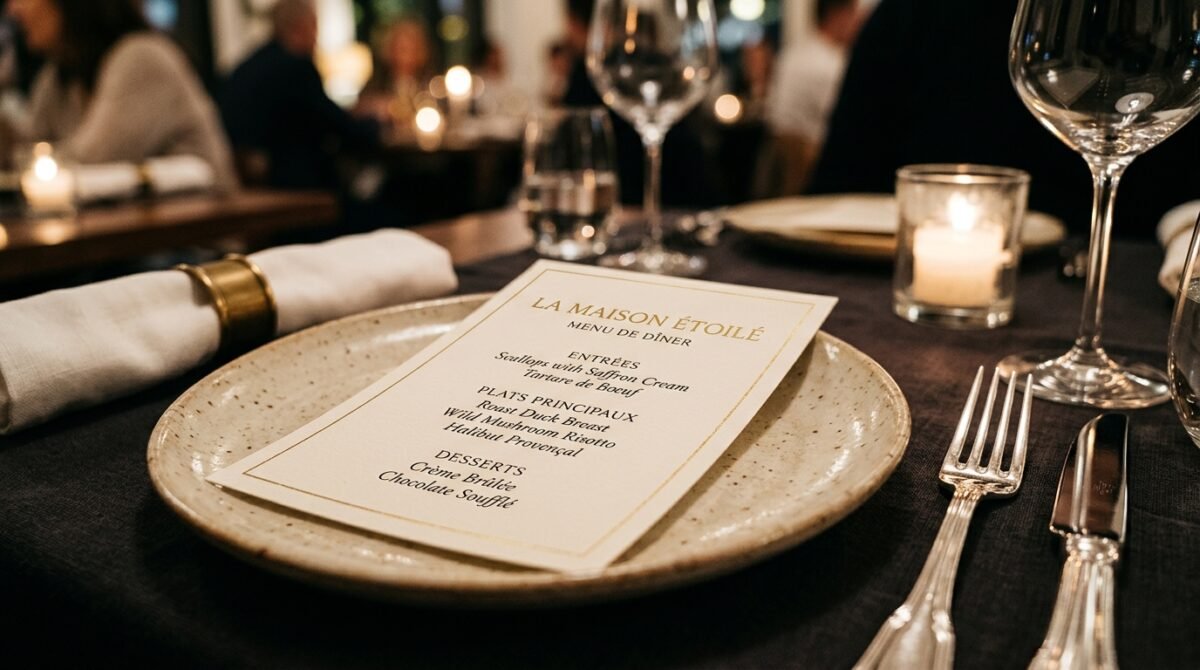
The menu for the upcoming dinner was the perfect vehicle for the exposure. I designed a beautiful, printed menu that looked incredibly professional. The first course was a ‘deconstructed vegetable medley’—exactly what she had requested to stay ‘safe.’ But I had a secret ingredient in mind, and it wasn’t shellfish.
I spent hours perfecting the presentation. I wanted the dinner to feel like a high-end experience, one that she would be proud to photograph for her social media. I even hired a professional server to make it look like a formal, well-funded event. I wanted her to feel like the queen of the evening, just before the crown slipped.
I also prepared a small, inconspicuous box to place on the table. Inside were the printed receipts of all the ‘extra’ costs she had forced me to incur for her ‘allergy’ over the last year. It was a visual representation of her greed. I wanted her to see, in cold, hard numbers, exactly how much she had taken from the family under false pretenses.
“I love the menu, OP. It looks so elegant. Did you manage to get that special organic kale I asked for? It really makes a difference for my digestion.”
— Clara, texting me the morning of the dinner party
I replied with a sweet, agreeable message, playing the role of the devoted host to perfection. I knew she was expecting me to be submissive and compliant. She had no idea that I had been keeping a secret of my own. I was ready to flip the script.
As the guests arrived, I made sure everyone was comfortable and in good spirits. The tension in the room was palpable to me, but to everyone else, it just felt like a fancy gathering. The anticipation was intoxicating. I watched Clara walk in, wearing an expensive outfit and acting like she was doing us a favor by showing up.
The Moment of Truth
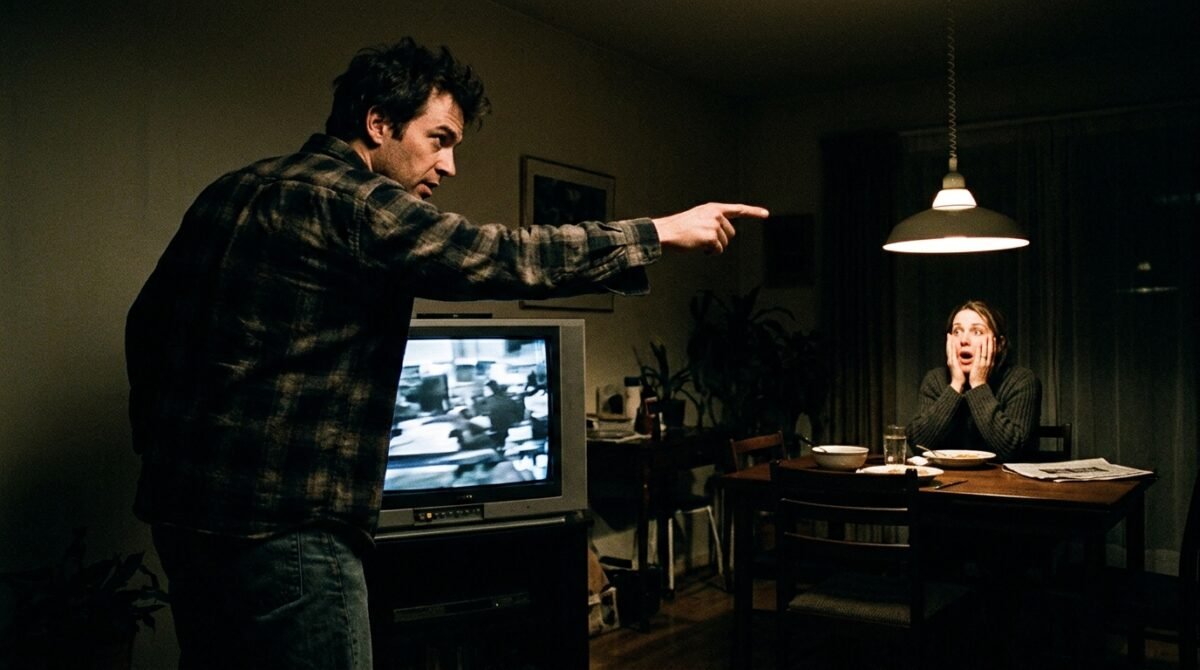
When the appetizers were served, I made sure everyone had theirs. I walked over to Clara with her special, custom-made dish. I stood there, watching her take a bite, smiling as if I were waiting for her approval. Then, I pulled out my phone and mirrored the audio/video I had captured at the bistro to the smart TV in the living room.
The room went completely silent. The audio of her raving about the lobster was crystal clear, echoing off the walls. She froze, her fork halfway to her mouth. The look on her face was priceless—a mixture of shock, confusion, and then, slowly, the realization that she had been caught.
“Clara, I hope you’re enjoying the dish. It was very expensive to source. Much like that lobster lunch you enjoyed last Tuesday. Should I call an ambulance, or do you think you’ll survive this meal?”
— My public reveal during the dinner party
The guests were stunned. My brother, who was sitting next to her, looked at her with a mix of betrayal and embarrassment. He had been the one defending her the most, and seeing her caught in a lie like this was a massive blow to his ego. He didn’t say a word, he just stood up and walked away from the table.
Clara tried to speak, tried to make an excuse, but the evidence was too strong. The video was clear, the date was stamped, and the context was undeniable. She had no way to spin this. She was exposed, not just as a liar, but as a manipulative, greedy guest who had exploited her family for years.
The silence stretched on, heavy and suffocating. No one knew what to say. The ‘special’ dinner I had prepared was left untouched as everyone processed the revelation. I felt a sense of immense relief, as if a weight had been lifted off my shoulders. The truth was out, and there was no going back.
The Aftermath in the Family Group Chat
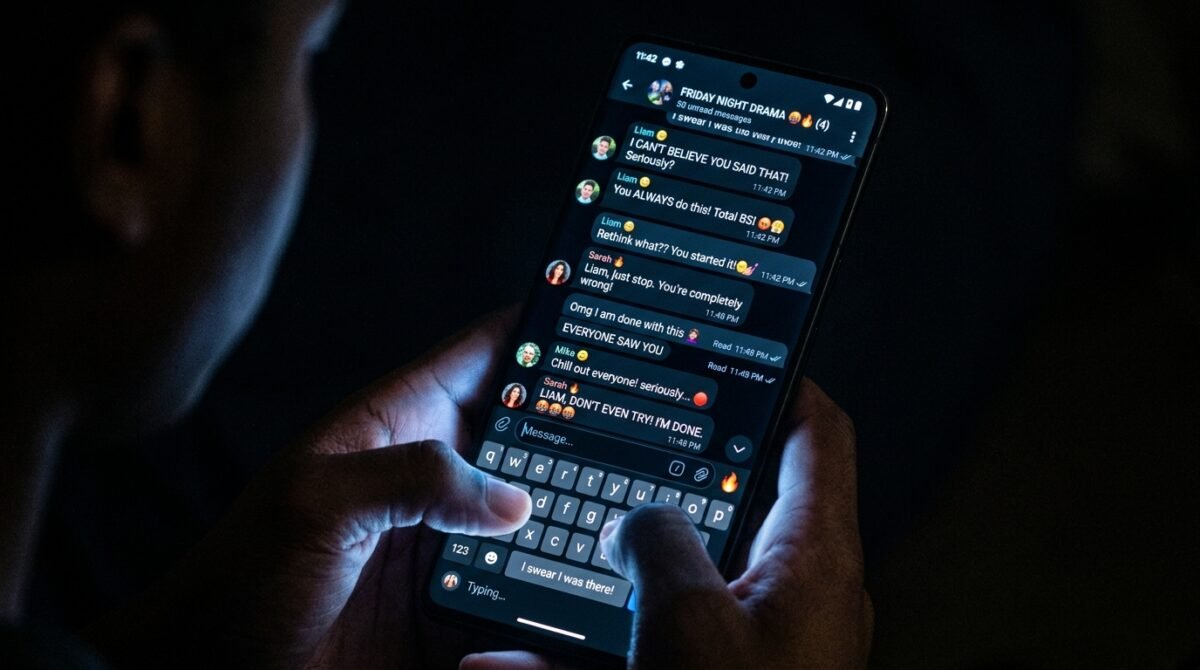
The fallout was instantaneous and digital. Within an hour of the dinner, the family group chat—which usually focused on birthdays and holiday plans—erupted into a chaotic war zone. Clara tried to play the victim, claiming I had ‘trapped’ her and that I didn’t understand her medical history, but nobody was buying it anymore.
My brother, initially silent, finally entered the chat. His anger was palpable. He realized that he had been made to look like a fool, and he wasn’t happy about it. He demanded to know how long she had been lying, and the lack of a coherent answer only made things worse for her.
“I don’t know what you’re all so upset about. I’ve been under a lot of stress. Maybe I just forgot about the lobster? It’s not a big deal!”
— Clara, in the family group chat following the dinner
“You don’t ‘forget’ a life-threatening allergy, Clara. You’ve cost us thousands of dollars and hours of stress. Don’t bother coming over for Thanksgiving.”
— My brother, finally setting a boundary
The messages continued late into the night. Other relatives chimed in, sharing their own stories of feeling ‘guilted’ into accommodating her. It was a massive wave of pent-up resentment that finally found its outlet. Clara was being slowly pushed out of the inner circle of trust, and there was nothing she could do to stop it.
I watched it all unfold, feeling a strange sense of detachment. I didn’t feel guilty. I had given her a chance to be honest, and she had chosen to continue the charade. I had done my part to protect the family from her continued manipulation, and the rest was up to them to handle.
The group chat eventually went quiet, but the damage was done. The relationships had been fundamentally altered. People were no longer looking at Clara with pity; they were looking at her with suspicion. The dynamic had been permanently broken, and that was the only outcome I had hoped for.
The Financial Audit

After the initial storm settled, I decided to take the next step. I sent a formal email to my brother and Clara, itemizing every single extra cost incurred due to her ‘allergy’ over the past two years. I included receipts, grocery lists, and even the labor costs I had calculated for the extra time spent menu-planning.
The amount was staggering. It totaled over $8,500. It wasn’t just the money; it was the audacity of it all. I wasn’t expecting her to pay it back—I knew she wouldn’t—but I wanted there to be a permanent, written record of her financial exploitation of the family.
“I am not asking for repayment, as I know that is impossible. I am simply documenting the financial impact of your choices. This document will be shared with the rest of the family for transparency.”
— From the email I sent to Clara and my brother
The email caused another stir. My brother was furious—not at me, but at the sheer scale of the cost. He hadn’t realized how much money had been siphoned off over the years. It was a sobering moment for him, and it pushed him even further away from her.
Clara didn’t respond for three days. When she finally did, she tried to claim that the costs were ‘voluntary gifts’ and that I was being petty. But it didn’t matter what she said. The numbers were there. The truth was documented. The narrative had shifted from ‘Clara the sufferer’ to ‘Clara the consumer.’
I felt a deep sense of accomplishment. I had successfully dismantled her control over the family and exposed the reality of her behavior. It wasn’t just about the money; it was about reclaiming the agency that she had taken from us. The financial audit was the final nail in the coffin of her elaborate, years-long scheme.
The Reddit Community Weighs In

I eventually posted the story on a popular subreddit for family drama, wanting to see if I had gone too far. The response was overwhelming. Within hours, the post had thousands of upvotes and hundreds of comments. The community was overwhelmingly supportive, labeling my actions as ‘rightfully vindictive’ and ‘necessary boundary enforcement.’
Many people shared their own stories of dealing with ‘allergy fakers.’ It was eye-opening to see how common this kind of behavior was. People were tired of being manipulated by others who used health issues as a tool for control, and they were cheering for me.
“NTA. You didn’t just expose a liar, you saved yourself and your family from years of continued manipulation. People like this deserve to be called out for their selfishness.”
— u/JusticeSeeker (Top Comment, 32.1k upvotes)
“The level of planning you put into that reveal is legendary. You didn’t just win the argument; you won the war.”
— u/DinnerPartyHero (14.2k upvotes)
There were a few dissenters, of course, suggesting that I had been ‘too harsh’ or ‘passive-aggressive,’ but they were quickly drowned out by the flood of support. The community was united in its condemnation of Clara’s behavior. It made me feel less alone in the experience.
The validation from strangers was surprisingly helpful. It confirmed that my frustration was justified and that I hadn’t lost my mind. The entire ordeal had been so isolating, but the internet had provided a sense of solidarity that I hadn’t expected. It was a digital catharsis.
I spent hours reading the comments, realizing that this was a much larger social phenomenon than I had realized. It wasn’t just about my sister-in-law; it was about the broader issue of how we handle boundaries and respect in our interpersonal relationships. The lesson was clear: don’t let people run over you, and don’t be afraid to demand the truth.
Reflecting on the Boundaries

Looking back, I realize that the allergy lie was just the tip of the iceberg. It was a symptom of a much larger problem: a complete lack of respect for boundaries. Clara had been pushing the limits for years, and I had been letting her. I had allowed her to define the terms of our interactions, and that was my mistake.
I learned that boundaries aren’t just about saying ‘no’; they’re about enforcing consequences when someone ignores that ‘no.’ I had spent so long trying to be the ‘nice’ one, the one who kept the peace, that I had become a doormat. It took this drastic event for me to realize that peace at the cost of your self-respect isn’t peace at all.
“Boundaries without consequences are just suggestions. You taught her a lesson she desperately needed, even if she’ll never admit it.”
— Advice from a friend during the fallout
I started attending therapy to process the trauma of the situation. It helped me understand why I had allowed myself to be manipulated for so long. It wasn’t about being weak; it was about being a person who valued family harmony above all else—and realizing that some people don’t deserve that kind of loyalty.
Today, my relationship with Clara is non-existent. We don’t speak, and I don’t go to events where she is present. It’s a boundary that I’ve set for my own mental health, and it’s been incredibly liberating. I don’t feel the need to justify my actions or win her over anymore.
The family gatherings have changed, too. They’re quieter, perhaps, but they’re also more genuine. We’ve all learned to set clearer expectations and to stop catering to the loudest or most demanding person in the room. It’s a healthier dynamic, and I’m proud of the part I played in making it happen.
Lessons in Authenticity

The experience taught me that being authentic is worth more than being liked. For years, I had been trying to please everyone, and all it did was make me miserable. By standing up for the truth, I lost a relationship, but I gained a sense of self-respect that I hadn’t had in a long time.
I also learned the importance of trust. Trust is fragile, and once it’s broken, it’s rarely repaired. I had given Clara my trust, and she had exploited it. Now, I’m much more selective about who I let into my circle. I look for people who are honest, reliable, and respectful of my boundaries.
“The truth is a powerful tool. It might be painful at first, but it sets you free in ways that silence never could.”
— Personal reflection on the experience
I’ve also learned to be more skeptical of ‘dramatic’ claims. When someone presents a high-maintenance demand, I don’t just accept it at face value anymore. I ask questions, I look for context, and I don’t feel guilty about being a critical thinker. It’s not about being cynical; it’s about being smart.
The entire ordeal was a crucible that forged a stronger, more assertive version of myself. I’m no longer the person who will sacrifice my own comfort to accommodate someone else’s lies. I’m confident in my choices, and I’m no longer afraid of the conflict that might come from setting boundaries.
In the end, I think Clara learned something too, even if she’ll never admit it. She learned that she can’t use people indefinitely without facing the consequences. She learned that the world isn’t her stage, and that if she wants to be a part of our lives, she’s going to have to play by the rules—and play fair.
Moving Forward

Life has returned to a new kind of normal. The holidays are less stressful, the dinner parties are more enjoyable, and the air of tension that once defined our family gatherings has largely dissipated. My brother is doing better, too. He’s taking time for himself, and he’s much more guarded in his new relationships.
I still get messages from Clara every now and then, usually attempts to re-enter the fold or justify her past behavior, but I don’t engage. I’ve moved on, and I encourage others to do the same. Holding onto anger is just as damaging as being the victim. It’s time to focus on the future.
“The best revenge is living well and being free from the drama you used to be trapped in.”
— My personal mantra for moving forward
I’m planning a new dinner party, one that I’m excited about. There are no special menus, no complicated dietary restrictions, and no hidden agendas. It’s just going to be a group of friends, good food, and genuine conversation. It’s going to be everything the previous dinners weren’t.
I’m grateful for the experience, as difficult as it was. It taught me things about myself and my family that I never would have learned otherwise. It made me a better host, a better relative, and a better person. And most importantly, it taught me that I am the one in control of my own life.
If you find yourself in a similar situation, don’t be afraid to take a stand. Your boundaries are yours to set, and your peace is worth protecting. Don’t let someone else’s entitlement dictate your happiness. Stand up, speak your truth, and live your life on your own terms. You won’t regret it.
Conclusion
This story of betrayal and revelation serves as a stark reminder that we are all responsible for the boundaries we set in our personal lives. Clara’s allergy lie was not just a dietary preference; it was a mechanism of control, a way to test the limits of our patience and generosity. By exposing the truth, I wasn’t just ending a charade; I was reclaiming my dignity and the health of my family dynamics.
The fallout was, and continues to be, a process of healing. It highlights the importance of honesty and the dangers of letting manipulative behaviors go unchecked. We must always remember that our kindness should never be exploited, and that setting firm, clear boundaries is an act of self-care, not an act of aggression. The truth may be uncomfortable, but it is ultimately the only foundation upon which healthy, sustainable relationships can be built.
What about you? Have you ever had to deal with a relative who used a manufactured health crisis or a complex ‘need’ to control family events? How did you handle it, and do you regret your actions? Let’s talk about it in the comments below.
What's your verdict on this dilemma?
Vote below to contribute to the official community consensus.

Have a Dilemma Keeping You Up at Night?
Share your real-life feud, wedding chaos, or relationship crossroads anonymously with our editorial team.
What do you think ?
0 Comments🛡️ Comments are moderated to protect community integrity. Your comment will appear once approved by the editorial team.