
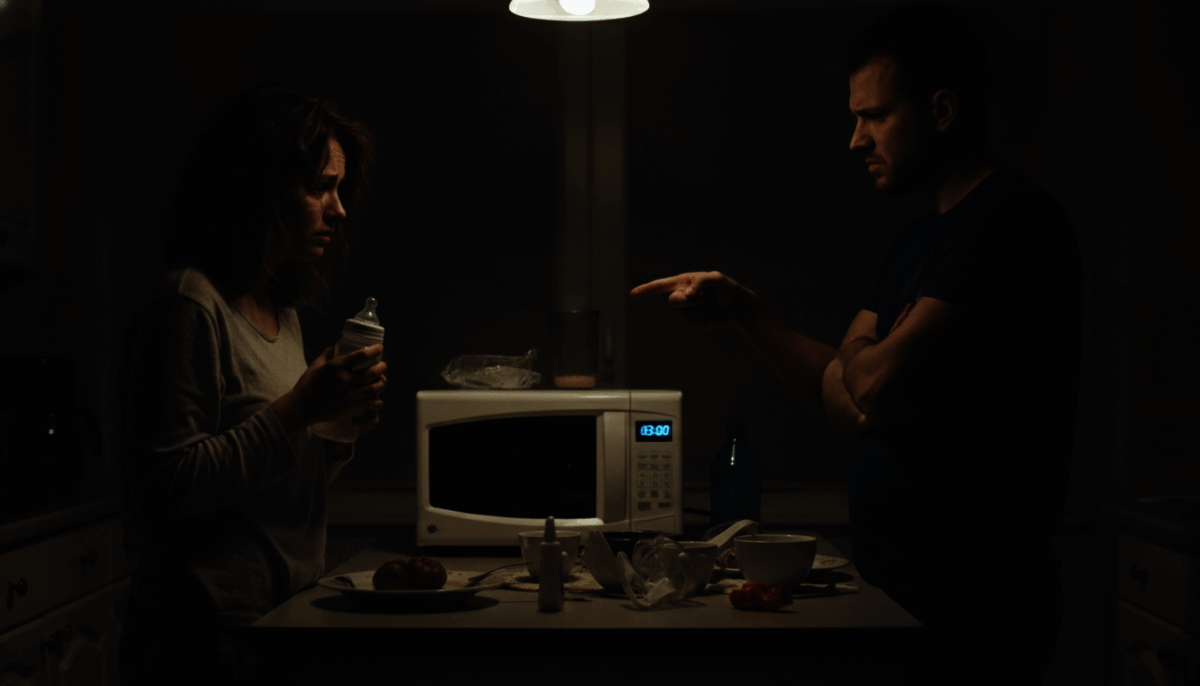
Motherhood is supposed to be the most rewarding experience of a woman’s life, but nobody warns you about the silent, creeping erosion of your autonomy that can happen behind closed doors. For me, the unraveling didn’t start with a big betrayal or a secret bank account; it started with the temperature of a bottle of breast milk at three o’clock in the morning. What should have been a simple, tired routine became the frontline of a power struggle I didn’t even realize I was losing.
My husband, Mark, has always been a ‘researcher.’ He prides himself on being the rational, data-driven partner. But lately, that rationality has curdled into an obsessive need to dictate every aspect of our household, specifically regarding our four-month-old daughter, Clara. I was sleep-deprived, leaking milk, and just trying to soothe a crying infant, when he walked into the kitchen and ripped the bottle out of my hand because I had dared to use the microwave for fifteen seconds.
That moment was the catalyst. It wasn’t just about the microwave; it was about the lack of trust, the condescension, and the sudden realization that I was no longer an equal partner in my own home. I felt small, dismissed, and terrified that if I conceded on this, I would soon lose the right to make any decisions for my own child. The silence that followed his outburst wasn’t peace; it was the sound of my patience finally snapping.
By the time the sun came up, I was already packing bags. I didn’t yell, and I didn’t ask for permission. I simply took the baby, walked out the front door, and headed straight to my mother’s house. This is the story of how a kitchen appliance became the final straw in a marriage that had been suffocating me for months, and why, for the first time in a long time, I finally felt like I could breathe again.
The Three AM Kitchen Confrontation
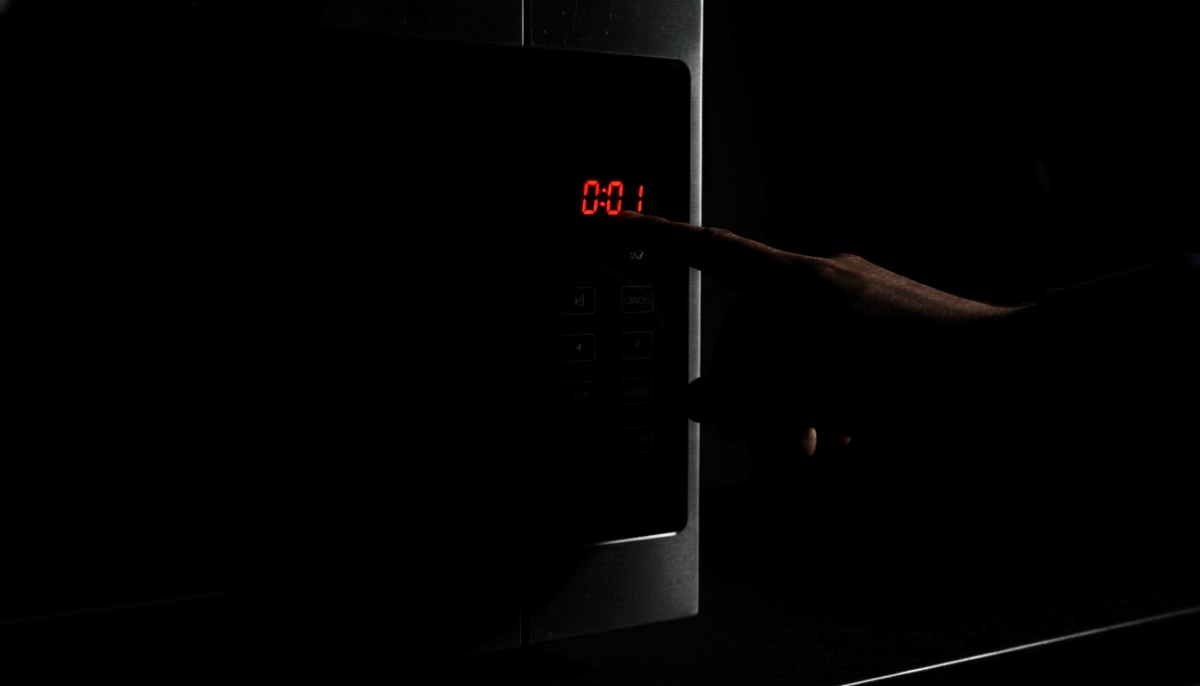
The house was dead silent, save for the rhythmic, high-pitched wails of Clara echoing down the hallway. I was stumbling through the kitchen, my eyes heavy with the kind of exhaustion that feels like physical weight. I had just finished pumping, and the milk was cold from the fridge. In my sleep-addled state, I did what I had done a dozen times before: I popped the bottle into the microwave for fifteen seconds, just to take the chill off.
Before the timer could even tick down, Mark was there. He didn’t come in gently; he burst through the doorway, his face twisted in a mixture of performative panic and genuine anger. He reached past me, snatched the bottle out of the microwave, and slammed the door shut.
“Are you trying to destroy her nutrition? You know the studies! Microwaving milk creates hot spots, kills the antibodies, and completely ruins the structural integrity of the lipids. I have told you this, I have linked you to the articles, and yet here you are, prioritizing your convenience over our daughter’s health.”
— Mark
I stood there, blinking, trying to process his rage. My heart was hammering in my chest, a mix of adrenaline and pure, unadulterated shock. I tried to speak, to explain that it was barely ten seconds and that I had shaken the bottle thoroughly to distribute the heat, but he cut me off mid-sentence.
“It doesn’t matter,” he snapped, his voice rising. “It is the principle. If you can’t follow basic, scientifically-proven safety protocols for our child, how can I trust you to be the primary caretaker while I’m at work? You’re acting reckless, Sarah. This isn’t just about a bottle; it’s about your inability to take this role seriously.”
I looked at him—really looked at him—and saw a stranger. This wasn’t the man I had married. This was a man who needed to feel superior, even if it meant belittling his wife in the dead of night while she was at her most vulnerable. I realized then that my exhaustion wasn’t just coming from the baby; it was coming from the constant, low-level surveillance I lived under every single day.
The Pattern of Micro-Management

Looking back, the microwave incident wasn’t an isolated event. It was the crescendo of months of ‘suggestions’ that felt more like commands. Mark had a way of framing his control as ‘optimal parenting.’ Whether it was the brand of diapers we used, the specific schedule he demanded for Clara’s naps, or the way I folded the laundry, everything had to be done his way or it was considered ‘sub-optimal.’
He would leave sticky notes on the fridge, detailed schedules on the whiteboard in the hallway, and send me links to mommy-blogs and scientific journals via email throughout the day. It was as if he was grading my performance as a mother, and I was consistently coming up short. I had started to doubt my own instincts, constantly second-guessing whether I was holding the baby right or if my milk production was ‘up to par’ based on his spreadsheets.
“I just want the best for her, Sarah. Is that a crime? If you’d just read the literature I send you, we wouldn’t have to have these conversations. I’m trying to optimize her development, and you seem to be stuck in these lazy, old-school habits.”
— Mark
I remember sitting on the bathroom floor, crying while the baby napped, reading a 40-page PDF he had emailed me titled ‘The Biological Imperative of Parental Precision.’ It was a document he’d written himself. The sheer audacity of it, to treat our child’s upbringing like an engineering project, made me feel like an employee rather than a mother.
My friends had started to notice, too. When we went out, Mark would hover, correcting the way I held the car seat or making comments about the snacks I packed. I had made excuses for him, telling everyone he was just ‘anxious’ or ‘very involved,’ but deep down, I knew it was about control. He didn’t want a partner; he wanted an extension of his own will.
The pressure was mounting. Every day felt like a test, and I was failing it by simply existing as a fallible human being. I was becoming a ghost in my own house, terrified of making a mistake, terrified of the ‘feedback’ I would inevitably receive later that evening. The microwave incident broke the seal on that dam of silence I had been keeping.
The Decision to Walk Away

After he stormed out of the kitchen, I sat in the dark for a long time, rocking Clara until she finally fell back asleep. My mind was racing, but for the first time in months, it wasn’t racing with worry about how to please Mark. It was racing with a plan. I realized that if I stayed, I would eventually lose myself completely. I wasn’t just being managed; I was being erased.
I didn’t pack everything. I took the essentials: the diaper bag, a few changes of clothes for me and the baby, my ID, and my keys. I left a note on the island—not an apology, just a statement. ‘I cannot function in an environment where my parenting is treated as a professional failure. I am taking Clara to my mother’s. Do not contact me until I am ready.’
Walking out to the car felt surreal. The air outside was cool and crisp, a stark contrast to the stifling, climate-controlled atmosphere of our house. When I turned the ignition, my hands weren’t shaking for the first time in weeks. I felt a strange, terrifying sense of liberation. I was choosing myself, and I was choosing to protect my daughter from growing up in a home where her mother was constantly demeaned.
“You’re really leaving? Over a bottle? This is irrational, Sarah. You’re being emotional and you’re going to regret this decision when you realize you can’t handle the logistics of life on your own.”
— Mark, in a text sent at 4:15 AM
I didn’t answer. I put the phone on ‘Do Not Disturb’ and drove. My mother was already awake when I arrived, her porch light casting a warm, welcoming glow against the dark driveway. She didn’t ask questions. She just hugged me, took the baby, and told me that the guest room was ready. That simple, quiet act of support was all I needed to confirm I had done the right thing.
The next few days were a blur of tears and relief. I spent hours just sitting with my mom, talking about things I had kept hidden for so long. She validated every single feeling I had buried. She told me that I wasn’t crazy, that the ‘researcher’ act was a common tactic for people who need to feel superior to those around them. I wasn’t just a bad mom; I was a victim of a very specific kind of domestic manipulation.
The Digital Fallout and Family Pressure
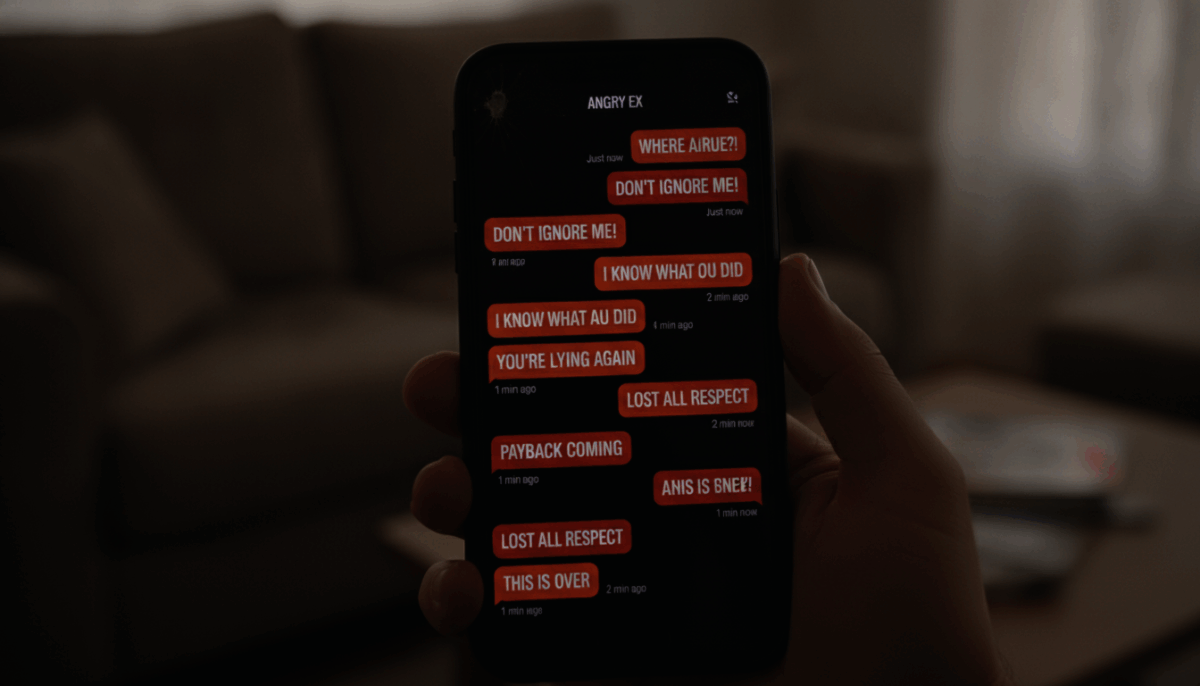
By the third day, the texts started flooding in. Not just from Mark, but from his mother and his sister. They were all echoing the same sentiment: that I was being ‘impulsive,’ that Mark was just ‘passionate about his kid,’ and that I was ‘tearing a family apart’ over a misunderstanding about a microwave. It was a classic smear campaign, designed to make me feel like the villain of the story.
Mark had painted me as the hysterical, irrational wife who ‘ran away’ because she couldn’t handle a simple conversation about health and safety. He posted a vague status on Facebook about ‘staying strong for his family’ and ‘people who don’t prioritize their children,’ which, of course, everyone knew was about me. The humiliation was sharp, but it also solidified my resolve.
“Mark, I’m not coming back because you ‘care about the baby’s health.’ I’m coming back when I feel safe, respected, and treated like an equal partner. And right now, that is not happening. Stop the texts and stop the family group chat campaign.”
— My text response to Mark
The family group chat was the worst. His mother kept sending me articles about ‘The Importance of Marriage Counseling’ and ‘The Dangers of Leaving a Stable Home.’ It was exhausting. They weren’t interested in the truth; they were interested in the preservation of the status quo, and I was the wrench in their well-oiled machine.
I started screenshotting everything. My lawyer told me that documenting the harassment was crucial, and even though it felt like a betrayal to keep logs of our conversations, I knew I had to protect myself. I was realizing that this wasn’t just a temporary cooling-off period. This was the end of my marriage, and I needed to prepare for the reality of what that would mean.
The most painful part was the realization that his family had never really seen me as an equal. I was just the girl who gave Mark his heir, the ‘vessel’ for his genetic legacy. Once I stopped performing the role they assigned me, I ceased to have value in their eyes. That realization was cold, but it was also the final piece of the puzzle I needed to fully detach.
Reddit Weighs In: The Verdict of the Internet

I finally posted my story to a throwaway account on Reddit, just to see if I was losing my mind. I expected a mix of opinions, maybe some people telling me to go back to counseling. What I got instead was a firestorm of support that left me sobbing in front of my laptop. Thousands of people, many of them parents, shared stories of their own experiences with ‘optimization-obsessed’ partners and the thin line between care and control.
“This is text-book coercive control, OP. He isn’t worried about the milk. He’s worried that you have a preference or a method that isn’t HIS method. Once he breaks your spirit on the microwave, he’ll move on to your schedule, your friends, and your finances. Run, and don’t look back.”
— u/SafetyFirstMom, 12.4k upvotes
The thread became a repository for people who had lived through similar nightmares. They helped me realize that his ‘scientific’ arguments were just tools to silence me. When I presented my side, the internet didn’t see an irrational mother; they saw a woman who had been gaslit for months. The validation was overwhelming.
Some comments were brutal. They pointed out the red flags I had ignored in the early days of our relationship—the way he insisted on picking out my clothes, the way he ‘corrected’ my driving, the way he made fun of my hobbies. I saw my marriage through a lens of objective observation, and it was horrifying. I had been living in a prison of his design.
“My ex-husband was exactly like this. It started with food prep and ended with him trying to control my birth control. He frames it as ‘for the family’ so he never has to be the bad guy. You are the villain to him because you dared to say no. Stay at your mom’s. Do not let him ‘apologize’ his way back in.”
— u/Survivor101, 8.9k upvotes
Reading these comments felt like waking up from a long, feverish dream. I wasn’t alone. Thousands of women had been here, had seen the exact same patterns, and had come out the other side stronger. The Reddit community didn’t just give me advice; they gave me a roadmap for survival, and the clarity to see that there was no ‘fixing’ a man who didn’t respect my fundamental humanity.
The First Legal Intervention

Mark didn’t take the silence well. When he realized I wasn’t coming back for a ‘discussion,’ he escalated. He threatened to file for emergency custody, claiming that I was ‘unstable’ and that I had abandoned the child. He even had his lawyer send me a letter demanding that I return to the marital home immediately, citing the ‘best interests of the child’ as a way to force my hand.
My lawyer, a sharp woman named Elena, just laughed when she read the letter. She told me that judges don’t look kindly on men who try to use custody threats as a way to control their wives. We drafted a response that was ice-cold and focused purely on the facts: I had left a volatile environment, I was in a safe space with family, and I was fully capable of caring for our daughter.
“We are not interested in engaging in a battle of parenting philosophies. My client is providing a safe, stable, and nurturing environment for the child. Any further attempts to use legal threats as a tool for emotional manipulation will be documented and presented to the court.”
— Excerpt from my lawyer’s letter to Mark’s counsel
The fear of the legal process was intense, but having a professional in my corner made all the difference. I wasn’t alone in this anymore. I was following a process, I was protected, and I was no longer playing by his rules. Every time he sent me a message trying to guilt me into returning, I forwarded it to Elena. The power dynamic had shifted.
I realized that Mark had always assumed I wouldn’t have the resources—or the courage—to stand up to him. He thought I was dependent on him for everything, including my confidence. But he had underestimated the strength that comes from having a support system. My mother, my lawyer, and even the online community had created a safety net that prevented me from falling back into his grasp.
The legal process was slow, but it was steady. It was the antithesis of Mark’s frantic, erratic behavior. For the first time, I felt like the adult in the room. I was dealing with reality, not the manufactured emergencies of a man who needed to feel like the king of his castle.
The Sunday Dinner Silence
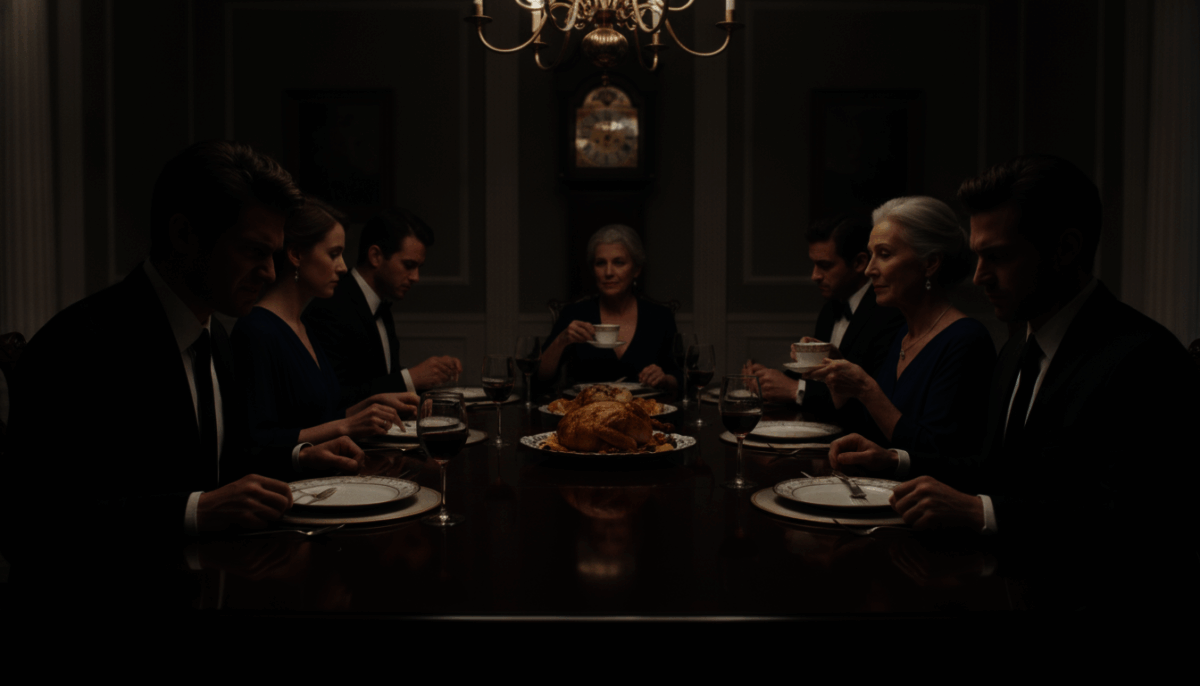
Weeks later, Mark tried to orchestrate a ‘reconciliation’ dinner at his parents’ house. He invited my parents, hoping to put me in a position where I couldn’t say no without looking like the antagonist. I agreed, but only because I knew it was time to end the ambiguity once and for all. I walked into that house with my head held high, Clara in my arms, and a sense of calm that Mark clearly wasn’t expecting.
The dinner was excruciatingly awkward. Every time I reached for a glass or moved to help with the baby, I could feel his eyes on me, waiting for me to slip up, waiting for a chance to ‘correct’ me. But I didn’t give him that. I was precise, I was calm, and I was utterly indifferent to his attempts to provoke me.
“So, Sarah, have you finally realized that the microwave is bad for the baby? I’ve printed out some new research from a peer-reviewed journal that you really need to see.”
— Mark, in front of both our families
The entire table went silent. My father, usually a quiet man, looked at Mark and shook his head. ‘Mark,’ he said, his voice steady, ‘we’re here to talk about your daughter, not your kitchen habits. Let it go.’ It was the first time anyone had publicly challenged him, and the look of shock on his face was almost worth the entire ordeal.
I didn’t argue. I didn’t defend myself. I just smiled, looked at my mom, and changed the subject to the baby’s latest milestone. I refused to enter his arena. By refusing to play his game, I made the game irrelevant. It was a small victory, but it felt like a triumph.
That night, I didn’t go home with him. I stayed at my mother’s, and the next day, I filed for divorce. I didn’t do it out of anger; I did it because I knew that I deserved a partner who viewed me as an equal, not as a subordinate in a project called ‘My Life.’
Reflecting on the ‘Research’

During the divorce proceedings, I had the chance to look through his ‘research’ files. It was an eye-opening experience. Hundreds of pages of articles, links, and self-authored documents, all centered around his need to define reality for everyone around him. It wasn’t about health; it was about authority. He felt that if he controlled the information, he controlled the outcome.
It was a sad way to live, really. He was so obsessed with being ‘right’ that he had lost the ability to be present. He was so focused on the ‘optimal’ way to raise a child that he had missed the joy of actually being a parent. He had turned our life into a sterile, soulless performance, and he was the only member of the audience.
“I thought that if I did everything perfectly, our family would be perfect. I thought that by following the data, I could avoid the mistakes my parents made. I didn’t realize that my rigidity was the very thing that was destroying us.”
— Mark, during a brief, unprompted moment of vulnerability in mediation
His confession in mediation was the closest I ever got to an apology. It didn’t change anything—the damage was done, and we were past the point of return—but it helped me understand the psychology of it. He was a man drowning in his own insecurity, trying to build a raft out of rules and regulations. It wasn’t an excuse for the way he treated me, but it was an explanation.
I learned that I couldn’t fix him, and I certainly couldn’t be the victim of his ‘fix.’ My role wasn’t to be his project manager or his research assistant. My role was to be myself, and to be the mother my daughter needed: someone who was present, loving, and capable of trusting her own gut.
The process of shedding that influence was slow. For months, I would catch myself looking for his approval before making a decision, or feeling guilty for not following a ‘proven’ method. But every time, I would remind myself that I was the primary authority in my daughter’s life. I was enough.
The Life After the Microwave

Life today is quiet, and it is mine. My daughter is thriving, and she doesn’t care if her milk was warmed in the microwave or by the slow, ‘optimal’ method. She is happy, she is healthy, and she is being raised by a mother who trusts her own instincts. We have a routine, but it’s a flexible, gentle one—one that leaves room for errors, for joy, and for the messy, unscientific reality of being a human being.
I still see Mark occasionally for custody handovers. He’s different now, or at least he seems to be. He’s less manic, less obsessed with the ‘data.’ Maybe he learned something, or maybe he’s just realized that he can’t control me anymore. Either way, it doesn’t matter. The power he had over me has evaporated, replaced by a healthy, professional boundary.
“You look different, Sarah. Like you’re actually happy.”
— Mark, during a routine hand-off, six months post-divorce
I didn’t answer him. I just smiled, put my daughter in the car, and drove away. I didn’t need his validation, and I didn’t need to explain my happiness to him. I was simply living it. And that, in itself, was the greatest triumph of all.
I think about that night in the kitchen often. If I hadn’t made that choice—if I had just stayed, if I had apologized and promised to do better—I would still be there, slowly losing myself in the details of his obsession. I might have been ‘safe’ from the ‘dangers’ of the microwave, but I would have been in mortal danger of losing my own soul.
The microwave wasn’t the problem. The problem was the lack of space for me to be anything other than a secondary character in his story. Now, I’m the author of my own, and it’s a story where I finally get to be the hero.
Lessons in Autonomy

If I could go back and talk to that version of myself—the one standing in the kitchen at 3 AM, trembling with exhaustion and fear—I would tell her that she is being strong even when she feels weak. I would tell her that the red flags aren’t just quirks, and that her gut feeling is the most reliable scientific data she will ever have. I would tell her that it’s okay to walk away.
The most important lesson I learned is that relationships shouldn’t require you to minimize yourself. If you find yourself constantly apologizing for your existence, or feeling like your instincts are being replaced by someone else’s requirements, that isn’t a partnership. It’s a hierarchy, and you’re at the bottom. You deserve to be at the top of your own life.
“Your autonomy is not negotiable. A partner who demands you follow their ‘optimization’ protocols is a partner who doesn’t trust your ability to navigate the world. Never trade your sanity for their approval.”
— Advice from my therapist
I’ve also learned the value of community. Whether it’s friends, family, or even the anonymous strangers on the internet who listen, having people who validate your reality is crucial. When you’re being gaslit, you lose your sense of what’s normal. You need outside perspectives to help you see the truth of what you’re living through.
I am no longer the woman who worries about the temperature of the milk. I am the woman who enjoys the feeding, the cuddles, and the quiet moments in between. I’m a better mother because I’m a whole person, and I’m a better person because I’m no longer being molded by someone else’s insecurity.
To anyone out there who feels like they’re living in a cage made of someone else’s rules: look for the door. It might be smaller than you think, and the jump might be terrifying, but the life waiting on the other side is yours. And it is so, so worth it.
Conclusion
My journey from a stifled, controlled wife to an independent mother was neither quick nor easy, but it was essential. The microwave incident was merely the catalyst for reclaiming the life I had almost traded for the comfort of a ‘perfect’ marriage. I learned that true love isn’t about control or optimization; it’s about mutual respect, trust, and the space to be human.
Today, I stand as a testament to the fact that you can survive the breakdown of your life and emerge on the other side better, stronger, and more authentic. I’ve embraced my flaws, trusted my instincts, and taught my daughter that she is the only person who gets to define her path. If you find yourself in a situation where your autonomy is constantly being questioned, take this as your sign: you are not the problem.
What about you? Have you ever had a moment where a seemingly ‘small’ issue revealed a much larger, more toxic dynamic in your relationship? Do you believe in the importance of setting non-negotiable boundaries, or do you think some compromises are just part of the ‘parenting work’? Share your thoughts below; I’d love to hear your experiences and continue this vital conversation.
What's your verdict on this dilemma?
Vote below to contribute to the official community consensus.

Have a Dilemma Keeping You Up at Night?
Share your real-life feud, wedding chaos, or relationship crossroads anonymously with our editorial team.
What do you think ?
0 Comments🛡️ Comments are moderated to protect community integrity. Your comment will appear once approved by the editorial team.