

When I bought my beach house three years ago, it was meant to be a sanctuary—a place to decompress from the grind of my corporate life. I made it clear to my family from day one: this was my private escape, not a free hotel. My sister, Sarah, was always the first to ask for dates, but she was also the first to respect the rules… or so I thought.
Life has a way of blurring boundaries, especially with family. About four months ago, I had to travel abroad for an extended work project, leaving the house sitting empty. I had entrusted my spare key to our mother, thinking it was a safe move for emergencies. That trust proved to be the most expensive mistake of my life.
I returned home two weeks early, expecting the quiet rhythm of the coast, only to find my driveway occupied by a car I didn’t recognize and my living room filled with the scent of someone else’s life. What I discovered wasn’t just a weekend getaway—it was a full-scale occupation.
The moral dilemma that followed tore through my family like a hurricane. I was branded the ‘villain’ for valuing my own property over ‘family loyalty.’ But when your own flesh and blood treats your sanctuary like a public resource, where does the obligation actually end?
This is the story of how I had to become the person I never wanted to be: the sister who handed an eviction notice to her own sibling, and the repercussions that followed when the family mask finally slipped.
The Empty Nest Discovery
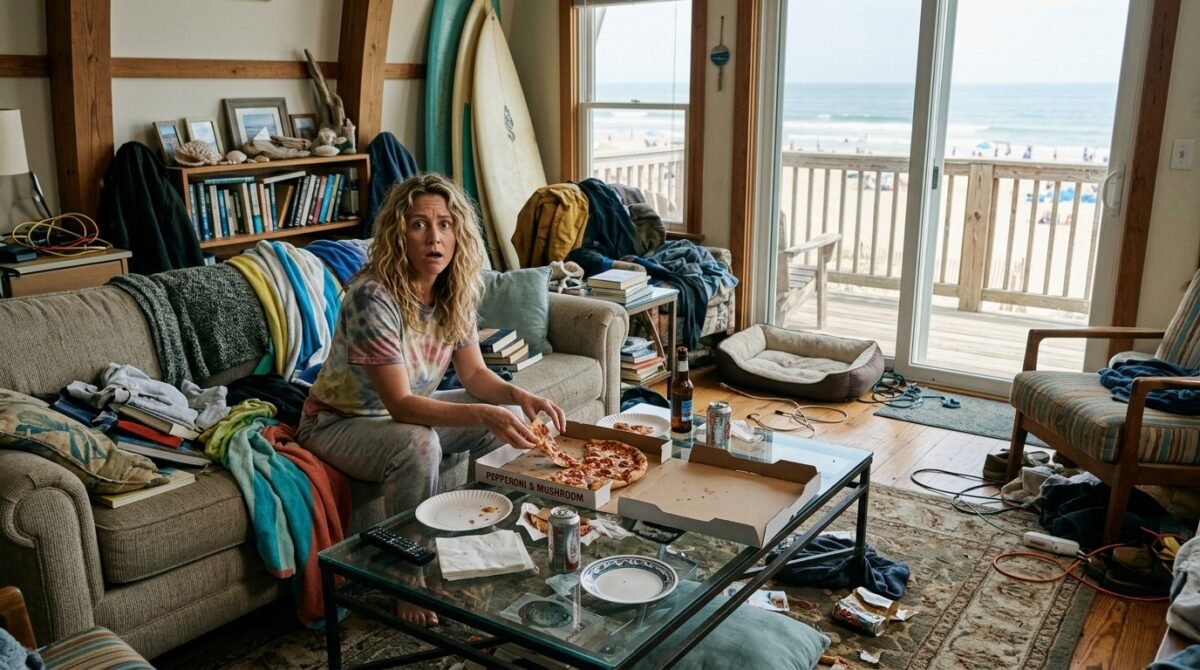
Walking up to the front door, I expected dust and silence. Instead, I heard the muffled bass of pop music thumping through the floorboards. My heart sank. I checked the driveway, and there it was—a faded sedan I hadn’t seen in months, parked haphazardly across the landscaping I spent thousands of dollars to curate.
I didn’t storm in. I stood on the porch for a moment, listening. I heard laughter. Sarah’s laugh. And then, a man’s voice, deep and unfamiliar. The violation hit me like a physical blow. This wasn’t a misunderstanding; this was a deliberate choice to ignore my existence.
I unlocked the door with my own key, my pulse hammering against my temples. When I walked into the living room, the scene was one of domestic bliss. Sarah was sprawled on my designer sofa, a half-eaten pizza box resting on my glass coffee table, her boyfriend asleep in the recliner. The sheer audacity of it left me speechless.
“Sarah. What in the hell are you doing in my house, and why is there a stranger sleeping on my couch?”
— Me, the moment of discovery
She jumped, the pizza slice sliding from her hand onto the rug. She didn’t look terrified; she looked annoyed. That was the moment I realized the depth of the entitlement I was dealing with.
She scrambled to her feet, wiping grease onto her jeans. “Oh, hey. You’re back early. We were just, you know, watching the place for you. Keeping the pipes running.” The lie was so thin it was transparent, and the absolute lack of remorse in her eyes told me everything I needed to know about how she viewed me—not as a sister, but as a resource.
The Rent-Free Justification
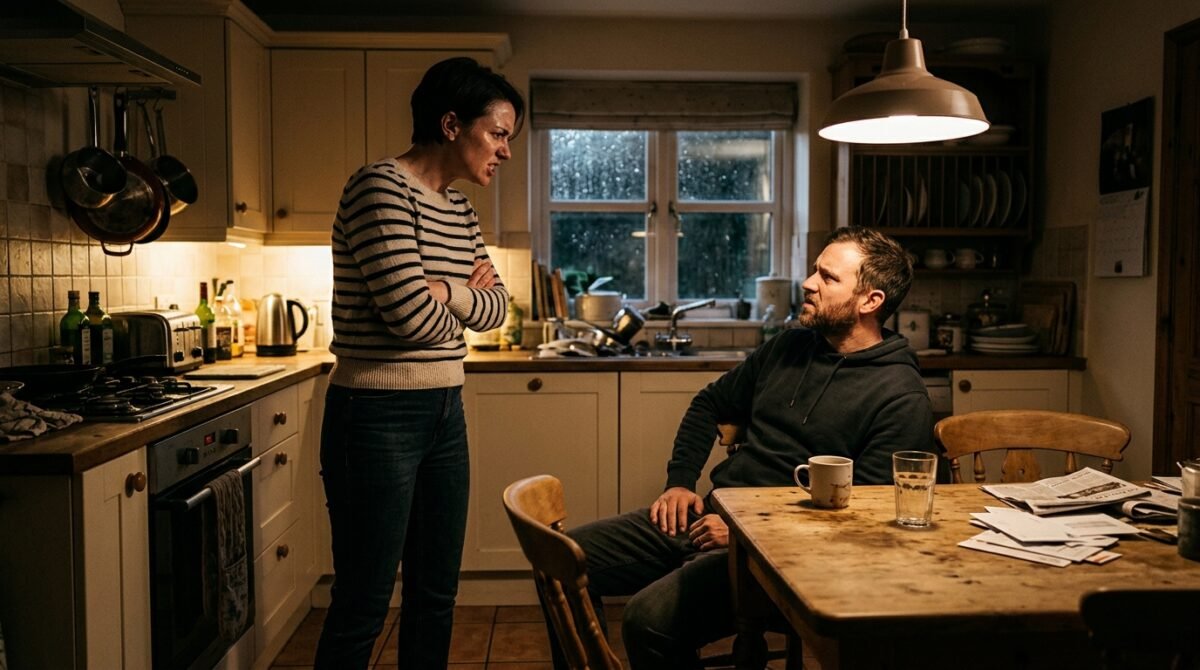
I didn’t let her spin the narrative. I told her to get her boyfriend out immediately. I was reeling, trying to process the sheer scale of the intrusion. I walked through the house, finding evidence of a four-month residency. My wine collection was depleted. My bedding had been replaced with cheap, store-bought linens. My closet had been purged to make room for her seasonal wardrobe.
She followed me, tailing me like a petulant teenager. She started justifying her presence as if it were a favor she was doing for me. “It was just sitting here,” she said, her voice rising in pitch. “You aren’t even here, and I was going through a rough patch with my apartment. It’s family, right? You’re supposed to help family.”
“Helping family is offering a couch for a weekend, Sarah. This is breaking and entering under the guise of familial duty. You’ve been living here for four months.”
— My response during the initial confrontation
She claimed she had saved money by staying here, money she was supposedly ‘investing’ in her future. She seemed genuinely baffled that I would care about the electricity bill, the wear and tear, or the fact that she hadn’t asked for permission a single time since I left for Europe.
I sat her down at the table—the same table she had been using as a craft desk—and told her the party was over. She laughed, a nervous, jagged sound. She thought I was posturing. She truly believed that because we shared the same parents, my assets were her assets by default. It was a terrifying realization.
I looked at the receipts I found in the trash—deliveries for furniture, clothing, and groceries for two people. She wasn’t just ‘staying’ here; she was living a life that she couldn’t afford, bankrolled by my silence. The entitlement was so deep it felt like a personality disorder.
The Paperwork of Defiance
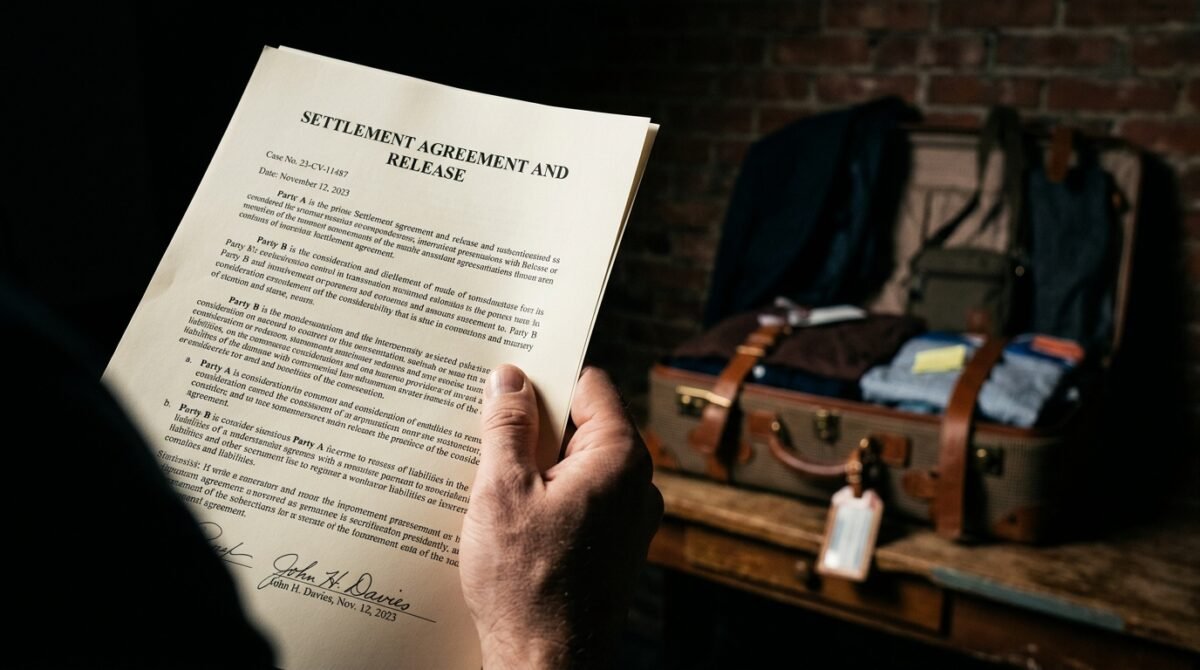
I didn’t wait for her to come to her senses. I knew that in the eyes of the law, even without a lease, she had established residency. I contacted a lawyer the very next morning. The advice was cold and surgical: serve an eviction notice, document everything, and do not engage in emotional debates.
When I handed her the document, the transition from ‘sister’ to ‘defendant’ happened in real-time. She read the paper, her face turning pale, then flushing a deep, angry red. She threw it back at me, screaming about how I was ‘the worst kind of person’ for involving the legal system against a sibling.
“You’re really going to throw me out on the street? Over some furniture and a few nights of sleep? You have no heart.”
— Sarah, attempting to manipulate the situation
I didn’t answer. I just stood there, holding the door open. I felt a strange sense of detachment. The bond we once had was being systematically dismantled, and honestly, I didn’t feel the grief I expected. I felt a cold, hard clarity. This was a boundary I should have set years ago, and I was finally doing it.
She spent the next hour packing, but she did it slowly, defiantly, leaving trash behind and intentionally damaging a few items of decor. It was a parting shot, a way to show that she was still in control. I watched it all, my hands steady, documenting every scuff on the floor and every broken piece of glass.
The neighbors had noticed the activity. Mrs. Gable from next door walked over, looking concerned. “I didn’t know you had guests, dear. The noise has been quite a bit at night.” Her words confirmed my worst fears: Sarah hadn’t just been living there; she had been hosting parties, bringing in strangers, and turning my quiet sanctuary into a revolving door of chaos.
The Family Group Chat Explosion

Before she had even cleared the driveway, the digital war began. My phone started vibrating incessantly—notifications from the family group chat. My mother, my aunt, and my cousins were all chiming in, none of them knowing the full story, all of them reacting to Sarah’s version of events.
“I can’t believe you’d do this. Sarah is in tears and you’re acting like she’s a criminal. It’s a vacation house! It’s not like you were using it!”
— Mom, in the family group chat
I didn’t reply to the group. I took screenshots of the house, the damage, and the electricity bills from the months she was there, and I posted them directly into the chat. The silence that followed was deafening. I didn’t defend myself. I just laid out the facts, the timelines, and the financial cost.
My aunt messaged me privately, trying to play the mediator. She told me I was ‘right, but wrong.’ She argued that being right doesn’t matter when you lose your family. But as I read her message, I realized that ‘family’ had been used as a weapon to keep me quiet for far too long.
The group chat became a battleground of accusations. My cousin accused me of having ‘too much money’ and therefore not needing to worry about petty things like house rules. I realized then that my success was a point of contention for them, and my property was just another thing they felt entitled to ‘redistribute.’
I finally muted the thread. I wasn’t going to spend my energy convincing people who didn’t want to see the truth. I had my house back, I had my locks changed, and I had a newfound appreciation for the value of my own privacy. The digital noise could wait.
The Cost of Indulgence

Once the dust settled, I sat down to calculate the damage. I kept a ledger, not because I expected to be reimbursed—I knew I wouldn’t see a dime from Sarah—but because I needed to see it in black and white to confirm I wasn’t crazy. The numbers were staggering. It wasn’t just the rent, but the utilities, the broken furniture, and the professional cleaning services I had to hire to scrub the house back to a livable state.
| Category | Estimated Cost | Notes |
|---|---|---|
| Utility Overages | $1,200 | Constant AC/Heat usage |
| Furniture Replacement | $3,500 | Stains and pet damage |
| Professional Cleaning | $800 | Deep sanitize |
| Lost Wine/Supplies | $1,500 | Total depletion |
The total came to over $7,000. For Sarah, this was just ‘stuff.’ For me, it represented hours of overtime, missed weekends, and the peace of mind I had worked for years to achieve. The disconnect was profound. She didn’t see theft; she saw ‘sharing.’
I realized that the way she treated my house was a reflection of how she treated our entire relationship. She had been taking and taking, and I had been providing, thinking it was love. But love without boundaries is just enabling, and I had been the best enabler in the business.
I kept the ledger on my desk for a week. Every time I felt a pang of guilt or a desire to reach out and ‘fix’ things, I looked at the numbers. It was a cold, hard reminder that I didn’t owe her my peace. I owed myself the life I had worked for.
I made a decision then: I would not ask for the money. I would not pursue her for damages. I would treat the $7,000 as the price of a permanent, final boundary. It was the cheapest investment I ever made in my own future peace.
The Reddit Verdict

I posted my story on a popular forum, expecting to be crucified by the ‘family first’ crowd. I wanted to see if I was truly the villain in this saga. The response was immediate and overwhelming. Thousands of people weighed in, and the consensus was not what I expected. The validation felt both relieving and strangely hollow.
“OP, you aren’t the villain. You’re the person who finally stopped being a doormat. If she was a stranger, she would have been arrested. Being family doesn’t give her a pass to commit grand larceny of your time and property.”
— u/BeachHouseLawyer (Top Comment, 42.1k upvotes)
“I love how the family blames the victim. They’re only mad because the free ride is over. Keep the locks changed and don’t look back. You’re doing the right thing for your mental health.”
— u/FreedomSeeker (12.4k upvotes)
There were, of course, the dissenters. Some people argued that I should have talked to her first, that I was being ‘cold’ and ‘unforgiving.’ I read those comments too. They stung, but they didn’t hold up under scrutiny. Every time someone said ‘talk it out,’ I remembered the four months of silence while my house was being gutted.
The internet community, with its brutal honesty, helped me frame the situation correctly. I wasn’t just dealing with a sister who needed help; I was dealing with a pattern of behavior that had been ignored for years. The feedback loop was essential for me to stay the course.
I spent hours reading the comments, finding stories of other people who had been taken advantage of by family members. It was a community of survivors who had learned the same lesson: you can love your family from a distance, and sometimes, that distance is the only thing that keeps the love alive.
The Unannounced 6:00 AM Kitchen Intrusion

Two weeks after the eviction, I woke up to a sound that made my blood run cold. It was the sound of a key fumbling in the lock. I had changed the locks, but the sound triggered a PTSD-like response. I bolted upright, grabbing my phone, ready to call the police.
I walked to the kitchen, my heart hammering. I hadn’t realized that the lock change hadn’t been enough to stop her—she had tried to use an old spare she must have made copies of before I caught her. Seeing her outside my window, trying the handle, was the final straw.
I didn’t open the door. I walked to the window and tapped on the glass. She jumped, her face contorted in a mixture of anger and desperation. She started yelling something, but I couldn’t hear it through the glass. I held up my phone, showing her the screen: I was dialing 911.
“You’re trespassing. If you don’t leave this property right now, I am going to report this to the police and have you arrested for the theft of my belongings.”
— Me, shouting through the closed window
She turned and fled to her car. It was pathetic, really. A grown woman running away from her own sister because she couldn’t accept ‘no.’ It confirmed everything I needed to know about her mental state and her lack of boundaries.
The police report was filed later that morning. It wasn’t about spite; it was about documentation. I needed a paper trail. I needed to ensure that if she ever showed up again, there would be a legal record of her harassment. I was done playing the ‘nice sister’ role.
That morning changed everything. It took away the last shred of doubt I had. There was no ‘misunderstanding’ to fix, no ‘family dinner’ to bridge the gap. There was only my security and her entitlement. And I chose my security.
Why the Sunday Dinner Table Went Silent
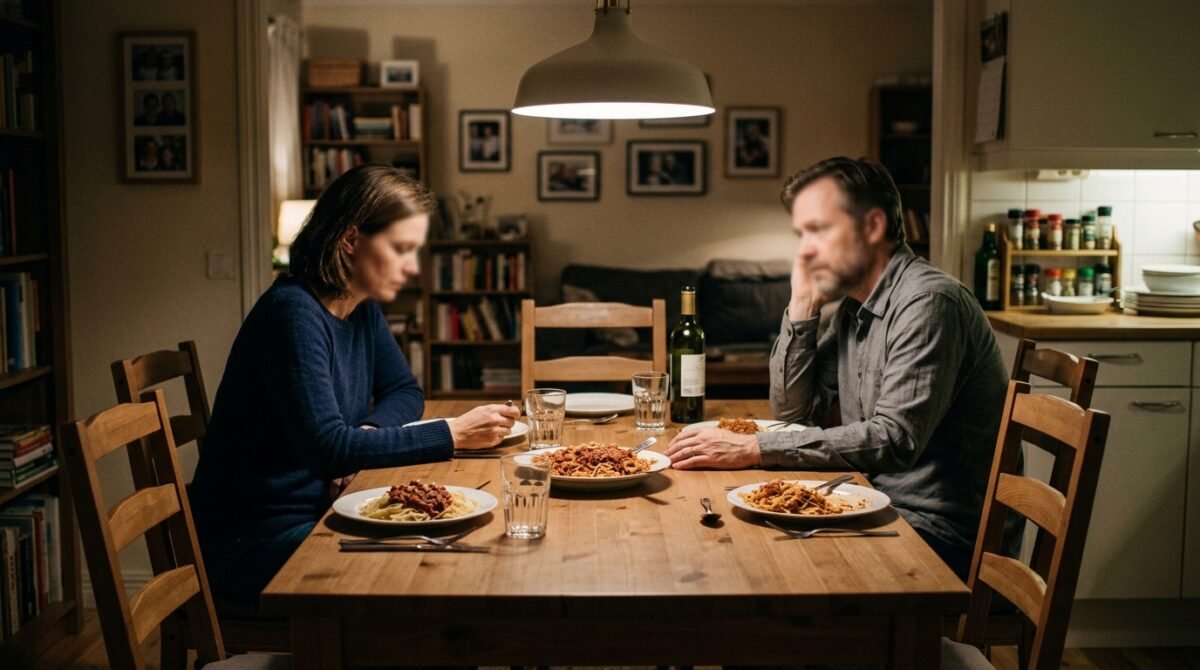
A month later, the inevitable happened: a mandatory family dinner. I didn’t want to go, but my parents insisted, claiming it was time for us to ‘hash things out’ like adults. I agreed only on the condition that Sarah was not allowed to bring up the house.
The atmosphere was thick enough to cut with a knife. Sarah sat across from me, glaring at her plate. Every time I moved, she tensed up. My mother tried to make small talk, but it felt forced, a desperate attempt to pretend that everything was normal.
When the dessert arrived, Sarah couldn’t help herself. She started in on a sob story about how her current apartment was ‘unsafe’ and how she was ‘struggling to find a place.’ She made sure to look at me, her eyes watery, as if I were the reason for her misfortune.
“It’s amazing how we’re all here having a nice dinner, while some of us are being forced to live in squalor by those who have everything.”
— Sarah, during the uncomfortable dinner
The table went dead silent. My father put his fork down and looked at her. For the first time in my life, he didn’t take her side. He told her clearly that the house was my business and that she had overstepped. It was a small victory, but it meant the world to me.
Sarah stood up, threw her napkin down, and walked out. No one followed her. No one apologized for her behavior. We sat there, the tension finally breaking, and talked about things that actually mattered. It was a start, a slow healing of a long-broken family dynamic.
I realized then that the silence at the dinner table wasn’t a failure—it was a boundary. It was the family acknowledging that the old ways of doing things weren’t working anymore. It was the first step toward a healthier, more honest relationship with my parents, at least.
The Certified Letter That Changed Everything

The next piece of communication I received wasn’t a text or a call; it was a certified letter from a lawyer representing Sarah. She was suing me for ’emotional distress’ and ‘unlawful eviction,’ claiming that she had a verbal agreement to stay there. I sat on my porch, reading the document, and realized she really had lost touch with reality.
I didn’t panic. I had every text message, every record, and the fact that I had never signed a lease or taken a cent from her. My lawyer laughed when he read it. The case was baseless, but the emotional cost of being dragged through it was real.
I had to decide whether to fight it or just let the noise settle. My lawyer advised me to counter-sue for the damages I had documented earlier. I didn’t want to do it, but I realized that if I didn’t, she would keep coming after me. The legal system was the only language she seemed to understand.
“If you don’t fight this, she will never stop. She needs to see that there are consequences for her actions.”
— My lawyer, advising on the counter-suit
I signed the papers. It was the hardest thing I’ve ever done, officially declaring war on my own sister in court. But I realized that the war had already started—she just wanted to be the only one with weapons.
The counter-suit was a wake-up call for her. Once her lawyer saw the evidence—the photos, the receipts, the timeline—he dropped the case. It was over in a matter of weeks. The silence that followed was the most peaceful thing I had ever experienced.
It was a final, painful chapter in our relationship. I don’t think we will ever be close again, and perhaps that’s for the best. Some people only know how to take, and I’ve learned that the only way to protect what I have is to keep the gates closed.
Rebuilding the Sanctuary

I spent the next six months reclaiming my house. I painted the walls, replaced the furniture she had ruined, and finally, truly, made it mine again. Every room now feels like a sanctuary, not a battleground. I’ve installed a high-tech security system, not just for the house, but for my peace of mind.
The house is no longer a place for guests. I have a strict ‘no-key’ policy for family. If someone wants to visit, they stay in a hotel, and they are invited. The entitlement that once lived here has been replaced by a sense of ownership that I hadn’t realized I was lacking.
I still see Sarah occasionally at large family gatherings, but we don’t speak. It’s not out of anger anymore, but out of a need for safety. We are like two strangers who happen to share the same history, walking on opposite sides of the room. And that’s okay.
“You are not a bad person for choosing your own life over the demands of someone who doesn’t respect your boundaries. You are a person who finally values yourself.”
— My therapist, reflecting on the journey
I’ve learned that the people who get angry when you set boundaries are the ones who benefited the most from you having none. It’s a bitter pill to swallow, but it’s the truth. I’m a better person for it, and my life is, for the first time, truly my own.
The beach house is quiet now, just the sound of the ocean and the wind. It’s exactly what I wanted from the beginning. It took a long road to get here, but I finally have the sanctuary I dreamed of. And I’m never, ever giving the keys to anyone again.
Conclusion
Looking back, the eviction of my sister wasn’t just about a house—it was a revolution of self-respect. It was the moment I realized that my value as an individual is not dependent on my capacity to sacrifice for others who refuse to respect me. The trauma of the experience has faded into a hard-earned lesson that I carry with me into every relationship, professional and personal.
We often talk about the ‘sacred bond’ of family, but we rarely discuss the toxicity that can fester when that bond is weaponized. I’ve chosen to protect my peace, and in doing so, I’ve found a life that feels more authentic than anything I had before. The doors are locked, the boundaries are clear, and for the first time, I am truly at home.
What about you? Have you ever had to draw a line in the sand with family, even when it cost you everything? Share your thoughts and stories below. Does family loyalty come with a price tag, or are there lines that should never be crossed? Let’s talk about it.
What's your verdict on this dilemma?
Vote below to contribute to the official community consensus.

Have a Dilemma Keeping You Up at Night?
Share your real-life feud, wedding chaos, or relationship crossroads anonymously with our editorial team.
What do you think ?
0 Comments🛡️ Comments are moderated to protect community integrity. Your comment will appear once approved by the editorial team.