

Death has a way of stripping the veneer off a family, revealing the rot underneath. My Aunt Clara was a woman of refined tastes and quiet intellect, having spent forty years curating a private library that was more than just a collection of paper and ink; it was her life’s work. Rare first editions, vellum-bound classics, and leather-clad historical texts that were worth more than some people’s homes. When she passed away last winter, the grief was heavy, but it was quickly overshadowed by the vultures circling the mahogany shelves of her study.
I was the black sheep of the family in the eyes of my cousins, mostly because I was the only one who actually showed up to visit Clara while she was alive. I wasn’t just her nephew; I was the person she trusted to protect her legacy. As the named executor of her estate, I took my responsibility with the solemnity it deserved, documenting every cataloged spine and ensuring that the collection remained intact for the archive donation she had specified in her will.
However, my cousins—people who hadn’t spoken to Clara since their last request for a ‘loan’ was denied—decided that her library was their personal inheritance. They viewed the library not as a historical treasure, but as a piggy bank to be raided. The audacity with which they approached the situation, assuming I would simply roll over, is what led to the most explosive confrontation in our family’s history.
This is the story of how a quiet, bookish man had to transform into a legal nightmare to protect the things that mattered most to a woman who is no longer here to defend them. I didn’t want a war. I wanted to honor a promise. But when the dust settled and the sheriff arrived, I realized that some bridges aren’t just burned—they are dismantled, cataloged, and sold for parts.
The Subtle Unraveling of Family Boundaries
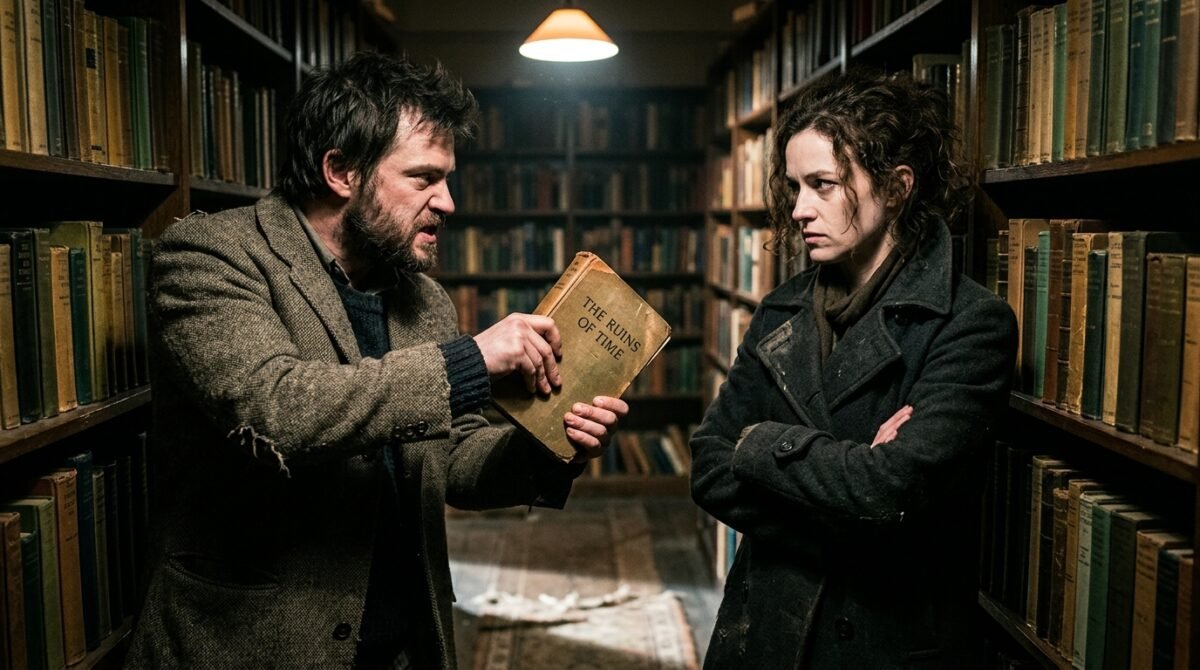
It started with a knock at the door that felt entirely too casual for a house still draped in mourning. My cousins, Sarah and Mark, walked into Aunt Clara’s study as if they were browsing a bookstore rather than visiting a grieving nephew. They didn’t offer condolences; they offered appraisals. Sarah ran her fingers over a set of Dickens, her eyes glinting with a hunger I found genuinely repulsive.
I had been working through the inventory list, a task that felt like breathing underwater. I looked up, startled by the intrusion. ‘I didn’t invite anyone over today,’ I said, my voice tight. Mark just shrugged, pulling a heavy tome from the shelf and leafing through it with careless, dirty hands. ‘We’re family, right? We figured we should get a head start on the ‘personal items’ before the estate sale people come in and mark everything up for strangers.’
“You realize this isn’t an estate sale, right? This is a curated collection, and the majority of this is going to the university archive as per her specific instructions. Put that book back, Mark.”
The tension in the room was palpable. Sarah laughed, a sharp, dismissive sound. ‘Clara was a sweet lady, but she was delusional at the end. She wouldn’t have wanted these books to sit in some dusty basement at a college. They belong in the family. We deserve to have a piece of her legacy after all the years we supported her.’
I felt a cold rage settle in my gut. Supported her? They had ignored her birthday cards, skipped her holiday dinners, and only showed up when they needed money for a down payment or a vacation. I kept my composure, though my hands were shaking. I wasn’t going to let them dismantle her life’s work for a quick buck on the secondary market.
I stood up, closing the ledger on the desk with a definitive thud. ‘You have ten minutes to leave this property. I have already engaged legal counsel for the estate, and every single volume in this room is accounted for. If anything goes missing, I won’t be calling your parents. I will be calling the police.’
The Midnight Raid on the Mahogany Shelves

Two nights later, the security system chime woke me at 3:00 AM. I was staying in the guest room of the estate to ensure the integrity of the property until the probate court finished its initial review. I sat up, my heart hammering against my ribs, and checked the tablet linked to the camera system. My blood ran cold as I saw the living room lights flickering on.
Sarah and Mark were back, this time with a friend I didn’t recognize and several large, heavy-duty duffel bags. They weren’t looking for mementos; they were packing books like they were stealing loot from a vault. I watched on the screen as they methodically worked their way down the shelves, ignoring the sentimental items and heading straight for the rare editions I had already identified for insurance.
“Hurry up! If we get the leather-bound collection out now, we can hit the rare book dealer in the city by morning. We’ll be halfway to a payout before he even checks the inventory.”
— A leaked text message from Mark’s phone, recovered later
I didn’t call my cousins. I didn’t yell at them through the intercom. I picked up my phone and dialed the local sheriff’s department. The dispatcher was calm, almost bored, until I explained that I was the executor of an estate witnessing a felony in progress. I had the legal documents saved on my cloud drive, ready to provide proof of my authority the second the officers arrived.
The wait felt like an eternity. I sat in the dark, watching the feed as they loaded the bags. They were laughing, drinking wine they’d found in the kitchen, completely oblivious to the fact that their ‘family heist’ was being documented in high definition. Every bag filled was another nail in the coffin of our family relationship. I felt a strange sense of clarity; this wasn’t about the books anymore. It was about justice.
When the blue and red lights finally washed over the front of the house, the atmosphere shifted instantly. I saw them scramble, dropping a bag of first-edition poets as they realized they were trapped. I walked down the stairs, meeting the deputies at the door with the executor paperwork in one hand and my phone, recording, in the other. It was, without a doubt, the most satisfying moment of my life.
The Fallout: When Blood Is Thicker Than Water, But Less Than Legal

The scene that followed was pure, unadulterated chaos. Mark tried to claim they were ‘borrowing’ the books to keep them safe from me, while Sarah dissolved into a performative display of weeping that the deputies completely ignored. They were handcuffed on the front lawn, the duffel bags of rare literature sitting at their feet like contraband. My aunt’s neighbors were all watching from their windows, no doubt enjoying the spectacle of the family’s disgrace.
My phone started blowing up within minutes. My aunt, the mother of the two thieves, was calling me, screaming about how I had ‘criminalized a family disagreement.’ I let it go to voicemail. I wasn’t in the mood to be lectured by a woman who had taught her children that everything in life was for the taking if you were bold enough to grab it.
“You’ve ruined their lives over a few old books! How could you do this to your own cousins? They are blood, and you treated them like common criminals in front of the whole neighborhood!”
— Voicemail from my Aunt Diane
The following morning was a blur of legal paperwork and witness statements. The local district attorney was surprisingly interested in the case, largely because the value of the stolen collection pushed the theft into felony territory. I spent six hours at the station, meticulously cataloging exactly what had been removed from the shelves and confirming that I had explicitly told them both that they were not allowed on the property.
By the time I returned home, the entire family group chat was a war zone. I had been added back in by my uncle, only to see dozens of messages accusing me of being a power-tripping narcissist who cared more about property than people. I read every one of them, feeling nothing but a profound sense of distance. I was no longer part of their world, and for the first time in my life, that felt okay.
I blocked the entire family group after sending one final message: ‘The law will decide what is fair. I have done my job as executor, and I will continue to do so until every piece of Aunt Clara’s legacy is safe.’ I then turned my phone off and slept for fourteen hours, the first peaceful rest I’d had since the funeral.
The Courtroom Confrontation
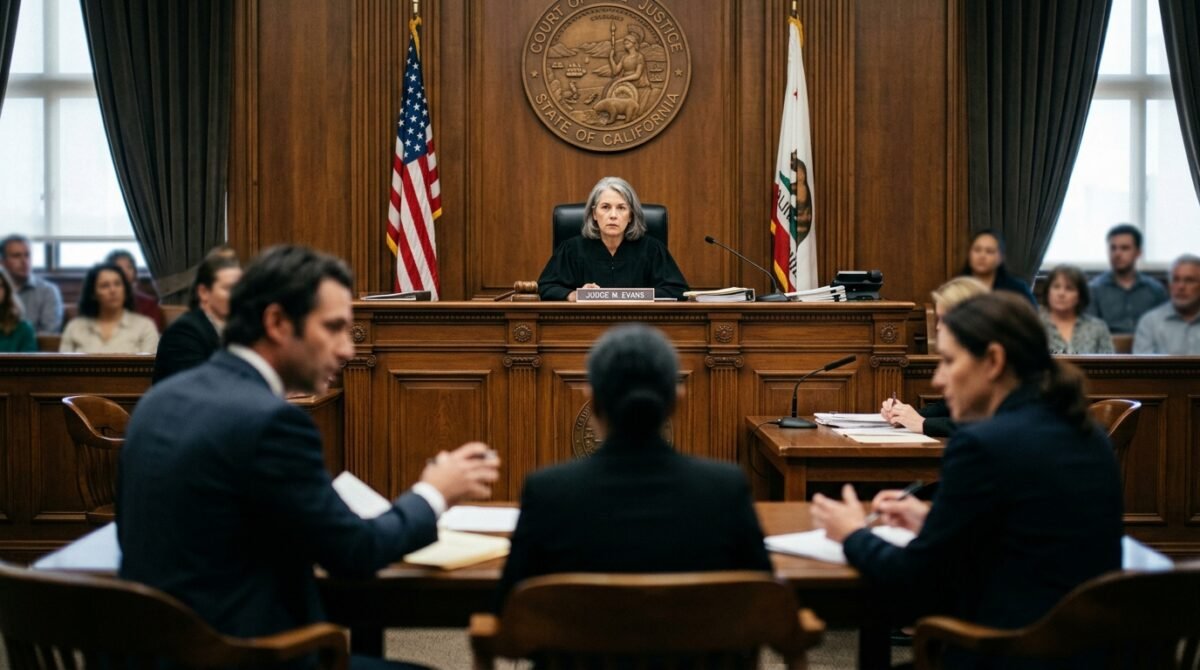
The preliminary hearing was held two weeks later. The courtroom was small, and the air felt stale. Sarah and Mark looked like shells of their former selves, having traded their designer clothes for cheap, ill-fitting suits. They didn’t look at me when I entered, but the shift in their demeanor was unmistakable. They were scared, and for the first time, they understood the gravity of their actions.
Their attorney tried to argue that this was a ‘misunderstanding’ between relatives. He painted a picture of a grieving family trying to recover mementos from a beloved aunt. My attorney, a shark of a man I’d hired specifically for his lack of patience with family nonsense, simply pulled out the security footage and the audio recording of my warning to them from the week prior.
“Your Honor, this wasn’t a family squabble. This was a calculated burglary of a protected estate. My client warned them. They ignored him. They returned at 3:00 AM with equipment designed to strip the house bare. This isn’t grief; this is greed.”
— My attorney’s opening statement
The judge didn’t even blink. He looked over the evidence, then looked at my cousins, his expression one of pure disdain. He made it clear that the court would not tolerate the looting of estates, regardless of the blood relationship between the parties involved. The bail was set, and a strict no-contact order was issued, preventing them from coming within five hundred feet of me or the library.
Watching them be led away to be processed was an surreal experience. I remembered playing tag with Mark in this very yard when we were children, back when we actually liked each other. It was a tragedy, really, how money and entitlement had poisoned everything. But that wasn’t my fault. I was just the one who had to clean up the mess they insisted on making.
After the hearing, I felt a strange lightness. The books were being processed for the archive, the legal system was doing its job, and I was officially out of the firing line. I didn’t feel guilty. I felt like a guardian who had finally successfully defended his charge against an overwhelming, albeit pathetic, force.
Reddit Weighs In: The Verdict of the Internet

I decided to post the summary of the situation on Reddit, just to see if I was losing my mind. The response was immediate and overwhelming. I wasn’t just being validated; I was being hailed as a hero of boundaries. The Reddit hive mind, usually so quick to find fault with the OP, was surprisingly unified in its support for my decision to call the police on my own family.
“NTA. Your cousins aren’t family; they are predators who waited for the body to be cold before they started picking the bones. You didn’t ‘call the cops on family,’ you called the law on thieves who were looting an estate you were legally obligated to protect. Good on you for having the backbone to do what needed to be done.”
— u/JusticeSeeker (Top Comment, 42.1k upvotes)
The thread exploded. People shared their own horror stories of inheritance disputes, of parents and siblings who turned into monsters over grandma’s silver or dad’s retirement account. It was a sobering look at how common this kind of behavior was. I realized that my situation wasn’t unique, but the way I handled it—without hesitation—was what set it apart.
There were a few contrarians, of course, mostly people who believed that ‘family comes first’ no matter what, but they were quickly drowned out by the sheer volume of people who understood that respect and boundaries are the foundation of any healthy relationship, biological or otherwise. The consensus was clear: you are not responsible for the bad behavior of your relatives just because you share DNA.
Reading the comments helped me finalize my resolve. I had been worried that I might have gone too far, that I should have tried to ‘talk it out’ one last time, but the community pointed out the fatal flaw in that logic. You can’t talk to someone who thinks they are entitled to your property. You can only set a hard boundary and be prepared to enforce it with the weight of the law.
I thanked everyone who commented, even the ones who argued with me. It was cathartic to see the situation laid out in black and white by thousands of strangers. It confirmed what I already knew: I had made the right choice, and I was going to stick to it, no matter how much the rest of my family cried ‘betrayal.’
The Aftermath: A Quiet House and New Beginnings

With the legal proceedings ongoing, the house has finally gone quiet. The library, once a place of tension and potential theft, is now a sanctuary. I spend my evenings reading in the same chair my aunt occupied for years, the weight of the books grounding me. The estate is finally moving toward its conclusion, and the university has confirmed they are ready to accept the collection as a permanent, cataloged memorial to Clara.
I have moved on to my own home, leaving the estate management to the professionals. I don’t check the family group chat anymore. I don’t look at social media posts from my cousins or their parents. I have essentially ghosted my entire extended family, and the silence is beautiful. I didn’t realize how much noise they brought into my life until they were gone.
My friends have been supportive, though they all admit that my situation sounds like a plot from a thriller novel. We’ve had a few dinners where I’ve recounted the details, and the look of shock on their faces is always the same. It’s hard to believe how quickly people can turn when they think they can get away with it, but that is the reality of human nature.
“I’ve learned that the people who scream the loudest about ‘family’ are usually the ones who use that word as a weapon to get what they want. Once you stop fearing the label, they lose all their power over you.”
— My reflection on the situation
I still think about my aunt sometimes, sitting in this library. I hope she would be proud of how I handled it. She wasn’t a confrontational woman, but she was a person of principles, and she would never have allowed her life’s work to be treated like garbage by people who didn’t appreciate its value. I did this for her, and in doing so, I did it for myself.
If there’s one lesson I’ve learned, it’s that boundaries aren’t just for protecting your time; they are for protecting your integrity. When you let people walk all over you, you aren’t just losing your stuff; you’re losing yourself. I found that I like myself much better when I’m the person who stands up for what’s right, even if it means standing alone.
The Legal Implications of Being an Executor

Many people don’t realize the legal weight that comes with being an executor. It’s not just about distributing assets; it’s about liability. I learned quickly that if I had allowed them to take those books, I could have been held personally liable for the estate’s losses. The court does not care that they are ‘family.’ They care about the fiduciary duty I owed to the estate.
It’s a sobering responsibility, and one that I would advise anyone to take seriously. If you are named as an executor, you are, by law, the protector of that person’s final wishes. If you falter, if you let sentimentality or family pressure override your legal duty, you are essentially committing a form of malpractice. It’s not a position for the faint of heart.
I’ve spoken to my attorney about what to do in the future, and he’s been very clear. Never try to handle an inheritance dispute on your own. Always have a paper trail, always document every conversation, and never, ever be afraid to involve the authorities when it crosses the line into criminal activity. Sentimentality is the enemy of justice in probate courts.
“The law is a tool, and you have to know how to use it. In this case, it was the only thing standing between the history of an entire collection and a local pawn shop.”
— My estate attorney
I hope that sharing this helps others who might be in similar situations. Don’t let the fear of being the ‘bad guy’ stop you from doing the right thing. If your family is doing something illegal, they are the bad guys, not you. It’s a hard truth to accept, but once you do, the path forward becomes much clearer and, honestly, much easier to navigate.
I’m looking forward to the future now, free of the baggage that came with my family’s expectations. I have my own life to build, and I’m doing it on my own terms, with the lessons of the past firmly in my rear-view mirror. I am a free man, and that is worth more than all the rare books in the world.
Why I Don’t Regret the Call

People have asked me if I ever feel regret. Do I wish I had just let them take a few books? Would it have saved the family relationship? Maybe. But then I have to ask: what kind of relationship is based on theft and coercion? If I had let them take the books, they would have just wanted more. It would have been the silver next, then the furniture, then the house itself.
You teach people how to treat you, and by allowing them to walk all over my aunt’s wishes, I would have been teaching them that my boundaries were non-existent. I would have been teaching them that they could use me to get whatever they wanted. I refused to be that person anymore, and I have no regrets about the decision I made.
The family has suffered, yes. But they suffered because of their own choices, not because of mine. They chose to break the law, and they are dealing with the consequences. I am simply a witness to their self-destruction. And while it’s sad to see people you once cared about fall so far, it’s not my job to save them from themselves.
“It’s not about vengeance. It’s about the fact that actions have consequences. They made their choice, and I made mine. We are both living with them.”
— My final statement on the matter
I have found peace in the fact that I protected what my aunt loved. That was the goal from the beginning, and I achieved it. Everything else—the drama, the group chats, the legal fees—is just noise. I have learned to tune it out, and I have learned to value my own peace above the approval of people who clearly don’t have my best interests at heart.
I’m ready to move on. I’m ready to start a new chapter, one that doesn’t involve guarding bookshelves or dealing with family feuds. The library is secure, the legacy is preserved, and I am finally, truly, moving forward.
The Final Accounting
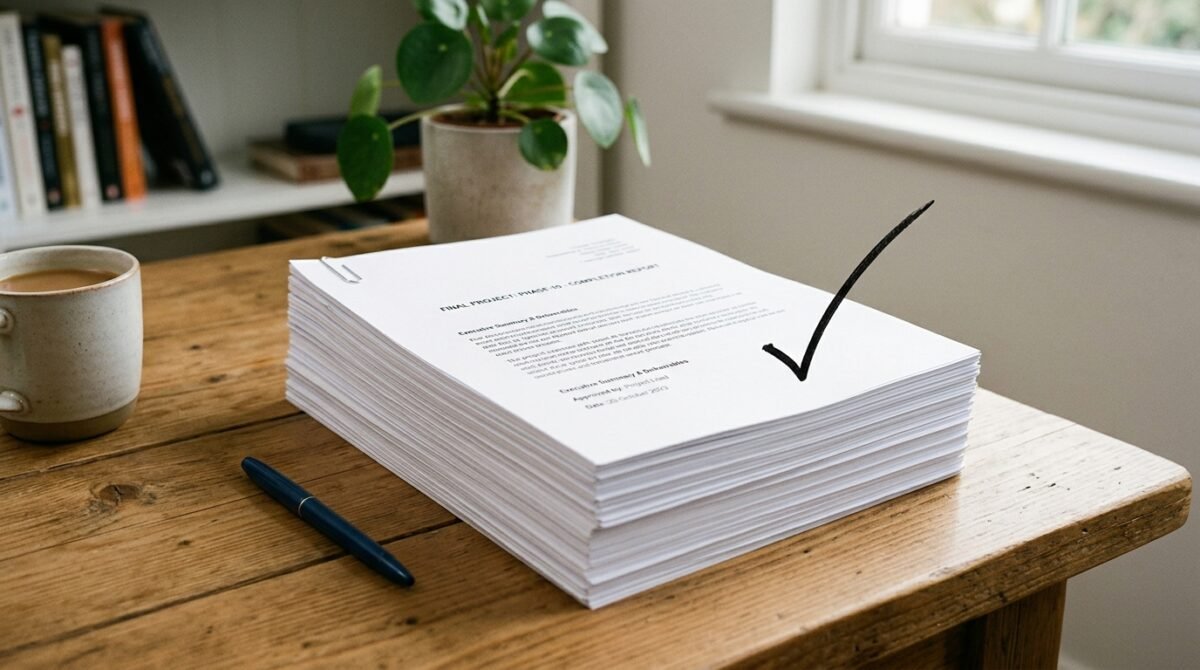
As we wrap up the estate, the final accounting shows that the library donation has been finalized and the university is thrilled with the condition of the collection. It was all worth it. Every sleepless night, every stressful conversation, every moment of doubt—it was all worth it to ensure that these books would be enjoyed for generations to come, rather than sold for a quick buck.
I received a thank you letter from the university’s lead archivist, expressing their gratitude for my diligence in protecting the collection. It was a small gesture, but it meant the world to me. It reminded me that there are people out there who value the same things I do, and that those values are worth fighting for.
I’m currently in the process of finalizing the last few details of the estate, and it feels good to be at the finish line. I’ve learned so much about the process, about the law, and about myself. I know I’m capable of handling difficult situations, and I know I have the strength to stand up for what is right, even when it’s uncomfortable.
“I am proud of the outcome. Not because I ‘won,’ but because the right thing was done. The books are safe, the estate is settled, and I can finally breathe.”
— My concluding thought on the process
I don’t know what the future holds for my cousins, and honestly, I don’t care to find out. I wish them well in their own lives, but I have no desire to be a part of them. I’ve learned that life is too short to surround yourself with people who don’t respect your values, and I’m choosing to surround myself with people who do.
This has been a life-changing experience, and I’m grateful for the lessons it’s taught me. I’m a better person for having gone through it, and I’m looking forward to a future where the only thing I have to worry about is what book I’m going to read next. It’s a simple life, but it’s mine, and that’s all I ever wanted.
Reflecting on the Ties That Bind

I think a lot about why families fall apart over money. It’s a common story, yet we never seem to learn. We think that we’re different, that our family would never do that, and then, when the pressure mounts, the truth comes out. It’s a sad reality, but it’s a reality nonetheless. We have to learn to protect ourselves, even from the people we love.
I’ve realized that ‘family’ is a loaded term. It’s supposed to mean support, love, and unconditional care, but for many, it becomes a burden, a chain that keeps them tied to people who don’t have their back. I’ve broken that chain, and it feels like I’m finally living my own life for the first time.
I encourage anyone reading this to take a look at their own relationships. Are you being treated with respect? Are your boundaries being honored? If not, don’t be afraid to take a stand. You don’t have to be a victim, and you don’t have to put up with toxic behavior just because you share a surname.
“True family is about mutual respect, not shared DNA. If someone can’t respect your boundaries, they don’t deserve your place in their life.”
— A final piece of advice for readers
I’m at peace with my decision. I’ve done what I needed to do, and I’m ready for whatever comes next. The library is safe, the legacy is secure, and I am free. That is enough for me. That is everything I could have hoped for.
Thank you for following along with my story. It hasn’t been easy, but it’s been worth it. I hope you find the strength to stand up for your own values, no matter what they are. You deserve to be treated with respect, and you deserve to live a life that you’re proud of.
Conclusion
The story of my aunt’s library has reached its end, but the lessons I’ve learned will stay with me for a lifetime. When we are faced with the moral crossroads of family entitlement versus personal integrity, the choice is rarely easy, but it is often binary. We either choose to protect our values, or we choose to surrender to the demands of those who would see them dismantled.
I chose to stand my ground. I chose to prioritize the wishes of the person who meant the most to me, even when it meant severing ties with the rest of my family. It was a painful, difficult journey, but it led me to a place of clarity and peace. I am no longer the person who lets others walk over him; I am the person who draws the line and defends it.
Now, I turn it over to you. Have you ever had to draw a hard line with family over an inheritance or a matter of principle? How did you handle the fallout, and do you have any regrets? Let’s talk about it in the comments below. Your stories might just help someone else who is currently navigating their own family crisis.
Poll: If you were in my position, would you have involved the police, or tried to resolve it internally?
1. Involve the police immediately (The legal route)
2. Try to talk it out one last time (The family route)
3. Let them take it to avoid the drama (The peace-at-all-costs route)
What's your verdict on this dilemma?
Vote below to contribute to the official community consensus.

Have a Dilemma Keeping You Up at Night?
Share your real-life feud, wedding chaos, or relationship crossroads anonymously with our editorial team.
What do you think ?
0 Comments🛡️ Comments are moderated to protect community integrity. Your comment will appear once approved by the editorial team.