

Growing up, my brother Julian was the sun around which our entire family orbited. He was the golden child, the one who could do no wrong, while I was simply the reliable, high-achieving older sister who was expected to provide a safety net whenever he inevitably stumbled. By the time I hit thirty, I had worked my way into a high-powered career and purchased a beautiful home with a detached, private guest suite that I intended to use as an office and occasional space for visiting friends. When Julian asked to stay for ‘a few months’ while he figured out his post-grad transition, my parents practically begged me to say yes, framing it as an opportunity for us to bond.
I agreed, under the strict condition that he maintain the space and respect my privacy. For the first few weeks, things seemed fine. He was quiet, kept to himself, and even offered to help with the lawn. I felt guilty for my initial hesitation, thinking perhaps I had been too cynical. I was working long hours at the firm, often leaving before dawn and returning late, which left me blissfully—or so I thought—unaware of what was actually happening mere steps from my front door while I was away.
The first sign that something was wrong wasn’t a loud noise, but a strange discrepancy in my utilities. My electricity bill spiked by nearly 400 percent, and my private gated driveway, which was supposed to remain clear, was frequently littered with mysterious trash bags and the occasional half-empty bottle of cheap beer. I started to notice a strange wear-and-tear on the high-end flooring of the guest suite, and the smell of stale smoke began to seep into the ventilation system of my main house.
My parents, blinded by their love for Julian, dismissed my concerns as me being ‘too uptight’ or ‘jealous of his social life.’ They couldn’t understand why I was concerned about a few extra guests. Little did they know, Julian wasn’t just having guests over; he was operating a full-scale, ticketed event space for his fraternity brothers and their friends, turning my hard-earned luxury investment into a college-town cash cow. The moral dilemma wasn’t just about the money; it was about the absolute betrayal of trust and the weaponization of my kindness.
This is the story of how I finally drew the line, the explosive confrontation that shattered the golden child narrative, and the long, painful aftermath of choosing my own peace over the comfort of a blood relative who saw my home as a resource to exploit. It was a lesson in setting boundaries that I hope serves as a warning to anyone currently playing the role of the reliable older sibling.
The Mysterious Utility Spike and the Unlocked Gate

It started with a monthly statement from the electric company that made my jaw drop. A residential bill that had historically hovered around two hundred dollars had ballooned to nearly eight hundred. I sat at my kitchen island, cross-referencing the dates, and realized the surges were almost exclusively on Thursday, Friday, and Saturday nights. I had chalked it up to inefficient appliances, but the intensity of the spikes suggested heavy-duty cooling and sound equipment operating for hours on end.
I decided to install a smart doorbell and a hidden perimeter camera near the driveway, ostensibly for ‘security’ purposes. I didn’t tell Julian, as I wanted to see if I was just being paranoid. The first night the camera went live, I checked the footage during a late dinner at the office. My breath hitched as I watched a steady stream of young men—none of whom I recognized—shuffling through the side gate, many carrying large coolers and crates that definitely didn’t belong to my brother.
I arrived home earlier than usual that Friday, around 9:00 PM. As I pulled into the driveway, I heard the unmistakable thumping of bass reverberating through the structure of the guest house. I didn’t even park in the garage; I marched directly to the suite’s front entrance, my heart hammering against my ribs. I tried the handle, but it was locked. I banged on the door, and after a long silence, Julian appeared, looking disheveled and smelling faintly of cheap cologne and stale alcohol.
“Julian, why is there a literal crowd of strangers in my backyard? And why is there a bouncer-style folding table set up in front of the door with a Venmo QR code taped to it?”
— Me, confronting Julian
He stammered, trying to laugh it off as a ‘small gathering’ that had ‘gotten a little out of hand.’ He tried to block my view of the interior, but I pushed past him, only to be met with a wall of loud music, smoke, and at least thirty people I had never seen before in my life, all drinking from plastic cups that were definitely not part of my guest-suite inventory.
The Venmo Trail of Evidence
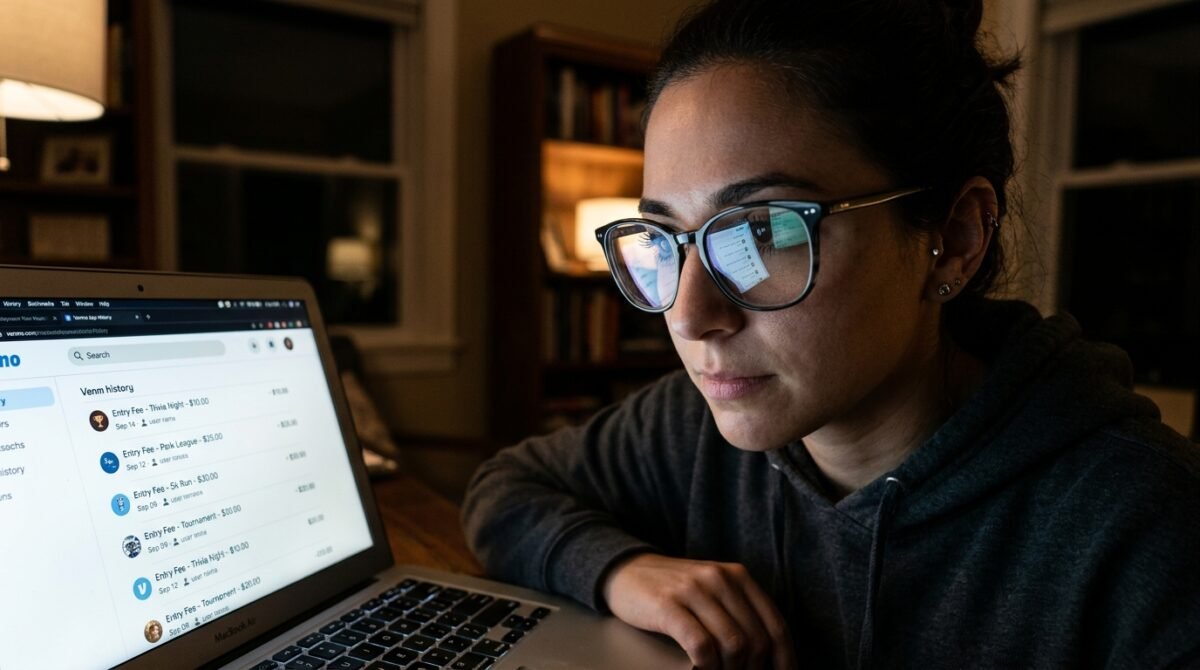
Once I managed to clear the room, the extent of the operation became clear. There were makeshift bars constructed from my kitchen counters, professional-grade lighting rigs stashed in the laundry room, and a stack of printed flyers advertising ‘The Suite Sessions’ with an entry fee of twenty dollars. It wasn’t just a party; it was a business. He was charging people to enter my home, using my utilities, and drinking my liquor.
I sat down at his laptop, which he had left open on the counter in his haste to hide the ‘entry’ table. I didn’t have to look hard. His Venmo history was a goldmine of evidence. There were dozens of transactions labeled ‘Entry Fee,’ ‘Cover,’ and ‘Drink Ticket.’ He had made nearly three thousand dollars in a single month using my property as his venue. The sheer audacity of it left me physically ill.
I took screenshots of everything. I knew that if I confronted him without proof, he would gaslight me, and my parents would jump to his defense, claiming I was exaggerating. I needed a paper trail that proved this was a systematic abuse of my hospitality. I gathered all the digital evidence into a folder on my cloud drive, ensuring that he couldn’t delete his way out of this once the conversation turned sour.
When he returned from ushering the last of the stragglers out of the yard, I was waiting for him at the kitchen island, laptop open. He saw the screen and his face went pale. He didn’t even try to apologize at first; he went straight to the victim card, claiming that he ‘deserved’ this money because I was so wealthy and he was ‘just trying to get by’ in a tough economy.
“You’re really going to hold this over me? You make six figures! A few parties didn’t cost you anything you can’t afford. You’re being incredibly stingy for someone who claims to love their brother.”
— Julian, defending his actions
I realized then that he didn’t just feel entitled to my space—he felt entitled to my success. He genuinely believed that because I had ‘more,’ he was justified in taking it without my permission. The lack of remorse was the most chilling part of the entire encounter.
The Morning After the Confrontation
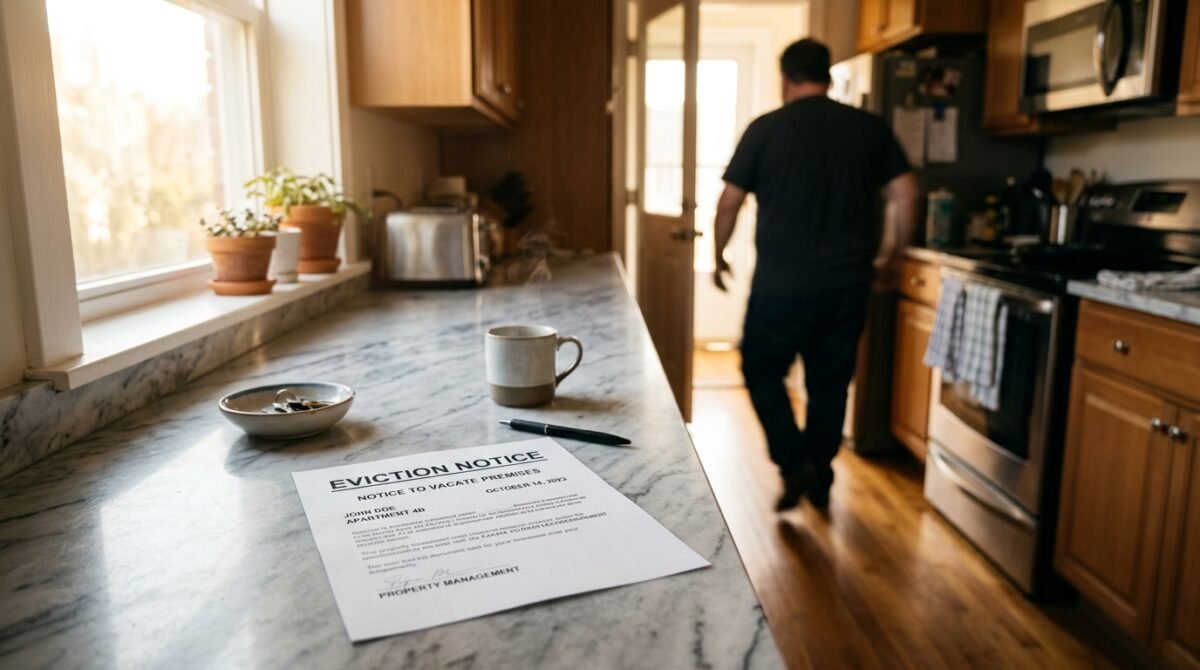
I didn’t sleep that night. I spent the hours between 3:00 AM and sunrise drafting a formal eviction notice. I knew that because of our family ties, he would try to argue that this was ‘family business,’ but I needed to treat this like the professional real estate transaction it actually was. I printed out three copies and placed one on his bedside table, another on the kitchen counter, and kept the third in my briefcase.
When he woke up, I was already dressed for work, holding a cup of coffee and waiting in the main kitchen. He walked in, looking hungover and annoyed, probably expecting me to have ‘cooled off.’ He didn’t even look at the paper I had placed on the island until I pointed to it with a trembling finger. He read it, laughed, and then crumpled it into a ball, tossing it into the sink.
“You’re not serious,” he said, his voice dripping with condescension. “You’re really going to kick your own brother out over a few parties? Mom is going to hear about this, and you know exactly how she’s going to react. Do you want to be the villain in this family? Because that’s exactly what you’re choosing right now.”
I didn’t blink. I told him that the ‘villain’ was the person who turned a home into a commercial venue without consent. I told him he had thirty days to vacate, and that if he didn’t, I would involve the local police to have him removed as an unauthorized occupant. The shift in his demeanor was instant—he went from dismissive to openly hostile, realizing that I wasn’t playing the ‘big sister’ role anymore.
“I am not asking, Julian. This is a legal notice. You have broken every boundary I set. You are not a guest anymore; you are a liability. If you aren’t out by the first of the month, I’m calling the cops.”
— Me, holding my ground
He stormed out of the house, slamming the door so hard that a picture frame fell off the wall. I felt a strange sense of relief wash over me, mixed with the sickening dread of knowing what was coming next: the inevitable call from my parents.
The Family Group Chat Explosion

It didn’t take long. By noon, my phone was vibrating incessantly. My mother had started a group chat, titled ‘The Family,’ and the messages were already coming in fast. She was livid, accusing me of being heartless and throwing my ‘poor, struggling brother’ out onto the street. She didn’t ask what happened; she simply assumed I was at fault, as she always did.
“How could you do this to your brother? He’s family! We are supposed to support each other, not kick each other out because you’re having a bad mood. You need to apologize and let him stay.”
— Mom, via Family Group Chat
I didn’t argue. I simply sent a screenshot of the Venmo history, the utility bill, and a photo of the guest suite trashed with empty beer cans. I told them exactly what he had been doing. I didn’t sugarcoat it. I told them that he was running a for-profit event business in my home, and that he had lied to me about his activities for months while I worked to support myself.
The silence that followed was deafening. My father, who usually stayed out of these things, chimed in, saying that while what Julian did was ‘wrong,’ eviction was ‘extreme.’ My mother, however, continued to insist that I was the one at fault for ‘being too strict’ and ‘not giving him enough guidance.’ It was clear they weren’t interested in the truth; they were interested in maintaining the status quo where I took care of Julian regardless of his actions.
I muted the chat. I realized then that my parents were never going to see me as anything other than a resource for their favorite child. The realization was painful, but it was also liberating. For the first time in my life, I didn’t feel the need to justify my existence or my boundaries to them. I was done being the person who sacrificed her peace to keep the family facade intact.
The Final Move-Out Day

The next three weeks were a masterclass in psychological warfare. Julian tried everything. He played the victim, the confused brother, and then, when those didn’t work, he tried to bribe me with a ‘cut of the profits’ from his next event. I stayed cold. I changed the Wi-Fi password, removed the smart TV from the suite, and checked the perimeter cameras every single hour. He knew I was serious, but he kept testing me, hoping I would crack.
On the final day, I came home from work to find him still there, his things barely packed into a few cardboard boxes. He looked at me with a mixture of hatred and confusion. He still didn’t understand why I wouldn’t forgive him. He honestly thought that blood was a ‘get out of jail free’ card for any behavior, no matter how egregious.
I stood by the door while he loaded his car. I didn’t offer to help. I didn’t offer him a hug. I just watched. When he finally drove away, the silence in the house was overwhelming. I went into the suite to inspect it, and the damage was worse than I thought. The hardwood floors were scratched, there were cigarette burns on the carpet, and the guest bathroom was a disaster. I realized I would be spending a significant amount of money to fix it.
“You’re really doing this? You’re really ending our relationship over a house? You’re going to regret this when you have no family left.”
— Julian, leaving the house
I didn’t respond. I just closed the door and locked it. I felt a weight lift off my shoulders that I hadn’t realized I was carrying. The financial cost of the repairs was high, but the cost of keeping him there was significantly higher. I had reclaimed my space, and for the first time in a long time, the house felt like my own again.
Reddit Weighs In: The Community Verdict

I posted about the situation on a popular subreddit, needing to know if I was truly the ‘villain’ my family made me out to be. I laid out the timeline: the utility bills, the hidden camera discovery, the Venmo evidence, and the eviction process. Within an hour, the post had blown up. The response was overwhelming, and for the first time, people were on my side.
“Your brother wasn’t just a guest; he was a tenant running an illegal business out of your property. You didn’t evict your brother; you evicted a business partner who was stealing from you. NTA.”
— u/ReliableSisterSupport (Top Comment, 15.2k upvotes)
The thread became a repository of similar stories. People shared their experiences with ‘golden child’ siblings, the pain of being the ‘responsible one,’ and the necessity of cutting ties with toxic family members. It was a massive validation that I had done the right thing. The consensus was clear: I had set a boundary, and my brother had crossed it, and I was well within my rights to remove him.
There were a few dissenting voices, of course—people who argued that family always comes first and that I should have ‘talked it out’ more. But the sheer volume of support for my decision to prioritize my own home and financial health was comforting. It proved that the family dynamic I had grown up in wasn’t ‘normal,’ even if it was the only one I had ever known.
I read through thousands of comments, and while some were painful to process, they helped me detach from the guilt my parents were trying to push on me. I wasn’t just a ‘mean sister’; I was a homeowner protecting her asset from someone who had no respect for it. The internet gave me the perspective I couldn’t get from my own family, and it was exactly what I needed to move forward.
The Aftermath: Setting Boundaries with Parents
The fallout with my parents was the hardest part. They stopped calling for a few weeks, and then tried to ‘guilt-trip’ me into calling them. When I finally did, I was firm. I told them that I would not discuss Julian’s behavior or my decision to evict him again. If they brought him up, I would end the call. It took three hang-ups before they finally understood that I was serious.
They still try to defend him, of course. They talk about how he’s ‘struggling’ and ‘looking for work,’ but I don’t engage. I listen for a few minutes, talk about my own life, and if the conversation veers toward him, I make my excuses and leave. It’s a work in progress, but it’s a necessary one. I’m learning that I can have a relationship with my parents without letting them dictate how I treat my brother.
I’ve also started seeing a therapist to work through the resentment I’ve built up over the years. It’s not just about the guest suite; it’s about a lifetime of being the one who had to be ‘perfect’ while Julian was allowed to be ‘flawed.’ Understanding that dynamic has been eye-opening, and it’s helping me build a healthier relationship with myself, rather than just reacting to the people around me.
“I love you both, but my home is not an extension of the family’s obligation to Julian. I am happy to see you, but the subject of Julian’s living situation is closed.”
— My boundary statement to my parents
It’s not perfect, and there are still tense moments, but the power dynamic has shifted. They don’t call the shots anymore, and that, in itself, is a victory.
Reflecting on the ‘Golden Child’ Syndrome

Looking back, I realize that Julian’s behavior wasn’t a sudden departure; it was the inevitable result of a lifetime of being told that his mistakes were charming, while mine were expected to be non-existent. He never learned how to take responsibility because he never had to. Everything he touched was either fixed by my parents or smoothed over by the people who loved him.
I think about the thousands of dollars he made off those parties and realize he probably spent it all within a week. He doesn’t have the discipline to save, because he’s always relied on the ‘family safety net.’ The eviction was the first real consequence he’s ever faced, and it was a shock to his system. It’s sad, in a way, but it’s also necessary.
I wonder if he’ll ever truly change. Probably not, unless he’s forced to, and even then, it’s a long road. But that’s no longer my burden to carry. I’ve realized that my primary responsibility is to my own life, my own goals, and my own peace. I’m done being the martyr, and I’m done being the person who pays the price for everyone else’s mistakes.
The lessons I’ve learned are hard-won, but they’re solid. I’ve learned that saying ‘no’ is a complete sentence. I’ve learned that family doesn’t give someone a right to your resources. And most importantly, I’ve learned that I am capable of standing up for myself, even when the pressure to give in is immense.
The Financial Toll: A Reality Check

When I finally tallied the damage, the numbers were sobering. The guest suite renovation costs, the lost rental potential, the increased utility bills, and the legal threat I had to prepare for all added up. It was a significant hit to my savings, but it was also a concrete measure of the cost of ‘keeping the peace.’ It made me realize that ‘keeping the peace’ is often just a code for ‘paying for someone else’s comfort.’
| Category | Estimated Cost | Notes |
|---|---|---|
| Utility Overages | $1,800 | Four months of high-intensity use |
| Floor/Carpet Repair | $3,500 | Professional refinishing and replacement |
| Lost Rental Income | $4,000 | Opportunity cost of a vacant suite |
| Legal/Misc Expenses | $500 | Documentation and cleaning supplies |
The total cost was nearly ten thousand dollars. That’s a lot of money, but it was the price of my independence. I see it now as an ‘tuition fee’ for learning how to stand up for myself. I’m no longer bitter about the cost; I’m just grateful that I had the resources to handle it and that the lesson wasn’t any more expensive than it was.
I’ve since rented the suite out to a professional who respects the lease and the boundaries. It’s a stark contrast to the chaos that Julian brought into my life. Every time I get a rent check, I’m reminded that I was right to do what I did. The space is once again a place of peace, and that’s worth every penny of the repair costs.
Moving Forward: New Rules for the Home

I have a new set of rules now. My house is a sanctuary, not a revolving door for family drama. If friends come over, they are guests, not residents. There is a clear distinction between ‘visiting’ and ‘living,’ and I make sure everyone who enters knows that the rules apply to them, no matter who they are. It’s a firm approach, but it’s the only way to ensure that I don’t find myself in the same situation again.
I’ve also started doing more for myself. I’ve traveled, I’ve taken up new hobbies, and I’ve focused on building a community of friends who respect boundaries. I’m no longer the person who is always there to pick up the pieces; I’m the person who is focused on building something of her own. The change has been transformative, and I feel more grounded than I ever have.
My relationship with my parents is still distant but stable. I’ve learned to accept them for who they are without needing their approval for my life choices. I’ve also learned to forgive myself for the guilt I felt for so long. It was a wasted emotion, but it was part of the journey. I’m moving forward with my eyes open and my boundaries firmly in place.
To anyone out there struggling with a similar situation: don’t let anyone make you feel guilty for protecting yourself. Your home is your space, your money is your hard-earned asset, and your peace is non-negotiable. Don’t let the ‘golden child’ narrative trap you into a life that isn’t yours. Stand up, set your boundaries, and don’t look back.
Conclusion
The story of my brother’s eviction is, in many ways, the story of my own awakening. It wasn’t just about the parties or the money; it was about finally stepping out of the role that had been assigned to me since childhood. I am no longer the reliable older sister who can be used and discarded; I am a woman who knows her worth and is willing to defend it.
Looking back, I realize that the most difficult part wasn’t the eviction itself, but the act of choosing myself over the expectations of my family. It’s a choice that has cost me relationships and caused a lot of pain, but it’s also the choice that allowed me to finally breathe. I’ve learned that true family is built on respect and boundaries, not on blind loyalty or the sacrifice of one person for another.
I hope that by sharing this, it gives others the courage to set their own boundaries, no matter how hard it might seem. You don’t have to be the ‘villain’ in someone else’s story to be the hero in your own. The road ahead might be lonely at times, but it’s a road that leads to a life of your own design, and that is a prize worth fighting for.
What about you? Have you ever had to draw a hard line with a family member, even when the pressure was high? How did you handle the fallout, and what did you learn from the experience? Let’s talk in the comments below.
What's your verdict on this dilemma?
Vote below to contribute to the official community consensus.

Have a Dilemma Keeping You Up at Night?
Share your real-life feud, wedding chaos, or relationship crossroads anonymously with our editorial team.
What do you think ?
0 Comments🛡️ Comments are moderated to protect community integrity. Your comment will appear once approved by the editorial team.