
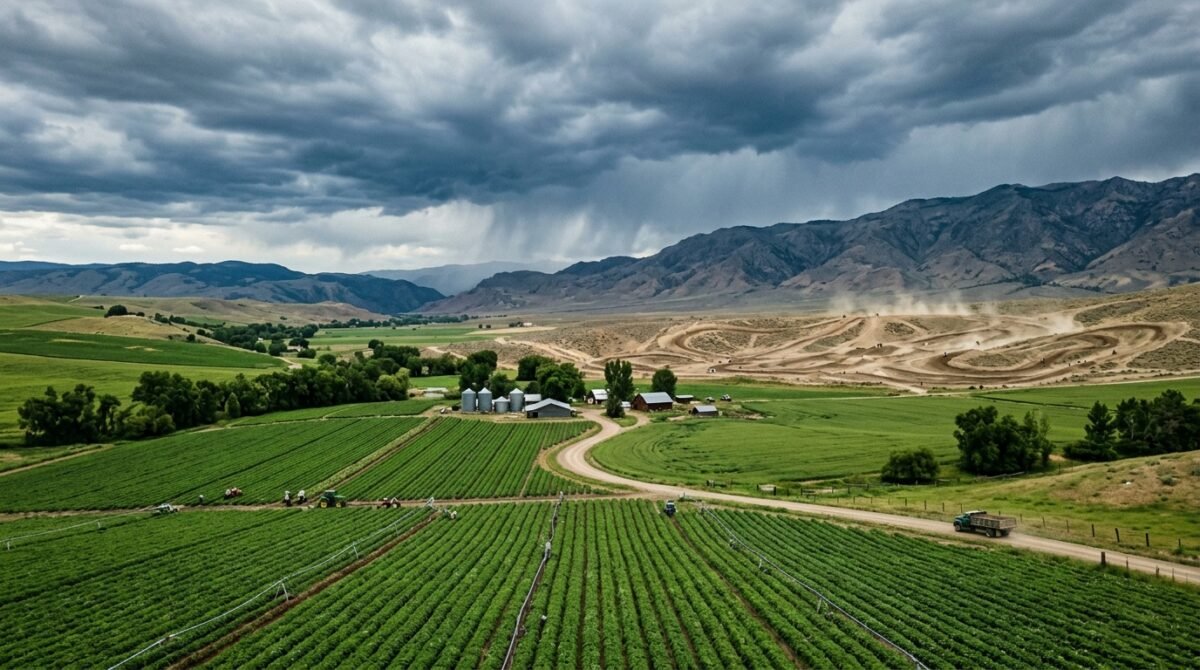
I never imagined that the greatest gift I would ever receive would become the catalyst for the systematic destruction of my family dynamic. My grandfather, a man of calloused hands and unwavering integrity, worked that soil for fifty years. He didn’t just grow corn and soybeans; he cultivated a legacy of patience and quiet, steady growth. When he passed, he left the deed to the eighty-acre farm to me—his only grandchild who showed any interest in the rhythm of the seasons, the smell of damp earth after a rain, and the grueling, thankless work required to keep the land alive.
My parents, however, saw the land through a different lens. To them, it wasn’t a living, breathing testament to a life well-lived; it was an asset with untapped potential for their favorite son, my brother, Kyle. Kyle had spent his late twenties chasing adrenaline-fueled hobbies, moving from one failed business venture to the next, fueled by the limitless financial backing of our parents. The farm, in their eyes, was simply the next stage for his latest obsession: a professional-grade ATV and motocross track.
The dilemma began with a casual Sunday dinner, the kind where the air is thick with the scent of pot roast and unvoiced expectations. It started with a comment about how ‘underutilized’ the back acreage was. I dismissed it at first, thinking it was just idle chatter. I was foolishly optimistic, believing that my parents respected the legal reality of the estate and the sentimental value the land held for me. I was wrong.
Over the coming months, the pressure escalated from subtle hints to direct, aggressive ultimatums. They didn’t just want a corner of the land for a weekend hobby; they wanted the soul of the farm gutted for a heavy-duty dirt track. When I refused, the narrative shifted from ‘family support’ to ‘selfish betrayal.’ The story that follows is an account of how an inheritance turned into a battlefield, and how I was forced to choose between the physical legacy of a man I loved and the approval of the people who raised me.
The Sunday Dinner Where Everything Changed
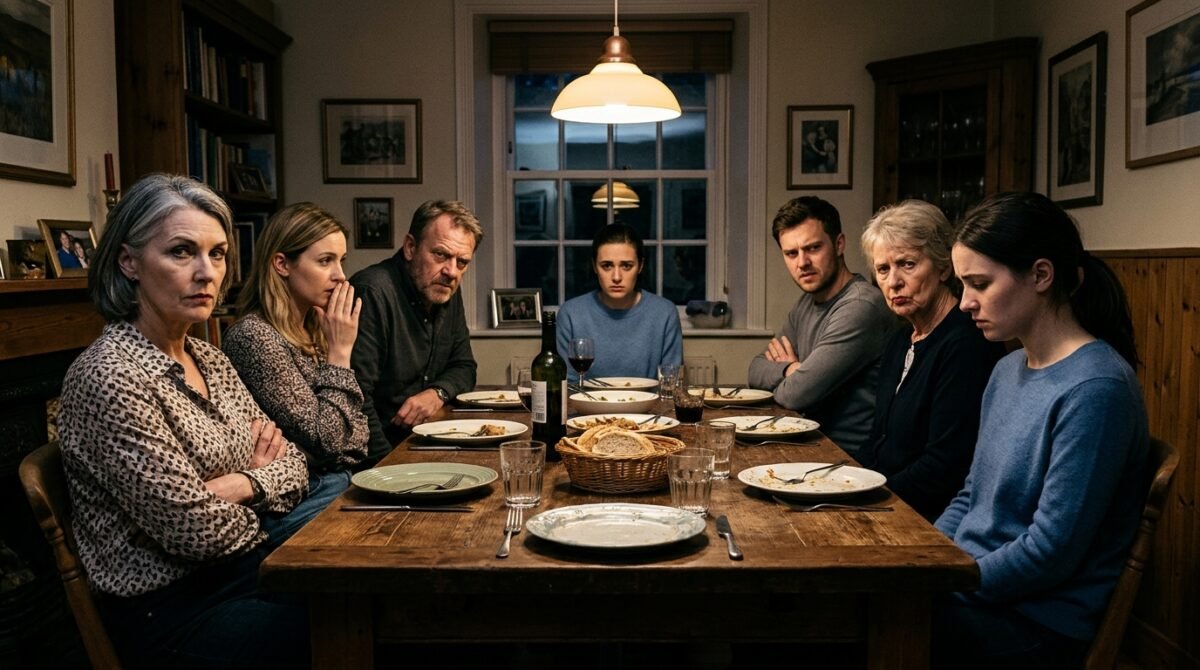
The dinner started like any other, with my father pouring wine and my mother fussing over the placement of the silverware. Kyle was there, scrolling on his phone, looking bored, his latest project—a custom-built ATV—parked prominently in the driveway like a trophy. I had spent the morning clearing brush and inspecting the irrigation lines, my boots still stained with the dark, rich soil of the south pasture. The contrast between my life and theirs had never felt more visceral.
Midway through the meal, my father cleared his throat, a sound that signaled a lecture was imminent. He looked at me, then at the window overlooking the expanse of fields. ‘You know, that back forty is doing nothing but collecting weeds,’ he remarked, his voice deceptively casual. ‘Kyle has been looking for a place to really test out his rig. It seems a waste to have all that space and not put it to some practical use, doesn’t it?’
I felt a cold prickle at the back of my neck. ‘It’s not weeds, Dad. It’s a cover crop I planted last season to enrich the soil. And it’s not for ATVs. It’s for farming. That’s what the land is for.’
Kyle looked up then, a smirk playing on his lips. ‘It’s just dirt, sis. You’re acting like I’m asking you to pave over the Sistine Chapel. It’s a track. It would be fun for the whole family. Think of it as a way to bring everyone out here more often.’
“It is not just dirt, Kyle. It is my livelihood and my grandfather’s legacy. You want a track? Rent space at a track facility. You are not ripping up my fields for your toys.”
The table went silent. My mother sighed, a long, dramatic sound that signaled her disappointment. ‘We are only suggesting it because we care about family cohesion,’ she said, her tone dripping with passive-aggression. ‘You seem to have forgotten that we helped you with the property taxes during your first year. This is a small way you could show your appreciation for Kyle, who has had a hard time finding his passion lately.’
The Unsolicited Appraisal and the Escalation
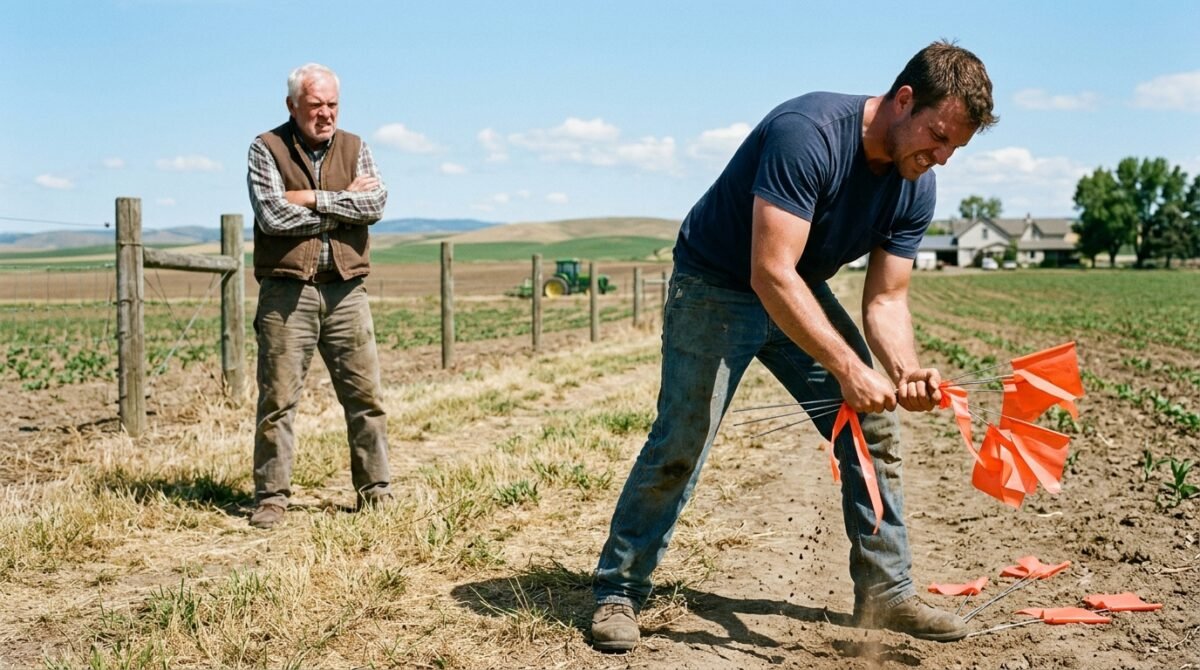
Two weeks after that dinner, I woke up to the sound of heavy machinery idling near the property line. I grabbed my keys and headed out, my heart hammering against my ribs. I found a professional surveyor, flanked by my father, standing near the edge of the south pasture. They weren’t just looking; they were marking lines with orange flags, mapping out a layout that would effectively cut the farm in half, destroying the irrigation path and crushing the young saplings I had planted in the spring.
I stormed up to them, my voice shaking with rage. ‘What do you think you’re doing?’ I shouted. My father didn’t even look guilty. He simply pointed to the surveyor. ‘We’re just getting a feel for the topography. If we’re going to build a track, we need to make sure the drainage is handled properly. We’re doing this right, not just winging it.’
I pulled the flags out of the ground one by one, throwing them at his feet. ‘You have no right to be here. This is private property. If I see you or any heavy equipment on this land again without my express permission, I will call the sheriff. I mean it, Dad. I don’t care who you are.’
My father’s face turned a dangerous shade of purple. He stepped into my space, his eyes cold. ‘I am your father. I paid for the legal fees to settle the estate. I have more of a claim to what happens here than you do, simply by virtue of the money I’ve poured into this family. You are being irrational and selfish, and quite frankly, I’m disappointed in how power has gone to your head.’
“Your money didn’t buy this land, Dad. Grandfather bought this land with his sweat. If you want to talk about money, pay me back for the repairs I did on the barn. Otherwise, get off my property.”
I left them there, feeling more isolated than I ever had in my life. By the time I reached the house, my phone was blowing up with messages from my mother. It was clear that the battle for the farm had officially escalated from a casual request to a full-blown declaration of war.
The Late-Night Group Chat Explosion
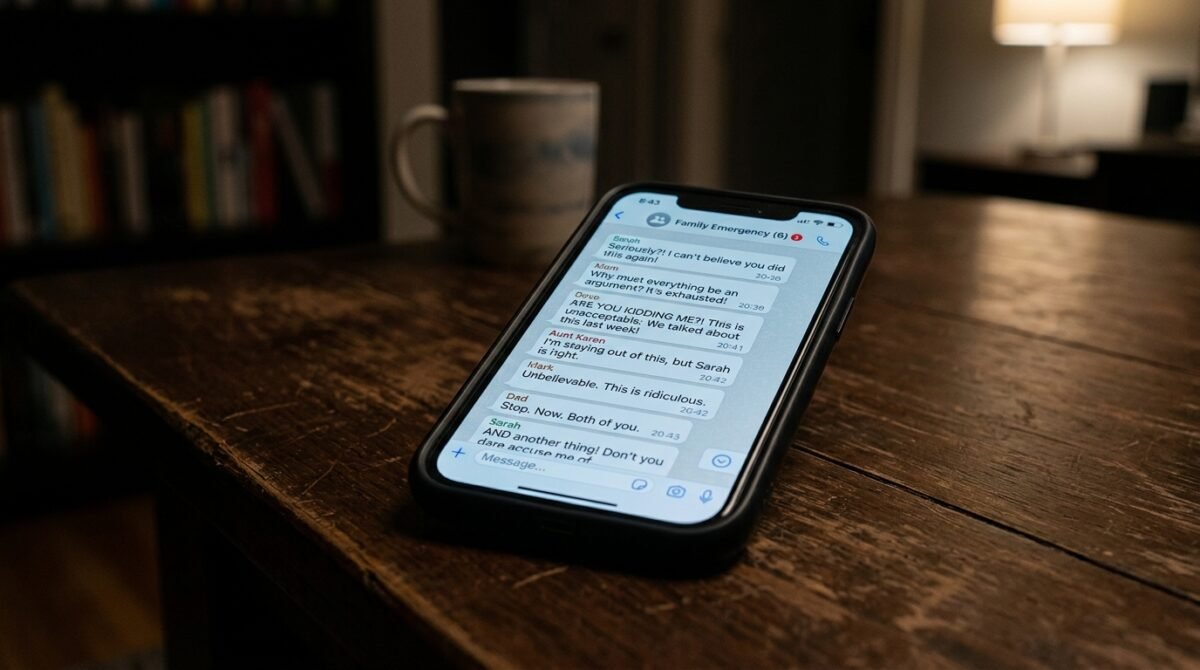
By ten that evening, the family group chat was a minefield of insults and demands. My mother had started a new thread titled ‘Family Unity’ and added every aunt, uncle, and cousin we have. The messages were designed to shame me into submission, painting me as the ungrateful daughter who was holding the family’s happiness hostage for a few measly crops.
“I just can’t believe [OP] is acting this way. We just wanted a simple dirt track for Kyle to keep him motivated, and she’s acting like we’re asking for her kidney. It’s devastating to see this kind of greed.”
— Mom
“She’s always been the favorite of Grandfather, but he never taught her how to share. This is what happens when you raise a child to think they’re better than their own blood.”
— Dad
I didn’t engage for hours, but the notifications kept coming, a relentless barrage of emotional manipulation. My cousins started chiming in, some siding with me, others urging me to ‘just let it go for the sake of peace.’ It was a masterclass in gaslighting. They were rewriting history, pretending that the farm was a family asset rather than a specific bequest left to me in a legal will.
I finally typed a response, my fingers trembling. I laid out exactly what the track would destroy: the soil quality, the local ecosystem, and the legal reality of the inheritance. I made it clear that the land was not a playground and that no amount of shaming would change the fact that I held the deed. I didn’t care who read it. I was done trying to manage their perceptions.
The silence that followed was heavy, but it was replaced by a private message from my brother. He didn’t use the group chat. He sent a single voice note that chilled me to the bone. He wasn’t asking anymore; he was threatening to find a way to take the land by force, claiming he had ‘consulted with some people’ who knew how to challenge a will. The mask of the fun-loving brother had completely slipped away.
The Certified Letter of Disinheritance
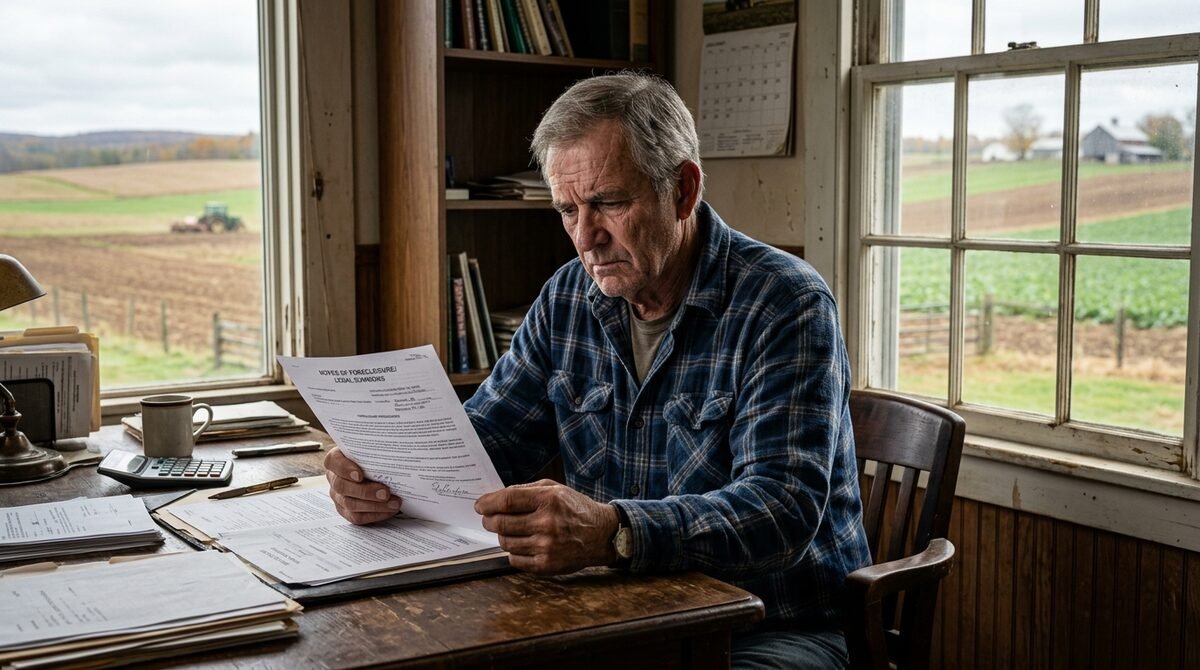
A week later, a thick envelope arrived via certified mail. It wasn’t from a lawyer, but it was written with the cold, precise language of someone trying to sound like one. My parents were claiming that because I had ‘breached the implied contract of family cooperation,’ they were cutting me off from all future financial assistance and, more importantly, they were threatening to sue me to contest the grandfather’s will, alleging he was ‘of unsound mind’ when he signed it over to me.
I read the letter three times, my hands numb. They were willing to smear the memory of the man who had loved them, the man who had built the very life they currently enjoyed, just to get a dirt track for their son. It was the ultimate betrayal. I called a lawyer immediately, someone who specialized in estate law. I needed to know if they could actually do this. The answer was a mix of reassurance and dread: they could try, but it would be expensive and messy.
The financial stakes were terrifying. I had savings, but a legal battle against my parents’ deep pockets could bankrupt me within a year. I looked out at the fields, the golden hour sunlight casting long, beautiful shadows across the rows of corn. Was the land worth the fight? Could I survive the trauma of a court case that would drag my grandfather’s reputation through the mud?
I decided then and there: I wouldn’t budge. I started documenting everything—every text, every email, every visit. I set up a security camera system around the property, a silent sentinel that would watch over the land when I couldn’t. I was preparing for a siege, and for the first time, I felt a strange sense of clarity. I wasn’t just defending land; I was defending the truth.
The Day the Sheriff Was Called
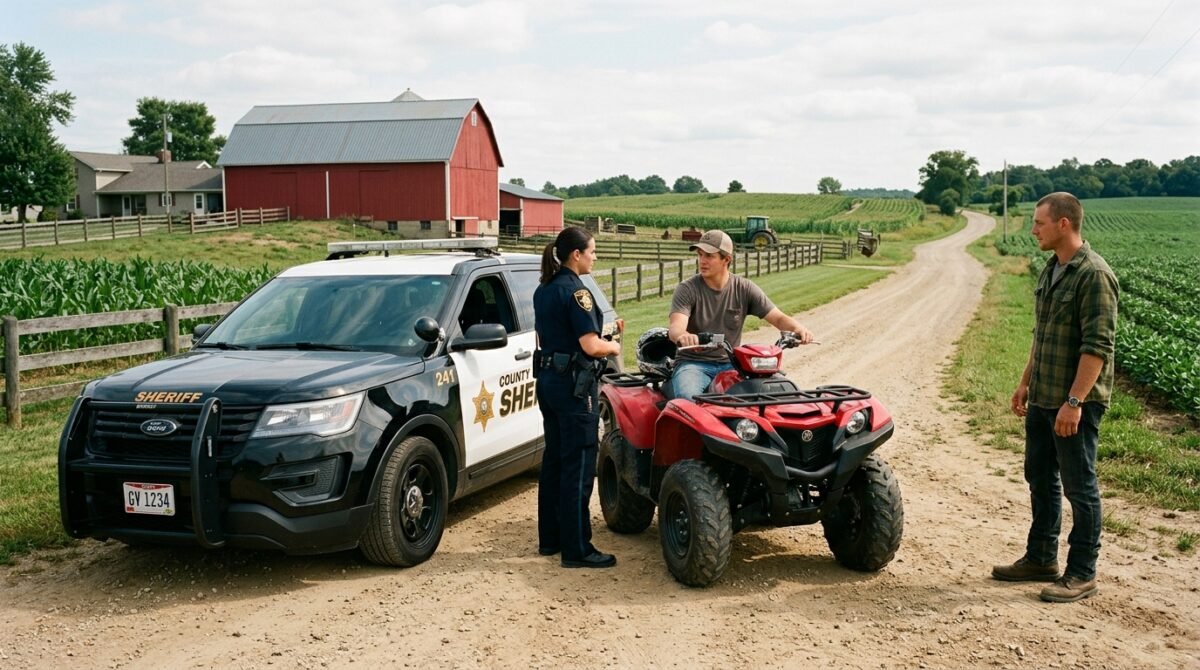
The showdown happened on a Tuesday. I was working on the tractor when I heard the roar of an engine. Kyle had arrived, not with the equipment for a track, but with a trailer carrying the ATV. He was driving it onto the grass, his face set in a defiant scowl. He wasn’t going to wait for permission anymore. He was going to turn it into a track by simply riding over it until the soil was packed down.
I didn’t yell this time. I didn’t run at him. I pulled out my phone and dialed the sheriff’s office. I had the deed in my pocket, and I had the lawyer’s number on speed dial. I watched from the porch as Kyle did donuts in the south field, laughing as he tore up the earth. It was a sickening sight, the destruction of months of work in a matter of minutes.
When the patrol car pulled up the gravel driveway, Kyle’s smile vanished. He stopped the ATV, looking confused as the deputy stepped out, hand resting near his holster. I walked down to meet them, my heart racing but my resolve solid as iron. I explained the situation, provided the deed, and pointed out the damage that had already been done.
“He is trespassing, officer. I have asked him to leave repeatedly. He is destroying private property.”
The deputy looked at Kyle, then at me. ‘Son, you need to load that thing up and leave right now, or you’re going to jail for criminal trespassing and destruction of property. I don’t care who owns the land, the deed says she’s the boss here.’
Kyle looked like he wanted to argue, but he saw the look in the deputy’s eyes. He loaded the ATV back onto the trailer, his face a mask of pure, unadulterated hatred. He didn’t look at me once as he drove away, leaving behind deep, scarred ruts in the earth that would take years to heal.
The Fallout: No Contact and The Silent Phone
After the incident with the sheriff, the communication from my parents changed. They stopped calling me to argue and started calling me to threaten. They told me that if I didn’t drop the charges against Kyle and allow him to ‘use the land as he sees fit,’ they would never speak to me again. They called me a ‘disgrace’ and a ‘thief’ who stole from her own blood.
I realized then that this was the end of the relationship. They were never going to see me as an adult with her own agency; they were always going to see me as a tool to serve their son’s whims. I blocked their numbers. I blocked my brother’s number. I blocked the aunts and uncles who kept sending me links to articles about ‘forgiving family.’ It was the hardest thing I’d ever done, but it was also the most liberating.
For the first time in months, the farm was quiet. I spent my days repairing the ruts Kyle had left. It was physical, brutal work, but it was therapeutic. Every shovel of dirt I moved back into place felt like a reclamation of my life. I wasn’t just fixing the field; I was fixing the boundaries of my own existence.
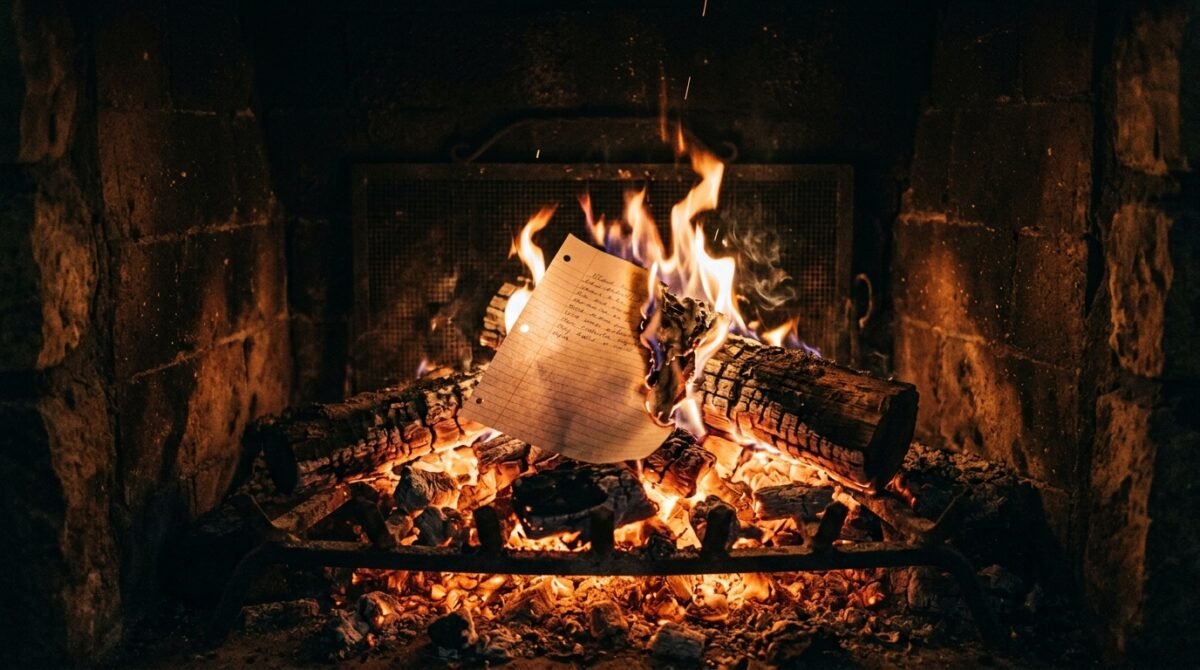
I received one last letter from my mother, a typed page filled with venom. She didn’t ask for reconciliation; she demanded an apology and a promise to ‘transfer the deed’ to Kyle within thirty days. I burned the letter in the fireplace that night. The ashes drifted up the chimney, vanishing into the night sky, much like the illusion of the happy family I had spent my entire life trying to maintain.
Community Reaction: The Reddit Verdict

I posted my story on a popular forum, expecting to be judged for turning in my own brother. Instead, the response was overwhelming. Thousands of people shared their own stories of inheritance disputes and family manipulation. It was a stark reminder that I wasn’t alone in this. The support helped me realize that the guilt I felt was a symptom of their gaslighting, not a reflection of my actual moral character.
“OP, you are NTA. You inherited that land for a reason. Your grandfather clearly saw your value and your brother’s destructive tendencies. Hold that line. If you give them an inch, they will take the whole farm and ruin it within a year. Stay strong.”
— u/FarmLifeGuru (Top Comment, 32.1k upvotes)
“This is classic golden child syndrome. Your parents don’t care about the farm; they care about maintaining the power dynamic where Kyle gets everything and you get the scraps. Cutting them off is the only way to save your sanity and your property.”
— u/LegalEagle88 (15.4k upvotes)
The sheer volume of validation was almost overwhelming. People were sharing legal advice, suggesting ways to protect the land, and reminding me that blood doesn’t grant people the right to abuse you. The thread became a sanctuary for others dealing with similar toxic dynamics, a testament to the fact that family is something you earn, not something you are forced to endure.
I found myself spending hours reading the comments, finding comfort in the shared human experience of setting boundaries with those who refuse to respect them. It didn’t make the pain of losing my family go away, but it made the decision to walk away feel correct. I wasn’t the one who broke the family; they were the ones who demanded I choose between them and my own survival.
The Reclamation: Bringing Life Back to the Soil
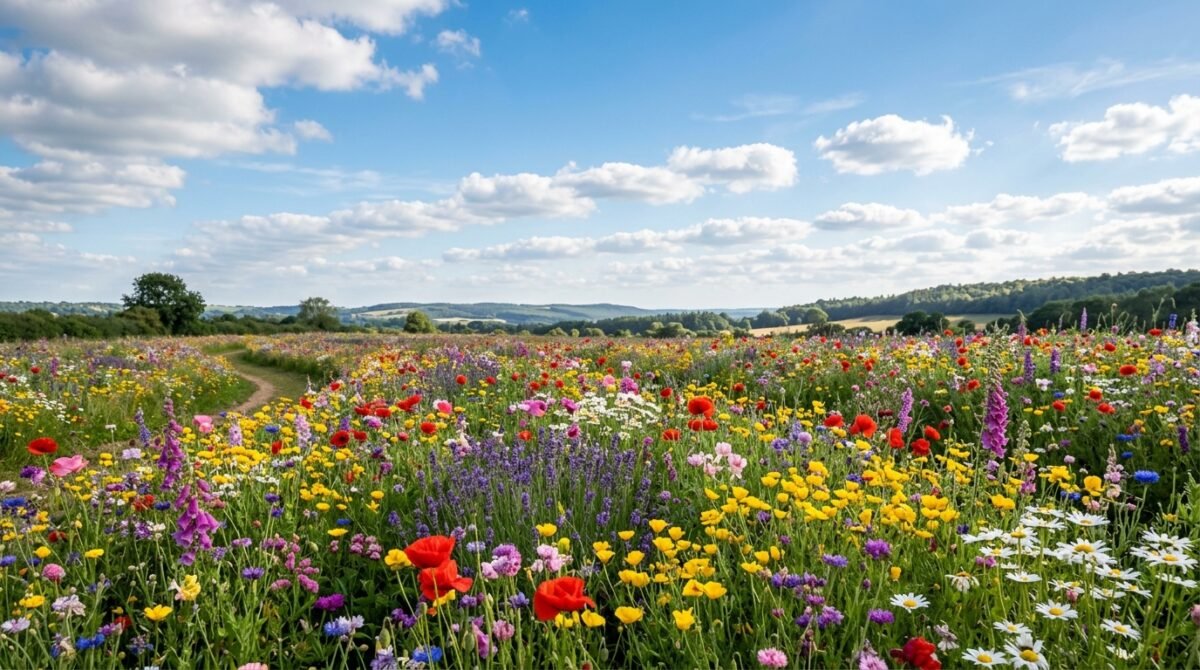
With the legal battle threats fading into silence, I turned my attention fully back to the land. I decided to diversify. I started looking into sustainable farming practices, planting native wildflowers along the perimeter where the track was supposed to be. I wanted to turn the site of their attempted destruction into a haven for pollinators. It was a symbolic gesture, but it meant the world to me.
I hired a consultant to help me improve the soil quality in the south pasture. We spent weeks tilling, adding organic compost, and testing the pH levels. The difference was remarkable. Within a few months, the land was thriving. The wildflowers bloomed in a riot of color, and the crops were stronger than they had been in years. The farm was no longer just a place of work; it was a sanctuary.
I often thought about my grandfather during those long days. I wondered if he had known this would happen. Maybe that was why he left it to me. He knew I was the only one who wouldn’t let it become a playground for those who didn’t appreciate the value of a hard day’s work. I felt a profound sense of peace knowing I was fulfilling his trust.
I started hosting small community workshops on the farm, teaching others about sustainable agriculture. It was the antithesis of what my family had wanted. They wanted to tear up the land for a selfish, loud, temporary thrill; I was building a community around a shared, quiet, long-term purpose. The irony wasn’t lost on me.
The Unintended Consequences for My Brother

I heard through the grapevine—a cousin who still occasionally reached out—that Kyle’s life had continued its downward spiral. Without the easy, subsidized outlet of the farm, he had tried to build a track on a piece of rented land, but he ran into zoning issues almost immediately. He ended up getting into trouble for illegal dumping on the site, leading to a heavy fine and a reputation that made it hard for him to rent anywhere else.
It was a sobering realization. My parents were still funding him, but their money couldn’t solve the fundamental problem: Kyle had never learned the value of working for something. He expected the world to bend to his desires, and when it didn’t, he lashed out. My decision to stand firm hadn’t just saved my farm; it had forced him to face the reality of his own lack of direction.
I felt a flicker of pity for him, but I suppressed it. He was a grown man. He had made his choices, and he had been more than happy to let his parents try to strip me of my inheritance to satisfy his boredom. There was no room for him in my life, and there was certainly no room for his entitlement on my land.
The cousin told me that my parents were still furious, still talking about how I was ‘the one who destroyed the family.’ I let it go. If their version of a happy family required me to sacrifice my livelihood and my integrity, then I wanted no part of it. The truth was, the family was broken long before I inherited the farm; I was just the one who finally refused to pretend it was whole.
Reflections on the Meaning of Legacy
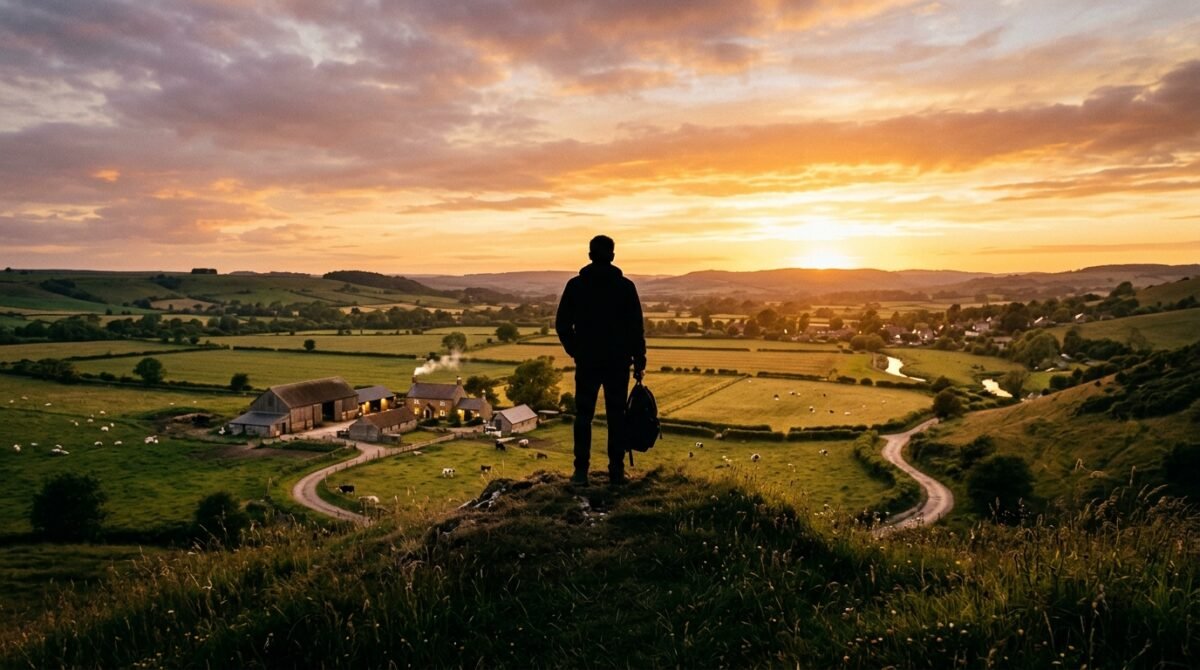
As I stand in the fields at dusk, watching the sun set behind the trees that my grandfather planted, I realize that legacy isn’t just about what you own. It’s about what you stand for. My grandfather left me more than eighty acres of dirt; he left me the strength to defend what matters. He left me a lesson in values, in integrity, and in the importance of saying ‘no’ when the pressure to fold becomes unbearable.
I have learned that boundaries are not acts of aggression; they are acts of self-preservation. When you say ‘no’ to someone who is trying to take advantage of you, you aren’t destroying the relationship; you are exposing it for what it truly is. I have lost my parents, and I have lost my brother, but I have found a version of myself that I can respect. That, to me, is the greatest inheritance of all.
The farm continues to grow. Each season brings new challenges and new rewards. I am learning the business side of things, looking into organic certification, and planning for the long-term sustainability of the property. I am no longer the person who worries about the approval of others; I am the steward of a legacy that belongs to the future, not the past.
I hope that, wherever my grandfather is, he sees what I’ve done. I hope he knows that his land is safe, that it’s being cared for with the same love he poured into it, and that I didn’t let the noise of the world distract me from the work that truly matters. The dirt is deep, the sky is wide, and for the first time in my life, I am exactly where I need to be.
Conclusion
The story of my farm is one of struggle, but it is also one of survival. Walking away from my family was the hardest decision of my life, but it was the only one that allowed me to keep my dignity and the land I love. Through the lens of the internet and the support of strangers, I found that my experience resonated with so many others who have had to choose between their own truth and the expectations of those who raised them.
Now that the dust has settled, I am focused on the future. The land is thriving, my boundaries are firm, and the peace I’ve found is worth more than any family connection that requires me to be a doormat. We often hold onto toxic family ties because we fear the loneliness of cutting them, but I’ve learned that being alone with your integrity is far better than being surrounded by those who make you feel like you aren’t enough.
What about you? Have you ever had to choose between a family demand and your own moral compass? Have you ever had to draw a hard line that resulted in a total collapse of a relationship you thought would last forever? Share your stories below—let’s discuss the weight of legacies and the courage it takes to protect them.
What's your verdict on this dilemma?
Vote below to contribute to the official community consensus.

Have a Dilemma Keeping You Up at Night?
Share your real-life feud, wedding chaos, or relationship crossroads anonymously with our editorial team.
What do you think ?
0 Comments🛡️ Comments are moderated to protect community integrity. Your comment will appear once approved by the editorial team.