
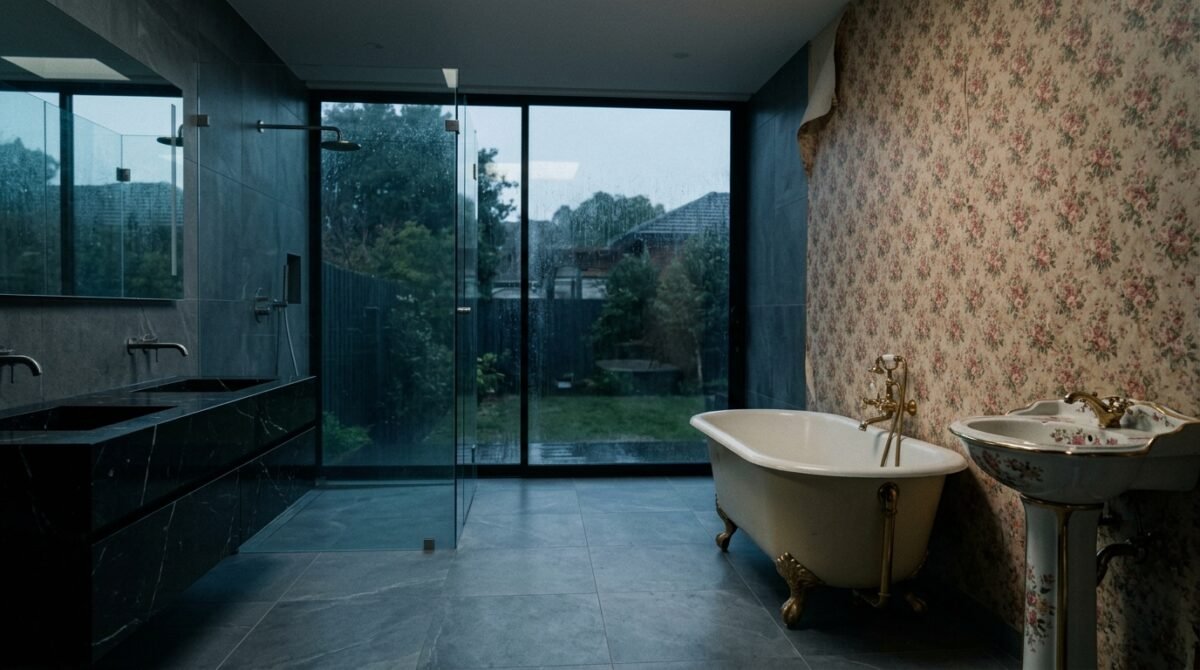
It started, as most disasters do, with a seemingly harmless suggestion during Sunday dinner. My mother-in-law, Barbara, had always harbored opinions about our home décor. She found our minimalist aesthetic ‘cold’ and ‘uninviting.’ I had always brushed it off, treating her comments as the harmless musings of a woman from a different generation. But beneath the surface, a war was brewing—a war over space, agency, and the fundamental respect required to sustain a partnership.
My husband, Mark, was the bridge between us, or so I thought. He was the one who promised me that our home was our sanctuary, a place where no one—not even his overbearing mother—could dictate the terms of our comfort. We had spent years renovating our home, pouring our savings into a space that reflected our shared vision. It was our first real investment in our future, and it was supposed to be untouchable.
The breaking point didn’t arrive with a bang, but with the sound of a key turning in the lock after a grueling three-day business trip. I returned home expecting the quiet comfort of my own space, only to find the door to our master bathroom locked from the inside. When I finally forced it open, the scent of fresh paint and heavy floral perfume hit me like a physical blow. The minimalist sanctuary I had curated was gone, replaced by an ornate, baroque nightmare that screamed of Barbara’s obsession with ‘traditional’ aesthetics.
This wasn’t just a redecoration; it was a psychological annexation. My toiletries were shoved into a cardboard box in the hallway, and the elegant stone vanity I had chosen was replaced by a clunky, antique monstrosity that I had explicitly told Mark I despised. Standing in the middle of that room, surrounded by the remnants of my autonomy, I realized that my marriage had been hollowed out long before the bathroom walls were torn down.
In the following pages, I will detail the slow, calculated erosion of my boundaries, the gaslighting that turned my preferences into ‘inconveniences,’ and the final confrontation that led me to serve my husband with divorce papers. This is not just a story about a bathroom; it is a story about the cost of choosing a spouse who refuses to choose you.
The Sunday Dinner Sabotage

The conflict began three months ago, during one of those interminable Sunday dinners at Barbara’s house. She had been fixated on our bathroom for weeks, complaining that it lacked ‘warmth’ and ‘feminine grace.’ I had laughed it off, assuming she was just making conversation, until she pulled out a catalog of Victorian-style bathroom fixtures and laid them on the dinner table like a battle plan.
Mark had sat there, silent as a grave, while his mother explained how she had already spoken to a contractor who was ‘very affordable.’ I felt the temperature in the room drop. I looked at Mark, waiting for him to shut it down, to tell her that our home was not a project for her to undertake. Instead, he started asking about the cost of the gold-plated faucets.
“Mom, I think it’s a generous offer. We’ve been talking about needing more character in that room anyway. Maybe we should consider it as a surprise for her birthday?”
— Mark, during the Sunday dinner betrayal
I felt a cold shiver run down my spine. This wasn’t a surprise; it was a plot. I looked at the table, my appetite completely gone. I told them clearly, in front of both of them, that I absolutely did not want any changes to our bathroom. I liked it the way it was. I liked the clean lines. I liked the modern aesthetic. It was our home, not a showroom for his mother’s nostalgia.
The tension was palpable. Barbara went quiet, her smile tightening until it looked like a thin, white scar. She didn’t argue. She just looked at Mark, and I saw a silent communication pass between them that made me feel like an outsider in my own family. I left the table early, citing a headache, but the truth was that I was physically ill from the lack of support.
That night, I confronted Mark in our bedroom. I asked him why he hadn’t backed me up. He brushed it off, telling me I was being ‘over-sensitive’ and that his mother just wanted to be helpful. He insisted that she was paying for most of it, which made it a ‘win-win.’ I realized then that my husband didn’t see my boundaries as lines in the sand; he saw them as suggestions to be overridden for the sake of peace and convenience.
The Silent Invasion of Space
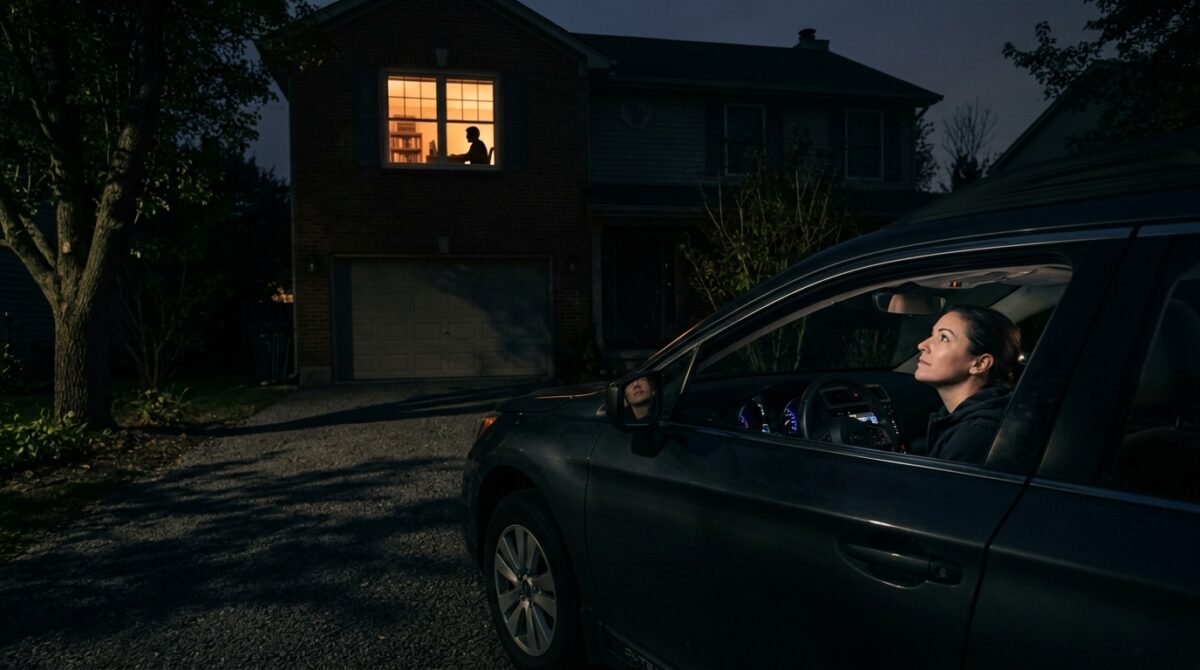
Over the next few weeks, I noticed subtle shifts in the house. Items would disappear—a soap dispenser here, a towel rack there. When I asked Mark about them, he claimed he had ‘tidied up.’ I felt like I was losing my mind, living in a house that was slowly being curated by someone who wasn’t there. I started checking the front door lock every night, half-expecting to find Barbara inside.
Then came the text messages. My phone would buzz with unsolicited advice from Barbara, sending links to wallpaper samples and vanity lighting. I stopped replying, but that didn’t stop the flow. She started acting as if the renovation was a foregone conclusion. She’d mention in passing, ‘I’ve already picked out the tiles, they’re holding them at the warehouse for me.’
“I don’t care if you like the tiles or not, Sarah. It’s an investment in the home’s value. You’re being incredibly childish about a simple design update.”
— A text message from Mark to Sarah during her workday
The audacity was staggering. Mark had moved from being a silent enabler to an active participant in undermining my authority in our own home. I started working longer hours at the office just to avoid being home, to avoid the feeling that my sanctuary was being violated. I felt like a guest in the house I helped pay for, a secondary character in a life I was supposed to be co-authoring.
I eventually confronted Mark about the text messages. He claimed he didn’t see the problem. He told me that his mother’s taste was ‘classic’ and that my obsession with ‘modern’ was just a phase. I realized then that he didn’t just want the bathroom changed; he wanted me to conform to his mother’s version of what a wife—and a home—should be.
The psychological toll was immense. I found myself crying in my car before walking into the house, bracing myself for the next ‘improvement.’ I was living in a state of high-alert, waiting for the other shoe to drop. I started secretly looking into local real estate, wondering if I could afford to move out if things didn’t change. I hadn’t realized how much of my identity was tied to the safety of that home until it started being stripped away.
The Business Trip Treachery

When the opportunity for a three-day business conference in Chicago arose, I initially hesitated to go. I didn’t want to leave the house unattended, not with the way things were going. But Mark insisted. He even suggested it would be a ‘nice break’ for me, a chance to ‘reset’ and come back with a ‘fresh perspective.’ In hindsight, it was clearly a calculated move to clear the playing field for the renovation.
I left on a Thursday morning, kissing Mark goodbye. He seemed almost too eager for me to leave, helping me pack my suitcase and reminding me not to forget my charger. I felt a pang of guilt for being so suspicious, wondering if I had blown everything out of proportion. Perhaps the bathroom was just a bathroom, and I was reading too much into a mother-in-law’s quirks.
The first night in Chicago, I received a photo from Barbara. It was a picture of our master bathroom, empty, the fixtures removed. I stared at my phone in disbelief. She hadn’t even waited for me to be out of town for more than 12 hours. The caption was a smiley face and the words, ‘The transformation begins!’ I called Mark immediately, but he didn’t answer.
“I’m in Chicago, Mark. Why is there a photo of my bathroom stripped bare in my inbox? Answer the phone!”
— A frantic voicemail left by Sarah
He didn’t call back for hours. When he finally did, he was dismissive, telling me that the contractor had an opening and they had to jump on it, otherwise they’d lose the slot. He promised that it would be finished by the time I got back, and that I would ‘love the final result.’ He sounded like a man who had already decided the outcome regardless of my input.
I spent the next two days in a blur of meetings, my heart racing every time my phone chimed. I was getting updates from the contractor—or rather, from Barbara through the contractor—about tile choices and grout colors. I felt completely powerless. My home was being dismantled, and I was thousands of miles away, unable to stop the wrecking crew that my husband had hired on his mother’s behalf.
The Unveiling of the Nightmare

Returning home felt like walking into a crime scene. The hallway was covered in dust, and the air smelled of industrial cleaner and cheap floral air freshener. I didn’t even drop my bags. I walked straight to the master bathroom door. It was locked. I had to use the master key from the kitchen drawer, my hands shaking so hard I dropped it twice.
When I finally opened the door, I couldn’t breathe. It was gone. My sanctuary was gone. In its place was a gilded, over-the-top, antique-styled mess that looked like it belonged in a 19th-century parlor, not a modern home. There were gold-leafed faucets, a vanity with ornate, claw-foot legs, and wallpaper that looked like it had been salvaged from a haunted house.
Mark was standing there, looking like he expected a round of applause. He had the audacity to smile, a wide, proud grin that made my skin crawl. He gestured to the room as if he had just gifted me a diamond necklace. ‘What do you think? It’s exactly like the one in her catalog, right?’ He didn’t even ask if I liked it. He assumed my only requirement was that it matched his mother’s vision.
“This is not my home, Mark. This is a mausoleum for your mother’s taste. Why would you do this to me when I explicitly said no?”
— Sarah, upon seeing the renovated bathroom
I walked into the center of the room, feeling the weight of the space. Every choice—from the hideous wallpaper to the impractical vanity—was a testament to how little my opinions mattered to him. I looked at the mirror and saw the woman I had become: someone who was being slowly erased from her own life. It wasn’t just about the bathroom anymore; it was about the years of being pushed aside.
Mark’s smile faltered, replaced by a look of confusion and then anger. He started defending the cost, the ‘quality’ of the materials, and how much his mother had ‘helped.’ He was still thinking in terms of finances and favor, completely missing the point of the emotional betrayal. It was in that moment that I knew. The marriage wasn’t just in trouble; it was over.
The Confrontation in the Hallway

The argument that followed was the loudest, most honest conversation we had ever had. For the first time, I didn’t hold back. I told him everything—the resentment over the Sunday dinners, the feeling of being an outsider in my own home, and the way he constantly prioritized his mother’s approval over my well-being. He tried to interrupt, to gaslight me, to tell me I was being ‘hysterical,’ but I didn’t let him.
I told him that this bathroom wasn’t a renovation; it was an eviction. I was being evicted from my own space, and he was the one who had handed over the keys to his mother. He stood there, jaw set, looking at me with a mix of defiance and disbelief. He couldn’t understand why a ‘nice’ renovation would be the end of the line for us. He truly believed that as long as it was ‘high quality,’ it should be acceptable.
“You think this is just about tiles? This is about you choosing her over me for the thousandth time. I am done being a guest in my own marriage.”
— Sarah to Mark during the final argument
He tried to call his mother while I was standing right there, intending to put her on speakerphone to ‘mediate’ the situation. That was the final straw. I realized then that even in our most intimate moments of crisis, he was incapable of acting independently. He needed her to tell him that he was right, to validate his choices, and to belittle mine. I snatched the phone out of his hand and set it on the counter.
I told him that if he wanted to live with his mother’s taste, he could live with his mother. I didn’t shout. I was cold, precise, and utterly final. I walked into the bedroom, packed a suitcase, and went to the guest room. I didn’t sleep that night. I listened to him pace the hallway, calling his mother, waiting for her to tell him how to fix it. She never did.
The next morning, I woke up with a clarity I hadn’t felt in years. I knew what I had to do. I didn’t need to argue anymore. I didn’t need to convince him of my perspective. The decision had been made for me, and all I had to do was execute it. I left the house, drove to my lawyer’s office, and started the process of reclaiming my life.
The Certified Letter

Serving Mark with divorce papers was the hardest and easiest thing I’ve ever done. I didn’t want a long, drawn-out confrontation. I wanted the process to be as clean and professional as possible. I had a courier deliver the envelope to his office on a Tuesday morning. I knew he would be surprised—he still thought this was just a fight about ‘decorating’—but I didn’t care about his reaction anymore.
He called me within ten minutes. His voice was shaking, not with sadness, but with pure, unadulterated shock. He demanded to know if this was some kind of ‘twisted joke.’ He kept asking me when I was coming home to ‘talk about this like adults.’ I told him that I had been trying to talk like an adult for years, and he had never listened.
“I am not coming back, Mark. The papers are the end of the discussion. Please direct all future contact to my attorney.”
— Sarah, on the final phone call
The aftermath was a whirlwind of frantic calls from his family. Barbara, in particular, was relentless. She left voicemails asking how I could be so ‘ungrateful’ and ‘cruel’ after all the effort she had put into our ‘shared future.’ I blocked her number, then blocked his, and left all communication to my legal team. It was the first time in years I felt truly in control of my own narrative.
My friends were shocked at first, thinking it was absurd to divorce over a bathroom. But as I explained the pattern of behavior—the lack of boundaries, the constant interference, the way Mark would always defer to his mother—they began to understand. It wasn’t about the bathroom. It was about the lack of a foundation. You can’t build a life on a house of cards, and that’s exactly what my marriage had become.
I spent the next few weeks at my sister’s place, reclaiming my sense of self. I started therapy, focusing on how I had allowed myself to be pushed into a corner for so long. It was a painful, eye-opening process, but it was necessary. I had to learn that I was worthy of a partner who respected me, and that no amount of ‘family’ could justify the loss of my own dignity.
The Reddit Trial

I posted my story on a throwaway account, just to see if I was crazy. I needed validation, I suppose, or maybe just a reality check. I kept the details vague, but the core of the story was the same. The response was overwhelming, a mix of support and harsh, necessary truths. It turns out, I wasn’t the only one who had dealt with a ‘bathroom annexation’ or an overbearing mother-in-law.
“This wasn’t about the bathroom. The bathroom was the symptom, not the disease. You did the right thing. Never stay with a man who lets his mother treat your home like her playground.”
— u/BrokenBoundaries (Top Comment, 32.5k upvotes)
The community support was a lifeline. People shared their own stories of ‘decorating’ betrayals, of husbands who wouldn’t set boundaries, and of the long-term damage that comes from being ignored in your own home. It gave me the strength to stay the course, even when I had moments of doubt. Knowing that I wasn’t alone made the path forward feel less like a lonely exile and more like a necessary transition.
There were, of course, the dissenters. Some called me shallow, saying I should have just ‘communicated better’ or ‘compromised.’ But those comments were drowned out by the vast majority who understood the deeper issue. They saw the pattern I had been living in, the slow erosion of my self-respect. They helped me realize that ‘compromise’ doesn’t mean giving up your autonomy to someone who doesn’t respect you.
I stopped reading the comments after a few days. I had found what I needed. I had confirmation that my reaction was reasonable, and that I wasn’t ‘hysterical.’ I was a woman who had finally decided that the cost of staying was higher than the cost of leaving. I felt a immense sense of relief, as if a great weight had been lifted from my shoulders.
Cleaning Up the Mess

The divorce proceedings were grueling. There were arguments over the house, the assets, and the renovations that had been done. Mark tried to argue that the ‘improvements’ increased the value of the house, and therefore, I should be grateful. My lawyer, a brilliant woman who didn’t suffer fools, shut that down immediately. We weren’t there to talk about the ‘value’ of the bathroom; we were there to divide our lives.
In the end, we agreed that he would take the house, provided he bought me out at a fair market value. I didn’t want the house anymore. I didn’t want to live in a place that had been tainted by his mother’s influence. I wanted a clean slate. I wanted to move somewhere where every piece of furniture, every color on the wall, was a reflection of me and my own choices.
“I don’t want the house. You keep the bathroom, Mark. You and your mother deserve each other’s company in that space.”
— Sarah during the final mediation
Leaving the house for the last time was strange. I didn’t feel sadness, just a profound sense of closure. I walked through the rooms, remembering the times I had felt happy there, and then letting those memories go. I realized that my home was not a building; it was a state of mind, and I was finally in a place where I could build that for myself.
I moved into a small, bright apartment in the city. It’s not as big as the house, but it’s mine. Every wall is painted the color I chose, every piece of furniture is something I love, and there is not a single trace of Barbara’s taste anywhere. It’s quiet, it’s peaceful, and it’s entirely mine. I finally have the sanctuary I had been looking for all along.
I still think about Mark occasionally. I wonder if he realizes what he lost, or if he’s still waiting for his mother to tell him what to think. But it doesn’t matter. His journey is his own, and mine is mine. I’ve learned that the most important boundary I ever had to set was the one between my own worth and the expectations of others.
The Aftermath and Reflection

Looking back, I realize that the bathroom was never the real issue. It was just the manifestation of a deeper, more systemic problem: a lack of respect for my personhood. If it hadn’t been the bathroom, it would have been the kitchen, or the living room, or how we raised our children. The pattern was set, and I was the one who had been enabling it by staying silent.
I’ve learned that you cannot change someone who doesn’t want to be changed. Mark wasn’t going to suddenly grow a spine or start valuing my opinion. He was comfortable with the way things were, and he had no incentive to do otherwise. It was my responsibility to decide what I was willing to live with, and I finally decided that I wasn’t willing to live with being invisible.
“Healing is not about forgetting what happened. It’s about remembering it, acknowledging the pain, and choosing not to let it define your future.”
— Sarah’s therapist, during their last session
I’m still in therapy, working on setting boundaries in other areas of my life. It’s not easy. Old habits die hard, and the desire to please others is deeply ingrained. But I’m getting better. I’m learning to say no, to prioritize my own needs, and to trust my own judgment. I’m learning that my voice matters, even when it’s inconvenient for others.
I have no regrets. The pain of the divorce was temporary, but the freedom I’ve gained is permanent. I am a different person than I was before—stronger, more self-aware, and much more protective of my own happiness. I’ve learned that a home is more than just a place to live; it’s a reflection of who you are, and you should never let anyone—not even your spouse—tarnish that reflection.
If there’s one thing I’ve taken away from this, it’s that boundaries are not just for others; they’re for yourself. They are the scaffolding that holds your life together. And if someone refuses to respect that scaffolding, then they don’t deserve to be a part of your life. It’s a hard lesson, but it’s one that has saved me.
A Final Word to the Reader

To anyone out there who is currently feeling unheard in their own home, who is watching their boundaries being slowly eroded, listen to your gut. Don’t let the ‘small’ things go if they feel wrong to you. Your intuition is your most valuable asset, and it’s usually telling you exactly what you need to know long before your brain is willing to accept it.
You are worthy of a partner who sees you as a partner, not as a secondary character in their own life. You are worthy of a home that is a sanctuary, not a battleground. And most importantly, you are worthy of being respected in your own choices. Never compromise your sense of self for the sake of ‘keeping the peace.’ The peace you buy at the cost of your dignity is not peace; it’s just silence.
“If you have to sacrifice your identity to stay in a relationship, the relationship is already empty.”
— A piece of advice Sarah holds onto
I hope my story serves as a reminder that it is never too late to take back your life. It might be hard, it might be messy, and it might be painful, but the alternative is far worse. Don’t wait for the ‘bathroom’ moment to realize you’re unhappy. Listen to the small signs, set your boundaries early, and be prepared to walk away if they aren’t respected.
Life is too short to be anything but the architect of your own happiness. I’ve started over, and it’s the best thing I’ve ever done. I am finally, truly, at home—in my apartment, and more importantly, in myself. And that, more than anything else, is what I hope for all of you.
Conclusion
This story isn’t just about the audacity of a mother-in-law or the cowardice of a husband. It is a cautionary tale about the slow, silent erosion of self-worth that happens when we allow our boundaries to be repeatedly crossed for the sake of ‘keeping the peace.’ The bathroom was the catalyst, but the choice to leave was the true transformation.
I hope that by sharing my journey, I can empower others to recognize the patterns of disrespect in their own lives before they reach the point of no return. We all deserve a sanctuary, both in our homes and in our relationships. If you find yourself in a position where your voice is ignored and your boundaries are treated as obstacles, remember that you have the power to change the narrative.
How about you? Have you ever had to walk away from a situation where you realized your boundaries were no longer being respected, or perhaps you’ve been the one who didn’t listen to a partner’s request for space? Let’s talk about it in the comments below. Does the ‘in-law’ dynamic often ruin marriages, or is the real culprit always the spouse who refuses to step up?
What's your verdict on this dilemma?
Vote below to contribute to the official community consensus.

Have a Dilemma Keeping You Up at Night?
Share your real-life feud, wedding chaos, or relationship crossroads anonymously with our editorial team.
What do you think ?
0 Comments🛡️ Comments are moderated to protect community integrity. Your comment will appear once approved by the editorial team.