

Friendship is often described as a sacred bond, one that survives the test of time, geography, and changing life circumstances. But what happens when that bond is put to the test by the mundane, unglamorous reality of physical clutter and broken promises? My friendship with Elena spanned over a decade, through college breakups, career pivots, and the shared lease that eventually became the site of our undoing.
When Elena decided to move across the country on a whim to ‘find herself,’ the transition was anything but smooth. She left in a hurricane of haste, promising that her belongings—a sprawling collection of designer labels she had spent years curating—would be retrieved ‘within a few weeks.’ I was the supportive best friend, the one who said, ‘Take your time, don’t worry about the space.’ I didn’t realize then that those words would become the anchor dragging me into four months of resentment.
As the weeks bled into months, my master closet, which I had intended to reorganize into a peaceful sanctuary, remained a storage locker for her Prada bags and silk gowns. Every time I opened the door, the scent of her expensive perfume was replaced by the stale reality of being taken for granted. The moral dilemma wasn’t just about the square footage; it was about the silent expectation that my home was simply an extension of her own.
The breaking point wasn’t a sudden explosion, but a slow, agonizing erosion of patience. After she ignored my polite check-ins and then my increasingly frustrated requests for a moving date, I realized that my kindness was being interpreted as free service. I decided to turn the tables, not just to reclaim my space, but to force her to confront the reality that her abandonment had a cost.
This is the story of how I transitioned from being the ‘accommodating best friend’ to the ‘cold, calculating creditor,’ and why the internet—and my former circle—can’t seem to decide if I’m a hero for setting boundaries or a villain for weaponizing a bill.
The Promise of a Two-Week Departure
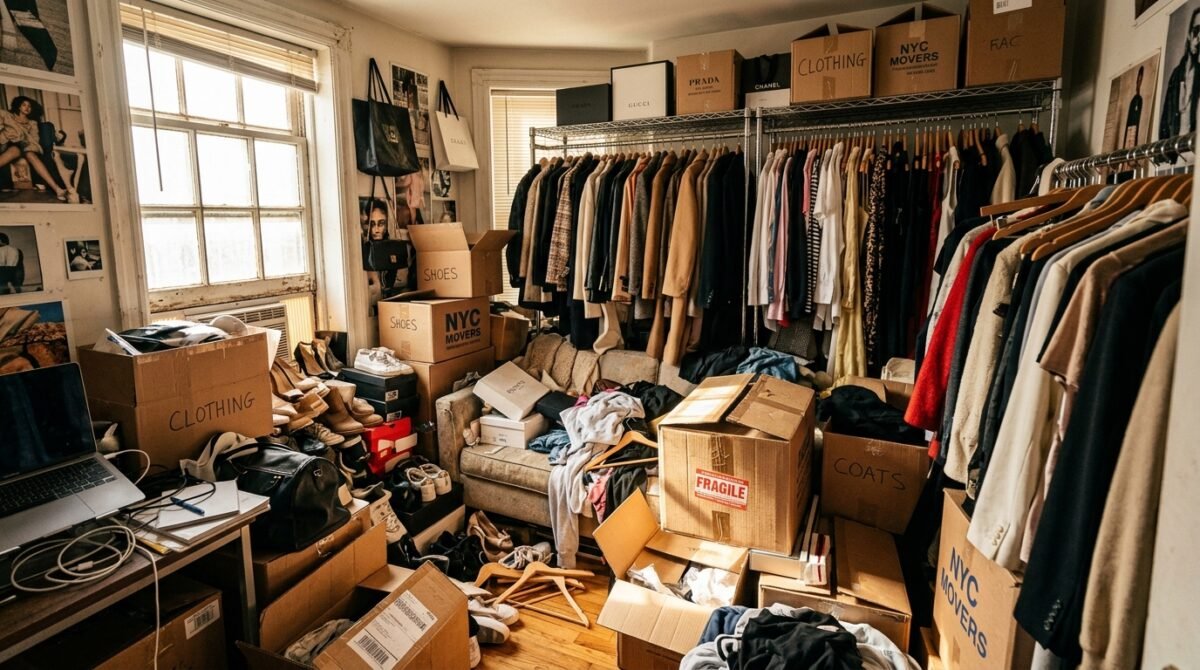
When Elena broke the news that she was moving to Los Angeles, the vibe in our shared apartment shifted instantly from ‘roommates’ to ’emergency evacuation.’ She was convinced that this was her moment to break into the fashion industry, and I, being the loyal friend, helped her pack the first few boxes. The master bedroom, which I had been promised for months, was finally going to be mine.
She looked at me, eyes wide with genuine excitement, and made a vow that I would hold onto for much longer than I should have. ‘This is just a temporary layover for these clothes,’ she said, gesturing to the racks that stretched from one wall to the other. ‘I promise, my cousin is driving a U-Haul out here in exactly two weeks. Everything will be gone by the time you move your furniture in.’
I believed her. Why wouldn’t I? We had been through everything together. I even helped her categorize the items: high-value winter coats, vintage evening wear, and the ridiculous amount of designer footwear that took up half the floor space. I was happy for her, even if it meant living out of a suitcase in the guest room for a fortnight.
But the two-week mark came and went. Then came the month mark. Then the two-month mark. The U-Haul never showed up. When I brought it up, the excuses were as high-end as the items she had left behind—scheduling conflicts, expensive movers, and the classic ‘I’m just so overwhelmed with settling in, can you please hold them a little longer?’
“I know it’s a lot, but you’re a lifesaver. My apartment here is basically a studio, and I don’t have the closet space. You’re literally the only person I trust with my Balenciaga collection.”
— Elena, via Text Message
At that point, I felt like a hostage to her wardrobe. I couldn’t move my things in, I couldn’t deep clean the space, and I felt a growing, sharp irritation every time I walked past that room. I was no longer a friend; I was a glorified security guard for her investment pieces.
The Silent Creep of Resentment

There is a specific kind of anger that builds when you are being taken advantage of by someone you love. It’s not the explosive, shouting kind of anger; it’s the quiet, simmering kind that manifests in the way you slam your own cabinets or avoid looking at the source of your stress. My master closet, which should have been my retreat, became a source of daily anxiety.
I started counting the items. I realized she hadn’t just left behind clothes; she had turned my home into a long-term storage facility. I found myself tallying the value of the items—easily thousands of dollars worth of merchandise. Meanwhile, I was paying the full rent on a room I couldn’t fully utilize. It felt like I was subsidizing her move to California.
I tried to be subtle at first. I would send messages like, ‘Hey, just checking in on the moving schedule, let me know when you need me to be home to let the movers in.’ The replies were consistently vague. It became clear that she didn’t have a plan, and she didn’t care that I did.
The resentment truly crystallized when I had a date over and had to apologize for the ‘mess’ in my master bedroom. Explaining that it was my ‘former best friend’s stuff’ made me sound pathetic. It was the moment I realized that keeping her secrets was only hurting me.
“Look, I’ve asked three times now. I’m starting to feel like I’m being used as a free storage unit. I need these items moved by the 15th, or I’m going to have to find another solution. I really value our friendship, but this is causing me a lot of stress.”
— My text to Elena
She didn’t even respond for two days. When she finally did, it was a breezy, dismissive voice note that made my blood boil. She treated my boundary as a minor, slightly annoying request rather than a serious deadline. That was the day I stopped being the ‘supportive friend.’
The Invoice That Shook the Foundation

I didn’t wake up one morning and decide to be a villain. I woke up and decided to be a businesswoman. I researched storage unit prices in my area, added a premium for the fact that this was my private bedroom, and calculated a daily rate. It wasn’t about the money—at least, not entirely. It was about the principle of the matter.
I drafted a formal document. It looked like an invoice from a professional storage firm. I listed the items, the duration of the ‘lease,’ and the total amount due. It came out to $1,400. To me, it was a bargain for four months of climate-controlled, secure storage of luxury goods.
I sent it to her via email and text. I didn’t add a snarky message; I just said, ‘Since these items have been occupying my space for 120 days, I’ve calculated a storage fee based on local rates. Please settle this by the end of the week so we can arrange for the final collection of your belongings.’
The reaction was instantaneous. My phone didn’t stop vibrating for an hour. It wasn’t just Elena; it was our mutual friends, her mother, and even a couple of people I hadn’t spoken to in years. The audacity of ‘billing a friend’ had apparently made me the villain in a narrative I didn’t recognize.
“Are you kidding me? You’re charging me? After I helped you move into that place? You’re literally the worst person I’ve ever met. We were supposed to be best friends, and you’re acting like a landlord from hell.”
— Elena, voice message
I didn’t waver. I held my phone in my hand, watching the notifications pile up, feeling a strange sense of calm. For the first time in months, I had taken control of the situation. The storage fee wasn’t just a bill; it was a clear sign that the era of Elena walking all over me was officially over.
The Group Chat Explosion
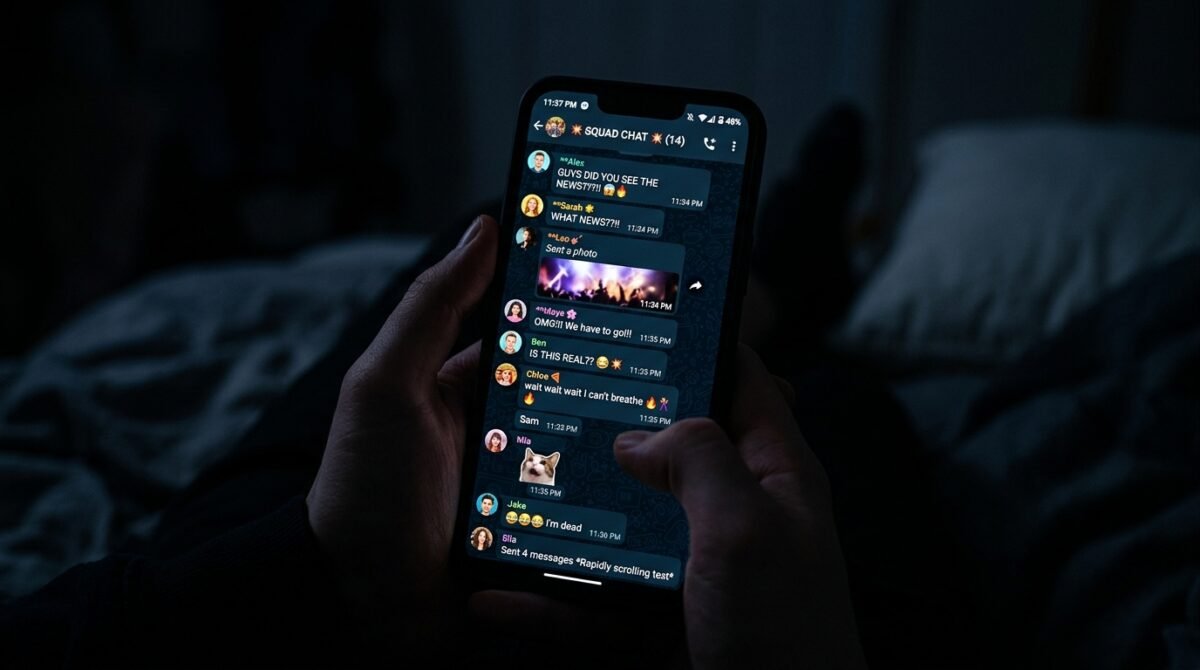
Within an hour, the drama had spilled over into our common group chat. It was a digital firing squad. Friends were weighing in, mostly siding with Elena because they saw the surface-level optics: a ‘petty’ friend charging a ‘struggling’ friend for helping her out. They didn’t see the four months of missed rent, the inability to use my own closet, or the total lack of respect for my time.
I read through the messages with a mounting sense of disbelief. It was as if they had all forgotten that I had been asking her to move these items since the first month. They were framing it as a betrayal of friendship, conveniently ignoring the fact that she had effectively abandoned her property in my home.
I decided to stay silent. I didn’t want to get into a mud-slinging match in a group chat. I just let them vent, watching the ‘bubbles’ move as they typed out their outrage. It was fascinating to see who would show their true colors. Some friends were actually quite understanding, DMing me privately to say they understood my frustration.
Then came the ultimatum. Elena typed out a long, dramatic message in the main chat, declaring that if I didn’t drop the invoice, she would ‘wash her hands’ of me entirely. She framed it as me being materialistic and money-hungry, rather than me wanting my own home back.
“If you want to value $1,400 over a decade of friendship, fine. Consider the clothes yours. I don’t want anything back from a person who treats friends like business transactions. You’re dead to me.”
— Elena, in the group chat
The irony of her claiming the clothes were ‘mine’ now, as if that was an act of generosity rather than an admission of abandonment, wasn’t lost on me. I realized that the friendship had been dead for a long time; it was just finally getting a funeral.
The Moral Ambiguity of the Internet

I decided to post my dilemma on a popular subreddit to see if I was actually the villain. I laid out the facts: the timeline, the requests, the storage duration, and the invoice. I expected a mix of responses, but I wasn’t prepared for the sheer volume of support—and the vitriol—I received.
The internet, as it turns out, is deeply divided on the intersection of friendship and financial boundaries. Many people pointed out that storage units are expensive, and by holding her items, I was essentially providing a free service that she had no right to demand. Others were horrified that I would ‘charge’ a friend, calling me cold and calculating.
The thread hit the front page within hours. Thousands of comments debated the nuances of the situation. It became a case study in what people think they owe their friends. Is a friend a free resource, or is there a limit to how much you can ask of someone?
“NTA. Your home is not a storage unit. If she wanted a place to store her designer clothes for four months, she should have rented a unit. She’s using the ‘friendship’ card to get out of paying for her own logistics. Tell her to pay up or sell the clothes to cover the costs.”
— u/ReasonableObserver, 15.2k upvotes
Reading the comments was therapeutic in a strange way. It validated my feeling that my boundaries were reasonable, even if they were unpopular with the people who were used to walking all over me. The consensus started to shift toward my side as more people realized that Elena hadn’t just been ‘forgetful,’ she had been negligent.
The Cold Reality of the Closet

With the internet’s validation, I felt empowered to handle the next step. I went back into my closet and actually looked at what was there. Really looked at it. There were tags still on some of the items. It was clear she hadn’t needed these things for her ‘new life’ in LA; she just couldn’t bear to let them go, but also couldn’t bear to pay for their transport. It was pure ego.
I took photos of everything. I documented the state of the items to ensure there was no claim of ‘damage’ later. I wanted to be absolutely above board. I sent an email to Elena stating that since she had threatened to abandon the items, I would be donating them to a local women’s shelter if the invoice wasn’t paid by the end of the month.
The response to that was frantic. Suddenly, the ‘money’ wasn’t the issue anymore. She was worried about her designer bags. The tone of her messages shifted from indignant to desperate. She realized that I wasn’t playing a game anymore; I was prepared to follow through.
It was a turning point for me personally. I realized that I had spent years being the one who ‘went with the flow’ and ‘didn’t make a big deal out of things.’ That personality trait had cost me my peace and my space. Standing in front of that closet, realizing I held the power to change my environment, was liberating.
“You can’t just donate my stuff! That’s theft! I’ll call the police. You have no right to touch my property, even if I haven’t picked it up yet.”
— Elena, panicked text
I calmly replied that as the homeowner, if property is abandoned for a specific period of time without a storage agreement, it becomes a liability. I wasn’t stealing; I was clearing space. I felt no guilt anymore, only a deep, cold satisfaction that the dynamic had finally shifted in my favor.
The Unexpected Ally

Surprisingly, the person who stepped in to mediate wasn’t one of our ‘mutual friends.’ It was Elena’s brother. He reached out to me, having heard bits and pieces of the story, and he was surprisingly apologetic. He knew his sister better than anyone, and he knew that she had a habit of treating people as ‘options’ rather than friends.
He offered to come over, pay the invoice himself, and move the items into his own basement, where they could sit for as long as she needed. He didn’t want the drama to continue, and he was embarrassed by her behavior. I agreed immediately. I didn’t want the money, really. I just wanted the space.
When he arrived, it was awkward, but civil. He loaded up the racks, the bags, and the boxes. As he was finishing up, he looked at me and said, ‘I know she’s a nightmare. She’s been like this her whole life. I’m sorry you had to be the one to finally draw the line.’
It was a moment of grace I hadn’t expected. It confirmed that this wasn’t about me being a bad friend. It was about me finally refusing to play the role of the enabler. Elena had spent her life relying on others to carry her weight, and for the first time, someone had stopped picking it up.
“I’ve known her my whole life. You did the right thing. Don’t let her convince you otherwise. She needs to learn that actions—and inaction—have consequences.”
— Elena’s Brother, during the move
Seeing the empty closet was like taking a deep breath after being underwater for months. The air in the room felt different. The space was mine again, and for the first time, I felt like the master of my own home.
The Aftermath of No-Contact

After the items were gone, I went full no-contact with Elena. I didn’t want an apology, and I certainly didn’t want to explain myself anymore. The group chat drama died down as quickly as it had started, once the ‘show’ was over and there was no more conflict to feed on. People moved on to the next viral dilemma.
I took the $1,400 her brother paid and donated half of it to the shelter I had threatened to donate her clothes to. The rest, I used to buy a new bedroom set—the one I had been dreaming of for months. Every time I walk into my room now, I see the result of my decision. It’s a physical reminder of the boundary I set.
It’s been months since the move. I don’t miss her, which is the most surprising part. I thought I would feel a sense of loss, but instead, I feel a sense of lightness. I realize now that the friendship was a weight I had been carrying, not a support system I was relying on.
I’ve learned to be more selective about who I let into my home and my life. I’ve learned that saying ‘no’ isn’t a betrayal; it’s a form of self-respect. And I’ve learned that when you stop being a doormat, some people will call you a villain—but those are the people who liked you better when you were on the floor.
“You’re a hero to everyone who has ever had a ‘friend’ overstay their welcome. It’s not about the money, it’s about the respect. Never apologize for reclaiming your space.”
— Another Reddit comment, 8.4k upvotes
The experience changed me. I am less inclined to ‘fix’ things for others and more inclined to protect my own peace. It was a painful, expensive lesson, but one I wouldn’t trade for the world.
Reflecting on the Cost of Boundaries

Looking back, the most interesting part of this whole saga wasn’t the bill itself, but the reaction of the people around us. It exposed the ‘enablers’ in our friend group. People who were quick to judge me for being ‘petty’ were the same people who, upon reflection, had also been used by Elena in various ways over the years. By standing up for myself, I inadvertently forced them to confront their own lack of boundaries.
It’s fascinating how society views friendships as these immutable, unconditional contracts. We are taught that being a ‘good friend’ means being endlessly flexible, regardless of the personal cost. When you shatter that expectation, you create a ripple effect. People get uncomfortable when they see someone else breaking the mold.
I’ve realized that the ‘price’ of friendship isn’t measured in dollars, but in the amount of oneself one is willing to sacrifice. I was willing to sacrifice too much. The $1,400 fee was just the visible tip of an iceberg of emotional labor I had been doing for years, silently and thanklessly.
I don’t think Elena is a ‘bad’ person in the malicious sense, but she is a deeply selfish one who never learned to respect the autonomy of others. My refusal to play along didn’t just end our friendship; it ended an illusion of a friendship that hadn’t been reciprocal for a long, long time.
“Boundaries aren’t walls to keep people out, they’re gates to let the right people in. You did the right thing by closing the gate on this one.”
— Wisdom found on a supportive message board
I am at peace with the outcome. I have lost a friend, but I have regained my sanctuary. And honestly? The view from my clean, empty master closet is worth more than any designer handbag.
Lessons Learned and Moving Forward

If I could give advice to my past self, it would be simple: stop saying yes when you mean no. The moment I felt that initial pang of resentment back in the first month, I should have spoken up. I should have set a clear, non-negotiable deadline for when the items needed to be gone. But I was afraid of conflict, and that fear was exactly what held me hostage.
There is a power in being clear and direct. I spent so much time trying to be ‘polite,’ which only served to confuse the issue. Elena didn’t see my polite requests as ‘boundaries’; she saw them as ‘suggestions.’ It wasn’t until I made it a financial, documented reality that she finally understood that I was serious.
I have a new rule now: if someone asks for a favor that involves my time, money, or space, I evaluate it not by how much I like the person, but by how much the favor costs me. It sounds clinical, but it’s the only way to avoid the slow burn of resentment that destroys relationships from the inside out.
I’m grateful for the experience, even the ugly parts. It taught me that I am capable of standing my ground, that my home is mine alone, and that true friends don’t demand that you sacrifice your well-being for their convenience. I am moving forward with a smaller, tighter circle of people who value mutual respect as much as I do.
“When people get angry that you set a boundary, it usually means that the boundary was necessary. You are a better person for learning this now.”
— Advice from a therapist friend
The chapter with Elena is closed. The closet is empty. And for the first time in a long time, I am fully at home.
Conclusion
The saga of the designer wardrobe was never really about the clothes. It was about the unspoken power dynamics that often exist in long-term friendships, the fear of setting boundaries, and the societal pressure to always be the ‘accommodating’ one. By choosing to bill my former friend, I wasn’t just recouping storage costs; I was reclaiming my autonomy.
The internet’s reaction highlighted how much we, as a culture, are still grappling with the intersection of personal relationships and financial reality. When does a favor become an obligation? When does generosity become exploitation? These are questions that don’t have easy answers, but they are questions worth asking.
I’ve learned that true friendship thrives on mutual respect, not on the ability to weather unreasonable demands. I’ve learned that the people who get angry when you set a boundary were the ones who benefited from you not having one in the first place. And I’ve learned that I am much stronger—and much more capable—than I ever gave myself credit for.
What about you? Have you ever had a friend overstay their welcome, literally or figuratively, and felt trapped by the social contract of friendship? How did you handle it? Did you set the boundary, or did you let the resentment simmer? Share your stories below—I’m curious to see how many of you have had to become the ‘villain’ in someone else’s story to protect your own peace.
What's your verdict on this dilemma?
Vote below to contribute to the official community consensus.

Have a Dilemma Keeping You Up at Night?
Share your real-life feud, wedding chaos, or relationship crossroads anonymously with our editorial team.
What do you think ?
0 Comments🛡️ Comments are moderated to protect community integrity. Your comment will appear once approved by the editorial team.