

Friendship is often described as the chosen family we rely on through thick and thin, but what happens when that bond is put to the test by a demand that feels less like a request and more like a financial shakedown? For years, Sarah and I were inseparable. We navigated the complexities of our twenties, supported each other through heartbreaks, and celebrated every milestone. However, the dynamic shifted drastically when Sarah decided that her 30th birthday needed to be a high-fashion, high-budget event—and that I was the one responsible for the centerpiece.
The trouble didn’t start with the cake. It started with an expectation of total financial deference. Sarah had always been the one with the expensive taste, and I had always been the supportive, albeit budget-conscious, friend. But when she sent me a link to a bespoke bakery offering a $500 ‘custom couture’ cake and expected me to add it to my list of wedding-style contributions, I felt a knot of anxiety tighten in my chest.
I tried to set boundaries. I suggested alternatives, spoke about my own financial goals, and even offered to bake something myself. Yet, the pressure continued to mount, turning into a series of manipulative comments in our shared friend group chat. I wasn’t just being asked to buy a cake; I was being asked to prove my loyalty through a transaction I simply couldn’t justify.
As the birthday approached, the situation reached a boiling point. I realized that if I gave in, I would be setting a precedent for the next decade of our friendship. I didn’t want to be a doormat. So, I made a choice that was both petty and, in my mind, a necessary stand for my own self-respect. I walked into the party empty-handed, save for one single, sad-looking grocery store cupcake.
This is the story of how that single, humble gesture triggered a social explosion, divided our friend group, and forced me to confront the reality that some friendships are built on conditions I am no longer willing to meet. From the leaked group chats to the silence that filled the room when I set that cupcake down, here is the full breakdown of how it all went wrong.
The Five-Hundred-Dollar Ultimatum
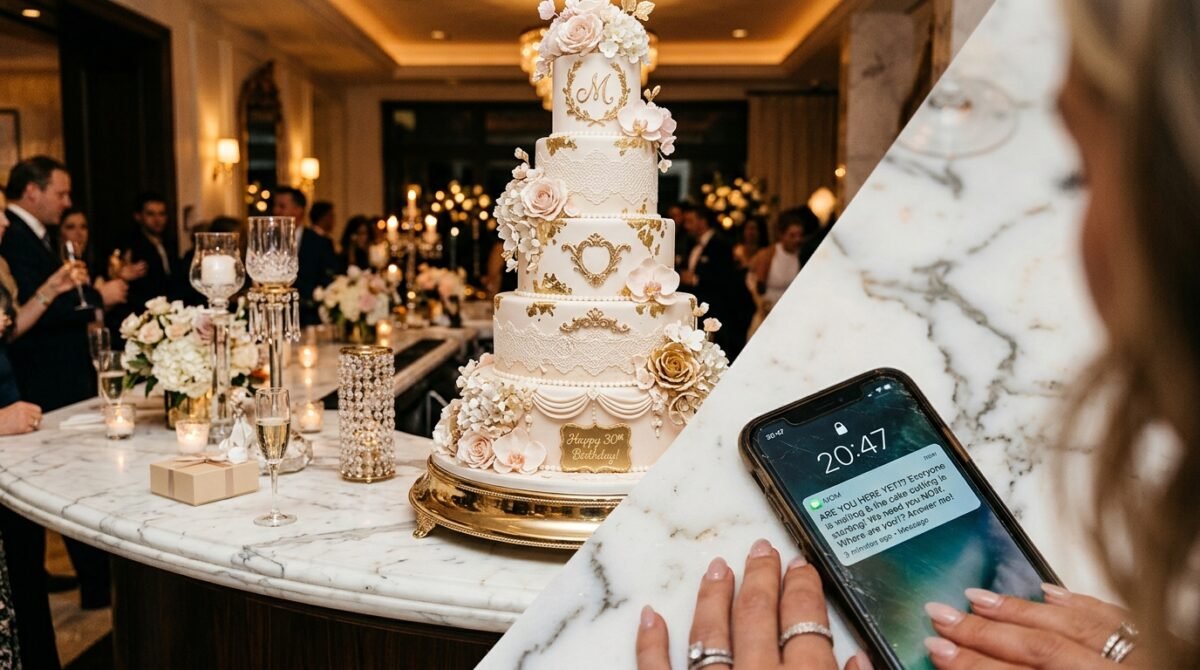
It started on a Tuesday afternoon with a notification that made my phone vibrate incessantly. Sarah had sent me a link to a bakery known for its celebrity clientele and exorbitant prices. The cake was a four-tier monstrosity covered in gold leaf and fondant flowers, priced at exactly $495 before tax and delivery. Her note was simple: ‘I found the perfect cake for my 30th! I know money has been tight for you, but this would mean the world to me as your gift.’
I stared at the screen, feeling my pulse quicken. I had just started paying off my student loans, and while I loved Sarah, $500 was an entire week’s paycheck for me. I felt a wave of guilt, followed immediately by a sharp jab of resentment. Why was it my responsibility to fund the centerpiece of a party I wasn’t even planning? I tried to explain my situation as gently as possible.
“Sarah, I really want to celebrate you, but $500 is completely out of my budget. I’m currently prioritizing my loan payments. Can we look for a beautiful, more affordable option together?”
Her response was cold and immediate. She didn’t acknowledge my financial situation at all. Instead, she pivoted to the ‘value’ of our friendship. She told me that she had done ‘so much’ for me over the years, and that if I couldn’t sacrifice a few hundred dollars for her milestone, it said a lot about how I valued her. The manipulation was palpable, and I felt like I was being backed into a corner.
I reached out to our mutual friend, Chloe, to see if I was overreacting. Chloe, who usually stayed out of the line of fire, sighed and told me, ‘Look, Sarah has been talking about this party for months. She’s really stressed about the aesthetic. Maybe just find a way to make it work?’ That was the moment I realized I was entirely on my own.
The pressure escalated over the next two weeks. Sarah started tagging me in social media posts about ‘true friends’ who ‘show up’ and ‘invest’ in the people they care about. It was a clear, public jab at me. Every time my phone pinged, I felt a sense of dread. She wasn’t asking for a gift; she was demanding a tribute, and the cost was my peace of mind.
I decided then and there that I wouldn’t be bullied. I wouldn’t provide the cake, and I wouldn’t cave to the financial ultimatum. But I also knew that showing up without a gift while others brought expensive items would be a social suicide mission. I needed a way to signal that I was present, but that I refused to be a pawn in her game of financial one-upmanship.
The Group Chat That Sealed My Fate

The situation exploded when Sarah created a ‘Party Planning Committee’ group chat that I wasn’t supposed to be part of, or at least, she didn’t realize I had been added to by accident when an admin error occurred. I sat in silence as I watched the messages scroll by. They weren’t just talking about logistics; they were talking about me.
“I don’t think she has the money for the cake, honestly. She’s always been the ‘cheap’ one in the group. I’m just going to force her hand at the party. If she doesn’t bring it, she’s going to look like such a loser in front of everyone.”
— Sarah in the Party Committee Group Chat
I felt my blood run cold. Reading those words, seeing my best friend mock my financial struggles for the sake of her ego, was a turning point. There was no more ‘best friend’ left to save. The sadness I had been feeling evaporated, replaced by a steely resolve. If she wanted me to look like a loser, I would give her a show, but it wouldn’t be the one she expected.
I spent the next few days in a state of hyper-focus. I didn’t reply to the group chat. I didn’t tell Sarah I knew what she said. I acted as if everything was fine, confirming my attendance and telling her I was ‘working on the cake situation.’ The ambiguity was my weapon. I watched as she grew more smug, clearly anticipating the moment I would present a $500 receipt.
The audacity of her plan—to intentionally humiliate me at her own party—was the final nail in the coffin. I realized then that our friendship had been one-sided for years. I was the ‘reliable, cheap friend’ who was always there to pick up the pieces, and she was the ‘star’ who required constant, expensive maintenance. The dynamic was fundamentally broken.
I started preparing for the party. I didn’t spend hundreds, but I did spend time planning. I knew exactly what I was going to do. It wasn’t about being cheap; it was about the message. I wanted to highlight the absurdity of her demand by giving her exactly what she deserved: a single, solitary gesture that mirrored the pettiness of her own behavior.
I felt a strange sense of liberation. The anxiety was gone, replaced by a cold clarity. I knew the party would be a disaster, and I knew I would likely lose the friendship, but it felt like a fair trade for my self-respect. I was no longer going to play by her rules, and for the first time in years, I felt completely free.
The Grocery Store Revelation
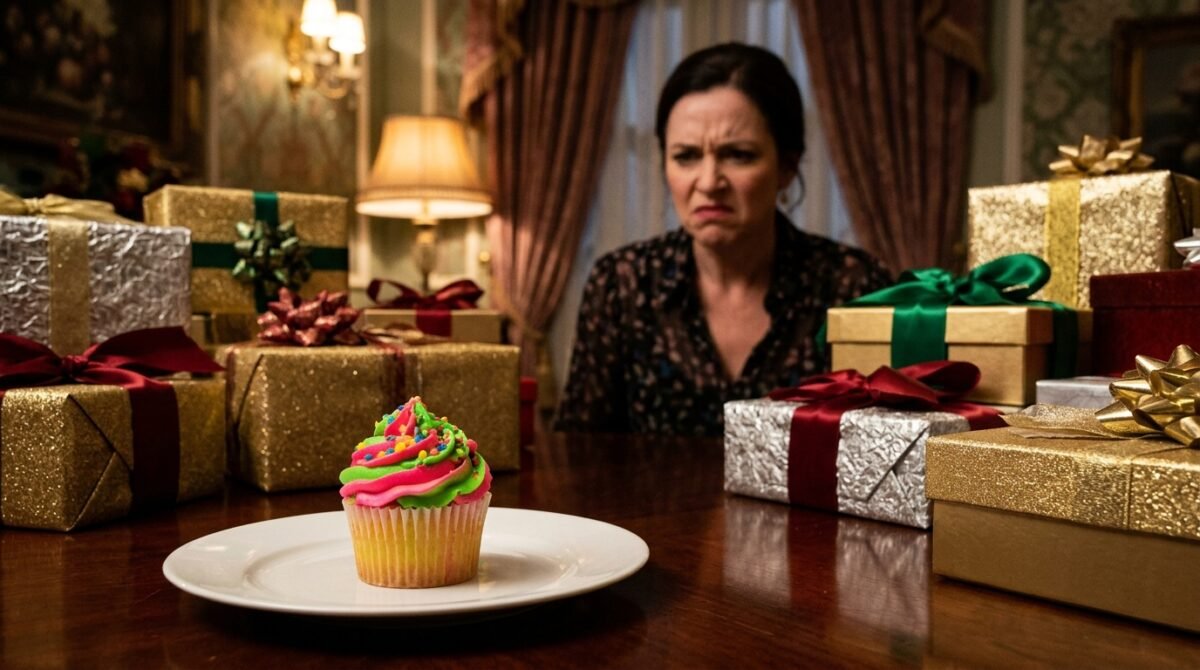
I walked into the local grocery store on the morning of the party, the fluorescent lights humming overhead. I went straight to the bakery section. I wasn’t looking for custom fondant or gold leaf; I was looking for the most basic, unassuming, plastic-wrapped cupcake they had. I found a package of two, but I only needed one. I bought a single vanilla cupcake with a swirl of neon-pink frosting and a plastic ring that said ‘Happy Birthday’ on it.
It looked ridiculous sitting in the passenger seat of my car. It was the antithesis of the ‘couture’ cake Sarah had demanded. I could have bought a nice bouquet of flowers, or a card, or something ‘proper,’ but that wasn’t the point. A bouquet would have been a gift. A single, cheap cupcake was a statement. It was a reflection of the value she had placed on our friendship.
I arrived at the venue an hour early, carrying the cupcake in a small, clear container. I didn’t hide it. I walked in with my head held high, though I knew the judgment was coming. I saw Sarah across the room, wearing a dress that likely cost more than my car, looking around for her ‘gift.’ When she saw me walk in with the small container, her eyes narrowed, but she didn’t say anything yet.
The guests were arriving in droves, dressed in their finest, carrying beautifully wrapped presents. I felt the eyes on me as I made my way to the gift table. I placed the cupcake right in the middle of the expensive boxes and bags. It looked like a punchline. I turned around and saw Sarah watching me, her expression a mix of confusion, shock, and mounting rage.
She walked over to me, her heels clicking aggressively against the hardwood floor. ‘Is this a joke?’ she hissed, her voice low enough that only I could hear. I smiled, feeling remarkably calm. ‘You said you wanted a cake for your birthday, Sarah. I thought a cupcake would be more than enough to celebrate.’ The look on her face was priceless—a perfect combination of entitlement meeting a brick wall.
I didn’t wait for her to respond. I grabbed a drink from the bar and walked toward the patio. I wasn’t going to spend my night arguing. I had made my point, and for the first time, I felt like the adult in the room. I watched as she stood there, staring at the cupcake like it was a personal insult, which, in a way, it absolutely was.
The Confrontation in the Kitchen

About an hour into the party, Sarah dragged me into the kitchen. The music was thumping in the other room, but in here, the silence was deafening. She was shaking with anger, her perfectly manicured hands clenched into fists. ‘You are honestly unbelievable,’ she started, her voice rising with every word. ‘I asked for one thing. One thing to make my day special, and you decided to humiliate me in front of everyone.’
I looked her in the eye. ‘Sarah, I didn’t humiliate you. You humiliated yourself by demanding a $500 cake from your friends. You don’t get to dictate my financial choices. I didn’t have the money, and I certainly wasn’t going to go into debt to prove my loyalty to you. That’s not friendship; that’s a business transaction, and I never signed up for it.’
“I thought we were friends! If I were in your position, I would have found the money. You just don’t care about me at all, do you? You’re selfish.”
— Sarah, mid-confrontation
I shook my head. ‘If you were in my position, you would have understood. But you’ve never been in my position, have you? You’ve never had to worry about rent or loans. You think because you want something, it should be provided to you. I’m done being the person who fills your gaps, Sarah. I’m done being the person who pays for your lifestyle.’
She looked stunned, as if she couldn’t believe I was finally standing up to her. ‘You’re ruining my birthday,’ she whispered. ‘I’m not ruining anything,’ I replied, ‘I’m just refusing to participate in the performance anymore.’ I turned to walk away, but she grabbed my arm. ‘You’re leaving, and you’re not welcome back,’ she said, her voice trembling with rage.
I pulled my arm away. ‘I was already planning on leaving, Sarah. Happy Birthday.’ I walked out of the kitchen, past the stunned guests who were trying to ignore the drama, and out the front door. The cool night air hit my face, and I took a deep breath. It was done. The friendship, the debt, the pressure—it was all gone.
I drove home with the windows down, feeling an incredible sense of relief. I knew the fallout would be immense, but I didn’t care. I had finally drawn the line, and the sky hadn’t fallen. I had survived, and more importantly, I had kept my dignity.
The Digital Backlash
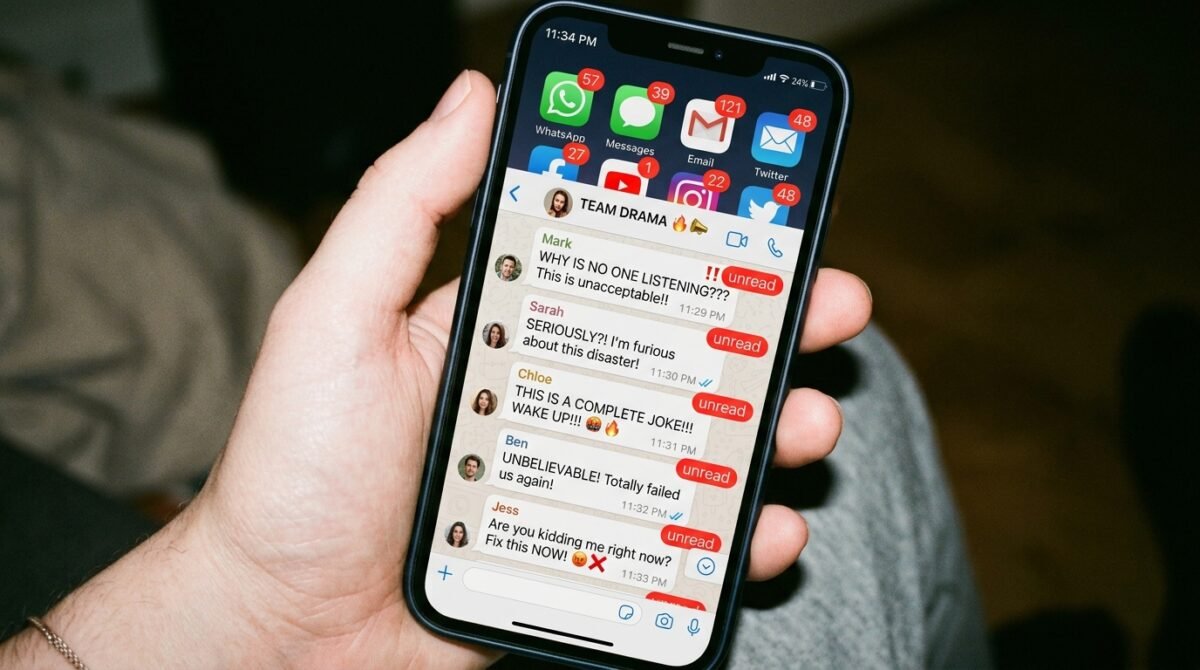
The fallout was instantaneous. By the time I reached my apartment, my phone was buzzing incessantly. The group chat was exploding. People were taking sides, though most of them were clearly on Sarah’s side, echoing her sentiments about me being ‘petty’ and ‘unsupportive.’ I muted the thread, but I couldn’t help but look at the screenshots sent to me by a friend who was also uncomfortable with the situation.
“I can’t believe she actually did that. Who brings a grocery store cupcake to a 30th birthday party? It’s clearly a power move to make Sarah feel bad. What a toxic friend.”
— Jessica, in the group chat
It was fascinating to watch the narrative shift. In their eyes, the ‘crime’ was the cupcake, not the demand for $500. They were all focused on the social etiquette of gift-giving rather than the underlying toxicity of the request. It proved to me that most of these people were just spectators who didn’t understand the years of history behind this moment. I felt no need to defend myself to them.
I replied to a few people who reached out personally, keeping it simple: ‘I didn’t have the money for the cake, and I didn’t appreciate being told that my worth as a friend was tied to a purchase.’ Most of them didn’t have a response to that. They hadn’t considered the perspective; they just saw the surface-level drama.
I blocked Sarah on all platforms. I knew there would be no productive conversation, and I didn’t want to be dragged into a cycle of accusations. I needed space to process the end of a decade-long friendship. It was a strange feeling—mourning the loss of someone who had once been my closest confidante, while simultaneously feeling relieved that they were gone.
The next few days were quiet. I stayed home, focused on my work, and started reading books I had been putting off. I felt like I had shed a skin. The constant pressure to perform, to pay, to show up—it was all gone. I was finally allowed to be myself, even if ‘myself’ was someone who bought $2 cupcakes instead of $500 gifts.
I started getting messages from people I hadn’t spoken to in years, who had heard the rumors and wanted the ‘real’ story. I told them the truth, and to my surprise, many of them agreed with me. Some even shared stories of their own experiences with Sarah, confirming that this wasn’t an isolated incident, but a pattern of entitlement that had finally hit a breaking point.
Reddit Weighs In: The Verdict

I posted my story on AITA, wanting to get an objective perspective from the internet. I expected a mix of responses, but the sheer volume of support was overwhelming. The comment section became a battleground of people debating the definition of friendship, financial boundaries, and the etiquette of gift-giving. It was eye-opening to see how many people had been in similar situations.
“NTA. Your friend is not a friend; she is a client who expects you to pay for her life. The fact that she demanded a $500 cake from you is absolutely insane. You did the right thing by setting a boundary, and the cupcake was a brilliant, albeit petty, highlight of her true colors.”
— u/BudgetFriendship (Top Comment, 32.1k upvotes)
The thread took off, reaching the front page within hours. People were dissecting the ‘cake ultimatum’ from every angle. Some argued that I should have just said no directly, while others applauded the ‘malicious compliance’ of the cupcake. It was cathartic to see thousands of strangers validating the feelings I had kept bottled up for so long.
Another common theme in the comments was the idea of ‘friendship taxes’—those invisible costs we pay to keep people in our lives. Many users shared their own stories of walking away from ‘friends’ who constantly asked for money, time, or favors they couldn’t afford. It felt like I was part of a broader movement of people reclaiming their autonomy.
“I had a ‘friend’ like this. She wanted me to pay for her destination bachelorette party, her expensive bridesmaid dress, and her shower gifts. When I finally said no, she told me I wasn’t a ‘supportive sister.’ Good for you for cutting ties early. Don’t look back.”
— u/FreedomFromEntitlement (12.4k upvotes)
There were, of course, a few dissenting voices. Some called me ‘immature’ for the cupcake stunt, suggesting I should have just stayed home. I acknowledged those points—I knew it was petty—but I also felt that in the face of such blatant entitlement, a little bit of pettiness was justified. It was my way of reclaiming the narrative, even if it was in a small, symbolic way.
The most helpful comments were the ones that focused on the long-term health of my life. They reminded me that friendship is a two-way street, and that if I felt the need to ‘perform’ for Sarah, it was never a healthy connection to begin with. The advice to keep the distance and focus on those who actually appreciate me was the best takeaway from the entire experience.
The Aftermath: Moving On

It has been six months since the party. Sarah and I haven’t spoken, and I don’t expect we ever will. I’ve heard through the grapevine that she’s still telling the story of ‘the friend who ruined my birthday with a cupcake,’ which honestly makes me laugh. It’s such a distorted version of reality that it only confirms I made the right decision.
I’ve reconnected with friends who didn’t participate in the group chat drama, and our relationships feel so much more authentic now. There’s no pressure to spend money we don’t have, and no expectations of grand gestures. We just enjoy each other’s company, which is what friendship was supposed to be all along. It’s refreshing, and it makes me realize how much energy I was wasting on Sarah.
I also learned a lot about my own boundaries. I used to be the person who said ‘yes’ to everything to avoid conflict. Now, I’m much more comfortable saying ‘no,’ especially when it comes to financial requests. I’ve realized that a ‘no’ is a complete sentence, and that the people who get angry at a ‘no’ are the very people you shouldn’t be saying ‘yes’ to.
I still think about the cupcake sometimes. It wasn’t the most mature way to handle things, but it was the catalyst for my freedom. It forced me to be honest about my feelings and to stop living in fear of Sarah’s judgment. I don’t regret it. It was a small price to pay for the peace of mind I’ve found since then.
I’ve started saving the money I would have spent on those ‘friendship taxes’ and putting it toward a travel fund. I’m planning a trip for myself next year—a trip where I get to decide exactly what I spend and how I celebrate. It’s a small goal, but it feels like the beginning of a new chapter where I am the author of my own life.
Why We Tolerate Entitlement

Reflecting on this whole experience, I’ve started to wonder why we tolerate such blatant entitlement in our personal lives. We set boundaries at work, in romantic relationships, and with strangers, yet when it comes to long-term friends, we often feel a strange sense of obligation to accept behavior we would never tolerate elsewhere. Is it the history? Is it the fear of being alone?
I think it’s a combination of both. We hold onto the memories of who our friends *were* at the start, ignoring the reality of who they have become. We tell ourselves that it’s just a phase, or that they don’t mean to be hurtful, even when their actions say otherwise. I spent years making excuses for Sarah, convincing myself that her behavior was just a ‘quirk’ of her personality.
The truth is, entitlement is a poison. It eats away at the foundation of trust and mutual respect until there is nothing left. When you’re constantly the one giving and the other person is always taking, you aren’t in a friendship—you’re in a parasitic relationship. It took me a long time to admit that, but seeing it on paper has been transformative.
I hope that by sharing my story, others might recognize the signs in their own lives. If you feel dread every time your friend asks you for something, if you feel like your worth is being measured by your bank account, or if you feel like you have to ‘perform’ to keep the peace, it’s time to take a step back and evaluate.
You deserve friends who celebrate you for who you are, not for what you can provide. Don’t be afraid to set boundaries, and don’t be afraid to walk away when those boundaries are ignored. It’s not easy, and you might lose people you thought you’d have forever, but the space you create is worth it.
The Lesson in a Cupcake

If I could go back, would I change anything? Maybe I wouldn’t have brought the cupcake. Maybe I would have just stayed home and skipped the confrontation altogether. But then again, if I hadn’t gone, I might still be wondering if I should have ‘just made it work.’ The cupcake was the final, undeniable proof that the friendship was over, and I needed that proof to finally let go.
It taught me that sometimes, you have to be the ‘villain’ in someone else’s story to be the hero in your own. Sarah needed a villain to blame for her own unhappiness, and I stepped into that role perfectly. I’m okay with that. I don’t need to be the hero in her narrative; I just need to be at peace with my own choices.
I’ve learned to appreciate the smaller, more genuine gestures. A coffee with a friend, a shared meal where we split the bill, a thoughtful card—these are the things that build a real connection. They aren’t about grand displays of wealth; they’re about the time and energy we invest in each other. That’s what I’m looking for now.
If you’re in a situation like mine, remember that you are not responsible for other people’s expectations of you. You are only responsible for your own integrity. If someone tries to shame you into doing something you don’t want to do, hold your ground. The right people will stand by you, and the wrong ones will show themselves the door.
I’m grateful for the experience, as painful as it was. It shaped me, forced me to grow, and ultimately led me to a place where I feel more secure and confident than I ever did before. And that, in the end, is worth much more than a $500 designer cake.
Community Perspectives: The Final Word

The discussion on my thread has continued for weeks, and I’ve been reading through the latest comments with interest. It’s amazing how much this story has resonated with people across different backgrounds. The community has provided a wealth of perspectives that have helped me process the final stages of this chapter. It’s not just about me and Sarah anymore; it’s about a shared human experience of boundary-setting.
“The most important thing I’ve learned from these stories is that you aren’t responsible for the ‘image’ your friends want to project. If she wanted a $500 cake, she could have bought it herself. Her desire for a luxury lifestyle isn’t your burden to carry. Good for you for finding your voice.”
— u/BoundariesAreBeautiful (8.9k upvotes)
There’s a real power in community. Hearing that I’m not alone, that others have stood their ground against similar pressures, has been incredibly validating. I’ve realized that my experience is just a tiny part of a much larger trend of people finally speaking up for themselves and refusing to be defined by the expectations of others.
I’ve also seen some really thoughtful advice about how to handle future friendships. People suggest being transparent about finances early, not letting ‘obligations’ build up, and always keeping your own goals at the forefront. It’s advice I’m definitely going to take to heart as I move forward.
I’m happy to leave the ‘cake drama’ behind me now. The cupcake served its purpose, the lessons have been learned, and I’m ready to move on. Thank you to everyone who shared their stories, gave advice, and offered support. It really did make a difference in how I see my own worth.
If you’re reading this and feeling stuck in a similar situation, know that you have the power to change your circumstances. You don’t have to be the person you’ve always been; you can be the person you want to be. And sometimes, it just takes one, small, courageous act to start that change.
Conclusion
The story of the $500 cake is ultimately a story about the boundaries we set for ourselves and the price of our own peace. It was never really about the dessert; it was about the power dynamic that had been allowed to fester for far too long. By choosing to bring that single, humble cupcake, I didn’t just reject a financial demand; I rejected the version of myself that had been playing a supporting role in someone else’s life.
Walking away from a decade-long friendship is never easy, but sometimes it is the only way to reclaim your own narrative. I’ve learned that true friendship isn’t bought, and it certainly doesn’t come with a price tag. It’s built on respect, empathy, and a mutual understanding that neither person is more important than the other. I’m finally in a place where I can surround myself with people who value me for who I am, not for what I can give.
What about you? Have you ever had to draw a hard line in a friendship that seemed to be costing you more than it was worth? How did you handle the pressure, and what did you learn about your own boundaries in the process? I’d love to hear your stories in the comments below. Let’s keep the conversation going about what it really means to be a friend.
What's your verdict on this dilemma?
Vote below to contribute to the official community consensus.

Have a Dilemma Keeping You Up at Night?
Share your real-life feud, wedding chaos, or relationship crossroads anonymously with our editorial team.
What do you think ?
0 Comments🛡️ Comments are moderated to protect community integrity. Your comment will appear once approved by the editorial team.