

When I finally closed on my beachfront villa in Florida, it wasn’t just a financial investment; it was the culmination of fifteen years of grueling double shifts, missed birthdays, and the kind of corporate ladder-climbing that leaves you feeling hollowed out. I bought this place as a sanctuary, a quiet retreat where the only thing I had to worry about was the tide schedule and the salt content of my morning coffee. I made the mistake, however, of extending an invitation to my extended family for a ‘long weekend’ during the off-season. I thought I was being the benevolent, successful relative. I thought I was building memories.
I was wrong. What I actually built was a stage for a disaster that would cost me thousands of dollars and, more importantly, my patience for familial entitlement. My relatives didn’t just stay at my house; they treated it like an all-inclusive party resort for people who weren’t invited. When I drove up to the property after three days away, I didn’t see the pristine white siding I had left behind. I saw a lawn littered with crushed beer cans, a shattered sliding glass door, and the undeniable stench of regret wafting out from the open living room.
The moral dilemma here isn’t just about the money, though five thousand dollars is certainly a significant sum. It is about the complete lack of respect for the boundaries I spent my entire adult life establishing. When I decided to change the locks that very evening, I knew I was burning a bridge. What I didn’t expect was the sheer, unadulterated audacity of my family members when they realized they were no longer welcome in the one place that was truly mine.
This isn’t just a story about a ruined carpet or a broken television; it is a story about the breaking point of a person who has always been the ‘reliable’ one, only to find that reliability is often just a fancy word for ‘easy target.’ As I stand here, keys in hand and the police report filed, I am ready to share exactly how this went down, the fallout that followed, and why I haven’t looked back since.
The Initial Pitch and the ‘Generous’ Offer
It all started during a lukewarm Thanksgiving dinner where the conversation inevitably turned to my success. My cousin, Sarah, had been drooling over the photos of the villa I posted on social media for months. She kept mentioning how ‘hard it is’ to find affordable housing for the whole clan during the summer months. Foolishly, I felt a pang of guilt. I was one person in a four-bedroom house, and they were a family of six struggling to find a getaway. I offered them the keys for a long weekend in early October, thinking they would treat it with the same reverence I did.
I laid out the rules clearly. No parties, no large groups of friends, and certainly no smoking inside. I even typed out a ‘house guide’ that was laminated and placed on the kitchen island. I remember feeling so professional, so prepared. I told them, ‘I want you to enjoy it, but please, treat this house like it belongs to you, because I worked very hard for it.’ They promised me the moon. They promised the house would be left ‘better than they found it.’
“Don’t worry about a thing! We just want a quiet space to reconnect as a family. We’ll be in bed by ten every night. You’re a saint for doing this!”
— Sarah, via text message, three weeks before the incident.
Looking back, I should have seen the red flags. The excessive emojis, the vague ‘we might have a few friends over for dinner,’ and the way my aunt immediately asked about the Wi-Fi password for their ‘gaming console’—I should have known then that my definition of a quiet weekend and theirs were worlds apart. I spent days cleaning and stocking the fridge, wanting to be the perfect host. I even left a bottle of expensive champagne on the counter as a welcome gift. That was my first mistake.
By the time I left for my business trip, I had convinced myself that this was a good idea. My mom had even called to tell me how much everyone appreciated the gesture. I felt like the ‘cool’ cousin. I felt like I was finally part of the inner circle of the family I had spent years distancing myself from. The house was spotless, the linens were crisp, and the ocean view was serene. I had no idea that I was essentially handing over the keys to a wrecking crew.
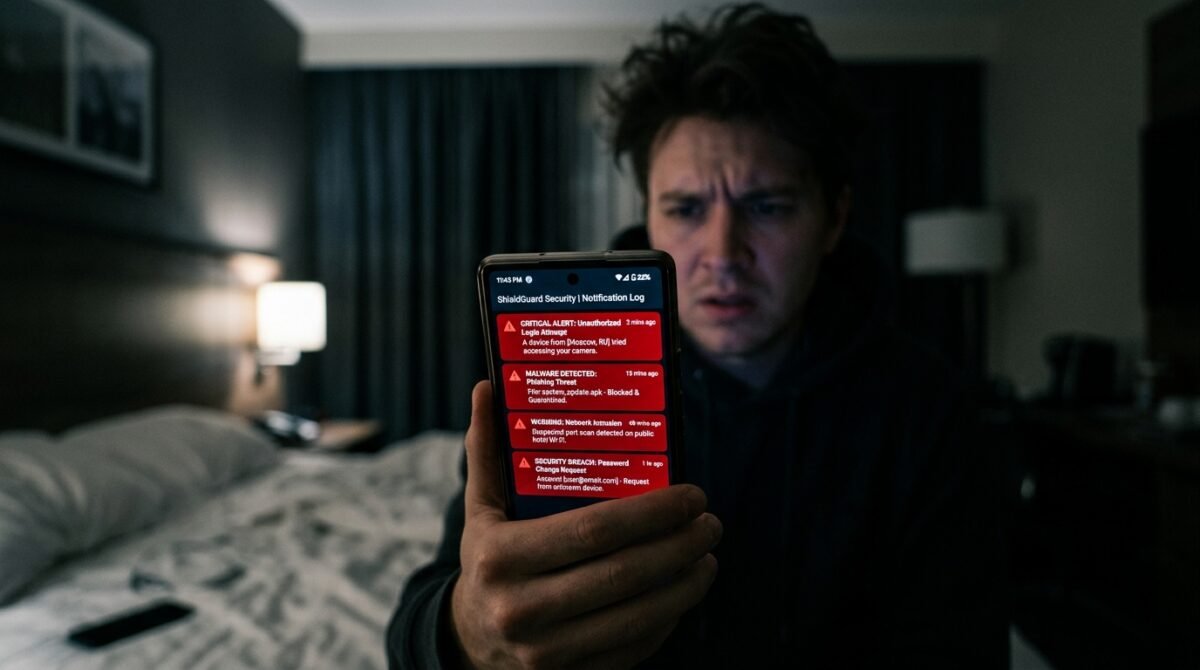
The realization of what I had done started to sink in when I received the first notification from my smart home security system. It was 2:00 AM on the second night. The motion detector on the patio had been triggered. Then again at 2:15. Then again at 2:30. I sat in my hotel room in Chicago, staring at my phone, watching the activity log scroll by. This wasn’t a family gathering. This was a revolving door of people.
The Early Morning Surveillance Reveal
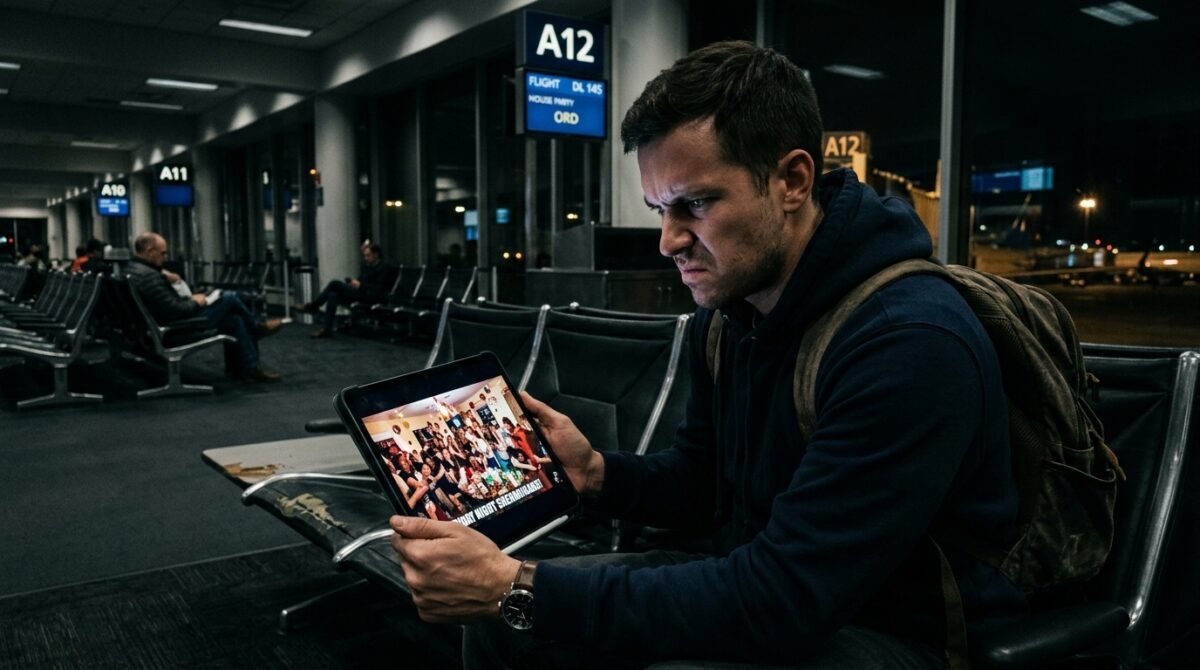
I couldn’t sleep. The notifications kept coming. By 4:00 AM, I decided to check the camera feed that I had installed in the living room specifically for when the house was vacant. I didn’t want to spy on them, but my peace of mind depended on knowing the house was still standing. What I saw on that screen made my blood run cold. There were at least fifteen people in my living room. They were dancing on the sofa, spilling drinks on the white rug I had specifically imported, and someone was actually smoking a cigar while leaning against my fireplace mantle.
I grabbed my tablet, my hands shaking so hard I could barely type. I checked the exterior cameras next. The pool deck was a disaster area. There were empty kegs, broken plastic cups, and a giant inflatable pool floatie that had clearly been dragged through the house. I could hear the muffled sound of music pumping through the speakers I had carefully calibrated for high-end audio. It was a full-blown rager in a house that I had explicitly told them was not for hosting events.
“I am watching the feed right now. Who are these people? You said this was for a family weekend. Why is there a DJ setup in my living room?”
— My text to Sarah at 4:30 AM.
Sarah didn’t respond until 9:00 AM. Her reply was so casual it felt like a slap in the face. She acted as if the party was a totally normal occurrence and that I was being ‘uptight’ and ‘controlling’ for monitoring the house. The gaslighting started immediately. She claimed that the ‘friends’ were just ‘extended cousins’ who happened to be in the area and that they were ‘just letting loose for one night.’ She didn’t mention the damage. She didn’t mention the smoke. She just told me to ‘relax and stop being so intense.’
The audacity was staggering. I realized then that they had never intended to respect my home. They saw it as a free hotel, a place where they could live out their fantasies of luxury without paying for the upkeep or the mortgage. I spent the next four hours calling local property managers and friends in the area, trying to figure out if there was any way I could get down there early. I ended up cutting my business trip short, changing my flight, and paying a hefty fee to get home a day ahead of schedule.
The anger I felt wasn’t a hot, impulsive rage; it was a cold, calculated clarity. I realized that my family had been using me for years, and this was just the most blatant manifestation of their entitlement. As I packed my bag, I started planning exactly how I would handle the situation. I wasn’t going to scream. I wasn’t going to cry. I was going to evict them, and I was going to make sure they never set foot on my property again.
The Confrontation at the Threshold
When I finally pulled into the driveway the next afternoon, the scene was worse than the cameras had depicted. The lawn was trashed, with cigarette butts ground into the manicured grass. The front door was slightly ajar, which was the first sign that they didn’t even bother to lock up. I walked inside, the smell of stale beer and cheap cologne hitting me like a physical wall. The house was empty, or so I thought. I heard voices coming from the back patio—my cousins were still there, lounging on my deck chairs, nursing hangovers.
I walked out to the patio, and the silence that fell over the group was almost comical. They looked at me as if I were an intruder, not the owner. I didn’t say a word at first; I just started taking pictures. I took photos of the broken glass in the pool, the stains on the outdoor cushions, and the empty alcohol bottles. Sarah finally stood up, looking disheveled and annoyed that her ‘vacation’ was being interrupted by the person whose house she was currently destroying.
“Oh, look who decided to show up early. You’re killing the vibe, honestly. We were just about to clean up.”
— Sarah, trying to act like a victim of my ‘mood.’
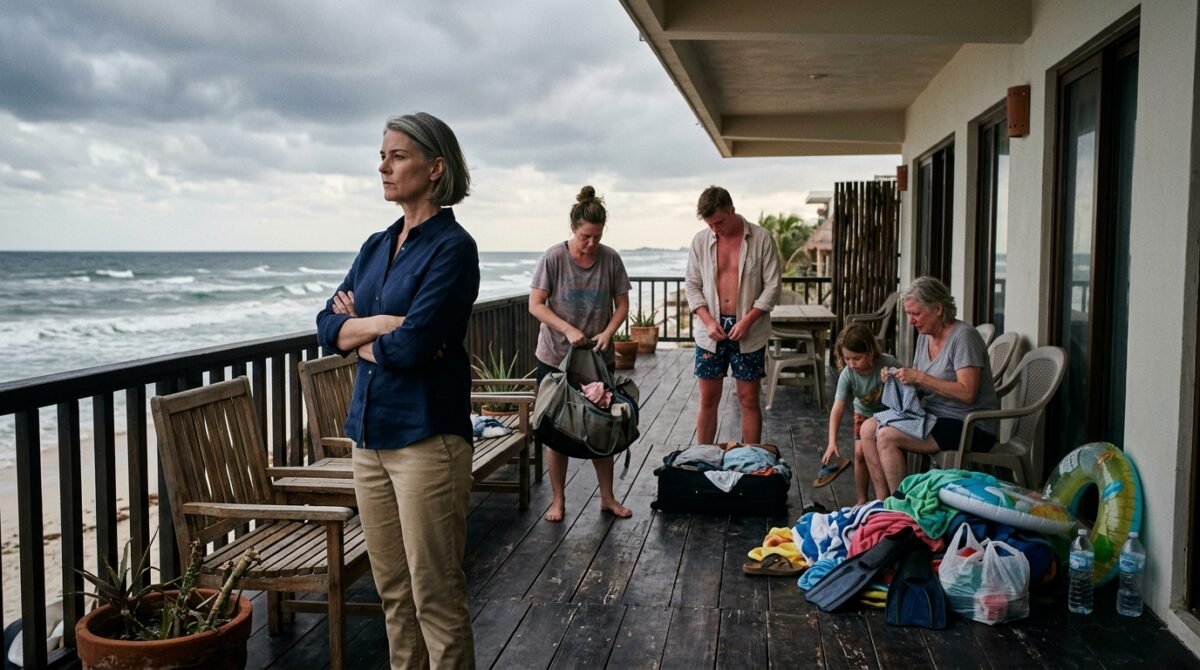
I looked her straight in the eye and told her to get her things. I didn’t argue. I didn’t debate the ‘vibe.’ I told them that they had violated every single rule we had agreed upon, and they were officially evicted. My aunt started crying, talking about how ‘family is family’ and how I was being ‘cold-hearted.’ It was the classic manipulation tactic—the attempt to weaponize our blood relation to excuse their inexcusable behavior. I didn’t budge. I held the door open and waited.
One by one, they packed their bags. They were indignant, complaining about how they had ‘nowhere to go’ and how I was ‘ruining the family dynamic.’ They acted as if the damage they had caused was just an unfortunate accident, like someone had spilled a glass of water, rather than a systematic trashing of my private property. I stood there, arms crossed, watching them drag their suitcases through the house, checking for any last-minute theft. I caught my cousin stealing a set of high-end kitchen knives, which I made him put back immediately.
The tension was palpable. Every time someone tried to make a joke or pass it off as ‘just having some fun,’ I shut them down. I didn’t want their apologies; I wanted them gone. As the last car pulled out of the driveway, I felt a wave of relief so intense it nearly knocked me over. But the relief was short-lived, because then I had to go back inside and assess the actual damage. That was when I realized the $5,000 estimate was actually on the low side.
The Inventory of Destruction
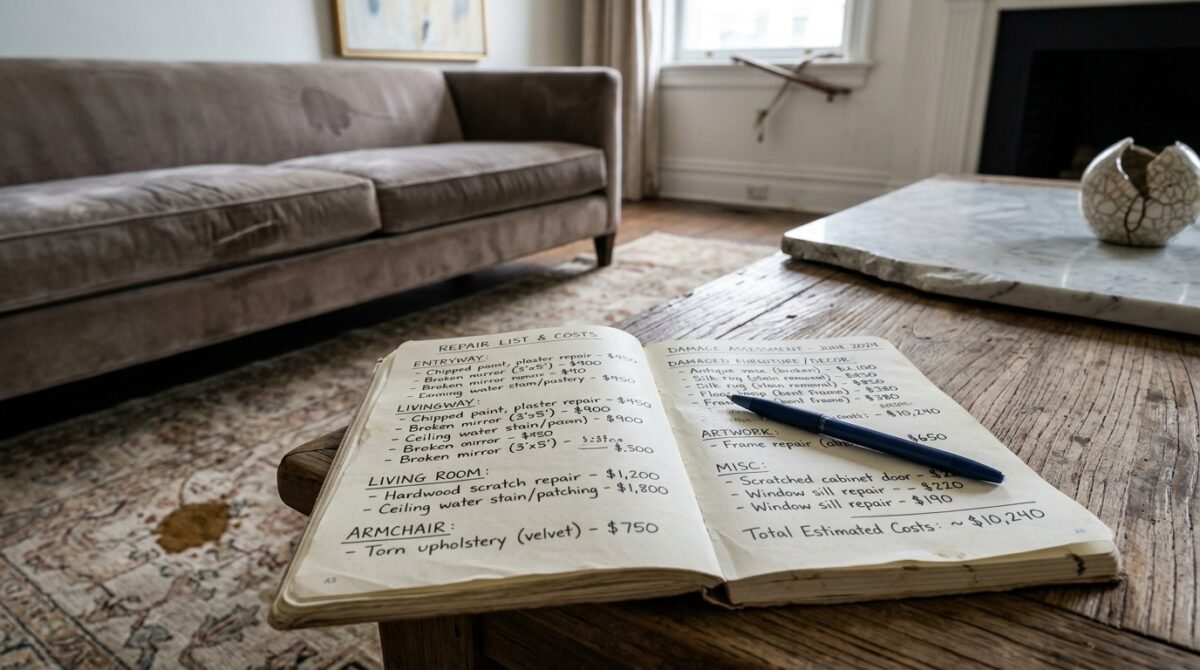
I spent the next six hours doing a full walk-through of the property with a notepad. I wasn’t just looking for broken items; I was looking for the hidden damage. The sliding glass door had been smashed—not completely shattered, but spiderwebbed, likely from someone throwing something at it. The living room rug, a custom piece I had spent a fortune on, was ruined by red wine stains that had clearly set in. The dining room table had deep scratches, likely from people sliding bottles or using it as a dance floor.
The kitchen was a biohazard. I found rotting food stuffed into the back of the pantry, and the dishwasher was broken because they had tried to run it with regular dish soap. My smart lighting system had been reset, and several of the bulbs were missing. Even the bathroom had damage—a vanity mirror was cracked, and the marble countertop had been etched by some kind of acidic cleaning product they clearly didn’t know how to use. It was a level of carelessness that felt intentional, like they were punishing me for having something they didn’t.
| Item/Repair | Estimated Cost |
|---|---|
| Sliding Glass Door | $2,200 |
| Custom Rug | $1,500 |
| Dining Table Refinishing | $800 |
| Miscellaneous Damage | $500 |
| Total | $5,000 |
It wasn’t just the money. It was the violation of my personal space. I walked through the house, room by room, and felt like a stranger in my own home. I touched the walls, checking for damage, and realized that my family had essentially taken a sledgehammer to my trust. They didn’t see me as a person who had worked for this; they saw me as a resource. I sat down on the floor of the living room and finally let myself feel the exhaustion of the last forty-eight hours.
I pulled out my phone and started drafting an email. I wasn’t going to call them; I wanted a paper trail. I itemized the damages, attached photos of every single mess, and sent the bill to the family group chat. I didn’t ask for a payment plan. I didn’t ask for an apology. I simply stated the amount and gave them a deadline. The response was immediate and vicious. My phone started blowing up with notifications, people accusing me of being greedy, of being ‘that person’ who values money over blood.
“You’re really going to charge your own blood for a little fun? You’re acting like a landlord, not a cousin. This is disgusting behavior.”
— A message from my uncle in the group chat.
I didn’t reply to the insults. I simply muted the chat and started researching locks. I knew that if I didn’t secure the perimeter, they would try to come back. They would try to ‘make up’ for it by ‘fixing’ things themselves, which would only lead to more damage. I needed to cut the cord, and I needed to do it permanently.
The Security Overhaul
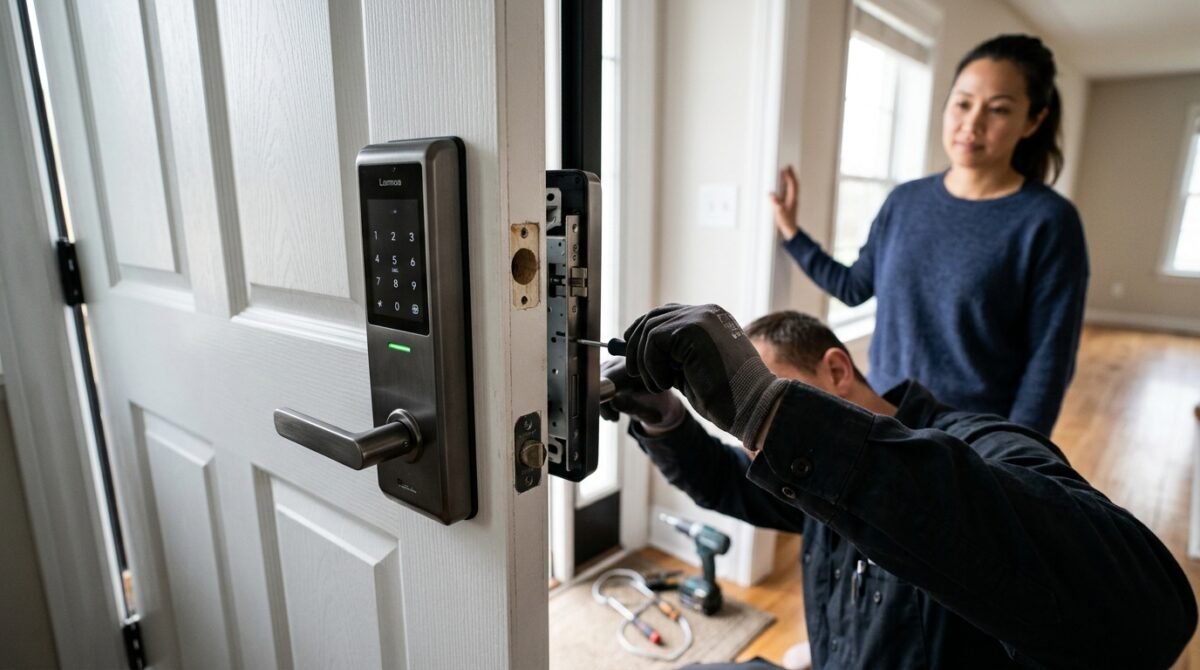
By noon the next day, I had a locksmith at the house. I didn’t just want the locks changed; I wanted a biometric system that only recognized my fingerprints and a select few people I actually trusted. The locksmith looked at the damage to the sliding door and the general state of the place and asked me if I needed to file a police report. I hadn’t even considered it, but hearing him say it out loud made me realize how serious the situation was. These people had essentially committed vandalism in my home.
I spent the afternoon filing the report. The officer was sympathetic, but he warned me that since I had ‘consented’ to them being there, it would be a civil matter. Still, having the record on file felt like a necessary step. It was my way of reclaiming the narrative. I wasn’t just the ‘rich cousin’ who was being difficult; I was a victim of property crime. I felt a weird sense of satisfaction as I watched the police cruiser pull away, knowing that I had documented the truth.
The most important part of the day was the installation of the new lock. I watched as the old, standard-issue lock was unscrewed and replaced with a sleek, heavy-duty smart lock. It felt like a symbolic closure. With every turn of the screwdriver, I felt a little bit of the weight lifting. I was no longer the host. I was the warden of my own peace. I knew the family would react poorly, and I knew the drama was far from over, but for the first time in weeks, I felt safe in my own house.
I also updated the Wi-Fi credentials and removed everyone from the smart home app access. I went through my phone and deleted every contact associated with the people who had been at the party. It felt drastic, but it was necessary. I couldn’t have them in my digital life if I wanted them out of my physical one. I realized that the people who were calling me ‘greedy’ were the same ones who had never once asked me how I was doing, only what I could do for them.
As the sun set, I sat on the patio, looking out at the ocean. The house was quiet. No music, no shouting, no broken glass. Just the sound of the waves. I realized then that I had been carrying a burden of obligation for years, and that this incident had finally forced me to drop it. I was finally, truly, on my own. And it felt amazing. The financial loss was a painful lesson, but the freedom I gained was worth every penny of that five thousand dollars.
The Fallout: The Group Chat Explosion

When I finally checked my phone the next morning, the group chat was a war zone. My family had been busy. There were over three hundred messages, most of them accusing me of being a traitor to the family. They were sharing screenshots of the invoice I had sent, calling me ‘calculating’ and ‘cruel.’ My mother had even jumped in, begging me to ‘just let it go’ and to ‘be the bigger person.’ It was the same old refrain—the expectation that I should sacrifice my well-being to preserve their comfort.
I didn’t read every message. I skimmed enough to see that the toxicity was peaking. They were planning a ‘family meeting’ to address my ‘unacceptable behavior.’ They were talking about me as if I weren’t even in the chat, dissecting my character and blaming my career for my ‘coldness.’ I realized that they had no intention of taking responsibility. They were only focused on how they could pressure me into dropping the bill and giving them access back to the villa.
“She’s clearly stressed out. Let’s just go over there next weekend and help her fix things up. She’ll come around once she sees we’re trying.”
— A message from my aunt, clearly not listening to a word I said.
That message was the final straw. They were planning to trespass. I immediately took a screenshot of that text and forwarded it to my attorney. I had a cease-and-desist drafted within the hour. It wasn’t a game anymore. I was ready to protect my property by any legal means necessary. I sent a final message to the group chat, stating that any further attempts to access my property would be met with legal action, and then I blocked every single one of them.
The silence that followed was deafening. I felt like I had just cut off a limb that had been gangrenous for years. My phone stopped buzzing. The constant stream of manipulation, guilt-tripping, and entitlement had ceased. I spent the rest of the day in a state of quiet productivity. I called a cleaning crew to come in and do a deep clean of the entire house, and I scheduled a repair service for the sliding glass door. I was finally taking care of my home.
I knew that the drama would continue behind my back, and that my reputation in the family would be tarnished, but I realized I didn’t care. The version of me they wanted—the one who provided, the one who stayed quiet, the one who took the abuse—was dead. I was building a new boundary, and while it was isolating, it was also liberating. I had finally learned that my value as a person was not tied to what I could provide for people who didn’t respect me.
The Internet Weighs In: Reddit’s Brutal Verdict

I decided to post about the situation on a popular subreddit for relationship advice. I needed to know if I was actually the villain. I laid out the facts, the damage, the entitlement, and my decision to cut them off. The response was overwhelming. Within an hour, the post had thousands of upvotes and hundreds of comments. The vast majority of people were firmly on my side, calling out the family’s behavior for what it was: blatant abuse of a relationship.
“They didn’t just break your door; they broke your trust. You owe them absolutely nothing. Stay strong, keep the locks changed, and don’t let them guilt you back into being their doormat.”
— u/RealTalkMama (Top Comment, 15.2k upvotes)
There were also comments from people who had been through similar situations. They shared stories about how their families had taken advantage of their generosity and how hard it was to finally set a firm boundary. It was incredibly validating to see that I wasn’t alone in this. The sheer volume of support reminded me that my boundaries were not only valid but necessary. I wasn’t being ‘cold’; I was being a responsible homeowner.
Some users warned me about the legal complexities, which was helpful. They advised me to keep all documentation, including the original agreement of what the stay entailed, in case they tried to sue me for ‘eviction without cause’ or some other ridiculous claim. I felt much better prepared knowing that I had the support of people who understood the logic behind my actions. It was a stark contrast to the toxicity in my own family group chat.
I also read the dissenting opinions—the people who said I should have ‘talked it out’ instead of changing the locks. While I disagreed with them, it was interesting to see how people perceived ‘family loyalty.’ It made me realize that different families have different standards, but in my case, the standard had clearly been set to ‘take advantage of her.’ The discussion on Reddit helped me clarify my own feelings and solidified my resolve to never let them back in.
The thread turned into a massive debate about boundaries in general, which was fascinating. People were sharing their own ‘boundary success stories.’ It was like a masterclass in self-respect. I went back to the thread every few hours, reading the comments and feeling a sense of peace that I hadn’t felt in a long time. I was finally, for the first time in my life, putting myself before the expectations of others, and it felt right.
The Aftermath: Finding Peace in Solitude

A month has passed. The house is finally back to its original state. The sliding glass door is fixed, the rug is replaced, and the place is as pristine as it was the day I bought it. I’ve started spending more time there, and I’ve actually begun to enjoy the silence. I’ve even started a small garden on the patio, something I never would have felt comfortable doing when I was worried about people trampling it.
I’ve had no contact with my family. My mother tried to call a few times, but I didn’t answer. I sent her a polite but firm letter stating that I would be open to a conversation only when they were ready to apologize and pay for the damages. I haven’t heard back, which tells me everything I need to know. They weren’t looking for a relationship; they were looking for a freebie. And that’s a hard truth, but it’s one I’m finally able to accept.
I’ve also started seeing a therapist to work through the guilt that still occasionally pops up. It’s hard to unlearn a lifetime of being the ‘person who fixes everything,’ but I’m making progress. I’ve realized that my need to be helpful was often a defense mechanism to earn love, and that real love shouldn’t come with a price tag of five thousand dollars and a trashed home.
My career has actually improved, too. Without the drain of family drama, I’ve been able to focus more on my goals. I recently got a promotion, which I’m celebrating with a solo trip to the coast—a real vacation, where I won’t have to worry about anything but my own happiness. I’ve finally learned to enjoy the fruits of my labor without feeling the need to share them with people who don’t appreciate the work that went into them.
I know the future might bring more attempts from them to reach out, but I’m ready. I have the locks, I have the legal support, and most importantly, I have the self-respect. I’ve learned that the most important thing you can own isn’t a house or money; it’s the peace of mind that comes from knowing you’ve drawn a line, and you’ve held it.
Reflecting on the Cost of Boundaries

People always talk about the benefits of boundaries, but rarely do they mention the cost. The cost is often the relationship itself. I lost my family—or at least, the version of them that I thought existed. That is a grief all its own. It’s a mourning process, realizing that the people you expected to be there for you are the ones who were waiting to take advantage of you. But the gain is your integrity.
If I had to go back and do it again, I wouldn’t have invited them in the first place. I would have saved myself the five thousand dollars and the heartache. But then I wouldn’t have learned this lesson. I wouldn’t have discovered the strength I have to say ‘no’ to the people I love. Sometimes, the most important lessons in life come at a high cost, and this was one of them.
I look back at the photos I took of the damage, and they don’t make me angry anymore. They make me sad, but it’s a controlled sadness. It’s the kind of sadness you feel when you realize you’ve outgrown a part of your life. I’ve moved on. I’ve started a new chapter, one where I am the author, and I am the one setting the rules. And that, I’ve realized, is worth more than any beach villa in the world.
I hope that anyone reading this who is struggling with similar issues, whether it’s family entitlement or boundary violations, knows that they aren’t alone. You aren’t ‘being difficult’ by protecting your home or your life. You are being a person who deserves respect. Don’t be afraid to change the locks, even if it’s on your own life. You are the only one who can keep your sanctuary safe.
If you’re wondering if you should let ‘just one more person’ stay at your place, take this as a sign: don’t. Protect your peace. The right people will respect your boundaries, and the wrong ones will show you exactly why they don’t belong in your life. Stay firm, stay strong, and keep your doors locked.
Conclusion
This experience has been a masterclass in the necessity of boundaries. Losing five thousand dollars was a painful, expensive lesson, but the emotional clarity it provided is something I wouldn’t trade. I’ve learned that my family’s entitlement wasn’t a reflection of my success, but rather a reflection of their own lack of respect. By changing the locks, I didn’t just secure a building; I secured my own self-worth.
The fallout was intense, but it was necessary to prune the dead weight from my life. I am now in a place where my home is truly mine, and my time is truly mine. I hope my story serves as a reminder to anyone who feels like an ‘easy target’ that you have every right to demand respect, and you have every right to close the door on those who refuse to give it to you.
What do you think? Have you ever had to draw a hard line with family over property or personal space? Did you regret it, or was it the turning point you needed? Let me know in the comments below—I’m curious to hear your experiences.
What's your verdict on this dilemma?
Vote below to contribute to the official community consensus.

Have a Dilemma Keeping You Up at Night?
Share your real-life feud, wedding chaos, or relationship crossroads anonymously with our editorial team.
What do you think ?
0 Comments🛡️ Comments are moderated to protect community integrity. Your comment will appear once approved by the editorial team.