
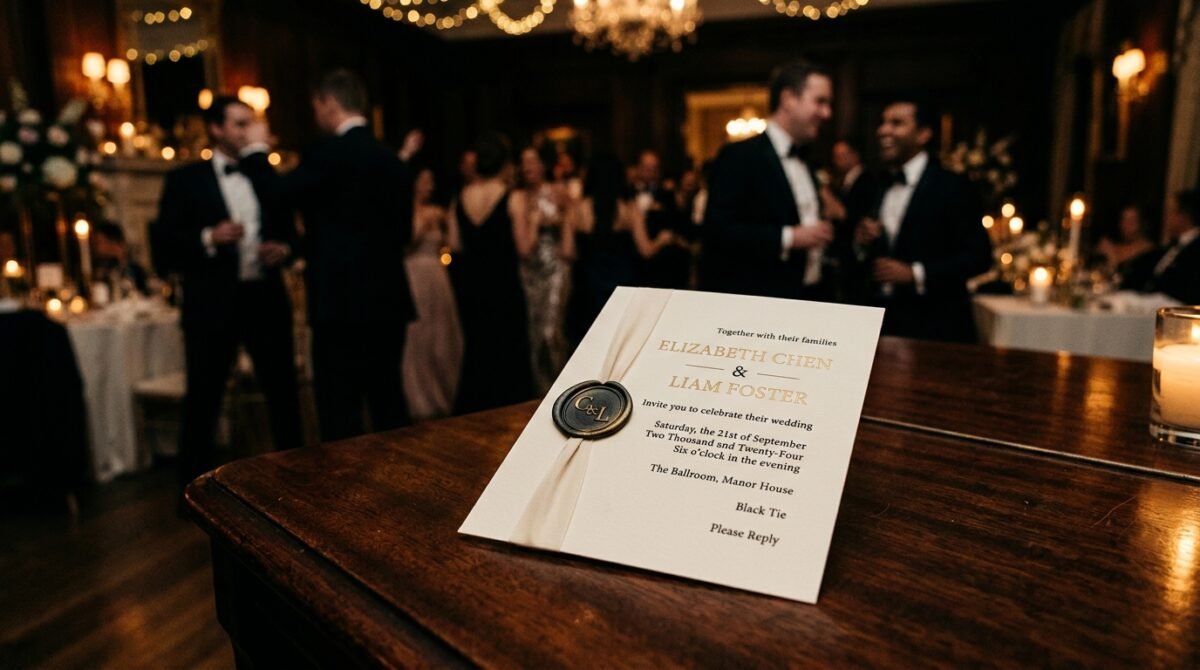
When my partner and I began planning our wedding, we envisioned a night of refined elegance—black-tie, intimate, and surrounded by people who genuinely celebrated our commitment. We had spent eighteen months curating every detail, from the hand-pressed menu cards to the specific seating chart designed to avoid any semblance of familial tension. Yet, none of that preparation could have accounted for the audacity that arrived in the form of a casual text message from my brother, Mark, three weeks before the ceremony.
Mark, who had been a groomsman since the inception of our plans, has always been the golden child of our family. His charming facade, however, masked a series of questionable choices that culminated in his current, very public affair with a coworker. When he approached me with the expectation that his mistress would be welcomed at our black-tie affair—an event where his estranged wife and our entire extended family would be in attendance—I was left with a moral and social dilemma that threatened to dismantle our entire wedding day.
This wasn’t just a simple plus-one request; it was a power move. It was an assertion that his personal indulgences superseded my wedding vows and the dignity of my guests. My refusal was swift, but his reaction was a masterclass in manipulation. What followed was a cascade of emotional blackmail, threats to boycott the wedding, and the eventual, painful decision to strip him of his duties as a groomsman, effectively severing the last thread of harmony in our family.
As I sat in my living room, the weight of the decision pressing down on me, I realized that standing my ground would cost me my relationship with my brother. The irony was not lost on me: I was protecting the sanctity of my marriage to someone I loved, while he was attempting to trample the sanctity of his own, and mine, simultaneously. This is the story of how one wedding invite became the catalyst for a total family collapse.
The fallout has been immense. My parents are calling me ‘unforgiving,’ my brother is spinning a narrative of victimhood, and I am left trying to salvage a day that was supposed to be about love, not about managing the chaotic, infidelity-ridden life of a man who refused to respect a simple boundary. This is my truth, and the reality of what happens when you decide that your boundaries are worth more than keeping the peace.
The Casual Text That Started A War

It was a Tuesday afternoon when my phone buzzed with a message from Mark. We had just finished finalizing the seating chart, and I was feeling a rare sense of accomplishment. I expected a question about his tux fitting or perhaps his flight arrival time. Instead, the message was short, blunt, and dripping with an entitlement that made my blood run cold.
“Hey, just a heads up, I’m bringing Sarah as my plus-one. She’s looking forward to meeting everyone and seeing how you guys do a black-tie event. Let me know if you need to update the guest count.”
— Text from Mark
I stared at the screen, my thumb hovering over the reply button. Sarah was not just a coworker; she was the woman currently destroying Mark’s marriage to his wife of six years, a woman who was also invited to our wedding and who I considered a dear friend. The sheer audacity of expecting me to host his mistress in the same room as his wife was beyond comprehension.
My response was immediate. I didn’t mince words, though I kept it civil. I reminded him that the wedding was a black-tie event, strictly for family and close friends, and that ‘plus-ones’ were reserved for spouses and long-term partners we had personally vetted and approved months ago. I reminded him that his wife, Elena, would be there and that this was entirely inappropriate.
Mark’s reply came within seconds, showing he had clearly anticipated pushback but assumed he could override it. He told me that his marriage was ‘effectively over’ and that I needed to stop being ‘judgmental’ and ‘stuck in the past.’ He insisted that if he were to attend, Sarah had to be by his side because he didn’t want to be ‘miserable’ alone.
The conversation spiraled rapidly. I felt a surge of protectiveness over my event. This was not a theater for his personal drama. I gave him a final ultimatum: come alone, or don’t come at all. He replied with a single, ominous sentence: ‘You’ll regret making me choose.’ At that moment, I knew this wasn’t going to end with a simple conversation.
The Inevitable Escalation at Sunday Dinner
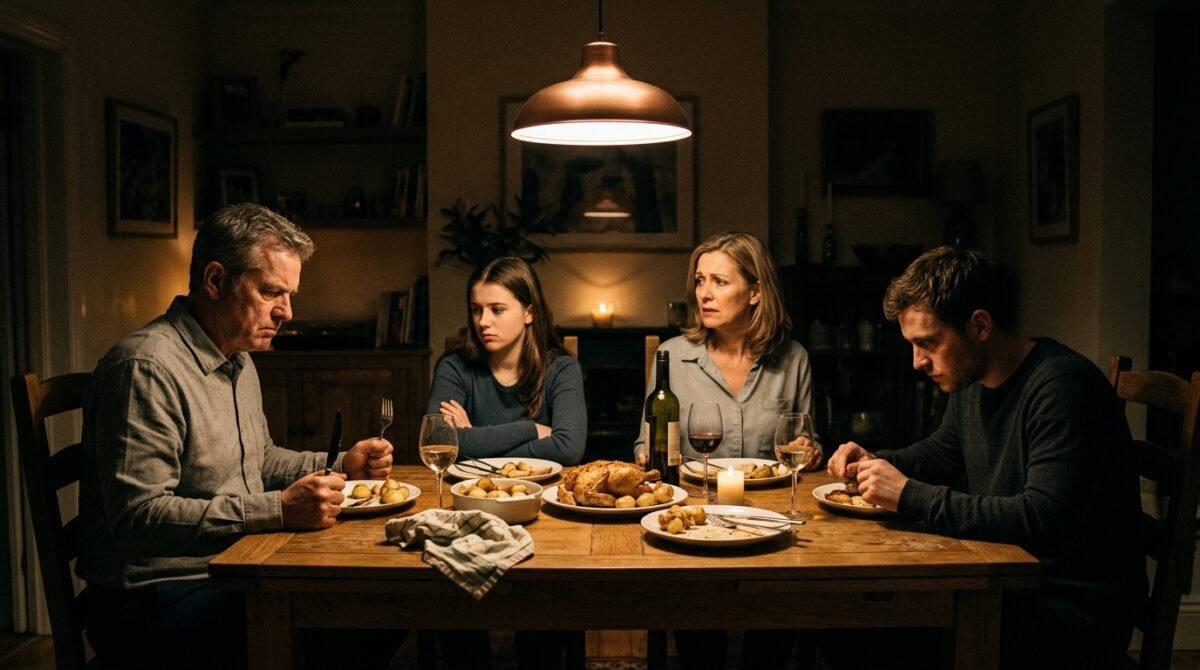
The next Sunday, the tension at our parents’ dinner table was thick enough to cut with a knife. Mark arrived without his mistress, but the mood he brought with him was toxic. He spent the first twenty minutes of dinner sighing loudly and making pointed comments about how ‘some people care more about rules than family.’ My parents, oblivious to the text exchange, were confused and increasingly annoyed.
I stayed quiet, focusing on my food, until Mark leaned over and whispered, loud enough for my mother to hear, that he couldn’t wait to see how ’empty’ the wedding would feel without real support. That was the breaking point. I looked him dead in the eye and told him that his ‘support’ wasn’t needed if it came with the condition of disrespecting my guests.
“Mark, this is not the place. If you can’t respect my marriage or my guests, you don’t need to be there. I am not letting you turn my wedding into a playground for your affair.”
— My response to Mark
My mother dropped her fork, the clatter echoing in the silence. She asked what was going on, and Mark, ever the manipulator, played the victim. He claimed I was being a ‘tyrant’ and ‘controlling’ because he wanted to be happy. He didn’t mention the mistress by name, but the implication was clear enough to anyone listening.
I stood up and laid it out clearly. I explained that he was a groomsman, a role that required maturity and decorum, neither of which he had demonstrated. I told him that I was reconsidering his role in the wedding entirely. The table went deathly quiet. My father finally spoke up, telling Mark to drop it, but Mark was already deep in his tantrum.
He stood up, shoved his chair back, and declared that if he couldn’t bring who he wanted, he wouldn’t be standing up there for me. He thought this would make me fold. He expected me to beg him to stay. Instead, I simply nodded and said, ‘That’s your choice. I accept it.’ The look of shock on his face was one of the most satisfying moments of my life.
The Official Notification of Removal
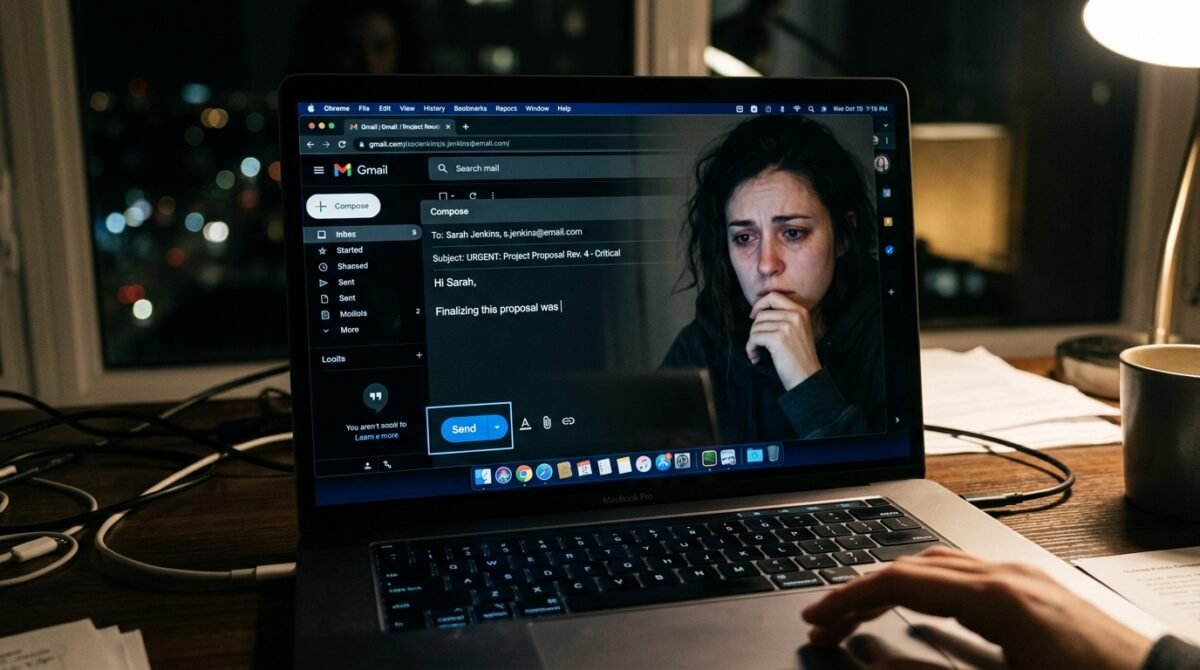
The morning after the disastrous dinner, I didn’t wait. I drafted a professional, firm email to Mark, copying my parents so there could be no misinterpretation of the facts. I officially removed him from his duties as a groomsman. I thanked him for his initial willingness to participate but stated clearly that his recent behavior made his participation impossible.
I also sent a follow-up email to the florist and the wedding coordinator, updating the party list. It felt like a weight had been lifted off my shoulders. I wasn’t just losing a groomsman; I was losing a source of constant stress. However, the reaction from the rest of the family was not what I expected. My aunt called me, breathless, telling me I was ‘going too far’ and that ‘family is family, regardless of mistakes.’
I found myself defending my decision over and over again. It was exhausting. People kept telling me that weddings are about ‘forgiveness’ and ‘unity.’ I kept asking them why that burden only fell on me. Why was I the one expected to sacrifice my comfort and my guest’s dignity for the sake of a man who couldn’t keep his life together for one single day?
“I am not asking for your permission to manage my wedding. I am informing you that Mark will not be a part of it. If you choose to support his entitlement over my boundaries, that is a choice you are making.”
— My email to my extended family
The backlash was immediate. My brother started posting cryptic statuses on social media about ‘toxic people’ and ‘fake family.’ My parents were being bombarded with questions from relatives. It felt like the wedding had become a political campaign, and I was losing in the court of public opinion.
Despite the noise, I felt a strange sense of peace. I had removed the chaos. I had protected my wife-to-be from the potential disaster of having his mistress seated at the same table as his wife. I was doing the right thing, even if the world around me was screaming that I was being cruel.
The Reddit Trial: How The Internet Reacted
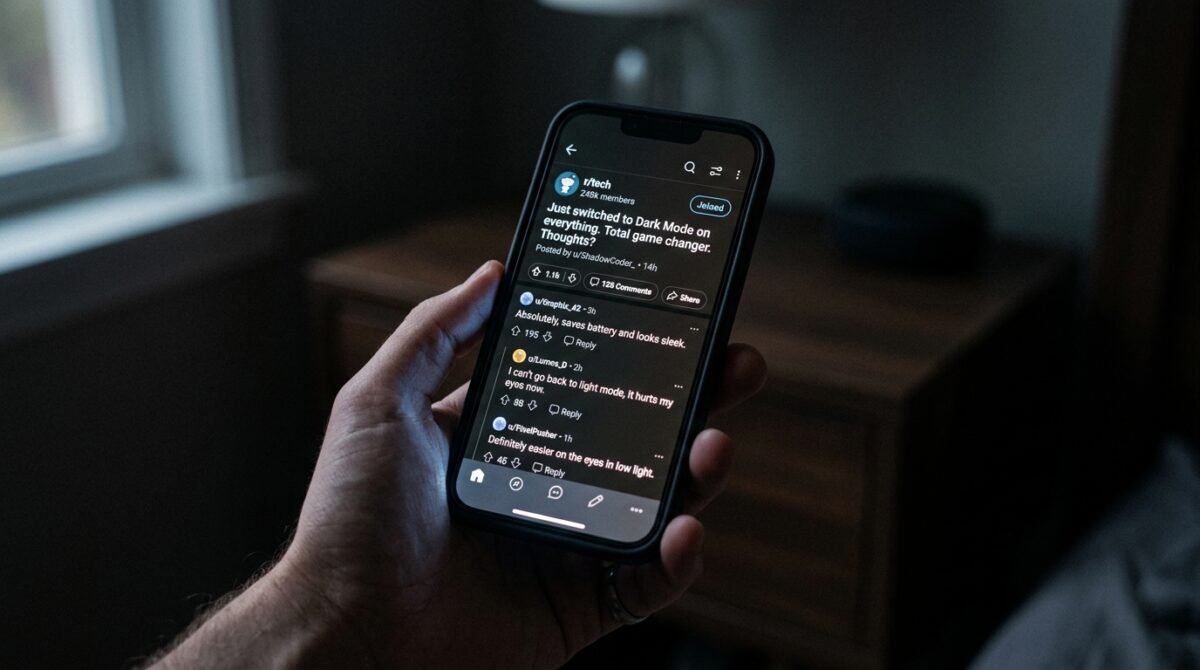
When I finally posted the situation on Reddit, I expected a mix of opinions. I needed to know if I was truly the ‘monster’ my family was painting me to be. I provided the full context: the affair, the black-tie requirement, the ultimatum, and the fallout. I sat back and watched the comments roll in by the thousands.
The response was overwhelming. While a few voices argued that I should have ‘kept the peace,’ the vast majority were firmly on my side. People were shocked by the audacity of my brother and commended me for standing my ground. It was validation that I had been craving, even if I hadn’t realized it.
“NTA. Your wedding is not a public forum for your brother’s affair. The fact that he expected to bring his AP to the wedding of his own sister, while his wife is in attendance, is mind-boggling. You didn’t just cancel his role; you saved your wedding from a disaster.”
— u/WeddingPlannerPro (Top Comment, 28.1k upvotes)
Another user chimed in with a more analytical perspective, noting the power dynamics at play. They pointed out that Mark was attempting to ‘normalize’ his affair by forcing me to validate it by allowing the mistress to attend. By saying no, I wasn’t just protecting the wedding; I was refusing to participate in his gaslighting.
“This is classic narcissist behavior. He wants you to be complicit in his cheating. If you had let her come, he would have spent the rest of his life saying, ‘Well, even my sister approved.’ You did the right thing by cutting him off before he could use your wedding as a stamp of approval.”
— u/FamilyDramaExpert (12.4k upvotes)
Reading these comments felt like a massive relief. It was the affirmation that I hadn’t lost my mind. The Internet, in all its chaotic glory, had provided a mirror that showed me my boundaries were not only reasonable but necessary. It helped me prepare for the inevitable confrontation at the wedding itself.
The Final Phone Call With Dad

A week before the wedding, my father called. He didn’t yell, which made it worse. He sounded tired. He told me that Mark was refusing to come at all now, and that my mother was crying every night. He asked me, as a final plea, if there was ‘any way to fix this.’ He suggested that perhaps we could ‘just let him bring her’ and ‘ignore them’ for the night.
I held firm. I explained to my father that his suggestion was a betrayal of the very principles he had raised me with. If I ignored them, I would be enabling the destruction of his marriage. I asked him if he would be comfortable looking at his daughter-in-law, Elena, throughout the night, knowing that my brother had brought his girlfriend right in front of her.
“Dad, if I let them come, I am choosing to disrespect Elena. I am choosing to make my wedding about Mark’s ego. I love you, but I will not sacrifice my integrity just to keep him from pouting.”
— My response to my father
My father was silent for a long time. Then, he sighed and said, ‘I guess I understand. But the family will never be the same after this.’ I knew he was right. My wedding would be the dividing line in our family history—the moment things shifted, perhaps permanently. It was a somber realization, but one I was ready to face.
We ended the call with no resolution, just a mutual understanding that the path was set. There was no turning back. The wedding would happen, my brother would likely be absent, and the family would have to deal with the consequences of his choices. I hung up the phone and felt a strange sense of finality.
The Day Of: Quiet Before The Storm
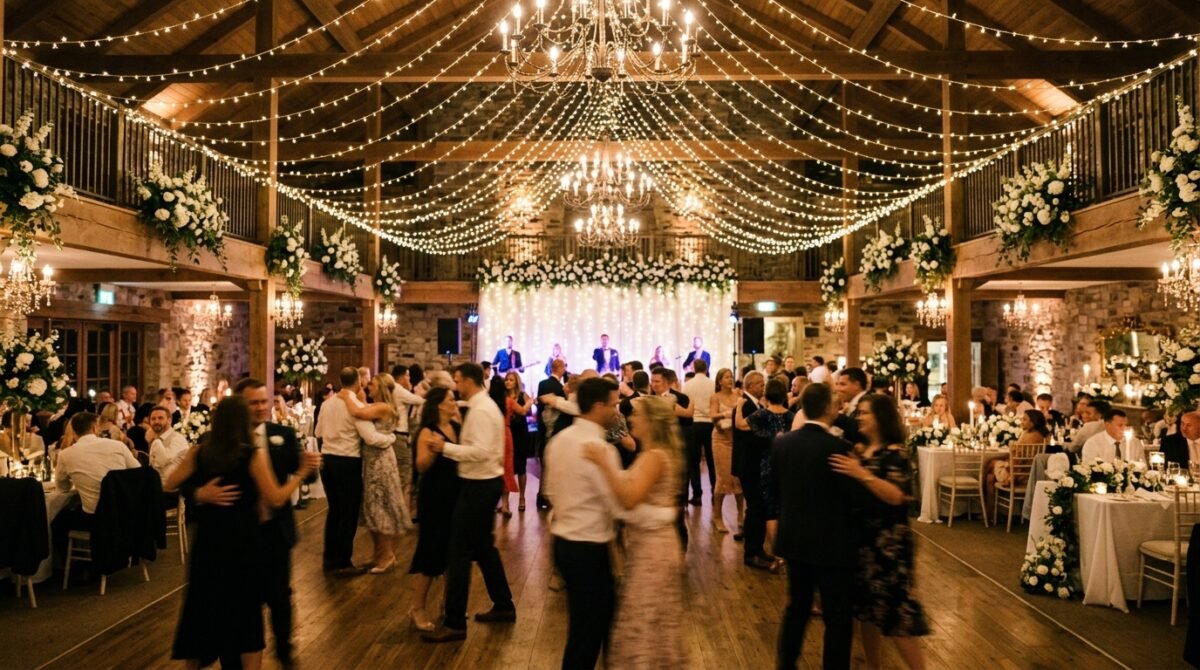
The morning of the wedding was surprisingly calm. The hair and makeup team arrived, the champagne was popped, and the air was filled with laughter. Mark was absent, as expected. His name had been removed from the programs, and the extra chair at the head table had been relocated. The space he would have occupied felt less like a hole and more like a relief.
Elena arrived, looking stunning and unaware of the full extent of the drama. I hugged her, and she smiled, oblivious to the fact that she had been spared a public humiliation. Seeing her so happy, so oblivious, made every bit of the struggle worth it. I knew I had done the right thing, not just for myself, but for her.
Throughout the day, I kept waiting for a scene. I kept waiting for Mark to show up with his mistress, to crash the ceremony, or to create a scene at the entrance. I had alerted security to keep an eye out, just in case. But as the hours passed and the ceremony concluded, the anxiety began to fade. He didn’t come.
The reception was everything we wanted it to be. It was elegant, intimate, and free of the toxicity I had spent weeks fearing. We danced, we toasted, and we celebrated our love. It was the perfect night, and the absence of my brother didn’t diminish it; it refined it. The people who were there were the ones who mattered, the ones who respected us.
Late in the evening, I found myself sitting at the bar, watching the crowd. I felt a profound sense of gratitude. I realized that setting boundaries had not just protected my wedding; it had cleared the air for the rest of my life. I was no longer beholden to the expectations of a man who didn’t respect me.
The Aftermath: Family Fallout
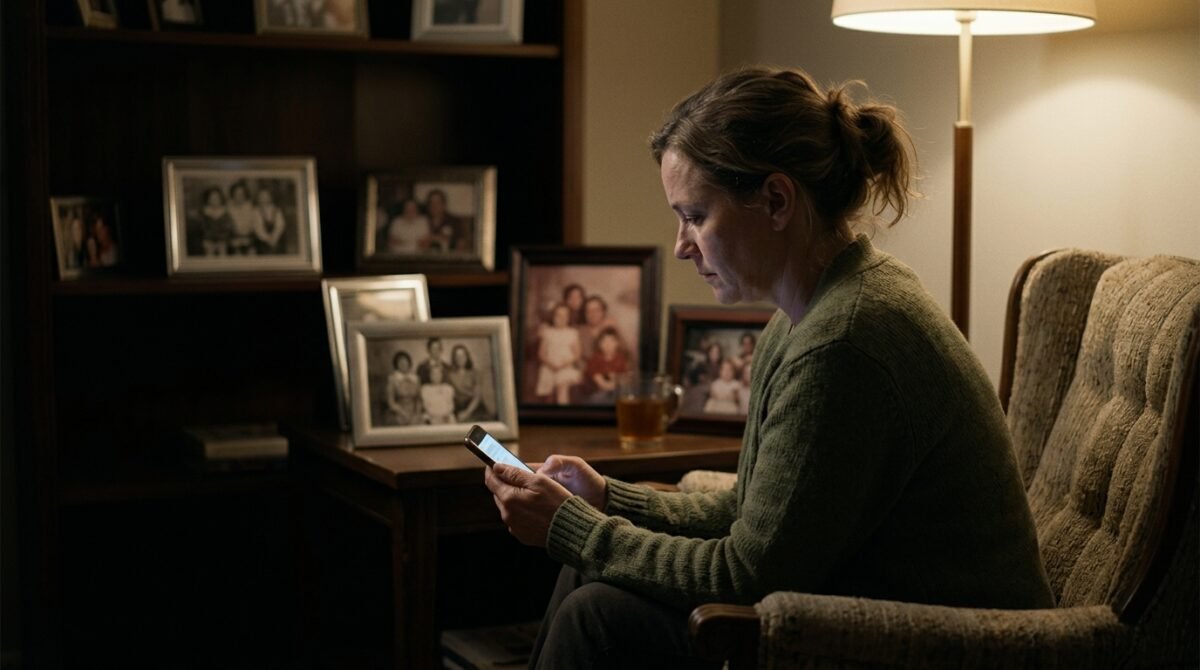
In the weeks following the wedding, the fallout began in earnest. I was no longer the ‘golden child’ to my extended family. I was the ‘stubborn one.’ My mother didn’t speak to me for a month, and my father’s interactions remained strained. Mark had successfully painted me as the villain, and many of my relatives had bought into his narrative.
I received messages from aunts and cousins telling me that I should have ‘been the bigger person.’ They didn’t seem to care that being the ‘bigger person’ would have meant being a silent accomplice to infidelity. It became clear that in my family, peace was valued far more than integrity. I started to wonder if I was part of a family or part of a performance.
I began to set boundaries with them as well. When a relative brought up ‘poor Mark’ at a lunch, I stopped them immediately. I told them that if we were going to talk about the wedding, we would talk about the facts, not the narrative Mark had spun. Most of them didn’t want the facts; they wanted the gossip.
“I am not interested in hearing about how my brother is the victim here. He made his choices, and he is living with the consequences. If you want to talk about our family, let’s talk about something else. If not, I’m leaving.”
— My boundary setting with my aunt
It was a difficult transition. I lost contact with a few cousins I had been close to, which hurt more than I expected. But I also found that the people who really cared about me—my partner, my best friends, and a few supportive relatives—stayed by my side. They saw the integrity of my actions, even when the rest of the family didn’t.
The distance between me and my parents grew, but it also became more honest. We stopped pretending that everything was fine. We started having actual conversations, even if they were uncomfortable. It wasn’t the relationship I had hoped for, but it was a real one, and that was a start.
Lessons in Radical Honesty

Looking back, I realize that the conflict over my wedding wasn’t just about the plus-one. It was about the power of saying no. For years, I had been the person who accommodated others, who kept the peace, who smoothed over the rough edges of my brother’s life. This was the first time I had truly stood up for myself, and the sky hadn’t fallen.
I learned that boundaries are not just for others; they are for yourself. By saying no to Mark, I was saying yes to my own self-respect. I was declaring that my life and my choices were worth protecting. It was a lesson that has carried over into my marriage and my career.
I also learned that people who only love you when you are compliant don’t actually love you; they love the convenience you provide. Losing the approval of those people was a painful process, but it was also incredibly liberating. I no longer have to perform for them. I no longer have to manage their opinions of me.
“Integrity is expensive. It costs you the approval of people who didn’t respect you in the first place, but it buys you the freedom to be who you truly are.”
— A thought I kept in my journal
My brother is still with his mistress, and his marriage has long since ended. He doesn’t talk to me, and for the first time in my life, I don’t feel guilty about it. We are living in two different worlds, and I am perfectly happy to stay in mine. The wedding wasn’t just a day; it was the birth of a new version of myself.
I have started to see my family dynamics with a clarity I never had before. I see the cycles of enabling and the patterns of manipulation. And for the first time, I have the power to break those cycles. I am not responsible for their behavior, only for my own.
Reflecting on the Community Impact

The response to my story on the Internet was a turning point. It wasn’t just about me; it was about the thousands of other people who had been in similar situations, struggling to set boundaries in the face of family pressure. I realized I was part of a larger conversation about the necessity of standing up for oneself.
Many people reached out to me with their own stories of wedding drama and toxic family members. They thanked me for sharing my experience, saying it gave them the courage to set their own boundaries. Knowing that my struggle had helped others made the pain of the experience feel like it had a purpose.
The Reddit community, in particular, was a source of great support. The debates that took place under my post were varied and, at times, heated. They challenged me to think about my own motivations and my own reactions, which helped me grow. It wasn’t always easy to read the criticism, but it was necessary.
“Thank you for sharing this. It’s so hard to stand up to family, especially when they make you feel like the bad guy. Your story gave me the strength to tell my own sister that she can’t bring her drama to my wedding. You’re not alone.”
— A private message from a reader
I realized that when we share our stories, we aren’t just seeking validation; we are building a community. We are helping each other navigate the complexities of relationships and boundaries. We are learning that it’s okay to put yourself first, and that the people who truly matter will understand.
The impact of this story has been much larger than I ever imagined. It has touched people in ways I couldn’t have anticipated, and it has reminded me that we are all, in our own ways, trying to find our voice and stand our ground. And that is a powerful thing.
Finding Peace in the New Normal

Today, I am happier than I have ever been. My marriage is strong, built on the foundation of the boundaries we set early on. We have learned to navigate family conflict together, and we have learned that our love is the most important thing we have. We don’t worry about the drama of others; we focus on the peace of our home.
My relationship with my parents is still a work in progress. We have found a middle ground, one that is based on mutual respect and a clear understanding of our differences. It’s not the relationship I dreamed of, but it’s a healthy one, and for now, that is enough. I have learned to appreciate the progress, however slow it may be.
I no longer feel the need to justify my existence or my choices to anyone. I know who I am, and I know what I stand for. I have found a sense of confidence that I never had before, a quiet strength that comes from knowing that I can handle whatever life throws my way.
“Peace isn’t the absence of conflict; it’s the ability to manage it with grace and integrity. I have found my peace, and I will not trade it for anyone else’s approval.”
— My personal mantra
I hope that anyone who reads this story finds the courage to set their own boundaries. I hope they realize that they are worth more than the drama of others. I hope they find the peace that comes from knowing that they are in control of their own lives. Because in the end, that is all we really have.
Life is too short to spend it living according to the expectations of people who don’t have our best interests at heart. It’s time to take control, to stand our ground, and to live our lives on our own terms. And if that means losing a few people along the way, then so be it. It’s a price worth paying.
Conclusion
My journey from a panicked bride-to-be to a confident woman setting firm boundaries has been one of the most transformative experiences of my life. The choice to cancel my brother’s role in our wedding was not made out of malice, but out of a desperate need to preserve the sanctity of our commitment and the dignity of our celebration. What seemed like a singular, harsh decision became the blueprint for my future—one defined by radical honesty, self-respect, and a refusal to participate in the toxic cycles of my family.
I now understand that setting boundaries isn’t just about protecting yourself from others; it’s about affirming your own value. Every time I said ‘no’ to the pressure to conform, I was saying ‘yes’ to my own integrity. I have lost some relationships along the way, but I have gained something far more valuable: a life that is truly my own, free from the manipulation and drama that once held me captive.
I invite you all to reflect on your own lives. Are there areas where you are compromising your integrity to keep the peace? Are you sacrificing your own well-being to accommodate the whims of those who do not respect you? It is never too late to draw a line in the sand and reclaim your power. Your worth is not determined by the approval of others, but by the choices you make every single day.
I would love to hear your thoughts on this. Have you ever had to set a major boundary with family during a life milestone? Was it worth the fallout, or do you regret the distance it created? Let’s keep the conversation going in the comments below.
What's your verdict on this dilemma?
Vote below to contribute to the official community consensus.

Have a Dilemma Keeping You Up at Night?
Share your real-life feud, wedding chaos, or relationship crossroads anonymously with our editorial team.
What do you think ?
0 Comments🛡️ Comments are moderated to protect community integrity. Your comment will appear once approved by the editorial team.