
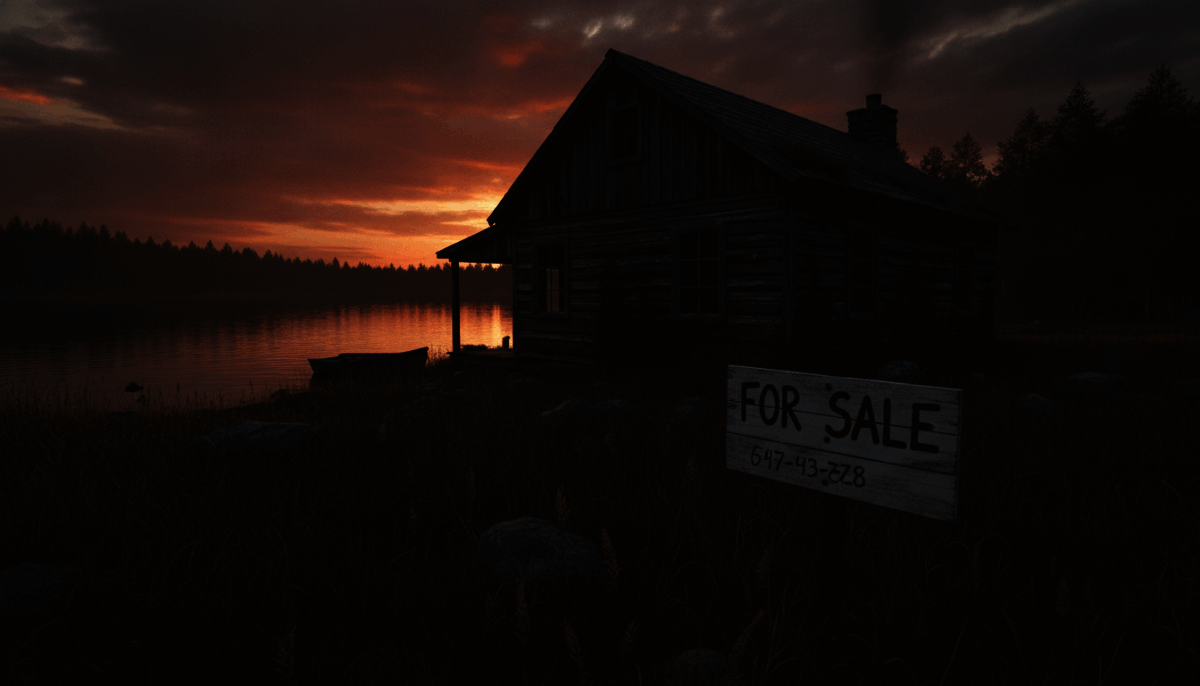
Growing up, the lake cabin was more than just a summer house; it was the physical embodiment of our grandfather’s legacy. It was where we learned to fish, where the screen door slammed in the rhythm of July, and where our family found its only true sanctuary from the pressures of modern life. When Grandfather passed, he left the property to my brother, Marcus, and me as tenants in common. It was a gesture of trust, a hope that we would maintain the bond that the property itself had fostered.
For years, Marcus and I managed the costs together. It wasn’t always easy, but it was fair. Then, the pandemic shifted everything. Marcus, who had always been prone to chasing get-rich-quick schemes, decided that the cabin was his ticket to passive income. He didn’t see a sanctuary; he saw a revenue stream. He wanted to gut the charm, install smart locks, and turn our family history into a high-turnover Airbnb listing.
The tension began as a subtle shift in our monthly check-ins. Marcus started complaining about the property taxes, the maintenance fees, and the ‘lost opportunity cost’ of keeping the cabin for private use. I didn’t realize at the time that he was building a narrative to justify stripping me of my rights. He wasn’t just interested in renting it out; he was interested in total control, and he didn’t care who he had to steamroll to get it.
The dilemma wasn’t just about money—it was about the erosion of a memory. When he finally approached me with his demand, he wasn’t asking for a partnership; he was issuing an ultimatum. He wanted me to sign a quitclaim deed, handing over my half for a pittance, citing his ‘sweat equity’ and ‘vision.’ I realized then that if I didn’t act decisively, I would lose the cabin anyway, while he would reap the profits. So, I took a different path.
This is the story of how I handled a brother who viewed blood as a business transaction. It is a story of legal loopholes, family betrayal, and the cold, hard reality of the open market. Sometimes, when someone tries to force your hand, the only way to win is to change the game entirely.
The Tuesday Night Facetime That Started the War

It started on a Tuesday, the kind of mundane evening where you expect nothing more than a quick check-in about pool maintenance or insurance renewals. I was sitting on my couch when the Facetime call came through. Marcus looked agitated, pacing back and forth in his home office, a background of charts and graphs behind him that I had never seen before. He didn’t even say hello. He jumped straight into the pitch.
He started talking about ‘market penetration’ and ‘yield optimization.’ I felt a knot form in my stomach. He claimed that the cabin was underperforming as an asset. He argued that we were losing thousands of dollars every summer by not utilizing the platform economy. I tried to interrupt, to remind him that we weren’t a corporation, but he just talked over me, his voice rising in volume.
“Listen, I’ve done the math. If we transition the cabin to a short-term rental, we’re looking at a 15 percent ROI within the first year. But to get the insurance and the permits, I need full administrative control. I need you to sign this quitclaim deed so I can list it under my LLC.”
— Marcus, via Facetime
I sat there in silence, feeling the blood drain from my face. A quitclaim deed? He wanted me to give up my legal ownership of the property for a business entity he controlled entirely. He wasn’t offering to buy me out at fair market value; he was essentially asking me to donate my half of the inheritance to his personal portfolio. He painted it as a ‘family favor,’ claiming that I was being ’emotional’ and ‘short-sighted’ by holding onto a nostalgic asset.
I asked him why he couldn’t just sign the paperwork as a joint partnership. His answer was quick, practiced, and cold. He claimed that having two owners made the platform vetting process ‘too complicated’ and that banks preferred single-owner entities for high-risk rental properties. It was a flimsy excuse, and we both knew it. He wanted total ownership so he could decide whether to keep the cabin or flip it entirely.
The conversation ended with him telling me to ‘think about it’ and that I should send the signed documents by Friday. He didn’t ask how I felt. He didn’t acknowledge that this was our grandfather’s legacy. He simply set a deadline, as if I were an employee and he were the CEO. I hung up the phone, and for the first time in my life, I didn’t feel like a brother; I felt like an obstacle in his way.
The Calculated Response to a Bad Faith Proposal

Wednesday morning, I woke up with a clarity that surprised me. I realized that Marcus had been banking on my reluctance to cause a scene. He knew I valued the peace of the family, and he bet that I would cave just to keep the peace. But he had fundamentally misunderstood the nature of our grandfather’s gift. It wasn’t a business asset; it was a trust, and he had just violated the first principle of that trust.
I spent the day researching property law in our state. I found that as a tenant in common, I had every right to petition for a partition sale if we couldn’t agree on the management of the property. I didn’t want to sell, but if Marcus was going to force my hand by trying to steal my equity, I wasn’t going to roll over. I had a conversation with a local real estate attorney, a sharp woman named Sarah who understood exactly what was happening.
Sarah explained that if Marcus wouldn’t agree to a fair buyout, the court would essentially force a sale of the entire property to divide the proceeds. She told me that I could preempt the drama by listing it myself. It was the nuclear option. If I listed the property, it would be gone. No rental business, no ‘passive income’ for Marcus, just the finality of a sale.
I didn’t tell Marcus what I was doing. I let him think I was still ‘considering’ his request. He texted me on Thursday, asking if I had printed the forms yet. I told him I was reviewing the tax implications with my accountant. He bought it, hook, line, and sinker. He was so convinced of his own brilliance that he never considered that I might have my own team of advisors.
I called a reputable broker in the lake town. I told them I wanted a quick, clean sale. I didn’t care if we got the absolute top dollar—I wanted it sold before Marcus had time to file any counter-claims or injunctions. By Friday morning, the listing was live. I didn’t send him the deed; I sent him the link to the Zillow listing. The irony was almost too delicious to keep to myself.
The Group Chat Explosion

The explosion happened exactly twenty minutes after I sent the link. My phone started vibrating with a intensity I’d never felt before. The family group chat, which usually consisted of birthday wishes and holiday photos, turned into a war zone. Marcus had sent a screenshot of the listing, followed by a flurry of accusations that would make a sailor blush.
“Are you actually insane? You listed the cabin? I am in the middle of securing a loan for the renovations, and you just nuked the whole thing! You are trying to bankrupt me!”
— Marcus, in the family group chat
My parents jumped in, naturally confused and worried. They had no idea about the ‘business deal’ Marcus had tried to pressure me into. They only saw two brothers fighting over a house. I stayed calm. I didn’t engage in the shouting match. I simply laid out the facts as they had happened, including the demand for the quitclaim deed. The silence from my parents was deafening.
My mother, who had always been the peacemaker, shifted her tone instantly. She was horrified that Marcus would try to trick me out of my inheritance. She asked him point-blank if he had intended to cut me out of the profits. Marcus tried to deflect, talking about ‘streamlined operations,’ but he was losing the room. The support that he expected to be automatic wasn’t there.
Other relatives started weighing in. It turned out that Marcus had been complaining to them as well, trying to paint me as the ‘difficult’ one. Now that the full story was out, the narrative shifted. He wasn’t the savvy entrepreneur; he was the greedy brother who tried to pull a fast one on his own blood. The group chat became a collection of disappointment and shock.
I watched the messages roll in, feeling a strange sense of detachment. The bond I once had with Marcus was effectively severed in that group chat. He wasn’t just angry that I had listed the house; he was angry that he had been exposed. He continued to spam the chat with threats of legal action, but it was just noise. The house was on the market, and there was nothing he could do to stop it.
The Community Weighs In: The Reddit Verdict

I knew the situation was complicated, and I needed an outside perspective. I took to the subreddit dedicated to family conflicts, anonymizing the names and stripping away the identifying details. I wanted to know if I was the villain, or if the absurdity of the request was as clear as I thought. The response was overwhelming, and for the most part, it validated my decision to act.
“NTA (Not The Asshole). Your brother tried to steal your inheritance under the guise of ‘business.’ A quitclaim deed is a massive red flag. You didn’t just protect yourself; you called his bluff. The fact that he’s calling it ‘his’ business shows exactly what he intended to do with the proceeds.”
— u/LegalEagleEye (Top Comment, 32.4k upvotes)
The community support was diverse. Some pointed out the legal necessity of the partition sale, while others focused on the emotional betrayal. It was fascinating to see how many people had experienced similar dynamics with siblings who viewed them as tools for their own success. It made me feel less alone, and it gave me the confidence to stand my ground when the inevitable legal threats arrived.
There were a few dissenting voices, of course. Some argued that I should have tried to ‘talk it out’ more or that selling the family cabin was too extreme. They argued that family properties should stay in the family at all costs. But the consensus was clear: when one party acts in bad faith, the social contract is broken. You aren’t obligated to preserve an inheritance if the other party is actively trying to strip you of your stake.
The discussion also touched on the dangers of Airbnb-ing family properties. Many users shared horror stories of how short-term rentals destroyed the very atmosphere that made a cabin special. It confirmed that even if I had agreed to his plan, I would have ended up hating the outcome. The cabin would have become a commercial space, losing the quiet sanctity that I actually cared about.
I kept checking the thread for hours, reading the stories of others and finding comfort in the shared human experience. It was a digital community, yes, but for a moment, it was the support system I didn’t know I needed. It clarified that my reaction wasn’t just a fit of pique; it was a rational response to an irrational and predatory demand.
The Real Estate Agent’s Reality Check

When the broker, Linda, called me to discuss the initial interest, she was refreshingly blunt. She told me that the market was hot, but that there were already people asking about the ownership dispute. Apparently, Marcus had called her office, trying to claim that the listing was fraudulent or that I didn’t have the legal standing to sell. Linda had handled him with the grace of someone who had seen it all before.
She told me that as long as my paperwork was in order, Marcus’s tantrums meant nothing. She advised me to stop responding to him entirely. ‘Let your lawyer do the talking,’ she said. ‘He’s trying to intimidate you because he knows he can’t stop the sale.’ She was right. Every time I engaged with Marcus, I gave him a platform to manipulate me. The silence was my greatest weapon.
We had three showings scheduled for the weekend. Linda told me that the cabin looked great, but the emotional history made it a tough sell for people looking for a ‘turnkey’ rental. I realized that my plan was working exactly as intended: the property was going to be sold to someone who would use it as a home, not a commercial enterprise. It was the best outcome for the house itself.
The financial breakdown was simple, yet sobering. By selling now, we would both walk away with a significant chunk of cash. Marcus would lose his dream of being a landlord, but he would have the capital to invest in something else—something he could control entirely. I would lose the cabin, but I would be free of the toxic dynamic that had been suffocating me for years.
Linda sent over a contract for the first offer. It was a fair price. I looked at the signature line and hesitated for a moment. This was it. The final step. The end of the cabin. I thought of my grandfather, and I hoped he would understand. I signed the document with a steady hand, knowing that the real betrayal wasn’t selling the house; it was letting it be turned into a commodity for someone else’s ego.
The Final Confrontation at the Cabin

I knew I had to go to the cabin one last time. There were personal items—old fishing gear, photos, a few family heirlooms—that I wanted to collect before the new owners took over. I also knew there was a high probability that Marcus would be there. He had been lurking around, trying to discourage potential buyers, according to the neighbors. I didn’t care. I needed closure.
I pulled up the drive, and there he was, sitting on the porch steps, staring out at the lake. He looked exhausted, his usual bravado replaced by a hollow look. He didn’t stand up when I got out of the car. He just watched me as I walked toward the front door. He didn’t try to stop me from entering, which I took as a sign that he finally realized the game was over.
“You know, you’re destroying a piece of history. You could have been a part of something big. Now, it’s all gone for a quick buck. I hope it was worth it.”
— Marcus, while sitting on the porch
I looked at him, and for the first time, I didn’t feel anger. I felt pity. He was so obsessed with ‘something big’ that he had missed the actual value of what we had. I told him that the only thing destroying the history was his desire to turn it into a hotel. I walked past him and into the cabin, the smell of pine and old wood hitting me like a physical wave of nostalgia.
I spent an hour packing, box by box. I found the old fishing rod grandfather used to use. I found the photo albums in the attic. Every item was a memory, and I was grateful for every single one. I left the cabin exactly as I found it, clean and peaceful. When I came back out, Marcus was gone. He had left his keys on the railing, a quiet admission of defeat.
I locked the door for the last time. It was a strange feeling, that final click. The responsibility that had weighed on me for so long vanished, replaced by a lightness I hadn’t felt in years. I drove away without looking back. The cabin was a part of my past, but it no longer dictated my future. It was a clean break, and it was exactly what I needed.
The Aftermath: Legal and Personal Lessons

The sale closed two weeks later. The funds were divided equally, just as the law dictated. I took my share and put it in a high-yield savings account, deciding to wait before making any big decisions. I wanted to see how the dust settled before moving on. The legal fees were significant, but they were worth every penny for the peace of mind I received in exchange.
My relationship with Marcus is effectively non-existent now. We haven’t spoken since that day at the cabin. My parents have tried to mediate, but I’ve set a firm boundary: I am not talking to Marcus until there is a genuine apology and a recognition of what he did. So far, all I’ve heard is that he is still angry about the ‘lost opportunity.’ It confirms my decision to stay away.
I’ve learned a lot about boundaries through this process. I learned that when someone demands something that compromises your values or your rights, you don’t have to negotiate. You just have to stand up for yourself. The entitlement of others is not your responsibility to manage. If they try to force you into a corner, you have the right to exit the room.
There’s a strange freedom in not having to worry about the cabin anymore. I don’t check the weather forecasts for the lake. I don’t worry about property taxes or insurance premiums. I don’t wonder what kind of ‘renovations’ Marcus is planning. I’ve reclaimed that mental space, and I’ve filled it with new hobbies and new goals.
I still miss the cabin, of course. I miss the quiet mornings on the lake and the way the sunset hit the trees. But I also realize that the cabin was just a place. The memories are mine, and no sale can take them away. I am moving forward, and for the first time in a long time, I am doing it entirely on my own terms.
Reflecting on the ‘Passive Income’ Trap

Looking back, I realize how pervasive the ‘Airbnb’ mindset has become. Everyone is looking for a side hustle, a way to make their assets work harder for them. But in the rush to monetize everything, we often forget the intrinsic value of things. A home is a home, not a commercial enterprise. When we treat family assets as pure capital, we lose the emotional connection that gives them meaning in the first place.
Marcus was caught in that trap. He saw a cabin, and he saw a hotel. He saw a family legacy, and he saw a revenue stream. He wasn’t necessarily a bad person—he was just a product of a culture that values ‘hustle’ over ‘heritage.’ But that mindset is corrosive. It turns relationships into transactions and homes into investments. It’s a dangerous way to live, and it’s a quick path to loneliness.
I hope that one day, Marcus realizes that. I hope he sees that his pursuit of ‘passive income’ cost him a relationship with his brother. But that is his journey, not mine. I’ve done what I needed to do to protect my own peace. I’ve learned that sometimes, the most ‘successful’ thing you can do is to walk away from a deal that doesn’t serve your soul.
I’ve been reading a lot about minimalism and intentional living since the sale. It’s helped me process the emotional weight of the past few months. I’m focusing on building a life that isn’t dependent on assets or status. I’m finding that the less I have that is tied to someone else’s expectations, the happier I am.
It’s been a hard lesson, but it’s been a valuable one. I am no longer the person who was afraid to stand up to my brother. I am no longer the person who felt obligated to sacrifice for someone else’s greed. I am me, and that is enough. And honestly, that’s the greatest inheritance I could have asked for.
Community Perspectives: The Long-Term Consequences

I went back to the Reddit thread recently to see how people were reflecting on the situation. The community had some interesting thoughts on the long-term consequences of these types of disputes. Many people shared that family estrangement often happens over money, and it’s rarely about the money itself—it’s about the lack of respect and the betrayal of trust.
“The money is just the manifestation of the problem. Your brother didn’t respect you. When you took the power away from him, you didn’t just end the business deal; you asserted your own value. He’s angry because he can no longer control you. Don’t look back.”
— u/RelationshipWisdom (Top Comment, 15.2k upvotes)
Others shared their own experiences with inherited properties. It turns out this is a very common issue. Many families end up selling their ancestral homes because of disagreements over how to use them. It’s a sad reality, but it’s a common one. It’s a reminder that we need to be clear about our intentions and our boundaries from the very beginning.
Some users even suggested that I should reach out to the new owners to see if I could visit once in a while. I thought about it, but decided against it. I think it’s better to have a clean break. The cabin is someone else’s home now, and I want them to have the space to create their own memories, without the baggage of the past. It’s the right thing to do.
I’m grateful for the community’s support. It’s given me a lot to think about, and it’s helped me feel less isolated in my experience. I know that others are going through similar things, and if sharing my story can help even one person stand up for their rights, then it was worth the effort.
The thread is still active, with people sharing their own stories and advice. It’s a testament to how universal these struggles are. We’re all just trying to navigate our relationships and our legacies, and sometimes that means making the hard choices. I’m proud of the choice I made, and I’m ready to see what comes next.
A Final Note on Moving Forward

It has been six months since the sale closed. The sky is just as blue, the lake is just as calm, and I am finally at peace. I’ve started a new chapter of my life, one that is focused on growth and self-discovery. I don’t look back at the cabin with regret; I look back at it with gratitude for the memories and relief that the chapter is closed.
I have learned that standing up for yourself is not an act of aggression; it is an act of self-preservation. When we allow others to trample on our boundaries, we only hurt ourselves in the long run. By taking control of my future, I’ve gained more than I ever could have with any ‘Airbnb’ scheme. I’ve gained my autonomy, my self-respect, and my peace of mind.
To anyone out there struggling with a similar situation: don’t be afraid to act. Don’t be afraid to set boundaries. Don’t be afraid to walk away from a deal that doesn’t align with your values. Your life is yours to live, and no one else gets to decide how you spend it. You have the right to protect your legacy, even if that means letting go of the physical assets that represent it.
I’m looking forward to the future, to new adventures and new experiences. I’m grateful for the friends and family who supported me through this, and I’m grateful for the community that listened. Life is short, and it’s too precious to spend it in conflict over property. I’ve chosen to invest in myself, and I know it was the right decision.
Thank you for listening to my story. It’s been a journey, and I’m glad you were a part of it. If you’re ever in a position where you feel like you have to choose between your peace and your family’s expectations, remember that you always have a choice. Choose your peace. You won’t regret it.
Conclusion
My journey from a brother who felt trapped to a person who claimed their autonomy wasn’t easy, but it was essential. The cabin is sold, the drama is fading, and I am finally the master of my own fate. I’ve learned that legacy isn’t defined by the bricks and mortar of a lake house; it’s defined by the values we uphold and the boundaries we set.
Life is too short to compromise your integrity for someone else’s greed. Whether it’s a family estate, a business partnership, or just a simple agreement, always prioritize your own well-being and your own moral compass. Sometimes, that means making the difficult choice, but it’s always the right choice in the end.
What about you? Have you ever had to draw a line in the sand with a family member over an inheritance or a shared asset? How did you handle the pressure, and what did you learn from the experience? Let’s keep the conversation going in the comments below.
What's your verdict on this dilemma?
Vote below to contribute to the official community consensus.

Have a Dilemma Keeping You Up at Night?
Share your real-life feud, wedding chaos, or relationship crossroads anonymously with our editorial team.
What do you think ?
0 Comments🛡️ Comments are moderated to protect community integrity. Your comment will appear once approved by the editorial team.