

For years, the promise of a grand European vacation had been the shining beacon of our family life. My mother-in-law, Martha, had insisted on footing the bill for a three-week tour of Italy and France. It was supposed to be a bonding experience—a chance to bridge the gap between generations, to let my seven-year-old daughter, Chloe, experience the history of Europe, and to finally put years of minor friction behind us. I spent months meticulously planning itineraries, booking boutique hotels, and managing the logistics of international travel for a small child.
Chloe’s hair had always been her pride and joy. It reached down to her waist, a thick, cascading curtain of chestnut curls that she spent hours brushing every night. She saw it as her ‘princess hair,’ and I, perhaps indulgently, loved it just as much as she did. Martha, however, never hid her distaste for it. She called it ‘unruly,’ ‘unprofessional,’ and ‘a maintenance nightmare.’ I had dismissed these comments as the generational grumblings of a woman who favored rigid, short styles. I never imagined those grumblings would manifest into a physical act of violation.
When I dropped Chloe off at Martha’s house for a ‘pre-trip sleepover’ to get her excited for the flight, I had no reason to be suspicious. It was a standard tradition, one meant to foster excitement and allow me to finish the final packing. I kissed my daughter goodbye, noted her hair was perfectly brushed into a side braid, and left with a light heart, completely unaware that I was handing over control of my child’s identity to someone who felt entitled to reshape it.
The return home the next morning was a blur of silence and horror. When I saw Chloe, she didn’t run to me with her usual exuberance. She stood in the doorway, head bowed, her neck exposed, and her hair—that beautiful, waist-length asset—chopped into a jagged, uneven pixie cut that barely grazed her ears. The sight didn’t just shock me; it felt like a cold, sharp blade to my own stomach. My daughter wasn’t just crying; she was mourning.
As the reality of the situation set in, the ‘European Vacation’ transformed from a dream into a weapon. The financial stakes were high—thousands of dollars in non-refundable deposits—but the moral stakes were higher. I realized then that if I allowed this to pass without a seismic reaction, I would be setting a precedent for every violation that was sure to follow. The suitcase stayed closed, the tickets were pulled, and the war for my daughter’s autonomy began.
The Morning of the Mutilation
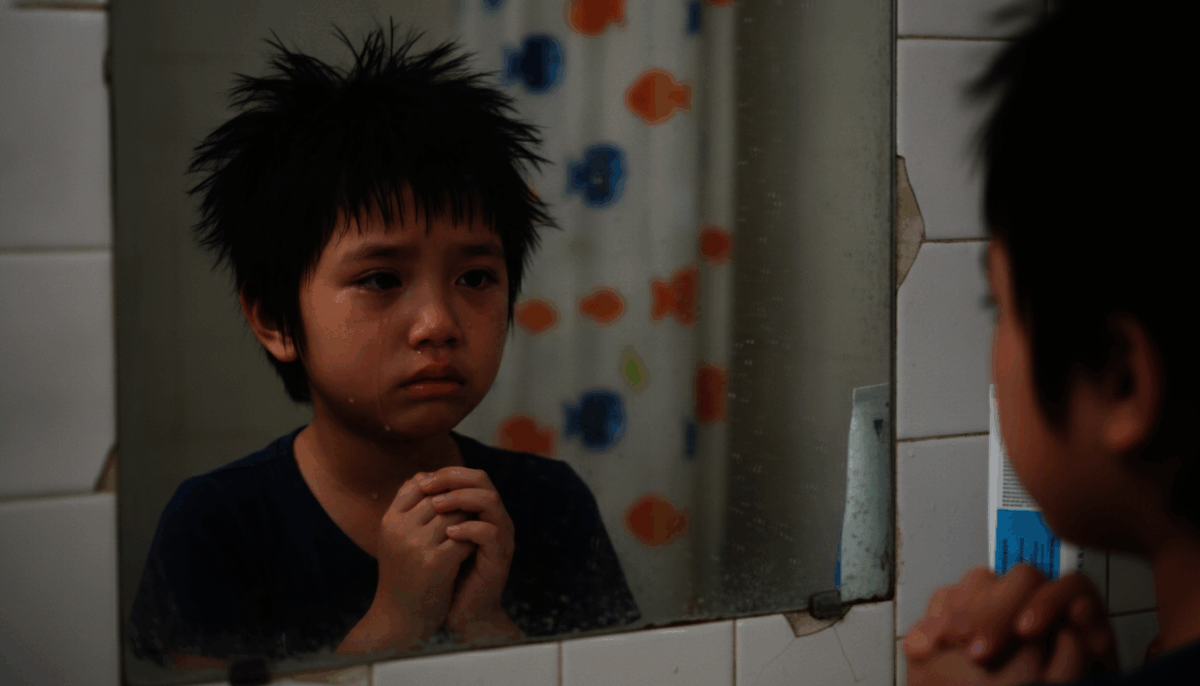
The morning started with a strange, heavy silence. When I arrived at Martha’s, the front door was unlocked. I walked into the kitchen to find Martha sitting at the table, sipping tea with an expression of calm, almost unsettling satisfaction. Chloe was sitting in the corner of the living room, hidden behind a throw blanket, her shoulders shaking with quiet sobs. My heart hammered against my ribs, a primal alarm signaling that something was fundamentally wrong with my world.
I asked Martha where Chloe was, and she simply gestured toward the living room while adjusting her glasses. ‘She needed a change,’ Martha said, her voice devoid of any guilt. ‘The maintenance was keeping her from being a child. I took her to a stylist I know. It looks much cleaner now, don’t you think? She can actually run around without me having to chase her with a detangler every twenty minutes.’
I didn’t answer. I rushed to the living room and pulled the blanket away. The sight of my daughter’s face, framed by uneven, hacked-off clumps of hair, broke me. I knelt down, my hands trembling as I touched the jagged ends. It wasn’t just that it was short; it was poorly executed, with chunks missing near the nape of her neck. It looked like a DIY job done with kitchen shears while she was likely terrified and unable to stop it.
“Mommy, she told me if I cried, I would be a baby and babies don’t get to go to Italy. I didn’t want to lose the trip, so I stayed still. Why does it look like this? I hate it!”
— Chloe, age 7
The rage was cold and sharp. I stood up, feeling a surge of adrenaline that threatened to make me shake. I turned to face Martha, who was still sitting at the table, now checking her watch as if this were just another Sunday morning. She had no idea the boundary she had just vaporized. She expected me to be grateful for her ‘help’ in grooming my child, unaware that she had just ignited a fire that would consume our entire family dynamic.
I didn’t scream. I didn’t throw anything. I simply walked over to the kitchen table, took my daughter by the hand, and began to back out of the house. Martha started to stand up, her voice regaining that sharp, authoritative tone she used whenever she felt her control slipping. ‘We have a flight to catch in forty-eight hours,’ she reminded me, her eyes narrowing as if she were disciplining an unruly subordinate. I didn’t look back.
The $4,200 Cancellation

Back at home, the adrenaline wore off, replaced by a crushing sense of defeat and a burning need for justice. I sat Chloe down, tried to soothe her, and contacted a reputable hair salon to see if anything could be salvaged. The stylist was honest: there was nothing to do but wait for it to grow out. The damage was structural and deep. I felt like I had failed as a protector. I looked at the itinerary on the kitchen island—the museum tickets, the private tours, the hotel confirmations—and felt physically ill at the thought of sharing a hotel room with the woman who had done this to my child.
I sent a brief, ice-cold email to Martha and the rest of the family group chat. I was done. I wasn’t just canceling the vacation; I was cutting off the access. The financial loss was secondary to the message I needed to send. If money was the only way she understood value, then money would be the language I used to show her exactly how much this violation cost her.
“Due to an irreconcilable boundary violation involving my daughter’s physical appearance, the upcoming trip is canceled. You are no longer welcome to join us, nor are we attending. Do not contact me regarding the deposits.”
— My email to the family group chat
The fallout started within minutes. My phone began to buzz incessantly. My husband, David, was calling, his voice a mixture of confusion and panic. He had been at work and had no idea what happened. When I explained, his initial reaction was disbelief, followed by a defense that bordered on enabling. He suggested that it was ‘just hair’ and that we shouldn’t ruin a trip for everyone over something that would eventually grow back. That was the moment I realized I wasn’t just fighting Martha; I was fighting the entire system of excuses that allowed her to behave this way.
I held firm. I called the airline, the hotels, and the tour operators. I swallowed the non-refundable fees. I watched my bank account drop by thousands of dollars, but with every transaction, I felt a strange sense of liberation. I wasn’t ‘losing’ money; I was buying my daughter’s autonomy back. I was paying for the right to say ‘no’ to the woman who thought she was the matriarch of our household.
Martha’s reaction was not one of apology. It was one of aggressive indignation. She began calling my friends, my mother, and anyone she could reach to spin the narrative that I was a ‘hysterical’ mother who was throwing away a luxury vacation because I was ‘upset about a haircut.’ She tried to frame it as me being unreasonable, painting herself as the victim of my erratic behavior. She didn’t realize that in the age of social media and text receipts, the truth is rarely buried for long.
The Group Chat Explosion
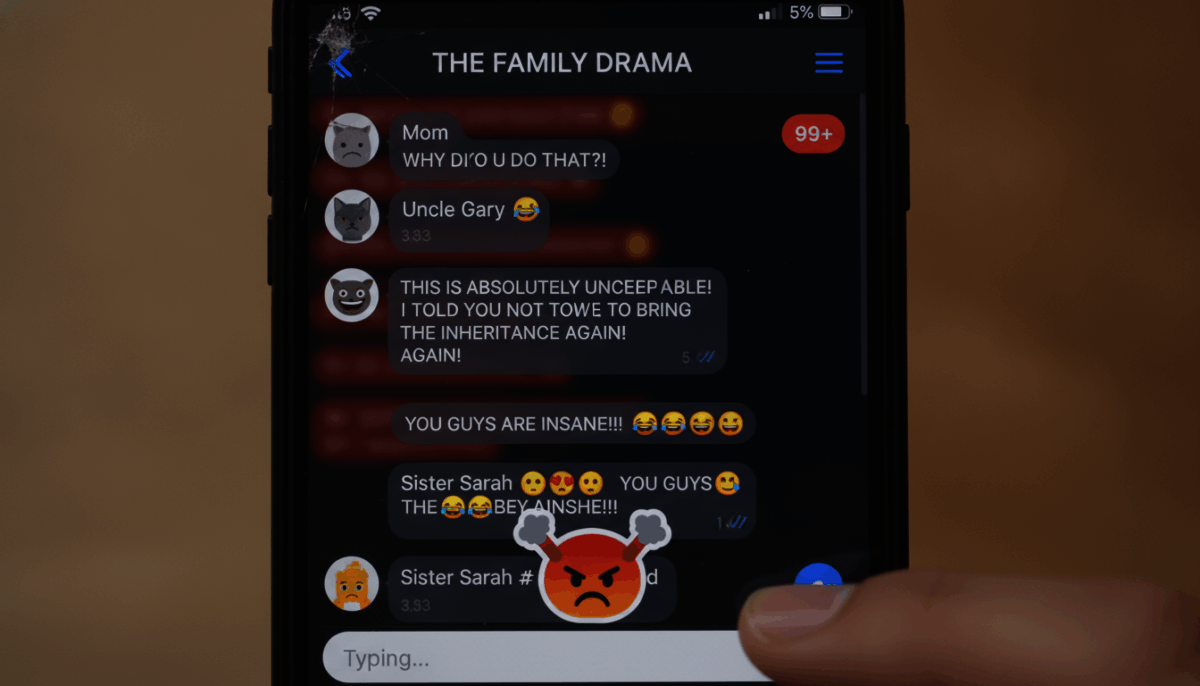
The family group chat, previously a place for planning dinner reservations and travel logistics, quickly descended into a war zone. Martha’s sister, my sister-in-law, and even my husband’s cousins weighed in, most of them taking Martha’s side. They argued that it was ‘just hair’ and that I was being ‘dramatic’ to satisfy my own ego. They didn’t see the violation; they saw a minor inconvenience that I was blowing out of proportion to punish a grandmother.
“Are you seriously ruining a $4,000 trip for everyone because of a haircut? Martha did it to be nice! She thought Chloe looked like a ragamuffin. Grow up. You’re teaching your daughter that she can be entitled just like you.”
— Sister-in-law, in the family group chat
I felt the isolation closing in. It is a lonely thing to stand up for your child when everyone else is gaslighting you into believing your boundaries are actually ‘drama.’ I took a deep breath, knowing that if I retreated now, I would never be able to enforce a boundary again. I responded with a single, devastating screenshot of the conversation I’d had with Chloe about why she didn’t stop Martha—the part where she admitted she feared losing the trip. The chat went silent for a long, heavy moment.
The silence was my first victory. It didn’t change their minds, but it made them uncomfortable. They had to confront the fact that Martha had used the trip as a bribe to manipulate a seven-year-old into silence. It was a power move, and it was ugly. I started to see who the real allies were. A few cousins messaged me privately, expressing their shock and siding with me, but they were too afraid to post in the main group chat for fear of Martha’s wrath.
I didn’t engage in the back-and-forth. I put my phone on ‘Do Not Disturb’ and focused on Chloe. We turned our ‘vacation week’ into a ‘stay-cation’ of her choosing. We went to the zoo, the movies, and had ice cream for breakfast. We reclaimed the time that was supposed to be spent in Italy. It wasn’t the same, but it was ours. And every time I looked at her hair, I was reminded that I had made the right choice.
Martha, however, wasn’t done. She realized the group chat wasn’t winning me over, so she shifted tactics. She started sending me formal, legal-sounding emails, demanding reimbursement for the ‘time and effort’ she put into planning the trip. She claimed that my cancellation was a ‘breach of verbal contract.’ It was laughable, but it also showed the depth of her entitlement. She didn’t just want to control my daughter; she wanted to control my finances and my autonomy as an adult.
The ‘Helpful’ Grandmother Narrative

Martha’s next move was a classic manipulation tactic: the public appeal for sympathy. She posted a photo of herself and Chloe on Facebook, taken weeks before the haircut, with a caption about how much she ‘missed her sweet granddaughter’ and how sad she was that ‘misunderstandings’ were keeping them apart. It was designed to make me look like the gatekeeper, the cruel mother keeping a grandmother away from her grandchild over a ‘silly disagreement.’
The comments were exactly what she wanted: ‘Oh, you poor thing!’ and ‘Grandmothers are so important, don’t let her be so harsh.’ I sat there, reading them with a glass of wine, realizing that I didn’t care about public perception. The validation I needed wasn’t coming from Facebook; it was coming from the look of relief in Chloe’s eyes every time she realized she didn’t have to see ‘Grandma Martha’ for a while.
I didn’t respond to the post. Instead, I waited. I knew Martha’s ego wouldn’t let her stay silent for long. She wanted a reaction, she wanted a confrontation, and she wanted to be the victim in a public forum. I ignored the bait. By refusing to play the game, I was essentially starving the troll. It drove her even crazier, leading her to send increasingly erratic messages to my husband, who was caught squarely in the middle.
“Your wife is alienating my granddaughter. She is a controlling woman who can’t take a joke. If you don’t step in and demand she lets me see Chloe, I will have to consider involving my attorney to establish grandparent rights. This is ridiculous.”
— Email from Martha to my husband
My husband, usually a man who avoided conflict at all costs, finally reached a breaking point. When he saw the threat of ‘grandparent rights,’ something in him snapped. He realized that this wasn’t about a haircut anymore; it was about the total erosion of our family unit. He finally understood that if he didn’t stand with me, he would lose his own daughter’s trust, just as he was starting to lose his wife’s respect.
He drafted a response that was clear, firm, and final. He told her that our daughter’s body, hair, and autonomy were not up for debate. He told her that her access to our child was a privilege, not a right, and that by violating that trust, she had effectively burned the bridge. It was the first time I felt like we were a true team. He didn’t ask for permission; he just stated the new reality.
The atmosphere in our house shifted. We were no longer on the defensive. We were building our own boundaries, and for the first time in years, the air felt clear. The financial loss of the trip felt like a small price to pay for the peace that replaced the constant, simmering tension of dealing with Martha’s unsolicited ‘help.’
Reddit’s Verdict: The Community Weighs In

When I finally posted the full story to Reddit, I was expecting a mix of opinions. I wanted to see if I was truly the villain in this, as my mother-in-law had painted me. The response was overwhelming. Within hours, the post hit the front page, and the comments were a mix of outrage, solidarity, and practical advice. The sheer volume of people who had dealt with similar ‘grandmother-from-hell’ scenarios was staggering.
“NTA (Not The Asshole). This isn’t about hair. This is about physical boundaries and bodily autonomy. Your MIL taught your daughter that her body belongs to anyone who holds the purse strings. Canceling the trip was the only way to demonstrate that her autonomy is more valuable than any European vacation. You are a rockstar mom.”
— u/MamaBearDefender (Top Comment, 45.2k upvotes)
Many users shared stories of how they had allowed ‘small’ boundary violations to slide, only to find that it snowballed into massive, life-altering intrusions. It was a sobering reminder that boundaries are not just suggestions; they are the walls that protect our sanity. The consensus was clear: I wasn’t being dramatic; I was protecting my child’s sense of self.
There were, of course, the dissenters—the people who argued that family should be forgiven and that ‘hair grows back.’ But even those voices were quickly drowned out by people who pointed out that the issue was the lack of consent, not the hair itself. If she could cut her hair, what else could she do? What other ‘improvements’ did she have in mind for my daughter? The fear of the unknown kept me resolute.
I started a thread of updates, documenting the legal threats and the fallout. The Reddit community acted as a sounding board, helping me draft responses that were both professional and firm. They reminded me to keep everything in writing, to document the violations, and to never, ever yield to the pressure of ‘family loyalty’ when it came at the expense of our mental health.
The most helpful advice was the reminder that silence is a powerful tool. By not feeding the conflict, I was forcing them to deal with their own behavior. Every time Martha tried to escalate, I would simply document it and move on. The community taught me that I didn’t owe anyone an explanation or an apology for protecting my daughter.
I felt a deep sense of gratitude toward these strangers on the internet. They gave me the strength to keep the boundaries firm even when the loneliness of the situation started to set in. They confirmed that what I was doing was not just right; it was necessary for my daughter’s development into a woman who would know that her body was her own.
The Legal Threat and the Reality Check
The threat of ‘grandparent rights’ hung over us like a dark cloud for weeks. I spent nights researching the laws in our state, trying to understand if there was any merit to her claims. The conclusion was always the same: grandparent rights are generally reserved for situations where the child’s wellbeing is at risk or where there was a pre-existing, significant relationship that had been abruptly severed for no reason. Our situation was entirely different.
We had a log of every boundary violation, every attempt at manipulation, and the specific event that led to the current state of estrangement. We had the emails, the screenshots, and the testimony of my husband, who was ready to stand up for our parenting choices. The fear began to dissipate, replaced by a cold, hard resolve to be prepared for whatever came next.
I consulted with a family lawyer just to be sure. She looked over our documents and laughed at the notion that Martha had a case. ‘She has nothing,’ the lawyer told me. ‘Unless she can prove that you are an unfit parent, she has no standing. Cutting a child’s hair without permission is a boundary violation, but it’s not evidence of parental neglect. Keep doing what you’re doing.’
“You need to keep all correspondence. Do not engage with her directly if it becomes legal. If you hear from an attorney, you let me handle it. You are doing the right thing by protecting your daughter’s autonomy.”
— Advice from my attorney
The relief was palpable. We weren’t just guessing anymore; we were operating from a position of strength. We stopped checking for her emails. We stopped worrying about her Facebook posts. We focused on our life, our daughter, and our future. The ‘vacation’ money we had ‘wasted’ on cancellation fees felt like a cheap price to pay for the freedom from this constant surveillance.
We even started looking into ways to use the money we would have spent on the trip for something that actually benefited our daughter—like a college fund or a series of art classes that she had been asking for. We were taking the energy that Martha had tried to suck out of our lives and redirecting it into something positive. It felt like we were winning.
Martha eventually stopped the threats. Perhaps her own lawyer told her the same thing, or perhaps she realized that she was losing the ability to control the narrative. The silence that followed was the most beautiful sound I had heard in years. We were finally free to be our own family, without the shadow of someone else’s expectations looming over us.
The Healing Process: Reclaiming Identity

Chloe’s hair started to grow back, but the emotional work was just beginning. We had to have many conversations about why grandma did what she did, and more importantly, why it was wrong. I wanted to make sure Chloe didn’t internalize the idea that her body was something to be ‘fixed’ or that she had to accept mistreatment to please others.
We started playing games where she had to say ‘no’ to things she didn’t want to do—even small things, like eating a vegetable she hated or playing a game she wasn’t interested in. It was a way to practice the skill of boundary-setting in a safe environment. She started to become more confident, more assertive, and more aware of her own worth. It was a silver lining I hadn’t expected.
I also realized that I had my own healing to do. I had spent years trying to please Martha, trying to bridge the gap, and trying to be the ‘good daughter-in-law.’ I had to let go of the guilt, the desire for her approval, and the idea that I could fix a toxic relationship. I accepted that some people are simply incapable of respecting boundaries, and that’s not a failure on my part.
“Mommy, I like my hair now. It’s growing back, and it’s mine. You don’t have to worry about me anymore. I know how to say no now.”
— Chloe, aged 8, months later
The healing was slow but steady. We spent the summer building a new routine, one that didn’t involve checking in with Martha or worrying about what she might do next. We found joy in the small things, and we learned to trust each other again. The trauma of the hair incident didn’t define us; it became a defining moment of our strength.
I stopped looking at social media. I stopped checking if she was talking about me. I realized that her opinion of me was none of my business. The only opinions that mattered were mine, my husband’s, and my daughter’s. We were creating our own culture, our own traditions, and our own boundaries. It was liberating.
The incident had stripped away the facade of our ‘perfect’ family life and revealed the rot underneath. But instead of letting it destroy us, we used it as a foundation to build something better. We were no longer beholden to the expectations of others, and that was the greatest gift the catastrophe had given us.
Reflecting on the ‘Generational’ Excuse

One of the most persistent narratives I heard during this entire saga was the ‘generational’ excuse. People would tell me, ‘That’s just how her generation is,’ or ‘She didn’t mean any harm, she just comes from a different time.’ It’s a convenient way to excuse bad behavior, but it’s also a way to avoid holding people accountable for their actions. It suggests that somehow, older generations are incapable of learning, respecting others, or understanding modern concepts of autonomy.
I don’t buy it. Respect is not a generational trait; it’s a human one. It doesn’t take a modern sensibility to understand that you shouldn’t alter someone else’s appearance without their permission. It doesn’t take a social media degree to know that manipulating a child is wrong. These aren’t new rules; they are basic tenets of decency that have existed for centuries.
By excusing her behavior as ‘generational,’ we are essentially saying that she is not responsible for her actions. We are infantilizing her, even as she tries to treat us like children. It’s a double standard that I refused to accept. She was a grown woman, capable of understanding the consequences of her choices, and she deserved to be held accountable for them.
“Don’t let them tell you that ‘times have changed.’ Respect has always been the same. If she didn’t respect you before, it wasn’t because of the times; it was because of her character. You were right to hold your ground.”
— A wise comment from a Reddit user
This experience taught me that the ‘generational’ argument is often used to gaslight people into submission. It’s a way of saying, ‘You’re too sensitive,’ when in reality, the other person is just being disrespectful. It’s a way of shifting the burden of the conflict onto the victim, suggesting that if only they were more ‘patient’ or ‘understanding,’ the conflict wouldn’t exist.
I learned to reject this logic. I learned that my feelings were valid, my boundaries were reasonable, and my daughter’s autonomy was non-negotiable. I stopped trying to educate those who didn’t want to learn and focused on protecting those who mattered most. It was a powerful shift in perspective that changed my life.
The next time someone tells me that ‘this is just how they are,’ I will know that it’s not an excuse; it’s a warning. It’s a sign that the person is unwilling to grow, unwilling to change, and unwilling to respect boundaries. And knowing that, I will know exactly where I stand in relation to them: at a distance.
The New Normal: Life After the Storm

Life looks different now. We are more cautious, more deliberate, and more protective of our time and energy. We don’t have regular ‘family dinners’ with Martha, and the ‘open door’ policy is a thing of the past. It’s not a punishment; it’s a protection. We have found that the quality of our relationships is much better when we are not forced to interact with people who don’t respect us.
Chloe is thriving. She’s learned that her voice matters, that she has the right to say ‘no,’ and that her body belongs to her. She doesn’t talk about the hair incident much anymore, but she has a confidence that I didn’t see before. She carries herself with a sense of self-assurance that is beautiful to watch. The experience, as traumatic as it was, gave her a foundation of self-worth that will serve her for the rest of her life.
My husband and I are closer than ever. We went through the fire and came out the other side as a team. We learned that we can handle the hard stuff—that we can stand up to family, face the fallout, and still come out on the other side with our marriage and our sanity intact. We’ve become our own unit, independent and strong.
“We aren’t the same people we were before that trip. We’re stronger, more honest, and we finally know who we are as a family. And we’re okay with that.”
— My husband, David
We’ve even started planning a new trip—one that we are paying for ourselves, on our own terms, with no one else invited. We’re going to take our time, pick the destinations we want, and enjoy the experience as a family. It’s not about the destination anymore; it’s about the journey and the fact that we are in control of it.
The silence from Martha’s camp has become the norm. Sometimes, I wonder if she realizes what she lost, but then I remember that she never really valued what she had in the first place. She valued control, and she lost that. I am okay with the trade. I have my daughter, my husband, and my peace. And in the end, that’s all that really matters.
I’ve learned that the most important thing I can do as a parent is to teach my child that her boundaries are sacred. If I can do that, then everything else will fall into place. And if I have to cancel a few more vacations or ruffle a few more feathers to ensure that, I will. Because in the long run, the integrity of our family is worth more than any price we might have to pay.
Final Thoughts on Boundary Enforcement

If there is one thing I want people to take away from my story, it is this: you are not responsible for other people’s reactions to your boundaries. If someone gets angry because you set a limit, that is their problem, not yours. If they try to manipulate you, guilt-trip you, or threaten you, that is a reflection of their character, not your reasonableness.
We spend so much of our lives trying to be ‘polite’ that we often forget to be ‘honest.’ We tolerate the little digs, the unsolicited advice, and the boundary violations because we don’t want to make a scene. But sometimes, a scene is exactly what is needed. Sometimes, you have to be the one to say, ‘This stops here,’ and then actually follow through with it.
It’s not always easy. It’s often painful, and it can be isolating. But it is also the only way to live an authentic life. You cannot build a healthy relationship on a foundation of resentment and boundary violations. You have to be willing to walk away from the things that are not serving you, even if they are family. Especially if they are family.
“Boundaries are the distance at which I can love you and me simultaneously. If you can’t respect my space, you don’t get access to my life.”
— A mantra I adopted during the process
I hope that if you are in a similar situation, you feel empowered to act. Don’t wait for permission to protect your child or yourself. Don’t wait for the ‘right time’ to set a boundary. The right time is now. The cost of inaction is almost always higher than the cost of taking a stand, even if that stand feels like it will tear your world apart.
Remember that you are the primary protector of your child’s world. Their trust in you is the most valuable currency you have. If you sacrifice that trust to keep the peace with someone who doesn’t respect you, you are making a bad deal. Always choose your child, always choose your integrity, and always choose your own peace.
And know that you are not alone. There is a whole community of people out there who have been where you are, who have set their own boundaries, and who have come out the other side stronger. You can do this. You are stronger than you think, and your life is worth more than the approval of someone who doesn’t see your worth.
Conclusion
The journey from the moment of the haircut to this place of peace has been long and exhausting, but I wouldn’t change a single thing. We lost money, we lost a vacation, and we lost a relationship, but we gained so much more. We gained our own autonomy, our own peace, and the certainty that we are capable of protecting what matters most.
I realize now that the trip was never just a trip—it was a test. It was a test of my resolve, my boundaries, and my commitment to my daughter’s wellbeing. I failed the test by allowing the situation to get that far, but I passed the test of how to respond when it did. And that, ultimately, is the lesson that I will carry forward for the rest of my life.
I am curious, though. Where do you draw the line? Have you ever had to cut off a family member because of a boundary violation? Do you think I was too harsh, or was the cancellation the only way to send a message? I invite you to share your experiences in the comments below. Let’s discuss how we can all do better at protecting our families and ourselves in a world that often demands we sacrifice our boundaries for the sake of ‘keeping the peace.’ Poll: Did the OP go too far by canceling the vacation? Yes (too harsh) vs. No (necessary consequence).
What's your verdict on this dilemma?
Vote below to contribute to the official community consensus.

Have a Dilemma Keeping You Up at Night?
Share your real-life feud, wedding chaos, or relationship crossroads anonymously with our editorial team.
What do you think ?
0 Comments🛡️ Comments are moderated to protect community integrity. Your comment will appear once approved by the editorial team.