
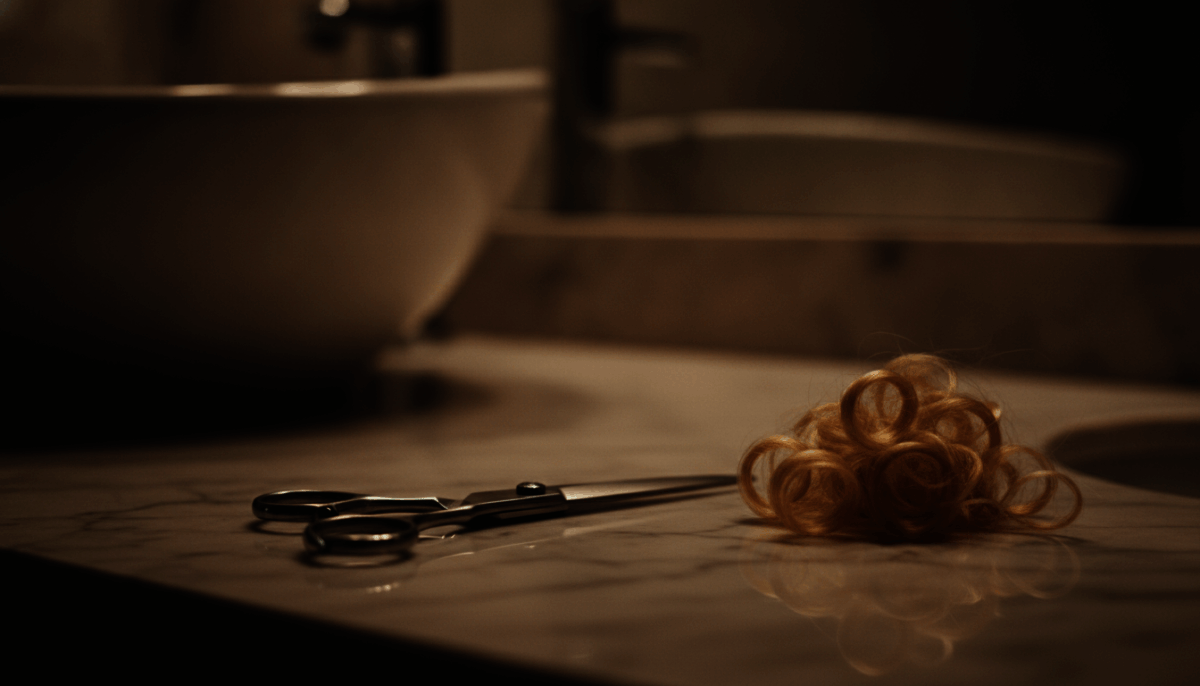
I had spent two years carefully curating my son Leo’s curls. They were his signature, a soft halo of golden ringlets that everyone in the family—or so I thought—adored. My mother-in-law, Brenda, had always been ‘old fashioned,’ which was usually a polite way of saying she felt her opinions on child-rearing carried more weight than my own. But I never imagined she would take a pair of scissors to my son’s head without so much as a whisper of a question.
The incident wasn’t just about a haircut; it was about agency, autonomy, and the terrifying realization that my boundaries were merely suggestions in Brenda’s eyes. We had talked about his hair before. She had made comments—the ‘little girl’ jokes, the ‘he needs a proper boy cut’ lectures—but I had shut them down with a firm, polite smile every single time. I thought I had made myself clear. I thought I had been heard.
But then came the Tuesday afternoon. The afternoon that changed our family dynamic forever. I had left Leo in the bathroom for five minutes while I handled an urgent work call in the office next door. When I returned, the silence was heavy, thick with a kind of premeditated mischief that I recognized too late. The transformation was absolute, and the damage was permanent.
What followed was a cascade of excuses, gaslighting, and the slow, painful dissolution of a relationship that had already been fraying at the edges. This isn’t just a story about a bad haircut; it’s a story about the breaking point that inevitably arrives when you stop letting people walk over you. It’s about the moment you realize that some people don’t respect you, and you have to decide if you’re okay with that.
The Five Minutes That Cost Me Everything
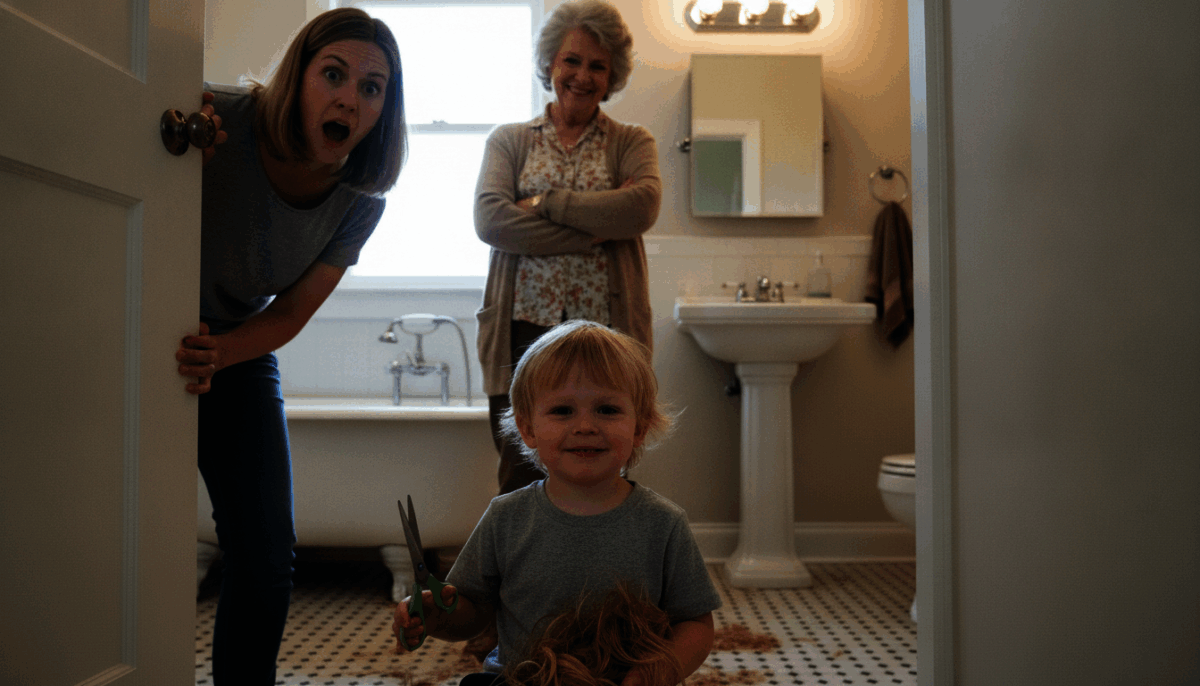
The house was quiet, save for the hum of the refrigerator and my own voice muffled by my headset as I finalized a quarterly report. Leo was happily playing with his bath toys in the ensuite, under the watchful eye of Grandma Brenda. It was supposed to be a bonding session, a simple hour where Brenda could play with her grandson while I managed the demands of my job. I trusted her. That was my first mistake.
I remember the stillness of the house when the call ended. Usually, there’s a symphony of toddler sounds—giggles, splashes, the clatter of plastic boats against the porcelain tub. But there was nothing. A heavy, unnatural silence hung in the hallway. I stood up, stretching my stiff back, and walked toward the bathroom with a feeling of unease that I couldn’t quite place.
As I reached the door, I saw Brenda standing near the vanity. She was holding something in her hand, her expression one of forced, rigid calmness. Leo was sitting on the bath mat, looking confused, reaching up to touch his head with tiny, hesitant fingers. When I looked closer, my blood didn’t just run cold; it stopped moving entirely. The floor was littered with soft, golden ringlets, scattered like autumn leaves on the white tile.
My son’s hair, which had been down to his shoulders, was now unevenly hacked off near his ears. It looked jagged, butchered, as if someone had used kitchen shears to trim a hedge in the dark. I didn’t scream. I couldn’t. I just stared at the pile of hair, then at Brenda, then at my son. The air in the room felt thin, suffocating.
“Brenda, what have you done? Why does he look like this? Why would you do this without asking me?”
— Me, in the immediate aftermath
Brenda didn’t even flinch. She set the scissors down on the granite counter with a small, sharp ‘clack’ that sounded like a gavel hitting a block. She looked at me with a pitying, almost condescending expression, as if I were the one acting unreasonably. She didn’t look guilty; she looked triumphant.
The Justification of a Grandmother’s Ego
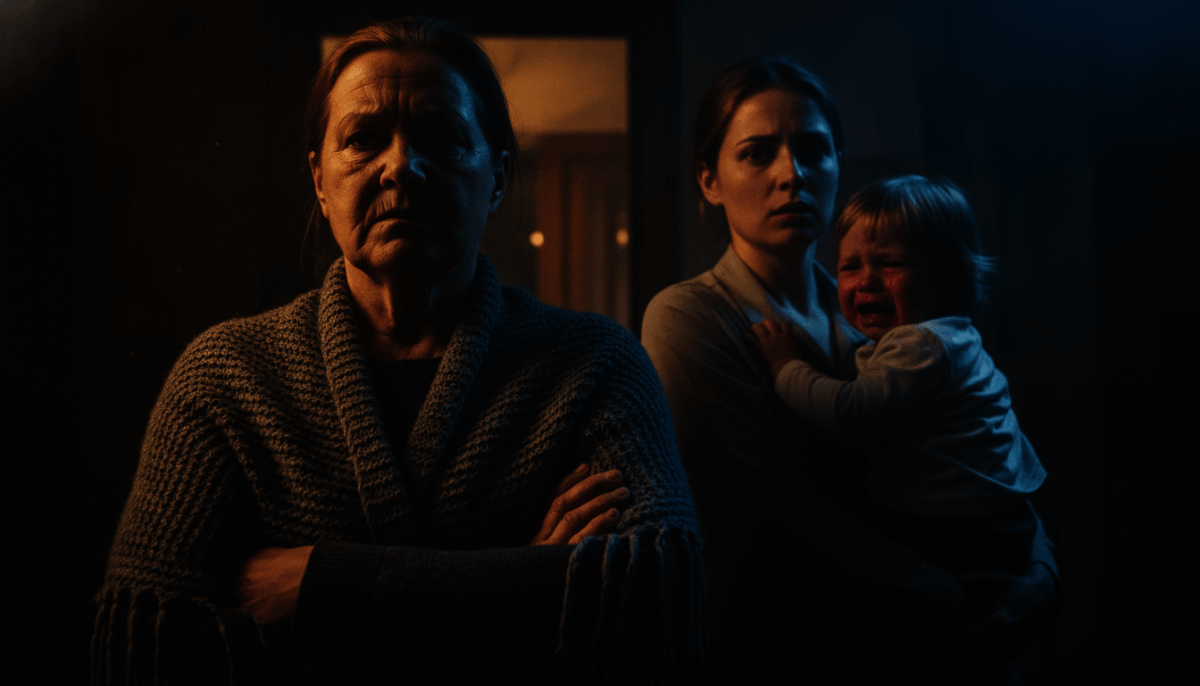
“I was doing him a favor,” Brenda said, her voice smooth and devoid of any apology. “He looked like a wild animal. Those curls were getting in his eyes, and quite frankly, it was embarrassing for the family. People were starting to talk, wondering why I couldn’t teach you how to maintain a proper boy.” She stood taller, brushing a stray hair off her sweater, as if she were a teacher correcting a particularly slow student.
I felt a white-hot rage building in my chest, a physical pressure that made it hard to breathe. I knelt down to gather Leo into my arms, feeling the jagged ends of his hair against my palm. He started to cry, sensing the sudden shift in my energy, his small body shaking. I realized then that she hadn’t just changed his look; she had violated his personhood, and she had done it while he was vulnerable.
“It wasn’t your choice to make, Brenda. It was never your choice. This isn’t your child, and your opinion on his hair ended the moment I said no the last four times you brought it up. Do you have any idea how much work went into these curls? Do you even care how he feels?” I was shaking now, the adrenaline making my hands tremble as I checked Leo for nicks from the scissors.
Brenda crossed her arms, her lips thinning into a straight, hard line. “You’re being dramatic. It’s just hair. It grows back. You’re overreacting because you want total control, and it’s pathetic. A child needs discipline, and if you won’t provide it, I will. You should be thanking me for saving him from looking like a hippie.”
“Get out. I want you out of my house right now. If you think for one second that you have the right to touch my son like that, you are gravely mistaken. Do not call, do not come over, do not send messages. You are done here.”
— Me, delivering the ultimatum
She sneered, gathered her purse, and walked past me as if she were leaving a restaurant where the service was sub-par. She didn’t look at Leo. She didn’t apologize. She simply exited, leaving me alone with the mess she had created and the devastating realization that my trust had been fundamentally misplaced.
The Group Chat Explosion
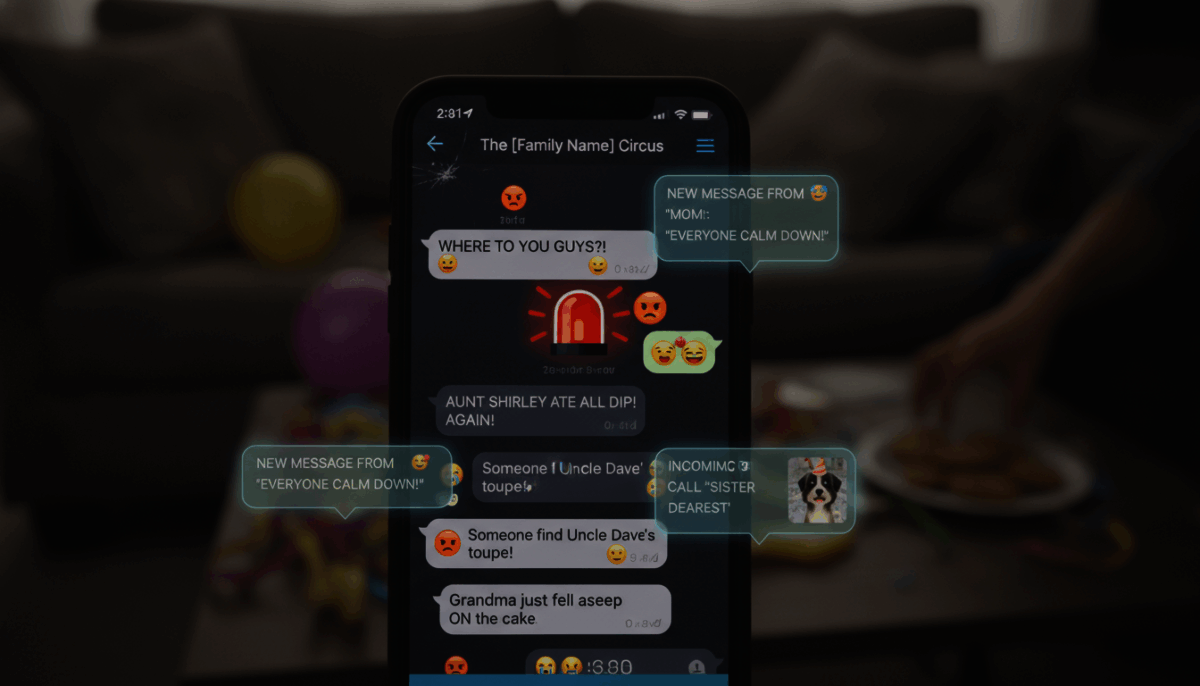
I didn’t expect the fallout to be immediate, but I underestimated the reach of Brenda’s victim complex. Within two hours of her leaving, my phone started buzzing incessantly. It wasn’t just Brenda; it was the entire extended family. She had clearly been busy painting a picture of me as an unstable, irrational mother who had kicked her out of the house for ‘simply helping’ with a haircut.
The family group chat, which usually consisted of birthday wishes and photos of pets, was suddenly a war zone. I saw messages popping up from aunts, cousins, and siblings-in-law, all piling on with unsolicited advice and accusations. They had heard her side—the ‘crazy, ungrateful daughter-in-law’ version—and they were ready to defend their matriarch.
“Hey, I heard about the incident today. Brenda is really upset. Why are you being so harsh? It’s just hair, and she’s his grandmother. You need to apologize and let this go.”
— Aunt Sarah, in the family group chat
“You’re really going to cut off his grandmother over a haircut? That’s incredibly toxic behavior. You’re isolating him from his family.”
— Cousin Mike, adding fuel to the fire
I read through the messages, my jaw tightening with every new notification. It was astounding to see how quickly they turned against me without even asking for my side of the story. Brenda had clearly mastered the art of playing the victim. I didn’t reply to the chat. I simply took a screenshot of the chopped hair, the pile on the floor, and the text I had sent to Brenda earlier.
I realized then that this was not a battle I could win through persuasion. These people didn’t care about the truth; they cared about the hierarchy that Brenda had established. By challenging her, I had disrupted the status quo, and that was the real crime. I started blocking them, one by one, feeling a strange sense of liberation with every name I removed from my contact list.
The Professional Intervention

The next day, I took Leo to a professional stylist. I wanted to see if anything could be salvaged. The woman who saw us, Sarah, was horrified when she saw the work. She spent an hour gently trying to even things out, but the damage was deep. She had to take it down much shorter than I wanted, but at least it looked intentional now. Leo was brave, sitting in the chair and watching his reflection with wide, curious eyes.
While Sarah worked, we chatted. She told me she had seen this before—grandparents who felt entitled to ‘correct’ grandchildren because they raised their own children a certain way. She gave me a sense of validation I hadn’t received from anyone in my inner circle. She told me that boundaries were not a request; they were the fence that protected my child, and I had every right to repair that fence.
“It’s not about the hair,” Sarah said as she swept the floor. “It’s about who gets to decide what happens to his body. If she can do this, what’s next? What will she feed him when you say no sweets? Where will she take him without your permission? You’re doing the right thing, even if it feels lonely right now.” Her words stayed with me long after I paid the bill and drove home.
When we got back, I felt a new sense of resolve. My husband, who had been away on a business trip, finally landed. I had been dreading the conversation. I knew he loved his mother, and I knew how much she pushed his buttons, too. I didn’t know if he would back me up or if he would tell me I was overreacting just like the rest of them.
I waited for him to walk through the door, my heart pounding in my throat. I had the photos printed out on the kitchen island. I was ready to show him the reality of what happened, not just the story his mother had spun in her group chats. I had to know where he stood, because this was the moment our marriage would either solidify or crack under the pressure.
The Husband’s Choice
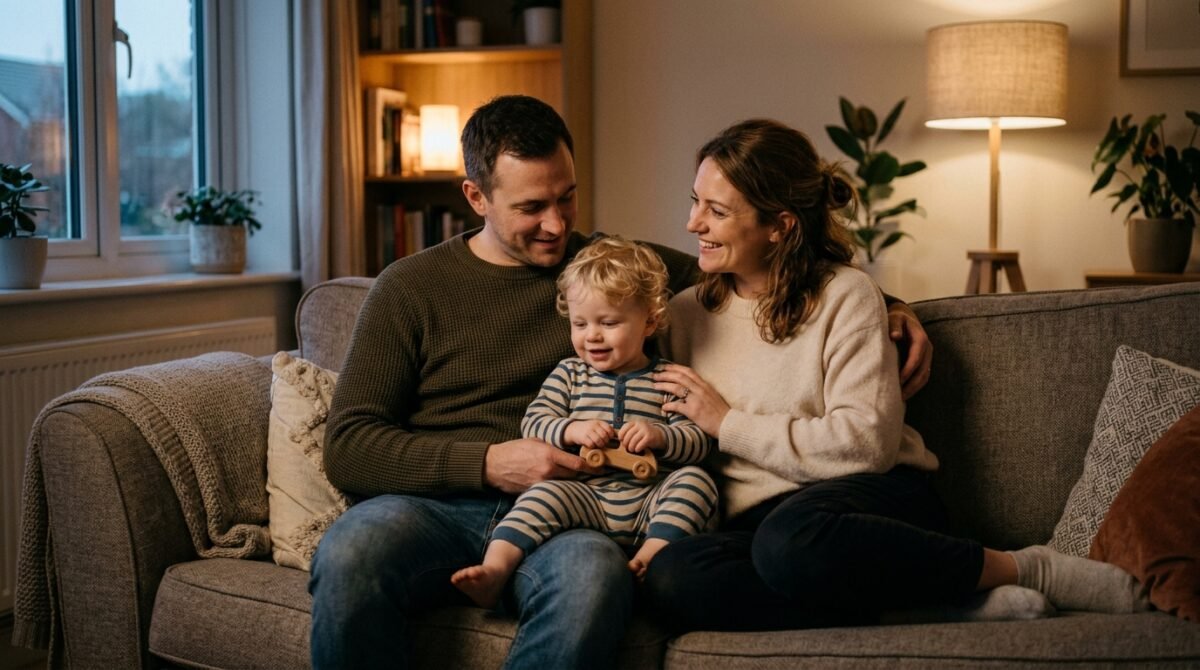
When Mark saw Leo, he stopped dead in his tracks. He didn’t ask what happened; he just looked at his son’s hair, then looked at me, his eyes wide with disbelief. I didn’t say a word. I just pointed to the photos on the counter. He picked them up, his face darkening as he studied the images of the hair on the floor and the jagged mess left behind.
“She did this?” he asked, his voice low and dangerous. I nodded. He didn’t ask for an explanation. He didn’t ask if I was being ‘too sensitive.’ He knew his mother, and he knew the boundary we had set months ago regarding Leo’s appearance. He knew that this wasn’t an accident; it was a power move.
“I don’t care if she’s my mother. She had no right. This is our son, and she treated him like a doll she could manipulate. I’m calling her.”
— Mark, my husband, showing his support
I watched him pace the kitchen, his phone pressed to his ear. I couldn’t hear Brenda’s voice, but I heard Mark’s. It was the sternest I had ever heard him. He wasn’t yelling; he was delivering a verdict. He told her clearly and concisely that she was not welcome in our home, nor would she be seeing Leo, until she understood the gravity of what she had done.
The call didn’t last long. When he hung up, he looked exhausted. “She’s playing the victim, as expected. She says she was just trying to help, that I’m being brainwashed by you. She doesn’t think she did anything wrong. She said she’d do it again if she had to.” The finality of his words hung in the air, cold and hard.
We sat on the couch together, holding Leo, who was blissfully unaware of the storm he had caused. For the first time in a long time, we were truly a team. The validation I had been craving from the rest of the family didn’t matter anymore. I had my husband’s support, and that was the only alliance that mattered in this house.
The Reddit Trial: How the Internet Reacted
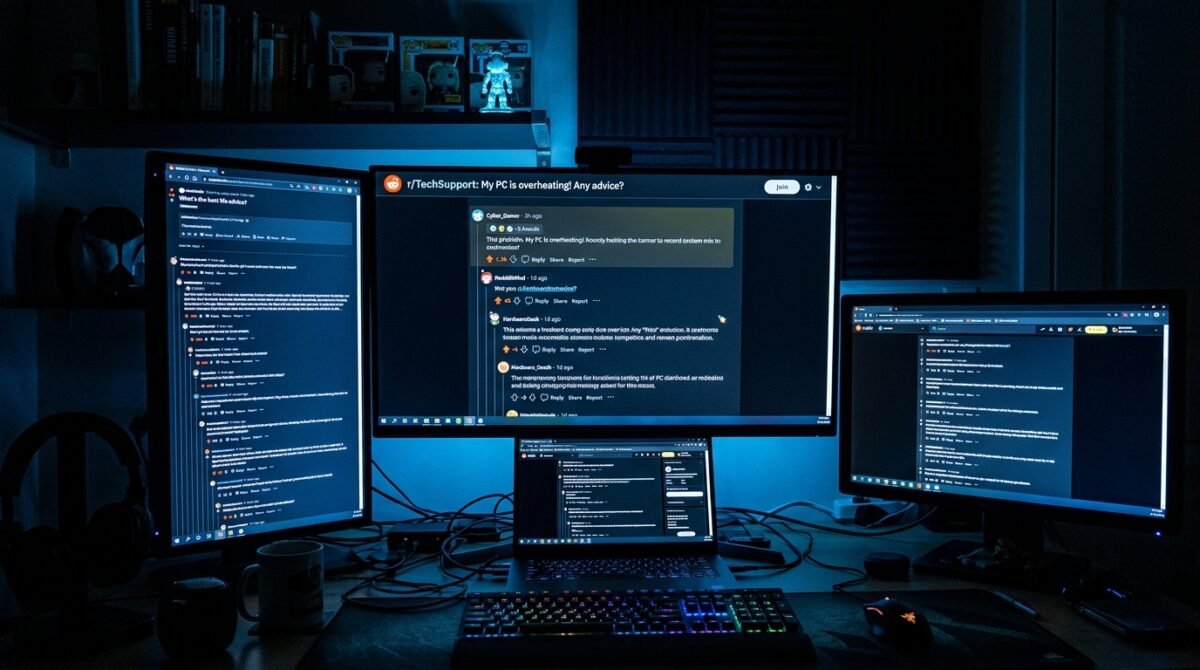
That night, I posted the story on a popular forum, wanting an outside perspective. I needed to know if I was truly the villain in this story. I laid it all out: the history, the boundaries, the incident, and the reaction from the family. I didn’t expect the response I got. Thousands of people weighed in, and the verdict was overwhelming.
“This is not just a haircut. This is physical assault on a child and a total disregard for parental authority. Your MIL is a nightmare. Stand your ground. NTA.”
— u/ParentingGuru (Top Comment, 28.4k upvotes)
“The fact that she did it in secret, behind your back, tells you everything you need to know about her intentions. She wanted to hurt you by taking control away from you. Do not let her back in.”
— u/BoundaryBound (15.2k upvotes)
Reading the comments felt like a massive weight being lifted off my shoulders. I wasn’t crazy. I wasn’t overreacting. I was a mother protecting her child. The consensus was clear: Brenda’s behavior was predatory, and my reaction of going no-contact was the standard, healthy response to such a violation.
There were a few dissenters, of course, mostly people who insisted that ‘grandparents are family and you should forgive them for the sake of the kid.’ But those comments were quickly buried by others who pointed out that a toxic presence is far worse for a child than a missing one. I spent hours reading, feeling the collective support of thousands of strangers who understood the importance of boundaries.
The internet community became my sounding board. They gave me advice on how to handle the inevitable holiday guilt-trips and how to explain to other family members why I was staying away. They reminded me that I didn’t owe anyone an explanation, but if I chose to give one, it should be short and final. I felt empowered, ready to handle whatever came next.
The Cease and Desist

A week later, a letter arrived in the mail. It wasn’t from Brenda, but from her lawyer—or so she claimed. It was a poorly drafted letter demanding ‘grandparental rights’ and threatening a lawsuit if I didn’t grant her access to Leo. It was a bluff, an attempt to scare me into submission. It was exactly what the Reddit community had warned me might happen.
I showed the letter to Mark. He laughed, a bitter, hollow sound. He had already talked to a family law attorney friend who confirmed that in our state, grandparents had almost zero legal standing unless there was a pre-existing, court-ordered relationship. Brenda was grasping at straws, desperate to force her way back into our lives because she couldn’t stand being ignored.
We didn’t reply to the letter. We took it to our own lawyer, who drafted a formal response stating that any further attempt to intimidate or harass us would be documented and reported to the authorities. It was a strong, protective shield that made me feel safer than I had in weeks. We were officially moving from ‘ignoring’ to ‘defending.’
I started keeping a journal, documenting every interaction, every phone call, and every attempt Brenda made to reach out. I realized that this was a long game. Brenda was the type of person who would never apologize because she truly believed she was the protagonist of everyone else’s story. I had to be prepared for the long haul.
“Don’t give her an inch. If you give her an inch, she’ll take a mile. Keep the records, stay the course, and protect your home.”
— Our lawyer, giving us final advice
That night, I looked at Leo, sleeping soundly in his crib. His hair was already starting to grow back in little tufts. He didn’t know about the lawsuits, the family feuds, or the drama. He was safe, and as long as I was his mother, I would keep it that way, no matter who had to be cut out of our lives to ensure his peace.
The Sunday Dinner Silence

A month later, we had to attend a wedding for a distant cousin. I knew Brenda would be there. I had debated not going, but I refused to let her dictate my social life. We walked in, Leo in his suit, and the room went quiet. I could feel the eyes of the family on us—the ‘black sheep’ and the ‘difficult wife.’ I held my head high, focusing on Mark and Leo.
Brenda was sitting at a table near the front, looking resplendent in a new dress. When she saw us, she stood up, her face lighting up with a practiced, fake smile. She started walking toward us, her arms outstretched as if to scoop up Leo. I didn’t stop walking. I kept my pace, my hand firmly on Mark’s arm, and we walked right past her to our assigned table.
The air in the room was electric with tension. I could see the whispers, the glares, the people judging us for ignoring the family matriarch. But it didn’t bother me. I had seen her true face in the bathroom, and the polite social facade meant nothing to me anymore. I realized that my power didn’t come from their approval; it came from my own integrity.
Brenda eventually retreated to her table, her face a mask of cold, controlled fury. She didn’t try to approach us again. She spent the rest of the evening pointedly ignoring us, which was exactly what I wanted. We had a wonderful time, dancing with Leo, eating good food, and enjoying the company of family members who were actually decent people.
“You’re doing great. Don’t look back. Just focus on us.”
— Mark, whispering to me during the reception
That evening proved to me that we could survive the isolation. We were enough. We didn’t need the toxic approval of a woman who didn’t respect us. We had our own little family, and that was enough to sustain us through any drama she could dream up.
The Aftermath: Finding Our New Normal

It has been six months since the incident. Leo’s hair is back to its beautiful, unruly curls. We still get the occasional ‘checking in’ message from extended family members, but we’ve learned to just ignore them. We’ve found a new normal, one that doesn’t include the anxiety of wondering what boundary will be crossed next. Our home feels lighter, calmer, and more ours.
We’ve had to make some hard choices, including skipping holidays that Brenda hosts, but it’s been worth it. We’ve created our own traditions, ones that focus on Leo and our family, not on performance and obedience. It’s been a journey of self-discovery, learning what it means to be a parent in a world that often demands you defer to your elders.
I’ve learned that the people who tell you to ‘just get over it’ are the ones who don’t have to deal with the consequences of the abuse. They aren’t the ones who had to deal with the trauma of a violation. My loyalty is to my son, and if that means burning bridges, then so be it. I’d rather walk through the fire than let someone else burn my house down.
I feel a sense of peace that I didn’t know was possible. I’m no longer waiting for the other shoe to drop. I’m no longer second-guessing my decisions to please someone who fundamentally doesn’t respect me. I am the mother of my son, and I am the protector of my home. That is a role I take with absolute seriousness.
“You are the CEO of your own home. Never apologize for setting the rules for your own children.”
— A wise commenter, reflecting on the experience
If you’re out there, wondering if you’re overreacting to someone who keeps crossing your lines, know this: you aren’t. Your boundaries are the only thing keeping you and your family safe. Trust your gut. It’s usually right.
The Unsolicited Gift at the Door
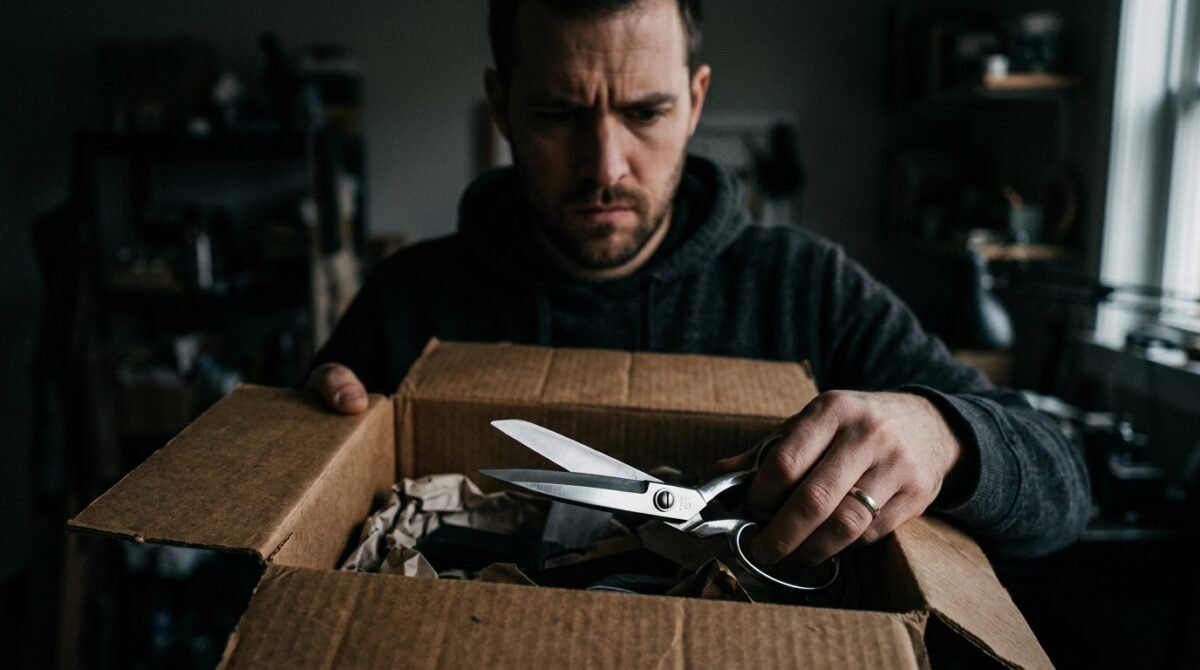
Just last week, a package arrived on our doorstep. No return address, just a plain brown box. I opened it with a sense of dread, expecting more intimidation tactics. Inside was a pair of scissors—the same kind she had used—wrapped in a note that read, ‘For the next time he gets messy.’ My heart skipped a beat, not out of fear, but out of pure, unadulterated resolve.
I didn’t call her. I didn’t cry. I simply put the scissors in a box to be donated to a local charity and threw the note in the trash. The message was clear: she still didn’t get it. She still thought she was the one in control. And the realization that she was still playing these games just made it easier to keep the door shut. She was trapped in her own cycle of obsession, and I was free.
I told Mark about it that evening. He didn’t even blink. He just went to the window and checked that the locks were secure. We didn’t talk about it for long because it didn’t deserve any more of our energy. We had reached a point where her actions had become background noise, a distant annoyance rather than a central conflict.
I thought about what I would tell Leo when he’s older. I’ll tell him the truth. I’ll tell him that his grandmother had a hard time understanding that people are not extensions of her own will. I’ll tell him that we protected him because he deserved to have autonomy over his own body, his own hair, and his own life. I’ll teach him that respect is earned, not demanded.
The package was the last straw, the final confirmation that no-contact was the only way. I feel no guilt. I feel no regret. I only feel a profound sense of gratitude that I saw the truth when I did. We are building a life that is truly our own, and that is the greatest victory of all.
Conclusion
Looking back, the haircut was the catalyst, not the cause. The cause was a lifetime of entitlement that I had been conditioned to accept as ‘family love.’ By drawing a hard line in the sand, I didn’t just save my son from a bad haircut; I saved myself from a lifetime of being a supporting character in someone else’s drama.
I invite you, the reader, to reflect on your own boundaries. Have you ever felt pressured to accept a violation in the name of ‘family’? Do you believe that blood ties grant people the right to cross your personal lines? Share your thoughts below. Is there a boundary you’ve had to set that changed everything for you?
We are all the guardians of our own small worlds. Let’s make sure we protect them with the ferocity they deserve. The storm has passed for us, and the sun is finally starting to shine through. I hope that if you’re in the middle of your own storm, you find the strength to stand your ground, too.
What's your verdict on this dilemma?
Vote below to contribute to the official community consensus.

Have a Dilemma Keeping You Up at Night?
Share your real-life feud, wedding chaos, or relationship crossroads anonymously with our editorial team.
What do you think ?
0 Comments🛡️ Comments are moderated to protect community integrity. Your comment will appear once approved by the editorial team.