
Living with roommates is supposed to be a symbiotic arrangement, a shared space where boundaries are respected and property lines are drawn in clear, bold ink. For three years, I had maintained a peaceful, if slightly distant, cohabitation with Chloe. We split the bills, took turns with the common area chores, and generally kept to our own corners of the apartment. That peace, however, was shattered the moment I walked into the laundry room and saw the unthinkable.
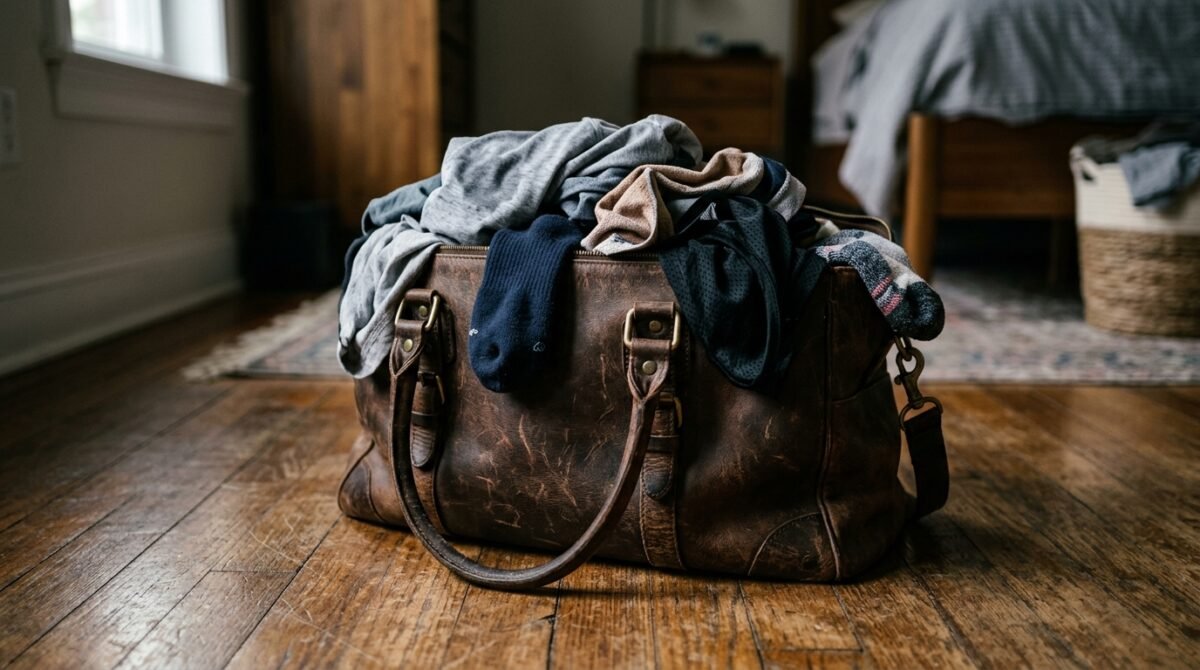
My vintage 1990s leather tote—a piece I had saved for two years of internships to afford—was not sitting on its shelf in my closet. It was slumped in the corner of the laundry room, sagging under the weight of three days’ worth of Chloe’s damp, post-workout spandex. The interior, lined with delicate silk, was stained and smelling of stale sweat. It wasn’t just a bag; it was a piece of history that had been treated like a plastic bin.
When I confronted her, the reaction wasn’t one of remorse. It was one of casual entitlement. She argued that since it was ‘just sitting there’ and looked sturdy, it was the perfect vessel to haul her clothes down to the basement machines. The lack of respect for my personal property ignited a fuse that had been burning low for months.
The argument that followed was explosive, loud, and final. Realizing that an apology wasn’t coming and that the damage to the leather was likely permanent, I made a decision that would change the trajectory of our living situation. I decided that if she couldn’t respect my property, she would pay for it—literally. I withheld her half of the rent to cover the professional restoration and the loss of value to my bag.
This is the story of how a single act of carelessness led to a legal-adjacent standoff, a series of panicked text messages, and a complete breakdown of trust. It is a cautionary tale about the high cost of assuming that your roommate’s belongings are communal property.
The Discovery in the Laundry Room
I had just returned from a long shift at the office, my mind focused entirely on the prospect of a quiet glass of wine and a book. As I walked past the shared laundry alcove near the kitchen, a flash of familiar deep-brown leather caught my eye. At first, I assumed I was misremembering where I’d left my bag, but as I moved closer, the reality set in with a sickening thud in my stomach.
There it was—my vintage leather tote. The structure was warped from the weight of damp polyester and cotton gym gear. The bottom of the bag, designed for delicate storage, was bowing outward, and the straps looked stretched to their breaking point. I reached down, my hands trembling as I picked it up, only to be hit with the overwhelming scent of gym sweat and fabric softener.
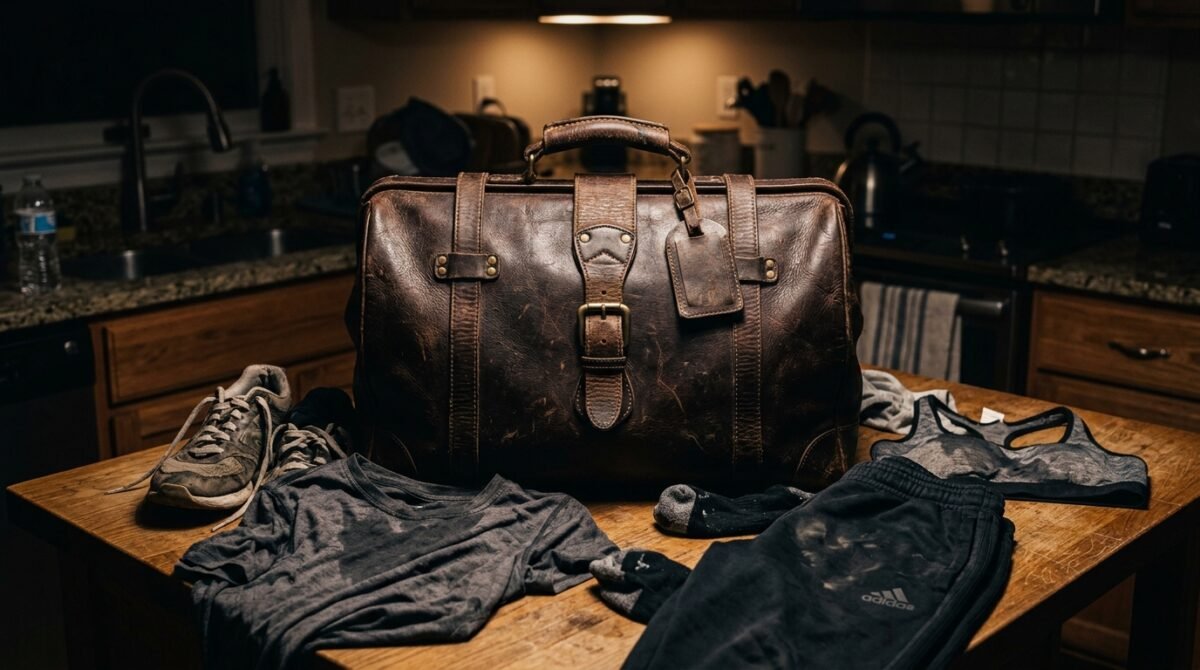
I began pulling out the items one by one: a pair of neon cycling shorts, a crusty towel, and a sports bra. Each item felt like a physical affront. I took the bag to the kitchen island, spreading it out under the harsh LED lights to inspect the damage. The silk lining was discolored, and there were faint, dark grease marks on the exterior leather where she had clearly dragged it across the dusty laundry room floor.
I stood there for ten minutes, waiting for the sound of her bedroom door to open, my heart rate steadily climbing. I didn’t want to overreact, but the violation felt so personal, so deliberate. How could she possibly think this was acceptable? The bag was worth $2,500 when I bought it, and it was certainly worth more as a collector’s item now. The loss wasn’t just aesthetic; it was financial.
“I just wanted to see what she had to say for herself before I completely lost my temper. I set the bag on the counter, laid out her sweaty clothes next to it, and waited for her to walk out for her nightly snack.”
When Chloe finally strolled into the kitchen, she wasn’t even looking in my direction. She headed straight for the fridge, grabbing a carton of iced coffee. She glanced at the counter, saw her laundry, and then looked at me with an expression of mild annoyance rather than guilt. It was the lack of shock on her face that truly made my blood turn to ice.
The Unapologetic Confrontation

“You’re kidding, right?” I asked, my voice barely above a whisper. I pointed at the tote. Chloe didn’t even blink. She took a sip of her coffee and shrugged, leaning against the counter as if she were waiting for the bus. Her nonchalance was infuriating, a wall of indifference that I felt compelled to smash through with pure, raw truth.
“I needed something to haul the stuff down,” she said, her tone dripping with the kind of entitlement that only comes from someone who has never been told ‘no’ in their life. “It was sitting in the closet, and it’s a big bag. I figured it was just luggage. It’s not like it’s delicate china.”
I felt a vein pulsing in my temple. “Chloe, that bag is worth twenty-five hundred dollars. It’s vintage, it’s leather, and it is absolutely not a laundry basket. You’ve ruined the lining, and the leather is stretched out. You didn’t even ask to borrow it.”
“You’re acting like I threw it in a dumpster. It’s a bag. It holds things. That’s what it was made for, isn’t it? Stop being so dramatic about a piece of old leather.”
— Chloe’s response during the first argument
The argument escalated quickly. She tried to frame me as a ‘materialistic snob’ for valuing an object over our living dynamic, completely ignoring the fact that she had violated a basic boundary. The more she talked, the more I realized that this wasn’t an accident. She viewed my things as communal property, a mindset that had likely been festering for the entire time we’d lived together.
I told her clearly, ‘You owe me for the cleaning and the depreciation of this bag.’ She laughed, a sharp, dismissive sound that echoed in the small kitchen. She told me to get over myself and walked back into her room, slamming the door hard enough to rattle the pictures on the wall. I sat in the dark kitchen, the smell of her sweat still clinging to the leather, and realized that our relationship was effectively dead.
That night, I didn’t sleep. I spent hours online searching for leather restoration specialists, finding quotes that started at three hundred dollars and went up from there. But it wasn’t about the cleaning. It was about the principle. I had been paying rent, keeping my head down, and staying out of her way, and this was the repayment I received for my civility. The seed of the rent-stoppage idea was planted then, born out of a desire for immediate, tangible justice.
The Strategic Silence and the Ledger

The next morning, the apartment was deathly quiet. I didn’t send her a text, and I didn’t try to engage. I knew that if we started talking, it would just turn into another screaming match. Instead, I sat down at my laptop and opened a spreadsheet. I listed the original cost of the bag, the current replacement value, the repair estimate, and the emotional toll of having my sanctuary invaded.
I looked at the rent due date—three days away. Her half was fifteen hundred dollars. If I kept it, I would have just enough to cover the damages and potentially start looking for a new place. It was a risky move, one that could lead to eviction or legal trouble, but the sense of power it gave me was intoxicating. I had been pushed into a corner, and this was my exit strategy.
I decided to document everything. I took high-resolution photos of the lining, the stretched leather, and the marks on the exterior. I saved the receipts from when I purchased the bag, proving the value. If she wanted to escalate this, I would be ready. I would treat this like a small claims court case before it even began.
Throughout the day, Chloe sent a series of passive-aggressive texts. She was clearly trying to gauge my temperature, testing to see if I was still angry or if I had ‘gotten over it.’ I ignored them all. Silence is often the most effective weapon in a conflict, especially when the other person thrives on drama and reaction.
“Hey, are you going to get over the bag thing today? I have a busy weekend and don’t want to deal with your attitude. Just leave the rent check on the counter like usual.”
— Text message from Chloe at 10:14 AM
I replied only with a single image: the invoice for the bag from the luxury retailer. I didn’t add a caption. I let the document speak for itself. Her typing bubble appeared, vanished, appeared again, and then stayed silent for three hours. The power dynamic had shifted, and for the first time in three years, I wasn’t the one walking on eggshells.
I began packing my own things, just in case. I started with my most valuable possessions, moving them into a storage unit across town. If I was going to be an ‘unreasonable’ roommate, I was going to be a prepared one. I wasn’t just withholding rent; I was preparing for a total fallout.
The Rent Due Date Explosion

The morning of the rent payment arrived with a heavy, oppressive tension. I had already transferred my half to the landlord’s portal, but I had explicitly left hers unpaid. I knew she would try to login and see the balance, and I knew she would immediately come for me. I was ready, sitting at the kitchen table with my tea, waiting for the inevitable.
She came out of her room around 9:00 AM, looking frazzled. She was holding her phone, her thumb hovering over the screen. She went to the kitchen counter, looked for the rent check, and then turned to me. Her face was pale, a mix of genuine confusion and rising rage. She didn’t bother with pleasantries.
“Where is your half of the rent, and why does the portal say I owe three thousand dollars? You didn’t pay your share, and now it’s telling me the account is delinquent. What have you done?” She was practically vibrating with anger. I took a slow sip of my tea, feeling oddly calm in the face of her storm.
“I paid exactly what I owe, minus the damages you caused to my property. The remaining balance is yours to cover. If you wanted the rent to be paid in full, you should have treated my belongings with respect.”
She exploded. It was a torrent of insults, accusations, and threats. She shouted about how I was going to get us both evicted, how I was being ‘a sociopath’ for holding money hostage, and how the bag was ‘trash anyway.’ She even threatened to call the police, to which I simply nodded and told her that would be a great way to document the damage to my property.
The argument spilled out into the hallway, catching the attention of our neighbor, who peeked out, eyes wide. I didn’t care. The shame of the conflict was far outweighed by the satisfaction of finally asserting a boundary. She was realizing, for the first time, that I wasn’t a doormat, and that my patience had a very firm expiration date.
She went back into her room, and I heard the sound of her calling her boyfriend. I sat back down, opened my laptop, and began drafting a formal email to the landlord explaining that there was a dispute regarding property damage and that I would be covering my portion of the rent immediately. I was protecting myself, and I was making sure that the paper trail was clean.
The Digital Paper Trail
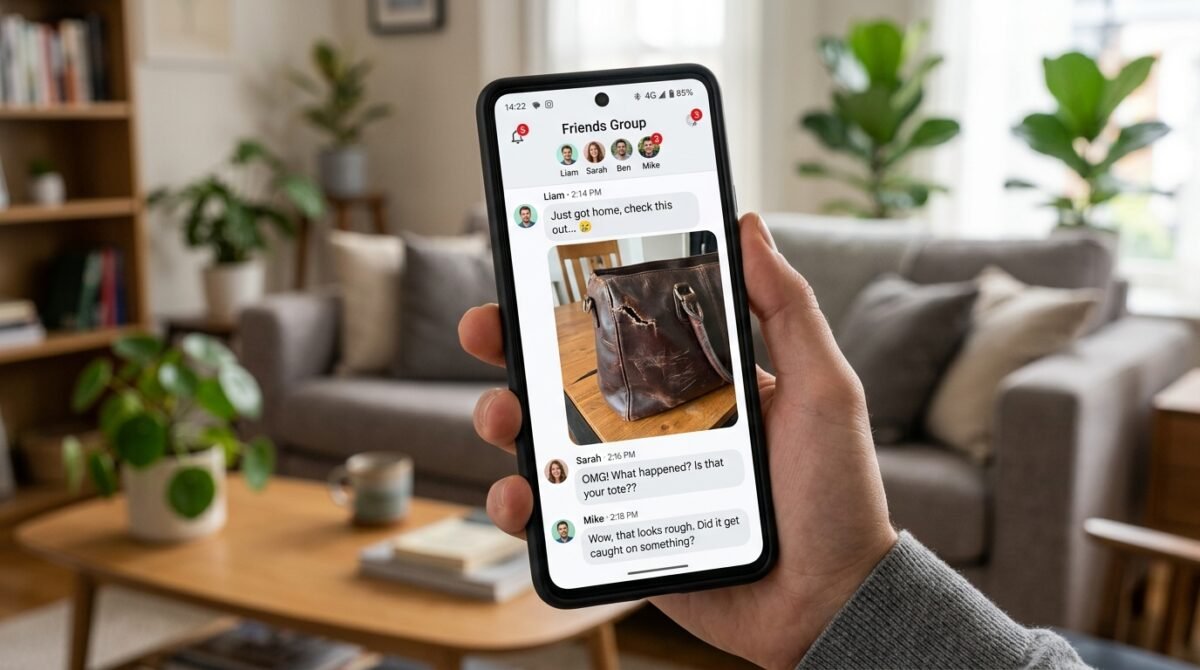
The hours after the confrontation were filled with a barrage of digital noise. Chloe had clearly been texting everyone she knew, trying to build a narrative where she was the victim of a vindictive roommate. My phone buzzed incessantly with messages from mutual friends, some asking what was going on, others clearly sent on her behalf, telling me to ‘just pay the rent and be an adult.’
I chose to be transparent. I didn’t respond to her directly, but I did post a short, factual update in our shared group chat—the one where we usually coordinated utility payments. I attached the photos of the bag, the repair quotes, and a link to the original purchase receipt. I didn’t frame it as an attack; I framed it as a financial transaction. I was reclaiming the cost of my destroyed property.
“I’ve had a lot of messages today. To clear things up: My roommate used my $2,500 bag as a laundry basket. It is damaged beyond simple cleaning. I am withholding the cost of the bag from my rent contribution. I have already contacted the landlord to explain the situation.”
— My message to the roommate group chat
The response was immediate and divided. Some friends thought I was being ‘petty,’ arguing that rent is a separate issue from personal disputes. Others, however, were horrified by the idea that someone would treat a vintage luxury item like a hamper. It was a fascinating window into how people view property rights and accountability.
I spent the afternoon monitoring the landlord’s reaction. To my relief, our landlord was a reasonable person who had dealt with roommate disputes before. He replied to my email, asking for a sit-down meeting. He wasn’t taking sides, but he was concerned about the lease agreement, which was exactly what I wanted. I was no longer just a roommate in a silent war; I was a tenant protecting my rights.
Chloe, meanwhile, was spiraling. She had started moving her things out, clearly convinced that I was going to ruin her credit or get her evicted. I watched from the living room as she hauled boxes to her car. Every time she passed me, she muttered something derogatory, but I just continued working on my laptop, completely unmoved by her performance.
Community Reaction: The Reddit Verdict

When I posted the story to a popular subreddit, I expected some pushback. What I got was a tidal wave of debate that lasted for days. The community was split right down the middle, with thousands of users weighing in on the morality of withholding rent versus the audacity of using someone’s expensive bag as a laundry basket. The comment section became its own microcosm of the conflict.
Some users were completely on my side, citing the ‘law of consequences’ and the fact that she had clearly violated a boundary. They pointed out that if she had borrowed a car and crashed it, she would be expected to pay, so why should a luxury bag be any different? The support was validating, helping me realize that my internal compass wasn’t as skewed as she had made me feel.
“NTA. You don’t get to use someone else’s expensive items as a utility vessel and then cry about being ‘punished.’ She ruined a $2,500 item. She owes you that money. Withholding the rent was the only way to ensure she actually paid you back, because you know she never would have written you a check.”
— u/PropertyRightsAdvocate (Top Comment, 32.5k upvotes)
On the other hand, there were the ‘legal realists’ who warned me about the dangers of withholding rent. They pointed out that in many jurisdictions, withholding rent is a direct violation of the lease and can lead to eviction for both parties, regardless of who is at fault. It was a sobering reminder that while I had the moral high ground, I was skating on thin legal ice.
“ESH. Your roommate is an entitled jerk for using your bag, but you are playing with fire by withholding rent. You could lose your apartment over this. Keep the legal battles separate from your living expenses, or you’re just going to end up homeless with a fixed bag.”
— u/LegalEagle99 (14.2k upvotes)
The debate went on, with people arguing about the value of ‘vintage’ goods and whether or not I should have had the bag in the laundry area in the first place. I read every comment, taking notes on the advice. It helped me realize that while my anger was justified, my method needed to be adjusted to ensure I didn’t suffer long-term consequences from my own protest.
The Landlord’s Mediation

Two days later, we sat in the landlord’s office. It was a small, clinical space that felt far removed from the emotional toxicity of our apartment. Mr. Henderson sat behind his desk, looking like he’d rather be anywhere else. He had our lease in front of him, and he looked between us with a weary, practiced expression.
“I’ve reviewed the emails,” he started, his voice steady. “And I’ve heard both sides. Let’s get one thing clear: the rent is a contract between you both and me. If the total is not paid by the end of the week, I will begin the eviction process. I do not care about the bag, and I do not care about the laundry. That is a personal matter.”
Chloe tried to interrupt, starting in on her ‘victim’ story, but the landlord raised a hand. “I’m not interested in the history. I’m interested in the apartment being paid. If you two have a dispute over property damage, you resolve it yourselves, but you resolve it without jeopardizing the lease. Am I clear?”
“I will pay the full rent to the landlord today, but I will be deducting the amount from your security deposit if we move out, or I will be taking you to small claims court. This isn’t over, Chloe. You owe me for the restoration of that item.”
I felt a sense of relief wash over me. The threat of eviction was gone, and I had successfully shifted the focus to a legal pathway. Chloe looked livid, realizing that she wouldn’t be able to bully me into paying her share. She grumbled something about having to ‘scrape’ the money together, which was a lie—I knew her parents paid for her lifestyle—but I didn’t care.
We left the office without speaking. The silence between us was now absolute. She went back to packing, and I started looking for a subletter to replace me as soon as possible. The apartment, once a place of relative peace, had become a prison. I knew I couldn’t stay here for another month, even if the rent was paid on time.
The Final Move-Out

The next two weeks were a blur of bubble wrap and cardboard. I treated it like a surgical operation, systematically dismantling my life in that apartment. Every time I packed a box, I felt a little lighter, a little more detached from the chaos that had defined my living situation for the last month. Chloe barely looked at me, spending most of her time in her room with the door locked.
On my final day, the apartment was stripped bare. The walls, once covered in art and photos, looked cold and empty. I did one final walkthrough, making sure that I hadn’t left anything behind. I saw the spot in the laundry room where the bag had been sitting, and I felt a strange sense of closure. That single moment had been the catalyst for this entire change.
I had already hired a professional cleaning service to do my part of the move-out, ensuring I wouldn’t be blamed for any of the damage she had caused in the common areas. I was determined to leave with my reputation and my financial standing intact. I even took photos of the empty rooms to document that I was leaving the place in better condition than I found it.
“I hope you find someone else to use as your personal assistant and laundry valet. You clearly need someone who is as reckless as you are. I’m done.”
— My final words to Chloe as I handed over my keys
She didn’t respond, just grabbed the keys from my hand and shut the door. I walked to my car, the cold air hitting my face, and breathed a sigh of relief. I was moving into a small studio downtown, a place where I would live entirely alone. No more shared laundry, no more common areas, and no more entitled roommates.
As I drove away, I felt a profound sense of independence. I had stood up for myself, defended my property, and navigated a high-stakes conflict without losing my cool. It was a lesson in self-worth that I would carry with me for the rest of my life. The bag was still damaged, and the restoration was going to be a long process, but the cost was worth the peace of mind.
Reflecting on the Cost of Boundaries

Looking back, the entire incident feels like a fever dream. It’s strange how something as mundane as a laundry basket can expose the cracks in a relationship that you thought was stable. The realization that Chloe felt comfortable enough to treat my most prized possession as a utility item was the ultimate betrayal. It wasn’t about the money; it was about the lack of fundamental respect for my autonomy.
I’ve since had the bag restored by a specialist in the city. It’s not quite as perfect as it was before, but it still carries its history, and now it carries a new story, too. Every time I look at it, I’m reminded of the time I stood my ground and chose myself over the comfort of a toxic living arrangement. It’s a physical reminder of my own backbone.
I’ve learned that setting boundaries isn’t always pretty. It’s often loud, it’s uncomfortable, and it can result in the loss of a friendship or a living situation. But the trade-off is a life where you are no longer a target for someone else’s entitlement. I’ve become much more selective about who I let into my personal space, and I’ve become much more vocal about my property rights from day one.
“Don’t let anyone make you feel bad for defending what is yours. You aren’t being petty; you are teaching people how to treat you. If they can’t handle that, they have no place in your life.”
I still see comments on my original post from time to time. People still argue about whether I was in the right, and honestly, I don’t care anymore. The experience forced me to grow up in a way that I hadn’t expected. I moved out, I took care of myself, and I moved on. And for that, I am grateful for the entire disastrous, expensive, and eye-opening experience.
If you’re ever in a position where you feel like you’re being taken advantage of, don’t wait for the other person to change. They won’t. You have to be the one to enforce the boundary, even if it feels like you’re starting a war. Sometimes, the war is the only way to achieve peace.
Conclusion
The aftermath of the ‘Laundry Bag Incident’ taught me more about adult life than three years of cohabitation ever could. It wasn’t just about a bag or a rent check; it was about the realization that my boundaries were only as strong as my willingness to defend them. I am now happily living alone, and while my budget is tighter, my peace of mind is infinite.
This situation sparked a massive debate across the internet, highlighting a deep divide in how people perceive the boundaries of shared living. Some believe that roommates should be ‘like family’ and share everything, while others believe in strict, property-based boundaries. Where do you fall on the spectrum?
Community Poll: Do you believe that in a roommate situation, minor use of belongings should be communal, or is every single item strictly off-limits without explicit permission? Share your thoughts below and tell us your own ‘roommate horror story’ in the comments.
What's your verdict on this dilemma?
Vote below to contribute to the official community consensus.

Have a Dilemma Keeping You Up at Night?
Share your real-life feud, wedding chaos, or relationship crossroads anonymously with our editorial team.
What do you think ?
0 Comments🛡️ Comments are moderated to protect community integrity. Your comment will appear once approved by the editorial team.