

Friendship is often described as a sacred bond, a pact of mutual support and shared experiences. But what happens when that bond is tested by the crushing weight of a $1,800 salon bill? My best friend, Sarah, and I have navigated the treacherous waters of adulthood together for over a decade. We have seen each other through bad breakups, career pivots, and the occasional questionable fashion choice. However, nothing prepared me for the day she decided to undergo a radical hair transformation that would ultimately threaten to dismantle our entire relationship.
It started innocently enough. Sarah had been feeling stagnant, a common symptom of the mid-twenty-something slump, and she decided that a complete aesthetic overhaul was the remedy. She spent hours scrolling through Pinterest, curating a mood board of high-maintenance, ultra-luxurious hair styles that looked like they belonged on a red carpet in Milan rather than a suburban brunch spot. I, being the supportive friend, encouraged her to go for it—never imagining that my validation would be used as a weapon against my bank account.
When the day of the appointment arrived, the air was thick with anticipation. Sarah chose ‘The Gilded Lily,’ a salon known for its exorbitant prices and clientele that includes local socialites and influencers. She brought a photograph of a model with intricate, multi-tonal extensions and a balayage technique that required at least six hours of expert labor. She thought she was simply asking for a style; the stylist, however, saw a blank check.
As the hours ticked by and the shampoo bowl turned into a base for a chemical laboratory, the cost was silently climbing. By the time the final blow-out was complete, the transformation was undeniable. Sarah looked like a different person. But as she walked to the front desk, the mood shifted from celebratory to catastrophic. The invoice wasn’t just a bill; it was a testament to the dangers of miscommunication and the toxic illusion of luxury.
The dilemma began the moment she turned to me, her eyes wide with a mix of panic and entitlement. She didn’t have the funds. She looked at me, not with a plea for help, but with the expectation of a savior. This is the story of how a hair appointment turned into a battleground for boundaries, financial independence, and the true meaning of friendship.
The Pinterest Trap and the Stylist’s Ambition
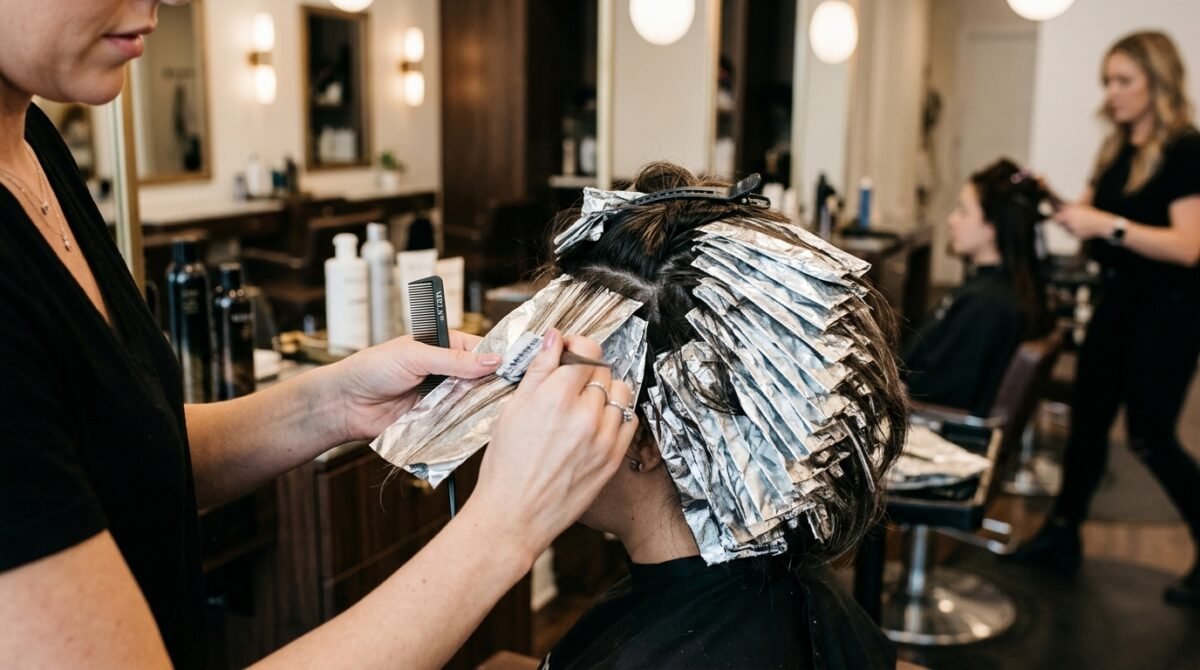
The consultation at The Gilded Lily was brief, bordering on dismissive. The stylist, a man who went by the single name ‘Julian,’ didn’t seem interested in Sarah’s budget. He was interested in his artistic vision. When Sarah presented the photo—a heavily filtered, high-fashion editorial shot—Julian didn’t warn her about the hours of processing or the cost of the virgin human hair extensions he would eventually weave into her scalp.
Instead, he nodded knowingly, his eyes gleaming with the prospect of a high-value commission. He spoke in vague terms about ‘curating an experience’ and ‘tailoring the pigments to her unique aura.’ I stood by, sipping my complimentary cucumber water, feeling a faint prickle of unease. I knew Sarah wasn’t wealthy. We both worked mid-level corporate jobs. The salon looked like it cost more per hour than our monthly rent.
“Are you sure about this, Sarah? Julian seems more interested in his portfolio than your wallet. Maybe we should confirm the price range before he starts the lightening process?”
Sarah waved my concern away with a flick of her hand. She was already mentally living her new life as a woman with perfect, cascading waves. She told me to relax and that she had saved up a ‘little something’ for a treat. I trusted her. I shouldn’t have.
As the hours dragged on, the smell of bleach and expensive hair oil permeated the room. I spent most of the time answering emails, occasionally glancing up to see Julian meticulously adding foils. It was a production. He treated her hair like a canvas, ignoring the reality that this was a person sitting in a chair, not a mannequin. By hour four, the tab was already deep into triple digits, and we were nowhere near the finish line.
The atmosphere became increasingly strained as I realized that Sarah wasn’t asking questions about the cost. She was soaking in the attention. She loved being the person in the salon who required the most focus. She was the star of the afternoon, and for a few hours, the looming financial reality was completely eclipsed by the vanity of the situation.
The Moment the Receipt Hit the Counter

When the final product was revealed, the mirror work began. It was undeniably beautiful. The color was a perfect gradient, the extensions blended seamlessly, and the style was voluminous. For a fleeting second, it felt like the money didn’t matter. Then, Julian turned the monitor toward the front desk. The total was displayed in bold, black font: $1,850. The silence in the room was deafening.
Sarah didn’t gasp. She didn’t look at the screen and reach for her wallet. She froze. I stood up, walking over to the desk, and felt my own stomach drop. I had expected maybe $400 or $500, but nearly two thousand dollars for a haircut and color? It was predatory, but it was also the reality of the establishment she had chosen.
“Ma’am, your total today, including the custom-ordered extensions and the color correction process, comes to one thousand eight hundred and fifty dollars. Payment is due at the time of service.”
Sarah turned to me, her face pale. She didn’t look at the stylist. She looked at me, a desperate, pleading, and frankly terrifying expression. It was the look of someone who had gambled money they didn’t have and lost. She whispered my name, and I knew exactly what she was about to ask.
I felt a surge of anger. We were best friends, yes, but we were adults with separate finances. I hadn’t signed any contract. I hadn’t been the one to choose the extensions. I had explicitly warned her to ask about the price. The weight of the moment felt like a physical pressure in the room, with the receptionist watching us with an expression of polished, cold impatience.
I didn’t immediately say no, which I regret now. I was stunned. I felt manipulated. I looked at the credit card machine and then at Sarah, who was slowly beginning to panic. This wasn’t just a debt; it was a test of how much she felt entitled to my life, my savings, and my inability to say ‘no’ in public.
The Walk to the Parking Lot

The walk to the parking lot after I had paid the deposit—a ‘temporary loan’ Sarah promised to pay back—was the longest walk of my life. She was quiet, the weight of the debt seemingly sinking into her as the adrenaline of the makeover wore off. She kept talking about how she would ‘figure it out’ and ‘pay me back next month when her bonus hit.’ I knew she didn’t have a bonus coming.
I kept my head down, staring at the pavement. I was calculating how much this would set me back. That was my vacation money. That was the money I had been putting away for a new laptop. I felt a cold, hard knot of resentment growing in my chest. How could she put me in this position? How could she expect me to be the safety net for her poor decision-making?
“I just didn’t expect it to be that much. You saw the photo I showed him. It was a high-end look. I assumed it would be expensive, but not… this. You’re the only person who understands how important this was for my confidence.”
Her justification was manipulative, though she probably didn’t see it that way. She was framing her vanity as a mental health necessity, and by extension, making me the villain if I didn’t support it. I didn’t respond. I couldn’t trust my voice to stay steady. I just wanted to get home and process what had just happened.
The car ride was suffocating. Every time she checked her reflection in the visor mirror, I felt my anger flare again. She was admiring the very thing that had just cost me nearly two months of disciplined savings. It felt like she was wearing my money on her head, and she didn’t seem to care about the cost to our friendship.
When I finally dropped her off at her apartment, she gave me a quick, tight hug. She didn’t apologize again. She didn’t mention the ‘loan’ details. She just skipped out of the car, her hair swinging in a way that made me feel like an absolute fool. I sat in my driveway for twenty minutes, staring at the dashboard, wondering if I had just financed the end of our friendship.
The Text Message That Crossed the Line
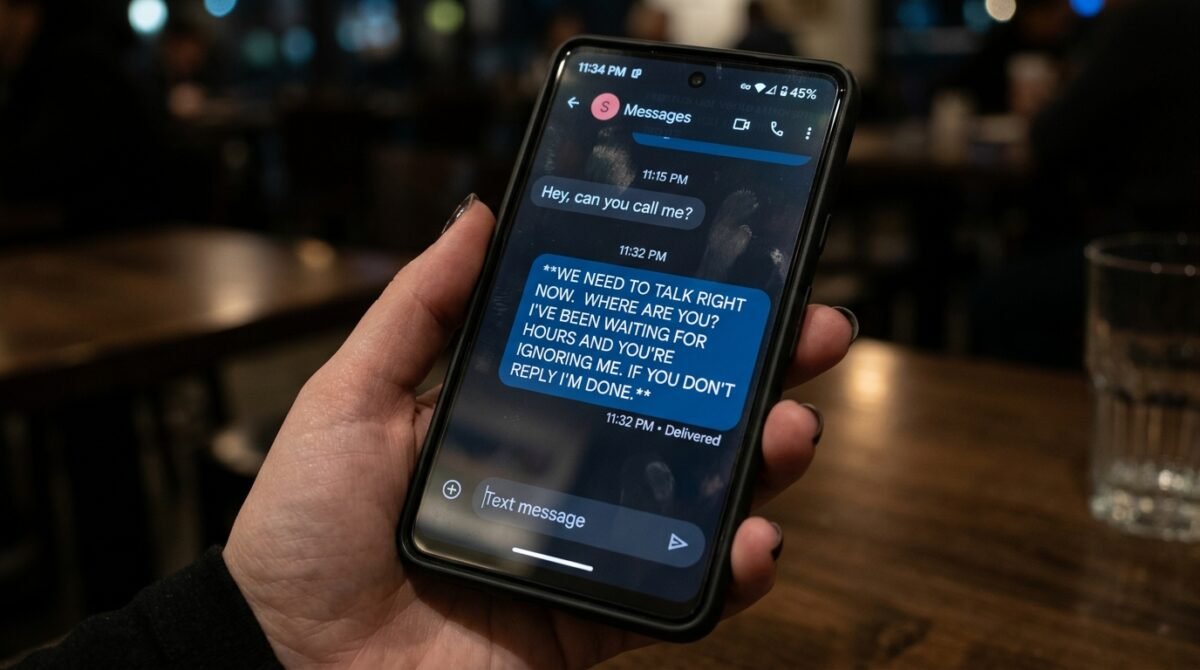
Two weeks passed. I hadn’t heard a word about the money. I had sent a casual text, hoping she’d bring it up, but she ignored it completely, instead sending me photos of her new hair in various lighting conditions. It was as if the debt had been deleted from her reality. Finally, I decided to be direct. I sent her a message asking about the repayment schedule.
“Hey Sarah, just checking in on the $1,800. I have some expenses coming up and I need to know when you’ll be able to pay me back for the salon bill.”
— Sent by Me
The reply didn’t come for six hours. When it did, it wasn’t an apology. It was a defense. She claimed that since I had ‘encouraged’ the look, I had some responsibility for the outcome. She said that a true friend wouldn’t be counting pennies and that she was currently ‘tight’ because of the stress of her job.
“I’m honestly surprised you’re bringing this up so soon. I thought you were happy to help me out, especially since you knew how much I needed this boost. Can’t you just wait until I’m in a better place? It’s just money.”
— Sarah’s Reply
I read the text at my desk at work, and I felt my hands shake. The audacity was breathtaking. ‘It’s just money.’ The phrase echoed in my head. If it was ‘just money,’ why couldn’t she pay it? Why was it only ‘just money’ when it was coming out of my account, but a ‘necessity’ when it was for her hair?
I realized then that this wasn’t about the hair. This was about a pattern of behavior. I had been the enabler for years, picking up the tab for drinks, covering for her during minor financial blunders, and always being the one to keep the peace. By paying the bill, I had inadvertently told her that my boundaries were flexible and that her whims were my priority.
I didn’t reply immediately. I spent the evening talking to my partner, who was livid. He told me I had to get the money back, regardless of the friendship. He helped me draft a firm, clear response. It wasn’t mean, but it was final. I wasn’t going to be the silent victim of her financial irresponsibility anymore.
The Group Chat Intervention

The situation escalated when Sarah decided to vent to our mutual friends. She framed the story as me being ‘transactional’ and ‘unsupportive’ of her personal growth. She left out the fact that I had paid $1,800 and was simply asking for it back. I found out about the group chat because one of our friends, who was tired of the drama, sent me screenshots.
The chat was a cesspool of enabling. People were telling Sarah that she was right, that I was being cold, and that I should just ‘let it go’ for the sake of the friendship. It was infuriating. They were judging me for wanting my own money back, while she was playing the victim. I felt isolated, but I also felt a strange sense of clarity. If these were the people who believed her lies, then I didn’t need them in my life.
“I just can’t believe she’s being so weird about a couple of grand. It’s not like she’s poor. She knows how much this meant to me. It’s like she’s waiting for me to fail just so she can hold it over my head.”
— Sarah in the Group Chat
I didn’t confront them in the chat. Instead, I saved every screenshot. I knew that at some point, I would need a record of how she was twisting the truth. It was a cold, calculated move, but I was done being the nice one. I realized that my kindness had been interpreted as weakness, and it was time to change that perception.
I felt a deep, hollow sadness. I had invested so much in this friendship, and it was being dismantled over a haircut. But the more I looked at the messages, the less I cared about saving the friendship. I cared about the principle. I cared about the fact that she was willing to burn our history to save her own face. That was the real betrayal.
I started to distance myself. I stopped responding to her messages. I stopped checking the group chat. I focused on my work and my partner, and for the first time in a long time, I felt like I was breathing again. The conflict was still there, but it was no longer consuming me. I was preparing for the final showdown.
The Confrontation at the Coffee Shop

I finally agreed to meet Sarah at a coffee shop to ‘talk it out.’ I didn’t want to involve lawyers, but I wanted to make it clear that I wasn’t going to walk away from $1,800. She showed up looking immaculate, her hair perfectly styled, and she acted as if we were just two friends meeting for a casual catch-up. She didn’t even mention the money until I brought it up.
The tension was palpable. The coffee shop was crowded, and every time someone walked by, she would lower her voice, as if she were the one being wronged. I kept my voice steady, laying out the timeline. I reminded her of the exact amount, the promise she made, and the fact that I had my own bills to pay. She tried to interrupt, but I held up my hand.
“Sarah, I’m not asking for a favor. I’m asking for my money back. You made a choice to spend that much at a salon. I made a choice to help you out because I thought you were in a bind. That was a loan, not a gift.”
She looked around, clearly embarrassed. She tried to argue that I had ‘forced’ her to choose that salon, which was a blatant lie. She said that she would pay me back, but only if I agreed to ‘stop being so difficult.’ It was a classic manipulation tactic—trying to make the repayment conditional on my submission.
I didn’t bite. I told her that the repayment was not conditional on anything. It was a debt. I told her that if she didn’t have the money now, we could set up a payment plan. I was trying to be reasonable, but she was only interested in escaping the consequence. She left the coffee shop in tears, claiming I was ‘ruining her life.’ I stayed behind, finished my coffee, and felt nothing but relief.
The Reddit Community Weighs In
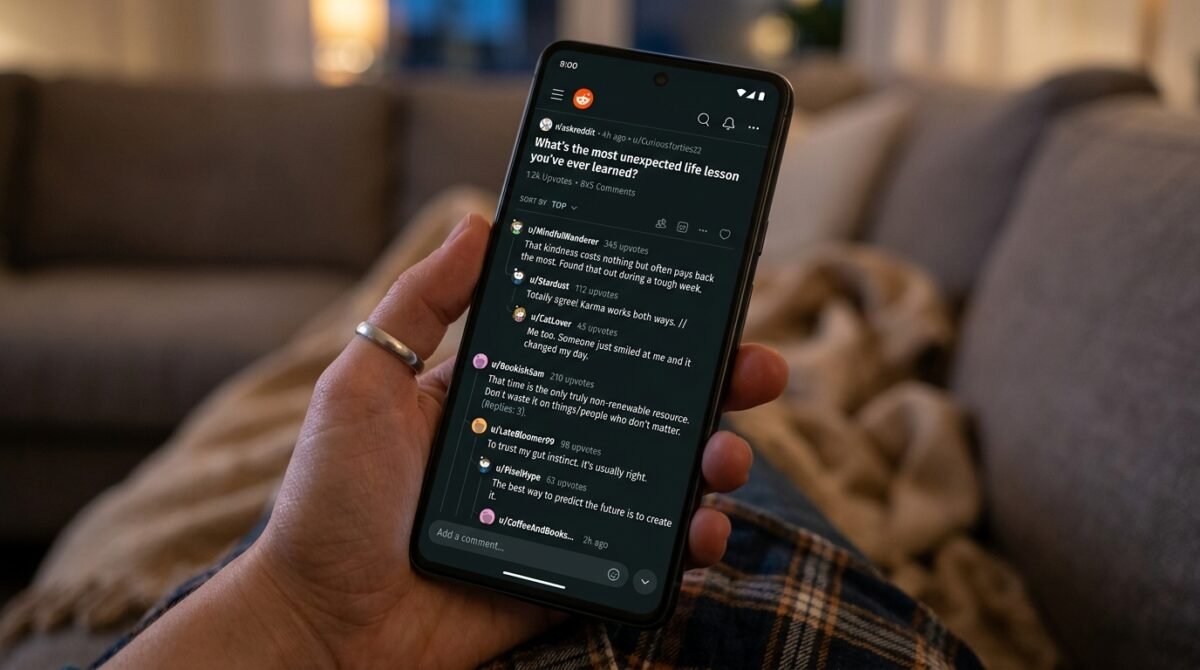
I posted the story on a popular forum, keeping the names and locations anonymous. I needed to know if I was the villain. I wanted to see if I was truly being ‘transactional.’ The response was overwhelming. Thousands of people chimed in, and the consensus was not what Sarah had hoped for. The internet was on my side, and it was validating to see that my boundaries were considered reasonable.
“OP, you are being used. This isn’t a friend; this is an anchor. She treated your bank account like a personal credit card and now she’s gaslighting you into thinking you’re the bad guy for asking for what you’re owed. Cut your losses and get the money back in small claims if you have to.”
— u/ReasonableObserver (Top Comment, 18.2k upvotes)
Reading the comments was like a weight being lifted off my shoulders. People shared their own stories of being taken advantage of by friends, and it made me realize that this was a common, albeit painful, dynamic. I wasn’t alone. I wasn’t crazy. I had every right to expect my money back, and I had every right to demand respect.
Some people argued that I should have set the boundary at the salon, but most understood the pressure of the moment. They saw the ‘salon trap’ for what it was. The support from strangers was more comforting than the support from my own friend group. It gave me the courage to move forward with the next step—a formal request for repayment.
The thread became a viral sensation, with people arguing over the ethics of the salon, the entitlement of the friend, and the importance of financial boundaries. It was a fascinating case study in human behavior, and it solidified my resolve. I was going to get my money, even if it meant the end of the friendship.
The Certified Letter
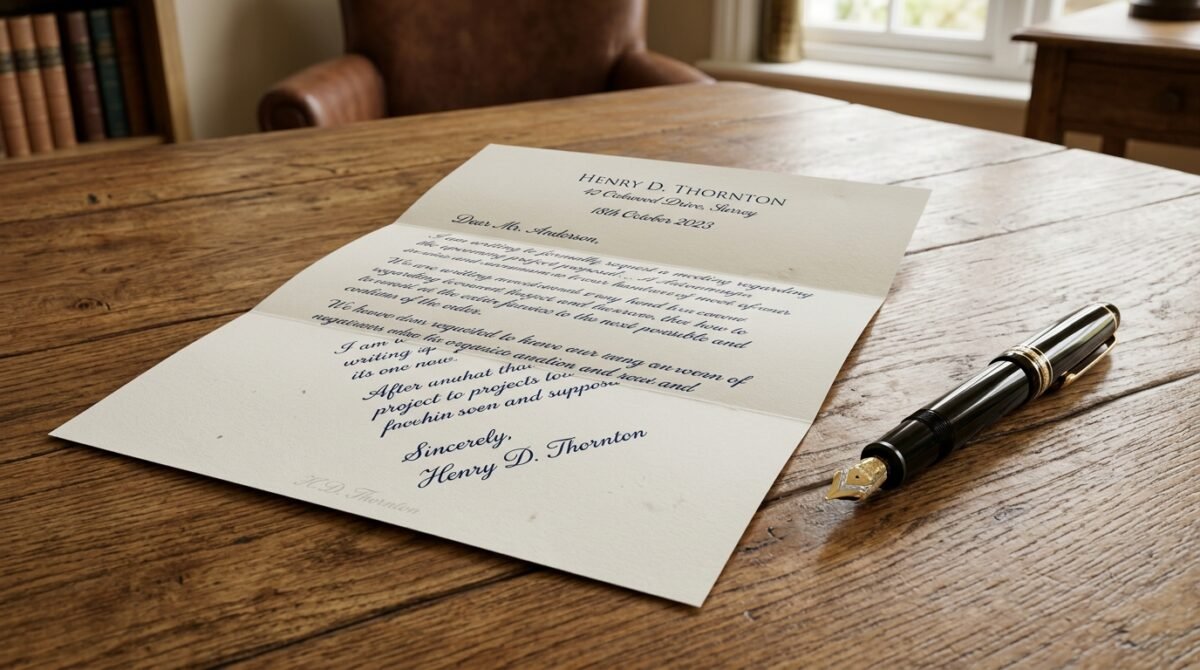
I knew that if I wanted to be taken seriously, I couldn’t just keep sending texts that would be ignored. I did some research and sent a certified letter to Sarah’s address. It was a formal request for the repayment of the $1,800, with a clearly defined deadline and a mention of small claims court if the deadline wasn’t met. It was a bridge-burning move, but I was done waiting.
The silence that followed was deafening. I didn’t hear from her for three days. Then, I got a frantic call. She was screaming, saying that I was ‘ruining our friendship’ and that she couldn’t believe I would go to such lengths. She tried to play the victim one last time, but I didn’t let her. I stayed calm and told her that the letter was simply a way to ensure we were both on the same page.
“I don’t want to do this, Sarah, but you’ve left me no choice. This is the money I worked for. I’m not going to just let it go. Please, let’s just resolve this and move on.”
She hung up on me. But a week later, I received a check in the mail. It wasn’t the full amount—it was $1,500, with a note saying she didn’t have the rest and that I should ‘consider it settled.’ I looked at the check, then at the letter, and I decided to accept it. I was ready to close this chapter.
I didn’t respond to the note. I deposited the check, and that was that. The friendship was effectively over, and while there was a sadness there, it was overshadowed by the feeling of being free. I had stood up for myself, and I had won, even if the price was the loss of a decade-long bond.
The Aftermath and the New Normal

Life feels different now. The absence of Sarah in my life is noticeable, but it’s not the vacuum I thought it would be. It’s more like a space that has been cleared for better things. I’ve realized that my time and my resources are valuable, and I’m much more cautious about who I share them with. I’ve also learned that setting boundaries is not an act of cruelty, but an act of self-respect.
I still see her on social media occasionally, though I’ve muted her posts. She’s still going to high-end salons, still posting photos of her hair, and still living a life that seems to be built on the same shaky foundation. I don’t feel anger anymore. I feel a strange kind of pity. She’s trapped in a cycle of needing validation that she’ll never truly find, and I’m just glad I’m no longer the one financing it.
My partner and I have become closer through this experience. We’ve had long conversations about money, boundaries, and how we want to handle our future. We’ve set up clear guidelines for our finances, and we’re both much more comfortable saying ‘no’ when we need to. It’s been a growth opportunity, a hard-learned lesson in the value of self-preservation.
Looking back, the $1,800 was a small price to pay for the clarity I gained. It was an expensive lesson, but one that I think I needed. I’m more confident, more secure, and more aware of my own worth. And honestly? My own hair looks just fine, and I paid a fraction of the price.
Lessons in Financial Integrity

If there’s one thing this experience taught me, it’s that financial integrity is the bedrock of any healthy relationship. When money enters the mix, it reveals the true nature of people. It shows you who respects your labor and who feels entitled to your success. It’s a harsh filter, but an effective one. I’ve learned to be upfront about money, to never lend what I can’t afford to lose, and to never let a friend make financial decisions for me.
We often talk about the importance of being ‘supportive’ friends, but support shouldn’t mean enabling destructive behavior. True support is being there for someone when they’re struggling, not helping them sink further into a hole of their own making. I was a supportive friend for years, but I wasn’t a healthy one, because I wasn’t holding my friend accountable.
I encourage anyone reading this to take a look at their own friendships. Are there patterns of entitlement? Are there boundaries that are being constantly pushed? Don’t wait for a $1,800 disaster to wake you up. Start small. Say ‘no’ to the things that don’t align with your values. The people who truly care about you will respect those boundaries; the people who don’t, well, they were never really your friends to begin with.
It takes courage to walk away from a long-term relationship, but it takes even more courage to stay true to yourself in the face of pressure. I’m proud of the person I’ve become through this process, and I’m grateful for the lessons, even the painful ones. I’m moving forward, one step at a time, with my eyes open and my boundaries firmly in place.
Conclusion
The story of the $1,800 salon bill is not just about a hair appointment gone wrong; it is a profound exploration of the boundaries that define our personal and financial lives. It serves as a reminder that we are responsible for our own choices, and that those choices should never be offloaded onto the people who care about us. The entitlement Sarah displayed was a symptom of a deeper issue, one that I was no longer willing to accommodate.
In the end, I lost a friend, but I gained something much more valuable: my own peace of mind and a renewed sense of self-respect. The journey from that salon chair to the resolution of the debt was arduous, but it was necessary. It forced me to confront the ways I had been compromising myself for the sake of others, and it provided the catalyst I needed to change my behavior permanently.
I hope this story encourages you to reflect on your own relationships. Where are your boundaries? Are they respected, or are they constantly tested? Don’t be afraid to stand your ground, even when it feels uncomfortable. Your financial and emotional well-being are not negotiable. Have you ever been in a situation where a friend’s entitlement cost you more than just money? Share your thoughts and stories in the comments below; let’s discuss the complexities of setting boundaries in modern friendships.
What's your verdict on this dilemma?
Vote below to contribute to the official community consensus.

Have a Dilemma Keeping You Up at Night?
Share your real-life feud, wedding chaos, or relationship crossroads anonymously with our editorial team.
What do you think ?
0 Comments🛡️ Comments are moderated to protect community integrity. Your comment will appear once approved by the editorial team.