
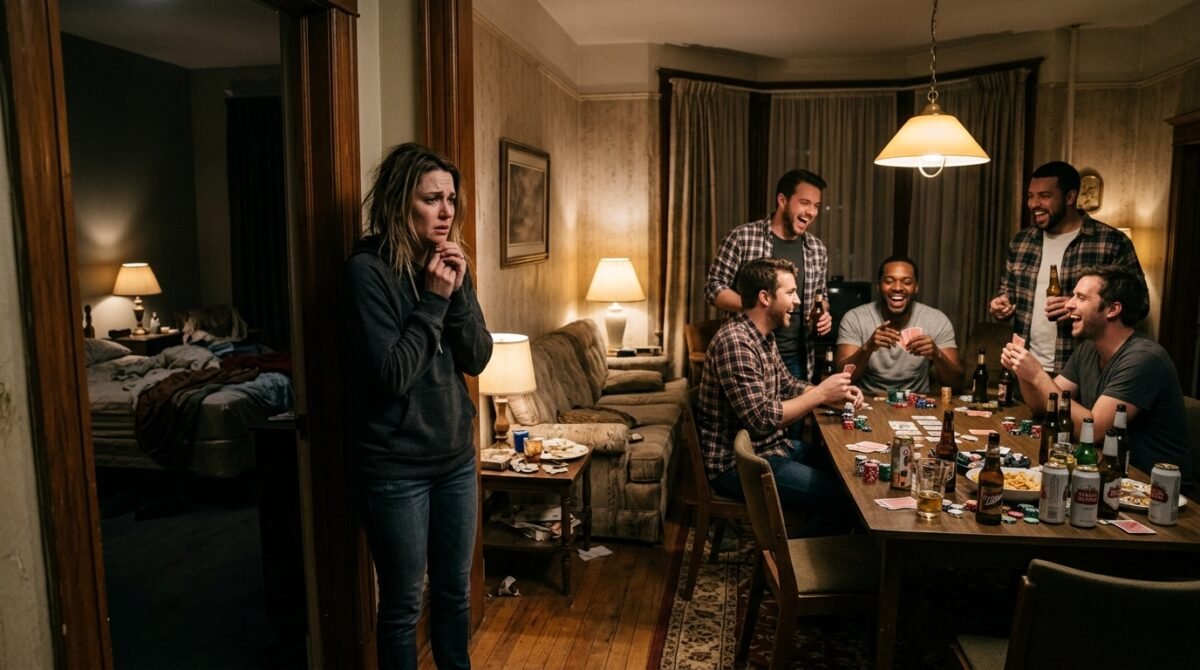
Marriage is often described as a partnership of equals, a shared journey through the peaks and valleys of life. But what happens when the road suddenly turns into a steep, treacherous climb for one person while the other decides to take a detour for leisure? For me, the realization that my husband, Mark, prioritized his recreational habits over the literal life-and-death needs of my family didn’t happen overnight. It was a slow, agonizing erosion of trust, characterized by small dismissals that eventually culminated in a confrontation I never imagined I would have to face.
My mother, a woman who had always been the backbone of our family, was diagnosed with a degenerative condition that required specialized care and a stable environment. When her apartment became unmanageable due to her physical decline, I naturally turned to the spare bedroom in our suburban home. It was supposed to be a temporary bridge—a place for her to receive treatments and recover. I assumed Mark, who had always been ‘cordial’ with her, would see this as a necessary act of compassion. I was wrong.
The conflict didn’t start with a scream; it started with a cold, calculated schedule. While I was busy coordinating doctor appointments and medical equipment, Mark was meticulously planning his ‘poker nights.’ These weren’t just casual hangouts; they were weekly, high-stakes events that filled our home with cigar smoke, shouting, and a complete lack of regard for anyone else’s comfort. The guest room, which shared a wall with our dining room, became the epicenter of a battle for respect.
As the walls of our marriage began to thin under the weight of his entitlement, I found myself oscillating between rage and disbelief. How could a man I had vowed to love and cherish be so utterly indifferent to the suffering of someone who had once been like a parent to him? This isn’t just a story about a guest room; it is a story about the true nature of character, the limits of compromise, and the moment you realize that sometimes, the person you sleep next to is a complete stranger.
The Initial Request and the First Dismissal
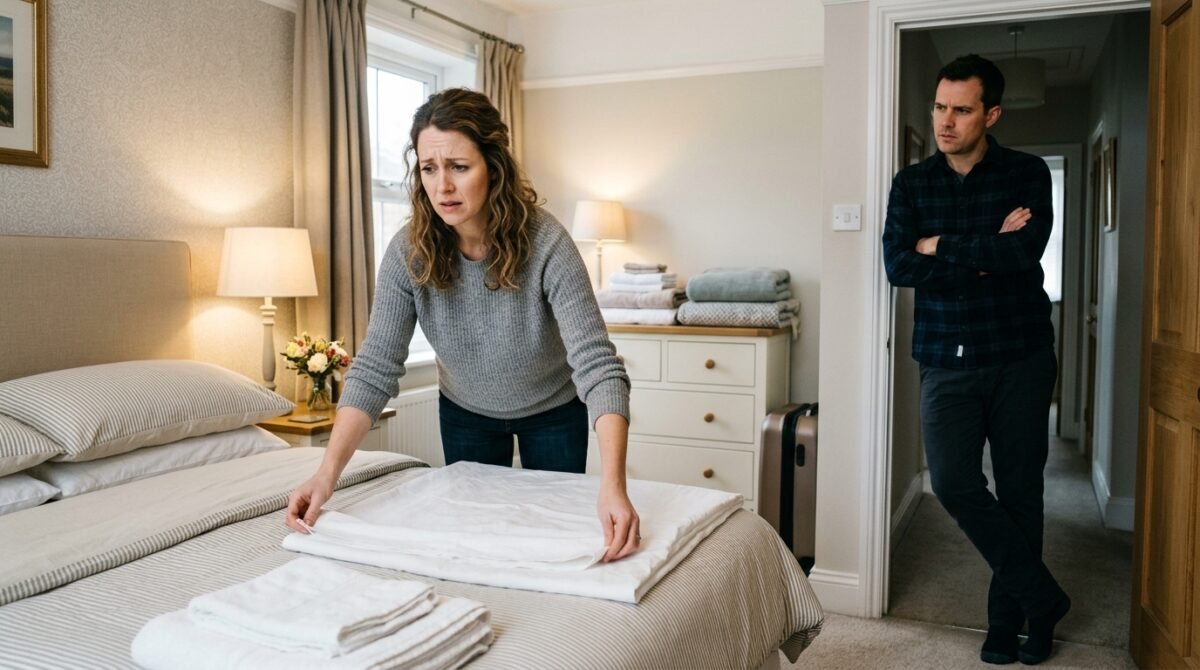
When the doctor told us my mother needed to be moved into a ground-floor living space, I felt a sense of urgency that I thought Mark would share. Our house was perfect for her needs. I broached the subject one Tuesday evening over dinner, hoping for a supportive response. I laid out the plan: we would convert the guest room, minimize the noise, and ensure she had the peace she needed for her recovery. I was prepared for him to ask about the financial logistics, but I wasn’t prepared for the tone he took.
Mark set his fork down, his expression hardening into something I didn’t recognize. He didn’t ask how she was doing; he asked how long she would be ‘disrupting’ our routine. I was stunned. I reminded him that this was about my mother’s health, not an inconvenience to his lifestyle. He scoffed, pointing out that we had obligations to our ‘social life.’ The term ‘social life’ felt like a slap in the face when applied to a woman who could barely walk without assistance.
“I just think it’s a big ask, Sarah. You know the guys come over every Friday. It’s the one time I get to decompress. Having your mom here, with all her equipment and potential medical emergencies? It’s not the vibe I want for the boys.”
— Mark, during our first conversation about the arrangement
I argued that his friends could meet at a bar or someone else’s house for a few weeks, but he wouldn’t budge. He insisted that our home was the ‘hub.’ The lack of empathy was chilling. He didn’t see a human being in pain; he saw a logistical hurdle to his weekend entertainment. I went to bed that night feeling a deep, sinking dread in my stomach, not knowing that this was merely the opening salvo in a much larger war.
The next day, I started clearing out the guest room. I bought new bedding, installed safety rails, and organized the space to be as comfortable as possible. I ignored the tension that filled the air whenever he walked past the room. I was operating on autopilot, fueled by the conviction that I was doing the right thing. But Mark was already plotting how to maintain his status quo, regardless of the consequences to my mother or our marriage.
The Friday Night Ambush
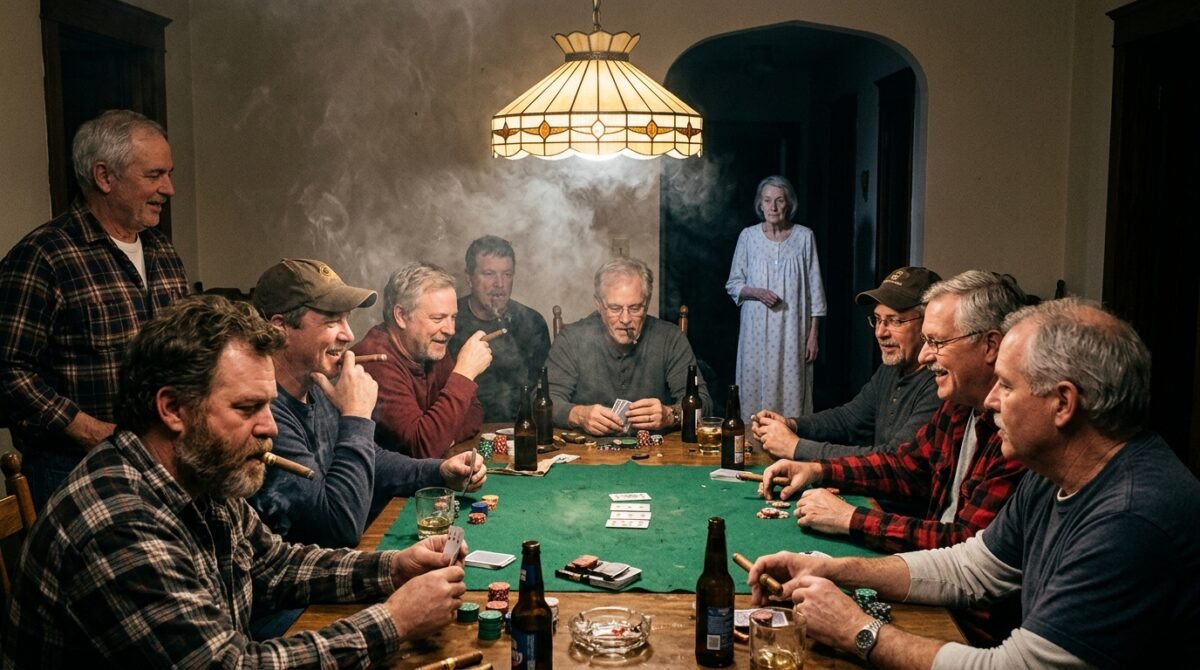
The first Friday arrived with a palpable tension. My mother had arrived that morning, exhausted and fragile. I helped her settle in, and she immediately went to sleep, overwhelmed by the move. Meanwhile, Mark was busy setting up the poker table in the dining room, just feet away from her door. I walked over to him, keeping my voice low to avoid waking her, and told him the game needed to be moved or canceled.
He looked at me as if I had suggested we sell the house. He argued that the boys were already on their way and that it would be ‘rude’ to cancel on them at the last minute. The irony was so thick I could hardly breathe. He was worried about being rude to his poker buddies, but entirely comfortable being cruel to a sick, elderly woman in her own daughter’s home. I told him in no uncertain terms that he could not have a group of loud men over while she was trying to rest.
“I’m not kicking them out, Sarah. Your mom can wear earplugs. If she’s really that sick, she’ll probably sleep through it anyway. Stop trying to control everything.”
— Mark, minutes before the guests arrived
The doorbell rang before I could respond. Within minutes, the house was filled with the sounds of boisterous laughter, the clinking of glasses, and the heavy thud of chairs being moved around. I stood in the hallway, watching my mother’s bedroom door, praying she wouldn’t wake up in a panic. I felt a surge of pure, unadulterated anger. I walked back into the living room and told the group that they needed to keep it down, but Mark just rolled his eyes.
By midnight, the noise had escalated. They were cheering, arguing over pots, and the air was thick with the smell of stale beer and cigars. My mother came out of the room, looking pale and frightened, clutching her cane. She didn’t say a word, just stared at the chaos in the dining room with a look of profound disappointment. I felt like the smallest person on earth as I helped her back into the room, promising to fix it. I realized then that Mark had no intention of respecting my boundaries.
The Secret Group Chat Revelation

The fallout from that Friday night was immediate. My mother stayed in her room all of Saturday, refusing to eat. When I confronted Mark, he doubled down, claiming I was ‘overreacting.’ I felt like I was losing my mind, caught in a cycle of gaslighting that left me questioning my own judgment. Then, the universe decided to hand me the evidence I needed. Mark had left his phone on the kitchen counter while he went to the gym.
I wasn’t looking for trouble; I was looking for the grocery list. But a notification popped up on the screen, and I couldn’t help but glance at it. It was from a group chat titled ‘The Poker Crew.’ The messages were sickening. They were mocking my mother, calling her a ‘roommate from hell’ and joking about how long it would take for me to snap. Mark’s contributions were the worst of all; he was complaining about how my mother’s presence was ‘ruining the vibe’ and how he was looking for a way to get me to kick her out.
“Just give it a few more weeks. She’s gotta be out soon, right? If not, I’m gonna start hosting the games in her room just to prove a point. She’s really killing the mood for us.”
— Mark, in the ‘Poker Crew’ group chat
I took screenshots. My hands were shaking so violently that I almost dropped the phone. I felt a cold clarity wash over me. This wasn’t about a game; this was about his total lack of regard for my family and, by extension, for me. He had been laughing at my pain with his friends, making me out to be the villain while he played the victim. I felt a deep, hollow ache in my chest. This was the man I had built a life with, and he was a stranger.
I didn’t confront him right away. I needed to be strategic. I saved the photos to a secure cloud drive and started planning my next move. The realization that he had been lying to my face for weeks gave me a strange kind of power. I was no longer the desperate wife begging for consideration; I was a woman who had seen the truth and was preparing for the aftermath. The mask was off, and I finally understood that I couldn’t fix what was fundamentally broken.
The Sunday Morning Ultimatum
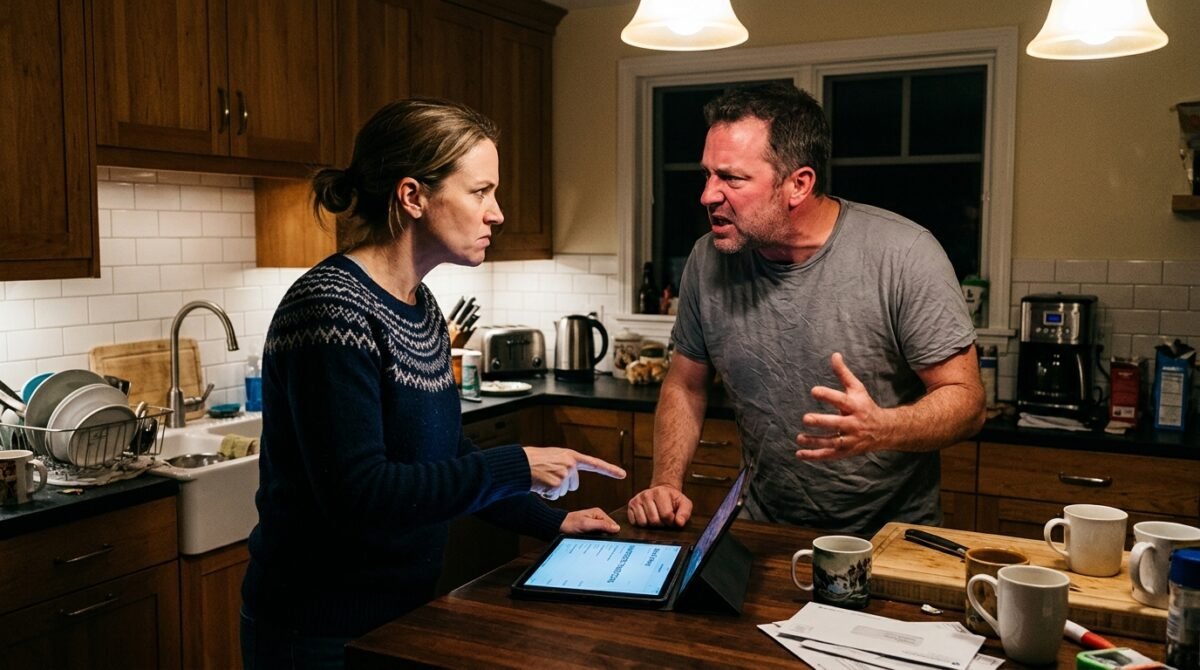
I let the tension simmer until Sunday morning. Mark came into the kitchen, acting as if nothing had happened, humming a tune as he made coffee. He asked me if I wanted anything from the store. I just stared at him, the silence between us growing heavy and suffocating. He eventually stopped, noticing my expression. He asked what was wrong, his voice dripping with that fake, patronizing concern he had mastered.
I pulled out my tablet and laid it on the counter. I opened the screenshots of the group chat. I didn’t say a word. I just watched his face as he read the messages. The color drained from his skin, and he tried to stutter out an explanation, but there wasn’t one. He tried to claim it was ‘just locker room talk,’ that he didn’t mean any of it, but the words felt like paper-thin excuses.
“Is this what you do when you think I’m not looking, Mark? You make fun of my mother, who is dying, while you play cards in my house? You think this is a joke?”
— Me, during the final confrontation
He got defensive, accusing me of snooping, of invading his privacy. He tried to turn the tables, claiming that I was the one who had changed, that I had become ‘obsessed’ with my mother and was neglecting our marriage. It was a classic deflection, an attempt to make me feel guilty for standing up for my own flesh and blood. I didn’t bite. I told him that the marriage was already in trouble because of his lack of empathy, and that this was the final nail in the coffin.
I gave him an ultimatum: either the poker nights stopped completely until my mother was gone, or he could find somewhere else to host them—permanently. I told him that I was no longer interested in being the ‘cool wife’ who sacrificed her family for his entertainment. He looked at me with pure venom, clearly not used to being challenged. That moment confirmed everything I needed to know about where his loyalties lay.
The Fallout and Family Intervention
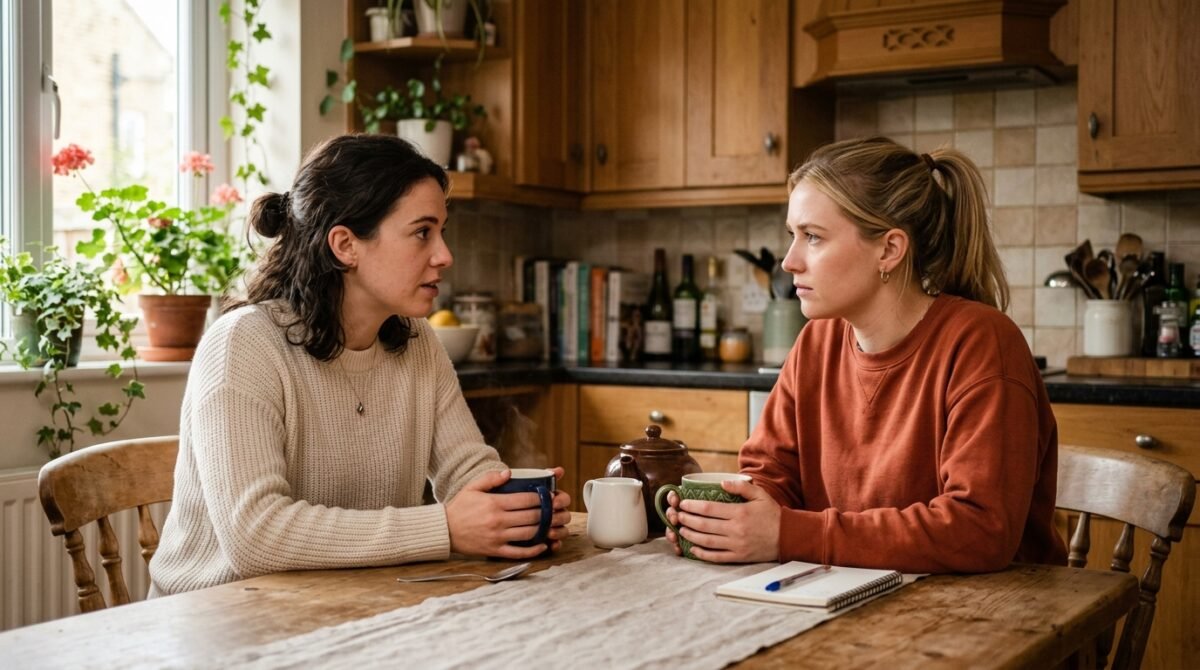
The fallout was swift and brutal. Mark didn’t change his ways; he just got sneakier. He started going out to his friends’ houses, but he made sure to let me know how much he hated it. He would come home late, smelling of smoke and alcohol, and start arguments over the smallest things. The energy in the house became toxic, and my mother could feel it. She started apologizing to me, telling me she felt like a burden, which only broke my heart further.
I reached out to my sister, and she was appalled by what I told her. She came over that weekend, and we had a massive family intervention. We didn’t invite Mark; we just laid out a plan to get my mother into an assisted living facility that was closer to our family. It wasn’t the ideal situation, but it was the only way to get her out of the firing line of Mark’s resentment. I felt like I was failing her, but I also realized that staying in that house was no longer an option.
“You’re doing the right thing, Sarah. This house isn’t a home anymore. It’s a battlefield. You need to get out of here, not just for your mom, but for your own sanity.”
— My sister, during our heart-to-heart
Mark found out about our plans and was furious. He claimed I was ‘tearing the family apart’ and that I was being ‘manipulative.’ The irony was lost on him, as always. He couldn’t see that his own actions had forced my hand. He tried to play the victim to our mutual friends, painting me as the hysterical wife who had lost her mind. Some of them believed him, which hurt, but most of them saw through the act. The people who mattered stood by me.
The process of moving my mother out was the hardest thing I’ve ever done. I felt like I was admitting defeat, like Mark had ‘won.’ But as I watched her settle into her new room, which was bright, quiet, and peaceful, I realized that I hadn’t been defeated. I had saved her from a toxic environment. And in doing so, I had taken the first step toward saving myself from a life I didn’t want to live anymore.
The Internet Weighs In

I decided to post my story on Reddit, needing an objective perspective. I expected some blowback, but I wasn’t prepared for the sheer volume of support. The post blew up overnight, reaching tens of thousands of upvotes. People were disgusted by Mark’s behavior and validated my feelings. The comments section became a space for people to share their own experiences with toxic partners and family drama, and I felt less alone than I had in years.
“Your husband is not just an AH, he’s a narcissist. Who makes fun of a dying mother-in-law in a private chat? He has zero respect for you or your family. Get out, lawyer up, and never look back.”
— u/JusticeForMom (Top Comment, 32.1k upvotes)
The community was ruthless in their assessment of Mark. They pointed out the red flags I had ignored for years—the small dismissals, the need for control, the constant gaslighting. It was like reading a biography of my own marriage. Many commenters warned me that he wouldn’t change, that he was only escalating his behavior. They encouraged me to prioritize my own happiness and to stop seeking validation from a man who couldn’t provide it.
“ESH? No, this is definitely NTA. The fact that he thinks his poker night is more important than his wife’s dying mother is all you need to know. He’s showing you exactly who he is. Believe him.”
— u/RealityCheck99 (15.4k upvotes)
Reading these comments was both validating and terrifying. It confirmed my worst fears, but it also gave me the courage to move forward. The community wasn’t just offering sympathy; they were offering a roadmap for survival. They shared legal advice, resources for counseling, and stories of their own successful departures from toxic situations. For the first time in a long time, I felt like I had a team behind me.
I realized that the internet, despite all its flaws, could be a powerful tool for connection and truth. People who didn’t know me from Adam were telling me that my worth wasn’t defined by my husband’s opinion. It was a simple message, but it was one I had desperately needed to hear. I was no longer just a wife; I was a person with agency, and I had the power to change my circumstances.
The Final Breaking Point
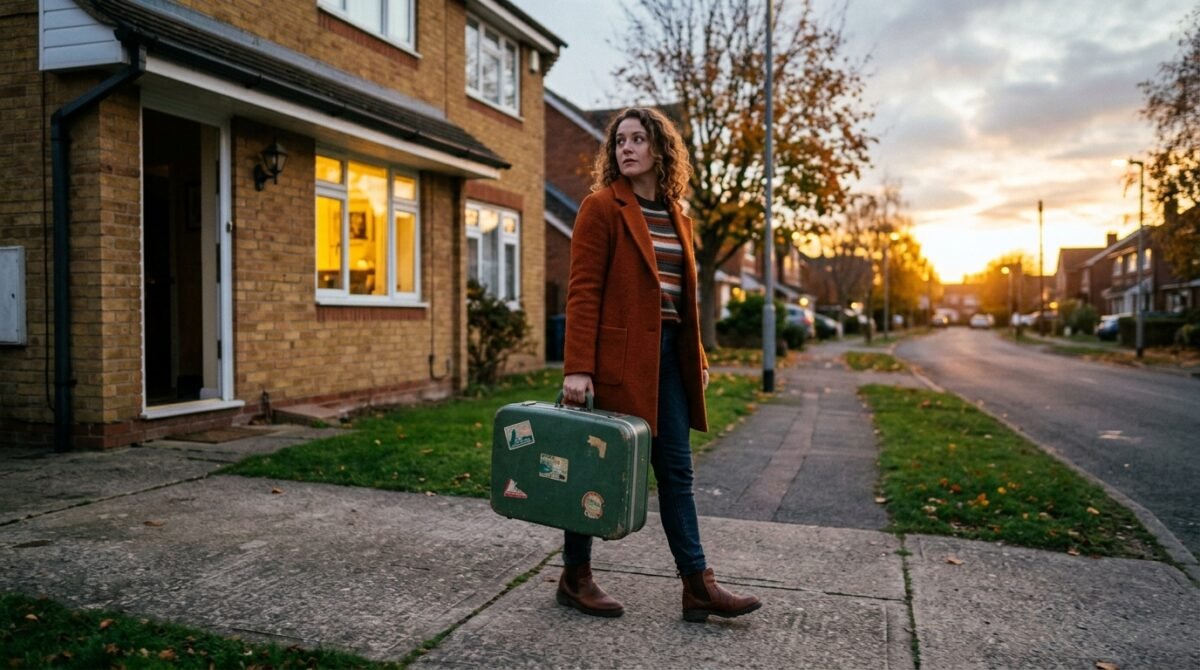
The end of my marriage didn’t happen in a courtroom; it happened in the middle of a Tuesday. Mark had come home and started complaining about a ‘mess’ in the living room, which was really just a box of my mother’s old photos I had been sorting through. He kicked the box, sending pictures flying across the floor. That was the moment. Something inside me just snapped. I didn’t scream, I didn’t cry. I just looked at him and felt a profound sense of peace.
I told him I was leaving. I wasn’t asking, I wasn’t negotiating, and I wasn’t looking for a reaction. I told him he could have the house, the poker table, and the lifestyle he loved so much. I didn’t want any of it. I wanted my dignity back. He tried to act surprised, tried to use his ‘charm’ to talk me down, but I didn’t hear a word he said. I walked out of that house that afternoon, and I never went back.
“I’m done, Mark. You win. You can have your house and your poker games. You just won’t have me to blame for them anymore.”
— My final words to Mark before leaving
The freedom was overwhelming. I stayed with my sister for a few weeks, and we just talked, laughed, and started to heal. I felt like I was shedding a skin I hadn’t realized I was wearing. The anxiety that had been my constant companion for years began to dissipate. I started to rediscover the things I loved—hobbies I had neglected, friends I hadn’t seen, and a sense of self that had been buried under the weight of his expectations.
It wasn’t easy. There were days when I felt lonely, days when I questioned if I had done the right thing. But then I would look at my phone, look at the messages I had saved, or talk to my mom, and I would remember the truth. I had chosen myself. And that was the most important decision of my life.
Reflecting on the Aftermath

It has been six months since I left, and I am a different person. My mother is stable, and our relationship has never been better. We spend our weekends together, not worrying about poker nights or noisy neighbors. She’s happy, and that’s all that matters to me. I’ve started a new job, one that challenges me and gives me purpose, and I’ve found a community of people who actually respect me.
I still think about Mark occasionally, but not with anger. I feel a sort of detached pity for him. He’s still living in that same house, playing the same games, and complaining about the same things. He hasn’t changed, and he probably never will. I realize now that his behavior wasn’t about me; it was a reflection of his own inability to grow. I was just the target of his insecurity, and I’m glad I’m no longer in the line of fire.
“The most important thing I learned is that no one can make you feel small without your permission. I gave him permission for too long, but I’ve taken it back.”
— My reflection on the experience
The lesson I learned is one I wish I didn’t have to learn the hard way: your home should be your sanctuary, and the people in it should be your biggest supporters. If they aren’t, it’s time to reevaluate the foundation of that house. I lost a marriage, but I gained myself. And that’s a trade I’d make again in a heartbeat.
To anyone out there struggling with a partner who doesn’t see your value or your needs, listen to your gut. It’s smarter than you think. You don’t have to be the ‘cool’ partner or the ‘accommodating’ spouse. You deserve to be seen, heard, and cherished. And sometimes, the hardest thing you have to do is leave, but it might also be the most liberating.
The Financial Reality

People often ask me about the financial side of the divorce, thinking it was the biggest hurdle. Surprisingly, it was the easiest part. We had kept our finances mostly separate, which saved me from a lot of legal battles. I had my own savings, which helped me secure a small apartment. Mark tried to argue over the furniture, but I told him he could have it all. My freedom was worth more than a couch or a dining room table.
| Asset | Who Took It | Reasoning |
|---|---|---|
| House | Mark | He wanted to keep his ‘hub’ for poker nights |
| Savings | Split | Legally required |
| Personal Items | Me | I only took what was mine |
| Furniture | Mark | I wanted a fresh start |
The financial ledger of my life changed overnight. I went from being one half of a two-income household to being a single, independent woman. It was a lifestyle adjustment, but it was one I welcomed. I learned to budget, to plan, and to be responsible for my own future. It wasn’t about the money; it was about the independence that came with it.
I remember sitting at my kitchen table in my new apartment, looking at my bank account, and for the first time in years, I didn’t feel a sense of guilt. I felt a sense of pride. I had built this. I had saved for this. And no one could tell me how to spend it or who I could host in my home. The financial independence was the cherry on top of my emotional freedom.
Lessons in Boundaries

If I could go back and tell my younger self one thing, it would be this: boundaries are not a sign of conflict; they are a sign of self-respect. I spent so long trying to keep the peace that I lost the war. I thought that by being flexible, I was being a ‘good wife.’ In reality, I was just teaching Mark that his wants were more important than my needs. It’s a hard lesson, but it’s one that has changed the way I interact with everyone in my life.
I now communicate my needs clearly and early. I don’t wait for things to boil over. I don’t apologize for my family, and I don’t apologize for my values. If someone doesn’t like it, they’re free to leave. That’s the power of having a clear sense of self. It’s not about being aggressive; it’s about being firm in your worth.
“Boundaries aren’t walls to keep people out; they’re gates to keep you safe. Once you start enforcing them, you’ll be surprised at how much better your life becomes.”
— My advice to anyone struggling
I’ve also learned to recognize the signs of toxicity earlier. Whether it’s in a relationship, a job, or a friendship, I’m quicker to address issues and to walk away if things aren’t right. I don’t fear being alone anymore; I fear being with the wrong person. And that’s a shift that has transformed my entire world.
I’m finally at peace. The drama of the past is behind me, and I’m looking forward to a future that I’m in control of. It’s not always perfect, and I still have days when I’m tired or stressed, but I’m doing it on my own terms. And that, in the end, is all I ever wanted.
Conclusion
My story is, at its heart, a reminder that we are the guardians of our own lives. We often get caught in the trap of thinking that sacrifice is the ultimate expression of love, but sacrifice without respect is just a slow suicide of the spirit. I sacrificed my comfort, my family, and my dignity for a man who didn’t even notice. I am thankful for the moment the mask fell, because it gave me the clarity to reclaim my life.
If you find yourself in a situation where your partner’s hobby or ‘social life’ takes precedence over the basic human needs of those you love, take a step back. Ask yourself why you’re staying. Ask yourself if you’re being loved, or if you’re being managed. You deserve more than that. You deserve someone who stands by you, especially when the road gets rocky.
What about you? Have you ever had to choose between a partner and a family member in a time of crisis? Did you make the right choice, or do you have regrets? Let’s talk about it in the comments. Your experiences might just be the sign someone else needs to reclaim their own path.
What's your verdict on this dilemma?
Vote below to contribute to the official community consensus.

Have a Dilemma Keeping You Up at Night?
Share your real-life feud, wedding chaos, or relationship crossroads anonymously with our editorial team.
What do you think ?
0 Comments🛡️ Comments are moderated to protect community integrity. Your comment will appear once approved by the editorial team.