
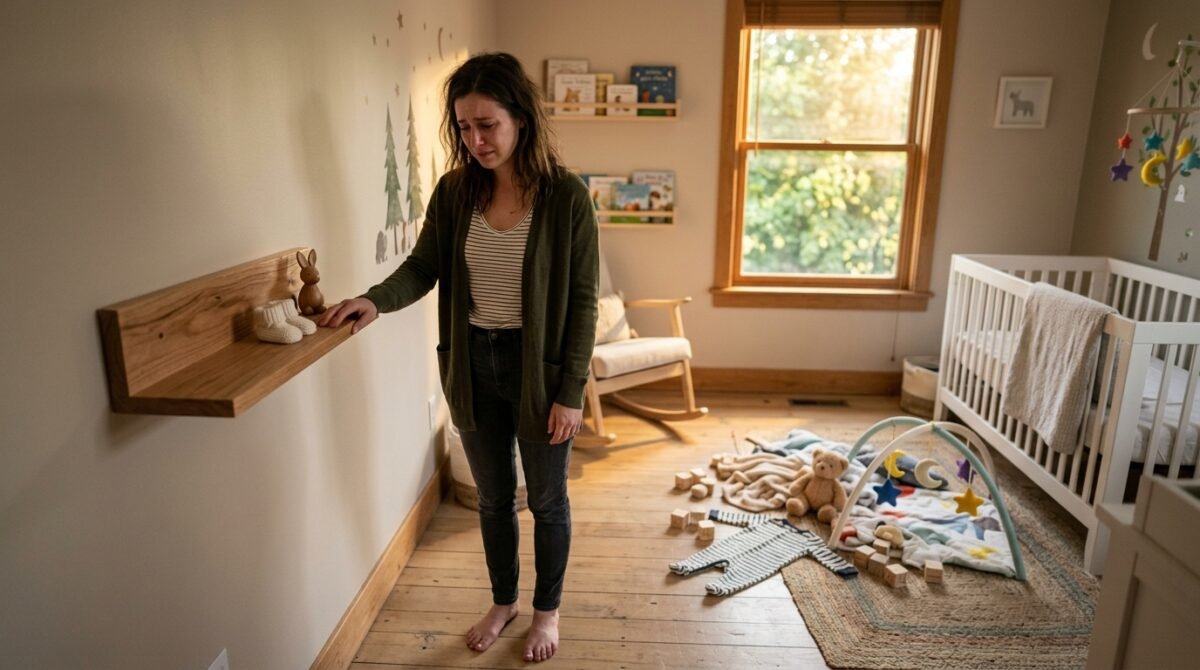
They say that grandmothers are the keepers of memories, the ones who weave the fabric of our family history into the lives of the next generation. But what happens when that keeper decides to act as the destroyer? My mother-in-law, Martha, always had a specific, rigid vision of what a home should look like. It was a sterile, minimalist aesthetic that she pushed on me from the day my husband, David, and I announced our first pregnancy.
I never imagined that her obsession with ‘decluttering’ would cross the line into total destruction of my most sacred possessions. While we were away for a weekend work trip, we entrusted her with the house and the responsibility of checking on our nursery, which was nearly finished. We didn’t ask her to clean. We didn’t ask her to organize. We certainly didn’t ask her to purge.
When we returned home, the shock wasn’t immediate—it was a creeping, icy dread as I walked into the baby’s room. The hand-crocheted blankets, the ones my late grandmother spent months on, were gone. The nursery felt hollow, not because it was unfinished, but because the heart of it had been ripped out. The silence in the house was deafening.
This isn’t just about ‘stuff.’ It’s about the violation of my agency, the disregard for my heritage, and the terrifying realization that Martha believes she has more authority in my home than I do. This is the story of how a single weekend led to a complete severance of ties and the permanent closure of my nursery door to the woman who thought she knew better.
The Invitation to Disaster

We were in a bind. Our usual pet sitter had a family emergency, and with our baby due in less than six weeks, we were frantic. David suggested his mother. I hesitated. I knew Martha’s penchant for ‘improving’ spaces, but I figured that as long as we were only gone for forty-eight hours, the damage would be contained to feeding the cat and watering the ferns. I specifically laid out the list of tasks: feed the cat, water the plants, leave the nursery alone.
I even went so far as to put a sticky note on the nursery door that said, ‘Please do not enter—organizing in progress.’ I thought it was clear. I thought it was respectful. I was wrong. Martha has a way of interpreting ‘please’ as a suggestion she is free to ignore if she deems her ‘superior’ logic more applicable to the situation at hand.
The morning we left, she kissed my cheek, her eyes scanning our living room with that familiar, judgmental squint. She kept commenting on how ‘cluttered’ our bookshelves were and how the colors in the nursery were ‘distracting’ for a newborn. I brushed it off, eager to get on the road and focus on my work conference. I didn’t realize I was handing her the keys to my ruin.
“I just want the home to be ready for the baby, dear. A cluttered environment leads to a cluttered mind, and you certainly don’t want the baby to grow up in chaos, do you?”
— Martha, before we left for the weekend.
I laughed it off then, thinking she was just being the typical, overbearing grandmother-to-be. I didn’t see the glint of determination in her eyes. I didn’t see the hidden agenda. I just saw a woman who liked things tidy, and I was naive enough to think that was the worst of her personality traits.
The Empty Shelf and the Cold Reality

We walked through the door on Sunday evening, exhausted and looking forward to nothing more than a shower and a quiet evening. The house looked different. That was the first red flag. It wasn’t that the cat was missing or that the plants were dead—it was that the entire downstairs felt… staged. It looked like a hotel lobby, stripped of all personality and warmth.
My heart sank as I bypassed the living room and headed straight for the nursery. I opened the door, expecting to see the colorful, handmade blankets draped over the rocking chair where I’d spent so many hours dreaming. Instead, I saw a bare white room. The rocking chair was empty. The shelf where my grandmother’s heirloom blankets were folded was completely vacant.
I checked the closet, the dresser drawers, and even the laundry room. Nothing. My hands started to shake, and I felt a wave of nausea hit me. I called David into the room, my voice trembling so much I could barely speak. We looked everywhere, but the evidence was gone. Martha hadn’t just ‘moved’ them; she had purged them.
“David, where are the blankets? The ones from my grandmother? They were on the shelf. They aren’t in the closet, they aren’t in the drawers. Where are they?”
— My panicked realization upon returning home.
When I finally reached her on the phone, her voice was calm, almost cheerful, as if she had just done me a massive favor. She explained that she had taken the ‘dusty, allergen-prone’ fabric to a donation center because she ‘knew I would appreciate a clean, modern start.’ She thought she was being helpful, but she had effectively thrown away the only physical connection I had left to a woman who helped raise me.
The ‘Helpful’ Justification

Her response during the follow-up phone call was the most infuriating part of the entire ordeal. She didn’t offer an apology; she offered a lecture on the virtues of minimalism. She talked about how ‘sentimental clutter’ is a trap for new mothers and how she was actually saving me from myself. She truly believed that because she had raised three children, her way of doing things was the only way.
I couldn’t breathe. I was sitting on the floor of the nursery, staring at the empty, sterile shelves, listening to her talk about how she had ‘organized’ the rest of the house by throwing out things she deemed ‘unnecessary.’ It was a systematic dismantling of my home’s character, all under the guise of helping a ‘stressed, pregnant girl.’
I interrupted her, my voice turning cold. I didn’t yell. I didn’t scream. I simply stated that the blankets were irreplaceable and that she had violated my trust in a way that I couldn’t ignore. She sighed, a patronizing sound that suggested I was being hormonal and oversensitive. That was the moment my respect for her evaporated entirely.
“You’ll thank me later when you realize how much easier it is to keep things clean. You shouldn’t be so attached to old rags, they were full of dust mites anyway.”
— Martha’s defense of her actions.
She treated the items like trash because, to her, they were just objects. She couldn’t comprehend that they represented the love, the time, and the history I wanted to pass down to my child. To her, a nursery was a project to be optimized, not a sanctuary to be filled with love.
The Lockdown Procedure

That night, David and I had the biggest argument of our entire marriage. Not because he was defending her, but because he was trying to play the mediator. He wanted me to ‘just talk it out’ with her, to find a compromise, to let it go so we could keep the peace for the sake of the baby. I told him there was no peace to keep when the other person viewed me as a child who needed to be managed.
I took the spare key back. I changed the security codes on our home alarm system. I told David that as long as his mother didn’t respect our boundaries—and as long as she didn’t show genuine remorse for what she had destroyed—she was not allowed in our house, especially not in the nursery. He tried to argue, but when he saw the state of the nursery, the reality of the loss finally hit him.
We decided on a strict ‘no-contact’ rule for Martha until she could admit her wrongdoing. She would not be invited for the birth, she would not be given a key, and she would certainly not be ‘helping’ with any more preparations. The nursery was officially off-limits for the foreseeable future, and we made sure the rest of our family knew exactly why.
“If she can’t respect my home, she doesn’t get to be in it. It’s not about the blankets anymore, David. It’s about the fact that she doesn’t see us as adults.”
— My ultimatum to my husband.
It was a cold, hard decision, but it was the only one that felt right. I spent the next few days in a fog, grieving for the blankets, yes, but also grieving for the grandmother I had hoped she would be. The silence that followed in the house was heavy, but it was a boundary I had to build to keep my own sanity.
The Family Group Chat Explosion

It didn’t take long for the news to spread. Martha, being the martyr she is, took to the family group chat to vent about her ‘ungrateful’ daughter-in-law. She spun the story, of course, framing it as a misunderstanding where she tried to ‘clean’ the house to make my life easier, and I responded with ‘irrational hostility.’ She played the victim perfectly.
The messages started flooding in. My sister-in-law, who usually stayed out of things, tried to mediate. My father-in-law, who rarely speaks up, asked for my side of the story. I decided to stop playing the game of whispers and sent the truth into the group chat, including pictures of the empty nursery and a summary of what had actually been thrown away.
The chat went quiet. The realization that she had thrown away family heirlooms without permission shifted the dynamic completely. It wasn’t just me being ‘hormonal’ anymore; it was an objective violation of property and sentiment. Even the people who usually defended Martha had nothing to say to that.
“She didn’t just ‘clean.’ She destroyed items that were hand-crocheted for my child by my late grandmother. These are not replaceable items. They are gone. And she did it while we were away.”
— My message to the family group chat.
The fallout was immediate. People who had been quick to judge me for being ‘difficult’ suddenly started asking where she had donated the items, hoping to retrieve them. But it was too late. Those blankets were gone, lost in the machinery of a donation center, likely already in someone else’s hands.
The Internet Weighs In

I posted my story on a few subreddits, desperate for some validation that I wasn’t the crazy one. The response was overwhelming. Thousands of people commented, most of them outraged on my behalf. They shared their own stories of overbearing in-laws, of ‘decluttering’ disasters, and of boundaries broken. It was cathartic to see that I wasn’t alone, and that my anger was justified.
The community support provided a buffer against the guilt I felt for cutting her off. People were telling me that my house is my sanctuary, and that no one, not even a grandmother, has the right to enter it and destroy my property. The legal perspective was also brought up—that what she did was technically theft, though I had no intention of calling the police on my husband’s mother.
“She didn’t just cross a line; she obliterated it. You are NTA. Keep her out of your house, keep her out of your nursery, and keep her out of your child’s life until she acknowledges that she violated your home and your heart.”
— u/FamilyDramaExpert (Top Comment, 42.1k upvotes)
Some people argued that I should try to forgive her for the sake of the baby, but the majority were firm: a grandmother who doesn’t respect the parents won’t respect the child. The perspective shifted from ‘family drama’ to ‘a boundary-setting masterclass.’ It gave me the strength to stand my ground when the inevitable ‘apology’ arrived.
The Non-Apology Apology
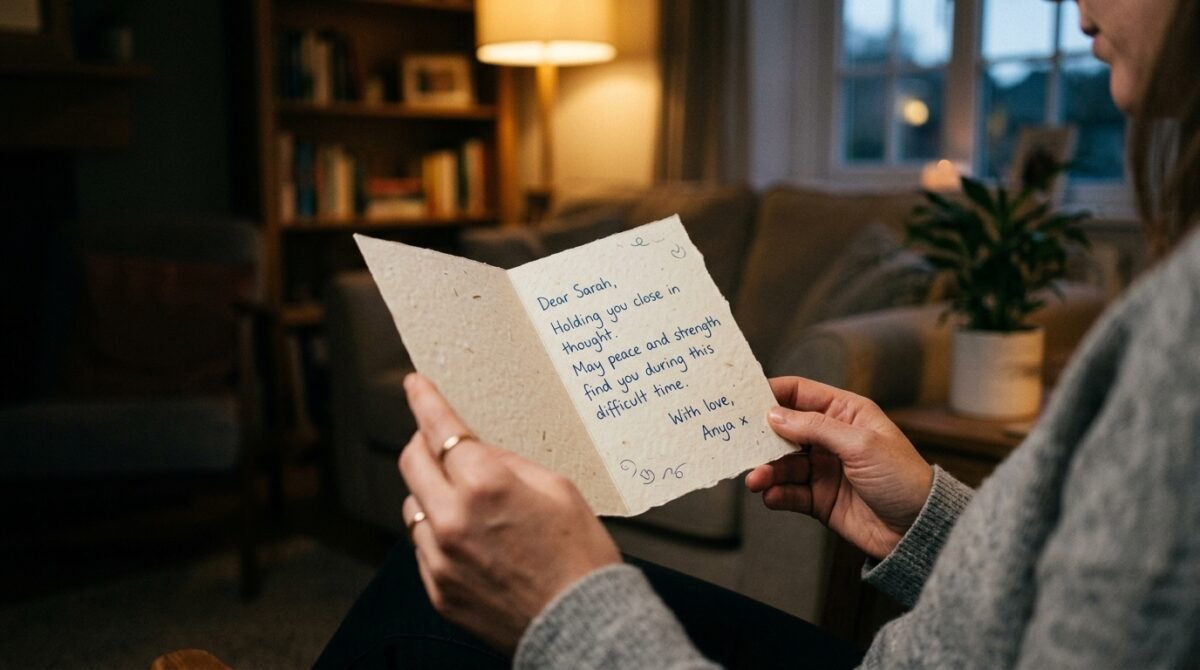
A week later, I received an envelope in the mail. It was a card from Martha. I opened it with shaking hands, hoping for some semblance of regret. Instead, I found a note that spent three paragraphs justifying her actions and one sentence that said, ‘I’m sorry if you felt hurt, but I only wanted the best for you.’ It was the quintessential non-apology.
She didn’t mention the blankets. She didn’t mention the betrayal of trust. She didn’t mention that she had effectively robbed me of my grandmother’s legacy. She just wanted to move past it, to pretend it never happened so she could continue to have access to our home and, eventually, our child. I read it, put it back in the envelope, and placed it in a drawer.
David asked if I had heard from her. I showed him the card. He didn’t say anything, but he didn’t ask me to reply to it, either. He finally saw the pattern. It wasn’t about the cleaning; it was about the control. And the control was no longer hers to exert.
“I’m sorry you feel that way.” That is not an apology. That is a deflection. It’s a way of saying that my feelings are the problem, not her actions.
— My response to David regarding her note.
I realized then that she would never understand. To her, her intentions were pure, and therefore, she couldn’t be in the wrong. That level of narcissism is something I cannot fix, and I refuse to subject my child to it.
The Nursery as a Sanctuary
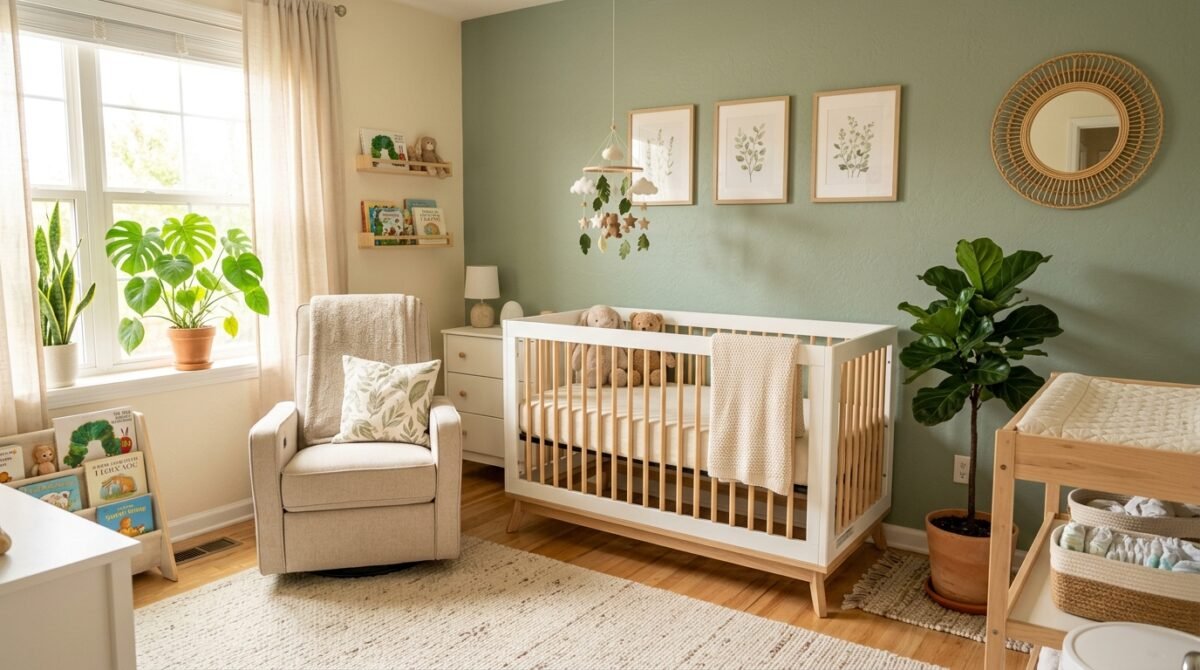
Slowly, the nursery started to come back together. Not in the way I had planned, but in a new, stronger way. I bought new blankets—not hand-crocheted, not heirlooms, but soft, beautiful ones that I chose for my baby. I painted the room a soft sage green, a color that felt peaceful and grounded. I made sure every item in that room was something I loved and that I had chosen intentionally.
The nursery became a symbol of our new reality. It wasn’t a room for grandmothers to ‘organize’ or for relatives to judge. It was a space for me and my husband to prepare for the arrival of our child. I locked the door whenever I left, not because I was afraid of burglars, but because I was reclaiming my space.
I started inviting friends over, the kind who respected my home and my boundaries. We sat in the nursery, laughed, and talked about the future. The void left by the blankets was still there, a ghost in the room, but the room itself was no longer a place of pain. It was a place of transformation.
“Every time I walk into this room, I feel like I’m reclaiming a little bit of the joy she tried to steal. It’s mine now. Completely and utterly mine.”
— My reflection on the healing process.
The process of decorating, of choosing the crib, the rug, and the curtains, became a therapeutic exercise. Each piece I added was a declaration of independence. I wasn’t the girl who let her mother-in-law walk all over her anymore. I was a mother, and I was protecting my home.
The Sunday Dinner That Didn’t Happen

The next major test was the Sunday dinner. It was a family tradition to go to Martha’s house every other Sunday. When the day came, I told David he was welcome to go, but I wouldn’t be attending. I had no interest in sitting at her table, drinking her tea, and pretending that everything was fine. I needed to stay home.
David stayed home with me. That was the first time he had ever missed a family dinner. I felt a pang of guilt, but it was quickly replaced by a sense of relief. We ordered pizza, sat on the floor of the living room, and just talked. For the first time in our marriage, we weren’t worried about his mother’s opinion.
It was a turning point. We were no longer living our lives in accordance with what Martha expected of us. We were building our own traditions, ones that weren’t centered around her ‘standards’ or her ‘approval.’ The house felt warmer, lighter, and more like our own.
“You don’t have to go, David. If you want to, I understand, but I’m not going to be part of the charade. I need to focus on what makes me feel safe right now.”
— My conversation with David on the day of the dinner.
Martha called, of course. She wanted to know why we weren’t there. When David told her we were staying home, she didn’t apologize or ask us to come over. She just hung up, hurt and bewildered that we would dare to choose ourselves over her.
Finding Closure in the Chaos

I don’t know if I will ever fully forgive her. Some things are too precious, too deeply connected to our history to be tossed away in a fit of ‘decluttering.’ But I have reached a point where I don’t think about it every single day. I’ve accepted that she is a person who lives in a world of her own making, one where she is the center, and I am just a guest.
I’ve learned that boundaries aren’t just about what we say; they are about what we do. By refusing to engage in her drama, by keeping her out of our home, and by prioritizing our own peace, I have effectively taught her how to treat me. She may not like it, and she may still think she’s the victim, but she no longer has the power to destroy my home.
The nursery is finished now, and it is beautiful. It is filled with love, not dust. And when I sit in the rocking chair, waiting for the baby to arrive, I don’t think about the lost blankets. I think about the life we are building, a life that is truly our own, protected by the hard, necessary work of setting boundaries.
“The loss of the blankets was painful, but it forced me to realize that my home is mine to protect. I am the gatekeeper now, and that is a power I will never relinquish again.”
— Final reflection on the ordeal.
To anyone out there struggling with overbearing family members, know this: you are allowed to be upset. You are allowed to be angry. And you are definitely allowed to close your door. Your home, your memories, and your life are worth protecting, even from the people who claim they have your best interests at heart.
Conclusion
The aftermath of this experience has left me with a new perspective on family, boundaries, and the importance of holding onto the things that truly matter. It’s easy to get caught up in the desire to please, to keep the peace, and to follow the unspoken rules of family tradition, but when those rules start to erode your own foundation, it’s time to rewrite them.
I’ve learned that a home is more than just walls and furniture; it’s a physical manifestation of the values and memories we choose to nurture. When those are threatened, we must act. My mother-in-law may still be waiting for an invitation that isn’t coming, but I have found a profound sense of peace in the space she is no longer allowed to touch. If you’ve ever had to set a hard boundary with a loved one, you know the guilt, the backlash, and the eventual, necessary relief that comes with it.
What would you have done if your most precious items were thrown out by a relative under the guise of ‘helping’? Would you have taken the high road, or would you have closed the doors for good? Let us know your thoughts in the comments below.
What's your verdict on this dilemma?
Vote below to contribute to the official community consensus.

Have a Dilemma Keeping You Up at Night?
Share your real-life feud, wedding chaos, or relationship crossroads anonymously with our editorial team.
What do you think ?
0 Comments🛡️ Comments are moderated to protect community integrity. Your comment will appear once approved by the editorial team.