

When my grandmother passed away, she didn’t just leave me a modest sum; she left me a lifeline. It was an inheritance specifically earmarked for my future, intended to secure my independence and provide a cushion for the life I was building with my husband, Mark. For years, Mark and I had lived a frugal existence, saving every penny for a down payment on a modest starter home. We were content, knowing that the hard work was building toward something tangible.
However, the arrival of that inheritance check triggered a transformation in my in-laws that I could never have anticipated. They had long treated Mark as an extension of their own assets, but my sudden ‘wealth’—which was essentially a security net—became their new obsession. They didn’t see it as my late grandmother’s legacy; they saw it as a slush fund for their own vanity project: a sprawling, exclusive beach vacation home in a private, gated community.
The audacity wasn’t just in the request. It was the fact that for the past five years, I have been explicitly banned from that property. According to my mother-in-law, Linda, the house is a ‘sanctuary for family heritage’ where ‘in-laws—even those married into the family—don’t quite fit the aesthetic.’ It was a slap in the face that I had swallowed for the sake of peace, but the moment they asked me to fund the very place that excluded me, the dynamic shifted from ‘polite daughter-in-law’ to ‘woman protecting her future’.
This article chronicles the downward spiral of our family relationship, the absurd justifications they used to try and pry my money from my hands, and the moment I finally drew a line in the sand that they couldn’t cross. It is a story about the intersection of greed, entitlement, and the realization that sometimes, the family you marry into is the one you need to walk away from to save yourself.
The Sunday Roast Intervention

It started on a Sunday afternoon that felt entirely benign. We were at my in-laws’ home for the weekly lunch, a tradition I usually tolerated with a forced smile. The mood was unusually chipper, with Linda hovering over the dining table, insisting I have a second helping of roast beef. Mark seemed unusually quiet, glancing at me with a nervous twitch in his eye that I didn’t register until it was too late.
Once the dishes were cleared, Linda pulled out a glossy architectural binder. It was filled with renderings of a massive wrap-around deck, an outdoor infinity kitchen, and a master suite expansion for their coastal vacation home. I looked at the images, genuinely confused as to why I was being given a tour of their renovation plans. That’s when the ‘ask’ came, wrapped in a thin layer of sugar-coated manipulation.
“We were thinking, since you just came into that lovely little windfall from your grandmother, it would be the perfect way to honor her memory by investing in the family legacy. The beach house needs a refresh, and we’d love for you to put down about fifty thousand to get the kitchen started.”
— Linda, my mother-in-law
I felt the blood drain from my face. I looked at Mark, expecting him to interject, to remind his mother that this was money meant for our house, not her seaside retreat. Instead, he stared at his feet. The silence in the room was deafening, broken only by the sound of a ticking wall clock that seemed to be counting down the seconds of my patience.
“Linda,” I started, my voice trembling slightly, “that money is for my personal security and our future mortgage. It isn’t a gift to be distributed. Besides, I haven’t been to that house in five years because I was told I ‘didn’t fit the vibe.’ Why would I fund a renovation for a place I’m not allowed to step foot in?”
The transition from smiling hostess to ice queen was instantaneous. She didn’t look offended; she looked like a CEO whose employee had dared to question a direct order. She leaned back, tapping her manicured nails on the binder. “That’s a very selfish way to look at family, dear. The house is part of the family estate. If you want to be part of this family, you start acting like it. It’s not about who stays there; it’s about who contributes to the legacy.”
The Late-Night Digital Siege
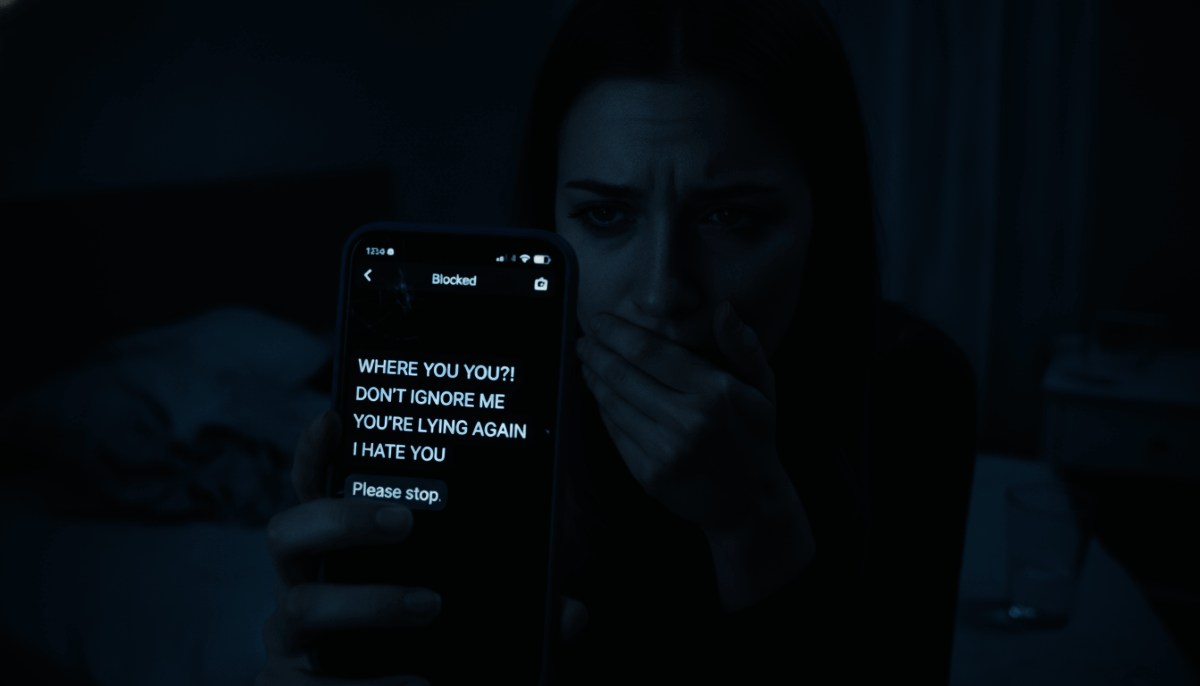
The confrontation didn’t end at the dinner table. By the time Mark and I got into the car, I was seething. He tried to tell me that ‘it was just a suggestion’ and that I should ‘try to be more flexible’ to keep the peace. I told him that if he wanted to fund his mother’s kitchen, he could use his own savings, but he remained silent, knowing his own bank account wouldn’t cover even a fraction of what they demanded.
Three hours after we got home, my phone started buzzing incessantly. It was the ‘Family Connection’ group chat—a group I had been added to years ago, mostly to be reminded of birthdays and holidays. But tonight, it was a war room. Linda had sent a series of messages that made my skin crawl with their passive-aggressive tone, painting me as the villain who refused to support the family unit.
“It’s truly disheartening to see such greed in a young person. The family vacation home is where we bond. If someone wants to be a stranger to the family, they shouldn’t be surprised when they are treated like one. We all sacrifice for the greater good.”
— Linda, Family Group Chat
I didn’t respond immediately. I watched as other family members chimed in—my brother-in-law, who rarely spoke to me, suddenly had a lot to say about ‘fair shares.’ It was a coordinated effort to shame me into submission. They were using the term ‘family’ as a weapon, a psychological cudgel to make me feel small and ungrateful for ‘the privilege of knowing them.’
I finally typed out a response, my fingers shaking. I kept it professional, cold, and final. I wasn’t going to engage in the mud-slinging. I just needed to state the facts. The money was locked in a high-yield account, and it was non-negotiable. I sent the message and immediately muted the thread, throwing my phone across the bed and burying my face in my hands.
Mark watched me, his expression caught somewhere between pity and irritation. He wasn’t on my side; he was just exhausted by the conflict. That was the moment I realized that my biggest problem wasn’t just the in-laws—it was the man I had married, who still viewed his parents’ demands as a standard requirement of his own life.
The Financial Audit Nobody Asked For

The next morning, I received an email from my father-in-law, Arthur. He claimed to be acting as the ‘family accountant,’ a title he invented to sound authoritative. He had attached a spreadsheet detailing the ‘value’ I had gained from being part of the family, suggesting that my $50,000 ‘investment’ was actually a bargain compared to the ‘social capital’ I had supposedly accrued over the years.
I read through his itemized list of expenses, which included things like ‘dinner costs, 2018-2023,’ ‘holiday gifts,’ and even ‘gas mileage for picking you up from the airport.’ It was asinine. He was literally trying to charge me for being a guest in their home, a place I had spent years trying to make comfortable for them. It was a cold, calculated move to make me feel like a debtor who was finally being called in.
| Category | Demand | My Reality |
|---|---|---|
| Renovation Contribution | $50,000 | My grandmother’s inheritance |
| ‘Social Capital’ Fee | $12,000 | Living costs paid by us |
| Holiday/Event Costs | $5,000 | Pro-rated guest expenses |
I replied to the email with a single attachment: a list of the times I had hosted them, paid for their dinners, and bought them luxury gifts that went unappreciated. I didn’t send a bill, but I sent a message that made it clear I knew exactly what this was: a shakedown. The lack of response for 48 hours was the most peaceful time I had experienced in weeks.
Of course, the silence was just the eye of the storm. By Thursday, I received a certified letter. They were officially requesting a ‘family meeting’ to discuss the ‘redistribution of assets.’ The absurdity of it was laughable, yet underneath the humor was a deep sense of dread. They were serious. They were actually going to try and sue me for a portion of an inheritance that they had no legal claim to whatsoever.
I spent the afternoon at a local law firm. The lawyer I spoke with, a woman named Sarah, laughed after reading the email from Arthur. She told me to lock everything down, change my beneficiaries, and prepare for a long, ugly battle. She warned me that people like this don’t stop when they’re told ‘no’; they stop when they realize they can’t win.
The Unannounced 6:00 AM Kitchen Intrusion

I woke up on Saturday to the sound of keys jiggling in the front door. We had given my in-laws a spare set of keys years ago—a ‘just in case’ measure that I had always regretted. I assumed it was Mark coming back from an early morning run, but the heavy, deliberate footsteps and the sound of a purse dropping onto the kitchen counter told me it was definitely not him.
I threw on my robe and marched into the kitchen. Linda was there, holding a tape measure, looking at our cabinets with a critical eye. She wasn’t even pretending to be a guest. She was treating our home as an extension of the beach house renovation project, as if she were planning on ‘borrowing’ our fixtures or appliances to save money elsewhere.
“The hardware in here is actually decent. It would look perfect in the guest bathroom at the beach house. I’ll send a handyman over later to take these off for us. Don’t worry, I’ll find something cheaper to replace them with.”
— Linda, standing in my kitchen
The audacity made me physically shake. I stood in the doorway, my arms crossed, watching as she started pulling open drawers to see what else she could ‘recycle’ for her own benefit. I didn’t scream; I didn’t throw her out immediately. I just pulled out my phone and started recording. She stopped mid-motion, noticing the camera, and her face turned a shade of purple I hadn’t realized a human could achieve.
“Get out,” I said, my voice low and steady. “Get out of my house, Linda. And don’t you ever use that key again. I am changing the locks before you get to the driveway.” She tried to laugh it off, calling me ‘dramatic’ and ‘overreacting,’ but I held my ground. I stood right in front of the door, waiting for her to pass.
When she finally stormed out, she made sure to slam the door hard enough to rattle the window panes. I spent the next hour calling a locksmith. I felt a strange sense of liberation. I had been trying to be the ‘good daughter-in-law’ for years, and all it had done was invite them to treat my life like a public resource. That was the last day I ever let them walk into my home uninvited.
When the Husband Finally Flipped

Mark came home to find the locks changed and me sitting on the couch with a glass of wine and a stack of legal documents. He didn’t even notice the locks at first. He walked in, went to the kitchen, and started complaining about how his mother had called him, crying, claiming I had held her hostage and threatened to call the police.
I didn’t yell. I just handed him the recording. He watched the video of his mother measuring our kitchen cabinets, her voice justifying the theft of our property. He watched it once, then twice, then three times. The color drained from his face. For the first time in our marriage, he wasn’t looking at this as a ‘clash of personalities.’ He was seeing it as a violation.
“I had no idea. She told me she was just coming over to drop off some mail. She said you guys had a disagreement about the money and she wanted to apologize. I didn’t know she was planning to… to gut our house.”
— Mark, realizing the extent of the betrayal
I told him that his mother had been manipulating him for years, using his desire for family harmony to bypass my boundaries. I laid it all out: the group chat, the fake ‘accountant’ emails, the threats. I told him he had to choose. He could be a partner to me, or a subsidiary of his mother’s empire, but he couldn’t be both.
He spent the night in the spare room. It was the longest night of my life. I didn’t know if he would choose me or his family. The next morning, he came out, looking as if he hadn’t slept at all. He didn’t say a word. He just picked up his phone, opened the family group chat, and typed: ‘If you ever come to our house uninvited or disrespect my wife again, you are no longer welcome in our lives.’ Then, he blocked them all.
It wasn’t a perfect solution, and the fallout was far from over. But for the first time, I felt like I wasn’t fighting a war on two fronts. I had my husband back, and the in-laws had lost their primary conduit of information. It was the first step toward a life that was actually ours.
The Reddit Trial: Community Verdict

I ended up posting the full story to a popular advice subreddit, needing to know if I was actually the villain. The response was overwhelming. Thousands of people weighed in, and while there were some ‘family comes first’ traditionalists, the vast majority were firmly in my corner, offering support and sharp, biting commentary on the entitlement of my in-laws.
“OP, you aren’t the villain. You’re the target. They don’t want your money; they want your submission. By paying, you would have admitted that your money, your home, and your time belong to them. Cutting them off is the only way to establish that you are a separate, sovereign entity. Hold the line.”
— u/StoicReader (Top Comment, 32.1k upvotes)
Reading through the comments was like receiving a massive validation of my sanity. People shared stories of their own experiences with toxic in-laws, warning me that the ‘love bombing’ would likely follow the ‘rage’ phase. They advised me to keep every document, save every text, and never, ever compromise on the money. It helped me realize that this wasn’t just a petty family squabble; it was a systemic issue of boundary violations.
There were even legal professionals in the thread, offering advice on how to handle potential harassment. I learned about ‘Cease and Desist’ orders and the importance of having a paper trail. The sheer volume of support gave me the courage to move forward with the next, more difficult phase: the permanent estrangement.
Some users warned me about the ‘flying monkeys’—other family members who would try to guilt-trip me into reconciling. I braced myself for the inevitable calls from aunts and cousins I hadn’t spoken to in years. It was a reminder that when you break a toxic cycle, the people who benefit from that cycle are never happy about it.
The Flying Monkeys and the Guilt Campaign

As predicted, the ‘flying monkeys’ arrived in full force. It started with my sister-in-law, who called me to ‘mediate’ the situation. She insisted that Linda was ‘just stressed’ and that the beach house renovation was a ‘dream’ that I was single-handedly crushing. She made it sound like I was the one who had caused all the drama, ignoring the fact that I was the one whose money was being demanded and whose home was being invaded.
I stayed calm. I told her that if she wanted to help Linda, she was welcome to use her own money. That usually ended the conversation pretty quickly. It became a pattern: they would call, I would offer a logical, boundary-focused response, and they would get frustrated when I didn’t play along with the emotional narrative they had constructed.
“Why are you being so difficult? It’s just money. They’re family. You’re acting like they’re strangers instead of the people who raised your husband. Don’t you think you’re being a bit extreme by cutting everyone off?”
— Sister-in-law during a phone call
I realized then that they were all part of the same echo chamber. They had been conditioned to accept Linda’s demands as the natural order of things. By refusing to comply, I wasn’t just withholding money; I was disrupting their entire social hierarchy. It was a terrifying realization, but it also made me feel empowered. I was the one person who refused to bow.
I eventually had to block the extended family as well. It was lonely, and it felt like burning bridges, but I knew that as long as they had access to me, they would be used as tools by my in-laws. I was protecting my peace, even if it meant being labeled the ‘difficult’ one in the family history books.
The Legal Finality of ‘No’
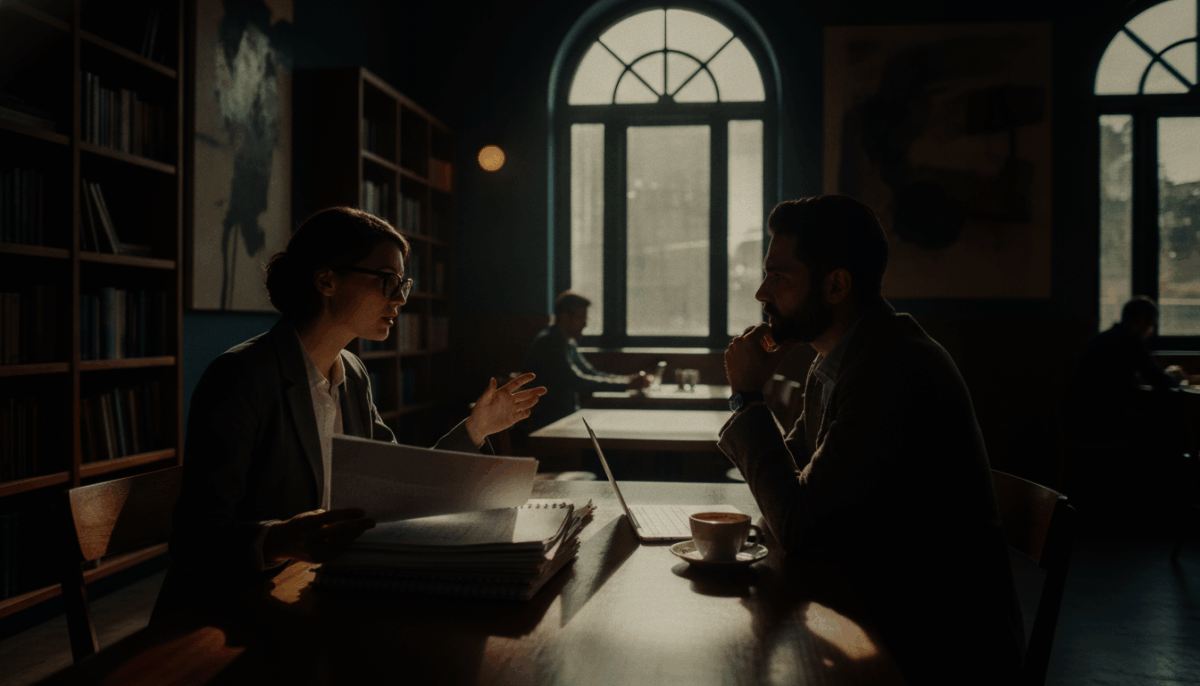
When the legal threats didn’t scare me, they tried to send a mediator—a family friend who happened to be a retired judge. It was a transparent attempt to use institutional authority to bully me. We met at a neutral coffee shop, and the ‘judge’ started off by talking about the ‘importance of family unity’ and how a ‘small investment’ would go a long way in healing wounds.
I didn’t let him finish. I pulled out the printouts of the emails, the photos of the kitchen invasion, and the timeline of the harassment. I told him that I had already spoken with an attorney and that if any further ‘mediation’ or legal threats were made, I would be filing a formal complaint for harassment and stalking. The look on his face changed from ‘condescending mediator’ to ‘concerned professional’ in an instant.
“I was not informed of these details. If these accusations of harassment and property intrusion are true, then I have been misled about the nature of this dispute. I will be withdrawing from this situation immediately.”
— The retired judge, after seeing the evidence
That was the turning point. When they realized they couldn’t control the narrative even with outsiders, they finally stopped trying to force me to the table. The legal threats evaporated, the phone calls stopped, and the silence finally became permanent. It was the most expensive ‘peace’ I had ever bought, but it was worth every cent of the legal fees I had paid to get there.
I finally felt like I could breathe. I wasn’t looking over my shoulder anymore. I wasn’t waiting for the next email or the next unannounced visit. I had successfully defended my boundaries, and in the process, I had redefined what ‘family’ meant to me. It wasn’t about blood or expectations; it was about respect, and for the first time, I had it.
The Aftermath: Rebuilding Our Own Legacy

With the dust finally settled, Mark and I sat down to actually plan our future. We didn’t have the beach house, but we had our inheritance, and we had our own vision. We decided to take a portion of the money and put a down payment on a house that was entirely ours—a place where no one else had a key, and no one else had an opinion on the decor.
We also invested in therapy, both individually and as a couple. We needed to unpack the years of conditioning we had both been subjected to. Mark had to learn how to exist as an adult without seeking his parents’ approval, and I had to learn how to trust that I didn’t need to constantly prove my worth to earn a place in a family that didn’t value me.
It wasn’t easy. There were days of doubt and grief for the family we thought we had. But every time we sat in our own living room, surrounded by our own things, we were reminded that we had made the right choice. We weren’t living for them anymore. We were living for ourselves, and for the life we were building together.
The beach house was eventually sold, as it turned out the in-laws couldn’t afford the upkeep without my ‘investment.’ It was a final, bitter confirmation that they had never really had the money to back up their arrogance. It didn’t bring me joy to see them lose it, but it did bring a sense of closure. The project that had been built on my exploitation had finally collapsed under the weight of its own greed.
A Reflection on Boundaries and Inheritance

Looking back, I realize that the money was never the real issue. The money was just the catalyst that exposed the cracks in the foundation of our relationship. If it hadn’t been the inheritance, it would have been something else—a wedding, a child, a career move. They had spent years grooming us to be compliant, and I had been a willing participant because I wanted to be ‘good.’
The lesson I learned is that ‘good’ shouldn’t come at the cost of your dignity. Boundaries aren’t about being mean or difficult; they are about defining the space where you exist as a human being. When you allow people to cross those lines, you are telling them that your needs don’t matter, and eventually, they will start to believe it.
I am grateful for my grandmother’s legacy, not because of the money, but because of what it taught me. It taught me who my allies were, it taught me how to stand up for myself, and it taught me that I am capable of building a life that is entirely mine. It was a painful, expensive lesson, but one that I am glad I learned before it was too late.
To anyone out there dealing with similar entitlement, remember: you don’t owe anyone your future. Your money, your home, and your time are yours. If someone can’t respect that, they don’t deserve to be a part of your life, regardless of their last name or the history you share.
Conclusion
The story of my inheritance and the ‘beach house’ debacle is one that I hope serves as a reminder that boundaries are not negotiable. In the end, the in-laws’ greed became their undoing, and my refusal to yield became my salvation. I am now happily low-contact, focused entirely on my own growth and my marriage, and I have never felt more free.
What about you? Have you ever had family members demand your money or assets for a project they kept you excluded from? How did you draw the line, and what was the ultimate result? I would love to hear your experiences in the comments below, as your stories often provide the best roadmap for those of us trying to navigate these complicated dynamics.
What's your verdict on this dilemma?
Vote below to contribute to the official community consensus.

Have a Dilemma Keeping You Up at Night?
Share your real-life feud, wedding chaos, or relationship crossroads anonymously with our editorial team.
What do you think ?
0 Comments🛡️ Comments are moderated to protect community integrity. Your comment will appear once approved by the editorial team.