

They say you never truly know a person until you travel with them. For three years, Mark and I had been the picture of domestic bliss, or so I thought. We were months away from our wedding, a ceremony we had been meticulously saving for since the day he proposed on the balcony of our first apartment. Our joint account, fondly labeled ‘The Forever Fund,’ was the sacred vessel for our future—our honeymoon, our down payment, and our dreams.
The cruise was supposed to be a pre-wedding celebration, a final stress-free escape before the chaos of final vendor payments and seating charts. We had booked a standard balcony room months in advance, a modest but comfortable space to enjoy the Caribbean sunset. It was a mid-range cabin, exactly what we could afford without dipping into the emergency fund. But as I stood in the sweltering heat of the terminal, watching the porters move luggage, I felt the first prickle of suspicion.
When we reached the check-in desk, the agent looked at our booking, frowned at her screen, and then brightened. ‘Oh, congratulations on the Royal Suite upgrade, Mr. Miller!’ she chirped, looking at Mark. I stood frozen. ‘Suite?’ I repeated, my voice barely a whisper. Mark didn’t look at me; he was already pulling his passport back, his face a mask of practiced indifference. It was the look of a man who had already decided that his comfort was worth more than our partnership.
The moral dilemma hit me with the force of a physical blow. This wasn’t just a miscommunication or a surprise gift; this was a calculated, selfish maneuver executed with our shared funds. As he began to explain that the ‘system’ had made a mistake, I saw the digital receipt glowing on his phone screen—a deliberate, solo upgrade to the most expensive room on the ship. The silence between us stretched, suffocating and heavy, as the reality of our broken foundation settled over me like a shroud.
I didn’t scream. I didn’t cause a scene. I simply realized that the man standing next to me was a stranger wearing the skin of my fiancé. In that terminal, surrounded by hundreds of excited vacationers, I made the decision that would end our relationship. I would leave him there, alone in his luxury suite, to face the consequences of a life he clearly preferred to live by himself.
The Paper Trail of Deception
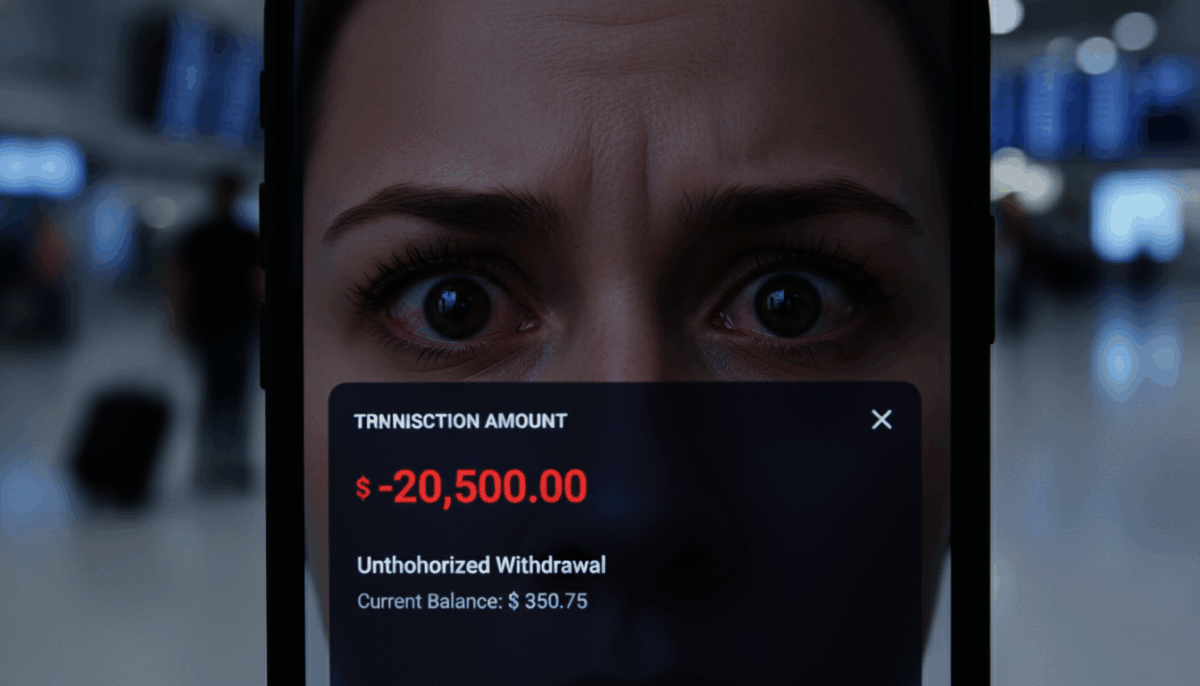
The realization didn’t come in one moment of clarity, but in a series of small, nagging inconsistencies that I had spent weeks ignoring. Mark had been increasingly protective of his phone, often leaving the room to take ‘work calls’ that lasted longer than his actual shift. He had insisted on being the one to handle all the cruise logistics, claiming he wanted to surprise me with little perks. I had been foolish, blinded by the anticipation of our wedding, never once thinking to audit the account I trusted him with implicitly.
While we stood in the terminal line, the agent had been too thorough. She had printed out the new itinerary, handing it to Mark with a smile. ‘Your luggage will be whisked away to the Royal Suite, sir. Enjoy the butler service.’ My heart stopped. I had seen the balance of our savings account the week before. It was meant to be untouched. I grabbed his phone from his hand while he was distracted, my fingers trembling as I opened his email.
Confirmation: Royal Suite Upgrade – Paid in full. Transaction total: $6,800.00. Remaining balance in Joint Savings: $142.12.
— Email from Cruise Line
I felt the blood drain from my face. He hadn’t just upgraded; he had emptied the account. The wedding dress deposit due on Monday, the catering balance, the photographer’s fee—it was all gone. All for a king-sized bed and a private whirlpool that he apparently deemed more important than our legal union. The audacity of it was so monumental that I felt a strange, detached calm wash over me. It was as if I were watching a movie about someone else’s life.
Mark finally turned to me, his eyes darting from my face to the phone in my hand. ‘I can explain,’ he started, his voice a frantic attempt at damage control. ‘I thought it would be a romantic gesture for our honeymoon, but then I realized I couldn’t afford both the wedding and the suite, and I thought we could just put the wedding on a credit card later. You know how much I wanted us to have the best start possible.’
His excuse was a pathetic, transparent veil for his narcissism. He had prioritized his own ego, his own status, his own desire to feel like a high-roller for seven days. He didn’t see a partner; he saw a prop in his personal theater of luxury. I looked at him, really looked at him, and realized I couldn’t spend another hour of my life tethered to this level of selfishness. The investment of three years felt like a sunk cost, one I was finally ready to abandon.
The Terminal Confrontation

The air in the terminal felt thick, humid, and heavy with the smell of salt and jet fuel. People rushed past us, dragging suitcases, oblivious to the fact that two lives were currently disintegrating in front of the check-in kiosk. I didn’t raise my voice. I didn’t want to make a scene, but I wanted him to understand the gravity of what he had done. I handed him his phone back, my movements mechanical and precise.
“You didn’t upgrade ‘us,’ Mark. You upgraded yourself. You took every penny we saved for our future and you turned it into a fancy bed. You didn’t just spend the money; you spent the trust I had in you. I hope the room service is worth it.”
— My parting words to Mark
He scoffed, adjusting his blazer, clearly thinking I was overreacting. ‘It’s just money, babe. We’ll make it back. Don’t ruin our vacation by being dramatic. Everyone wants a taste of the good life, and I just wanted to show you I could provide it.’ The disconnect was staggering. He genuinely believed that his vanity was a gift to me. He thought that by spending our money, he was proving his worth.
I looked at the gate leading to the ship, then back at the exit leading to the parking garage. The choice was so clear it hurt. I didn’t need to argue with him. Arguments require two people who share a common reality. Mark lived in a world where his desires were the center of the universe, and I was just a supporting character. I walked toward the exit, ignoring his protests as he began to follow me, worried more about the optics than the relationship.
He caught my arm, his grip firm. ‘Where are you going? We have to get on the ship! We’ve already paid for the suite!’ He was still talking about the suite. Even now, facing the end of his relationship, his mind was locked on the luxury upgrade. I shook him off, feeling a sudden, sharp clarity. There was no ‘we’ anymore. There was only him, his ego, and his empty bank account.
I left him there. I walked out of the terminal, the automatic doors sliding shut behind me with a finality that sounded like a prison cell locking. I didn’t look back. I knew he would try to follow, or call, or make excuses, but I had already mentally checked out. I was no longer his fiancée. I was a woman who had just saved herself from a lifetime of financial and emotional abuse.
The Digital Fallout
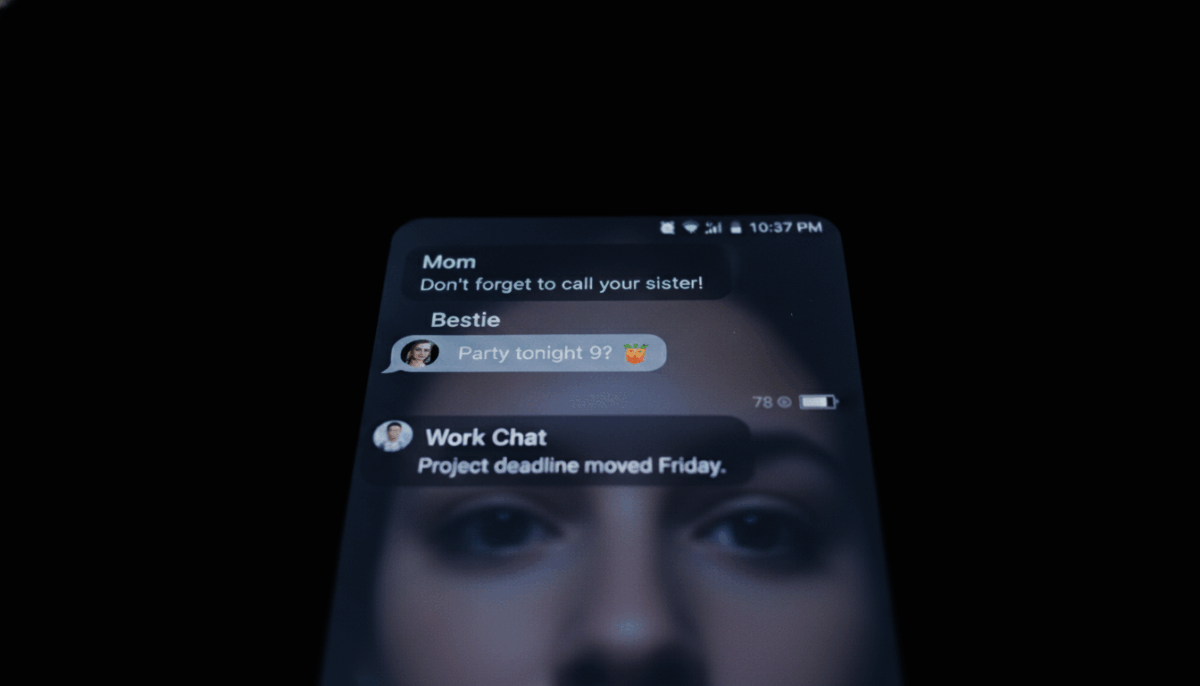
By the time I reached my car, my phone was vibrating incessantly. Notifications from Instagram, Facebook, and a deluge of missed calls were flooding in. Mark was already spinning the narrative. He was posting photos of the cruise ship from the outside, tagging me, claiming we were about to have the time of our lives. He wanted to maintain the facade even while I was sitting in my driveway, crying for the first time since leaving the terminal.
“My beautiful bride-to-be is feeling a bit under the weather, but we’re ready to set sail for the most incredible week of our lives! Can’t wait to show her the Royal Suite!”
— Mark’s social media post, timestamped 1:00 PM
I didn’t comment. I didn’t block him yet. I wanted to see how far he would take the lie. It was a bizarre, voyeuristic experience, watching him play-act a happy couple while I sat in my pajamas, drinking lukewarm tea and calling the bank to freeze any remaining assets. I had to secure what was left, even if there was almost nothing. I had to prove that I was gone, not just ‘under the weather.’
Then came the messages from his mother. She had seen the post, and she was already planning our wedding guest list changes. She was an enabler of the highest order, someone who had spent decades reinforcing Mark’s belief that he was the golden child who could do no wrong. Her messages were a mix of concern for ‘the optics’ and subtle barbs directed at my supposed instability.
“Mark says you had a panic attack at the terminal. Don’t worry, honey, we all get cold feet. Just take a pill and get on that ship. The wedding is in two months, and you can’t back out now. Think of the guests!”
— Mark’s Mother, via text
The irony was not lost on me. She was worried about the guests while I was worried about our survival. I replied with a simple, cold text: ‘The wedding is cancelled. Mark spent our life savings on a suite for himself. Talk to him if you want the truth.’ I didn’t offer any more explanation. I didn’t need their validation or their permission to end a relationship that had clearly been dying for a long time.
The next few hours were a blur of bank calls, cancelling vendors, and explaining to my parents why I was back home instead of in the Caribbean. My mother, bless her heart, didn’t ask questions. She just hugged me. That was the moment I knew I had done the right thing. When you have support, the gaslighting of a narcissist loses its power. I was finally breathing again, and for the first time in years, the air felt clean.
The Reddit Trial
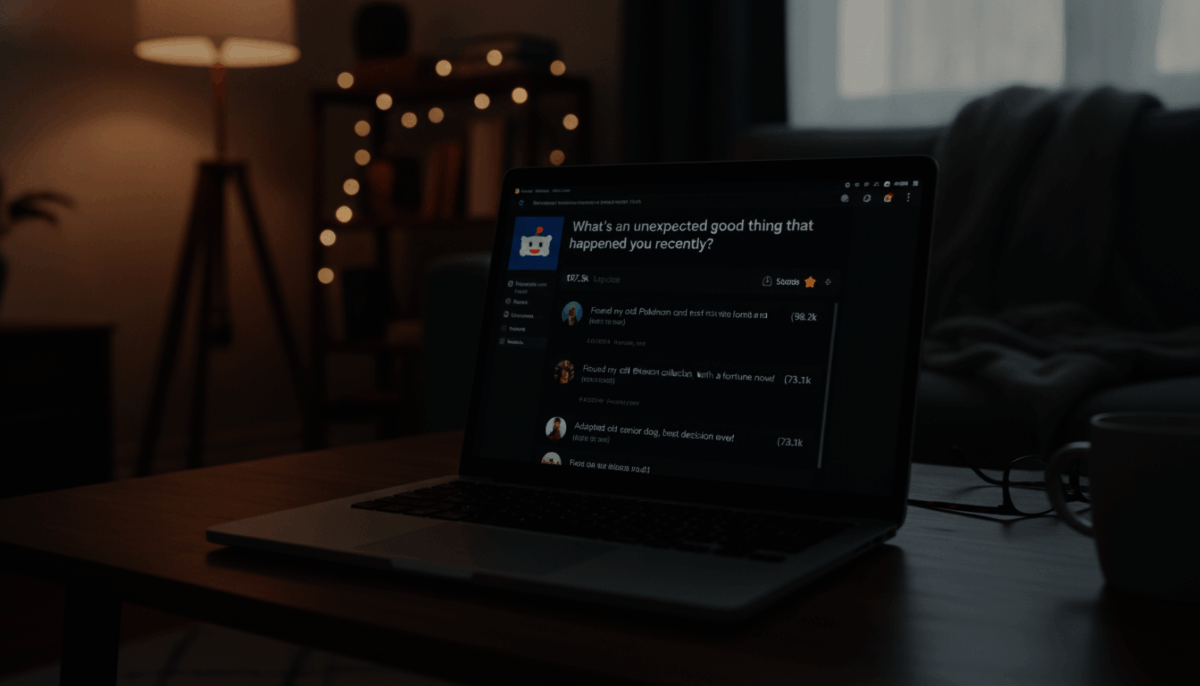
I posted my story on a throwaway account that night. I needed an objective perspective, even though I knew the answer. The Reddit community, in all its brutal and hilarious glory, didn’t disappoint. The comments started pouring in, validating my decision and providing some much-needed perspective on the ‘sunk cost’ of my relationship.
“Girl, you didn’t leave him at the terminal. You left him at the altar. That man doesn’t have a partner; he has a fan club. He wanted the Royal Suite because he wanted to feel like a King, and you were just the accessory. Good riddance to bad rubbish. NTA (Not The Asshole) a million times over.”
— u/RelationshipGuru99 (Top Comment, 32.5k upvotes)
It was strange reading these comments. People I had never met understood the situation better than his own family did. They saw the pattern—the subtle selfishness, the financial abuse, the need for control. They pointed out things I had been too close to see, like how he always picked the restaurant, how he controlled the budget, how he made every decision ‘for us’ while actually only benefiting himself.
“This wasn’t an accident. He waited until you were at the terminal, where you felt pressured and public, to reveal the ‘surprise.’ It’s a classic move to make you feel like you have to go along with it because ‘everyone is watching.’ You stood your ground in a high-pressure environment. That takes serious guts. Don’t look back.”
— u/LogicAndReason (15.2k upvotes)
There were a few outliers, of course. Some users suggested I should have stayed to ‘reclaim my half of the suite,’ which made me laugh. Why would I want to spend a week in a room with a man who betrayed me? The thought of sitting in that Royal Suite, forced to endure his apologies and his attempts to ‘make it up to me,’ felt like a personal hell. I had regained my freedom, and that was worth more than any luxury upgrade.
I kept reading, feeling lighter with every scroll. The collective wisdom of the internet was acting as a mirror, showing me the truth I had been trying to suppress for so long. I realized that the cruise wasn’t the problem; it was just the catalyst. The foundation had been cracking for years, and Mark had finally pushed the house over. I was grateful for the chaos because it forced me to see what I had been running away from.
The Aftermath of the Cancelled Wedding

Cancelling a wedding is a logistical nightmare. The deposits, the vendors, the disappointed relatives—it all felt like a second job. But as I went through the motions, I felt a sense of liberation. I wasn’t doing this for us anymore; I was doing it for me. I called the caterer, the florist, and the venue, telling them the truth: the wedding was off due to a complete breakdown in the relationship. Every phone call was a step toward a new, autonomous life.
Mark tried to contact me, of course. He sent flowers, long, rambling emails about how he ‘didn’t understand’ why I was so upset, and how he was ‘trying to make it special’ for me. He was playing the victim, casting himself as the misunderstood romantic who just went a little too far. He even sent a photo of the Royal Suite, empty, as if to show me what I was ‘missing out’ on. It was pathetic.
“Look at this view, OP. I’m here alone. I spent all this money for us, and now I’m sitting here by myself. Is this what you wanted? To ruin everything over a simple mistake?”
— Email from Mark
I didn’t reply. I had a lawyer draft a simple message stating that all communication should go through legal counsel regarding the division of remaining assets. It was a cold, hard boundary that I needed to enforce. He didn’t like it. He tried to call, he tried to show up at my apartment—which my roommate promptly handled—and he tried to guilt-trip my family. But the wall I had built was solid.
My friends were incredible. They didn’t coddle me; they celebrated me. We had a ‘not-a-wedding’ party where we burnt the registry gifts and drank expensive champagne—the kind we could afford because I wasn’t paying for a $6,000 suite. It was the most fun I had had in years. I felt like a weight had been lifted, a weight I didn’t even realize I was carrying.
The financial recovery was the hardest part. I had to pick up extra shifts at work and dip into my personal savings to cover the cancellation fees. It was a painful lesson in financial independence. I swore to myself that I would never, ever share an account again until I was absolutely sure of the partner’s character. I had been naive, but I was learning. I was becoming the person I had always wanted to be—strong, independent, and unwilling to compromise on my own worth.
The Realization of Financial Infidelity

It wasn’t until weeks later that I discovered the full extent of the financial rot. My lawyer and I went through the records, and it became clear that Mark had been ‘borrowing’ from our savings for months. Small amounts here and there—a new gadget, a high-end watch, dinners at exclusive restaurants. It was a pattern of spending that I had been too trusting to catch. He had been living a double life on my dime, a life that was centered entirely around his own pleasure.
The ‘Royal Suite’ wasn’t a mistake; it was the final, desperate act of a man who realized he was losing control. He thought that if he could just get me on that ship, trapped in a luxury bubble, he could manipulate me back into his fold. He had gambled our entire future on a hope that I would be too submissive to leave. He had underestimated me, and that was the biggest mistake of his life.
“Financial infidelity is just as damaging as any other kind of betrayal. You found out about his character, his spending, and his priorities all at once. This isn’t just about a cruise; it’s about the fact that he saw you as a resource, not a partner.”
— My therapist, during our session
I sat in the therapist’s office, finally seeing the patterns for what they were. I had been trained to accept his behavior, to make excuses for his selfishness, and to prioritize his feelings over my own. I had been in a toxic cycle that I didn’t even recognize as abuse because it was wrapped in the guise of ‘romance.’ The cruise was just the point where the mask fell off completely.
I felt a deep, profound anger. Not just at him, but at myself for letting it go on for so long. But my therapist reminded me that the past is a lesson, not a sentence. I had chosen to leave. I had chosen to walk out of that terminal. That was the moment I reclaimed my power. The money was gone, but the lesson was invaluable. I would never be that person again.
I started tracking my own finances with a clinical, almost obsessive, focus. Every penny accounted for, every goal clearly defined. I was building a future for myself, not for some shared fantasy that was actually a nightmare. It was empowering to see my bank account grow, not because of some ‘Forever Fund,’ but because of my own hard work. I was reclaiming my life, one dollar at a time.
Why the Silence at Sunday Dinner Was Deafening
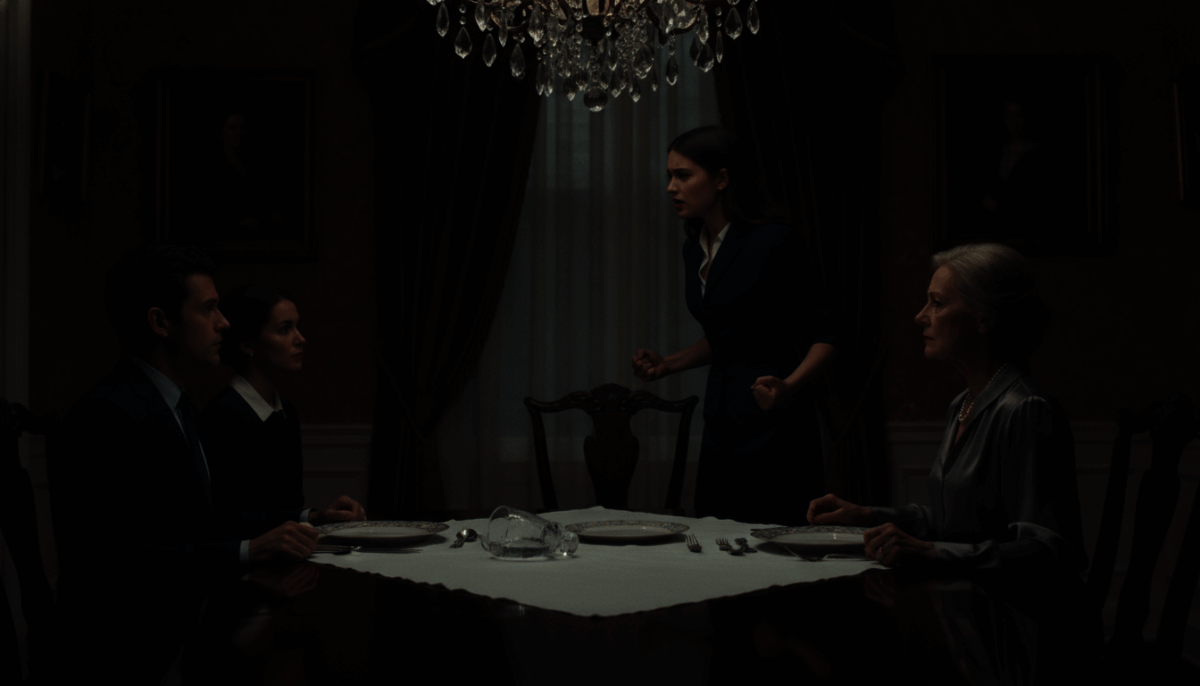
The family dinner at my parents’ house was the first time I had to face the extended family after the news broke. They were all there, looking at me with a mix of pity and morbid curiosity. The air was tense, the silence palpable. Everyone knew about the cruise, the cancelled wedding, and the fallout. I walked in, head held high, refusing to play the part of the ‘poor, jilted bride.’
Mark’s mother was there, and she didn’t waste any time. She cornered me in the kitchen, her voice dripping with artificial sweetness. ‘You know, Mark is really struggling. He’s taking a solo cruise again, trying to work through his grief. If you had just been more supportive, this wouldn’t have happened.’ I didn’t even blink. I just looked at her, calmly and deliberately.
“He isn’t grieving me, Martha. He’s grieving his status. He lost his accessory, and he lost his bank account. Don’t confuse his selfishness with my lack of support. I supported him for three years, and that’s why I’m standing here alone today.”
— My response to Mark’s mother
The entire room went silent. You could hear a pin drop. It was the moment the truth finally hit the table, unfiltered and unapologetic. I hadn’t raised my voice, but the weight of my words was undeniable. My father stood up, cleared his throat, and changed the subject, but the damage—or rather, the clarity—was done. People finally understood that I wasn’t the one who broke the relationship; I was the one who ended the cycle.
The rest of the dinner was surprisingly uneventful. People were afraid to approach me, afraid to ask the wrong questions. It was a strange kind of freedom. I had finally shed the expectations of others, the need to keep the peace at the expense of my own sanity. I realized that my own family had been waiting for me to stand up for myself, and seeing it happen had actually earned me their respect.
I left early, feeling a profound sense of relief. The drama was over, the truth was out, and I was still standing. The silence that had been so deafening was actually a sign of my own strength. I didn’t need their approval, I didn’t need their pity, and I certainly didn’t need their advice. I was the master of my own narrative now, and that was the most satisfying feeling I had ever experienced.
The Legal Reality Check

The aftermath wasn’t just emotional; it was a legal minefield. The money in the joint account was technically shared, and recovering it proved to be a complex process. My lawyer explained that without a formal agreement, proving that he had misappropriated our funds would be difficult. But we had evidence—his emails, his text messages, and the timeline of the transfers. It was clear that he had spent the money in bad faith, especially given that it was earmarked for our wedding expenses.
We filed a claim for the return of the funds, and the back-and-forth began. Mark’s lawyer tried to argue that the spending was ‘jointly agreed upon’ or ‘part of the honeymoon budget.’ It was laughable. I had all the documentation, all the emails where he promised to handle the savings, and the evidence that he had made these purchases without my knowledge. The case was solid, and he knew it.
“Your ex-fiancé is attempting to frame his solo spending as ‘romantic planning.’ It’s a classic tactic to avoid the legal repercussions of financial abuse. We have a strong case for the recovery of the misappropriated funds.”
— My attorney’s update
The legal process was draining, both mentally and financially. I had to pay for a lawyer, take time off work for depositions, and endure the stress of reliving the trauma. But it was necessary. I wasn’t just fighting for the money; I was fighting for justice. I wanted there to be a record of what he had done, a public acknowledgment that his actions were wrong.
In the end, we reached a settlement. It wasn’t the full amount—he had already spent a significant portion on his luxury lifestyle—but it was enough to cover the cancellation fees and get me back on my feet. I didn’t care about the final number as much as I cared about the closure. I had stood my ground, I had forced him to pay, and I had successfully navigated the complexities of ending a life I never should have started.
The final paperwork was signed on a rainy Tuesday afternoon. As I walked out of the lawyer’s office, the sun broke through the clouds. It felt like a sign. I was done with the drama, done with the legal battles, and done with Mark. The chapter was closed, and I was ready to start writing the next one—one that was entirely my own.
Rebuilding My Life, One Day at a Time

Life after the cruise terminal was, at first, incredibly quiet. I had to learn how to exist without the constant, underlying hum of drama that had defined my relationship with Mark. I had to learn how to be alone again, to enjoy my own company, and to pursue my own interests. I started taking painting classes, something I had always wanted to do but never had the ‘time’ for when I was busy managing Mark’s life.
I also started working on my own financial health, building a portfolio that was entirely mine. It was a slow process, but it was incredibly rewarding. I wasn’t saving for a wedding; I was saving for my future—for a house, for travel, for the things that truly mattered to me. I was finally investing in the person I was, not the person someone else wanted me to be.
“I used to think my happiness depended on someone else. Now I realize that my happiness is something I create for myself. I am the architect of my own life, and I will never let anyone else draw the blueprints again.”
— A journal entry from three months post-breakup
My friendships became deeper, more intentional. I stopped trying to please everyone and focused on the people who truly supported me. It was a liberating shift. I was no longer trying to manage the optics of a perfect life; I was living a real one, complete with its flaws and its beauty. I was finally, truly free.
I still think about that day at the terminal sometimes. I look back on it not with regret, but with gratitude. It was the hardest thing I had ever done, but it was also the most necessary. I had saved myself from a lifetime of disappointment, a lifetime of being second-best in my own life. I had learned that my worth was not tied to a man, a suite, or a wedding.
I am happy now. Not the ‘perfect’ kind of happy that I used to try and project on social media, but a real, grounded, and resilient kind of happy. I have a life that is mine, a bank account that is secure, and a future that is bright. And if I ever see a cruise ship, I just smile, knowing that I left the worst of my life behind at the terminal.
The Final Verdict: Lessons Learned

Looking back at the whole ordeal, the most significant lesson I learned is that ‘red flags’ are rarely red. They are usually small, seemingly insignificant behaviors that accumulate over time. The way he talked about himself, the way he handled money, the way he prioritized his desires—it was all there, right from the beginning. I had just chosen to ignore it because I wanted the dream more than I wanted the reality.
Financial independence is not just a luxury; it is a fundamental pillar of self-respect. When I shared my money with Mark, I wasn’t just sharing funds; I was sharing my power. I was giving him the ability to control my future, and he used that power to serve himself. I will never make that mistake again. My money, my future, and my life are my own, and I will be the sole guardian of all three.
“The most expensive thing you can ever buy is a life that isn’t yours. I paid for it with my savings, but I bought back my freedom. It was the best bargain I ever made.”
— My concluding thought on the experience
I also learned the value of a support system. If I hadn’t had my friends, my therapist, and the Reddit community, I might have fallen back into the trap of gaslighting. Hearing other people share their experiences, seeing that I wasn’t alone, and realizing that my feelings were valid—that was the key to my recovery. You don’t have to face your struggles in isolation; there is power in sharing your story.
To anyone who is currently in a relationship where they feel diminished, controlled, or undervalued: leave. Do not wait for a ‘sign,’ do not wait for the perfect moment, and do not wait for them to change. The moment you realize that your partner is not your equal, that is the moment you should start planning your exit. It won’t be easy, but it will be worth it.
I am stronger now than I ever was. I am more aware, more intentional, and more resilient. The cruise terminal incident was the end of a chapter, but it was also the beginning of the best part of my life. I am finally living for myself, and I have never been more excited for what’s to come.
Conclusion
The story of my ruined cruise has become a part of my past, a cautionary tale that I tell with a sense of distance and even a little humor now. It wasn’t the tragedy I thought it was at the time; it was a rescue mission. I rescued myself from a life that was never going to make me happy. The questions that remain are not about whether I did the right thing—I know I did—but about what we owe to our partners and what we owe to ourselves.
How do we find the balance between partnership and independence? How do we spot the signs of financial and emotional narcissism before it’s too late? These are the questions that I hope my story inspires in others. I want this to be a space for open, honest discussion about the realities of modern relationships and the importance of maintaining our boundaries.
What is your take on this dilemma? Have you ever had to walk away from a life you thought you wanted because the reality was too toxic? Or perhaps you’ve been the one to realize that your partner’s ‘gestures’ were actually expressions of their own selfishness? Share your thoughts, your stories, and your advice in the comments below. Let’s learn from each other’s journeys, and let’s keep the conversation going.
What's your verdict on this dilemma?
Vote below to contribute to the official community consensus.

Have a Dilemma Keeping You Up at Night?
Share your real-life feud, wedding chaos, or relationship crossroads anonymously with our editorial team.
What do you think ?
0 Comments🛡️ Comments are moderated to protect community integrity. Your comment will appear once approved by the editorial team.