

For three years, Mark and I lived a life defined by spreadsheets. Every coffee bought, every grocery trip meticulously tracked, and every spare dollar diverted into the ‘Home Fund.’ We were building towards a specific dream: a Craftsman-style bungalow in the suburbs, a place where we could finally stop paying rent to a landlord who wouldn’t fix the leaking faucet. We had reached eighty-five thousand dollars, a sum that represented blood, sweat, and endless nights of ordering in pizza instead of dining out. It wasn’t just money; it was the foundation of our future, our security, and our shared promise.
The betrayal didn’t come in a dramatic midnight confession. It arrived as a notification on my banking app while I was sitting in a dentist’s chair, waiting for a cleaning. A withdrawal of forty-five thousand dollars. My heart didn’t just sink; it plummeted into a void I didn’t know existed. I remember the sound of the hygienist’s tools, the hum of the overhead lights, and the sudden, deafening roar of silence in my own head. My first thought was fraud. My second, far worse, was that I recognized the amount.
When I finally got home that evening, the garage door was open. There, sitting in the center of our rental’s cramped, dusty garage, was a 1968 cherry-red convertible. It was beautiful, undoubtedly, but it looked like a tombstone to me. Mark was leaning against the fender, a smug, boyish grin plastered on his face, clearly waiting for me to be impressed. He hadn’t just bought a car; he had bought a mid-life crisis at twenty-nine, funded by the very bricks and mortar we were supposed to be laying together.
I stood there for a long time, the keys to my own car still clutched in my hand, feeling the physical weight of his decision pressing against my chest. The air in the garage smelled like exhaust and new leather, a scent that would forever be associated with the death of my trust. I didn’t scream. I didn’t cry. The emotional detachment was instant, a survival mechanism kicking in to protect me from the sheer scale of the audacity. I realized then that we weren’t building a future at all; he was just biding his time until he could afford to leave the life I thought we were building behind.
This is the story of how a single purchase dismantled a three-year engagement. It is a chronicle of financial abuse, the absolute lack of respect for shared goals, and the moment I realized that being alone was infinitely better than being partnered with someone who viewed my hard work as his personal slush fund.
The Tuesday Afternoon Withdrawal
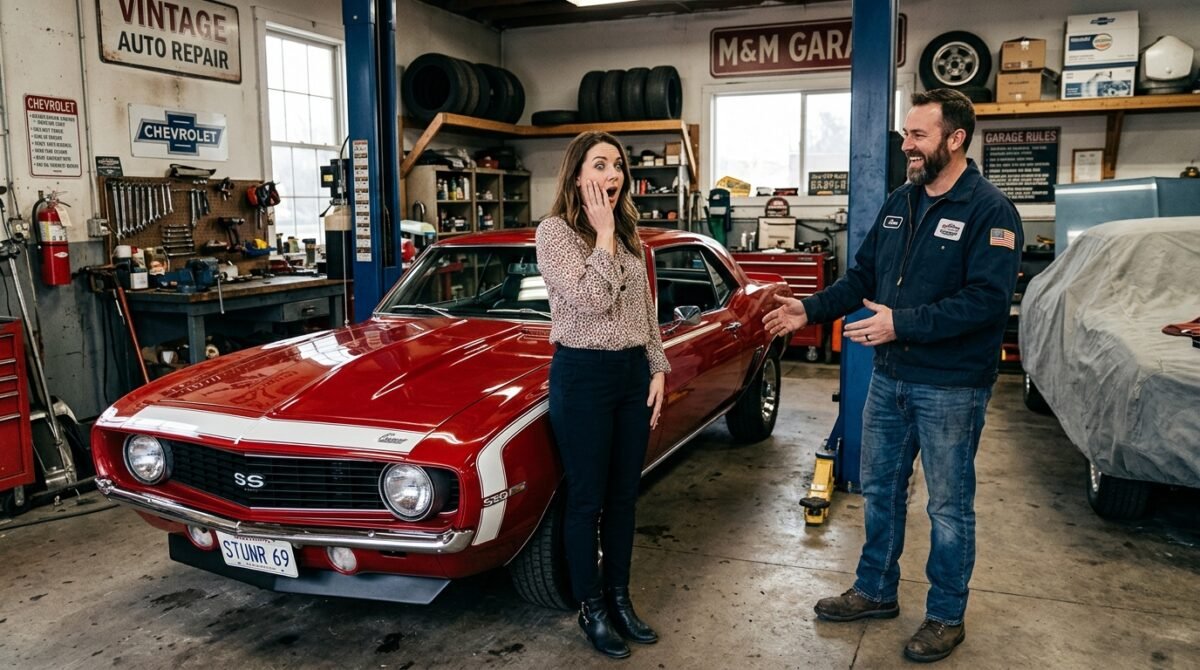
I remember the vibration of my phone in my pocket like it was yesterday. I was waiting for the receptionist to call me back, and when the notification popped up, I assumed it was a system error. I opened the app, expecting to see a pending utility payment. Instead, the balance was slashed. My hands started to shake, and I felt a sudden cold sweat break out across my neck. I clicked on the transaction history, and there it was: a wire transfer to a classic car dealership three towns over.
I called him immediately. He didn’t pick up on the first ring. By the third, I was pacing in the waiting room, ignoring the inquisitive glances of the other patients. When he finally answered, his voice was breezy, completely devoid of the panic I was feeling. He talked about his day, the weather, and his lunch, completely ignoring the elephant—or rather, the convertible—in the room. I had to interrupt him, my voice tight and barely audible.
“Mark, check the joint savings. Right now. Why is forty-five thousand dollars gone? Tell me you didn’t touch it.”
There was a long pause on the other end, the kind of silence that confirms your worst fears before the person even speaks. He sighed, a patronizing, heavy sound that made my skin crawl. He told me to calm down, that it was ‘an investment.’ He said he found a steal, a classic car that would only appreciate in value. He sounded like he was explaining a toy to a child, completely missing the fact that he had stolen our home.
I left the dentist without my cleaning. I didn’t care about the appointment; I cared about the fact that the life I had meticulously planned was being liquidated for a weekend hobby. I drove home, my mind racing through every sacrifice I had made over the last thirty-six months. I remembered the vacations we skipped, the clothes I didn’t buy, the overtime I worked just to hit those monthly savings targets. And he had just spent it in an hour of boredom.
When I arrived, he was already there, acting as if I was the one being unreasonable. He had clearly rehearsed his justification. He stood there, arms crossed, waiting for me to admire the shine on the hood. He talked about ‘experiencing life’ and how ‘a house can wait.’ I stared at him, really seeing him for the first time—not as my future husband, but as a stranger who had been hiding a massive ego behind a mask of shared responsibility.
The Justification of a Thief
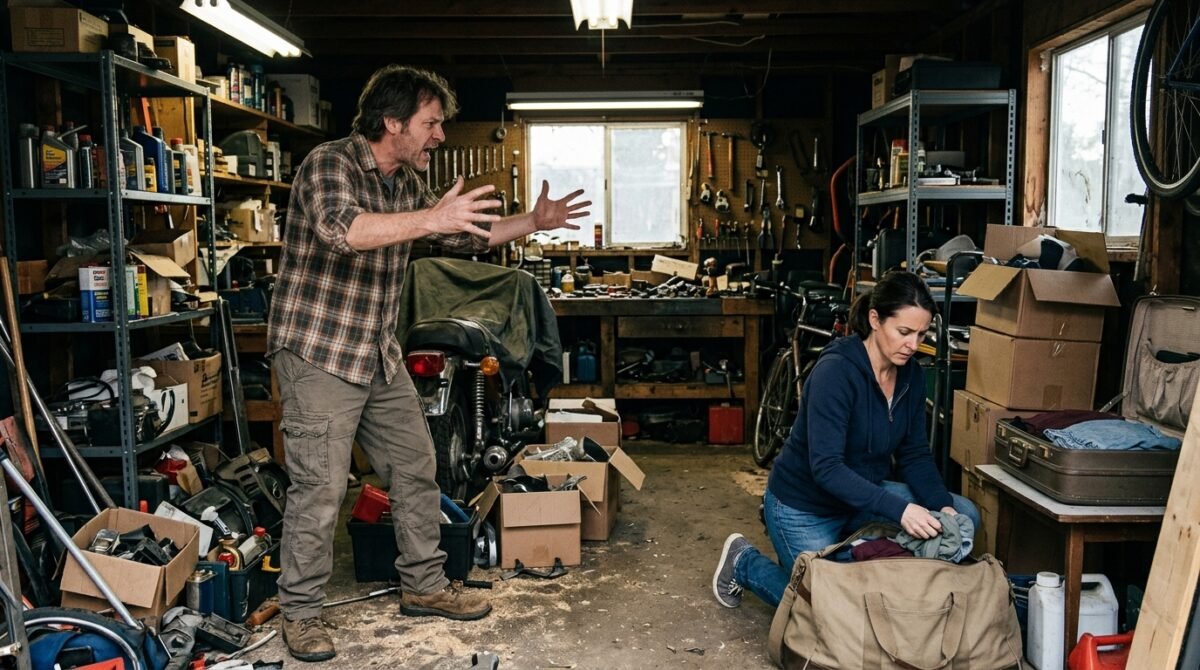
As we stood in the garage, the arguments started to pour out of him with such ease that it was clear he had been planning this for weeks. He argued that he was the ‘primary earner’ in his own head, even though our contributions to the savings were equal. He claimed that he felt stifled, that the pressure of saving for a house was ‘crushing his soul.’ I couldn’t help but laugh, a bitter, sharp sound that seemed to surprise him.
“You didn’t just buy a car, Mark. You bought your own way out of our relationship. You knew I wouldn’t agree, so you didn’t ask. That’s not a partnership. That’s a hostage situation.”
He tried to touch my arm, but I recoiled as if he were made of fire. He told me I was being hysterical, that it was ‘just money’ and that we could ‘start saving again.’ He didn’t seem to grasp the concept of time. The market was changing, interest rates were climbing, and our window to buy a house was closing. By stealing that money, he hadn’t just taken cash; he had taken our opportunity. He had set us back years, and he expected me to just shrug it off.
I looked at the car again. It really was beautiful, but it represented everything I hated about him at that moment. It was vain, expensive, and completely impractical. It was the physical manifestation of his desire to prioritize his own gratification over our survival. He kept talking about ‘resale value’ and ‘vintage appreciation,’ as if he were a financial advisor and not a guy who had just bankrupted his own wedding plans.
The conversation spiraled into a litany of his grievances. Apparently, he felt I was ‘too controlling’ because I wanted to stick to a budget. He felt that our lifestyle was ‘too restrictive.’ He had been keeping a ledger of things he wanted to do but couldn’t because of the house fund. It was the first time I realized he had been resenting me for the very goals he had originally agreed to with enthusiasm. The dishonesty wasn’t just in the transaction; it was in the years of pretending to be on my team.
I walked away while he was still explaining the engine specs. I went inside and started packing my things. Not all of them—just the essentials. I knew I couldn’t stay here, not even for one more night. Every room in this house felt tainted by the fact that he was willing to throw it all away for a piece of metal. He followed me, still talking, still trying to gaslight me into thinking I was the one creating the drama.
The Silence of the Ring

I walked into the bedroom and pulled the engagement ring off my finger. It felt heavier than it had when he placed it there two years ago. I set it on the nightstand, right on top of his watch. It was a simple, elegant piece of jewelry, and suddenly, it looked like a prop from a bad play. I stood there, waiting for him to follow me in. When he did, he saw the ring and his entire demeanor shifted. The arrogance vanished, replaced by a sudden, frantic realization that I wasn’t just ‘throwing a tantrum.’
“What are you doing? You’re acting like this is the end of the world. It’s a car, Sarah. It’s a car! Put the ring back on.”
I looked him in the eye and told him that the car didn’t matter. It was the fact that he had decided, unilaterally, that his whims were more important than our life together. I told him that I couldn’t marry someone who would sabotage me, someone who would hide a major financial decision, and someone who didn’t respect the foundation we had built. He tried to argue, to minimize, to beg, but for the first time in our relationship, his words didn’t reach me. I was completely walled off.
He started texting my sister, my mother, even our mutual friends, trying to get them to ‘talk some sense’ into me. My phone started blowing up with messages. Some were from his friends, telling me to ‘cool off,’ while others were from family members, genuinely confused about what happened. I ignored them all, focusing on getting my suitcase packed. The sound of his voice, pleading and then eventually turning angry, became background noise to the rhythm of my life falling apart and reassembling into something new.
“Are you serious? You’re leaving over a car? This is insane. Think about the deposits for the venue, the catering, everything! You’re ruining everything over a purchase!”
— Mark, in a text sent while I was packing
The irony of him saying I was the one ruining things was almost comical. He had spent our house fund, and he was blaming me for the consequences of his actions. I didn’t respond. I just finished packing, took my keys, and walked out of the door. He tried to block my path, but I pushed past him, my heart pounding in my ears. I didn’t look back. I didn’t care about the car, the house, or the ring. I just wanted to be free from his delusion.
I checked into a hotel that night, the silence of the room a stark contrast to the chaos I had left behind. For the first time in years, I didn’t have to check a budget. I didn’t have to account for his choices. I felt a weird, terrifying sense of liberation. The engagement was over. The house was gone. But for the first time in a long time, I was the only person I had to answer to.
The Group Chat Fallout
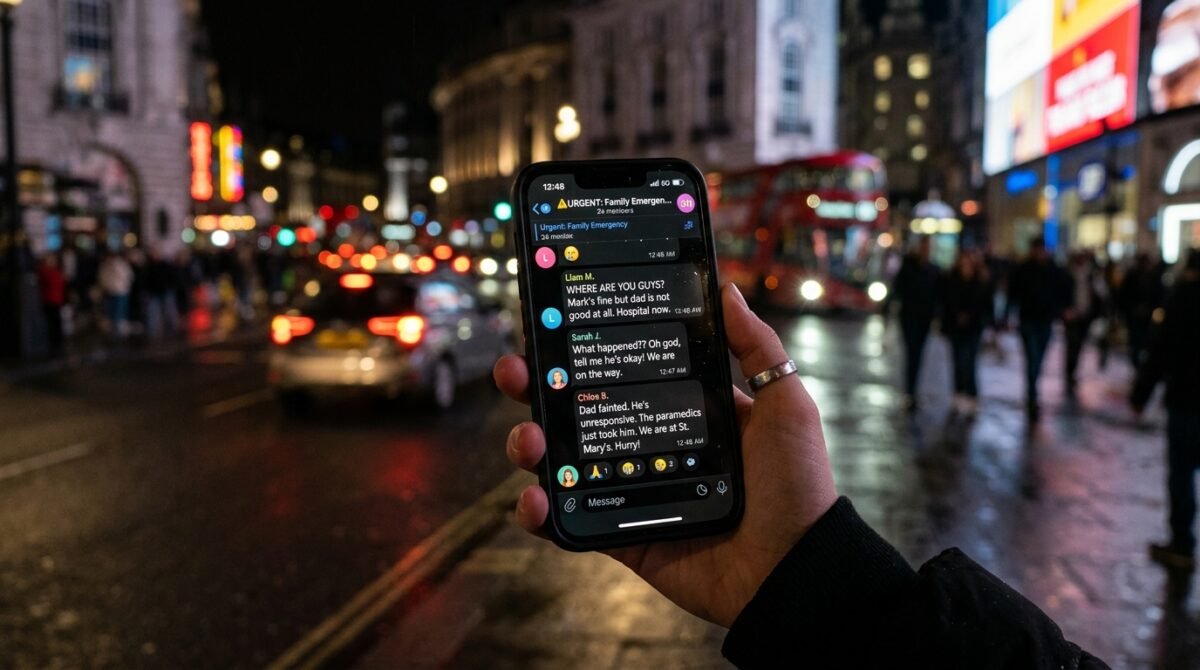
By the next morning, the news had spread through our social circle like wildfire. Mark had posted a picture of the car on social media, claiming he had ‘finally treated himself’ after a ‘hard few years.’ The comments were full of congratulations from people who didn’t know the truth. It was a masterclass in manipulation. I decided, right then and there, that I wasn’t going to stay silent. I didn’t want to be the ‘crazy ex’ who left for no reason.
I logged into our shared family group chat, where both our parents were members. I knew this would be nuclear, but I was past the point of caring about civility. I typed out a simple, cold message explaining exactly what had happened. I included a screenshot of the banking transaction—the wire transfer, the date, and the amount. I didn’t add any commentary, just the facts. The silence in the chat was palpable for nearly an hour.
“For everyone asking, Mark and I are no longer together. He used our entire house down payment—$45,000—to purchase this car behind my back. I have ended the engagement and moved out.”
— My message to the family group chat
The backlash was immediate. My mother called me within seconds, her voice shaking with rage. His parents were more hesitant, trying to defend him, saying he was ‘under a lot of pressure’ and that he ‘just needed a win.’ It was disgusting to hear them minimize his theft as a ‘win.’ I shut them down, telling them that if they wanted to support him, they could pay for the house he just stole from us.
Then came the barrage of messages from his friends. Some were genuinely shocked, having no idea he had access to that much money or that he would be so reckless. Others were aggressive, accusing me of ‘airing dirty laundry.’ I blocked them all. I didn’t need a support system of people who thought financial betrayal was acceptable in a committed relationship. The group chat became a war zone, and I just exited, leaving them to deal with the truth I had just dropped into their laps.
I felt a strange sense of vindication. By telling the truth, I had stripped him of the narrative he was trying to build. He couldn’t play the ‘misunderstood victim’ anymore. He was the guy who broke the promise, the guy who took the money, and the guy who lost the girl because he valued a piece of vintage steel over our future. It was the most honest I had been in three years, and it felt like inhaling pure oxygen after being underwater.
I realized then that the ‘team’ I thought I had wasn’t a team at all. It was an audience, and when the play went off-script, they all turned on me. But it didn’t matter. The only validation I needed was the clarity of my own actions. I had done the right thing, and the consequences—however messy—were worth the price of my own dignity.
Financial Reckoning and Legal Realities

The next few days were a blur of bank calls, lawyer consultations, and the brutal reality of disentangling our finances. Because the account was joint, legally, he had the right to withdraw the money. That was the most painful lesson of all. I had put my trust in the system, and the system had allowed him to walk away with my savings. I sat in a lawyer’s office, listening to the options, realizing that recovering the money would likely cost more in legal fees than it was worth.
The lawyer, a sharp woman with a no-nonsense demeanor, looked at me over her glasses. She told me that while it was a ‘moral atrocity,’ it was a common occurrence in failing relationships. She advised me to focus on the ‘clean break’ rather than the ‘revenge recovery.’ It was hard to hear, but she was right. Every hour I spent fighting for that money was an hour I wasn’t spending building my new life. I decided to let it go—not for him, but for me.
“You have to decide what’s more expensive: the money you lost, or the time you’ll lose trying to get it back. Cut your losses, Sarah. He’s not worth the energy.”
— My lawyer, during our initial consultation
I started selling off the things we had bought together, items that didn’t matter in the grand scheme but felt like weights around my neck. I donated the kitchen appliances, sold the furniture, and kept only what I had owned before we met. It was a purging process, a way of erasing the physical footprint of our ‘togetherness.’ Every time something left the apartment, I felt a little lighter, a little more like the person I was before I met him.
He kept trying to reach out. He sent emails, long, rambling manifestos about how ‘we’ could still work, how ‘the car was just a symptom of his fear of commitment’—as if that was supposed to make me feel better. He said he would sell the car if I would just talk to him. I didn’t respond to a single one. I had seen the true face of the man I was going to marry, and I had no interest in negotiating with someone who thought my trust was a renewable resource.
I spent my evenings reviewing my own finances, setting up new accounts, and planning a future that didn’t include a mortgage, at least for a while. I moved into a small, studio apartment. It was nothing like the house we were going to buy, but it was mine. It was quiet, it was clean, and it was entirely free of his influence. I started to rediscover the things I loved—hobbies I had given up to spend more time ‘saving.’ It was a bittersweet awakening, but it was mine.
The financial loss was staggering, yes. But the emotional gain? That was immeasurable. I was no longer the girl who was being gaslit into thinking she was the villain. I was a survivor, a woman who had walked away from a burning wreck and lived to tell the tale. I was broke, but I was free, and that was a currency I was finally starting to value.
Reddit Community: The Verdict

I posted my story on a popular forum, not for attention, but because I needed to hear that I wasn’t losing my mind. The response was overwhelming. Thousands of people commented, shared their own stories, and offered support. It was the first time I realized that my situation wasn’t unique, but that the way I handled it—the instant, decisive action—was what resonated with people. The community was a mirror, reflecting back the sanity I had been so desperately looking for.
“OP, you are an absolute legend for leaving immediately. Most people stay for months, trying to ‘fix’ the relationship while their finances are gutted. You valued your self-respect over the sunk cost. That is the ultimate power move.”
— u/FinanceTruthSeeker (Top Comment, 32.1k upvotes)
There were, of course, the dissenters. Some people argued that ‘people make mistakes’ and that I should have ‘given him a chance to fix it.’ Those comments were usually buried under a pile of downvotes. It was interesting to see the divide between people who saw marriage as a contract that could be breached and those who saw it as an unconditional commitment regardless of betrayal. I stood firmly with the former group. A relationship without trust is just a trap.
“I don’t get the NTA votes. Yeah, he’s a jerk for the car, but leaving immediately without even trying to talk it out is extreme. Marriage is about forgiveness, not just being right.”
— u/RelationshipGuru88 (1.2k downvotes)
I read through the comments for hours. It was a strange, cathartic experience. Seeing strangers validate my decision made it feel real. It wasn’t just a breakup anymore; it was a public declaration of boundaries. I saw people sharing tips on how to protect assets, stories about ‘financial infidelity,’ and advice on how to rebuild after a major loss. It made me realize that I wasn’t alone, and that there was a whole community of people who understood exactly why I had walked out.
The most touching comments were from people who had been in similar situations and stayed too long. They shared their regrets, their stories of years wasted, and the pain of eventually leaving anyway. Their stories reinforced my decision. They reminded me that the pain of leaving was temporary, but the pain of staying in a broken relationship would have been a lifetime sentence. I felt a surge of gratitude for the internet, for the raw, unfiltered honesty of strangers.
I didn’t answer the comments. I didn’t need to. I just read, absorbed, and let the support wash over me. It was like being surrounded by a virtual army of people who had my back. I stopped checking the updates after a while, but those comments stayed with me. They were the evidence I needed that I had done the right thing, that the moral weight of the situation was firmly on his side, not mine.
The Unexpected Encounter

Three months after the breakup, I was at a local grocery store, turning down an aisle, when I saw him. He was standing in the frozen food section, looking exhausted. He looked different—older, maybe, or just tired. He was wearing an old, stained sweatshirt, and his hair was unkempt. When he saw me, he froze. For a second, I thought he might come over, that he might try to say something, but then he just looked down at his cart and walked away.
It was such a strange, underwhelming moment. I had spent so much time fearing our next meeting, thinking about what I would say, how I would react. But seeing him there, just a guy buying frozen meals, the anger just… evaporated. It was replaced by a hollow, sad kind of pity. He hadn’t just lost me; he had lost his way. The car was probably sitting in the garage, a useless monument to a life he couldn’t afford to live.
“I hope you’re happy with the car, Mark. Because that’s all you have left.”
— What I thought about saying, but didn’t.
I didn’t speak to him. I just grabbed my items and went to the checkout. I didn’t feel the need to confront him, to gloat, or to express my anger. He was a part of my past, a closed chapter. He had made his choice, and he was living with the consequences. There was no need to add my own voice to the internal misery he was clearly already experiencing. I felt a weird sense of peace, knowing that I was moving forward while he was clearly stuck in the wreckage of his own making.
I left the store and got into my car—a modest, reliable sedan that I had bought with my own money. It wasn’t fancy, but it was mine, and it was paid for. As I drove away, I looked in the rearview mirror and saw him walking out of the store, dragging his feet. He looked like he was carrying the weight of the world. I didn’t feel happy, but I didn’t feel sad either. I just felt… done.
It was the final closure I didn’t know I needed. The story wasn’t about the car, or the house, or the money. It was about the transition from being a person who was defined by her relationship to a person who was defined by her own actions. Seeing him in that store, looking so ordinary and so defeated, reminded me that no one is a hero in someone else’s story when they act with such blatant disrespect. He was just a person, and I was finally just a person, too.
The Lessons in the Ledger

I started a new journal, not for drama, but for tracking. I wasn’t tracking house savings anymore; I was tracking my life. I wrote down the lessons I had learned, the things I would never compromise on again. I learned that financial transparency is the first and most important layer of intimacy. If you can’t be honest about money, you can’t be honest about anything. I learned that the ‘sunk cost fallacy’ is the most dangerous trap in a relationship. Just because you’ve invested time and effort doesn’t mean you have to keep investing until you’re bankrupt.
I also learned the importance of my own autonomy. I had spent years merging my identity with his, making our goals my goals. I had forgotten what I wanted, what made me happy, and what I valued. Reclaiming that space was the most rewarding experience of my life. I started taking classes, traveling, and spending time with friends I had neglected. I was building a life that was robust, independent, and entirely my own creation.
“You never know how much of yourself you’ve given away until you get it back. The house was a dream, but the freedom? That was a life.”
I look back at the photos of the ‘Home Fund’ spreadsheets now, and they don’t make me sad. They make me proud. They are a record of my dedication, my discipline, and my ability to achieve anything I set my mind to. The fact that the money was stolen doesn’t diminish the fact that I earned it. It just means I need to be more careful about who I share my life with in the future. It’s a lesson that was expensive, but it’s one I’ll never have to learn again.
I’m not anti-marriage, and I’m not anti-sharing. I just believe in a new kind of partnership—one that is built on radical honesty, shared values, and a mutual respect for each other’s contributions. I’m not rushing into anything. I’m enjoying the process of being me, and I’m confident that when the right person comes along, they will respect the boundaries I’ve built because they will have their own.
The car was just a car. It didn’t drive him anywhere meaningful, and it certainly didn’t make him a better person. But it did drive me to a place of self-discovery that I might never have reached otherwise. I’m grateful for the clarity, even if it came at the cost of a down payment. I’ve realized that the most valuable thing I own isn’t a house, or a car, or a savings account. It’s my own peace of mind, and that is something no one can ever take away from me again.
Moving Forward, Alone and Unapologetic

Today, I’m in a different place—literally and figuratively. My apartment is decorated exactly how I want it, with no compromises for someone else’s taste. I still save money, but I do it for my own goals, and I have total control over every cent. I’ve reached a point where I can laugh about the whole ‘convertible disaster.’ It’s a ridiculous story, the kind you tell over drinks to make people gasp, but it doesn’t hurt anymore. It’s just a chapter, one that is firmly finished.
I’ve started dating again, but on my own terms. My boundaries are clear from the first date: I’m not interested in merging finances until there’s a marriage contract that protects both parties, and I’m definitely not interested in anyone who thinks a car is a replacement for a home. I’ve found that being upfront about my past experiences is actually a great filter. People who are worth my time are respectful and supportive; those who aren’t, well, they usually run for the hills. And that’s fine by me.
“My history isn’t a secret, it’s a standard. I know what I’m worth, and I know what a partnership should look like. If you can’t meet that, we’re not going to be a match.”
I’ve also reconciled with my family. They realized that my decision was the right one, and they’ve been incredibly supportive as I’ve rebuilt. It’s taught me that a support system isn’t about blind loyalty; it’s about having people who care enough about you to tell you the truth, even when it’s hard. I’m grateful for that, and I’m grateful for the perspective I’ve gained. The life I’m living now is smaller in some ways, but it’s so much deeper in others.
I still think about that house sometimes. I see Craftsman-style bungalows and I wonder what it would have been like to live in one. But then I think about living in one with him, and I realize it would have been a prison. I would have been living in a house built on deceit and resentment. I’m better off in my small apartment, in my own life, where every breath I take is my own. I have no regrets about the decision I made that Tuesday afternoon.
The engagement wasn’t a mistake; it was a lesson. And the fact that I walked away from it with my integrity intact, rather than trying to salvage something that was already dead, is the greatest achievement of my life. I’m looking forward to whatever comes next, knowing that I can handle anything because I’ve already handled the absolute worst. I am finally, truly, and happily, my own person.
Reflections on the Nature of Trust

Trust is a fragile thing, something that takes years to build and seconds to break. My experience taught me that trust isn’t just about believing someone won’t cheat on you; it’s about believing they share your vision for the future. When that vision becomes misaligned, trust starts to erode. My fiancé didn’t just break my trust; he broke the narrative of our life together. He decided that his immediate pleasure was worth more than our long-term security, and that is a fundamental incompatibility that no amount of therapy could have fixed.
People often ask if I was ‘too harsh’ for ending it so quickly. I tell them that when the foundation of a house is cracked, you don’t keep building on top of it. You tear it down and start over. My engagement was a house with a cracked foundation. Staying would have been a gamble I wasn’t willing to make. I had already put three years of work into that foundation, and I wasn’t going to waste any more time hoping it would somehow hold up.
“Trust is the bedrock of any relationship. If you take that away, the entire structure collapses. I didn’t end our relationship; the act of betrayal did that long before I walked out the door.”
I’ve realized that the ‘hard’ decision—the one that requires you to walk away, to face the uncertainty of being alone—is almost always the right one. It’s the decision that saves you from yourself, from your own desire to avoid conflict, and from the comfort of the familiar. It’s the decision that forces you to grow, to evolve, and to become the person you were meant to be all along. I’m stronger for it, and I’m grateful for the clarity that came from the chaos.
I hope anyone reading this who is going through something similar—who is feeling the slow, creeping erosion of their own boundaries—finds the courage to act. You don’t need permission to leave. You don’t need to wait for a ‘bigger’ reason. If your gut is telling you that something is wrong, listen to it. Your future self will thank you for the courage you show today, even if it feels like you’re losing everything in the moment. You’re not losing everything; you’re just clearing the space for something better.
My story is a reminder that you are the primary architect of your own life. Don’t let anyone else hold the blueprints, especially if they’re going to use them to build a monument to their own ego. Stay true to your goals, protect your resources, and never, ever compromise your self-worth for the sake of a relationship that doesn’t honor you. It’s a hard lesson, but it’s the most important one I’ve ever learned.
Conclusion
This experience, while painful, served as a catalyst for a profound personal evolution. I went from being a partner in a shared, but ultimately hollow, dream to being the sole proprietor of a reality I actually enjoy. The financial loss, while significant, has faded into the background, overshadowed by the immense value of the self-respect I reclaimed. I am no longer defined by the money I saved or the house I didn’t buy, but by the strength it took to walk away from a life that no longer fit.
Reflecting on this, I see that the true cost of that convertible wasn’t the $45,000—it was the clarity I gained. We all face moments of moral and financial crossroads in our relationships, where the path we’re on suddenly diverges from the one we signed up for. The question isn’t whether you can forgive the error; it’s whether you can live with the person who made it. I realized I couldn’t, and that realization was my salvation.
What about you? Have you ever had to walk away from a major life plan because of a partner’s sudden, reckless betrayal? Do you believe that financial infidelity is a dealbreaker, or is it something that can be worked through with time? I’d love to hear your thoughts, your own stories of hard-earned boundaries, and what ‘freedom’ looks like to you after the dust settles. Let’s start the conversation below.
What's your verdict on this dilemma?
Vote below to contribute to the official community consensus.

Have a Dilemma Keeping You Up at Night?
Share your real-life feud, wedding chaos, or relationship crossroads anonymously with our editorial team.
What do you think ?
0 Comments🛡️ Comments are moderated to protect community integrity. Your comment will appear once approved by the editorial team.