

We all have that one family member who views the world through a lens of ‘what is yours is mine.’ For me, that was always Uncle Richard. I grew up admiring his ability to negotiate, but I never realized that his negotiation tactics were simply a polite cover for absolute entitlement. My pride and joy, a 1964 Chris-Craft wooden runabout, became the centerpiece of the most absurd conflict I have ever faced in my twenty-eight years of life.
I spent five years and every spare dime I earned working as a junior architect to restore that boat. It wasn’t just a vehicle; it was the culmination of my grandfather’s legacy, a piece of art that smelled of marine varnish and history. When I finally dropped it into the water last June, it felt like the achievement of a lifetime. I didn’t know that three miles away, my cousin was preparing for the ‘Miss Regional Excellence’ pageant, and my uncle was looking for a convenient way to pay for a thousand-dollar dress and entry fees.
The audacity of his request didn’t start with a scream; it started with a casual text message, the kind that feels innocuous until you read it twice. He didn’t ask; he informed. He looked at my hard work, my financial sacrifice, and my emotional investment, and saw nothing more than a liquidity event. This is the story of how a mahogany boat became the anchor for a sinking family dynamic, and why I chose a cold, hard ‘no’ over the preservation of a toxic relative’s ego.
As you read this, consider the weight of personal boundaries. When does a family obligation end, and where does blatant exploitation begin? I have learned the hard way that ‘family’ is often used as a weapon to bypass basic social decency. This isn’t just about a boat; it’s about the right to own the fruit of your own labor in a world that feels increasingly entitled to your resources.
The Initial Text Message That Started It All

It was a Tuesday evening, the kind of quiet night where the only thing on my mind was the upcoming weekend trip to the lake. My phone buzzed on the kitchen counter, a notification from Uncle Richard. I remember thinking he was probably checking in to see if I was going to be at the family barbecue on Sunday. I couldn’t have been more wrong.
The text was brief, clinical, and jarringly detached. He didn’t lead with a greeting or a ‘how have you been.’ He went straight to the transactional nature of his request, as if we were discussing a simple business arrangement rather than the sale of my prized possession.
“Hey, I was looking at your photos of the boat. It looks like it’s in great shape. How much do you think you could get for it in a quick sale? I need to cover Sarah’s pageant wardrobe and entry fees by the 15th. Let me know when you list it so I can help you find a buyer.”
— Uncle Richard via Text Message
I stared at the screen, my thumb hovering over the reply button. My pulse quickened, a physical reaction to the sheer, unadulterated gall of the man. Did he truly believe that I would liquidate five years of my life to pay for a pageant dress? The disconnect was so vast that I initially wondered if it was a joke. I sat there in silence, the hum of the refrigerator suddenly sounding deafening in the quiet apartment.
I took a deep breath, trying to summon a response that was firm but not immediately combustible. I knew that if I engaged with hostility, he would paint me as the villain to the rest of the family. I needed to establish, with absolute clarity, that the boat was not a negotiable asset. My heart was racing, not just from anger, but from the realization that my relationship with my uncle was about to undergo a permanent shift.
I typed out a response, my fingers shaking slightly. I deleted it, typed it again, and finally sent it. I wasn’t just defending a boat; I was defending my autonomy. The moment I hit send, I felt the air leave the room. It was the first strike in a battle I hadn’t asked for, and I knew that the fallout would be far-reaching and deeply unpleasant.
The Sunday Dinner Confrontation
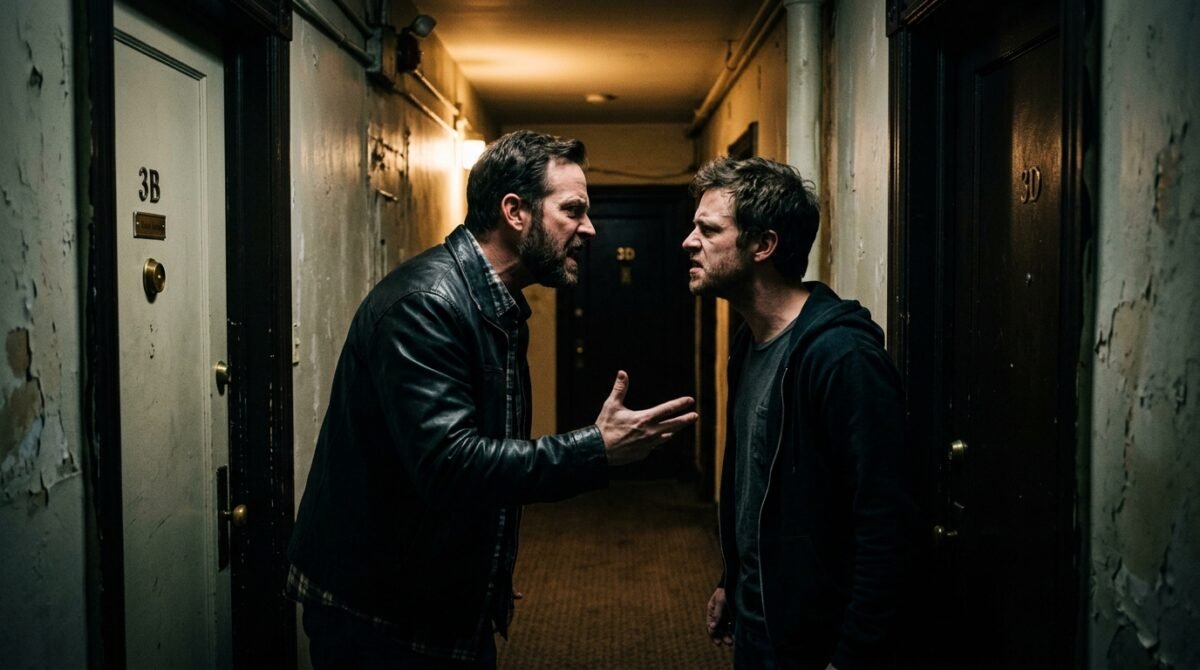
By the time Sunday rolled around, the tension was thick enough to cut with a serrated knife. I showed up at the family house, expecting a quiet meal, but the atmosphere was anything but serene. My aunt was fussing over place settings, and my uncle was standing by the window, his eyes narrowing the moment I walked through the door. He didn’t even wait for us to sit down.
He cornered me in the hallway near the coat closet, his voice low and pointed. He didn’t want the rest of the family to hear—or perhaps, he wanted to intimidate me without an audience. He leaned in, smelling faintly of cheap cologne and desperation. He acted as if my refusal to sell the boat was a personal slight against his daughter, Sarah.
“You’re really going to be that selfish, aren’t you? It’s family, for heaven’s sake. Sarah has a real chance at this competition, and you’re hoarding a toy that sits in a garage for nine months out of the year. Do you have any idea how much effort I’ve put into her training? Your selfishness is frankly embarrassing.”
I looked him directly in the eye, refusing to shrink. I realized then that he had no respect for my work, my time, or my boundaries. To him, my life was merely a support system for his ambitions. I felt a cold surge of clarity. I told him that the boat was not a toy, that it was a project I had poured my soul into, and that his daughter’s pageant expenses were not my financial responsibility.
The conversation quickly escalated. He started raising his voice, attracting the attention of my aunt, who drifted into the hallway with a look of practiced concern. She played the mediator, but her words were just as manipulative as his. She suggested that perhaps I could ‘just lend’ the money, implying that my financial stability was somehow a communal resource.
I stood my ground, my voice steady even as my hands clenched at my sides. I refused to negotiate. I told them both that if they continued to push, I would leave the dinner immediately. The silence that followed was agonizing. My uncle’s face went from indignant to calculating, his eyes flicking over me as if he were trying to find a weak point in my armor.
The Calculated Smear Campaign

Within forty-eight hours of the disastrous Sunday dinner, the fallout began in earnest. My phone started pinging with messages from other relatives—cousins I hadn’t spoken to in months, aunts who suddenly cared deeply about my ‘attitude’ toward family support. It was clear that my uncle had been busy, curating a version of events that made me look like the selfish, wealthy cousin who wouldn’t lift a finger for a child’s dream.
I sat on my sofa, reading through a thread on our extended family group chat. The narrative was shifting, and I was being cast as the antagonist in a story I hadn’t even finished reading. My uncle had conveniently omitted the fact that he was asking me to sell a major asset, instead framing it as me refusing to help out with a ‘small family favor.’
“I just can’t believe how cold some people can be. Sarah is crying her eyes out because she thinks she’s not good enough, and meanwhile, OP is sitting on a small fortune of a boat. It’s not about the money, it’s about family support. Some of us actually value our blood ties.”
— Aunt Martha in the Family Group Chat
I felt a sickening pit in my stomach. The manipulation was so transparent, yet it was working. People were chiming in with ‘agreements’ and ‘disappointments,’ not one of them bothering to ask me for my side of the story. I realized then that my uncle wasn’t just trying to get the money; he was trying to isolate me so that I would buckle under the social pressure.
I debated replying in the group chat, but I knew that would only give them more ammunition. Instead, I took screenshots of everything. I was archiving the hostility, documenting the way they were twisting the truth to serve their own ends. It was a cold, defensive measure, but I felt like I was being backed into a corner and I needed to keep a record of the absurdity.
The isolation was hard. I found myself checking my phone, hoping for a message from someone who might actually be on my side, but the silence was deafening. I felt like an outsider in my own family, a realization that was both painful and liberating. I realized that if this was the price of keeping my boat—and my integrity—it was a price I was willing to pay.
The Unexpected Ally

Just when I was about to delete the group chat and go completely no-contact, a private message popped up from my cousin Leo. Leo had always been the quiet one, the one who stayed out of the family drama and focused on his own life in the city. I clicked on the message, expecting another lecture, but instead found a breath of fresh air.
“Hey, I’ve been reading the group chat. I know what Uncle Richard is doing. He did the same thing to my parents when he wanted to buy his new truck. Don’t let them get to you. You worked your ass off on that boat, and everyone knows it. I’m backing you up if you need someone to speak the truth.”
— Private message from Cousin Leo
I felt a sudden, sharp relief. Someone saw it. Someone recognized the pattern of exploitation that had defined my uncle’s life for as long as I could remember. I replied, thanking him, and we spent the next hour talking about the history of the family and how Uncle Richard had always operated this way—grooming people to be his personal financiers.
Leo’s support changed the game. Having one person in the ‘in-group’ who knew the truth was enough to shatter the illusion of consensus. We decided that I wouldn’t engage in the chat, but if the conversation turned specifically to the boat, Leo would simply post a link to my project blog, where I had documented every hour and every dollar spent on the restoration.
It was a small act of rebellion, but it felt monumental. The power dynamic shifted slightly. My uncle was used to being the loudest voice in the room, the one who controlled the narrative through sheer volume and emotional blackmail. By introducing facts—the reality of the effort and the cost—we were going to expose the absurdity of his request without having to scream back.
I felt my confidence return. I stopped checking the group chat with anxiety and started checking it with a sense of morbid curiosity, waiting for the moment when I would finally drop the evidence. I wasn’t going to be the victim in this story anymore; I was going to be the architect of my own defense.
The 6:00 AM Kitchen Intrusion

I didn’t expect them to show up at my apartment. I was making coffee, still in my bathrobe, when the buzzer rang. I assumed it was the mail carrier or a delivery driver, so I buzzed them in without thinking. The elevator doors opened, and there stood Uncle Richard, flanked by his wife, looking like they were ready to stage an intervention.
I tried to block the door, but he pushed past me with a forced, jovial energy that was more terrifying than a direct threat. He marched into my kitchen, looked around at my modest setup, and then fixed his eyes on a photo of the boat I had framed on the wall. He acted as if he had every right to be there, as if he were doing me a favor by ‘helping’ me make the right decision.
“Look, we’re doing this for you. You don’t want to be the person who ruined Sarah’s future over a piece of mahogany. We have a buyer lined up. A friend of mine who loves classic boats. He’s willing to offer a fair price, and you can walk away with a clean conscience. Don’t be stubborn. This is your chance to redeem yourself.”
I felt the rage bubbling up, but I forced myself to stay calm. I stood in the middle of my kitchen, arms crossed, waiting for them to finish. The audacity of him having already found a ‘buyer’ was breathtaking. He wasn’t asking; he was executing a plan that he had built entirely around my property.
I finally spoke, my voice low and dangerously steady. I told him that he had five minutes to leave my apartment before I called the police for trespassing. His wife looked shocked, her mouth opening and closing as if she couldn’t believe I would prioritize my property over their ‘family request.’
He laughed, a dry, dismissive sound. ‘You wouldn’t dare,’ he said. But I reached for my phone, unlocked it, and pulled up the emergency contact list. He saw the shift in my demeanor—the absolute, non-negotiable wall I had put up. He realized that the version of me he had bullied for years was gone. He grumbled, threw some parting insults about my ‘lack of character,’ and stormed out, his wife trailing behind him in a state of bewildered irritation.
The Community Weighs In

I knew I needed a sounding board, so I posted my situation to an advice forum. I didn’t hold back. I detailed the text, the family dinner, the group chat smear campaign, and the morning intrusion. I didn’t want validation; I wanted to know if I was losing my mind, if there was some hidden societal rule about family that I was missing.
The response was instantaneous. Within hours, the post had thousands of views and hundreds of comments. The consensus was overwhelming. It wasn’t just that I was ‘right’; it was that I was being systematically abused by a relative who viewed me as an ATM. The comments ranged from supportive anecdotes to sharp, legalistic advice on how to protect my property.
“This isn’t family, this is a shakedown. The audacity to bring a buyer to your home without your consent is essentially harassment. Block them, go no-contact, and for the love of everything, keep that boat. Do not let them guilt-trip you into giving up your hard work for someone else’s vanity project.”
— u/BoatGuyRealist (Top Comment, 18.2k upvotes)
I spent the entire night reading through the comments. It was therapeutic to see that people from all walks of life recognized the toxicity of my uncle’s behavior. I felt a weight lift off my shoulders. I wasn’t the ‘selfish’ one; I was simply the one who had finally said ‘no’ to a cycle of entitlement that had probably been going on for generations.
Another commenter provided some sound advice: ‘Document every single interaction. If they keep showing up or sending threats, you need a paper trail for a restraining order. Do not engage with them anymore. Silence is your strongest weapon.’ I realized that my plan to stop responding was the right one. I wasn’t just protecting the boat; I was protecting my peace of mind.
The validation from the community gave me the armor I needed. I stopped feeling like I had to explain myself to my extended family. The truth was out there, and those who chose to ignore it were not people I needed in my life. The boat wasn’t just a boat anymore—it was a symbol of my boundaries, and I was going to keep it safe.
The Final Ultimatum

A week later, I received a certified letter in the mail. It was a formal, typed document from my uncle, written in the tone of a legal demand. It was absurd. It listed the ‘financial losses’ he would incur if I didn’t sell the boat, as if my ownership of a speedboat was somehow legally obligated to cover his daughter’s pageant career. It even mentioned a ‘familial debt’ from a loan my grandfather had given my father decades ago, which was entirely irrelevant and factually incorrect.
I held the paper in my hands, feeling the weight of the thick, expensive stationery. He was trying to intimidate me with the appearance of formality, thinking I would be scared by a typed letter. I laughed, a short, sharp sound that echoed in my living room. I didn’t even bother to open the envelope fully; I just took a photo of it and sent it to my lawyer, a friend from law school who had handled a few small issues for me in the past.
My lawyer called me back within an hour. He was amused, to say the least. ‘This is complete nonsense,’ he said. ‘He has zero legal standing. Tell him if he sends another one of these, we’ll file for harassment. And honestly? Just ignore it. It’s a bluff.’
I decided to take it a step further. I drafted a very short, very final response. I didn’t address the money, the pageant, or the boat. I simply stated that I would not be accepting any further contact, that I had documented his harassment, and that any future attempts to contact me would be forwarded to my legal representation. I sent it via email and through the mail, then blocked him on every platform.
The act of blocking him felt like cutting a heavy chain. I could almost feel the weight of his expectations dissolving. I was no longer the nephew he could manipulate; I was a person with iron-clad boundaries. The letter sat on my desk for a day, a relic of a failed negotiation, before I threw it into the recycling bin. The boat was safe, and so was I.
The Silence After the Storm

The weeks that followed were remarkably quiet. My phone stopped buzzing with family group chat notifications, my inbox remained free of threats, and the constant, nagging anxiety that had defined my life for a month began to fade. It was like waking up after a long, feverish nightmare. I realized how much energy I had been wasting on worry, on anticipating his next move, on trying to justify my own life to someone who never cared to listen.
I spent that weekend at the lake. I launched the boat, the engine roaring to life with a satisfying, deep sound that had always been my favorite part of the experience. As I glided across the water, the sunlight dancing on the varnish, I felt a deep, profound sense of gratitude. I wasn’t just grateful for the boat; I was grateful for the realization that I could survive the fallout of setting boundaries.
My cousin Leo reached out to tell me that the family was talking, that the narrative had shifted once my uncle started claiming I was ‘suing him.’ Most of the family had realized that he was lying, and the backlash against him had started to grow. It wasn’t my fight anymore. I had removed myself from the board, and the game had collapsed under the weight of its own dishonesty.
I found peace in the small things. I started focusing on my career, on my own hobbies, and on the friends who actually cared about me. I stopped trying to fix the ‘family’ dynamic, because I realized that it was never a dynamic I could control. I was responsible only for myself, and for the first time in a long time, that felt like enough.
The boat became even more special to me. It wasn’t just a project anymore; it was a testament to my survival. Every scratch in the mahogany had a story, and now, it had one more. It was the boat that stayed, the boat that refused to be sold, the boat that marked the end of an era of exploitation.
Reflecting on the Cost of Boundaries

Looking back, I see the situation with a clarity that only distance can provide. My uncle wasn’t just interested in the money; he was interested in the power. He wanted to see if he could make me choose between my own desires and his perceived authority as the ‘patriarch’ of the family. By refusing to comply, I hadn’t just saved a boat; I had saved myself from a lifetime of being his instrument.
There is a heavy price to setting boundaries, especially with family. You are often labeled as the ‘difficult’ one, the ‘cold’ one, or the ‘selfish’ one. People who are used to walking all over you will always be offended when you finally stand up and block their path. But the cost of *not* setting those boundaries is far higher. You lose your agency, your property, and eventually, your own sense of self.
I’ve learned that family is not just blood; it is a circle of mutual respect and genuine care. If those elements are missing, the label ‘family’ is just a word. I have no regrets about the way I handled the situation. I was firm, I was clear, and I refused to engage in the theatrics that my uncle thrived on. I maintained my dignity, and in the end, that is worth more than any sum of money.
I hope that anyone reading this who is currently dealing with a toxic relative knows that you do not owe them your soul, your assets, or your silence. It is not selfish to protect what you have worked for. It is not ‘mean’ to tell someone that they cannot reach into your life and take what they want. It is a necessary act of self-preservation.
I am moving forward, and I am stronger for it. I have the boat, I have my peace, and I have a renewed understanding of who I am and what I will tolerate. It’s a good feeling—to look at the water, feel the wind on my face, and know that everything I have, I kept through the strength of my own convictions.
Community Perspectives and Final Thoughts

The Reddit thread grew to such proportions that it was featured on a few ‘best of’ compilations, and the sheer volume of people sharing similar stories was staggering. It seems that ‘Uncle Richard’ is a character type that exists in almost every family. From the cousin who demanded a wedding fund to the aunt who tried to claim an inheritance that wasn’t hers, the stories were endless.
The consensus was unanimous: we all need to be better at saying no. We live in a culture that glorifies sacrifice, especially when it comes to family, but we rarely talk about the cost of that sacrifice. When we give until it hurts, we are often just enabling the people who want to keep taking. The comments from the community provided a sense of solidarity that I hadn’t expected.
“I had to go no-contact with my father for the same reason. It’s hard at first, and you will miss the version of them you thought existed, but you will not miss the anxiety. You’ve done the right thing. Never feel guilty for choosing your own well-being over someone else’s greed.”
— u/BoundariesAreHealthy (Top Comment, 15.6k upvotes)
I read these comments whenever I feel a flicker of doubt. It’s easy to second-guess yourself, especially when you’re socialized to believe that you owe your family everything. But the evidence—both in my own life and in the lives of thousands of others—is clear. Boundaries are not an act of hostility; they are the foundation of a healthy life.
I want to thank the community for their support. They helped me turn a moment of crisis into a moment of growth. If you are struggling with a similar situation, know that you are not alone. You have the right to your own life, your own possessions, and your own path. Don’t let anyone convince you otherwise.
As for the boat, it’s still in the water, and it’s still mine. And every time I turn the key in the ignition, I am reminded of the strength it took to keep it that way. I am not looking back, and I am certainly not looking for approval from the people who never had my back in the first place.
Conclusion
Reflecting on this ordeal, the most significant lesson I have learned is that true wealth isn’t in what you own—though my speedboat is certainly a treasure—but in the ownership of your own decisions. When you allow others to dictate your financial or emotional choices, you aren’t just losing assets; you’re losing your identity. The conflict with my uncle was a painful, necessary forge that hardened my resolve and clarified my values.
I am now firmly no-contact, and while the initial silence was strange, it has become the most peaceful chapter of my adult life. I no longer check my phone with a sense of dread, and I no longer feel the need to justify my hard work to anyone. My boat is a beautiful, mahogany-laden reminder that I am the captain of my own ship in every sense of the word.
I would love to hear your thoughts. Have you ever had to cut off a family member because they viewed your hard work as their personal piggy bank? Did you feel guilty at first, or was it an immediate relief? Let’s talk about it in the comments below, because sharing these experiences is the first step toward breaking the cycle of entitlement.
Poll: If a family member demanded you sell your most prized possession to fund their child’s hobby, would you: A) Negotiate to keep peace, B) Say ‘no’ and go low-contact, or C) Cut ties immediately and never look back?
What's your verdict on this dilemma?
Vote below to contribute to the official community consensus.

Have a Dilemma Keeping You Up at Night?
Share your real-life feud, wedding chaos, or relationship crossroads anonymously with our editorial team.
What do you think ?
0 Comments🛡️ Comments are moderated to protect community integrity. Your comment will appear once approved by the editorial team.