

We have all heard the horror stories about overbearing in-laws, but usually, those stories involve unannounced visits or unsolicited parenting advice. My situation, however, took a turn into the realm of the absurd when I realized my home had become an unofficial boarding house for my husband’s younger brother—the family’s undisputed ‘golden child.’ It started with small things: missing snacks, higher utility bills, and the occasional mysterious pile of wet laundry in the basement dryer. I brushed it off as my husband being disorganized, until the day I walked down to the basement to find a full-blown bedroom set, a gaming console, and a stash of fast-food bags that had clearly been accumulating for months.
The discovery didn’t just rattle me; it felt like a complete violation of my sanctuary. My husband, Mark, had been complicit, likely terrified of his parents’ reaction if he told them ‘no.’ When I confronted him, he stammered about ‘just helping his little brother get on his feet for a few weeks,’ which had somehow stretched into six months. The betrayal wasn’t just the guest; it was the secrecy. I had been paying for their golden child’s groceries, electricity, and water while he sat in our basement playing video games and job-hunting with the urgency of a sloth.
I didn’t yell. I didn’t throw his clothes out on the lawn—at least, not yet. Instead, I did something far more methodical. I spent an entire weekend calculating every single cent that had been siphoned from our household budget. From the artisanal coffee beans to the extra loads of laundry, I tracked it all. Then, I printed a professional, itemized invoice and sent it directly to my mother-in-law, labeled as a ‘Past Due Rent and Utilities Statement.’ The ensuing fallout was, predictably, catastrophic.
This is the story of how a single spreadsheet destroyed a facade of family harmony and why sometimes, when people treat your home like a public utility, you have to treat them like a corporation. The following account details the months of gaslighting, the cold realization of my husband’s lack of backbone, and the moment the golden child’s reign of terror in my basement finally came to a screeching, invoice-laden halt.
The Mysterious Disappearance of the Costco Run
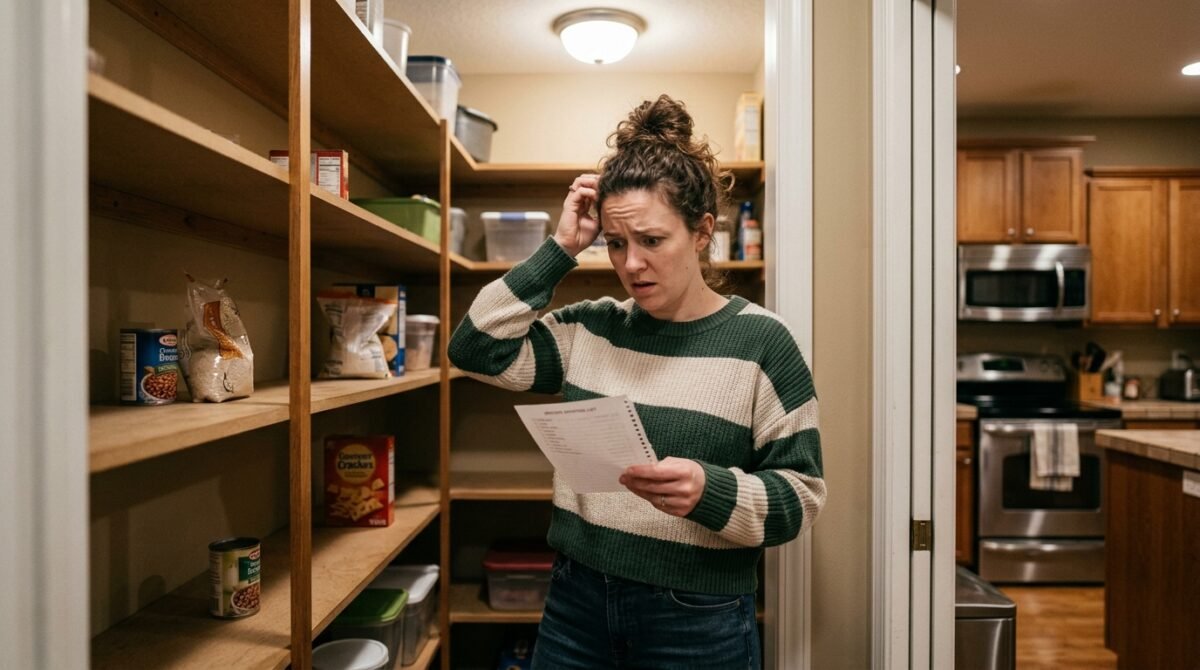
It began with the groceries. I pride myself on being a meticulous planner. Every Sunday, I sit down with my meal prep app, scan our inventory, and head to Costco. We are a two-person household, so a grocery bill of $200 usually lasts us comfortably through the week, with enough leftovers for lunch. But around the end of January, I started noticing discrepancies. The milk would be gone two days after a fresh gallon, the cereal was vanishing at an alarming rate, and the frozen pizza stash was perpetually empty.
When I mentioned it to Mark, he was dismissive. ‘I’ve been working late, I guess I’m just hungrier than usual,’ he’d say, never meeting my eyes. I felt like I was losing my mind, or perhaps dealing with a husband who had suddenly developed an insatiable appetite. I even checked the pantry, wondering if we had a mouse problem, though the mice in our neighborhood apparently preferred imported chocolate and organic granola bars.
“Mark, I’m serious. We are spending fifty percent more on food than we did last month. Did the price of eggs double overnight? I need you to look at the budget spreadsheet tonight.”
— Me, during the initial confrontation
He would always deflect, promising to be more mindful, yet the pattern continued. I started keeping a private tally, thinking maybe I was misremembering my purchases. It wasn’t until I found a half-empty bottle of soda I don’t drink hidden behind the detergent in the laundry room that I realized something was fundamentally wrong. Someone else was living in our house, and they were very bad at hiding their tracks.
The tension grew, a silent weight in the air between us. Every time I heard a floorboard creak upstairs, my heart would jump, and I’d assume it was Mark, but he was always sitting right in front of me. The gaslighting was subtle, but it was there, designed to make me doubt my own observations. I began to feel like a stranger in my own home, constantly questioning if I had simply forgotten to buy the supplies I was certain I had stocked.
I eventually started setting small traps. I would leave a specific brand of crackers on the counter, and by the next evening, they would be gone. I didn’t tell Mark. I wanted to see if he would confess. He never did. He just acted tired, irritable, and increasingly detached. The house felt like it was holding its breath, waiting for the inevitable moment when the illusion of our quiet life would shatter, and I would finally have to face the intruder eating my crackers.
The Basement Revelation

The tipping point came on a Tuesday afternoon. I had taken the day off work to deal with a plumbing issue, and the plumber needed access to the basement crawl space. When I walked down those stairs, the smell hit me first: a mixture of stale sweat, cheap body spray, and old takeout. It wasn’t the smell of a storage unit; it was the smell of a bedroom that hadn’t seen an open window in months.
My eyes adjusted to the dim light, and there it was. A full-sized mattress propped up against the wall, a laptop humming on a makeshift desk, and a small mountain of fast-food bags. My brother-in-law, ‘Golden Child’ Kevin, was fast asleep, wrapped in a blanket I recognized from our guest closet. The shock was so profound that I couldn’t even scream; I just stood there, paralyzed by the audacity of it all. How long had he been down here? How had Mark managed to hide this from me?
“Kevin? Are you serious right now? Get up. Get up right now and tell me why you are sleeping in my basement.”
— Me, the moment I discovered the intrusion
Kevin didn’t even look surprised. He just rubbed his eyes, looked at me with a mixture of annoyance and entitlement, and started complaining about how bright the lights were. He acted as if I were the intruder in his space, rather than the person whose mortgage paid for the roof over his head. The entitlement radiated off him like heat from a radiator. He didn’t even apologize; he just asked if I had any food upstairs.
I stormed back upstairs, my adrenaline spiked to levels I didn’t know were possible. I found Mark in the living room and didn’t even let him speak. I told him he had five minutes to explain why his brother was living in our basement, or I was walking out the door. The look on his face told me everything: he knew he was caught, and he knew he had absolutely no defense that would satisfy me.
He tried to plead the ‘family’ angle. ‘He’s just down on his luck, honey. My parents were so worried about him, and I didn’t want to stress you out.’ The irony of him being worried about my stress levels while secretly housing a grown man in our basement was almost laughable. It was the ultimate betrayal of trust, a secret kept not for my benefit, but to maintain his own version of a peaceful life where he could be the ‘good son’ to his parents and the ‘good partner’ to me, without ever having to actually be honest.
The Spreadsheet of Vengeance

I didn’t sleep that night. I sat at my computer, fueled by a rage so cold and sharp it felt like ice in my veins. I opened Excel and started a new sheet. I labeled it ‘Accountability.’ I went through every single bank statement, every credit card receipt, and every grocery bill from the last six months. I itemized everything: the electricity spikes, the water usage, the constant demand for premium snacks, and even the cost of the streaming services he was using while we were at work.
I was ruthless. If he ate a bag of chips, it went on the sheet. If I had to buy an extra bottle of detergent because he was doing his laundry on the sly, it was there. I calculated the average market rent for a room in our neighborhood, added a ‘convenience fee’ for the lack of notice, and totaled it all up. The number was eye-watering. It was nearly $4,500. A staggering sum for a ‘few weeks’ of crashing on a couch.
When I finished, I formatted the spreadsheet into a crisp, professional invoice. It looked official, cold, and entirely objective. I added a ‘Terms and Conditions’ section at the bottom, stating that payment was due within 48 hours or legal proceedings would be initiated. I wasn’t going to just yell at them; I was going to treat this like a business transaction. If they wanted to treat my home like a hotel, they were going to pay the hotel fees.
“I’m not asking for an apology, Mark. I’m asking for reimbursement. I have spent thousands of dollars to keep your brother alive while he played video games in our house. Here is the bill. Send it to your mother.”
— My parting words to Mark before sending the email
The next morning, I printed five copies. I left one on the kitchen island, one on Mark’s desk, and I scanned a digital copy and sent it to my mother-in-law. I didn’t CC my husband. I wanted her to see the bill, see the breakdown, and realize that I was not the naive daughter-in-law she could push around. The silence that followed was deafening.
I went to work as if nothing had happened, though my hands were shaking. I knew the moment she opened that email, the bomb would drop. I didn’t care. I felt a strange sense of liberation. For six months, I had been a pawn in someone else’s game of family politics, and now, I was the one holding the board. The power dynamic had shifted, and I was ready for whatever chaos ensued.
The Group Chat Explosion
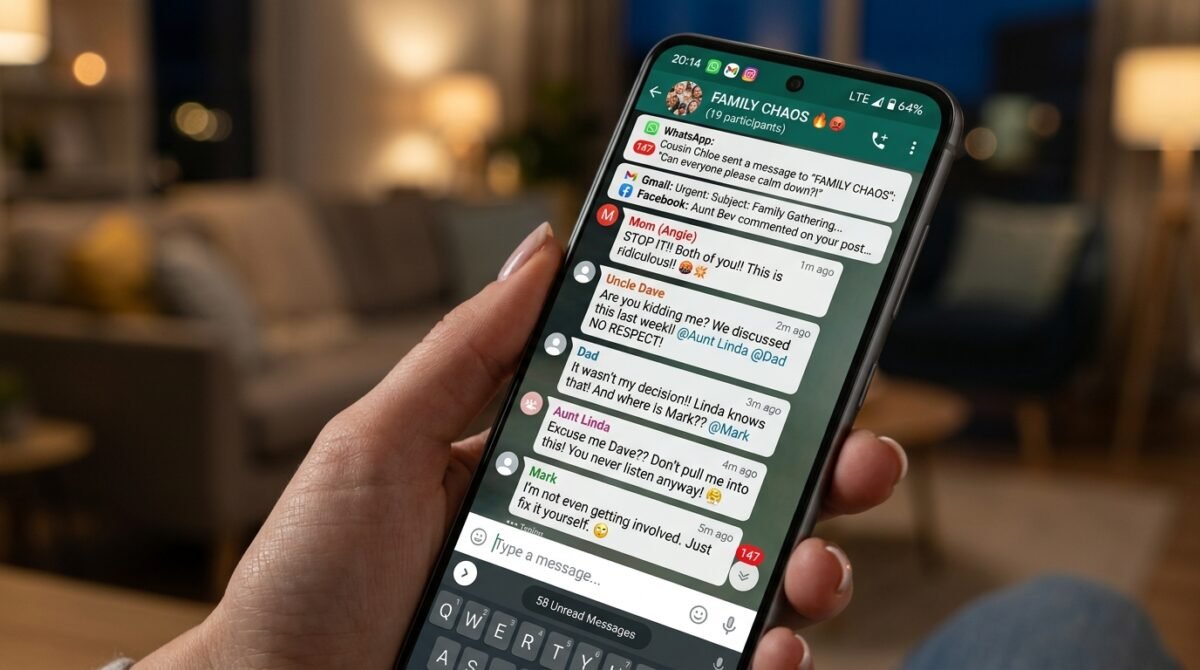
It took exactly three hours for the family group chat to explode. My phone started vibrating incessantly. My mother-in-law, my sister-in-law, and even an aunt I barely knew were all chiming in. They weren’t asking for clarification; they were accusing me of being a cold-hearted money-grubber who didn’t understand the value of ‘family support.’ They claimed that Kevin was going through a ‘hard time’ and that I should be ashamed of myself for charging him.
I read through the messages with an almost morbid fascination. It was a masterclass in gaslighting. They turned the victim into the villain, claiming that my ‘lack of charity’ was the real problem. They didn’t mention the secrecy, the lying, or the fact that I had been paying for their golden child’s lifestyle without my consent. They only focused on the dollar amount, which they deemed ‘insulting’ and ‘petty.’
“I can’t believe you would do this to Kevin. He’s family. We help our own. You are acting like a stranger who doesn’t care about the bond we share. This is disgusting.”
— My Mother-in-Law, via the family group chat
I didn’t argue back. I simply replied once, stating that the invoice was for services rendered and that the basement was no longer available for occupancy as of 5:00 PM that day. Then, I muted the chat. I didn’t need to see the rest of the vitriol. I knew how they functioned—they relied on shame to keep everyone in line, and I was no longer interested in playing that game. The silence from Mark was the most telling part; he hadn’t said a word in the chat, likely terrified of being caught in the crossfire.
By the time I got home, the house was tense. Kevin was still there, sitting on the basement floor, looking like a deer caught in headlights. He had clearly been told to leave, but he had nowhere to go. It wasn’t my problem. I walked past him without a word, grabbed a laundry basket, and started clearing out the rest of his things. I didn’t throw them out; I packed them neatly into trash bags and put them by the front door.
I felt a deep sense of relief as I worked. This wasn’t about the money anymore. It was about reclaiming my agency. The house, which had felt so contaminated for months, suddenly started to feel like my own again. I opened the basement windows to let the stale air out, scrubbed the floor, and started planning how I would transform the space into a home gym. I was done with the secret, done with the ‘golden child,’ and done with the expectations of a family that didn’t respect my boundaries.
The Midnight Confrontation

Mark finally confronted me that night. He was panicked, his face pale and eyes wide. He told me that his mother had called him in tears, claiming I was destroying the family. He tried to convince me to withdraw the invoice and let Kevin stay for ‘just another month’ so he could find a real job. He didn’t seem to understand that the issue wasn’t the money or the job; it was the fact that my home had been turned into a staging ground for a secret without my permission.
I looked at him, really looked at him, and realized that our relationship had been built on a foundation of his fear of his parents. He was a good person in many ways, but he was a spineless one when it came to his family. I told him that if he wanted to support his brother, he was welcome to do so—but not in our home, and not with my money. The ultimatum was clear: he could be my partner, or he could be his parents’ lackey. He couldn’t be both.
“You chose to lie to me for months. You chose to let your brother walk all over our space. I am choosing to end this. You have to decide who you are married to: me, or your mother’s expectations.”
— Me, during the final argument
He didn’t have an answer. He just cried. It was heartbreaking, but it was necessary. I told him he had to call his mother and tell her that Kevin had to leave immediately, or I would be staying at a hotel. I wasn’t bluffing. I had already packed a bag. The weight of the situation felt like it was finally shifting off my shoulders and onto the people who had created the problem in the first place.
He finally picked up the phone. It was the most difficult conversation I’ve ever witnessed. He had to stand up for us for the first time in his life. He didn’t do it perfectly, but he did it. He told his mother that we were a team and that the arrangement was over. The screams coming from the other end of the line were audible even from across the room. She was furious, but for once, it didn’t matter.
The shift in the room was palpable. Kevin, hearing the conversation from the hallway, stood up, grabbed his bags, and left without saying a word. He didn’t look at us. He didn’t thank us for the months of free rent, food, and utilities. He just walked out the door and into the night. It was the most satisfying thing I had ever seen. The intruder was gone, and for the first time, our home was just ours.
The Aftermath and the New Normal

The weeks following Kevin’s departure were the quietest of my life. My in-laws stopped calling, and for the first time in years, I didn’t feel the need to check my phone with dread. Mark and I had to do some serious work on our relationship. We went to therapy, and we had some very difficult conversations about boundaries, honesty, and what it meant to be a married couple. It wasn’t easy, and there were times I wondered if we could ever recover the trust that had been broken.
I kept the invoice as a reminder. I didn’t get the money, of course—I knew I never would. But that wasn’t the point. The point was the act of drawing the line. It proved to me that I was capable of standing up for myself, and it proved to my husband that his family was not the center of our universe. We started a new tradition of Sunday dinners, just the two of us, where we talked about our week and our goals, instead of obsessing over family drama.
“I realized that I spent so much time trying to be the ‘perfect’ daughter-in-law that I forgot to be a person with rights. The basement invoice was the loudest thing I could do to wake up my own life.”
— My reflection during a therapy session
We saw my in-laws at a distant cousin’s wedding a few months later. They ignored me entirely, which was a relief. I didn’t want their approval anymore. I wanted their absence. Mark was stiff and awkward around them, but he didn’t apologize for my behavior, and he didn’t try to make excuses. He just stood by me. That, to me, was worth more than any apology they could have offered.
The basement is now a beautiful home gym, complete with a yoga mat and a stationary bike. Every time I walk past it, I’m reminded of the time my life felt like a chaotic mess, but now it feels like a sanctuary. It’s amazing how much space you have in your heart and your home when you clear out the people who don’t belong there. I’m not the same person I was before the basement incident, and I don’t think I’ll ever be again.
I learned that boundaries aren’t just something you ask for; they are something you enforce. You don’t need permission to say no to people who use you, and you don’t need a committee of family members to justify your right to a peaceful life. I’m happier than I’ve ever been, and our marriage, while not perfect, is stronger than it ever was when we were living under the shadow of his family’s expectations.
Reddit Weighs In: The Verdict of the Internet

I posted my story on a popular forum, expecting a mixed reaction. I didn’t expect the overwhelming wave of support. Thousands of people commented, sharing their own stories of boundary-crossing in-laws and ‘golden child’ siblings. It turned out I wasn’t alone in the struggle to define where the marriage ends and the extended family begins. The internet, for all its faults, was a mirror for my own frustration.
“NTA. You didn’t just charge them for groceries; you charged them for the mental labor of managing their incompetence. The invoice was a boundary, not a bill. Never apologize for protecting your sanity.”
— u/BoundariesAreCool (Top Comment, 32.1k upvotes)
Others were more critical, suggesting I should have just kicked him out instead of playing the ‘accountant.’ But most understood that the invoice was a psychological tool. It was the only way to make them see the reality of what they were doing without me having to scream it. It was a way to quantify the invisible labor I had been doing for months. The community debate was intense, with people arguing over the legal implications of ‘charging’ family members, but the consensus was clear: I was not the one in the wrong.
“This is a classic case of ‘if you don’t set a price, they’ll name it for you.’ You made them pay the price of admission to your life. Good on you for not backing down when the family guilt-trip machine started running.”
— u/FamilyDramaExpert (15.2k upvotes)
Reading these comments helped me realize that my reaction wasn’t crazy. It was a rational response to an irrational situation. I felt validated in a way that I hadn’t felt in months. The Reddit community acted as a sounding board, helping me work through the lingering guilt that the family had tried to instill in me. It reminded me that just because someone is ‘family,’ that doesn’t grant them a free pass to exploit you.
I think the reason the story resonated so much was because everyone has a ‘Kevin’ in their life—someone who thinks the rules of adulthood don’t apply to them, or a family that expects the world from you while giving nothing in return. Seeing people react to my story with such passion showed me that we are all tired of the pressure to be ‘nice’ at the expense of our own well-being. It was a turning point in how I viewed my place in the world.
The Financial Breakdown
For those who were curious about the math, I put together a simplified version of the spreadsheet. It wasn’t about trying to make money; it was about showing them the tangible cost of their ‘free’ stay. I wanted them to see that every bag of chips, every light left on, and every extra gallon of water added up to a significant financial burden on our household.
| Item | Quantity | Total Cost |
|---|---|---|
| Groceries/Snacks | 6 Months | $2,800 |
| Utilities (Electric/Water) | 6 Months | $950 |
| Laundry/Cleaning Supplies | 6 Months | $300 |
| Room Rental Value | 6 Months | $450 |
| Total | – | $4,500 |
The reaction to the table was interesting. Some people thought I was being petty, while others thought I was too generous, arguing I should have charged a higher ‘cleaning’ fee for the mess left behind. Regardless of the exact figures, it served its purpose. It was a visual representation of the burden I had been carrying. Seeing it written down made the emotional abuse feel like a tangible, solvable problem.
I don’t regret the breakdown. I think it was necessary to show Mark that this wasn’t just a small, negligible thing. It was a massive drain on our resources, both financial and emotional. It was a concrete way to say, ‘Look at what you allowed to happen to us.’ It was the final step in my journey of reclaiming my life and my marriage, and I would do it again in a heartbeat if I ever found myself in a similar position.
The Lessons Learned

Looking back, the biggest lesson I learned was that silence is the enemy of boundaries. By trying to keep the peace, I allowed a situation to fester until it became untenable. I thought I was being a ‘good’ person by staying quiet and absorbing the cost, but all I was really doing was enabling behavior that was disrespectful to me and my marriage. I learned that being ‘nice’ is not the same as being ‘kind,’ and sometimes the kindest thing you can do for everyone involved is to be brutally honest.
I also learned that your marriage must be your priority, even over your extended family. Mark and I had to learn how to be a team, which meant he had to learn how to put me first, and I had to learn how to trust him to do that. It wasn’t a one-time fix, but a daily commitment to transparency and mutual respect. We’ve become much better at discussing things before they become problems, and we’ve learned to say ‘no’ to family when necessary.
“Boundaries aren’t walls to keep people out; they’re gates to let people in on your terms. I finally learned how to close the gate when it’s time for rest.”
— My concluding thought on personal growth
I don’t think I’ll ever have the same relationship with my in-laws, and that’s okay. I’ve realized that I don’t need their validation to be a successful, happy person. I’ve found my own support system of friends who respect my boundaries and value me for who I am, not for what I can do for them. The experience, while painful, was a necessary growing pain that ultimately led to a stronger, more authentic version of myself.
I hope that if anyone is reading this and feeling stuck in a similar situation, they know they have the power to change it. You don’t have to be a victim of your circumstances. You have a voice, and you have the right to use it. You don’t owe anyone your home, your money, or your sanity. Protect what is yours, and don’t be afraid to send an invoice—even if you know they’ll never pay it.
What Would You Do?

I often wonder how other people would have handled the situation. Would you have been as patient as I was for those six months, or would you have reacted sooner? Is there a point where ‘family’ ceases to be a valid excuse for poor behavior? I’m genuinely curious to hear your take, especially those of you who have had to deal with your own ‘golden child’ relatives or overbearing in-laws.
Was I too harsh with the invoice, or was it the only way to communicate with people who refused to listen? Would you have stayed in the relationship if your spouse had been as passive as Mark was? These are questions I still ask myself sometimes, even though I know the answer for me. I think the most powerful thing we can do is share our experiences so that no one else has to feel alone in their struggle to set boundaries.
“Have you ever had to send an ‘invoice’ or an ultimatum to family to get them to respect your space? What happened? Let’s talk about it in the comments below.”
— Invitation to readers
I’m finally at a place where I can look back on this with a sense of humor, though it took a long time to get there. It’s funny how a basement, a mattress, and a bag of chips can lead to such a massive shift in one’s life. It just goes to show that life’s biggest lessons often come from the most unexpected and absurd places. I’m grateful for the experience, as hard as it was, because it made me the person I am today: someone who doesn’t take ‘no’ for an answer when it comes to my home and my happiness.
So, please, tell me your stories. I want to hear the good, the bad, and the ugly. We’re all in this together, trying to navigate the complexities of family, marriage, and adulthood. Maybe by sharing our stories, we can all learn how to be a little bit better at protecting what matters most to us. I’ll be reading the comments, and I can’t wait to see what you have to say.
Conclusion
Reflecting on this journey, I realize that the ‘invoice’ was never really about the money. It was a tangible symbol of self-respect. In a family dynamic where I had long been relegated to the sidelines, sending that bill was my way of stepping into the center of my own life. It was a declaration that my home, my labor, and my emotional peace were not open for exploitation.
The aftermath—the distance from my in-laws, the hard work with Mark, and the reclaiming of my own space—has been a transformative experience. I learned that while we cannot control the behavior of others, we have absolute dominion over what we accept into our lives. Boundaries are not just suggestions; they are the guardrails that keep our lives from veering off into chaos.
I encourage everyone reading this to take a look at their own lives. Are there ‘golden children’ in your space, draining your resources while you stay silent to ‘keep the peace’? You have the power to break that cycle. You don’t have to be a martyr for the sake of family harmony. Your peace is valuable, and it is worth protecting at all costs. What is one boundary you’ve been afraid to set because of family pressure? Let’s open this up for a community discussion.
What's your verdict on this dilemma?
Vote below to contribute to the official community consensus.

Have a Dilemma Keeping You Up at Night?
Share your real-life feud, wedding chaos, or relationship crossroads anonymously with our editorial team.
What do you think ?
0 Comments🛡️ Comments are moderated to protect community integrity. Your comment will appear once approved by the editorial team.