
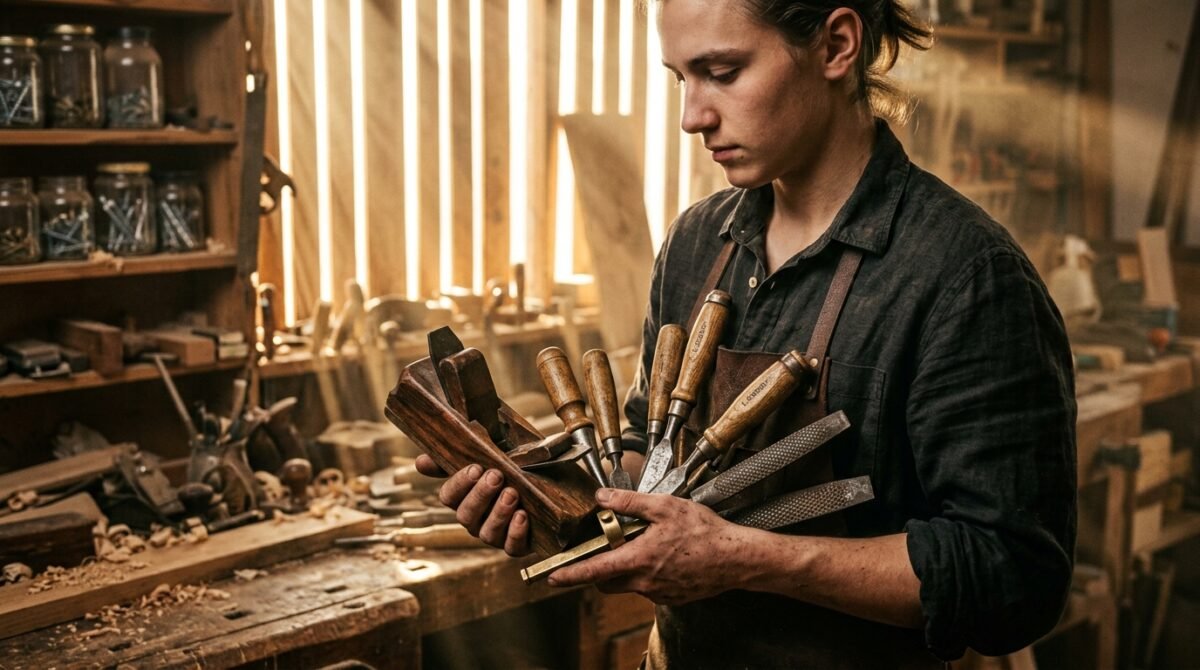
Growing up, my grandfather’s workshop was a sanctuary. It wasn’t just a shed; it was a cathedral of craftsmanship where the scent of cedar and oil hung heavy in the air. He was a master cabinet maker, and his tools—hand-forged chisels, custom-honed planes, and heirloom-quality saws—were his legacy. When he passed, he left the entire collection to me, knowing I was the only one who truly understood the weight of the steel in my hands. My sister, Clara, never cared for the workshop. To her, it was just a dark, spider-web-filled room that smelled like ‘old man.’
That changed last Tuesday. I returned from a weekend work trip to find the shadow-boxes empty. My workbench, usually pristine, was cluttered with empty soda cans and a crumpled flyer for a pop concert happening in the city. The realization hit me like a physical blow: the tools were gone. Every single one of them. I checked my bank account, thinking perhaps she had borrowed them and then tried to sell them, but there was nothing. A quick check of her social media confirmed my worst fears: photos of her wearing an expensive outfit at the concert, captioned with the phrase ‘Everything happens for a reason!’ followed by a grinning emoji.
When I finally cornered her, the confession was as pathetic as it was infuriating. She hadn’t sold them to a collector; she had offloaded the entire lot at a local pawn shop for a measly fifty dollars. Her logic, delivered with a shrug that made my blood boil, was that I ‘wasn’t even using them’ and she ‘needed the money for a once-in-a-lifetime experience.’ She didn’t see the history. She didn’t see the sweat and the decades of patience. She saw fifty dollars of liquid cash.
The fury that consumed me wasn’t loud. It was cold, calculated, and sharp. She relied on her car for everything—her job, her social life, and her sense of independence. If she could treat my inheritance as disposable, I could treat her primary asset the same way. The moment she left for her shift at the coffee shop, I took the keys from the hallway bowl and drove the car three towns over to a secure storage facility I rented, tucked away under a tarp. The war had begun.
The Empty Workbench and the Concert Flyer
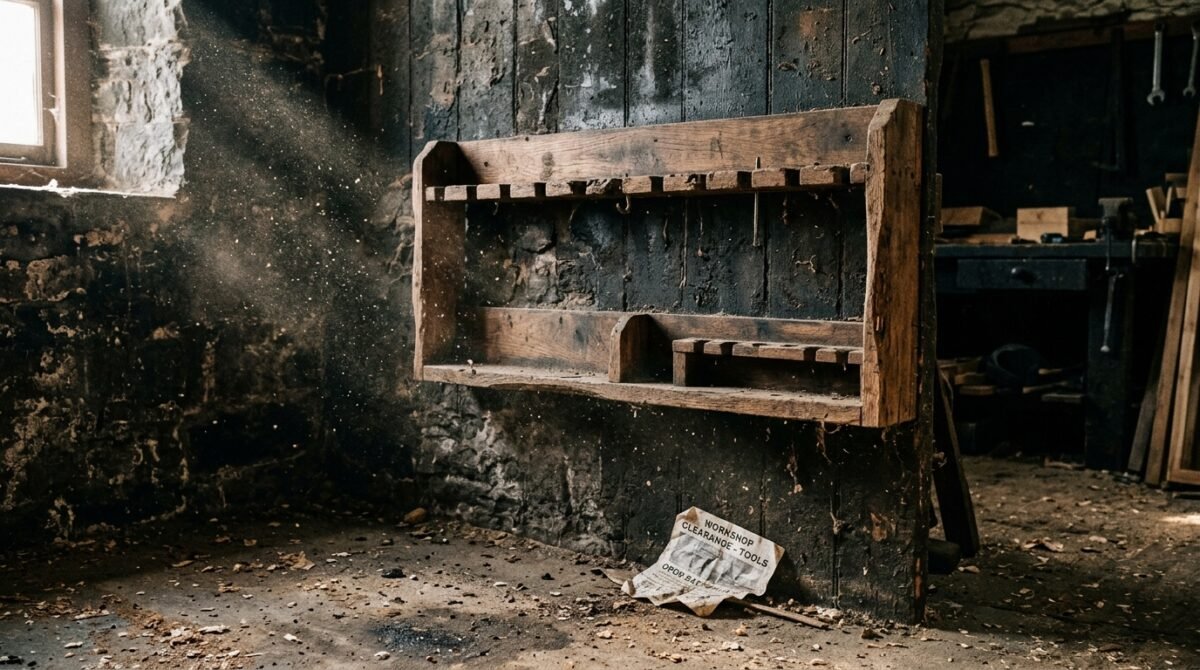
Standing in the center of the workshop, the silence was deafening. The empty tool racks looked like missing teeth in a smile. I touched the bare wood where the chisels had rested for thirty years. The sense of violation was absolute. My grandfather had spent his entire life curating those tools, teaching me how to sharpen them, how to respect the grain of the wood, and how to hold the mallet with purpose. To have that erased in a single afternoon for a concert ticket felt like a desecration.
I found the flyer crumpled under the workbench. It wasn’t just a concert; it was an exclusive festival pass. She had essentially traded a lifetime of family history for three hours of loud music and overpriced drinks. I didn’t want to believe it, so I checked the local pawn shop’s online inventory, though I knew the odds were slim. When I saw the photo of the collection listed under ‘Misc Hand Tools – As Is,’ my stomach turned over.
“You sold them for fifty dollars, Clara? Do you have any idea what those were worth? Not even in money, but in time?”
When she arrived home that evening, still buzzing with energy from her trip, she didn’t even try to hide it. She thought I would be impressed by her ‘hustle.’ She looked at me with a bewildered expression, as if I were the one being unreasonable for mourning a pile of metal. She had already spent the cash on an Uber and a cocktail. She kept reiterating that the tools were ‘just sitting there’ and that she felt like she was doing me a favor by clearing out the clutter.
The lack of remorse was the final straw. She didn’t just sell the tools; she invalidated my relationship with our grandfather. She viewed the house, the workshop, and the estate as a reservoir for her personal spending money. I realized then that talking to her was a waste of breath. She didn’t speak the language of respect; she only understood the language of consequence.
The Midnight Extraction
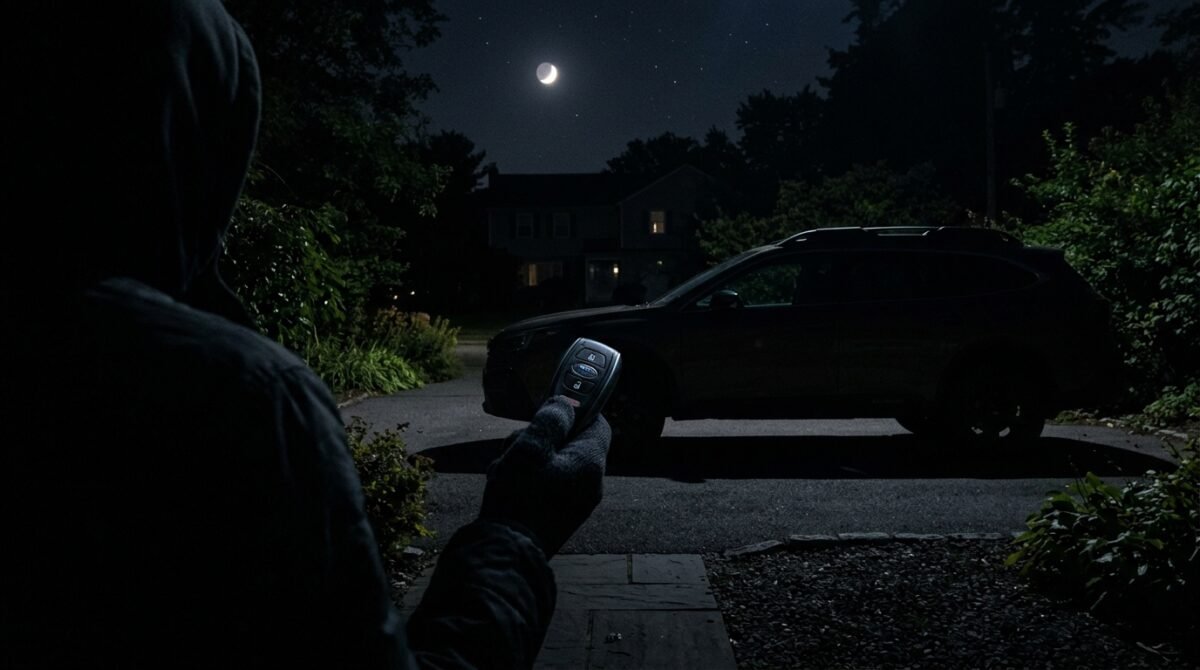
I didn’t sleep that night. I spent the hours pacing the kitchen, thinking about the car. It was a reliable, late-model sedan that our parents had helped her with, but the insurance and the maintenance were entirely her responsibility. She loved that car. It was her escape pod, her means of avoiding any real accountability. Taking it wouldn’t just be an inconvenience; it would be a complete disruption of her carefully curated lifestyle.
I waited until the house was dark. My movements were fluid, practiced, and silent. I went to the hallway and saw the key ring lying there, glinting under the motion-sensor porch light. I grabbed the keys, feeling the weight of the metal in my palm. It felt like a fair trade. I walked out to the driveway, the gravel crunching beneath my boots, and started the engine. It purred to life, unaware that it was being liberated from its owner.
Driving away felt like an act of reclamation. I had researched a storage facility earlier that day—somewhere far enough that she wouldn’t just stumble upon it, but close enough that I could monitor the situation. I parked the car, signed the rental agreement, and walked away with the keys tucked deep into my pocket. I knew the morning would be chaotic, but I was prepared.
When I arrived back at the house, I acted as if nothing had happened. I went to bed, listening to the muffled sounds of the house settling. I knew that by dawn, the realization would hit her. I wasn’t just taking her car; I was taking her sense of control. She had taken my history, so I was going to take her mobility. It was a cold, transactional exchange of pain.
The 8:00 AM Panic
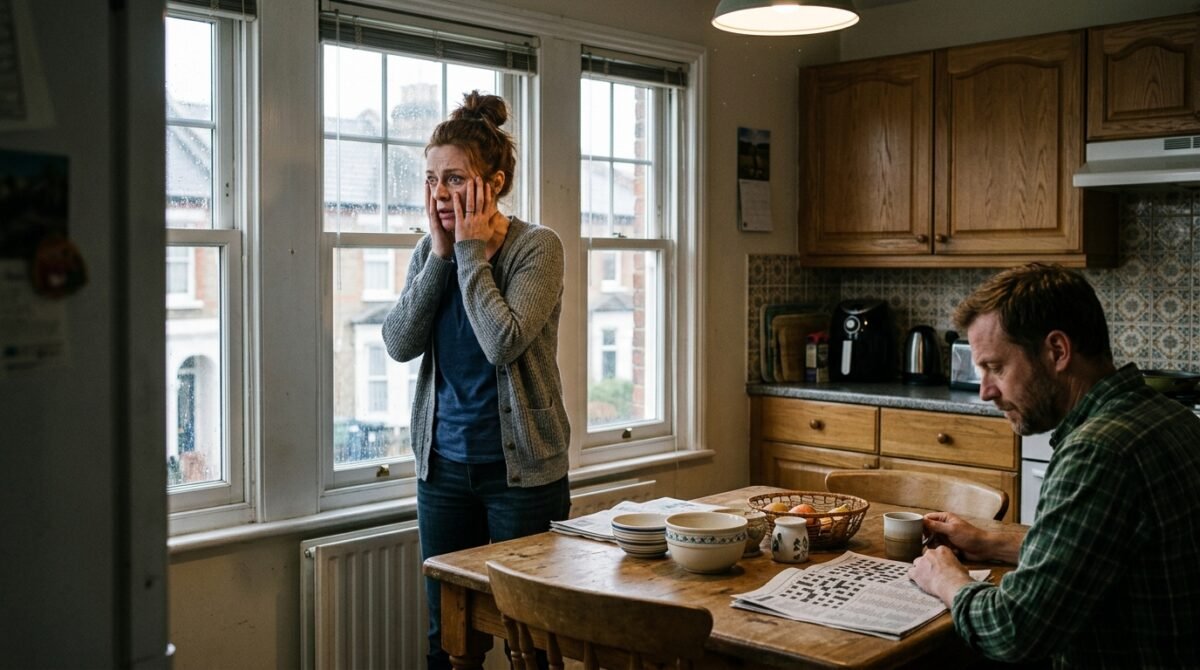
The alarm on her phone started ringing at 7:30 AM, but it was the silence of the driveway that eventually woke her up. I was sitting in the kitchen with a cup of coffee, reading a book, when the first scream echoed through the house. It wasn’t a scream of pain, but of pure, unadulterated confusion. She ran downstairs, her hair a mess, her phone already in her hand, dialing someone—probably her boyfriend.
I didn’t look up from my book until she stood directly in front of me, trembling. ‘Where is it?’ she demanded. ‘The car isn’t in the driveway. Did someone steal it? Did you call the police?’ I slowly turned a page and looked at her over the top of my glasses. I felt a strange sense of calm. The chaos she had created yesterday was being mirrored back to her, and for the first time in her life, she looked truly lost.
“The car is exactly where it needs to be, Clara. Just like the tools were exactly where they needed to be. You made a choice to trade what wasn’t yours, and now you have to deal with the consequences of that choice.”
She started to pace, her voice rising in pitch. She accused me of being insane, of being a thief, of destroying our family dynamic. She didn’t see the irony. She thought I was acting out of petty spite, completely ignoring the fact that she had effectively robbed me of the only thing I had left of my grandfather. She threatened to call the cops, but I just smiled. ‘Go ahead,’ I said. ‘Tell them you want to report a car stolen that I have a set of keys for and access to. See how that conversation goes.’
She stopped then, the reality sinking in. She knew she couldn’t involve the authorities without opening up a Pandora’s box about the tool sale. If she admitted I had a claim to the car, she had to explain why I felt justified in taking it. The silence that followed was heavy and thick with the weight of her own realization. She was trapped in the web she had spun herself.
The Escalating Text War
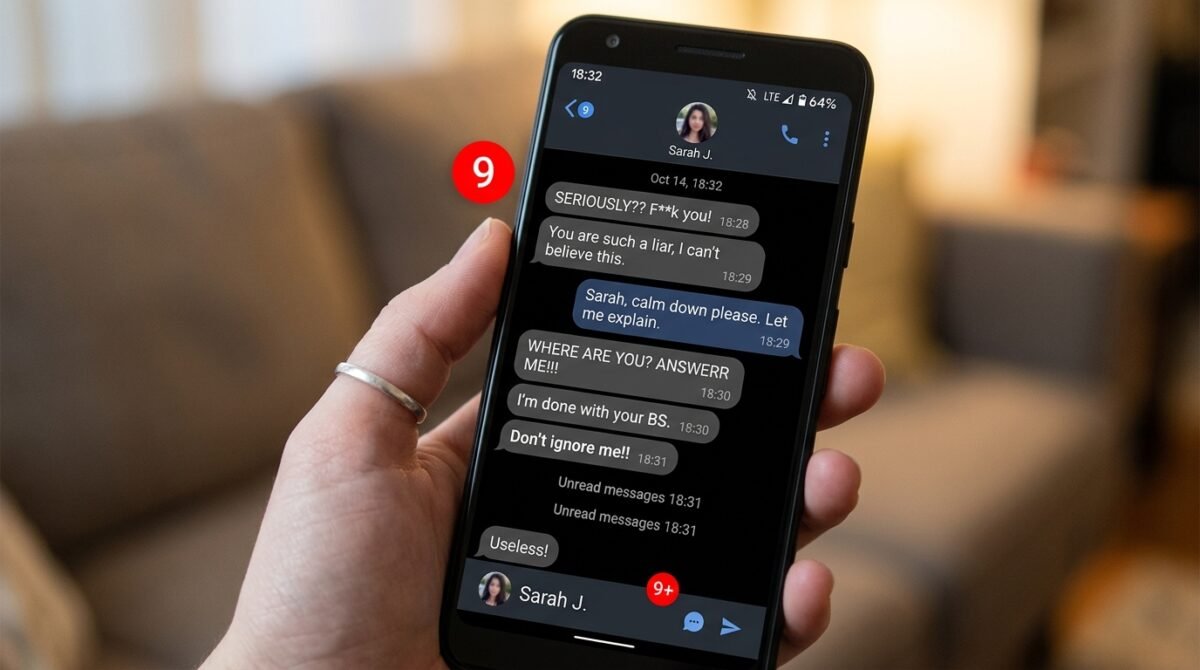
The next few days were a blur of digital hostility. She started blowing up my phone with messages, alternating between begging, screaming, and threatening. She claimed she had an interview for a new job, a social engagement that was ‘critically important,’ and that I was ruining her life. She tried to frame herself as the victim, ignoring the fact that she was the one who initiated the conflict. I didn’t engage with the emotional pleas; I only responded to the facts.
“You sold $2,000 worth of antique tools for $50. You can have the car back when I have the tools back, or the full market value of the tools in cash. Those are your two options.”
— My text response to her frantic messages
She tried to enlist our parents, but I had already called them. I sent them photos of the pawn shop inventory and the concert ticket stub. When they heard what she had done, they were horrified. My mother was particularly upset, as she remembered the afternoons my grandfather spent in the workshop with me. Clara didn’t have the support she thought she would have. She was isolated, left with nothing but her own sense of entitlement.
I kept track of her messages, watching her cycle through the stages of grief. She started with anger, then bargaining, then depression. I knew eventually she would hit acceptance, but she was still fighting it. She thought if she could just make enough noise, I would fold. She didn’t realize that for me, this wasn’t a tantrum; it was a boundary being reinforced with steel.
She even tried to call my employer, claiming I was ‘harassing’ her. When HR contacted me, I simply forwarded the text messages she sent admitting to the sale. The situation became professional, not just personal. She didn’t realize that in her quest to ‘get back at me,’ she was burning every bridge she had. I stayed silent, watching her destroy her own reputation, piece by piece.
The Pawn Shop Standoff
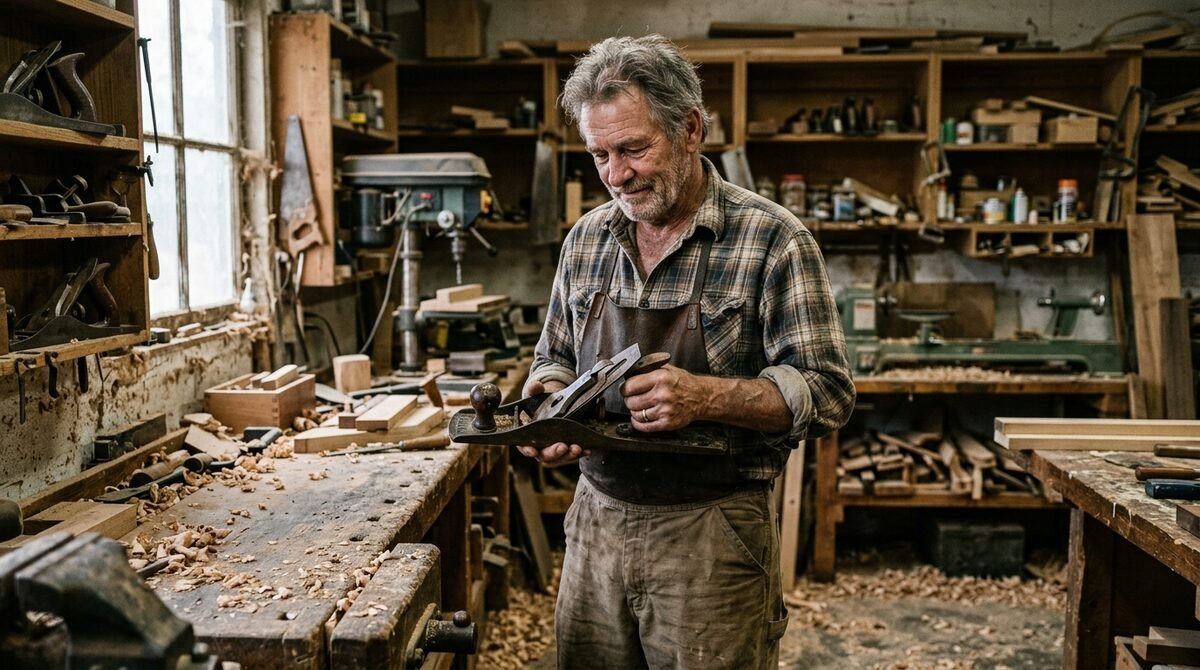
I finally decided to go to the pawn shop myself. I didn’t expect the tools to still be there, but I had to try. The shop was a dingy, dimly lit place that smelled of stale cigarettes. When I walked in, the owner looked at me with a bored expression. I explained the situation, showing him the photos of the tools and my grandfather’s original inventory log. He didn’t care about the sentimentality, but he did care about the law. He claimed he had already sold the majority of the collection to a private buyer.
My heart sank, but I didn’t show it. I demanded the name of the buyer. He refused, citing ‘privacy.’ I leaned on the counter, my voice steady. ‘You purchased stolen property,’ I said, ‘even if you didn’t know it was stolen at the time. I have the police report filed now, and they are going to want to know who you sold these items to.’ The threat worked. He grumbled, checked his ledger, and gave me a name.
It was a local carpenter—someone I actually knew. I left the shop and drove to his house. It was a long shot, but I hoped he hadn’t cleaned or modified them yet. When he answered the door, I explained the situation. He looked at the tools on his bench, clearly feeling bad. He had bought them in good faith, thinking they were just unwanted garage sale items. He offered to sell them back to me at his cost.
I paid the money, feeling a strange mix of relief and lingering anger. I had my tools back, but the cost had been high. Not just the financial cost, but the emotional drain of having to fight for something that was already mine. I looked at the chisels, their edges still sharp, and realized that while the tools were safe, the relationship with my sister was likely permanently altered.
The Unannounced Confrontation
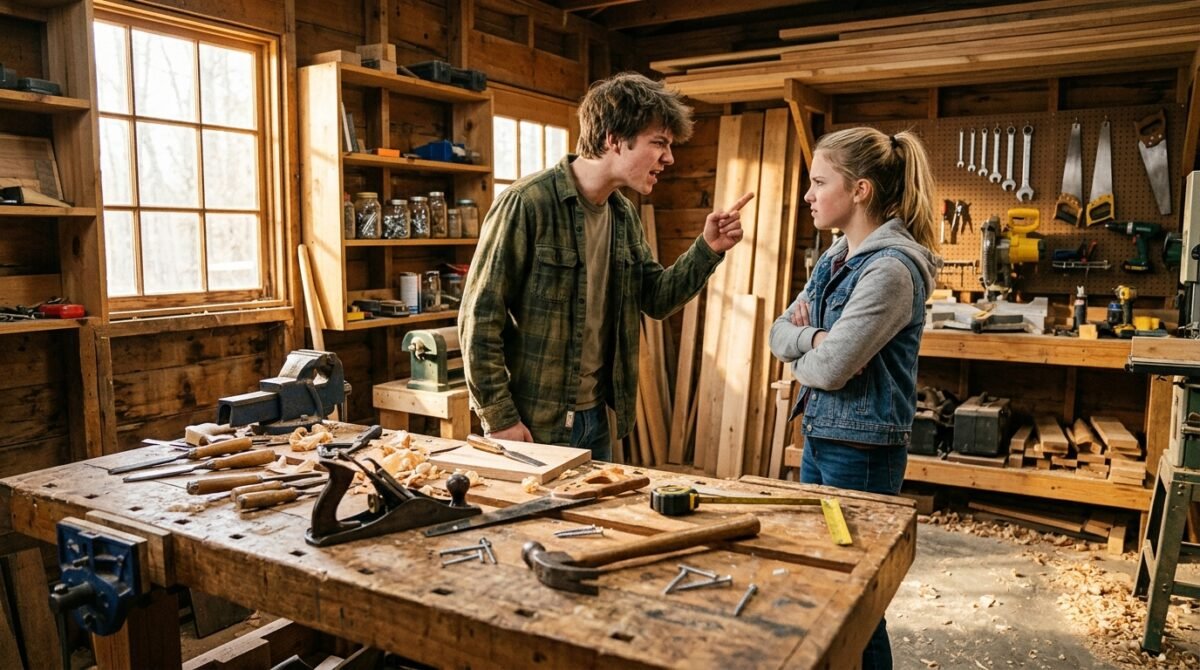
Clara showed up at the house unannounced, hoping to catch me off guard. I was in the workshop, cleaning the tools I had just recovered. She walked in, her face red, her hands shaking. She didn’t even look at the tools; she looked at me with pure hatred. She demanded the car keys, screaming that I was holding her hostage. I just kept working, the rhythmic sound of the cloth against the steel serving as a metronome for my resolve.
“You got your toys back. Now give me my keys. You don’t have the right to keep my property just because you’re angry about a stupid box of metal.”
I stopped what I was doing and looked at her. ‘These aren’t toys, Clara. They are the only things that connect me to the man who helped raise you. You sold them for a night out. You don’t get to demand anything from me until you understand the gravity of what you did. The car is staying where it is until you pay back the money you made from selling them, plus the cost of me buying them back.’
She froze. She hadn’t expected me to go through with buying them back. She thought I would just be angry. She didn’t realize that I was willing to put in the work to make things right. She started to cry, not out of remorse, but out of frustration. She didn’t want to pay; she wanted the situation to go back to how it was before, where she could act without consequence.
She eventually left, slamming the door so hard the photos on the wall rattled. I went back to work, feeling a strange sense of peace. For the first time, I felt like the power dynamic had shifted. I wasn’t just reacting to her; I was setting the terms. The air in the workshop felt cleaner, as if the space had finally been reclaimed from the toxic entitlement that had poisoned it for so long.
The Community Weighs In
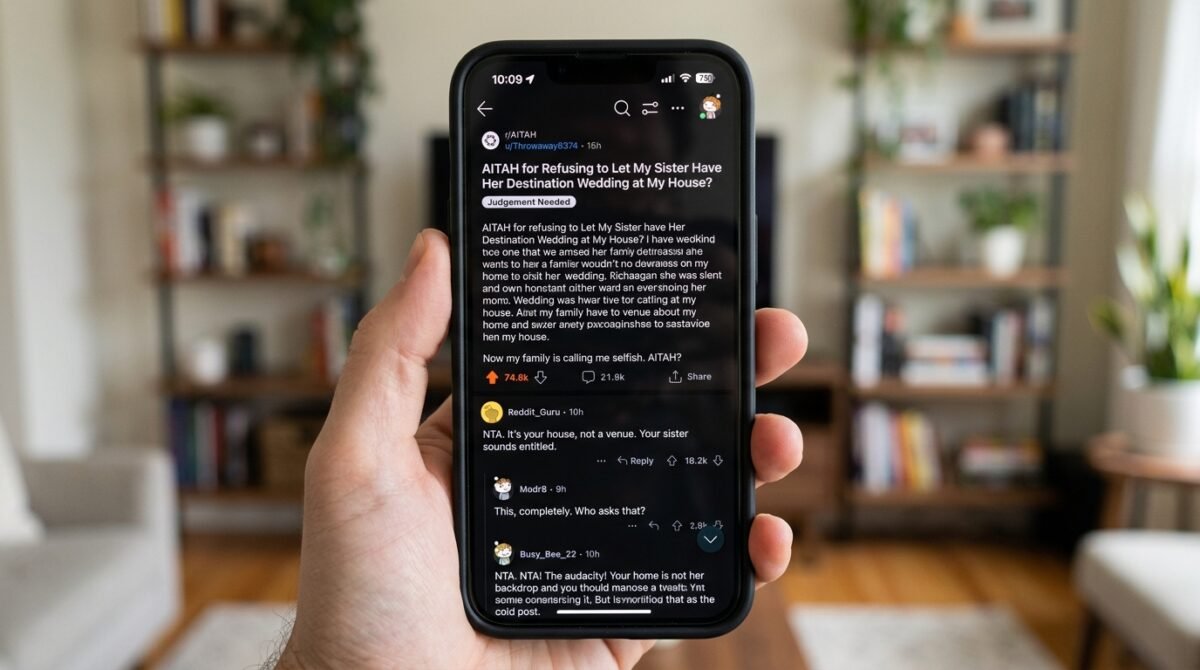
I finally posted about the situation on a popular sub-forum dedicated to family conflicts. I didn’t expect the response I got. Within an hour, there were hundreds of comments. Some people called me a hero, while others thought I was being too harsh. The debate was intense, reflecting the complex nature of family property and boundary setting. It was fascinating to see how many people had similar stories of siblings selling heirlooms for quick cash.
“NTA. Your sister sold your inheritance behind your back. That’s not just a ‘mistake,’ that’s a betrayal of trust. Taking the car was the only way to get her attention. Hold the line.”
— u/WoodworkerFan (Top Comment, 15.2k upvotes)
“ESH. She was wrong for selling the tools, but you holding her car hostage is basically theft. You should have gone through proper legal channels, even if it meant getting the police involved. Now you’re both in the wrong.”
— u/LegalEagle99 (10.1k upvotes)
Reading the comments helped me realize that while my actions might have been extreme, the context mattered. The people who supported me understood the value of the heirloom, while the ones who criticized me focused on the legal technicalities. It was a lesson in how different people perceive ‘property’ versus ‘history.’ I wasn’t looking for validation, but seeing the community split helped me see my own actions from a wider lens.
I realized that the ‘legal’ route would have been slow, expensive, and ultimately unsatisfying. The tools would have been lost in the bureaucracy of the pawn shop’s system. By taking the car, I created an immediate, tangible consequence that she couldn’t ignore. It was unconventional, perhaps even risky, but it was effective. The conversation in the comments section gave me the confidence to stick to my decision.
The Final Ultimatum
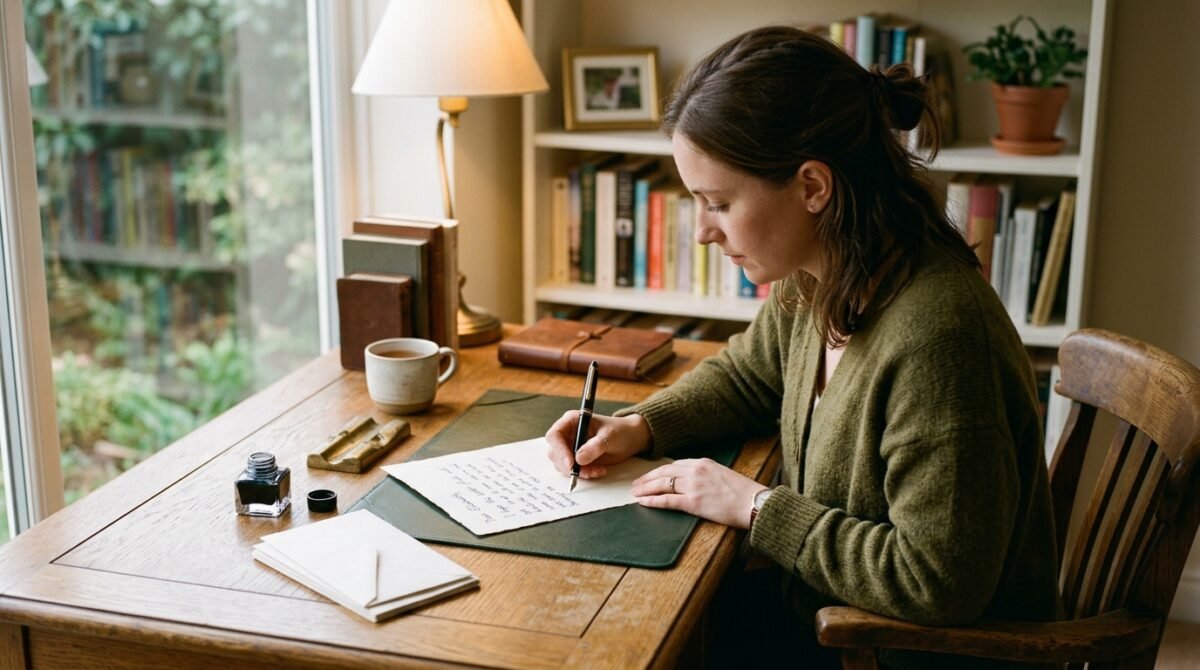
I decided it was time to end the stalemate. I sent her a formal letter, detailing the exact cost of the tools, the cost of the storage facility, and the expectation that she would pay me back before she saw her car again. I included the receipt from the carpenter. It was a business-like approach to a family disaster. I wanted to remove the emotion from the equation and focus on the cold reality of the debt she owed.
She didn’t respond for three days. I knew she was trying to find a way out, checking with friends and lawyers to see if she could force me to release the vehicle. When she finally texted me, the tone was different. It wasn’t angry or defensive; it was resigned. She knew she had lost. She asked how she could pay me back, suggesting a payment plan. I told her it had to be a lump sum or nothing.
“I don’t want a payment plan. I want the total. You had the money when you sold the tools; you can find the money to get your car back. I’m not your bank.”
She eventually borrowed the money from our parents, who had finally decided to intervene. They told her that this was the last time they would bail her out of a mess she created. It was a tough lesson for her, but I knew it was necessary. She paid me, and I gave her the keys to the storage facility. I didn’t meet her there; I just left the keys under the mat.
When she got the car back, she didn’t call or text. The silence was the best possible outcome. I didn’t want an apology; I didn’t think she was capable of one. I wanted the situation to be over, and for the tools to be back in their place. I had achieved both. The workshop was once again a place of peace, and the tools were back on their racks, waiting for the next project.
The Aftermath of the Silence
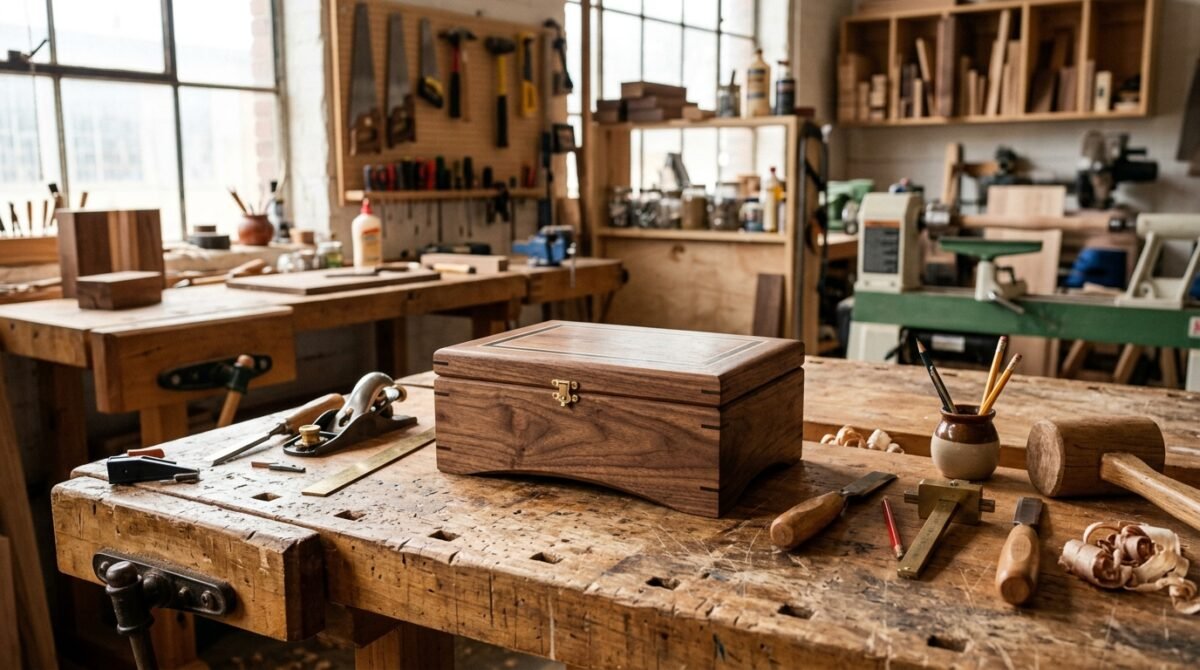
It’s been six months since the ‘Tool Wars,’ as my friends jokingly call them. Clara and I are in a state of polite, distant contact. We see each other at family holidays, but the intimacy is gone. I don’t trust her with anything of value, and she knows it. It’s a sad state of affairs, but it’s honest. I’ve realized that sometimes, in order to keep your own peace, you have to let go of the idea of a ‘perfect’ sibling relationship.
I’ve spent the last few months working on a new project—a jewelry box for my mother, using the tools I recovered. It’s been therapeutic. Every time I use one of the chisels, I think of the journey it took to get back here. I think of the workshop, my grandfather, and the choices I made. I don’t regret them. I stood up for what mattered, and in doing so, I learned a lot about my own capacity for resilience.
Clara is doing better, I think. She got a new job and seems to be taking more responsibility for her life. Maybe the lesson stuck, or maybe she just learned not to mess with my stuff. Either way, the dynamic has changed. I’m no longer the sibling she can walk all over. I’m the one who sets the boundaries, and she’s the one who has to navigate them.
People ask me if I’d do it again. The answer is simple: I would protect my history, no matter what it took. The tools weren’t just metal; they were a legacy, and I was the guardian of that legacy. I’m proud of the work I’ve done, both with the wood and with the difficult life lesson that came from this entire ordeal.
Reflecting on Inheritance and Entitlement
The core of this issue wasn’t the tools; it was the concept of entitlement. Clara grew up thinking that everything around her was communal property, something she could dip into whenever she felt a whim. She didn’t realize that respect is earned, and that inheritance isn’t just about the cash value—it’s about the significance of the objects. When we lose sight of the history behind our belongings, we lose a part of ourselves.
I’ve had a lot of time to think about the ‘right’ way to handle these situations. While my reaction was certainly drastic, it was the only thing that worked. It forced a conversation that she had been avoiding for years. It showed her that her actions had consequences that extended beyond just ‘oops, sorry.’ I hope that anyone reading this realizes that you don’t have to be a doormat in your own family.
Boundaries are only as strong as the person enforcing them. If you allow someone to cross your lines, they will do it again and again. I had to become the person who defended those lines, even if it meant being the ‘villain’ in someone else’s story. I’m comfortable with that role if it means preserving my peace and my legacy. The tools are safe, and that’s all that really matters.
As I move forward, I’m planning to build more, to create more, and to teach others about the craft my grandfather loved so much. The workshop is open again, and for the first time in years, it feels like it’s truly mine. The betrayal of the past has been replaced by the promise of the future, and for that, I am grateful.
Conclusion
The story of the stolen tools was never really about the fifty dollars. It was a collision of values: one person’s desire for immediate gratification versus another’s need to preserve a legacy. By taking a stand—however controversial—I was able to recover what was rightfully mine and, more importantly, establish a boundary that had been missing for too long. Sometimes, the most difficult paths are the ones we must walk alone to find our own strength.
What about you? Have you ever had to take drastic measures to protect an heirloom or a boundary within your family? Do you believe that some things are simply ‘off-limits’ regardless of the situation, or do you think everything is replaceable in the end? Share your thoughts in the comments below—I’m curious to see how you would have handled this messy chapter of my life.
What's your verdict on this dilemma?
Vote below to contribute to the official community consensus.

Have a Dilemma Keeping You Up at Night?
Share your real-life feud, wedding chaos, or relationship crossroads anonymously with our editorial team.
What do you think ?
0 Comments🛡️ Comments are moderated to protect community integrity. Your comment will appear once approved by the editorial team.