
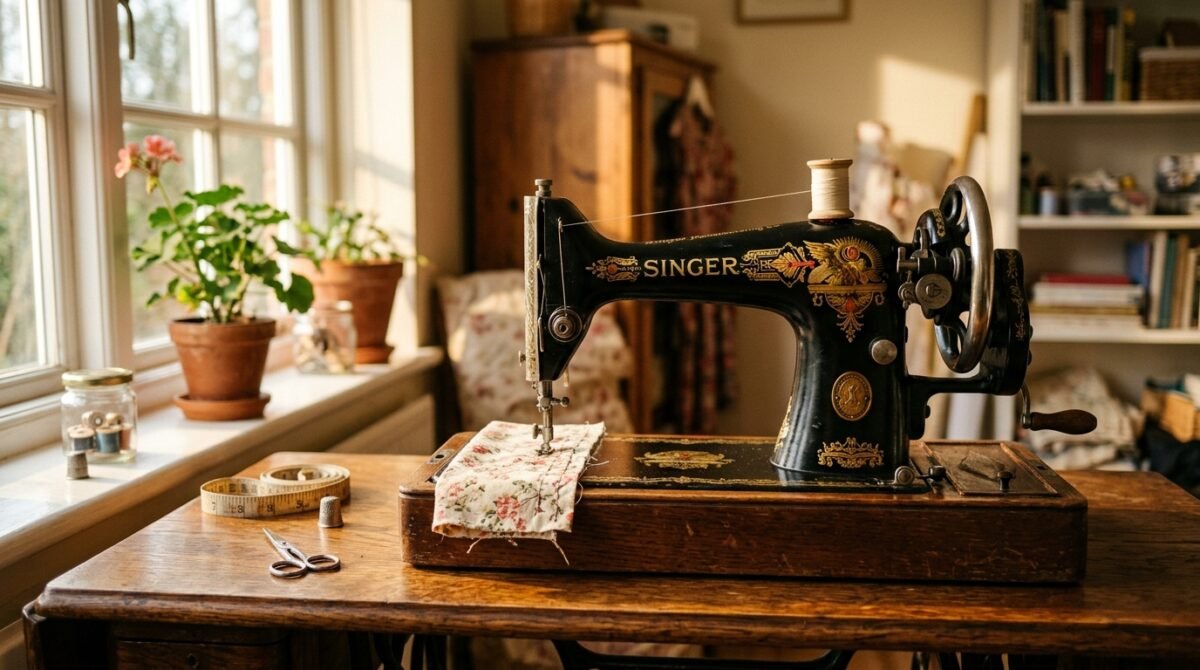
Inheritance is rarely just about the objects themselves. It is about the memories, the labor, and the identity etched into the wood and steel of the things we leave behind. My grandmother, Eleanor, was a master seamstress. Her custom-modified 1952 Singer sewing machine was her pride and joy—a machine that had stitched everything from my mother’s wedding gown to the modest, sturdy clothes she wore while raising us on a tight budget. When she passed away, the machine was left to me, not because I was the favorite, but because I was the only one who truly understood the weight of the needle.
My sister, Claire, never had much interest in sewing growing up. She was the one who complained about her itchy hand-knit sweaters and rolled her eyes at the hours of patience required to mend a hem. For years, she lived a life detached from our family’s modest textile history, pursuing trends and get-rich-quick schemes that rarely lasted more than a fiscal quarter. But when she saw the machine sitting in my sunroom, she didn’t see an heirloom; she saw a piece of equipment she could exploit for her latest, ill-conceived startup.
The moral dilemma didn’t arise overnight. It began with subtle comments about how ‘wasted’ the machine was, sitting idle as a display piece. It escalated when she announced her plans to start a ‘luxury’ dog clothing brand and decided, in her mind, that my property was essentially community property. The entitlement was cold, calculated, and entirely devoid of the respect I believed the machine deserved. What followed was a battle of wills that tested the very fabric of our sisterhood.
This story is a chronicle of boundaries crossed and a final, drastic decision that left our family in complete disarray. It is a testament to what happens when material greed collides with genuine historical preservation. As you read through the unraveling of these events, consider whether you would have handed over a piece of your history to someone who only viewed it as a tool for vanity, or if you, too, would have sought a way to ensure it was kept out of reach forever.
The Unannounced 9:00 AM Kitchen Intrusion
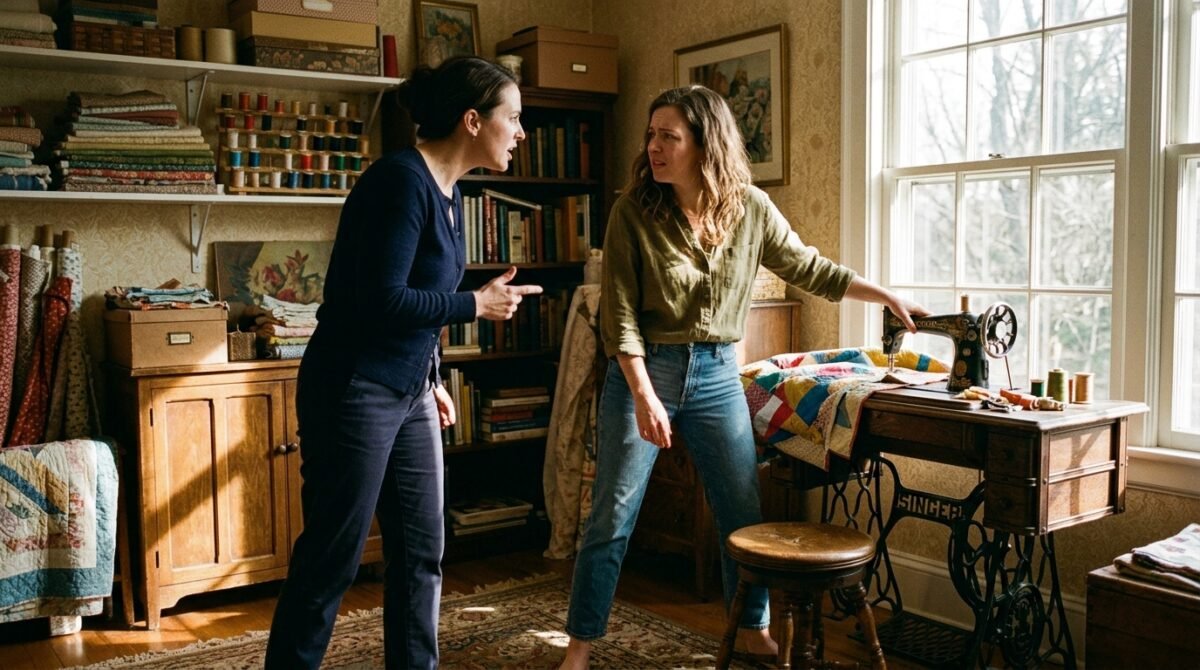
It was a Tuesday morning when the peace of my home was shattered by the sound of a key turning in my front door. I hadn’t given Claire a spare key in years, but she had kept one from a time when I was away on business, and apparently, she decided that period of trust was permanent. I walked into the living room to find her standing in my sunroom, running her hands over the mahogany cabinet of the Singer machine with a predatory gleam in her eyes.
I felt a cold spike of adrenaline. The machine was heavy, a piece of industrial art, and seeing her touch it felt like a violation of my grandmother’s memory. I didn’t greet her with warmth; I greeted her with the sharp, defensive posture of someone protecting a sanctuary. She didn’t even look guilty. She simply turned around, adjusted her scarf, and started the pitch as if she were speaking to a potential investor rather than her own sister.
“You know, it’s really a shame you don’t use this thing. It’s sitting here gathering dust while I’m trying to launch something that could actually make us money. Imagine: high-end, custom-stitched dog coats. This motor is perfect for heavy-duty denim. It’s basically just sitting here doing nothing.”
I stared at her, stunned. Her focus wasn’t on the heritage of the object or the hours my grandmother spent teaching me to thread the bobbin. It was entirely on the utility of the machine for her ‘dog couture’ brand. I realized then that to Claire, nothing was sacred. Everything was a commodity waiting to be monetized. I told her firmly that the machine was not for sale, not for rent, and certainly not for her to use for profit.
She didn’t take the rejection well. Her face hardened, the mask of the doting sister slipping away to reveal a sharp, impatient edge. She began to argue that because the machine was a ‘family item,’ she had as much right to it as I did. The irony was suffocating. She hadn’t visited Grandma in her final two years, citing ‘travel distance,’ yet here she was, claiming a stake in her most prized possession because it fit her business plan.
I stayed calm, but my voice was tight. I reminded her that the will was clear and the machine had been specifically bequeathed to me because I was the only one who kept the craft alive. She scoffed, calling it ‘sentimental hoarding.’ She left my house that day in a huff, but the look she gave the sewing machine as she walked out the door told me that this was not the end of the conversation. It was merely the opening move in a very ugly game.
The Escalating Pressure of the Family Group Chat

By that evening, the conflict had spilled over into the digital realm. The family group chat, usually reserved for birthday wishes and holiday photos, turned into a battlefield. Claire had clearly been busy painting a narrative that positioned me as the selfish sibling holding onto an object out of spite, rather than a genuine appreciation for our history.
“I just think it’s sad that [OP] is willing to let a piece of family history rot in a corner while I’m trying to build a business that honors our family’s work ethic. It’s really about what Grandma would have wanted—her legacy to continue, not to be a museum piece.”
— Claire, Family Group Chat
My mother chimed in, attempting to play the role of the mediator, but her words felt like a soft weight pulling me into submission. She urged me to ‘just let your sister borrow it for a few months’ to see if her business took off. It was a classic trap: once that machine entered Claire’s studio, it would never come back. I knew her work ethic—it was erratic and prone to leaving expensive messes in its wake.
“It isn’t a museum piece, Mom. It’s a precision instrument. Claire doesn’t even know how to oil the bobbin housing. She wants to run cheap fabric through a machine that was built for industrial silk. It would be ruined in a week.”
— My reply in the Group Chat
The back-and-forth went on for hours. My cousins joined in, some siding with Claire because they liked the idea of ‘supporting family business,’ and others staying silent. The pressure was mounting. I felt isolated, forced into a position where I had to justify my ownership of something that was rightfully mine. I stopped responding after a while, knowing that every word I typed was being screenshotted and used against me.
I looked at the machine again that night. I realized that keeping it at home was no longer safe. Claire had a key, and she was clearly desperate enough to ignore my boundaries. The entitlement was reaching a fever pitch, and I needed a solution that removed the temptation entirely. I wasn’t going to let this machine be the cause of further family division, but I also wasn’t going to let it be destroyed by someone who didn’t respect it.
I spent the night looking for alternatives. I didn’t want to sell it; that would make me just as transactional as my sister. I wanted it to be preserved in a place where people would understand its value, somewhere beyond the reach of Claire’s grasp. That was when I remembered the local historical society’s textile museum. They had been looking for period-accurate equipment for their gallery.
The Midnight Logistics of an Inheritance Removal
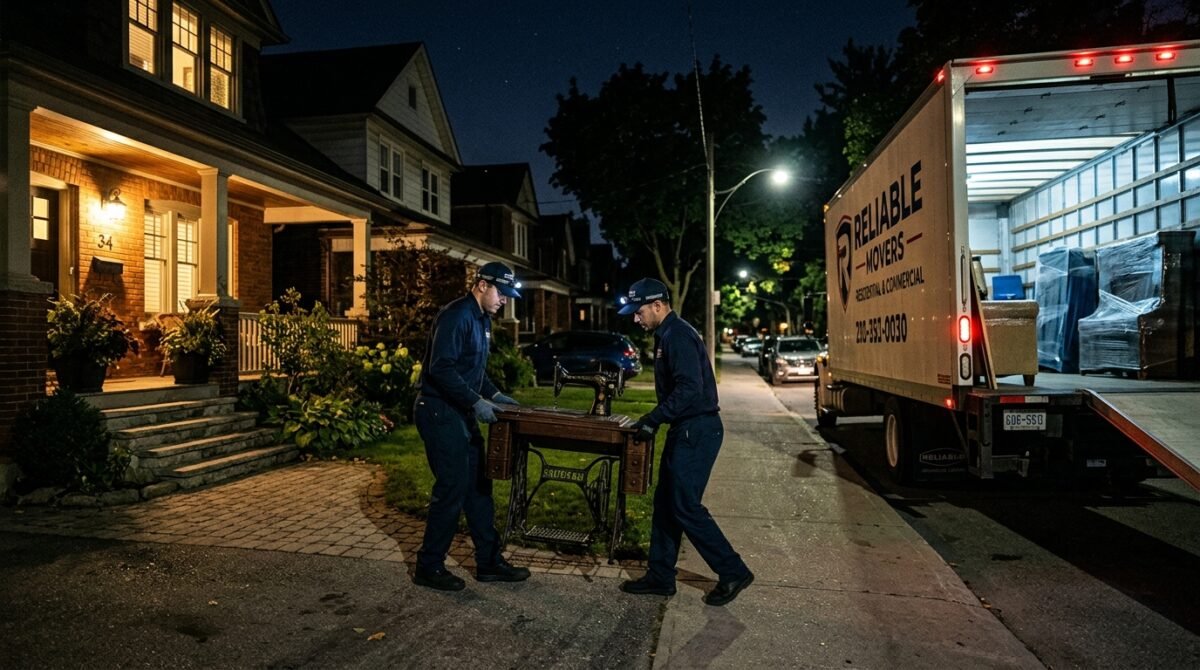
Executing the move had to be precise. I knew if I waited until morning, Claire would likely show up again with her boyfriend and a truck, ready to ‘liberate’ the machine by force. I didn’t want a public scene, and I certainly didn’t want to involve the police if I could avoid it. I called a professional moving company that specialized in fragile antiques—people who understood that this wasn’t just a piece of furniture, but a mechanical legacy.
At 3:00 AM, the crew arrived. I watched, heart pounding, as they wrapped the machine in industrial-grade padding and secured it onto a dolly. There was a strange sense of relief, mixed with profound sadness. I was moving the heart of my home to protect it from my own blood. It felt like an admission of defeat, but at the same time, it felt like the only way to win the moral argument.
By 5:00 AM, the machine was safely tucked away in the temperature-controlled storage vault of the museum, awaiting the curator’s review for their upcoming exhibit on local craftsmanship. I felt a surge of triumph. I was no longer the selfish sister holding onto a ‘dusty antique.’ I was a benefactor, preserving a piece of local history for future generations. It was a masterstroke of boundary-setting.
I drove home in the dawn light, feeling exhausted but strangely light. I knew the fallout would be immense. Claire would eventually come over, she would find the house empty of her prize, and she would erupt. But I had prepared for that. I had the documentation from the museum, and I had the moral high ground. There was no way she could claim I had ‘hidden’ or ‘sold’ it for profit when it was sitting in a public institution.
The next morning, I sent a simple, short message to the family group chat. I didn’t apologize. I didn’t explain my reasoning beyond the fact that the machine had been donated to a place where it could be properly cared for. I wanted to see who would stand by the decision and who would fall into the trap of enabling my sister’s entitlement. I turned off my notifications and waited for the inevitable explosion.
The Tuesday Afternoon Meltdown
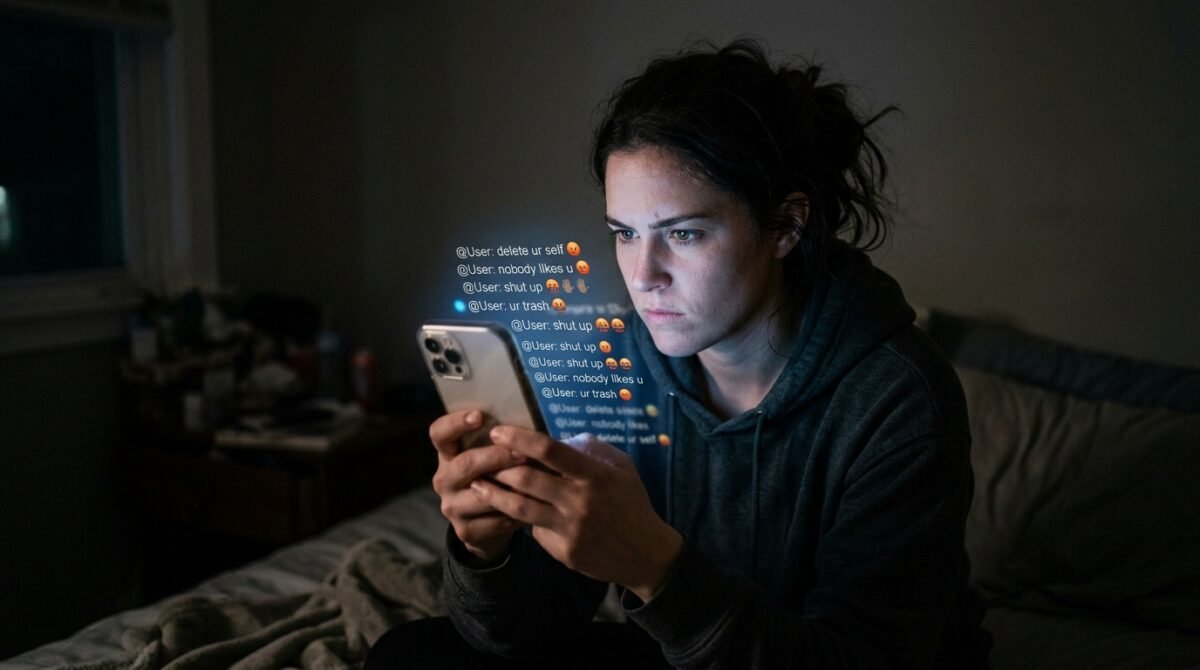
I didn’t have to wait long. By 10:00 AM, my phone was vibrating incessantly. I saw dozens of messages from Claire, followed by a frantic call from my mother. I didn’t pick up. I knew exactly what the script would be: accusation, guilt-tripping, and a sudden, feigned interest in ‘family heritage’ that only appeared when she was denied a toy.
When I finally opened the group chat, the toxicity was palpable. Claire had apparently driven over to my house, found the space where the machine used to be, and had a complete breakdown. She was calling me everything from a ‘spiteful snake’ to a ‘traitor to the family.’ She was claiming that I had destroyed the family bond over a ‘useless piece of metal,’ ignoring the fact that she was the one who had initiated the campaign of harassment.
“You took it away?! You actually took it away?! That machine was going to be the backbone of my company! You don’t get to decide what happens to family items! You are a selfish, petty brat who only cares about herself!”
— Claire, Family Group Chat
I responded with a singular, icy message that shut down the room. I attached the digital receipt of the donation, proving it wasn’t for sale, and that it was now public property. I emphasized that it was not a business asset to be exploited for dog costumes, but a memorial to our grandmother. The silence that followed was heavy, a physical manifestation of the realization that I had outmaneuvered her.
My mother’s messages changed tone immediately. She was confused, asking why I would do this without consulting the family. I told her that the machine was mine to dispose of as I saw fit, and that I chose a path of preservation rather than exploitation. It was a hard truth, and I knew it would alienate me from the side of the family that prioritized ‘keeping the peace’ over doing what was right.
The rest of the day was a blur of aggressive calls and ignored texts. I felt like I had stepped through a doorway into a new version of my life—one where I was no longer the ‘easy’ sibling. It was liberating to realize that I didn’t owe anyone access to my home or my heirlooms. I had set a boundary, and for the first time in my life, I had enforced it with teeth.
The Community Weighs In: The Reddit Verdict
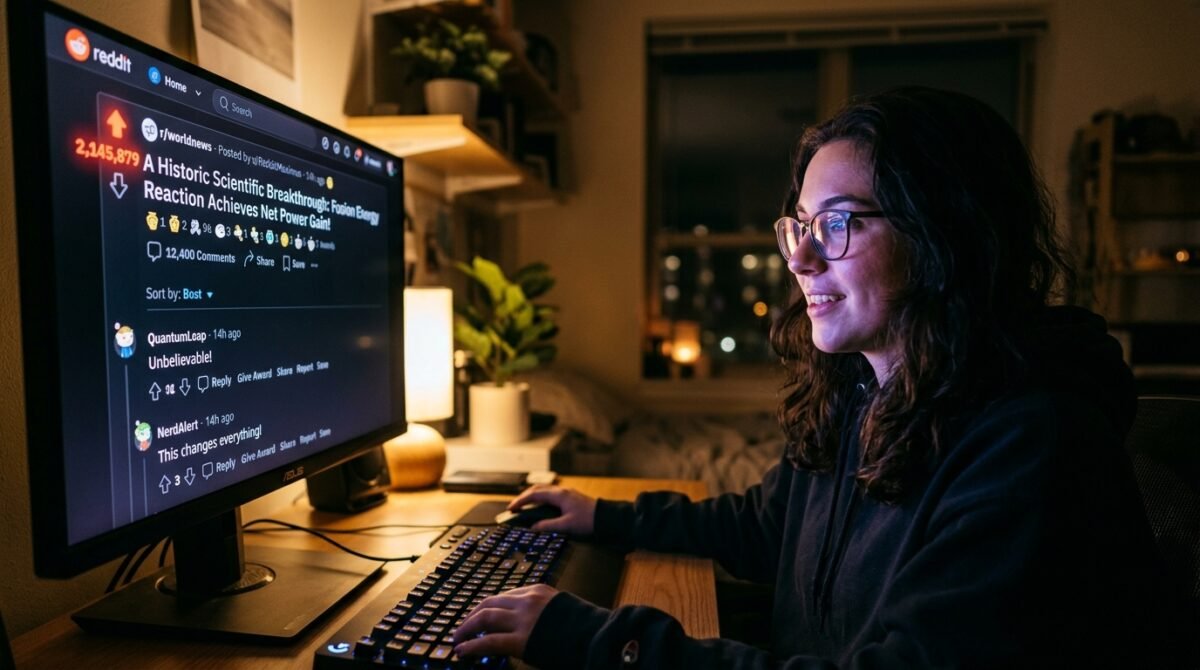
Naturally, I took to the internet to see if I was truly the villain in this scenario. I posted the situation in a popular relationship advice subreddit, omitting names but keeping the details vivid. The response was immediate and overwhelming. Thousands of people saw themselves in the story—either as the sibling who was always being taken advantage of, or as the person who had finally stood up to an entitled family member.
“NTA. Your sister didn’t want an heirloom; she wanted a free resource for a business she hadn’t even proven was viable. Donating it to a museum is the ultimate ‘power move’ because it preserves the history while taking away the temptation. You did the right thing.”
— u/FabricFanatic (Top Comment, 32.1k upvotes)
The consensus was heavily in my favor, though there were, as always, the contrarians. Some argued that I should have at least talked to the family first, but those comments were quickly buried by people pointing out that ‘family’ isn’t an excuse for theft or entitlement. The validation was exactly what I needed to stop doubting my choice.
“People who scream ‘family is everything’ are usually the ones who use that phrase to manipulate others into giving them what they want. She didn’t want the machine for the memories; she wanted it for the motor. You saved that machine from a terrible fate. Thank you for preserving history.”
— u/HistoryBuff88 (14.2k upvotes)
It was fascinating to watch the debate unfold. It became less about the sewing machine and more about the boundaries we draw with siblings who treat us like stores. The comments section became a support group for people who had dealt with similar ‘inheritance wars.’ It made me realize that I wasn’t alone in this, and that the guilt I was feeling was simply a conditioned response to a lifetime of being told to ‘be nice.’
I spent hours reading the advice. People suggested going no-contact for a while to let the dust settle. They suggested documenting every interaction. Some even suggested that I might want to change my locks, just in case Claire decided to get even more unhinged. The sheer volume of support gave me the courage to stick to my guns and stop checking my phone every five minutes for new insults.
The Aftermath: When Silence Becomes the Loudest Statement
A week had passed, and the silence from my sister was deafening. I hadn’t replied to any of her angry messages, and I had blocked her on social media so she couldn’t monitor my ‘mood’ or ‘success.’ I decided to go completely low-contact with my mother for a while as well, as she kept trying to guilt me into ‘making amends’ for the sake of the family gathering coming up next month.
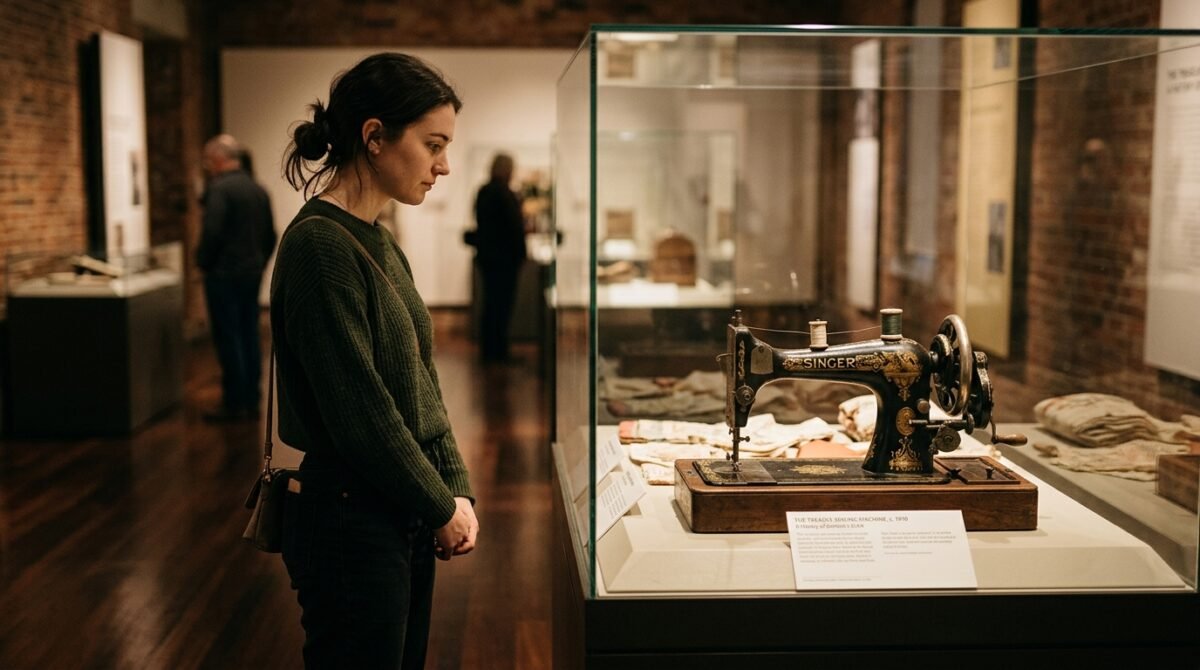
I went to the museum to visit the machine. Seeing it behind a glass partition, with a small placard explaining its history and the labor involved in its custom modifications, brought tears to my eyes. It looked dignified. It looked safe. A curator approached me and thanked me again, mentioning that it was already becoming a highlight for visitors interested in mid-century textile technology.
I realized then that I had made the right choice. My grandmother’s legacy wasn’t in my living room anymore—it was in the public eye, where it belonged. It was no longer a tool for a get-rich-quick scheme; it was an educational piece. I felt a profound sense of closure. I hadn’t just protected the machine; I had protected my own peace of mind.
My mother eventually called, not to yell, but to complain about how ‘quiet’ things were. I told her, firmly and calmly, that the silence was a direct result of the boundaries I had been forced to set. I explained that I was done being the family’s supply closet. If Claire wanted to build a business, she could do it with her own money and her own equipment, not by cannibalizing my history.
The conversation was the most honest one we had ever had. She didn’t like it, but she didn’t argue. She recognized that I was a different person than I had been a month ago. The entitlement that had defined our family dynamic for years was finally being challenged, and it felt like the foundation was finally shifting to something more equitable, even if it meant some bridges were burned in the process.
The Financial Reality: A Tale of Two Sisters
To understand the depth of the entitlement, one must look at the financial disparity. Claire’s ‘startup’ was essentially a drop-shipping scheme disguised as a boutique brand. She had been asking family members for ‘investments’ for months, and I was the only one who had consistently said no. My refusal to hand over the machine was the final straw in a long list of denials.
| Asset | Claire’s View | The Reality |
|---|---|---|
| Sewing Machine | Free Business Asset | Sentimental Heirloom / $4,000+ Market Value |
| Family Trust | Personal Loan Facility | Protected College Savings |
| My Time | Consulting / Labor | Personal Boundaries |
The table above illustrates the disconnect. Claire viewed every family resource as a potential fuel source for her ego. When I donated the machine, I wasn’t just ‘spiting’ her; I was removing a $4,000 asset from a volatile situation where it would have been depreciated, broken, and eventually sold for parts. I was protecting the asset’s value, even if the primary value was emotional.
I later learned through a cousin that Claire had actually gone ahead and bought a cheap, plastic-bodied machine from a big-box store to start her dog costume line. It broke within three weeks. She was now complaining on social media about the ‘terrible quality’ of modern manufacturing, a bitter irony that I chose to find amusing rather than vengeful. She was learning the hard way that you can’t force success with the wrong tools.
My financial independence and my respect for my belongings had always been a point of friction. I was the ‘boring’ sister who saved money and took care of things, while she was the ‘adventurous’ one who expected the world to hand her success. The machine was merely the catalyst for an inevitable collision between these two lifestyles. The aftermath confirmed that my cautious approach was the only one that led to stability.
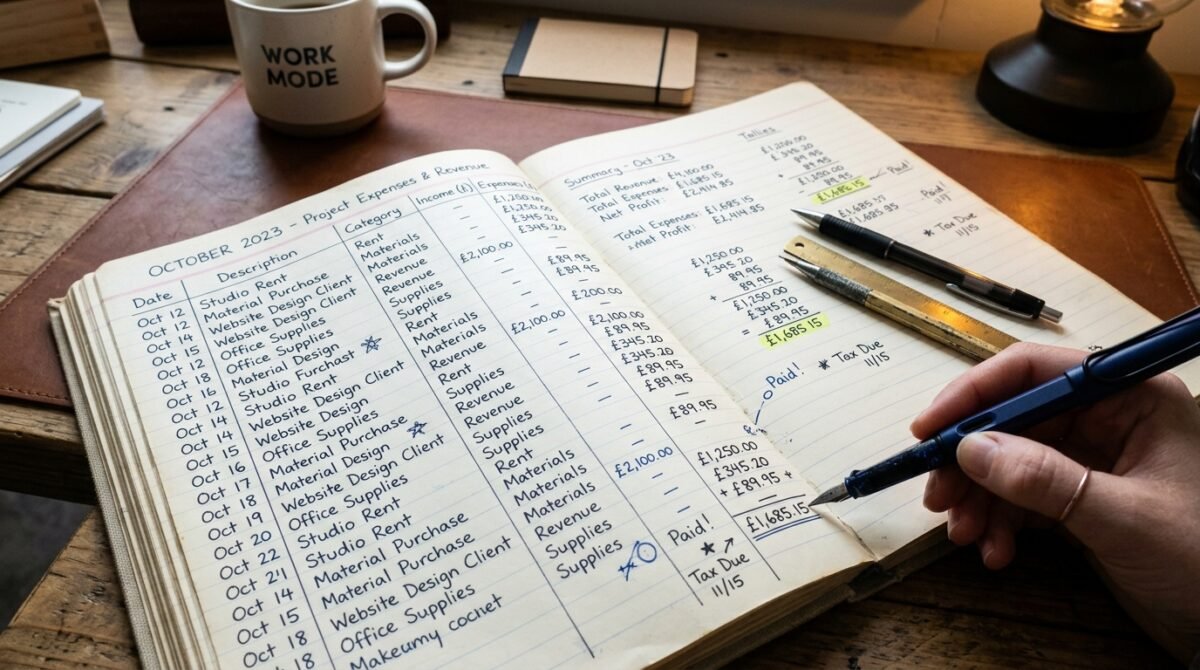
I kept a ledger of everything that had happened, not for the sake of holding a grudge, but for my own sanity. It served as a reminder of why I needed to keep my distance. Whenever I felt the urge to reach out and ‘fix’ things, I looked at the list of demands she had made and the disrespect she had shown. It was the only armor I needed to stay the course.
Navigating the New Normal of Low Contact

The weeks turned into months. I established a new routine, one where I didn’t worry about who was coming over to my house or what they were planning to take. I spent my time focusing on my own hobbies, perhaps even picking up a new, cheaper, more modern machine to practice my own sewing. It was a hobby again, not a battlefield.
I started seeing my mother on my terms—lunch in public, away from the influence of my sister. We avoided the topic of the machine entirely. It was the ‘elephant in the room’ that had finally been moved out of the house, and we were both better off for it. She eventually admitted that the house felt less tense, though she still missed the ‘old way’ of doing things, where we all just ignored the problems.
I found that I didn’t miss the drama. I didn’t miss the 6:00 AM phone calls, the guilt-ridden texts, or the feeling of having to defend my life choices to someone who didn’t respect them. The distance created a vacuum, and I filled it with peace. It was a luxury I hadn’t realized I was missing until I finally claimed it.
My sister continued to post updates about her ‘business struggles,’ but I no longer read them. I was free. I had set a standard: my property, my boundaries, and my respect were non-negotiable. If she couldn’t respect that, she didn’t get access to me. It was a hard lesson to learn in adulthood, but it was the most important one I had ever mastered.
I realized that the donation to the museum was the best gift I could have given myself. It was an act of finality that left no room for negotiation. It closed the door on a chapter of my life that was defined by ‘should’ and ‘ought to,’ and opened a new one defined by ‘I will’ and ‘I won’t.’ I was finally the author of my own narrative.
Reflections on Legacy and Materialism

What does it mean to inherit something? Is it a burden to be managed, or a gift to be enjoyed? For a long time, I thought it was a burden, a heavy weight of history that I had to carry for my family. But the ordeal with my sister taught me that inheritance is a choice. You can choose to be the caretaker of history, or you can choose to let others trample on it in the name of their own fleeting ambitions.
The museum staff sent me a thank-you note a few months later. They said the machine had become a hit with local school groups, who were learning about the shift from home-based production to mass-manufactured goods. My grandmother’s work—the specific tension of the threads, the patterns she had sewn into the cast iron—was being seen and appreciated by people who didn’t want anything from it other than to learn. That, to me, was the highest honor.
I often wonder what my grandmother would have thought. She was a practical woman. She would have likely laughed at the idea of her machine being the center of such a petty, modern feud. She probably would have told us both to grow up and get back to work. But I like to think she would have approved of the museum. She knew the value of a job done right, and she wouldn’t have wanted her life’s work to end up in a trash pile in a dog costume studio.
The moral of the story isn’t just about a sewing machine. It’s about the courage to say no. It’s about recognizing when someone is using ‘family’ as a weapon and refusing to be a target. It’s about understanding that you are not responsible for other people’s failed ventures, nor are you responsible for their disappointment when they realize they can’t use you as a stepping stone.
I’ve grown a lot in the last year. I’ve learned that I don’t need to be the ‘nice’ one if ‘nice’ means ‘doormat.’ I’ve learned that boundaries are not just suggestions; they are the walls that keep our lives from being invaded. And most importantly, I’ve learned that some things are worth fighting for, not because of what they are worth in dollars, but because of what they are worth to the soul.
The Final Verdict: Lessons for the Future

As I sit here writing this, I am struck by the simplicity of the solution I eventually found. All the months of anxiety, all the sleepless nights, all the angry text messages—they all vanished once I stopped trying to ‘solve’ the problem with my sister and started solving it for myself. I didn’t need her permission to donate the machine, and I didn’t need her understanding to make the right call.
If you find yourself in a similar position, whether it’s an heirloom, a piece of money, or even just your time, remember that you have the right to protect what is yours. You don’t have to be the martyr for your family’s dysfunction. You can be the one who changes the rules of engagement. It’s not easy, and it might cost you some relationships, but the price of peace is almost always worth it.
I’ve reconciled with the fact that my sister and I may never have the relationship we used to have, but that relationship was built on a foundation of unequal expectations. The new normal might be colder, but it is also much more honest. We are two adults now, and we are responsible for our own lives. If she wants to build a business, she has to do it the hard way, just like everyone else.
I’m proud of the woman I’ve become through this. I’m proud that I didn’t fold under pressure, and I’m proud that I stood by my grandmother’s legacy. The sewing machine is in a better place now, and so am I. It’s a strange feeling, but I think I’ve finally found my own rhythm, one that is independent of the expectations of others.
To anyone else dealing with entitled relatives, take this as a sign: do what you need to do to protect your boundaries. Don’t feel guilty for saying no, and don’t feel bad for taking steps that preserve your dignity. You are the only one who can truly value what you have, and you are the only one who can decide who gets to share in it.
Conclusion
My journey from a guilt-ridden sibling to a self-assured protector of my own history wasn’t a straight line. It was a messy, painful, and ultimately necessary process of shedding the expectations that had kept me trapped for years. By choosing to preserve the sewing machine rather than lose it to greed, I didn’t just save an object—I saved myself.
The debate surrounding this story continues to rage on in my mind and in the comments sections of the internet. It forces us to ask: What do we owe our family, and where does that obligation end? Are we truly ‘selfish’ for wanting to keep the things that define us, or is the true selfishness found in those who believe they have a claim to everything we have?
I’d love to hear your thoughts on this. Have you ever had to draw a hard line with a family member over an inheritance or an heirloom? Do you think the museum was the right move, or should I have tried harder to ‘keep the peace’? Let’s open this up to the community—we all have stories of family drama, and sometimes, the best way to move forward is to share the weight of our experiences.
Discussion Poll:
- Was I right to donate the machine without telling my sister?
- Should I have tried one more time to negotiate with her?
- Have you ever had to set a hard boundary with family over an heirloom?
Share your stories in the comments below. Let’s learn from one another.
What's your verdict on this dilemma?
Vote below to contribute to the official community consensus.

Have a Dilemma Keeping You Up at Night?
Share your real-life feud, wedding chaos, or relationship crossroads anonymously with our editorial team.
What do you think ?
0 Comments🛡️ Comments are moderated to protect community integrity. Your comment will appear once approved by the editorial team.