

Growing up, my grandparents’ house was a sanctuary. It smelled of old books, lavender, and the specific, comforting scent of cedarwood from the antique chests that lined the hallways. Those chests contained our family’s history: hand-stitched quilts, delicate porcelain tea sets that had survived two wars, and silver cutlery polished until it mirrored the faces of my ancestors. When they passed, the silence in the house was heavy, but the promise of their legacy was meant to be passed down through the bloodline. My father, grieving and perhaps a bit lost, remarried within two years to a woman named Karen. At the time, I was twenty-two and focused on college, naively believing that my father’s new life wouldn’t infringe upon the sacred space of my heritage.
Karen was not a bad person on the surface. She was charming, polished, and knew how to host a dinner party that looked like it belonged in a magazine. But there was a possessiveness about her that I couldn’t quite name. She didn’t just want to be my stepmother; she wanted to curate my life, and worse, she wanted to curate my past. She viewed my grandparents’ items not as sentimental markers of a family line, but as ‘vintage decor’ that lacked the right aesthetic. I should have seen the red flags when she asked if I minded if she ‘repurposed’ my grandmother’s vanity, but I dismissed it as a difference in taste. I was so wrong.
The tension began to boil over last autumn when Karen’s own children from a previous marriage—who had never even met my grandparents—started making comments about how ‘cool’ our family antiques were. I heard them whispering in the kitchen during a barbecue, discussing which pieces would look best in their own apartments. My stomach dropped. I tried to speak to my father, but he was deep in the fog of his second marriage, constantly reminding me that Karen ‘brought so much light into his life’ and that I should be more ‘generous’ with my possessions. I felt like a stranger in my own bloodline’s home.
Thanksgiving was supposed to be the moment of reconciliation. Or so I thought. My father had promised me that the heirloom conversation was closed, that the items were legally and morally mine. I arrived with my suitcase, ready to spend the long weekend in the house that still felt more like home than any place I’d ever lived. I had no idea that while I was driving, a decision had been made that would sever my relationship with my father permanently. The atmosphere was thick with a performative cheerfulness that didn’t reach anyone’s eyes, and as I walked through the door, I felt the familiar weight of the house—only this time, it felt like the walls were closing in on me.
The Pre-Dinner Announcement
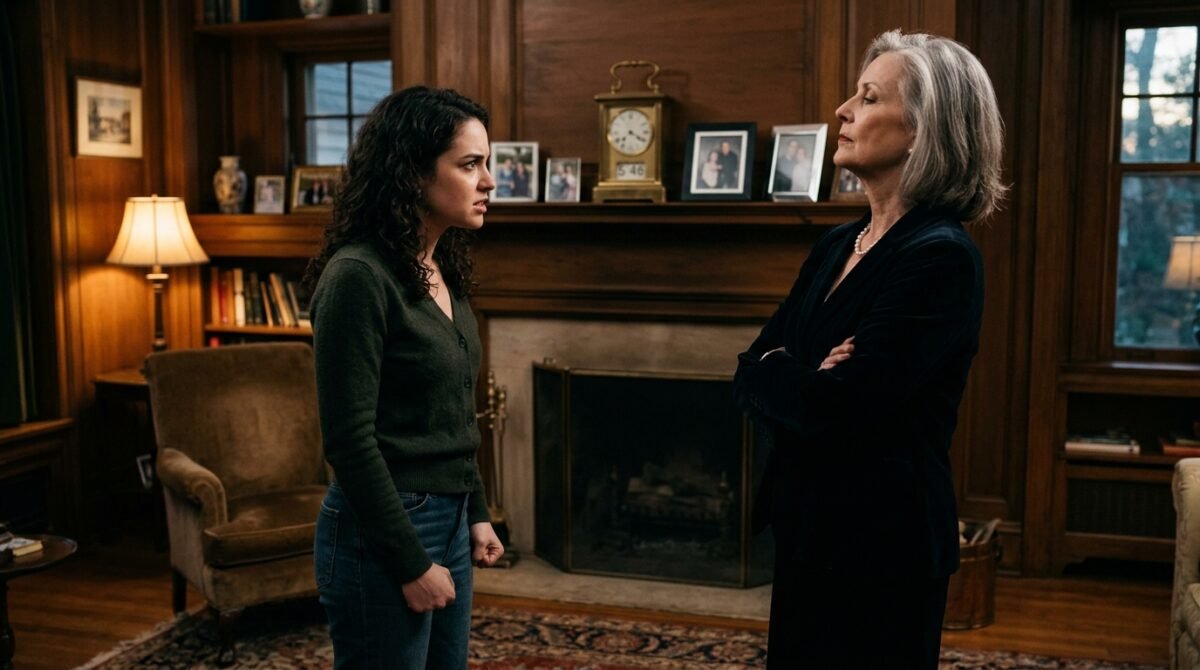
The living room was decorated with an aggressive amount of autumnal cheer. Karen stood by the fireplace, adjusting a wreath, looking like she was waiting for a camera crew. My father was in the corner, clutching a glass of scotch as if it were a life raft. When I walked in, the air changed. It wasn’t the warmth of a homecoming; it was the cold precision of a boardroom meeting. Karen didn’t offer a hug. Instead, she offered a tight, forced smile that barely cracked her perfectly lined lips.
“We’re so glad you’re here,” she said, her voice dripping with an artificial sweetness that made my teeth ache. “We have a surprise for dinner. We’ve finally decided how to handle the estate distribution. It’s been so long, and it’s time to move on.” I felt a spike of adrenaline. The estate distribution had been the elephant in the room for three years. I thought my father had finally stood up for me. I looked at him, searching for a sign, but he wouldn’t meet my gaze, staring intently at the pattern in the rug.
“I’ve decided that since the house needs to be refreshed, we are giving the majority of the antique collection to Tyler and Jessica. It’s what your grandparents would have wanted—family is what you make it, after all.”
— Karen, while pouring wine
My blood went cold. Tyler and Jessica were her children. They were standing behind her, wearing smug grins that made me want to scream. I stood in the middle of the room, my coat still on, feeling the heavy silence press into my eardrums. I didn’t say a word for what felt like ten minutes. My father finally cleared his throat, his face flushing a deep, embarrassed red. He started talking about ‘blending families’ and ‘letting go of material attachments,’ but his words felt like cheap excuses for a betrayal he didn’t have the spine to stop.
I looked at the mantle where my grandmother’s clock sat—the one that had ticked away every Christmas of my childhood. It was already adorned with one of Jessica’s gaudy, modern picture frames. The realization washed over me that this wasn’t just a decision; it was a coup. They had been planning this for months, likely using our family history as a way to curry favor with her adult children. I felt the tears burning behind my eyes, but I refused to let them fall. I wouldn’t give her the satisfaction of seeing me break down in front of her prize acquisitions.
I slowly took off my coat and draped it over a chair. My hands were shaking, but my voice remained steady when I finally spoke. “You don’t get to decide what my grandparents wanted,” I said, my voice cutting through the festive music playing in the background. “Those aren’t ‘decorations’ for your kids. Those are the only things I have left of the people who raised me while you were still a stranger to them.” The room grew so quiet I could hear the clock ticking—the very clock they were about to steal from me.
The Kitchen Confrontation
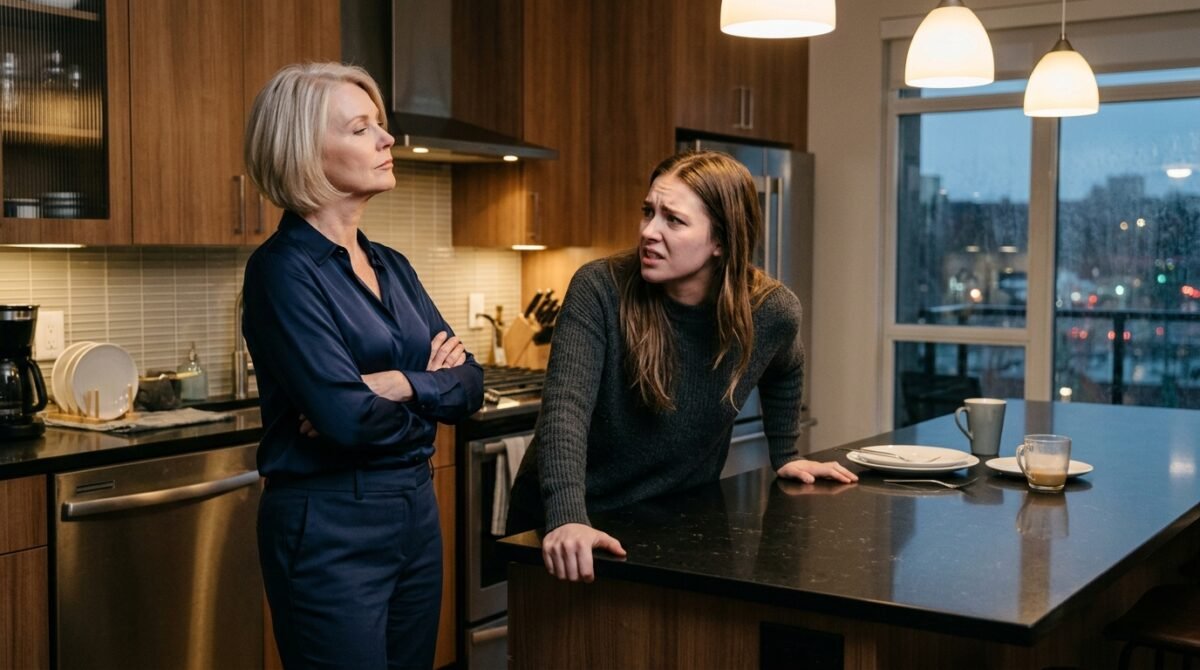
I retreated to the kitchen, needing to put some distance between myself and the audacity of the situation. Karen followed me, of course. She couldn’t let me have a moment to breathe or process. She leaned against the island, crossing her arms in a way that signaled she was ready for a fight. She started the ‘you’re being selfish’ monologue, a script I’m sure she had practiced in the mirror a dozen times. She talked about how I had ‘so much life ahead of me’ and how Tyler and Jessica were ‘struggling’ and needed the financial boost that selling the antiques would provide.
I turned around, the kitchen knife I had been using to move some appetizers forgotten in my hand. “So that’s what this is? You’re going to sell them?” I asked, my voice dangerously low. She hesitated for a split second, a flicker of panic in her eyes before she smoothed it over with a practiced, condescending smirk. She told me it was ‘an investment in our collective future.’ I realized then that my father hadn’t just given up his voice; he had signed over our family’s soul to this woman’s mercenary agenda.
“They are heirlooms, Karen. They aren’t your liquid assets. You don’t have the legal right to touch them, and if you try to sell them, I will make sure the entire family knows exactly what you’re doing.”
— My response to Karen in the kitchen
She laughed, a sharp, brittle sound that echoed off the granite countertops. She told me that Dad had signed a ‘joint ownership’ agreement that basically gave her power of attorney over the estate. I felt my stomach churn. I realized then that my father’s passivity was a form of active participation. He hadn’t been tricked; he had been exhausted into submission. He let her do the dirty work so he could play the victim of his own choices. I looked at the cupboards—the very place where I used to hide as a child—and felt a profound sense of mourning.
I told her that if she moved a single item, I would call a lawyer. Her face hardened, the mask of the sweet stepmother finally dropping to reveal the cold, calculated woman underneath. She told me that I was being ‘hysterical’ and that I was lucky they were even keeping me around for the holidays. That was the moment. The switch flipped. I looked at the woman who had systematically dismantled my home, and I realized that my presence here was no longer a requirement; it was a mistake.
I walked past her, my heart hammering against my ribs, and went back into the living room. I didn’t look at my father. I didn’t look at the step-siblings. I just grabbed my coat and my bag. My father asked where I was going, his voice pathetic and thin. I didn’t answer. I just walked to the front door, feeling the cold air of the November evening waiting for me, and I left without looking back. I didn’t care that it was Thanksgiving. I didn’t care that the turkey was in the oven. I was done.
The Group Chat Explosion
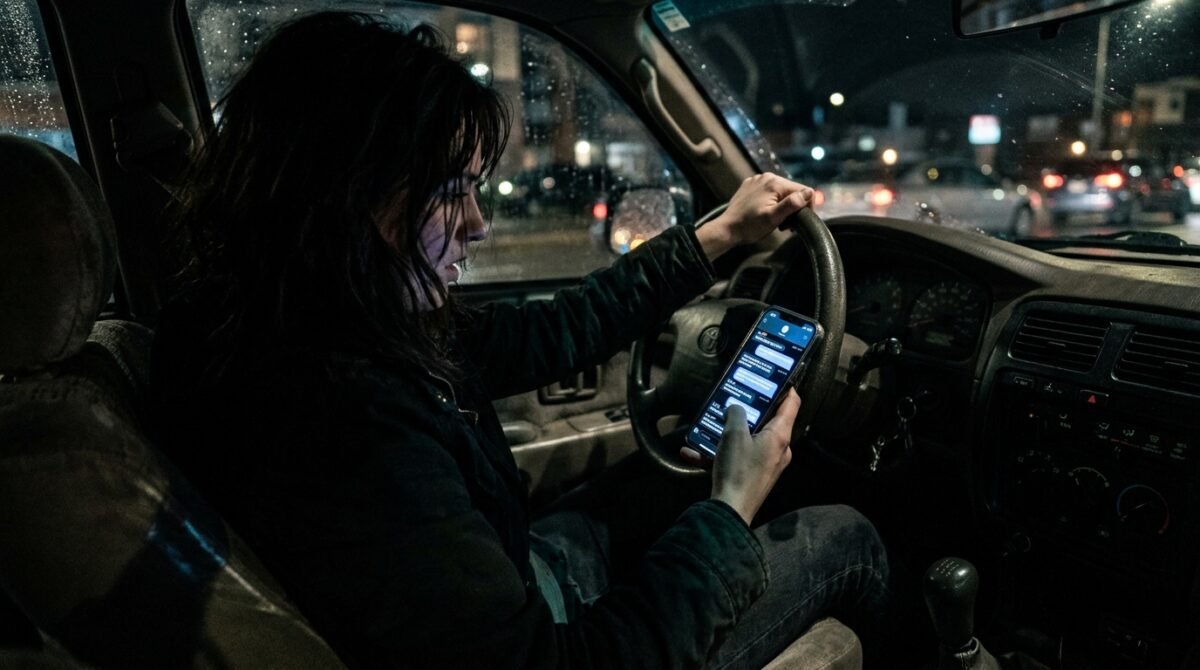
I didn’t even make it home before my phone started vibrating incessantly. The family group chat—the one that included my aunts, uncles, and cousins—was blowing up. Karen had clearly jumped on her phone the second I closed the door, painting a picture of me as a volatile, ungrateful brat who had ruined a ‘peaceful, beautiful holiday’ for everyone. I saw the messages scrolling by, each one more distorted than the last. She was playing the victim perfectly, claiming I had threatened her and made a scene because I was ‘jealous’ of her children.
My phone buzzed with a message from my Aunt Linda, who was usually my biggest supporter. She asked me what happened and said Karen was very upset. I felt a surge of rage. I didn’t want to explain myself to the whole group, but I couldn’t let Karen define the narrative. I took a deep breath, pulled over to the side of the road, and started typing. I didn’t hold back. I detailed the heirlooms, the plan to sell them, and my father’s complicity in the whole scheme. I even mentioned the ‘power of attorney’ she had bragged about.
“Just so everyone knows, I didn’t ruin the dinner. I left because my stepmother informed me she is liquidating my grandparents’ estate to fund her children’s lifestyle. If that’s what ‘family’ means to you, then I’m glad I’m out.”
— My final message in the group chat
The silence that followed was deafening. For ten minutes, not a single person typed. Then, my cousin started asking questions. My uncle, a blunt man who had always been close with my grandfather, sent a message asking for clarification. Karen tried to jump back in, but she was losing control of the narrative. I didn’t wait for her next lie. I muted the chat and tossed the phone onto the passenger seat, my hands trembling as I pulled back onto the highway.
I felt a strange sense of liberation. For years, I had been walking on eggshells, trying to keep the peace and preserve a relationship with my father that was clearly one-sided. By burning the bridge, I had finally stopped the bleeding. I wasn’t just losing antiques; I was losing the burden of pretending that my father was the man I once thought he was. It was a painful, raw realization, but it was the truth.
By the time I got to my apartment, I had thirty-two missed notifications. Most were from my father, ranging from ‘Please call me’ to ‘You’ve really embarrassed us.’ I didn’t read them. I knew what they were. They were requests for me to apologize for setting a boundary. I walked into my apartment, locked the door, and for the first time in years, I felt like the space was truly mine, not defined by someone else’s expectations or their version of my history.
The Aftermath and the Lawyer’s Intervention

The week following Thanksgiving was a blur of silence and legal letters. My father eventually stopped calling, replaced by a cold, formal email from a solicitor claiming that the ‘disposition of assets’ was legally handled and that any ‘harassment’ of Karen would be met with legal action. It was a cowardly way to handle his own daughter, but I wasn’t surprised. I went to a family lawyer of my own, armed with the records of my grandparents’ will that I had luckily kept in a fire-proof safe. The lawyer’s face as he read the ‘joint ownership’ document they had forced my father to sign was worth the retainer fee.
It turned out that the document was highly questionable. My grandfather’s will had a specific clause—the ‘bloodline provision’—that stated the heirlooms were to remain in the family. My father had no legal right to alter this, and he certainly didn’t have the right to grant Karen power of attorney over items that were essentially held in a trust for me. The look on my lawyer’s face was one of grim satisfaction. We were going to war, and for the first time, I felt like I had the armor to withstand it.
“They’ve made a significant mistake here. This isn’t just a family argument; this is a breach of fiduciary duty. We have a very strong case to freeze those assets until a probate court can review the original intent of the will.”
— My attorney during our first consultation
I didn’t tell my father I had hired a lawyer. I let him think I was just ‘sulking’ and would eventually come back to apologize. The silence from his side was filled with a false sense of security. They were likely already planning how to auction off the silver or the furniture, unaware that the items were about to be legally frozen. I spent the time organizing my own life, focusing on my job and my friends—the people who actually cared about my well-being and not my ‘aesthetic’ contributions to their household.
The emotional toll was immense, though. There were nights I cried over the loss of my father’s respect, realizing that he cared more about his new wife’s ego than his own child’s heritage. It’s a specific kind of grief, mourning someone who is still alive. I had to disconnect from the family group chat entirely, blocking my step-siblings and eventually, after a tearful message from my aunt, even taking a break from the extended family who were constantly trying to play mediator.
I kept busy. I started gardening, I took up painting, and I poured all my energy into my career. I refused to let Karen’s greed dictate my future. Every time I felt a pang of nostalgia for the house, I forced myself to remember the way Karen looked at me that night—not as a daughter, but as an obstacle to be removed. That image was enough to keep me centered. I was building my own history now, one that didn’t require permission from people who had already shown me exactly where I stood in their lives.
The Court Date That Changed Everything
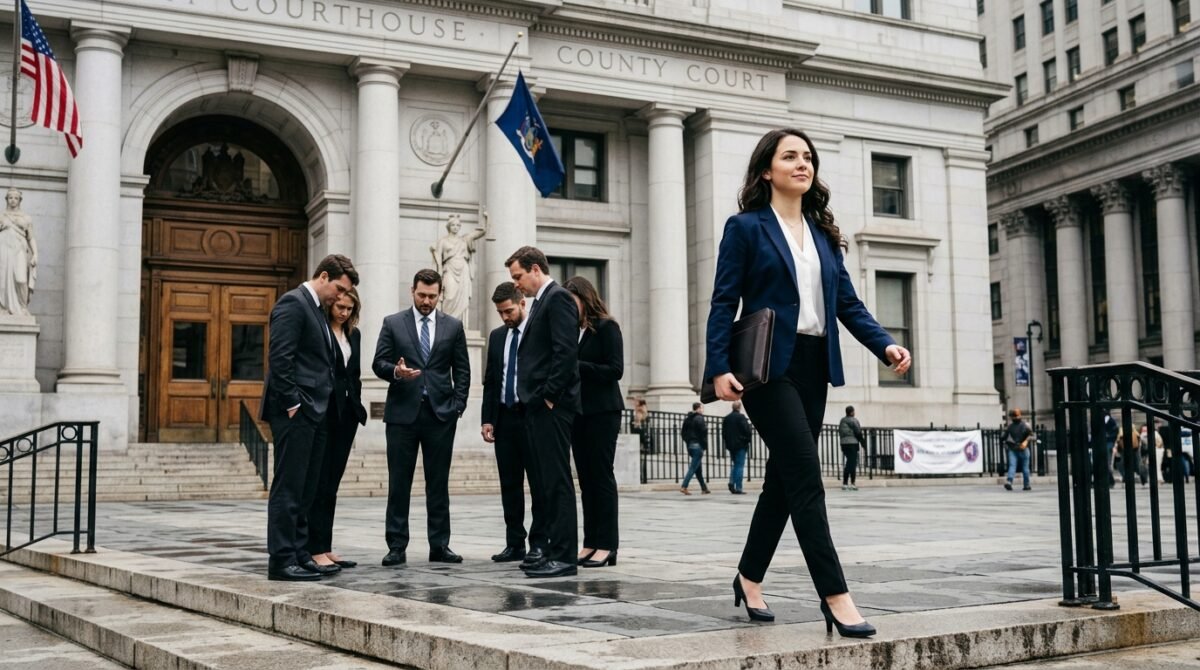
The day of the court hearing was cold and gray, fitting for the atmosphere. My father walked in with Karen and her two kids. They looked confident, almost smug, clearly expecting this to be a quick dismissal of my ‘entitled’ claims. When they saw me sitting with my lawyer, their faces shifted into masks of confusion and annoyance. My father walked up to me, trying to put on his ‘disappointed father’ voice, telling me that this was ‘unnecessary’ and that we could just talk this out over coffee.
I didn’t stand up. I didn’t say a word. I just looked at him, and for the first time, I saw him not as a father figure, but as a man who had chosen to be weak. The judge, a stern woman with a reputation for being thorough, opened the proceedings. It didn’t take long. My lawyer presented the original will, the ‘bloodline provision,’ and the evidence that the ‘joint ownership’ agreement had been signed under duress and without proper legal oversight.
“Mr. Miller, did you understand that your father’s will explicitly prohibited the transfer of these specific heirlooms to anyone outside the direct lineage? And yet, you signed a document transferring them to your spouse’s children? That is a direct violation of your fiduciary responsibilities as an executor.”
— The Judge, during the hearing
The look on Karen’s face was priceless. The smugness evaporated, replaced by a frantic, sweating panic. She tried to interrupt, but the judge silenced her with a look that could freeze water. My father looked like he wanted to vanish into the floorboards. The court ordered an immediate stay on any disposal of the assets and appointed an independent administrator to oversee the estate. I had won the legal battle, but the victory felt hollow. Seeing my father dismantled in a courtroom was not the triumph I had imagined.
The walk out of the courthouse was awkward and silent. My step-siblings were whispering, looking at me with undisguised hatred. My father lingered behind, clearly waiting for me to say something, to offer him an ‘out’ or to tell him it was okay. I walked right past him. I didn’t owe him an explanation. I didn’t owe him a conversation. I owed it to myself to walk away from the toxicity I had allowed to persist for far too long.
That night, I sat in my own small, rented apartment, looking at the photos of my grandparents I had saved on my phone. They looked happy, untainted by the greed that was currently consuming their legacy. I realized that the battle wasn’t just about the objects—it was about the boundaries. I had finally drawn a line, and even though it cost me my relationship with my father, it was a price I was willing to pay for my own sanity and self-respect.
The Public Opinion of the Internet
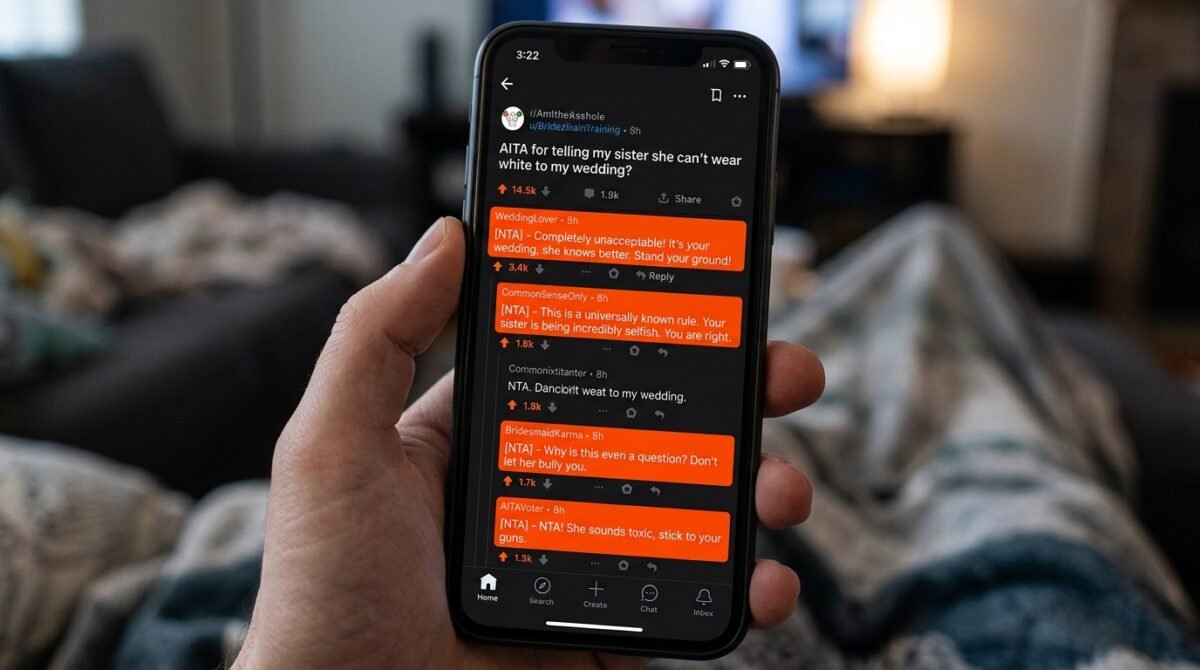
I decided to share my story on Reddit, not for clout, but because I needed to know if I was actually the villain. I posted a concise version of the events, expecting a mix of opinions. I was surprised by the sheer volume of support. Within hours, my post had reached the top of the subreddit. Thousands of people weighed in, and the validation was overwhelming. People who had been through similar family betrayals reached out, sharing their own stories of how their parents had been manipulated by new spouses.
The consensus was clear: I was not the asshole. The ‘NTA’ (Not The Asshole) verdicts were flooding in. Many pointed out that my father’s behavior was a classic case of ‘abandonment of duty’ in favor of a new partner. The legal advice—which I already knew from my lawyer—was reinforced by dozens of people who had been through probate court hell. It was comforting to know that, in the court of public opinion, I had done the right thing.
“Your father didn’t just fail to protect your inheritance; he failed to protect you. The heirloom issue is just the symptom. The disease is his total lack of loyalty to his own bloodline. Go no-contact and don’t look back. You did the right thing.”
— u/FamilyDramaExpert (Top Comment, 32.5k upvotes)
There were, of course, a few ‘E-S-H’ (Everyone Sucks Here) comments, saying I should have handled it ‘more diplomatically.’ Those comments triggered me initially, but then I realized: diplomacy is for people who respect your boundaries. You can’t be diplomatic with someone who is actively robbing you of your past. The people who suggested I should have been ‘nicer’ were often those who had never had to defend their own dignity against a calculated narcissist.
Reading the comments, I realized that many people struggle with the guilt of cutting off toxic family members. They fear the social consequences, the judgment of aunts and uncles, and the feeling that they are ‘the bad guy.’ But seeing the support gave me a sense of perspective. It wasn’t about being ‘bad’ or ‘good’; it was about self-preservation. I wasn’t just an orphan of heritage; I was a survivor of a toxic dynamic.
I kept the thread updated for a while, sharing the outcome of the court case. The community was invested, asking about my dad, asking about the house, and offering advice on how to handle the inevitable family gatherings. It was like having a massive, global support system. I realized that while my immediate family had failed me, there was a whole world of people who understood exactly what I was going through. It made the loneliness of the situation feel a little less crushing.
The Weight of the Heirlooms
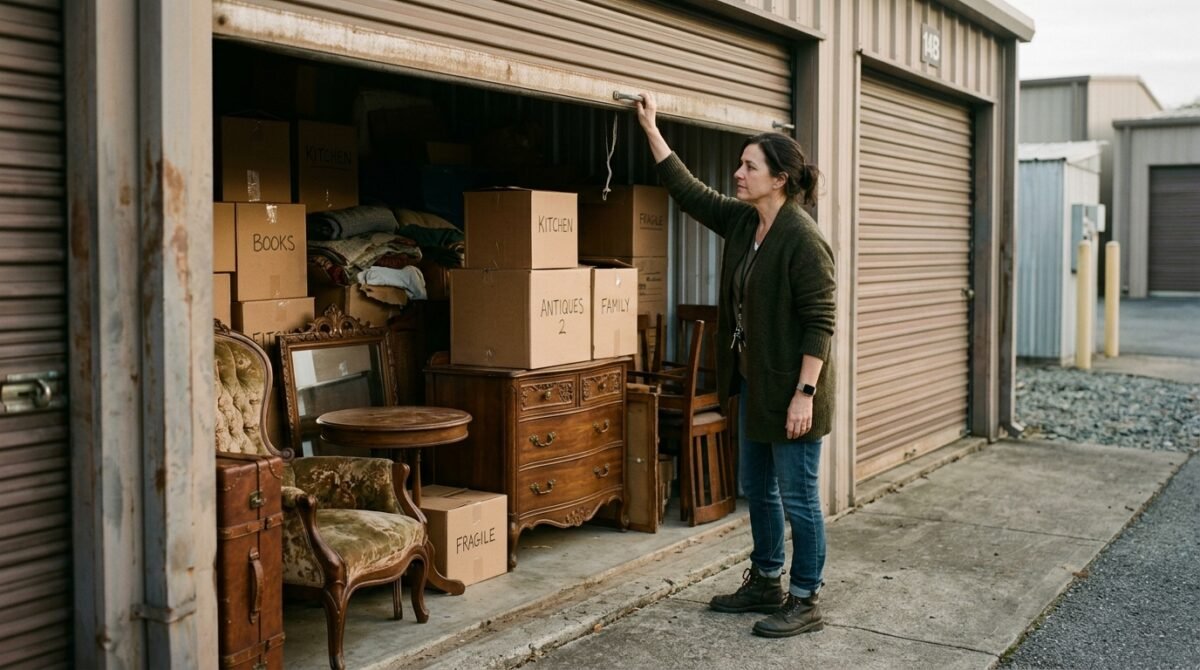
Now that the legal case is settled, I am tasked with what to do with the heirlooms. They are currently in a secure storage unit, waiting for me to decide their future. Every time I open that unit, I’m hit with that same smell of cedarwood and lavender. It’s a bittersweet moment. These objects are beautiful, but they are also heavy with the memory of the betrayal. I haven’t decided if I want them in my own home yet. They feel like a reminder of the fight, not just the people who owned them.
I’ve been talking to a local museum about potentially donating a few of the more significant items, the ones with historical value, while keeping the deeply personal pieces for myself. It feels like a way to honor my grandparents without turning my apartment into a shrine of conflict. It’s a way to let their legacy be shared rather than hoarded or stolen. It’s a process of healing that I didn’t expect to be this complicated.
“You aren’t just saving things; you’re deciding what story you want these items to tell. Don’t let them tell the story of your stepmom’s greed. Let them tell the story of your grandparents’ lives.”
— My therapist, during our session
I feel a sense of relief knowing they are safe. No one can sell them, no one can move them into their apartment, and no one can claim they are ‘decor’ for their kids. They are officially mine, protected by law and by my own firm resolve. The process of taking ownership of my life—and my inheritance—has been the most transformative experience of my twenties. I’ve learned that I don’t need a house full of antiques to be who I am.
I’ve started to invite friends over to see the items I’ve chosen to keep. It’s been a way to reclaim them. When I look at my grandmother’s teapot now, I don’t see the woman who tried to steal it; I see the tea parties my grandmother used to host. I’m slowly replacing the trauma with new, healthy memories. It’s a slow process, but it’s working. The heirlooms are becoming mine in a way they never were before.
There is still a void where my relationship with my father used to be, but I’ve come to terms with it. He made his choice, and I made mine. I don’t regret the walkout. I don’t regret the lawsuit. I don’t even regret the group chat explosion. They were all necessary steps in the process of becoming an independent adult who refuses to be gaslit or coerced. I am stronger, more resilient, and for the first time in a long time, truly at peace with my past.
The Silence of the Holidays

The next holiday season was the hardest. Thanksgiving rolled around again, and for the first time in my life, I wasn’t expected to be anywhere. No travel, no tension, no ‘performative’ gratitude. I spent the day alone, which was exactly what I needed. I cooked a simple meal, put on some music, and spent the day reading. It was a stark contrast to the chaos of the previous year, and the peace was profound. I didn’t feel ‘left out.’ I felt free.
I didn’t receive any messages from my father. I hadn’t expected any, but it still stung. The finality of the estrangement was settling in, like the first frost of winter. I realized that my father had likely doubled down, blaming me for the ‘family rift’ and presenting himself as the injured party to anyone who would listen. I didn’t care. The truth was documented in court, and that was enough for me. I was no longer interested in convincing anyone of my side.
“The hardest part of growing up is realizing your parents are just people who are capable of being small, petty, and wrong. And you have to be the one to decide if you want to keep them in your life anyway.”
— A piece of advice from a close friend
I spent the day thinking about my grandparents. I realized that they would have hated the way things turned out, but they would have been proud of me for standing up for myself. They were people of character, and they had raised me to have character, too. They wouldn’t have wanted me to endure disrespect just to keep a family structure intact. They would have wanted me to live a life that was honest and true to myself.
I started a new tradition: a small toast to the people who shaped me. I took out my grandmother’s favorite glass, poured a small amount of wine, and thanked them for the foundation they gave me. It was a moment of quiet, genuine connection that felt more like family than any Thanksgiving dinner I had ever attended. I felt their presence, not in the items, but in the strength I was finding within myself.
I’m looking forward to the future now. I’m planning a trip for the spring, I’m working on a new project at my job, and I’m surrounded by friends who support me. The shadow of my stepmother and the ghost of my father’s potential are finally receding. I’m not just defined by what I lost; I’m defined by what I chose to fight for and what I ultimately kept. It’s a good life, and it’s finally mine.
Reflections on Boundary Setting

Looking back at the entire ordeal, I’ve gained a lot of insight into the psychology of toxic family dynamics. It’s easy to think that if you just hold on long enough, things will get better. But sometimes, holding on is the very thing that keeps you trapped in the cycle. The moment I walked out of that house was the moment I started to heal. I had to stop hoping my father would change and start acting as if he never would.
Setting boundaries isn’t just about saying ‘no’; it’s about deciding what you value enough to protect. I valued my history, my dignity, and my peace of mind. By protecting those things, I had to sacrifice the comfort of the family unit. It’s a trade-off that people don’t talk about enough. You are often told that family comes first, no matter what, but that advice is dangerous when ‘family’ is used as a weapon to demand your compliance.
“Boundaries are not walls to keep people out; they are fences to keep yourself safe. Don’t be afraid to build them high, especially when it comes to the people who are supposed to love you the most.”
— Words of wisdom from my lawyer
I’ve learned to spot the red flags in other areas of my life as well. I don’t tolerate the same kind of subtle manipulation from friends or colleagues anymore. I’ve become much more assertive, more clear about my expectations, and more willing to walk away when those expectations aren’t met. It’s a superpower, really. When you’ve survived a high-stakes family betrayal, everything else feels like a minor hurdle.
I’ve also learned the value of documentation. Whether it’s legal wills, text messages, or just keeping a journal, having proof of your reality is essential. Gaslighters count on you losing your grip on what actually happened. By keeping records, I was able to maintain my sanity and build a rock-solid case. It was the most practical thing I did, and it saved me from the doubts that they tried to instill in me.
I’m not the same person I was two years ago. I’m tougher, but I’m also more compassionate toward myself. I know now that I’m capable of standing alone, and that’s a liberating feeling. I don’t need the approval of people who don’t have my best interests at heart. I have my life, my history, and my future, and I’m the only one in the driver’s seat. That’s all the legacy I need.
Lessons for the Community

If there’s one thing I want people to take away from my story, it’s that you have a right to your own story. You don’t have to be a supporting character in someone else’s life, even if that someone else is a parent. Don’t let your heritage be liquidated for the benefit of people who haven’t earned a place in your life. If you feel like your boundaries are being crossed, don’t wait for a ‘good time’ to speak up. The longer you wait, the harder it gets to break free.
Trust your instincts. If someone makes you feel small, if they make you feel like your history doesn’t matter, or if they prioritize their own wants over your needs, listen to that internal warning. It’s there for a reason. Don’t let guilt be the reason you stay. Guilt is often just the voice of the toxic person telling you that you’re doing something wrong by taking care of yourself. It’s not a moral compass; it’s a manipulation tactic.
“If you are currently struggling with a similar situation, remember this: your family’s greed is not your problem to solve. You are allowed to protect your inheritance and your dignity. You are allowed to walk away.”
— My advice to the reader community
Surround yourself with people who value you. Whether it’s friends, partners, or even an online community, having a support system is vital. It’s so easy to feel like you’re the only one who has ever dealt with this, but you’re not. There are thousands of people who have been in your shoes. Reach out, share your story, and find your people. You don’t have to do it alone.
And finally, be gentle with yourself. The recovery process isn’t linear. There will be good days and bad days, and that’s okay. You’re doing the hard work of healing, and that takes time. Celebrate the small victories, like standing up for yourself in a meeting or finally saying ‘no’ to a request that crosses your boundaries. You are rebuilding your life, and that’s an incredible achievement.
I am finally ready to move on, to really move on. The legal battle is over, the house is in the past, and I have my future ahead of me. I am thankful for the experience, as painful as it was, because it led me to the person I am today: someone who knows their worth and will never settle for less again. I hope my story gives you the strength to stand your ground, too.
Conclusion
My journey from the dinner table at Thanksgiving to the quiet peace of my own apartment has been one of the most challenging experiences of my life. It required me to strip away the illusions of ‘family’ that had long blinded me to the reality of my stepmother’s ambition and my father’s weakness. By choosing to walk away, I didn’t just save my grandparents’ heirlooms; I saved my own autonomy. The legal victory was a necessary step, but the real triumph was internal—a reclamation of my worth and a firm commitment to living a life where I am the author of my own history.
I understand that many of you reading this may be in the midst of your own family struggles, perhaps dealing with inheritance disputes, boundary violations, or the heartbreak of realizing that those closest to you have let you down. My advice is simple: protect your peace above all else. You are not obligated to maintain relationships that come at the expense of your own dignity or mental health. Your past is your own, and your future is something you have every right to build on your own terms, without the influence of those who do not respect your value.
I want to hear from you. Have you ever had to walk away from a family tradition or a toxic relationship to save your sanity? How did you deal with the guilt of prioritizing your own well-being over family expectations? Share your thoughts and stories in the comments below. Let’s create a space where we can support each other, validate our experiences, and perhaps, find the strength to set the boundaries we all deserve.
What's your verdict on this dilemma?
Vote below to contribute to the official community consensus.

Have a Dilemma Keeping You Up at Night?
Share your real-life feud, wedding chaos, or relationship crossroads anonymously with our editorial team.
What do you think ?
0 Comments🛡️ Comments are moderated to protect community integrity. Your comment will appear once approved by the editorial team.