

It was supposed to be a celebration. My husband, Mark, and I had been married for five years, and we decided to treat his parents to a dinner at ‘The Crest,’ an exclusive, members-only dining club that I have been a part of since I started my career in finance. It’s a place of quiet luxury, where the staff knows your name, and the standard of service is impeccable. I held the primary membership, and as a gesture of kindness, I had been paying for my father-in-law, Arthur’s, auxiliary dues for the past two years. It was roughly $1,200 a quarter, a cost I considered an investment in family harmony.
Arthur has always been a man of ‘old school’ sensibilities, which is often code for being impossible to please. He believes that money buys deference, and that the person serving him is merely an extension of the furniture. I had witnessed minor grumbles before, but I had never seen him in his true, vitriolic form until that Tuesday evening. The server, a young woman named Elena who was working her way through grad school, made one simple mistake: she brought the wrong vintage of red wine.
What followed wasn’t a request for a correction. It was a calculated, verbal assault that seemed designed to strip Elena of her professional dignity. Arthur didn’t just complain; he berated her, mocking her intelligence and questioning her worth as if she were a child who had failed a basic exam. The dining room, once filled with the gentle clinking of silverware, fell into a suffocating, judgmental silence. I looked at Mark, hoping for some intervention, but he was staring at his plate, frozen in that familiar, childhood-conditioned fear of his father’s temper.
I felt a cold, sharp resolve settle in my chest. I have spent years working in environments where merit and respect are the currency, and seeing someone treat a service worker like a sub-human because they feel emboldened by a membership fee is something I cannot tolerate. I didn’t cause a scene at the table. I didn’t shout. I waited until Arthur finished his third glass of the ‘correct’ wine, and then I silently finalized the decision that would end our comfortable, transactional relationship for good.
This is the story of how I revoked his access, the explosion that ensued within our family, and why I refuse to back down. Some call it petty, but when you trade your integrity for a $1,200 bill, you’ve already lost the argument. This isn’t just about a club membership; it’s about what happens when the people we love finally show us exactly who they are, and we decide we’ve seen enough.
The Vintage Wine Incident That Exposed Everything

The dinner started with a pretense of civility. Arthur had been complaining about the traffic, the decor of the foyer, and the ‘decline’ of the club’s atmosphere since we arrived. I ignored it, focused on keeping the peace for Mark’s sake. When Elena arrived with the bottle, she offered a polite, practiced smile. Arthur, however, was already in a mood. He barely looked at the label before he slammed his hand onto the table, causing the crystal to rattle.
“Do you see this?” he boomed, his voice echoing off the mahogany walls. “I specifically requested the reserve. This is the house swill. Do you have any idea how to read a menu, or are you just here to fill space while I wait for actual service?” Elena’s face went pale. She apologized immediately, her hands trembling as she reached for the bottle. She hadn’t even had a chance to pour it yet.
“I am incredibly sorry, sir. I’ll go check with the cellar manager right away to see if there was a mix-up with the order ticket. Please, give me just a moment.”
— Elena, the server
Arthur leaned back, crossing his arms with a smug, self-satisfied grin. “No, don’t just run away. Tell me why you thought this was acceptable. Is this a test? Do you think I don’t know the difference between a decent vintage and this vinegar?” He continued to harangue her for a full three minutes, even after the floor manager began to approach. He wasn’t looking for a solution; he was looking for an audience, and he was using Elena as his prop to perform his superiority.
I watched the other tables. People were looking away, uncomfortable, embarrassed for us. Mark finally looked up, his voice barely a whisper. “Dad, please. It’s just a mistake. It’s fine.” But Arthur just brushed him off with a flick of his wrist. “It’s not fine, Mark. It’s about excellence. If you allow mediocrity, you become mediocre. I’m teaching her a lesson she’ll need in the real world.”
The audacity of his statement was the final nail in the coffin. He wasn’t teaching a lesson; he was bullying someone who couldn’t talk back without risking her job. In that moment, I realized that by paying his dues, I was subsidizing this behavior. I was providing him the platform to act like an arrogant tyrant, and I was complicit in every insult he had ever hurled at staff members over the years. I stopped eating. My appetite had vanished, replaced by a cold, calculating clarity.
The Silent Commute and the Digital Execution

The ride home was excruciating. Arthur spent the entire drive complaining about the ‘unprofessional staff’ and lamenting the loss of ‘standards.’ Mark tried to steer the conversation toward his work, but his father kept circling back, clearly proud of how he had ‘corrected’ the situation. I didn’t say a word. I stared out the window, my phone tucked into my bag, already logged into the club’s administrative portal.
I didn’t wait until I got home to do it. While they were arguing about the quality of the service, I had my laptop open in my lap. It took less than thirty seconds to navigate to the ‘Member Management’ section. I saw his name, his profile, and the ‘Auto-Renew’ status for his quarterly dues. I felt a strange sense of liberation as I clicked ‘Remove Authorized User’ and then proceeded to cancel the upcoming payment.
“If you ever speak to someone like that again, Arthur, don’t expect to be sitting at my table. You aren’t teaching excellence; you’re teaching people that you’re a bully who hides behind a membership card.”
— My internal monologue before I hit the delete button.
The system prompted a confirmation screen: ‘Are you sure you want to terminate membership access for Arthur [Last Name]? This action is irreversible.’ I didn’t hesitate. I hit ‘Confirm’ and locked the screen. By the time we pulled into our driveway, he was no longer a member of The Crest. He had no idea, of course. He thought he was still the big man on campus, protected by my bank account.
Mark looked at me as he killed the engine. “You were quiet in there. You okay?” I looked at him, feeling a deep wave of pity. He was so conditioned to his father’s toxicity that he couldn’t even see how much it was poisoning our lives. “I’m fine, Mark,” I said, my voice steady. “I just realized something very important tonight about who we should be spending our time with.”
I went inside and immediately went to bed. I didn’t want to talk, and I didn’t want to explain. I knew that tomorrow morning, the reality would hit him. The club’s system sends automated emails to anyone whose status changes. He would know by breakfast. And when he found out, I knew exactly who he would call first. The fire was coming, but for the first time in years, I was actually looking forward to the heat.
The 8:00 AM Phone Call That Shattered the Peace

The next morning started exactly as I anticipated. I was in the kitchen, brewing coffee, when my phone started vibrating on the counter. The caller ID flashed ‘Arthur.’ I looked at it for a moment, letting it ring until it went to voicemail, then went back to my coffee. It rang again. And again. By the fourth time, Mark was awake, looking down the stairs with a confused, groggy expression.
“Why is my dad calling so much? Is everything okay?” Mark asked, grabbing his phone. I knew he was about to get a earful of his father’s rage. I leaned against the counter, arms folded. “He’s calling because he lost his club membership, Mark. I canceled it last night after he berated that server. He can’t act like a tyrant on my dime anymore.”
“You did what? Are you crazy? He’s going to go ballistic. You know how much that club means to him. That’s where he does all his networking!”
— Mark, during our morning argument
Mark’s reaction wasn’t anger at me for being impulsive; it was pure, unadulterated terror. He was afraid of his father’s reaction, afraid of the confrontation, and afraid of the social fallout. I watched him pace the kitchen, his phone buzzing incessantly as his father left a string of increasingly aggressive voicemails. I didn’t move. I felt like a weight had been lifted from my shoulders.
“I don’t care about his networking, Mark,” I said firmly. “I care about the fact that I am not funding a man who thinks it’s acceptable to humiliate a young woman who is just doing her job. If he wants to keep his membership, he can pay for it himself. If he can’t, then he shouldn’t be there.”
Mark finally picked up, putting it on speaker so I could hear the shouting. Arthur’s voice was a jagged blade, cutting through the silence of the morning. “Mark! Tell your wife she’s made a grave mistake. My access is gone! The front desk says there’s a payment block. Get her to fix this immediately or there will be consequences you won’t like!”
The Group Chat Explosion
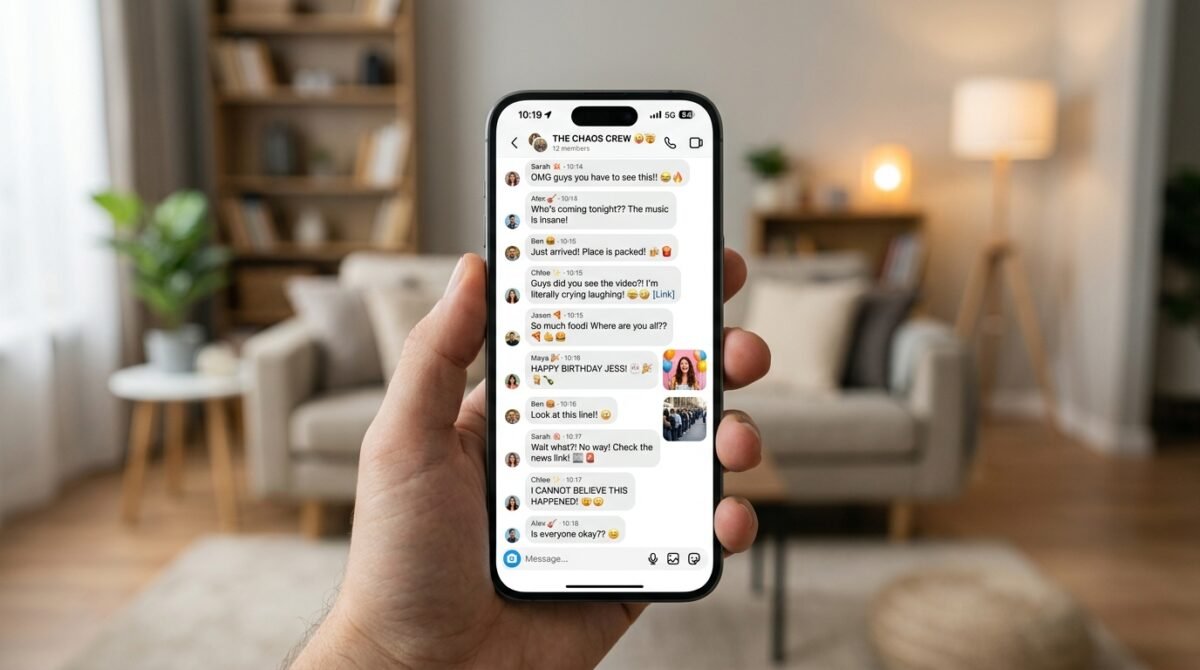
The fallout wasn’t limited to phone calls. Arthur didn’t just go to Mark; he went to the entire family. Within an hour, a group chat that hadn’t seen activity in months was suddenly blowing up with notifications. My mother-in-law, my sister-in-law, and even distant cousins were being pulled into the ‘injustice’ of the situation. Arthur had framed it as an act of petty vindictiveness on my part, omitting the minor detail about his verbal abuse of the staff.
“I don’t know what’s gotten into her. She’s throwing her weight around because she has a bit of money. She canceled my membership over a tiny misunderstanding at dinner. This is beyond disrespectful.”
— Arthur, in the family group chat
I read the messages as they came in, the phones vibrating in rapid-fire succession. My sister-in-law, Sarah, chimed in, asking me if I could ‘just smooth this over’ to avoid a massive family fight. I saw the messages piling up, people taking sides, most of them assuming I had overreacted because of some personal vendetta against Arthur.
I decided to reply, not with an apology, but with the truth. I typed out a concise, clear account of what happened. I didn’t exaggerate. I just laid out the facts: the incorrect wine, the verbal assault, and the fact that I chose not to be a financial enabler of that behavior. I sent it to the group chat, and for a solid five minutes, there was absolutely nothing. No typing bubbles, no replies. The silence was deafening.
Then, the replies started coming in. Some were supportive, but others were still siding with Arthur, arguing that ‘that’s just how he is’ and that I should be the ‘bigger person.’ It was the classic excuse used to protect the family patriarch at the expense of everyone else’s sanity. I put my phone down. I wasn’t going to spend my day defending my integrity to people who weren’t even there to see the look on Elena’s face.
Mark was looking at me, his eyes wide. He had read my response. “You really told them everything?” he asked, his voice soft. I nodded. “I’m not going to be the villain in his story because he can’t control his temper, Mark. If they have a problem with me standing up for someone being bullied, then they have a problem with me, period.”
The Inevitable Face-To-Face Confrontation

By the afternoon, Arthur showed up at our house. He didn’t call ahead. He just pulled into the driveway and hammered on the front door like he owned the place. I signaled to Mark to stay back. I was the one who canceled the membership, and I was the one who was going to have the conversation. I opened the door to find Arthur standing there, his face flushed with a mixture of entitlement and genuine confusion—he truly could not process why I would defy him.
“You’ve caused enough trouble,” he started, stepping inside without an invitation. “Fix the account. Now. You have no right to make unilateral decisions about our family dynamics. I’ve been a member of that club for fifteen years, longer than you’ve even known my son!” I stood my ground in the foyer, blocking his path to the living room. I didn’t invite him to sit down.
“You’ve been a member for fifteen years, Arthur, and yet you still don’t know how to treat someone with basic human decency. You lost the right to that membership the moment you decided your comfort was worth more than a person’s dignity. Pay for it yourself if it’s so important.”
— My response to Arthur at the front door
He scoffed, a short, sharp sound of disbelief. “I shouldn’t have to pay for it! It’s a family benefit. Mark, tell your wife to stop acting like a petulant child.” Mark stood behind me, his hands shaking slightly. He looked at his father, then at me. For a second, I thought he would buckle. But he didn’t. He took a breath and spoke, his voice surprisingly firm.
“Dad, I was there. I heard what you said to her. It was horrible. I didn’t say anything at the time, and I regret that. But I’m not going to force her to pay for your membership when you’re going to use it to act like that. She’s right. If you want the club, you have to find the funds.” Arthur stared at us, his mouth slightly agape. He hadn’t expected his son to align with me.
He didn’t stay long after that. He realized the power dynamic had shifted. He wasn’t the patriarch being challenged by a daughter-in-law; he was a man being held accountable by his family. He left, but not before promising that this wouldn’t be the end of it. As he slammed the door, the house felt strangely quiet, and for the first time in years, it felt like it actually belonged to us.
The Online Verdict: Reddit Weighs In

That evening, feeling the need to vent, I posted the full story on a popular forum. I didn’t use names, and I kept it objective. I wanted to see if I was truly the villain as Arthur claimed. Within an hour, the upvotes started rolling in. By the next morning, it was on the front page of the subreddit. Thousands of people were commenting, and to my surprise, the consensus was overwhelmingly in my favor.
“NTA. You aren’t just teaching him a lesson; you’re drawing a boundary. People who think their money makes them better than service staff are the absolute worst. Don’t back down. If you do, he’ll just do it again.”
— u/JusticeForServers, 18.2k upvotes
There were hundreds of comments like that. It was validating to see so many people recognize the toxicity of the situation. Some even suggested that this was a pattern of behavior that probably went back decades. I read through the threads, finding comfort in the fact that I wasn’t alone in dealing with entitled family members who use money as a weapon.
However, there were dissenting voices, too. A few people argued that I should have handled it privately, without involving the rest of the family. “You didn’t have to put his dirty laundry out in the group chat,” one user noted. I thought about that. Maybe I could have been more discreet. But then I remembered the way Arthur treated Elena, and I realized that he hadn’t been discreet with his abuse. Why should I be discreet about his consequences?
Another comment stood out. “You’re not just canceling a membership; you’re breaking a cycle of enable-ment. Mark is finally seeing his father for who he is. That’s the real win here.” That comment stayed with me. It wasn’t about the $1,200. It was about the fact that we were finally setting our own terms for our lives, and the family was going to have to deal with the new reality.
I showed the top comments to Mark. Seeing the community reaction helped him realize that his father’s behavior wasn’t just ‘normal’ or ‘eccentric’—it was unacceptable. It was a turning point for us as a couple. We weren’t just a pair of kids trying to navigate family politics anymore; we were a unit with our own values, and we were prepared to defend them.
The Aftermath: A New Kind of Family Dynamic

A month has passed since the ‘Wine Incident,’ as we call it now. Arthur has not renewed his membership at The Crest. Apparently, he couldn’t justify the cost when he had to pay for it himself, which tells me everything I need to know about his priorities. He’s been cold towards us, and the family group chat has been largely silent, which I find to be an absolute blessing.
We have had a few awkward run-ins at family gatherings. Arthur tries to act like nothing happened, occasionally making passive-aggressive comments about ‘today’s youth’ or ‘lack of respect for elders.’ I don’t engage. I just smile, finish my drink, and change the subject. It’s incredibly satisfying to know that I have the power to walk away from his nonsense whenever I choose.
“You’ve changed, you know. You used to be so accommodating. Now you seem… I don’t know, untouchable.”
— Mark’s sister, Sarah, during a recent lunch.
I told her that I haven’t changed; I just stopped pretending that respect is a one-way street. The ripple effects in our marriage have been profound. Mark is more assertive, more confident, and less prone to the anxiety he used to feel around his father. We’ve started setting boundaries in other areas of our lives, too—not just with Arthur, but with friends and professional acquaintances who don’t align with our values.
I also went back to The Crest. I made sure to stop by the front desk and talk to the manager. I asked them to pass on an apology to Elena for the incident. They told me she had actually quit the next day—not because of the incident, but because she had landed an internship in her field of study. I felt a wave of relief. She didn’t let that man define her future, and in a way, I had been part of her exit strategy.
There’s a quiet, underlying tension in the family now, but it’s a healthy tension. It’s the kind of silence that happens when people realize they can no longer push you around. Arthur knows he can’t buy my deference, and he knows that if he acts up again, there will be consequences. It’s not the relationship I envisioned, but it’s the only one that allows me to keep my self-respect intact.
Financial Lessons in Boundary Setting

People often ask if the money was worth it. Was it worth burning bridges over $1,200? The answer is an unequivocal yes. If you look at it strictly as a financial transaction, it’s a small price to pay for the freedom to be around people who align with your morals. If I had continued to pay those dues for another ten years, I would have spent $4,800. That’s a decent chunk of change, but it’s nothing compared to the cost of my mental peace.
| Action | Financial Cost | Emotional Return |
|---|---|---|
| Canceling Dues | -$1,200/Quarter | Priceless Freedom |
| Maintaining Status Quo | $0 (for me) | High Stress/Compromise |
| Setting Boundaries | Some Family Tension | Increased Self-Worth |
The table above is a simplification, of course, but it captures the essence of the choice. We are conditioned to think that family obligations are unconditional. We are taught that ‘blood is thicker than water’ and that we should endure almost anything to keep the peace. But peace that is purchased at the cost of your integrity isn’t peace; it’s just a fragile, temporary truce that eventually breaks.
I’ve learned that money is a powerful tool for setting boundaries. When you stop subsidizing someone’s bad behavior, you take away their most potent weapon. Arthur used the membership to feel superior, and by removing it, I stripped him of that illusion. It was a simple, logical action that had a profound effect on his ability to intimidate us.
I don’t regret the way I did it. I don’t regret the group chat message, and I don’t regret the public stance. Sometimes, when you’re dealing with someone who thrives on power, you have to use the tools at your disposal to level the playing field. It wasn’t about the money. It was about the principle of the matter, and I would do it again in a heartbeat if I had to.
The Evolution of My Relationship with Mark

Mark and I have grown closer than ever. Before this, we were living in a reality where we were constantly walking on eggshells. Now, we are partners in a true sense. We talk about our boundaries, we support each other when things get tough, and we have a shared understanding of what is acceptable and what isn’t. It’s amazing what a little bit of honesty can do for a marriage.
He admitted to me that he had been harboring his own resentment toward his father for years but was just too afraid to speak up. Seeing me take that stand gave him the courage he needed to be honest with himself. We’ve even discussed going to couples’ therapy to work on how to continue setting these boundaries, not just with his family but with the pressures of our own lives.
“I feel like I’ve been living in a dream, and you finally woke me up. I don’t want us to be like them. I want us to be who we choose to be.”
— Mark, during a quiet conversation last week.
We are making a conscious effort to break the patterns that we were raised in. It’s not easy, and there are days when the guilt creeps in, but we remind ourselves that we are building a foundation for our own future, one that isn’t defined by our parents’ expectations or their failures. We are creating our own version of ‘family’—one built on mutual respect and genuine care.
This experience has been a catalyst for a much larger transformation. We’ve started volunteering together, spending our time and money in ways that actually make a positive impact rather than just feeding into the egos of others. It’s been incredibly rewarding to see the world from a perspective where we are in control of our own actions and their consequences.
Looking back, I realize that the wine incident was a blessing in disguise. It forced a confrontation that was long overdue, and it gave us the opportunity to define our life on our own terms. I’m grateful for that moment of anger, because it led to a lifetime of clarity. We are no longer living for other people’s approval, and that, more than anything, is the greatest gift I could have given myself.
Finding the Courage to Walk Away

The final lesson I’ve taken away from this is the importance of knowing when to walk away. Whether it’s a job, a relationship, or a membership, you have to be willing to lose something in order to gain your dignity. Too many of us stay in situations that degrade us because we’re afraid of the ‘what ifs.’ What if they get angry? What if people judge me? What if I lose my status?
The truth is, those are the exact reasons you should leave. If staying somewhere requires you to sacrifice your moral compass, then it’s not a place you belong. I’ve found that the things I was most afraid of losing—my status at the club, my ‘good’ relationship with my father-in-law—were the very things that were holding me back from being the person I wanted to be.
I encourage anyone reading this to take an inventory of their own lives. Are there areas where you are enabling toxic behavior because you’re afraid of the consequences of setting a boundary? Are there people in your life who you keep around simply because of tradition or obligation? If so, consider the cost of that relationship. Is it worth your self-respect?
It takes courage to stand up to people who are used to being in control. It takes even more courage to stick to your guns when they push back. But once you realize that you have the power to walk away, the fear starts to dissipate. You don’t have to be perfect, and you don’t have to be polite when someone is mistreating you or the people around you.
So, here is my challenge to you: find one thing in your life that you are holding onto out of obligation rather than genuine value, and ask yourself what would happen if you let it go. You might be surprised at the sense of relief you feel. We are all responsible for the environments we create, and sometimes, the best way to improve that environment is to simply remove the source of the toxicity.
Conclusion
In the end, my decision to cancel the membership was never about the money. It was about the principle of the matter. When we allow people to act with impunity, we become complicit in their behavior. By setting that boundary, I didn’t just save myself from the stress of being associated with a bully; I empowered my husband to face his own reality and stood up for the dignity of someone who couldn’t stand up for herself.
The fallout was intense, yes, but it was also the beginning of a new chapter for us. We’ve learned that the only people who get angry when you set boundaries are the ones who were benefiting from you having none. We are now living our lives on our own terms, and the quiet we have at home is worth every penny of those dues I stopped paying.
What about you? Have you ever had to cut off a family member or pull back on a financial arrangement to keep your dignity? Did you face the same kind of backlash, or were you surprised by the support you received? Share your stories in the comments below—let’s discuss how to navigate these impossible family dilemmas and find the strength to set the boundaries we deserve.
What's your verdict on this dilemma?
Vote below to contribute to the official community consensus.

Have a Dilemma Keeping You Up at Night?
Share your real-life feud, wedding chaos, or relationship crossroads anonymously with our editorial team.
What do you think ?
0 Comments🛡️ Comments are moderated to protect community integrity. Your comment will appear once approved by the editorial team.