
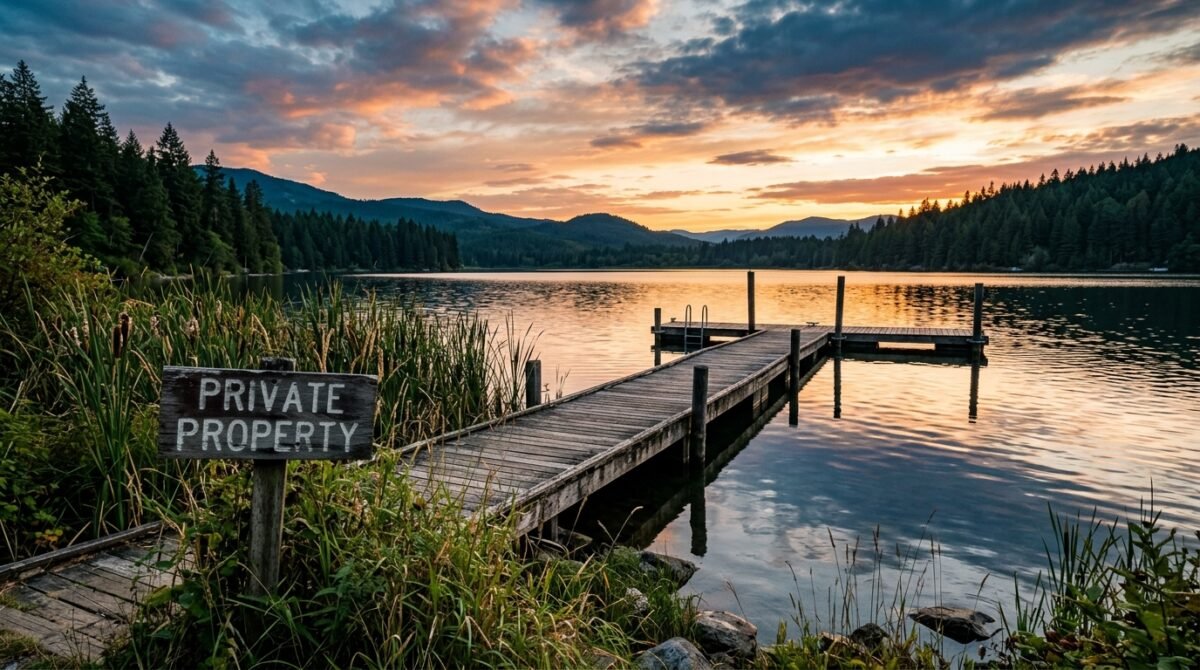
I grew up on the shores of Lake Havasu, in a house that my grandfather built with his own two hands. While the house itself was modest, he had secured a rare, grandfathered-in permit for a private deep-water dock. That dock became the anchor of my childhood and, eventually, my most prized possession after I inherited the property following my father’s retirement. It was my sanctuary, a place where I spent my weekends reading, fishing, and enjoying the silence of the water.
My brother, Greg, has always been the golden child—the one who needed constant validation and an audience for his expensive hobbies. Five years ago, he decided to launch an ‘exclusive’ ski boat club, a venture that mostly involved him and his friends drinking overpriced craft beer while hogging the local public boat ramp. When he found out I was the sole owner of the waterfront property, the dynamic of our relationship shifted from indifferent to predatory.
The entitlement wasn’t immediate, but it was inevitable. At first, it was just requests to ‘park a boat for an hour.’ Then, it became demands to host weekend-long club events on my dock. When I refused, the narrative shifted from ‘brotherly favors’ to ‘family duty.’ My parents, who had long since retired to a condo across town, began to weigh in, suggesting that my refusal to ‘share’ was a character flaw. They viewed my dock not as my private property, but as a family utility that existed for Greg’s social success.
The tension simmered for eighteen months, reaching a breaking point during a sweltering July afternoon when I arrived home to find three of Greg’s club members spray-painting a ‘Ski Club HQ’ banner onto the dock’s wooden decking. That was the moment I realized that no amount of polite boundary-setting would ever work with people who didn’t respect ownership. I didn’t yell. I didn’t call the police immediately. I simply walked into my house, pulled up my laptop, and initiated the process of selling the water rights to a developer who had been scouting the area for months.
This is the story of how a single decision turned my family upside down, the fallout of reclaiming my agency, and the sheer audacity of the entitlement that led to the permanent destruction of a family asset. It is a lesson in what happens when you mistake someone’s kindness for a lack of backbone.
The Slow Creep of Entitlement

It began subtly, during a family barbecue back in the spring of 2022. Greg mentioned his ski boat club was struggling to find a consistent ‘home base’ on the lake because the municipal marina was charging exorbitant fees for seasonal slips. I remember him looking at me with a smirk, mentioning how my dock was ‘basically just sitting there, gathering dust.’ I brushed it off, thinking he was just venting about his business problems.
Within two weeks, the requests became specific. ‘Just use it for the Saturday morning launch, it’s empty anyway,’ he had said. I told him no, citing insurance liabilities and the fact that I didn’t want the noise of a dozen boat trailers echoing through my backyard every weekend. My parents were there, and the look of disappointment on my mother’s face was palpable. She didn’t say a word, but the silence was loud.
By summer, the ‘casual’ requests turned into calendar invites. I started seeing my dock listed as the meeting point on an internal group chat I wasn’t supposed to see. I had to physically start locking the gate leading to the pier. Every time I did, I received a phone call from my father, questioning why I was being so ‘difficult’ and reminding me that family is supposed to support each other’s business endeavors.
“It’s just a dock, son. You’re holding onto it like it’s a gold bar. Greg is trying to build a business, and you’re treating him like a stranger. Can’t you just give him a key and let him manage the logistics?”
— My Father, in a heated phone call, June 2023
The pressure wasn’t just about the dock; it was about control. They wanted to see Greg succeed, and they wanted to use my assets to subsidize that success without paying a dime. They couldn’t understand that I had my own plans for the space, including a small yoga deck I wanted to build and quiet time that was non-negotiable for my mental health.
I began to document every unauthorized entry. I installed a security camera, not because I wanted to sue them, but because I needed proof that they were trespassing. Seeing Greg’s buddies drinking on my pier while I was at work was infuriating. I realized then that they didn’t just want access; they wanted to take over. My property had become a free resource, and my family was the primary squatter.
The Incident at the Pier
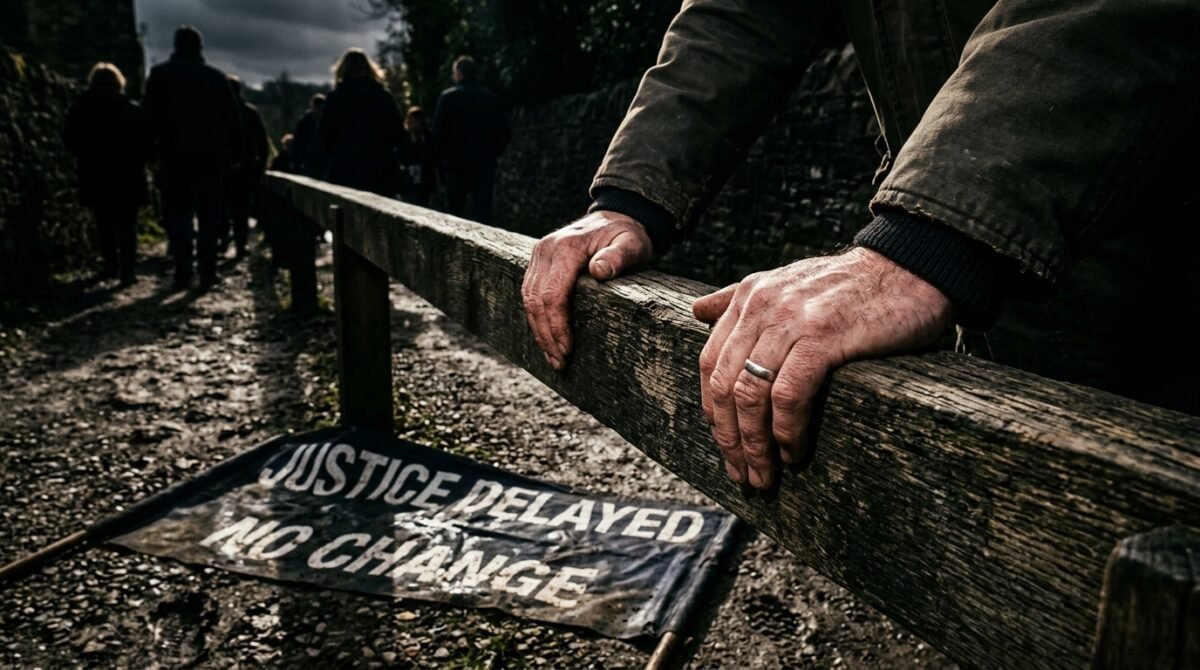
The breaking point occurred on a Saturday in mid-July. I had specifically told Greg on Friday that the dock was closed for the weekend as I had guests coming over for a small dinner party. He had responded with a simple ‘Whatever, man,’ which I took as an acceptance of the boundary. I was dead wrong.
When I walked down to the pier at 10:00 AM to set up some chairs, I found the area littered with empty seltzer cans, a discarded life jacket, and that hideous banner draped across the railing. The smell of cheap beer was heavy in the humid air. Three of Greg’s club members were still there, lounging in my Adirondack chairs, clearly waiting for the rest of the group to arrive.
I didn’t argue. I didn’t ask them to leave. I simply walked over to the banner, ripped it down in one violent motion, and tossed it into the lake. The look of confusion on their faces was priceless, but it was quickly replaced by indignation as they realized I wasn’t joking. I told them they had exactly three minutes to get off my property before I called the Sheriff’s department for trespassing.
“You realize Greg said we could be here, right? Who do you think you are, kicking us off? This place is basically a public club spot now. Don’t be a dick.”
— One of Greg’s club members, 10:15 AM
I didn’t answer. I stood there, arms crossed, watching the clock on my phone. They eventually left, grumbling and cursing, but the damage was done. My morning was ruined, and the sense of violation was absolute. I knew then that I couldn’t keep this property in a way that allowed them access. I had to make the ‘family asset’ disappear.
I called Greg immediately afterward. He didn’t apologize. Instead, he launched into a tirade about how I was ‘ruining the vibe’ of his business and embarrassing him in front of his crew. I told him he had until the end of the month to remove any remaining gear from my property, or it would be disposed of. The finality in my voice must have shocked him, because he finally went quiet.
The Secret Transaction

The decision to sell the dock rights wasn’t one I made out of anger, but out of cold, calculated logic. I looked up the local real estate laws and discovered that I could sever the dock access from the primary residential lot and sell it to an adjacent property owner who had been interested in expanding their waterfront footprint for years. It was a legal loophole, and it was entirely mine to use.
I contacted the neighbor, Mr. Henderson, a man who valued his privacy even more than I did. We met for lunch the following Tuesday. I told him I was done with the drama and wanted to offload the dock rights immediately. He didn’t even haggle; he knew the value of that deep-water access. We signed the preliminary paperwork that afternoon.
The price was fair—more than enough to pay off a significant chunk of my mortgage. It was a win-win. I would lose the dock, yes, but I would also lose the source of every argument, every trespassing incident, and every condescending comment from my family. The weight lifted from my shoulders the moment the ink dried on the contract.
Of course, I didn’t tell my parents or Greg. I wanted it to be a surprise. I knew how Greg would react—he would view it as a personal betrayal of the ‘family brand.’ But at that point, the ‘family brand’ was just a synonym for ‘exploiting the middle child.’ The secrecy felt like power.
For the next two weeks, I lived my life as normal, watching them plan their next big ‘event’ in the family group chat. It was almost comedic, seeing them discuss logistics for a dock that was no longer legally accessible to them. The irony was delicious, and I savored every message, knowing that the floor was about to drop out from under them.
The Group Chat Explosion
The realization hit them on a Friday evening. Greg had arrived at the dock with a trailer full of supplies, only to find a massive, permanent chain-link fence installed across the access path, topped with a ‘Private Property – No Trespassing’ sign and a new, heavy-duty padlock. The transition had been handled by Mr. Henderson’s crew while I was at work.
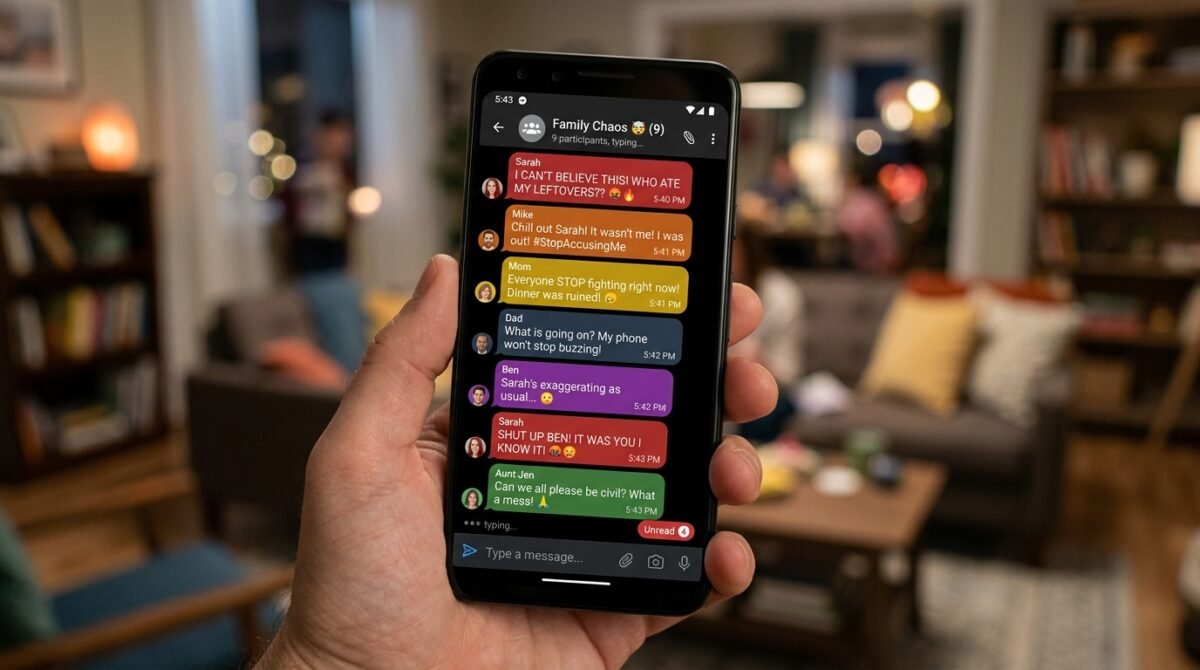
My phone started buzzing incessantly. It was the family group chat, which had been relatively quiet for a few days. The first message was from my mother, followed by a flurry of frantic texts from Greg. It was a digital cacophony of entitlement and confusion, and I made sure to take screenshots of every single one.
“What is this fence? Are you kidding me? We have clients coming at 8:00 AM! Open this gate right now! You’re literally sabotaging my business!”
— Greg, in the Family Group Chat
“You’re acting like a child. Take that fence down immediately. Your father and I are coming over to handle this. You have no right to block access to your brother.”
— Mom, in the Family Group Chat
I waited for the dust to settle before responding. I didn’t want to get into a shouting match. I wanted to deliver the news with clinical precision. I typed out a single message, knowing it would send them into a spiral. ‘The dock is no longer mine. I sold the usage rights to Mr. Henderson. The property is now part of his estate. Good luck with your business.’
The group chat went dead silent for a full ten minutes. I imagine there was a lot of frantic whispering and disbelief. Then, the messages started pouring in again, but this time they were different. The tone had shifted from entitled to desperate. They couldn’t wrap their heads around the fact that I had actually done it. They thought I was bluffing, or that I was just being ‘difficult’ for attention.
The Confrontation at the Door
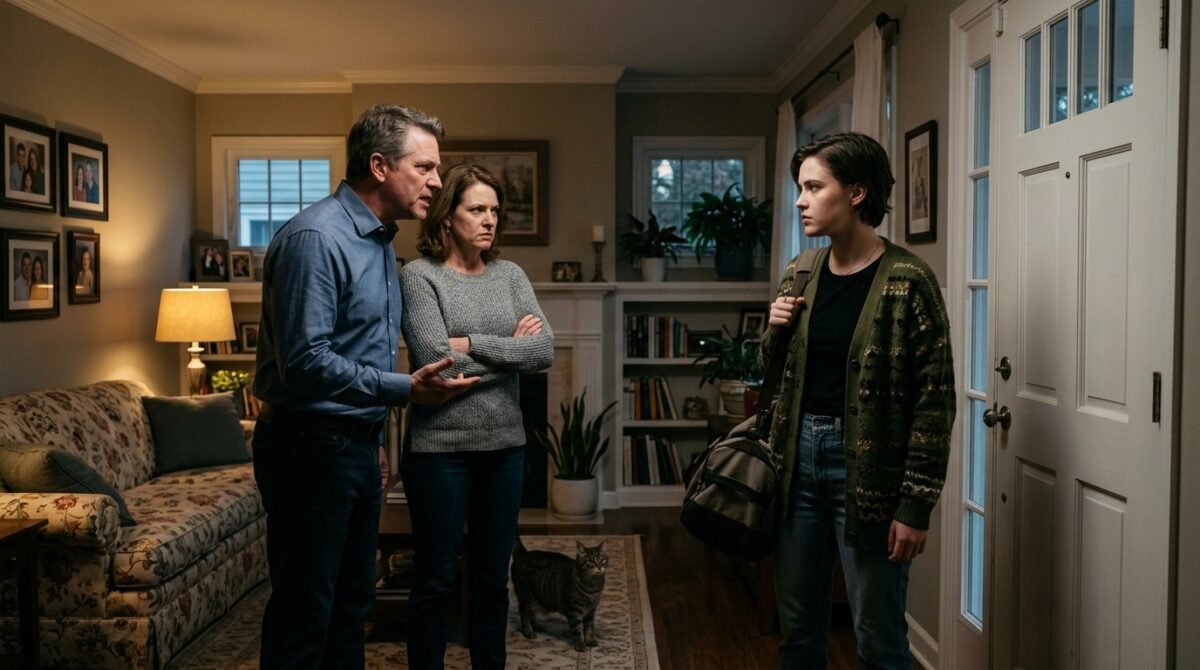
My parents arrived at my house within the hour. They didn’t knock; they pounded on the door like they owned the place. I opened it to find my father red in the face and my mother looking more disappointed than I had ever seen her. They didn’t wait for an invite. They pushed past me into the living room, ready for a fight.
My father started in immediately, demanding to know where the money went and why I hadn’t ‘consulted’ the family before making such a massive decision. He acted as if he had a legal claim to my property, despite the fact that I had held the title for years. He called me selfish, shortsighted, and an embarrassment to the family name.
I kept my voice low and calm. I told them that the dock was mine to dispose of as I saw fit, and that I was tired of being the family doormat. I pointed out that I had given them every opportunity to treat me with respect, but they had chosen to prioritize Greg’s business over my peace of mind. It was a hard truth, and they weren’t ready to hear it.
“You have no idea what you’ve done. You’ve burned a bridge that took us years to build. Greg is devastated. How could you be so cold? It was a family asset!”
— Dad, during the living room confrontation
My mother started crying, talking about how ‘the dock was the heart of our summer memories’ and how I was ‘tearing the family apart.’ I didn’t feel guilty. I felt relieved. The dock wasn’t the heart of the family; it was the leverage Greg used to manipulate me. The memories were tainted by the current reality of their behavior.
I told them to leave. When they refused, I picked up my phone and dialed the local police non-emergency line. The sight of me actually making the call was enough to get them to exit. They left, but the look on their faces told me they weren’t done trying to get their way. They still thought they could ‘fix’ this, as if I would just go back and buy the rights back from Mr. Henderson.
Reddit’s Verdict: The Community Reacts

I decided to post the story on a popular subreddit to see if I was actually the villain. I laid out the timeline, the trespassing, the group chat messages, and the final sale. The response was immediate and overwhelming. Thousands of people weighed in, and the vast majority were firmly on my side. It was validating to hear that my boundaries were not just reasonable, but necessary.
“NTA. Your parents and brother have been treating your property like a public resource for years. The moment you put up a fence, they should have realized they were guests, not owners. Selling it was the ultimate power move. Don’t look back.”
— u/LakeLifeLover (Top Comment, 18.2k upvotes)
There were, of course, the dissenters—the people who argued that ‘family comes first’ and that I should have found a way to compromise. But they were drowned out by the stories of other people who had suffered through similar experiences of ‘familial entitlement.’ It turns out, this is a common theme in family dynamics, and it often requires a nuclear option to break the cycle.
The community analysis was fascinating. People pointed out the legalities of property rights and the psychological tactics my parents were using—guilt-tripping, gaslighting, and the classic ‘you’re being difficult’ maneuver. It helped me realize that this wasn’t just a conflict over a dock; it was a conflict over my autonomy as an adult.
“The fact that they think they have a say in your financial decisions regarding your own property is the biggest red flag here. They aren’t looking for a ‘family asset’; they are looking for a free ride for Greg. You did the right thing by cutting that anchor loose.”
— u/BoundarySetter (12.5k upvotes)
Reading these comments gave me the strength to maintain the no-contact period I had implemented. Every time I felt a twinge of guilt, I would go back and read the top-voted comments. It was a reminder that I wasn’t crazy, and that I didn’t owe my family access to my life or my assets just because we shared a last name.
The Aftermath and New Realities
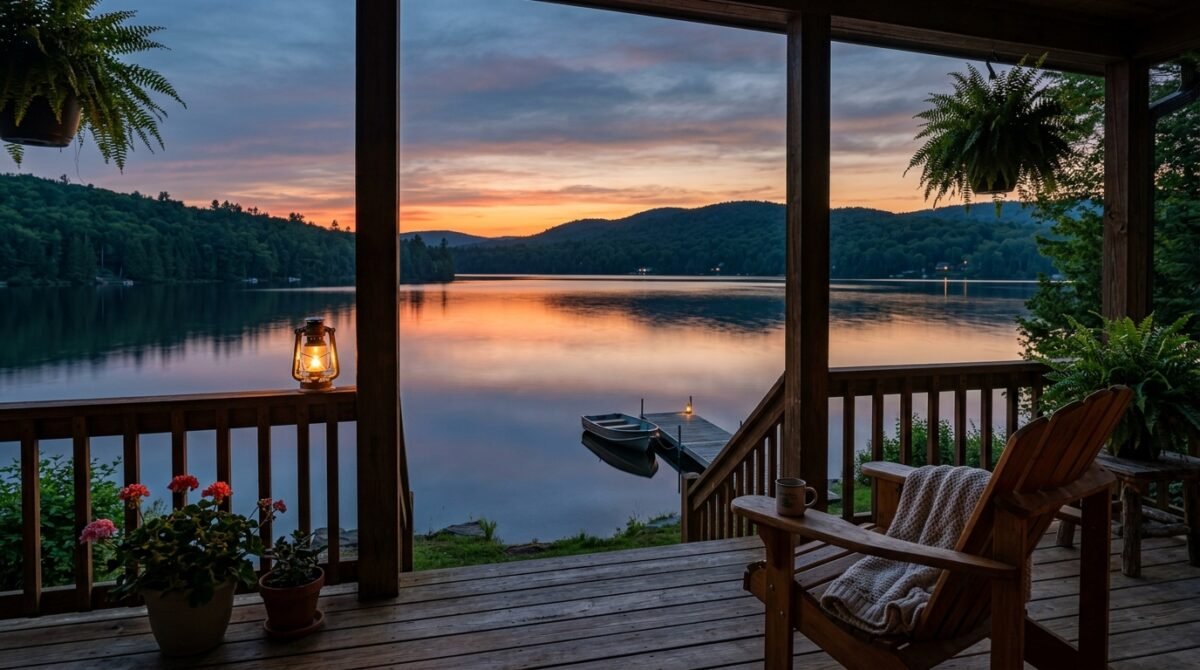
It has been six months since I sold the dock. Greg’s ski club folded within a month. Without the free, high-quality access to the water, his ‘business model’—which was essentially just hanging out on my property—collapsed. He tried to start it up at a public launch, but the city council shut him down for lack of proper permits and noise complaints. He blames me for the failure, of course.
My parents haven’t spoken to me since the day they left my house. They have sent a few passive-aggressive emails about ‘forgiveness’ and ‘family unity,’ but they haven’t once apologized for the trespassing or the entitlement. I haven’t responded to any of them. I’ve realized that for them, reconciliation would just mean I apologize for being ‘difficult’ and let them back into my life on their terms.
Mr. Henderson has since built a beautiful, private gazebo on the dock. I occasionally see it from my back porch. It’s quiet, and nobody is hosting loud parties or spray-painting banners. It’s exactly what I wanted for my home. I don’t regret the sale for a single second. The financial boost allowed me to invest in my own career and take a vacation I had been putting off for years.
The silence from my family has been the biggest gift. It’s given me the space to define who I am without their expectations looming over me. I’ve started setting boundaries in other areas of my life, too. If someone asks for something that I’m uncomfortable with, I no longer feel the need to explain myself or offer a compromise. I just say ‘no.’
It’s a strange feeling, being the ‘black sheep’ of the family. But as I’ve learned, the black sheep is often just the one who refused to be sheared. I’m living my life on my own terms now, and for the first time in years, I can sit on my back porch and truly enjoy the view of the lake, undisturbed by the demands of people who never really cared about the dock—they only cared about what they could get from it.
Reflecting on the Cost of Boundaries

When you set a boundary that truly matters, you have to be prepared for the fallout. Many people think setting boundaries is about ‘finding a compromise’ or ‘talking it out.’ Sometimes, that’s true. But when you are dealing with people who are fundamentally entitled to your resources, boundaries are a declaration of war. You have to be prepared for the anger, the guilt-tripping, and the loss of relationships.
I lost my relationship with my brother and my parents. That’s a heavy price to pay. But I have to ask myself: what kind of relationship was it, really? Was it based on love and mutual respect, or was it based on them taking from me? When I look at it objectively, I realize that the relationship was already dead. The dock was just the thing that exposed it to the light.
I think about the people who say I should have just ‘shared.’ They don’t understand the cumulative effect of being used. It wasn’t about the dock. It was about the fact that they never stopped to ask if I was okay with what they were doing. They never stopped to consider my feelings or my rights. To them, I was just a means to an end, a resource to be tapped whenever it was convenient.
If I had to do it all over again, I would have set the boundaries much earlier. I wouldn’t have waited for the banner-painting incident. I wouldn’t have let them talk to me the way they did. I would have been firmer, faster, and more decisive. But I’m happy with how I handled it in the end. I didn’t lose my cool, and I didn’t let them bully me into changing my mind.
The lesson here is simple: you are the guardian of your own peace. Don’t let anyone, family or otherwise, convince you that your rights are negotiable. Your property, your time, and your energy are yours to protect. And sometimes, the only way to protect them is to remove the asset that is causing the conflict entirely.
The Anatomy of Entitlement

Looking back, the signs of entitlement were everywhere. My brother treated the lake as his personal playground, and my parents treated my property as their family hub. They never considered that I had bought the house with my own savings, worked to pay off the mortgage, and maintained the dock through my own hard work. They simply saw ‘family’ and ‘opportunity.’
Entitlement is a parasite. It feeds on the kindness of others, and it justifies itself through narratives like ‘family duty’ or ‘brotherly support.’ My brother didn’t see himself as a trespasser; he saw himself as a visionary who was being blocked by a petty sibling. My parents didn’t see themselves as enablers; they saw themselves as peacemakers trying to help their kids get along.
The most dangerous form of entitlement is the kind that disguises itself as affection. When they said, ‘We just want what’s best for the family,’ what they really meant was, ‘We want what’s best for Greg, and we don’t care how it affects you.’ It took me a long time to distinguish between actual family love and the performative version they practiced.
I’ve learned to spot the signs now. If someone asks for a favor and then acts as if they have a right to it, that’s a red flag. If they ignore a ‘no’ and try to find a way around it, that’s a power play. And if they use ‘family’ as a weapon to make you feel guilty, that’s emotional manipulation. I don’t tolerate any of that anymore.
The sale of the dock was a wake-up call, not just for them, but for me. It forced me to confront my own history of people-pleasing and silence. I’m no longer the person who stays quiet to keep the peace. I’ve realized that the ‘peace’ they were talking about was just the silence of my own resentment. I’d much rather have the noise of an honest conflict than the suffocating silence of an unequal relationship.
Moving Forward: Life Without the Dock

Life is different now. The absence of the dock has created a literal and figurative space in my life. I have more time to myself, less stress, and a much cleaner living environment. I don’t worry about who is coming onto my property or what they’re planning to do with it. That peace of mind is worth more than any dock could ever be.
I’ve started taking up new hobbies. I’m into hiking now, which takes me away from the lake entirely. I’ve met a new group of friends who respect boundaries and who appreciate me for who I am, not for what I have. It’s refreshing to have relationships that are based on mutual respect rather than utility.
My advice to anyone dealing with similar family drama: don’t be afraid to take the nuclear option. Sometimes, the only way to save yourself is to destroy the thing that is causing the problem. It’s scary, and it will hurt, but the freedom on the other side is worth it. You don’t have to carry the weight of other people’s expectations forever.
I’m finally at peace with my decision. I don’t look at the lake with regret anymore. I look at it with the satisfaction of knowing that I did what I had to do to reclaim my life. The dock is gone, but I am still here, stronger and more independent than ever before. That’s the real victory.
Thank you for letting me share this story. It’s been a long journey, and writing this out has helped me process the final stages of the fallout. If you’re going through something similar, remember: your boundaries are the most powerful tool you have. Don’t let anyone take them from you.
Conclusion
The saga of the waterfront dock remains a definitive chapter in my life, a stark reminder that blood ties do not grant a license to exploit. By liquidating the asset that fueled my family’s sense of entitlement, I didn’t just solve a property dispute; I severed the invisible strings of manipulation that had held me back for years. The fallout was loud, painful, and ultimately necessary.
Reflecting on this, I realize that the true cost of ‘keeping the peace’ is often the sacrifice of one’s own identity and autonomy. I chose the hard path—the path of resistance and reclamation—and while it left me with a broken bridge to my past, it paved the way for a future built on my own terms. My family may view me as the villain of this story, but I view myself as the hero who finally stood up to the pressure.
What about you? Have you ever had to take drastic measures to reclaim your property or your peace from entitled family members? Did you feel the guilt, or was it pure, unadulterated relief? Share your own experiences below—let’s discuss the complexities of boundaries, family dynamics, and the high price of saying ‘no.’
Poll: If you were in my shoes, would you have sold the dock, or continued trying to set boundaries?
- Sold it immediately (The only way to be sure).
- Tried therapy or mediation first.
- Let them use it to keep the peace.
- Already went through a similar situation and chose to go no-contact.
What's your verdict on this dilemma?
Vote below to contribute to the official community consensus.

Have a Dilemma Keeping You Up at Night?
Share your real-life feud, wedding chaos, or relationship crossroads anonymously with our editorial team.
What do you think ?
0 Comments🛡️ Comments are moderated to protect community integrity. Your comment will appear once approved by the editorial team.