
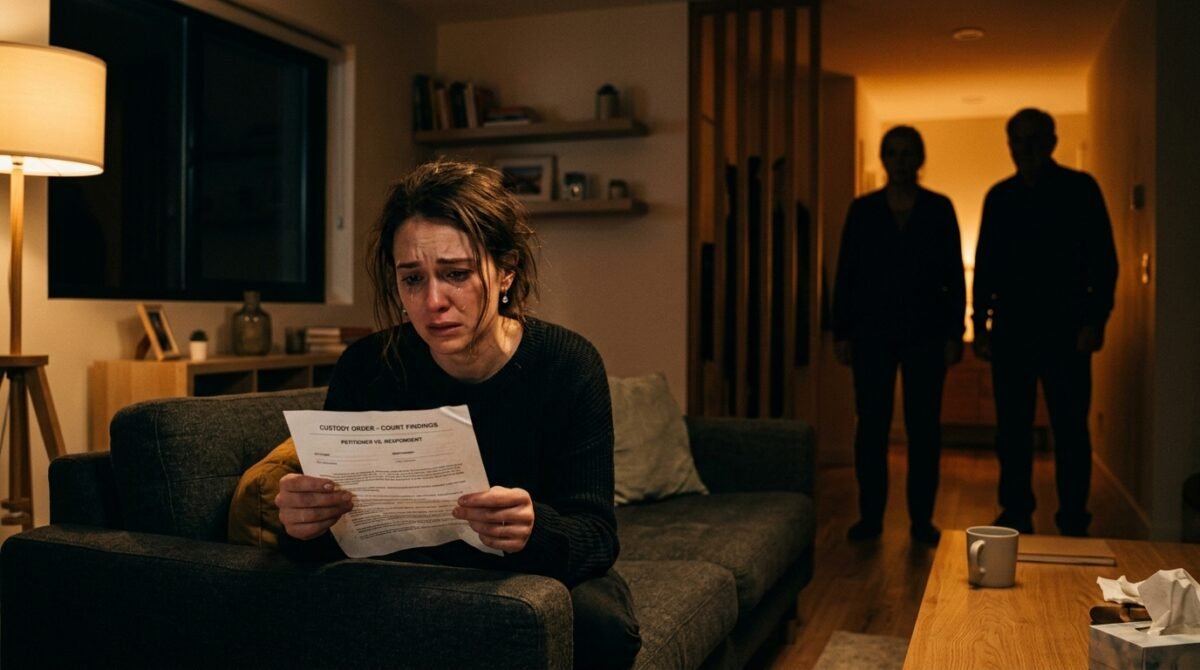
When my husband, Mark, and I brought our daughter, Clara, home from the hospital, we expected the usual unsolicited advice: which stroller to buy, how to get her to sleep through the night, and whether she was wearing enough layers. What I never expected was for my in-laws, Linda and Robert, to treat my motherhood as a mere suggestion rather than a job title. Their obsession with ‘natural’ living quickly transcended hobbyism and entered the realm of dangerous pseudoscience, specifically regarding raw, unpasteurized milk.
For the first six months, I was the primary caregiver, while Mark navigated a demanding promotion cycle. I trusted Linda to watch Clara during my weekly grocery runs and therapy appointments. It was only when I noticed a strange, earthy smell on Clara’s bibs—and observed a persistent, low-grade digestive upset—that I began to question what was happening in those two hours I was gone. The discovery that my mother-in-law was feeding my six-month-old raw cow’s milk, sourced from a ‘local farm’ she refused to name, was the catalyst for a war I never wanted.
The confrontation that followed was not a simple disagreement; it was a total breakdown of trust. When I laid out the medical literature regarding E. coli and listeria risks in infants, Linda laughed. She told me her own children were raised on it and that I was ‘killing my daughter’s immune system’ with my insistence on pasteurization. The moral dilemma wasn’t just about milk—it was about who held the ultimate authority over a child’s safety: the parents or the grandparents who believed their outdated experiences superseded modern pediatric science.
The situation escalated from a domestic dispute into a legal catastrophe within three weeks. After I formally cut off their unsupervised access to Clara, I received a certified letter that turned my life upside down. They weren’t just angry; they were filing for grandparental rights and emergency custody, alleging that my ‘extreme paranoia’ and ‘hostile gatekeeping’ were signs of a mother unfit to raise a child. Suddenly, my living room was no longer a sanctuary; it was a courtroom in the making.
The Sour Discovery in the Kitchen
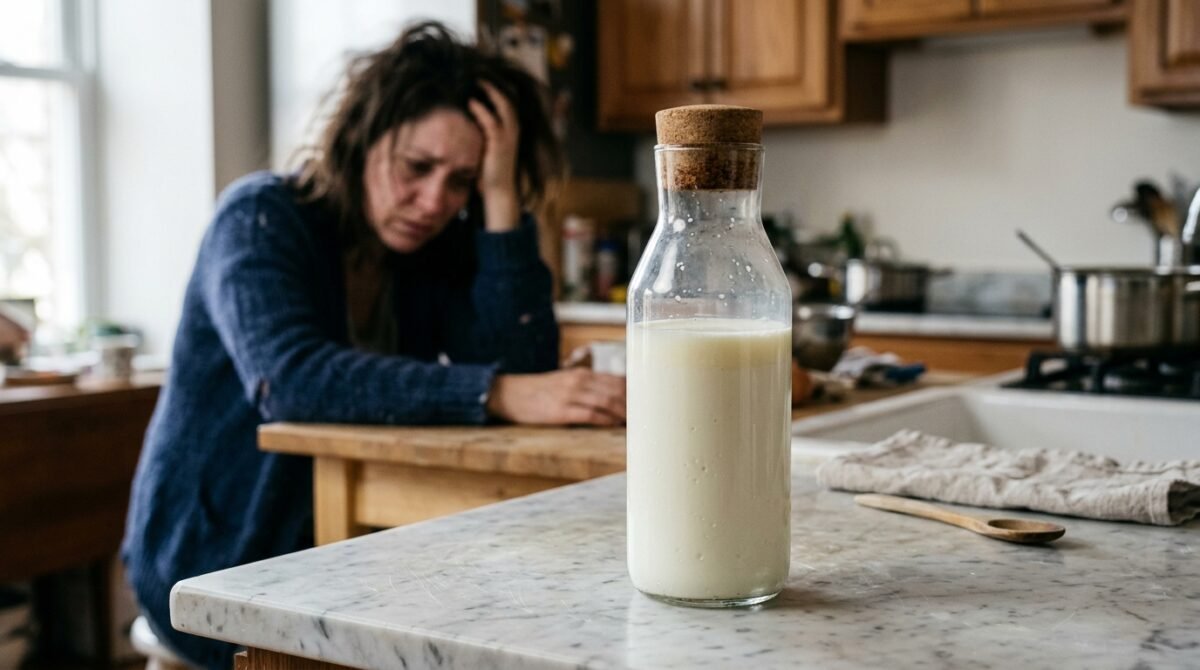
It started on a Tuesday, a day that felt like any other. I had returned from a quick trip to the pharmacy to find Linda sitting on the couch with Clara, a bottle resting on the child’s chest. When I walked into the room, Linda didn’t try to hide it; she simply smiled with a smug, knowing look. I noticed the bottle was opaque, a glass container that didn’t look like the ones I kept in our sterilized prep area.
I asked her what was in the bottle, and for a moment, she hesitated. Then she said, ‘It’s just some local goodness, Sarah. Don’t be so uptight. You’re depriving her of the probiotics she needs to actually be healthy.’ My heart sank. I snatched the bottle away, and the smell was unmistakable—the thick, heavy scent of raw, unpasteurized dairy. I felt a wave of nausea wash over me, not just from the smell, but from the realization that she had been doing this for weeks behind my back.
“You are not to give her anything but breastmilk or the formula I have authorized. If you cannot respect this, you are not allowed to be alone with her ever again.”
— Me, during the first confrontation
Linda’s face shifted from casual arrogance to cold fury. She stood up, smoothing her skirt as if she were the one being wronged. She told me that I was being a ‘helicopter parent’ and that my obsession with ‘sterile, factory-processed chemicals’ was going to lead to a weak child. She walked out of the house without saying goodbye to her granddaughter, leaving the air thick with tension.
Later that evening, when Mark came home, I showed him the remaining liquid in the bottle. He was shocked, but his reaction was muted. He kept saying, ‘Mom just wants what’s best, she’s old school.’ That was the first time I realized I was fighting two battles: one against my in-laws, and one against a husband who was conditioned to defer to his mother’s authority at the expense of our daughter’s health.
I spent that entire night reading pediatric medical journals and calling our pediatrician, Dr. Aris. The confirmation was clear: giving an infant raw milk was a medical gamble that could lead to severe bacterial infections. I felt isolated, trapped in a house where the walls felt like they were closing in. I started documenting everything—the dates, the times, and the conversations—never suspecting that these notes would eventually become exhibit A in a legal battle for my own child.
The Escalation of the Group Chat

The next morning, my phone started buzzing incessantly. It was the family group chat, a digital arena where my mother-in-law reigned supreme. She hadn’t just told Mark; she had involved his two sisters, both of whom were equally entrenched in the ‘natural living’ movement. They were tagging articles, memes about government control over food, and thinly veiled insults directed at my ‘anxiety issues.’
“It’s really sad that Clara is being kept from her family because Sarah is having a mental health crisis. We just want her to be strong. Maybe she needs a break from motherhood?”
— Linda, in the family group chat
I felt a cold shiver run down my spine reading that. A ‘break from motherhood’ was code for something much more sinister. I didn’t reply immediately. I knew that anything I typed would be used as evidence of my ‘instability.’ Instead, I took screenshots of every message. I saw my sisters-in-law chiming in, suggesting that maybe ‘the grandparents are the stable influence here’ and that ‘Mark needs to step up and make decisions for the child since Sarah is clearly struggling.’
Mark was silent in the chat, which hurt worse than the attacks. I turned to him, holding my phone out. ‘Are you going to defend me, or are you just going to let them talk about taking our child away?’ I asked. He sighed, looking at his screen. He was playing the mediator, telling them to ‘calm down,’ but he wasn’t standing up for my authority as a mother. He was treating the situation like a playground fight rather than an assault on our family unit.
I realized then that I was on my own. I went to my laptop and started searching for family law attorneys. I wasn’t just looking for a lawyer; I was looking for someone who understood that my desire to protect my child from a health risk was not a sign of mental instability. I felt like a criminal in my own home, constantly checking the locks and watching the driveway for their car.
The messages continued throughout the day. By lunch, they were debating ‘alternative’ medical treatments and suggesting that I was ‘overmedicating’ Clara because I used infant Tylenol after her vaccinations. They were building a narrative—a false, distorted version of our life—that was designed to make me look like a dangerous, delusional parent. It was a calculated smear campaign, and it was just beginning.
The Certified Letter of Doom
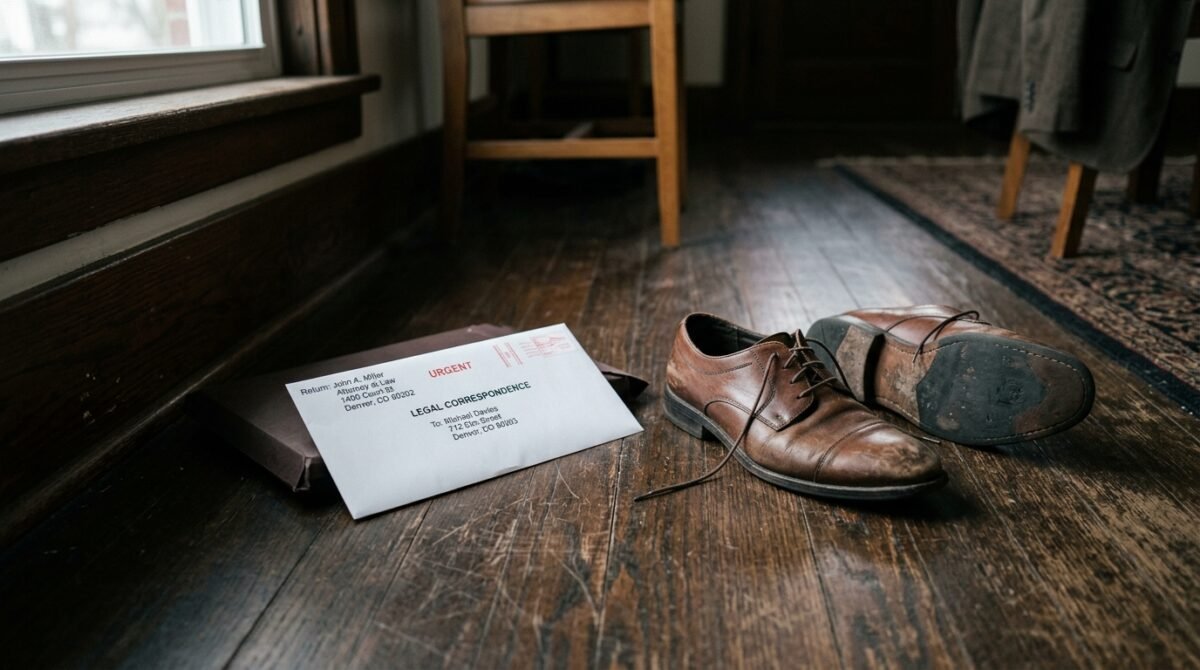
The knock at the door was heavy and deliberate. When I opened it, I didn’t see my in-laws; I saw a courier, his face impassive as he handed me a large manila envelope. My hands trembled as I tore it open. It was from a law firm specializing in family custody disputes. I sat on the floor of the foyer, the cold hardwood biting into my legs as I read the words that shattered my reality: ‘Petition for Custodial Rights and Temporary Emergency Guardianship.’
The document claimed that I was an unfit parent due to ‘erratic, paranoid, and restrictive behaviors’ that were isolating their grandchild from her ‘loving and supportive kin.’ They cited the ‘raw milk incident’ not as a health concern I had raised, but as a ‘minor dietary disagreement’ that I had used as a pretext to ‘weaponize the child’s health’ against the grandparents. It was a masterclass in gaslighting. They had twisted my protection of my daughter into an act of parental abuse.
I called my husband, who was at work. When I told him, he went deathly silent. ‘They wouldn’t do that,’ he finally whispered. ‘They just want to talk, Sarah. You’re overreacting.’ I screamed at him, the sound echoing off the walls of the house. I told him that I was holding the legal papers, that this wasn’t a talk—it was a declaration of war. He still didn’t grasp the gravity of the situation, and in that moment, I realized our marriage was fraying under the weight of his family’s intrusion.
“If you don’t call them right now and tell them to drop this, you are not coming back to this house until this is settled.”
— My ultimatum to Mark
He was stunned by the ultimatum, but I was past the point of compromise. I spent the rest of the day in a haze, meeting with a lawyer who looked at the document and immediately started taking notes on the ‘precedent of parental rights.’ She told me that while it was unlikely they would win, the process itself would be invasive, expensive, and emotionally draining. She warned me that they would try to dig into every aspect of my life.
That night, I didn’t sleep. I watched Clara sleep in her crib, a sense of fierce, protective rage burning in my chest. They wanted to take her? They would have to go through hell to do it. I was no longer the ‘anxious mother’ they wanted to paint; I was a woman defending her family from a predatory in-law dynamic that had been festering for years, masked as ‘love’ and ‘tradition.’
The Community Weighs In
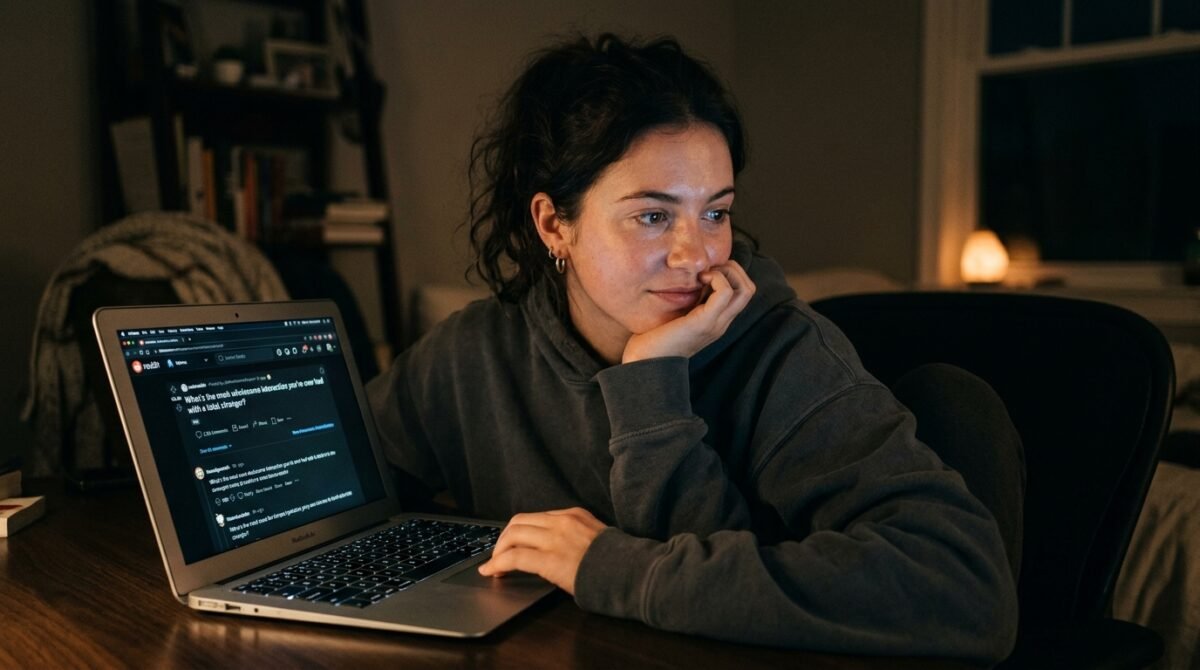
I posted about the situation on a popular parenting forum, keeping the details vague enough to avoid immediate identification, but clear enough to get honest feedback. The response was overwhelming. Within hours, the thread had thousands of comments. The consensus was swift and brutal: my in-laws were dangerous, and my husband was a ‘spineless enabler’ who needed to wake up or get out.
“This is not about the milk. This is about control. They are trying to assert dominance over you by proving they can do whatever they want with your child, and they are using the legal system to punish you for saying no. Document everything. Do not talk to them without a lawyer present.”
— u/LegalEagleParent (Top Comment, 32.5k upvotes)
Reading the comments was both validating and terrifying. I saw stories from other women who had dealt with similar ‘grandparent rights’ cases. Many of them shared the same pattern: the in-laws start with small boundary violations, wait for the parent to react, and then frame that reaction as ‘unstable behavior.’ It was a classic trap. I saw that I wasn’t alone, but I also saw the long, agonizing road ahead of me.
There were some dissenting voices, of course. A few people argued that ‘family is family’ and that I should ‘just let them have their way’ to keep the peace. Those comments were quickly downvoted into oblivion, but they still stung. They reminded me of the societal pressure to be the ‘accommodating daughter-in-law’ at any cost. I wondered if those people would feel the same way if it were their child’s health on the line.
I kept updating the thread with developments, using it as a diary to keep my sanity. The community support became my lifeline. When I felt weak, I read the comments about how I was ‘the shield’ for my daughter. When I felt like I was losing my mind, I saw the objective analysis from strangers who saw the situation for exactly what it was. It taught me that I didn’t need to justify my boundaries to people who didn’t respect them.
By the third day of the thread, the sheer volume of advice had helped me prepare a list of questions for my lawyer. I had a roadmap. I knew what to look for in the upcoming court hearings. The internet, often criticized for its toxicity, had become a bastion of tactical support that I desperately needed. It was the first time since the ordeal began that I felt like I had a fighting chance.
The Silent Dinner Table
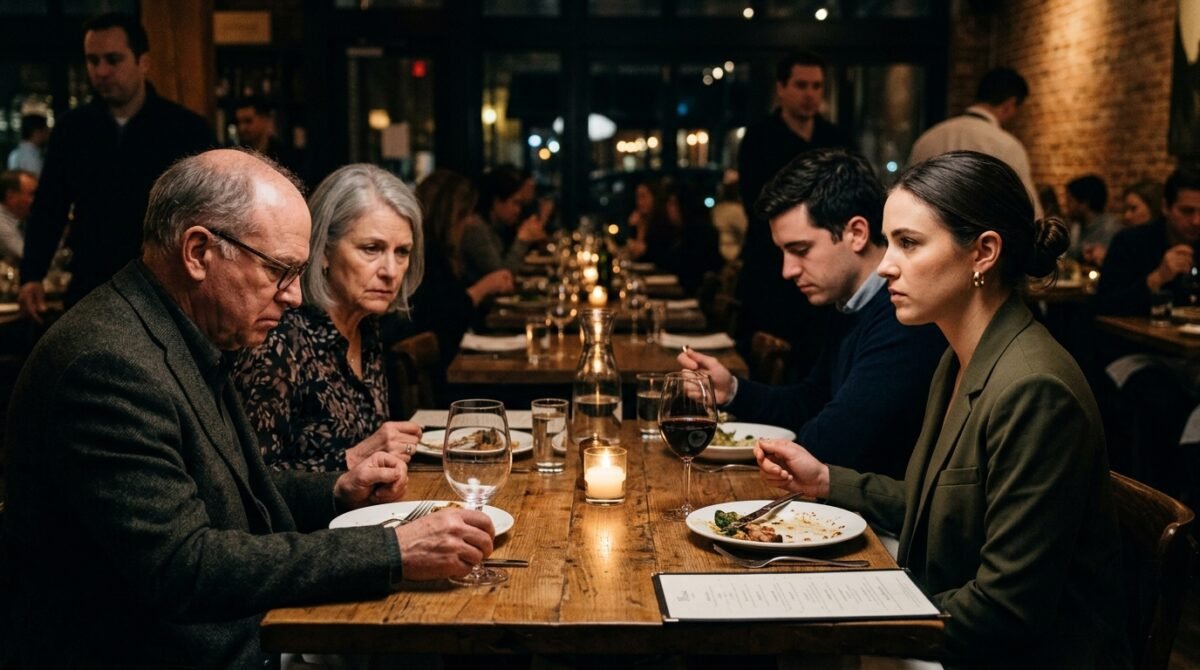
Mark finally agreed to have a meeting with his parents, but he insisted it be at their house. I refused to go. If they wanted to talk about custody, they would do it in a neutral location with our lawyers present. Eventually, they broke, and we met at a local restaurant. The atmosphere was stifling. Linda sat there with a tight, practiced smile, while Robert stared at me with undisguised contempt.
The conversation was a disaster from the start. They didn’t apologize. Instead, they launched into a lecture about how ‘times have changed’ and how I was ‘brainwashed’ by modern medicine. They tried to frame the raw milk as a ‘health supplement’ and insisted that my refusal to allow it was a form of child neglect. I sat there, my hands clasped tightly under the table, letting my lawyer do the talking.
“We are not here to discuss your dietary preferences. We are here to address the fact that you have filed a malicious lawsuit against your daughter-in-law. This ends now, or we go to court.”
— My lawyer, during the meeting
Linda looked horrified, not by the lawsuit, but by the fact that she was being told ‘no’ by someone who wasn’t a family member. She turned to Mark and started crying, asking him why he was letting his wife ‘treat his own mother this way.’ Mark looked down at his plate, his face pale. It was the most pathetic thing I had ever seen. He didn’t stand up for me, but he didn’t join them either. He just sat there, frozen in his own cowardice.
The meeting ended without a resolution. They refused to drop the suit, claiming that they were doing this for ‘the sake of the child’s future.’ I walked out of that restaurant knowing that they were not coming back from this. They were fully committed to the destruction of my reputation. The silence on the drive home was deafening, but it was the silence of a bridge being burned once and for all.
When we got home, the house felt different. It was no longer a home I shared with my husband; it was a bunker. I looked at Mark and told him that he had two choices: support me fully, publicly, and legally, or leave. He tried to tell me it was complicated, but I didn’t want to hear it. The ‘complicated’ nature of his family was the very thing that was tearing my life apart, and I was done trying to untangle it.
The Deposition of Truth
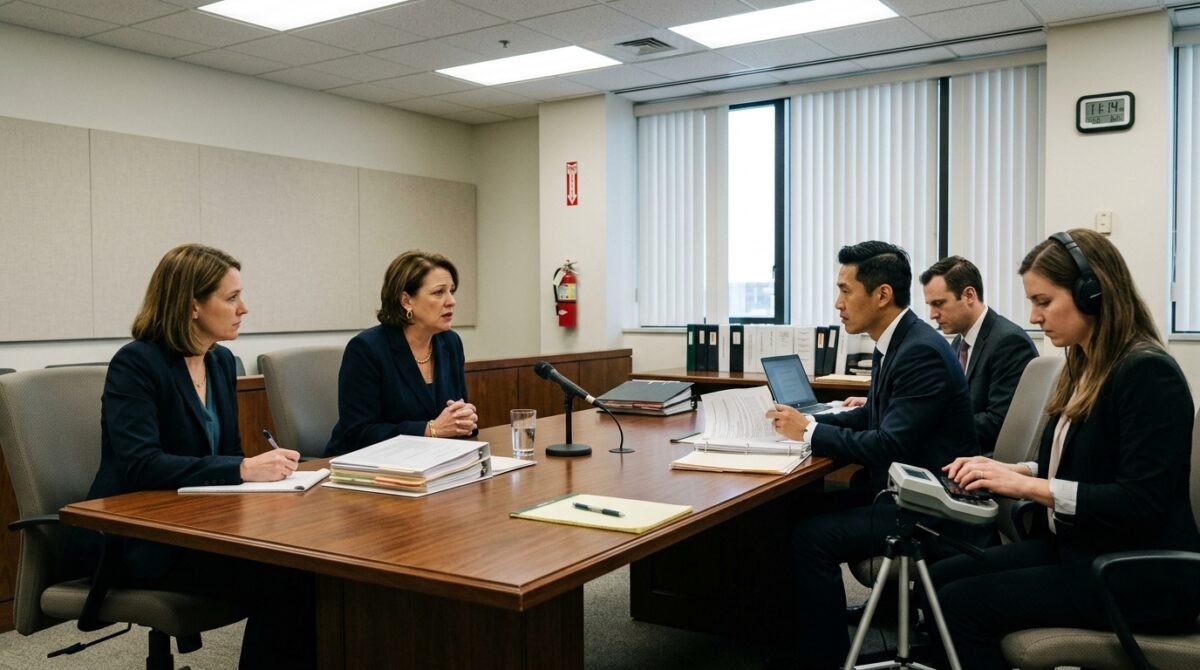
The deposition was the most grueling experience of my life. I sat in a sterile room, surrounded by lawyers and a court reporter, while my mother-in-law sat across from me, ready to lie under oath. She painted a picture of me as a volatile, shut-in mother who refused to let anyone help, someone who was ‘unstable’ and ‘dangerous.’ She even brought up my history of postpartum anxiety, twisting it into a narrative of ‘unfit parenting.’
I kept my composure, answering every question with cold, hard facts. When they asked about the raw milk, I brought in the printed medical warnings. When they asked about my ‘isolation,’ I spoke about the constant, uninvited intrusions that left me feeling unsafe in my own home. I was articulate, calm, and firm. I could see the lawyer for the in-laws getting frustrated; he couldn’t break me. I wasn’t the ‘hysterical’ woman they had sold to their legal team.
“I am not an anxious mother. I am a mother who is responding to a dangerous environment you created for my child. That is not a mental health issue; that is a protective response.”
— My statement under oath
The contrast between my testimony and Linda’s was stark. She was erratic, prone to dramatic outbursts and vague claims about ‘family traditions’ and ‘the way things were always done.’ The stenographer typed away, capturing every contradiction in her story. By the end of the session, even her own lawyer looked tired. He knew that the ‘unfit parent’ narrative was falling apart under the weight of actual, documented events.
Mark was there, but he was barely present. He looked as if he were watching a train wreck in slow motion. When we left the building, he finally started to realize the depth of his mother’s deceit. He saw her lies laid bare, saw how she was willing to destroy our family to satisfy her own sense of entitlement. He held my hand for the first time in weeks, his grip tight and uncertain.
That night, I didn’t need to tell him anything. He started packing a bag, not for me, but for his own things. He told me he needed to stay at his parents’ house for a few days to ‘confront them.’ I told him that was fine, but if he went there, he was staying there. The battle lines were drawn. I wasn’t just fighting the in-laws anymore; I was fighting for the integrity of my marriage, and for once, Mark seemed to understand that the status quo was no longer an option.
The Breaking Point

Mark didn’t return after three days. He called me, his voice shaking, telling me that his mother had ‘had a breakdown’ and that he couldn’t just walk away while she was in such a state. I listened to his excuses, but I felt nothing. No anger, no sadness—just clarity. He was choosing the comfort of his childhood home over the reality of his adult responsibilities. He was choosing the woman who was trying to sue for our child over the woman who was raising her.
I contacted my lawyer and told her to initiate separation proceedings. I didn’t want a divorce yet, but I needed a legal distance between us. I needed to ensure that no matter what happened with his family, my rights as a mother were protected. The emotional toll was immense, but the legal structure was beginning to solidify. I was no longer a victim; I was a litigant, and I was going to win.
“You are prioritizing your mother’s ego over your daughter’s safety. That is the end of our marriage as far as I’m concerned.”
— My final text to Mark before legal separation
The fallout was swift. Mark’s family, seeing that I wasn’t backing down, started leaking stories to our mutual friends. They claimed I had kidnapped the baby, that I was a drug addict, that I had lost my mind. It was all predictable, all pathetic. But I had prepared for this. I had character witnesses—the pediatrician, our daycare providers, neighbors—who were ready to testify to my stability and the health of my child.
I found peace in the routine. I took Clara to the park, I read to her, I played music. I stopped looking at the news, stopped checking the group chats. I focused entirely on her. I realized that the more time I spent worrying about what the in-laws were doing, the less time I had for the life I was actually living. The ‘war’ was something they were playing; I was choosing to live.
Every day, I felt a little stronger. I started going to the gym, eating better, and reconnecting with friends who had been pushed away by the drama. I was reclaiming my identity, shedding the label of ‘the daughter-in-law’ and becoming the person I had been before I ever met them. The court date was approaching, but for the first time, I wasn’t afraid. I was ready.
The Courtroom Verdict

The day of the hearing felt less like a drama and more like a formality. The judge was a no-nonsense woman who had seen it all. Our lawyer presented the evidence: the text messages, the documentation of the raw milk, the testimony of the pediatrician regarding the risk factors. The in-laws’ lawyer looked miserable, knowing that his case was built on a foundation of sand. When it was their turn to speak, they faltered. They couldn’t explain why they thought they had the right to bypass parental authority.
The judge’s ruling was decisive. She dismissed the petition for custody, noting that there was ‘absolutely no evidence’ of parental incompetence and that the ‘grandparental rights’ were being used as a tool for harassment. She issued a stern warning to the in-laws: any further attempt to interfere with my parenting or to harass me would result in a formal restraining order. The courtroom felt suddenly very quiet as the gavel fell.
“Grandparental rights are meant to protect the child’s best interest, not to facilitate the imposition of a grandparent’s will over the parents. This petition is dismissed with prejudice.”
— The presiding judge
I walked out of that courthouse feeling like I could breathe for the first time in months. Mark was waiting outside, looking lost. He didn’t say anything, just looked at me with a mixture of shame and regret. I didn’t stop to talk. I walked to my car, put Clara in her seat, and drove away. That was the moment the weight finally lifted.
I didn’t immediately file for divorce, but the distance between us was vast. I went home and, for the first time in weeks, slept without the fear of a lawsuit hanging over my head. I realized that while I had won the battle, I had also lost the version of the future I had envisioned with Mark. But I hadn’t lost my child, and that was the only thing that mattered.
The victory felt hollow in some ways, but it was a necessary one. I had protected my daughter, and in doing so, I had protected myself. The court had validated my boundaries, confirming that being a parent meant having the final say in your child’s life. It was a lesson that cost me my marriage and my relationship with my in-laws, but it was a lesson I would have paid any price to learn.
Reflecting on the Ruins

Looking back, it is hard to believe how quickly everything fell apart. One moment, we were a ‘happy’ family, and the next, we were in a legal battle that would change the trajectory of our lives forever. The raw milk was never the point; it was just the spark that ignited the bonfire of their entitlement. They had spent years preparing for this, waiting for a chance to exert control, and I was just the unfortunate target who dared to say no.
I think about Mark often. He is still struggling, still caught between his loyalty to his family and the reality of his own life. We are in counseling now, but it is slow, grueling work. He understands now that his mother is not the person he thought she was, but the process of deprogramming is painful. I don’t know if our marriage will survive, but I know that I will survive, regardless of the outcome.
“I learned that love is not about giving people what they want, it’s about protecting the people you are responsible for, even when the ones you love don’t understand why.”
— My reflection on the experience
I have become a different person. I am sharper, more cautious, and significantly more protective of my personal boundaries. I no longer feel the need to be ‘polite’ at the expense of my sanity. If someone tries to overstep, I call them out immediately. I have no time for games, and I have no patience for people who think their age or status gives them the right to dictate my life.
Clara is thriving. She is happy, healthy, and completely unaware of the storm that was raging around her. That is the greatest gift I could give her. She will grow up knowing that she is protected, and that her mother is a woman who fought for her. That, in the end, is all that matters.
The experience has changed my entire perspective on family. I realized that family is not a given; it is earned through mutual respect and boundaries. If you cannot respect the parents, you do not get access to the child. It is a harsh truth, but it is the only way to ensure that the next generation grows up in an environment of safety and autonomy.
The Aftermath: A New Normal

It has been six months since the ruling, and things have finally settled into a new, quiet rhythm. Mark moved out, but we are working on a custody arrangement that puts Clara’s needs first. He has started to stand up to his parents, finally telling them that if they want a relationship with their granddaughter, they need to respect his wife’s rules—and mine. It is a start, but it is a long way from where we were.
I am still in therapy, working through the trauma of the lawsuit and the betrayal of my husband’s inaction. It is a process, but I am doing better every day. I have found a community of other parents who have dealt with similar issues, and we support each other. It is amazing how many of us there are, and how much we have to teach each other about standing our ground.
“Boundaries aren’t walls; they are the gates that keep the wrong people out and the right people safe.”
— Advice from my therapist
I still receive the occasional message from my sisters-in-law, usually passive-aggressive comments on social media, but I just block them. I don’t engage. I don’t argue. I don’t even look at their profiles. My life is mine, and it is a life I am proud to live. I have reclaimed my agency, and I have protected my child.
For anyone else dealing with intrusive in-laws, my advice is simple: document everything, get a lawyer, and do not apologize for your boundaries. You are the parent. You are the final authority. And if people cannot respect that, they do not deserve to be part of your life. It is not an easy road, but it is the right one.
I am looking forward to the future now, not with dread, but with anticipation. I have learned to trust myself, to lean into my own wisdom, and to know that I am capable of handling whatever comes my way. I am a mother, and I am a warrior, and I wouldn’t have it any other way.
Conclusion
The story of my in-laws’ attempted custody battle is not just about a disagreement over milk; it is a cautionary tale about the dangers of unchecked parental entitlement and the importance of holding firm when the people who should be supporting you decide to undermine your role as a parent. My journey from a quiet, accommodating daughter-in-law to a woman who stood her ground in a courtroom was painful, but it was necessary to ensure my daughter’s safety and my own autonomy.
The legal system was a blunt instrument, but it served its purpose: it drew a line in the sand that could not be crossed. My marriage may still be in the balance, and my relationships with my in-laws are permanently severed, but I have no regrets. The peace of mind I feel today, knowing that I am protecting my child from harm, is worth every tear shed and every dollar spent on legal fees. If you take anything from this, let it be the knowledge that your boundaries are your most powerful tool as a parent.
How about you? Have you ever had to draw a hard line with family members, or have you faced a similar situation where your parenting was questioned by those closest to you? I would love to hear your experiences in the comments below. Do you believe there is ever a point where a grandparent’s ‘good intentions’ become a legal liability? Join the conversation and let us know where you stand.
What's your verdict on this dilemma?
Vote below to contribute to the official community consensus.

Have a Dilemma Keeping You Up at Night?
Share your real-life feud, wedding chaos, or relationship crossroads anonymously with our editorial team.
What do you think ?
0 Comments🛡️ Comments are moderated to protect community integrity. Your comment will appear once approved by the editorial team.