
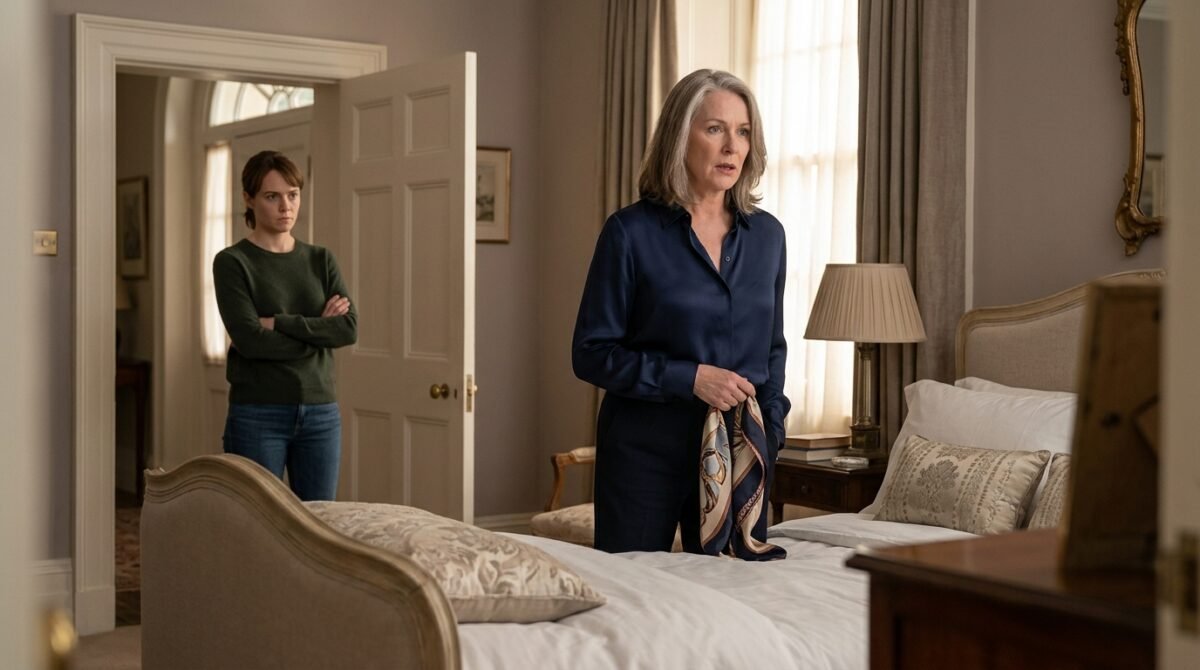
Marriage, they say, is the union of two families. But sometimes, that union feels more like a hostile takeover. My mother-in-law, Barbara, has always lived by a specific, antiquated code of ethics—one where she is perpetually the queen of the realm, regardless of whose house she is currently visiting. When she and my father-in-law announced their week-long visit, I went above and beyond. I deep-cleaned the house, stocked the fridge with their favorite organic teas, and put fresh, high-thread-count linens on the queen-sized bed in our dedicated guest room.
I thought I had prepared for everything. I had organized our schedules, cleared our social calendars, and even bought a new coffee machine she preferred. But I didn’t account for the sheer, unadulterated entitlement that would walk through my front door. The moment Barbara crossed our threshold, she didn’t compliment the home or thank us for the hospitality. Instead, she walked straight into the guest room, ran a finger along the headboard, and let out a sigh that sounded like a tire deflating.
It wasn’t just a sigh; it was a performance. She turned to my husband, Mark, with a look of profound betrayal. She claimed that having to sleep on a standard queen mattress while we slept in our master bedroom was a blatant sign of disrespect toward her as an elder. She demanded we vacate our room immediately, citing ‘filial duty’ and ‘tradition.’ I stood in the hallway, watching this unfold, feeling the familiar prickle of rage that only a boundary-pushing in-law can incite.
What followed was a slow-motion car crash of family dynamics. I realized right then that if I gave her the master bedroom, I would be signaling that my comfort—and my boundaries—were entirely optional. I had to make a choice: be the submissive daughter-in-law or the woman who finally put her foot down. I chose the latter, and the consequences were immediate, explosive, and, quite frankly, necessary for my own sanity.
The Inquest of the Master Suite
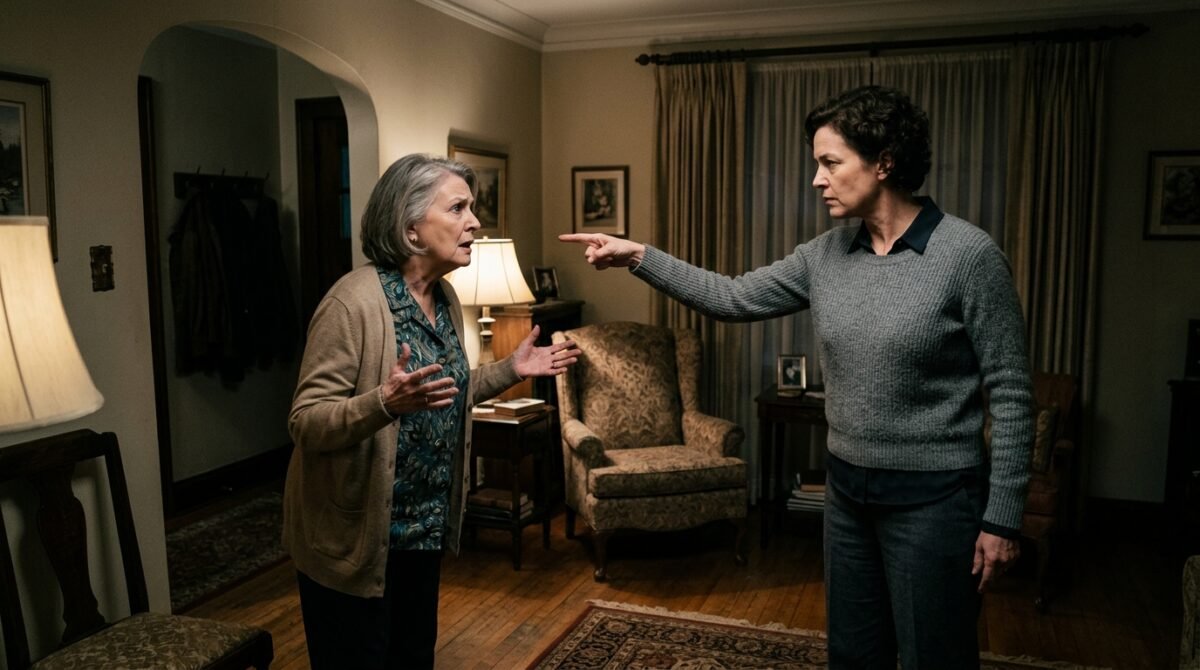
The confrontation didn’t happen in private. It started right in our living room with my father-in-law, Arthur, sitting quietly on the sofa while Barbara paced the floor. She pointed toward our bedroom door as if it were a forbidden temple. She explained that for a woman of her ‘stature and spinal condition,’ a guest bed was simply unacceptable.
I tried to remain calm. I pointed out that the guest room had a brand new orthopedic mattress, specifically chosen for comfort. It was quiet, it had an attached bathroom, and it was perfectly private. But logic wasn’t the currency Barbara dealt in. She dealt in hierarchy, and she felt she was at the top of it.
“Mark, sweetheart, I am your mother. It is frankly insulting that you would force us into the small room like guests. We aren’t guests, we are family. Family belongs in the master suite. It is the only room with the proper airflow for my comfort.”
— Barbara, The Mother-in-Law
My husband, usually a man of peace, looked trapped. He looked at me, pleading with his eyes for me to just cave, to just give in for the sake of the ‘peace.’ I saw the weight of his upbringing pressing down on him. But I was done. I wasn’t going to let someone who hadn’t contributed a dime to our mortgage dictate which room we slept in.
I stepped forward, my voice steady despite the adrenaline spiking in my chest. I told her that our home was not a hotel where she could demand a room upgrade based on her whim. I reminded her that the guest room was specifically designed for guests, and that was exactly where they would be staying for the duration of the trip.
The Escalation of Demands
After the initial argument, the atmosphere in our home turned toxic. Barbara stopped speaking to me directly, opting instead to speak through my husband as if I weren’t even in the room. She began commenting on how ‘small’ our kitchen was, or how ‘drafty’ the hallway felt. It was a classic power move—devalue the environment so the occupant feels inferior.
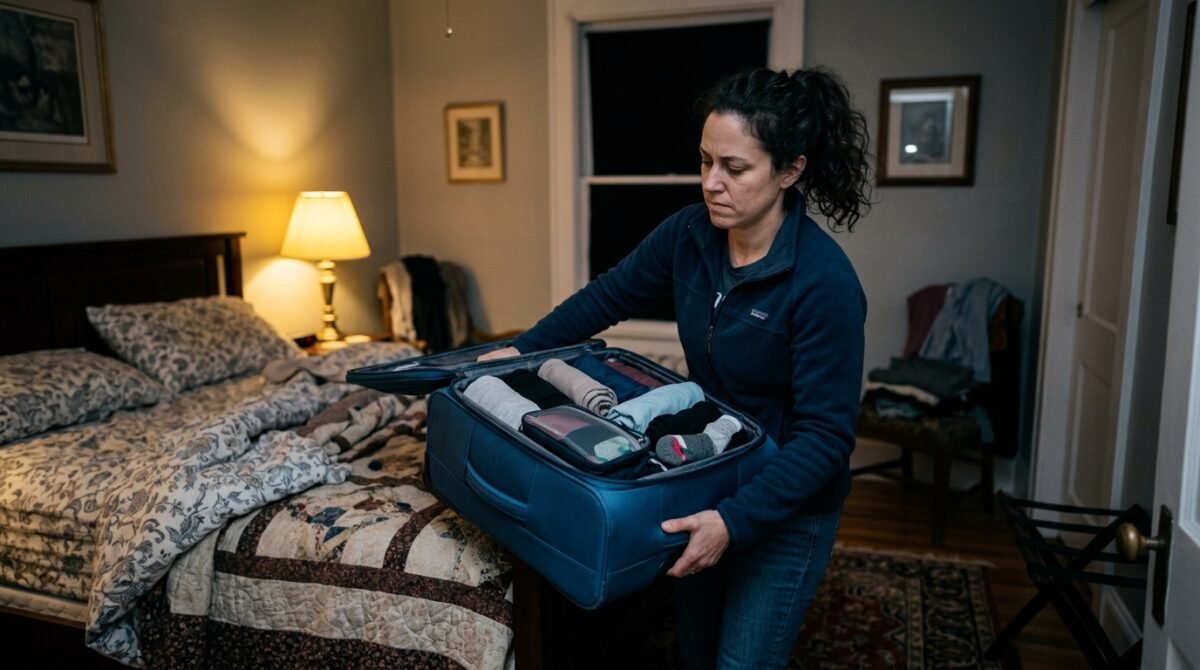
By the second night, she wasn’t just complaining about the room; she was moving her things into our master bedroom while we were at work. She had effectively decided that if she complained loudly enough, I would eventually surrender out of sheer exhaustion. When I came home to find her perfume bottles on my vanity, I knew the line had been crossed irrevocably.
“I took the liberty of moving my things in. The guest room was simply too cramped for my needs, and I’m sure you and Mark can manage in the smaller space for a few nights. It’s the least you can do for your elders.”
— Barbara, mid-argument
I walked into the master bedroom and saw her suitcase open on our bed. My blood went cold. This wasn’t about a bed anymore; it was about respect for my home. I didn’t yell. I didn’t throw her things. I simply picked up her suitcase, walked it back to the guest room, and set it on the bed. I didn’t say a word to her. I went back to the kitchen and started looking at motel listings.
Mark followed me into the kitchen, looking panicked. He told me I was ‘picking a fight’ and that I needed to be more flexible. I told him that if he wanted to sleep on the floor to accommodate her, he was welcome to, but I was not going to be displaced in my own home. The seed of the motel solution had fully bloomed in my mind.
The Motel Reservation Ultimatum

I didn’t tell them my plan until the next morning. We were having breakfast, and Barbara was already making snide remarks about the ‘inadequate’ breakfast selection. She looked at me and asked if I had finally decided to move our things to the guest room. I looked her right in the eye, took a sip of my coffee, and smiled.
I informed her that since she found our home so incredibly unsuitable and the guest room so ‘disrespectful’ to her standards, I had taken it upon myself to find them more ‘appropriate’ accommodations. I pulled up the confirmation on my phone and showed it to her. It was a modest, budget motel located exactly 15 miles away. It was clean, functional, and definitely not a five-star resort.
“Since my home is clearly not up to your exacting standards, Barbara, I have booked you a room at the Sleep-Well Inn down the road. It has everything you need, and they have excellent ratings. You are welcome to check in whenever you like.”
— The narrator to her MIL
The silence that followed was heavy enough to crush a diamond. Arthur dropped his spoon. Mark looked like he had seen a ghost. Barbara turned a shade of purple I didn’t know was possible. She stood up, her chair scraping harshly against the hardwood floor, and began to shriek about how I was ‘tearing the family apart’ and how she would never forgive this ‘humiliation.’
I didn’t flinch. I told her that the reservation was paid for and that the keys were ready for pickup. I wasn’t doing this to be cruel; I was doing this to save my peace of mind. If she couldn’t respect my home, she didn’t get to stay in it. It was a boundary line drawn in permanent marker.
The Fallout in the Group Chat

The news traveled fast. Within two hours, my phone was buzzing incessantly with messages from sisters-in-law, cousins, and even distant relatives I hadn’t spoken to in years. The narrative Barbara spun was that I had ‘kicked them out onto the street’ like common vagrants. She neglected to mention the motel reservation or the fact that I had offered them a perfectly clean guest room.
“How could you? Mom is crying. She’s a guest in your home! You have no respect for your elders. This is disgusting behavior from someone who claims to be a part of this family. We are all ashamed of you.”
— Sister-in-law, via Family Group Chat
I didn’t defend myself in the group chat. I simply sent a screenshot of the guest room I had prepared, the photos of the motel, and a brief message stating that my home is not a hotel and I will not be bullied in my own space. Then, I muted the chat. I realized that arguing with them would just validate their need for drama.
Mark was caught in the middle. He was fielding calls from his father, who was surprisingly neutral but clearly exhausted by the whole ordeal. Arthur had actually called the motel and found it perfectly fine, but he was too terrified of his wife to actually go there without her permission. It was a pathetic display of codependency that I refused to be a part of any longer.
I spent the rest of the day in the garden, ignoring the phone. The air felt lighter, despite the brewing storm. For the first time in years, I felt like I wasn’t just a supporting character in someone else’s drama. I was the protagonist of my own life, and I had just asserted my right to exist in my own home without being treated like a servant.
The Reddit Verdict: NTA or YTA?

I posted the whole situation on Reddit that night, needing a sanity check. The response was overwhelming. Within hours, the post hit the front page. The community was divided, but the majority stood firmly behind my decision to enforce boundaries.
“NTA. Your home is not a hotel, and her entitlement to your master bedroom is absolutely absurd. By setting this boundary, you’ve saved yourself years of future manipulation. Don’t back down. If she wants a five-star experience, she can pay for a five-star hotel.”
— u/ReasonableObserver (Top Comment, 32.5k upvotes)
There were, of course, the ‘but she’s family’ crowd. They argued that I should have just sucked it up for a week to keep the peace. But the consensus among the top comments was that peace at the expense of self-respect is not peace—it’s subjugation. The sheer number of people sharing similar stories of in-law horror was both comforting and terrifying.
I read through hundreds of comments. Some suggested I was being too passive, others said I was being too aggressive. But the overarching theme was that entitlement is a learned behavior, and by stopping it, I was actually doing everyone a favor. It was a lesson in how to handle ‘toxic positivity’ and ‘familial obligation’ in the modern age.
Seeing thousands of strangers validate my decision made me feel less like a villain and more like a survivor. I realized that my marriage to Mark was strong, but it needed to be tested like this. We had to decide if we were a team of two or a team of me-plus-his-parents. This moment was the catalyst for that necessary shift in our relationship.
The Silence at the Dinner Table

The next day, they were still in the guest room, refusing to go to the motel. It was a standoff. I went about my business, cooking dinner for myself and Mark. When I invited them to eat, they sat in silence. The tension was so thick you could cut it with a knife. Barbara didn’t say a word, she just picked at her food as if it were poison.
Arthur finally spoke up, trying to break the ice. He mentioned that the motel was actually quite close and that maybe we should just go for a walk to look at the local park. Barbara shot him a look that silenced him instantly. It was clear that she was holding out, hoping I would apologize and beg them to stay in the master suite.
“Are we really going to do this for the next four days? Eating in silence because you don’t get what you want? I’m not apologizing for having boundaries in my own home, Barbara. If you want to leave, the motel is waiting.”
— The narrator, breaking the silence
I wasn’t trying to be mean, but I was tired of the game. I looked at Mark, who was visibly sweating. He was terrified of his mother’s wrath. I realized then that my problem wasn’t just with Barbara; it was with Mark’s inability to stand with me. I leaned over and held his hand under the table, signaling that he needed to step up.
He squeezed back. He looked at his mother and finally said, ‘Mom, OP is right. This is our home. We love having you here, but you don’t get to dictate where we sleep. It’s either the guest room or the motel. It’s your choice.’ I felt a rush of pride. He had finally said it. The look of shock on Barbara’s face was worth every second of the preceding drama.
The Midnight Departure
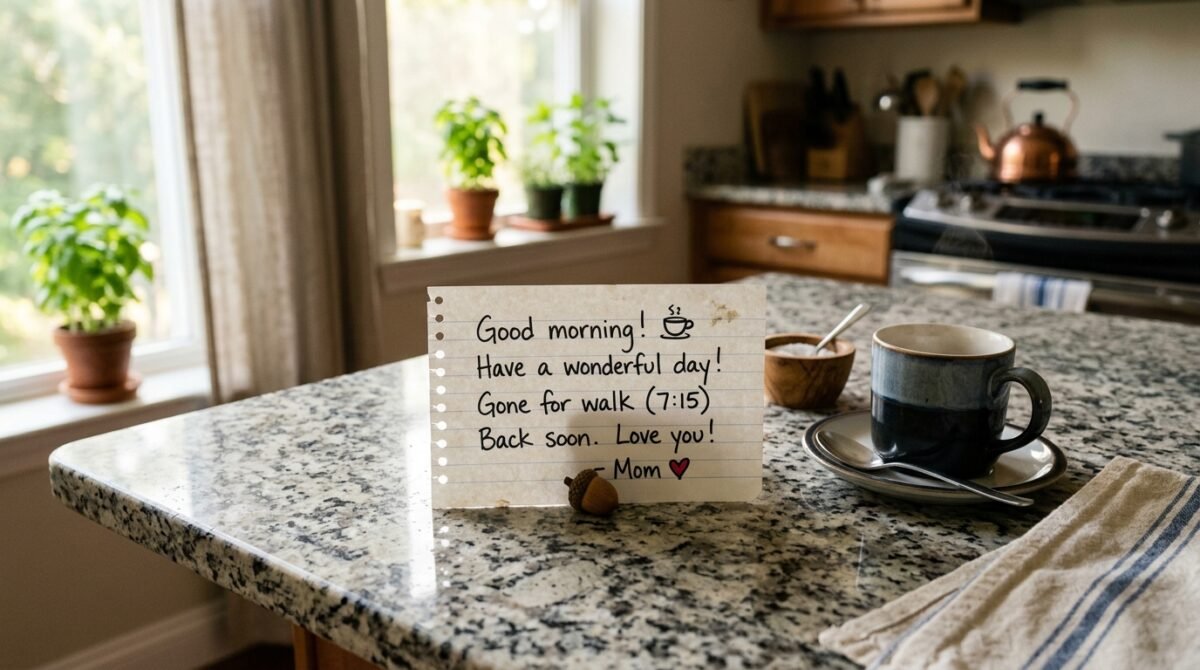
That night, I heard movement in the hallway. I didn’t get up, but I listened intently. I heard the sound of suitcases being dragged across the floor. My heart hammered in my chest. Were they leaving? I lay in bed, waiting, wondering if I had pushed them too far. Then, the front door opened and closed. A car engine started and pulled away.
I got up and looked out the window. They were gone. I felt a wave of relief so strong it almost brought me to tears. I walked to the guest room and saw that they had left it clean. They hadn’t trashed it, they hadn’t stolen anything. They had simply left. I went back to bed and finally, for the first time in days, I slept soundly.
The next morning, Mark found a note on the kitchen counter. It was from his father. It was short, but it explained everything. It said that Barbara felt ‘insulted beyond repair’ and that they had decided to cut their trip short and head to a hotel in the city instead. It was the best news I could have asked for.
“We have decided to move to a hotel. You have made your feelings about our presence very clear. We will be in contact when you are ready to apologize for your lack of hospitality.”
— The note left by the in-laws
I looked at the note and laughed. An apology? For what? For having a home? I put the note in the trash and started my morning routine. The house felt like it belonged to me again. The air was clear, the stress had evaporated, and I felt a sense of liberation I hadn’t expected.
The Aftermath and Reflection

In the weeks that followed, things were strained with the extended family. Some of them remained convinced that I was the villain, while others, having heard the full story, began to see the logic in my actions. Mark and I went to counseling, not because our marriage was failing, but because we needed to set stronger boundaries with his family moving forward.
We realized that we had both been complicit in allowing this dynamic to fester. We had avoided conflict for so long that it had become a monster. By confronting it, we had not only saved our sanity but also our relationship. We learned that ‘family’ doesn’t give you a free pass to treat people like subordinates.
I also learned about the importance of being direct. If I had spoken up months ago about the way Barbara treated me, perhaps it wouldn’t have reached this point. But it’s easy to look back with hindsight. The important thing is that the boundary is now set. They know that if they visit, they stay in the guest room, or they don’t stay at all.
I’ve started to realize that the ‘disrespect’ she spoke of was actually just a loss of control. She didn’t want respect; she wanted compliance. And that is a price I am no longer willing to pay. My home is my sanctuary, and I will defend it against anyone, even family, who tries to undermine my peace.
The Lessons Learned

Looking back, the motel was the best investment I ever made. The cost was trivial compared to the peace of mind I gained. It taught me that money can solve certain types of problems—specifically, the problem of unwanted entitlement. It was a small price to pay for the preservation of my home and my mental health.
I’ve also learned that the people who get angry when you set boundaries are usually the ones who benefited the most from you having none. Their anger is not a reflection of my character, but of their inability to respect me. It’s a bitter pill to swallow, but it’s a necessary one if you want to live a life on your own terms.
“Boundaries are not a wall to keep people out; they are a fence to keep your peace in. If they get angry at the fence, it’s because they were planning on trampling your garden.”
— A piece of advice from a Reddit commenter
My relationship with Barbara is currently non-existent, and honestly, I’m okay with that. We haven’t spoken in months, and the silence is peaceful. Mark talks to her occasionally, but the dynamic has shifted. He no longer feels the need to apologize for me, and he no longer expects me to bend over backward to please her.
We are a stronger team now. We’ve learned that the only people whose opinions truly matter are the ones inside our house. The rest is just noise. And if there’s one thing I’ve learned, it’s that you can’t control what other people think, but you can definitely control who stays in your guest room.
The Final Verdict

Life has returned to a new normal. We have visitors occasionally, but they are people who respect our space and our rules. The ‘guest room’ has become a symbol of our new boundaries. It’s a comfortable, welcoming space for those who appreciate it, and a reminder of where the line is drawn for those who don’t.
I encourage anyone dealing with a similar situation to not be afraid of the fallout. The people who truly love you will respect your boundaries. The ones who don’t are just showing you who they really are. Don’t be afraid to book that motel. Sometimes, the most ‘disrespectful’ thing you can do is refuse to be a doormat.
We are planning our own trip soon, and we’re going to stay in a hotel. We want the luxury of our own space, the freedom to come and go as we please, and the peace of not having to answer to anyone. It’s a lesson in hospitality, and it’s one that I’m happy to pass on to anyone else who needs it.
The journey from the ‘perfect daughter-in-law’ to the ‘difficult one’ has been worth every moment. I am happier, my marriage is stronger, and my home is finally, truly, my own. And that, in the end, is all that really matters.
Conclusion
The story of the motel reservation has become a legend in our circle of friends. It serves as a reminder that we are the masters of our own domains. The moral of the story is simple: if you don’t set your own boundaries, someone else will set them for you, and you probably won’t like where they draw the line.
I hope this account has provided some clarity for anyone currently navigating the treacherous waters of in-law relations. It isn’t easy to stand up to family, but the liberation that comes on the other side is worth every awkward phone call and every angry text. My home is no longer a place of stress, but a place of peace.
Now, I turn it over to you. Have you ever had to draw a hard line with family regarding your home or your personal space? Did it lead to a falling out, or did it eventually lead to a better understanding? Share your stories below—I’d love to hear how you handled your own ‘guest room’ dilemmas.
What's your verdict on this dilemma?
Vote below to contribute to the official community consensus.

Have a Dilemma Keeping You Up at Night?
Share your real-life feud, wedding chaos, or relationship crossroads anonymously with our editorial team.
What do you think ?
0 Comments🛡️ Comments are moderated to protect community integrity. Your comment will appear once approved by the editorial team.