

My home has always been my sanctuary. After years of saving, my husband and I finally moved into a place that felt like ours—clean, open, and carefully curated. It was the place where we hosted quiet Sunday dinners and enjoyed the silence that only comes with a space you’ve truly earned. That peace, however, was shattered on a Tuesday afternoon when a knock at the door signaled the arrival of a massive moving van that wasn’t supposed to be there.
My sister-in-law, Sarah, has always operated under the assumption that the world is her storage locker. She is the type of person who views ‘no’ as a suggestion rather than a boundary. When she called earlier that month about ‘downsizing’ her home, I naively offered to help her look for a reputable storage unit. I did not realize that in her mind, the solution to her logistical problem was parked right in front of my driveway.
What followed was an absolute violation of my domestic life. Without asking, without a single ‘can I,’ she orchestrated a full-scale occupation of my living room and dining area. Massive, dust-covered antique armoires, velvet chaise lounges from the 1920s, and fragile china cabinets were hauled in by two burly movers as I stood there in paralyzed shock. By the time I regained my voice, my living space had been transformed into an antique graveyard, and Sarah was nowhere to be found.
The moral dilemma here wasn’t just about the space; it was about the presumption. Why did she think she had the right to hijack my life for her own convenience? I spent the first night pacing around a mahogany dresser that was effectively blocking my view of the television, simmering with a rage that eventually crystallized into a singular, cold realization: if she was going to treat my home like a storage warehouse, she was going to pay the market rate for it.
This is the story of how I turned the tables on a family member who mistook my hospitality for weakness, the resulting firestorm of text messages, and the moment I finally decided that my mental health was more important than maintaining the facade of a ‘peaceful family dynamic.’ Sometimes, the only way to get a boundary respected is to put a price tag on it.
The Day the Moving Van Stole My Living Room
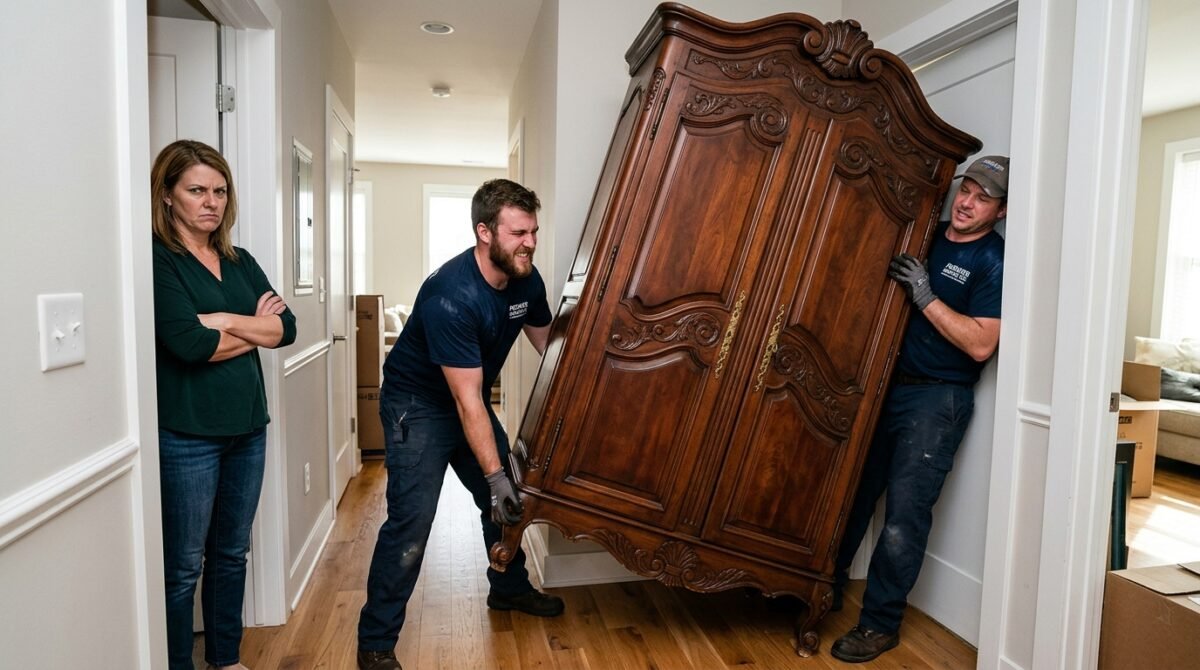
The sound of the heavy-duty engine idling in my driveway was the first warning sign. I was working from home, halfway through a virtual meeting, when the doorbell rang with a persistent, aggressive rhythm. I opened the door to find two men in uniform, sweating and looking at a clipboard. Behind them, a massive truck spanned the length of my front yard, leaking oil onto the pavement.
“Are you the homeowner?” one of the movers asked, already turning toward the truck. “We’ve got a load for the ‘Sarah Miller’ account. Living room and dining room staging.” My stomach dropped. I hadn’t spoken to Sarah since our brunch three days ago, where she’d vaguely mentioned looking into furniture liquidation. I assumed she was selling her pieces, not moving them into my house.
“You’ve got the wrong house. Sarah Miller doesn’t live here. This is my private residence, not a warehouse or an extension of her property.”
The movers looked unbothered, pulling out a phone to show me a text conversation. “She said to bring it here, leave it in the main living areas, and that you had the key to the side garage. Look, lady, we’re on a schedule. We’re dropping this off.” Before I could protest further, they began hauling a massive, ornate oak dining table through my front door, scraping the hardwood I had refinished only six months prior.
I felt a phantom pain in my floorboards as they maneuvered a heavy sideboard through the entryway. It was an invasion, plain and simple. Every time I tried to step in their way, they moved around me with practiced indifference. They weren’t just delivering furniture; they were delivering a message: Sarah didn’t care about my consent. She had decided this was happening, and she expected me to fall in line.
By the time they finished, my living room was unrecognizable. It felt like walking into a dimly lit, dusty estate sale. I looked at the chaos—the legs of chairs protruding into my walking paths, the smell of mothballs filling the air—and I felt a cold, hard resolve settle into my chest. I wasn’t going to be the victim here. I was going to be the landlord.
The Inevitable Phone Call and the Justification

I didn’t wait. I dialed Sarah’s number the moment the truck pulled away. I didn’t shout; instead, I spoke with a terrifying, measured calm that I knew she would find unsettling. She picked up on the third ring, her voice bright and breezily oblivious, as if she were calling to chat about the weather. She acted as if she had just done me a favor by ‘decluttering’ her life into my space.
“Hey! I hope the guys got everything inside okay. I’m so stressed with the new apartment hunt, and knowing my antiques are in your beautiful home makes me feel so much better. You’re such a lifesaver, truly.”
I let the silence hang for a moment, letting her hear the frustration radiating through the phone. I explained to her, in no uncertain terms, that I had never agreed to store her collection. I detailed the damage to my floors, the complete loss of my living space, and the sheer audacity of the move. Her response was a masterclass in gaslighting, shifting the blame onto me for being ‘difficult’ and ‘unsupportive’ during her transition.
She argued that because I had a large house, I had a ‘moral obligation’ to help family in need. She claimed that these pieces were ‘heirlooms’ that deserved a safe place, and that a professional storage unit would ‘ruin’ them with climate control issues. She wasn’t just asking for a favor; she was demanding access to my life based on a hierarchy of entitlement she had constructed in her own head.
I kept pressing her for a timeline. When would the furniture be gone? She gave me a vague, non-committal answer about ‘finding the right place’ and ‘settling in,’ which I knew translated to ‘indefinitely.’ It was clear that she had no intention of moving these items anytime soon. She wanted to keep her precious antiques safe in my ‘free’ warehouse, and she expected me to foot the bill for the stress and the space.
That was the final straw. I realized then that if I wanted these things gone, I had to stop acting like a family member and start acting like a business partner. I told her I would send over an invoice for the storage space, calculated at the market rate for a climate-controlled unit in our area, plus a ‘handling and inconvenience’ fee. She laughed. She actually laughed, thinking it was a joke. She had no idea what was coming.
The Invoice That Broke the Family Peace

The following morning, I sat down and did the math. I researched the local storage rates for a 200-square-foot climate-controlled unit. I factored in the damage to the floor, the lost utility of my living room, and the stress of the situation. I drafted a formal, professional-looking invoice. I didn’t send it as a joke; I sent it as a PDF attachment with a firm, professional email header.
The amount was significant: $850 per month, with a $200 initial ‘handling’ fee. When Sarah opened that email, the reaction was explosive. She didn’t call me; she started a group chat with my husband, my mother-in-law, and her brother. She was looking for allies, trying to paint me as the villain who was ‘extorting’ her during a time of crisis. She wanted them to force me to back down.
“Can you believe this? She’s charging me $850 to store family heirlooms. I’m family! This is absolutely disgusting behavior. How could anyone be this cold-hearted?”
— Sarah (Family Group Chat)
The notifications didn’t stop for an hour. My husband, who had been at work when the furniture arrived, was initially confused, but as the messages piled up, he started to get the picture. He saw the photos of the living room I had uploaded to the cloud folder. He saw the damage to the floor. His stance shifted from ‘let’s just resolve this’ to ‘this is completely unacceptable’ in a matter of minutes.
My mother-in-law, usually the peacemaker, tried to intervene by suggesting I just give Sarah a ‘grace period.’ She didn’t understand that Sarah had been doing this for years—taking, taking, taking, and never giving back. I had to lay it out for them in the chat. I wasn’t just talking about furniture; I was talking about the pattern of behavior that Sarah had established for over a decade.
I replied to the group chat with a simple, clear message: ‘The invoice stands. If the furniture is not removed within 48 hours, I will be donating the items to a local charity of my choosing and charging the storage fees for the duration they were in my home.’ The silence that followed was deafening. I had officially moved past the point of no return, and the dynamic of our relationship had been irrevocably altered.
The Escalation: When ‘Family’ Becomes a Weapon

Sarah didn’t take my ultimatum well. By the next afternoon, she showed up at my front door unannounced, red-faced and trembling with rage. She didn’t come to apologize or to move her things; she came to intimidate me. She marched right past me into the living room, gesturing wildly at the furniture as if she were showing off a museum exhibit she had just been robbed of.
“You are going to regret this. Do you know how many people are watching this play out? You’re making yourself the villain of this family. I’m going through a hard time, and this is how you treat me? You’re dead to me if you don’t drop this nonsense right now.”
I stood my ground, my hands shaking slightly behind my back. I told her that she was the one who had made the choice to violate my home and that she was the one who was responsible for the consequences. I didn’t raise my voice. I stayed calm, repeating that the invoice was non-negotiable and the deadline was firm. The look of pure, unadulterated shock on her face was something I’ll never forget.
She threatened legal action. She threatened to tell everyone in our extended family that I was a heartless gold-digger. She tried to physically push me aside to ‘reclaim’ one of her smaller trinkets, at which point I told her that if she touched anything else, I would be calling the police to report a trespassing and harassment incident. That stopped her in her tracks.
She eventually stormed out, slamming the door so hard that a picture frame on the wall rattled. I locked the door behind her and leaned against it, feeling a strange mix of terror and liberation. I had done it. I had set a boundary, and while the world hadn’t ended, the social fallout was just beginning. I knew my phone would be blowing up for days, but for the first time in a long time, I felt like I was in control of my own life.
That night, I received a series of long, rambling texts from my mother-in-law, pleading with me to be the ‘bigger person.’ She kept using the word ‘family’ like a bludgeon, expecting me to sacrifice my peace of mind for the sake of appearances. I realized then that my ‘family’ had become a collection of enablers, and that standing up to Sarah was also, by extension, standing up to their entire system of enabling.
The Reddit Trial: How the Internet Reacted

I decided to post my situation on a popular relationship advice subreddit. I needed a gut check. Was I crazy? Was I really the villain for demanding payment for the unauthorized use of my living space? I wrote out the story, focusing on the facts: the unsolicited delivery, the damage to the floors, the refusal to move the items, and the invoice. I hit ‘post’ and waited.
The response was immediate and overwhelming. Within three hours, the post had over 10,000 upvotes and hundreds of comments. The consensus was shockingly clear: I was the hero of my own story, and Sarah was a textbook example of an entitled narcissist. The validation was almost intoxicating after days of feeling like I was the one losing my mind.
“OP, you are not the villain here. You are the landlord of your own house. Sarah didn’t ask for a favor; she annexed your living room. The invoice is actually a generous way to handle this. Most people would have had it hauled to the curb on day one.”
— u/HomeownerHero (Top Comment, 24.3k upvotes)
I spent hours reading the comments. Some users suggested legal routes, while others shared their own stories of ‘furniture-dumping’ family members. It was a massive community of people who had dealt with similar boundary-crossers, and they were all cheering me on. They helped me realize that the ‘family obligation’ narrative is often just a tool used by toxic individuals to guilt-trip others into submission.
There were a few ‘YTA’ (You’re the Asshole) comments, mostly from people who thought I should have just communicated better, but they were quickly drowned out by the majority. The Reddit community acted as a sounding board, reflecting back the reality I was too close to see clearly. They reinforced the idea that ‘no’ is a complete sentence and that boundaries are not negotiable.
Seeing the sheer volume of support made me realize that I wasn’t alone. It made the guilt that my mother-in-law had been trying to instill in me seem trivial. I saved the thread and revisited it whenever I felt a twinge of doubt. It became my armor, a digital reminder that I was right to protect my home, my space, and my dignity, no matter what Sarah or her enabling family thought.
The Ultimatum: 48 Hours or the Curb
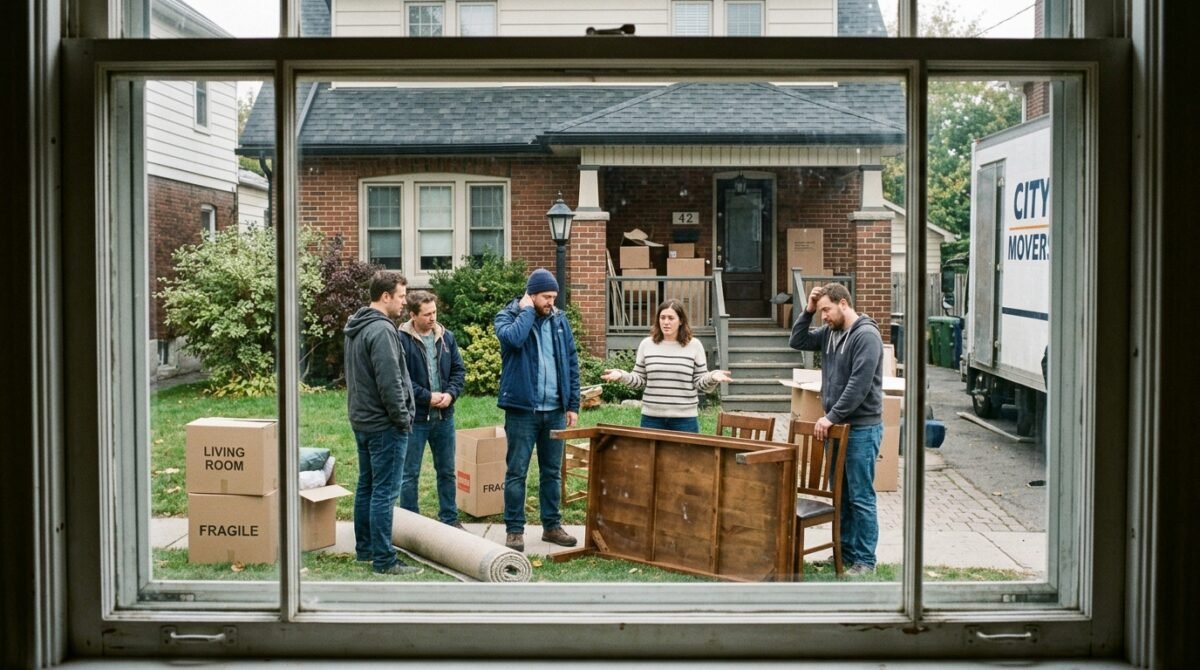
The 48-hour deadline I had set was approaching, and I hadn’t heard a word from Sarah. The furniture was still sitting there, a heavy, wooden testament to her audacity. I spent the time preparing. I researched local charities that provide furniture to families in need. I contacted a moving company and booked them for the morning after the deadline, in case she failed to act.
I sent one final message to the group chat, ensuring there was a clear paper trail for anyone who might try to accuse me of ‘theft’ later. I laid out the timeline, the cost, and the consequences. I was no longer interested in debating; I was interested in execution. I felt a strange sense of calm. The decision had been made, and all I had to do now was follow through.
“The 48-hour window is almost closed. If the furniture is not removed from my home by 8:00 AM tomorrow, I will be having it removed and donated. I have already contacted a charity, and they are prepared for the intake. Consider this your final notice.”
— Message to Family Group Chat
My husband stood by me, finally fully aligned. He had taken the day off work to help me manage the process. We weren’t angry anymore; we were just done. We had spent so much energy and emotional labor on Sarah, and we were ready to be finished with it. The house felt heavy, not just with the furniture, but with the years of tension that had finally reached a boiling point.
We spent the night clearing out our own items from the living room, prepping for the move. Every time I looked at an antique piece—a vanity that had sat in my hallway for three days, an armchair that had made the dining room impassable—I felt less ‘guilt’ and more ‘determination.’ We were reclaiming our sanctuary. We were getting our home back.
At 7:00 AM, the doorbell rang. It wasn’t Sarah. It was a group of her friends, looking confused and slightly embarrassed. They were there, on her behalf, to move the furniture. She hadn’t even had the courage to show up herself. She had sent her lackeys to clean up her mess. It was the final sign of her immaturity and her inability to face the consequences of her own actions.
The Exodus: Reclaiming My Space

The moving process was chaotic. Sarah’s friends were clearly uncomfortable, and they spent the entire time avoiding eye contact with me. I stood in the doorway, checking off items against a list I had made. I wanted to make sure everything was gone, that not a single dust-covered trinket remained in my home. It took four hours, and by the time they were done, the house felt strangely empty.
Once the last piece was hauled out, the silence returned to my living room. It was a beautiful, profound silence. I walked through the rooms, smelling the air. It still smelled like old wood and mothballs, but it was fading. I felt a wave of relief so strong I almost sat down on the floor and cried. I had done it. I had forced the issue, and I had won.
“I hope you’re happy. You’ve ruined our relationship over some stupid furniture. I’ll never forgive you for this.”
— A final text from Sarah
I didn’t respond to her text. I didn’t need to. Her words no longer had the power to hurt me. She had tried to weaponize her past and her ‘heirlooms’ against me, and I had simply refused to play the game. The relationship was already ruined—she had ruined it when she decided my home was her storage locker. I was just the one who finally acknowledged it.
My husband and I spent the rest of the day deep-cleaning the living room. We scrubbed the floors, washed the walls, and aired out the space. We put our own furniture back, returning the house to the way it was supposed to be. It was the most satisfying manual labor I have ever done. Each piece of furniture felt like a victory, a reclamation of our independence.
We ordered pizza that night and sat on the floor of our living room, enjoying the space. We didn’t talk about Sarah. We talked about our future, about our home, and about the fact that we had finally set a boundary that wouldn’t be crossed again. It was the best night of sleep I’d had in a month. The war was over, and for the first time, we were truly at peace.
The Aftermath: Family Fallout and New Realities

The weeks that followed were filled with awkward family interactions. Sarah stopped coming to our house, which was a blessing. The rest of the family was divided; some understood why I had done what I had, while others continued to whisper about my ‘harsh’ behavior. I learned quickly that the people who were most upset were the ones who also benefited from Sarah’s boundary-pushing.
I had to set new boundaries with my in-laws, too. I made it clear that my home was no longer a place for family drama or unsolicited ‘help.’ I started attending family gatherings on my own terms, and if the conversation turned toward the ‘furniture incident,’ I simply walked away. I wasn’t going to be the topic of discussion anymore. I had reclaimed my time, as well as my space.
“You know, you could have just been the bigger person. Family is about sacrifice, not about invoices and threats.”
— My Mother-in-Law
I told her, ‘Family is about mutual respect, and that’s something Sarah clearly doesn’t understand. If I’m not respected, I’m not a part of the arrangement.’ It was a hard conversation, but it was necessary. The dynamic of the family shifted. I wasn’t the ‘accommodating one’ anymore; I was the ‘one who has boundaries.’ And strangely, people started to respect me more for it.
I learned a lot about the people in my life during that time. I saw who was a friend and who was an enabler. I saw who could respect a firm line and who would try to cross it given the chance. It was a painful process, but it was also incredibly clarifying. I stopped worrying about ‘maintaining the peace’ and started focusing on ‘living in the truth.’
The furniture saga became a legend in our family, a cautionary tale about what happens when you mistake kindness for weakness. I don’t regret a single thing. I paid a high price in social capital, but I gained something much more valuable: the knowledge that I am strong enough to protect my own peace. And that, I’ve realized, is worth more than all the antique furniture in the world.
A Lesson in Boundaries and Worth

Looking back, the whole situation feels almost surreal. How did we get to the point where someone thought they could move a whole living room’s worth of items into my house without asking? It stems from a lifetime of being told that ‘family comes first.’ But what does that mean when ‘family’ is the one inflicting the damage?
I’ve come to realize that boundaries aren’t just for strangers. They’re most important with the people who think they have a ‘pass’ to ignore them. When you set a boundary, you’re not just telling someone ‘no’; you’re telling them how you expect to be treated. And if they can’t meet that standard, they don’t deserve the access to your life that they’re demanding.
“If you treat your home like a public warehouse, don’t be surprised when you’re treated like a landlord. Protect your space, because no one else will.”
I’ve stopped feeling guilty for the invoice. I’ve stopped feeling guilty for the 48-hour deadline. I’ve even stopped feeling guilty for the fact that Sarah is now ‘no-contact’ with me. It’s a consequence of her choices, not mine. I have created a life where my home is a place of comfort, not a place of conflict, and I’m never going to let anyone jeopardize that again.
For those of you who are dealing with similar situations, whether it’s an intrusive in-law or a friend who ‘borrows’ without asking: don’t wait for them to change. They won’t. You have to change the environment. You have to be the one to set the price, literally or metaphorically. You are the owner of your life, and that is a power that nobody can take away from you unless you give it to them.
I still see the occasional antique piece in a store window, and I chuckle to myself. I don’t feel the anger anymore; I just feel the freedom. The furniture is gone, the drama is fading, and I’m finally living in a home that I actually own—in every sense of the word. That’s the real victory here.
Community Reflection: The Lessons We Learn

The Reddit community feedback didn’t just validate my actions; it started a broader conversation about what we owe our family. Many people shared that they had been in the exact same position, feeling trapped by the ‘blood is thicker than water’ narrative. It became clear that this is a widespread problem: the weaponization of familial guilt to enforce boundary violations.
One user, a lawyer, chimed in with advice about ‘implied contracts.’ They noted that by allowing the furniture to stay for free, I was inadvertently setting a precedent that Sarah could continue to abuse. By sending the invoice, I had essentially formalized the transaction, which changed the power dynamic from ‘family favor’ to ‘legal agreement.’ That was a fascinating perspective I hadn’t considered.
“OP, you basically turned a disaster into a case study for boundaries. You didn’t just clear your house; you cleared your life of someone who refused to respect you. That’s the ultimate win.”
— u/BoundaryExpert (Top Comment, 15.2k upvotes)
Another user noted that the most important part of my story was the husband’s transition to a total ally. They emphasized that if your partner doesn’t support you in setting boundaries with their own family, the boundary is impossible to maintain. My husband realizing the gravity of the situation was the turning point that allowed us to move forward as a united front.
It was heartening to see so many people sharing their own ‘success stories’ of cutting ties with toxic family members. It made me realize that I wasn’t an outlier. There is a whole generation of people who are deciding that they are no longer going to sacrifice their mental health for the sake of ‘family peace.’ We are all learning that respect is a two-way street.
Ultimately, the community engagement reminded me that my story wasn’t just about furniture. It was about the courage to say ‘no’ when the pressure to say ‘yes’ is at its highest. It was about the realization that the people who get angry when you set a boundary are the exact ones who needed that boundary the most in the first place.
Conclusion
In the end, the ‘antique furniture drama’ taught me more about my own strength than a decade of quiet, compliant family life ever could. I learned that my home is not just a building; it is a manifestation of the boundaries I choose to enforce. When I let Sarah put her furniture in my living room, I wasn’t being kind—I was being a doormat. When I sent the invoice, I wasn’t being greedy—I was being a protector of my own peace.
The fallout was real, the family tension was palpable, and the emotional toll was significant. But every single bit of it was worth it. I have my life back, I have my home back, and most importantly, I have my self-respect back. I have realized that the people who truly love you will never demand that you sacrifice your comfort or your boundaries for their convenience.
I invite you to share your thoughts. Have you ever had a family member assume your home or your time was theirs for the taking? How did you handle it? Did you set a boundary, or did you suffer in silence? Let’s talk about it in the comments below—I want to hear your stories of boundary reclamation and the lessons you’ve learned along the way.
What's your verdict on this dilemma?
Vote below to contribute to the official community consensus.

Have a Dilemma Keeping You Up at Night?
Share your real-life feud, wedding chaos, or relationship crossroads anonymously with our editorial team.
What do you think ?
0 Comments🛡️ Comments are moderated to protect community integrity. Your comment will appear once approved by the editorial team.