
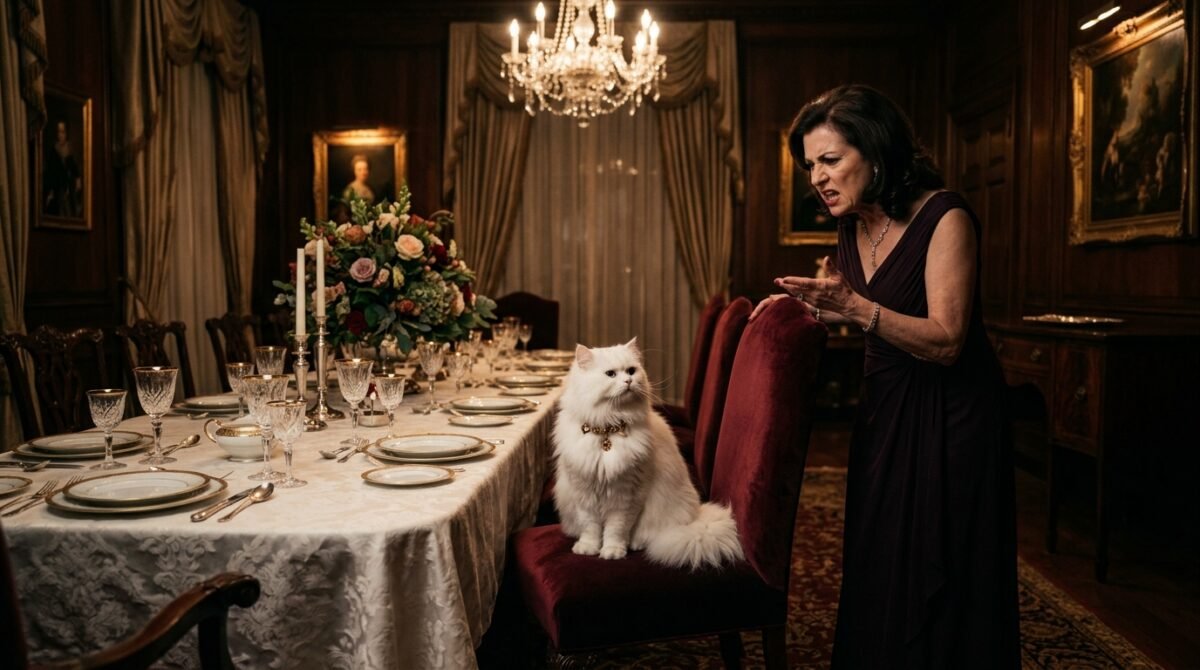
Family holidays are supposed to be a time of togetherness, joy, and the shared warmth of a meal prepared with love. However, for my family, the concept of ‘togetherness’ has become a weaponized term, wielded by my mother-in-law, Martha, to exert control over every aspect of our lives. Martha has always prided herself on being the matriarch of an impeccable home, but her obsession with ‘perfection’ has often crossed the line into absurdity, and in some cases, outright cruelty.
This year, the stakes were higher than ever. My cousin Sarah, who has been in a wheelchair since a car accident five years ago, was finally going to be joining us for our annual Thanksgiving gala. Sarah is the light of my life, a woman whose resilience puts our petty family squabbles to shame. I had spent weeks coordinating with Martha, ensuring the house was accessible, that the narrow hallway could accommodate Sarah’s chair, and that there was a proper place for her to sit comfortably at the head of the table.
Then came the phone call that shifted my reality. Martha, in her singular, chillingly calm voice, informed me that the dining room was ‘too crowded’ to accommodate a wheelchair and that she had already assigned the last main-floor chair to ‘Duchess,’ her prize-winning Persian cat, who was recovering from a minor surgery and needed ‘the best seating for morale.’ When I protested, the atmosphere of the house turned icy. I wasn’t just being asked to accommodate a pet; I was being asked to devalue a human being to make room for a pampered animal.
The dilemma was clear: do I swallow my pride and force Sarah to sit in the kitchen, or do I take a stand that would likely burn the family bridge to the ground? I chose the latter, but not before realizing that Martha’s obsession with her cat was merely a symptom of a much deeper, more malignant control issue. This is the story of how we reclaimed our dignity, hosted our own feast, and inadvertently triggered the biggest family explosion of the decade.
The Preposterous Mandate From the Matriarch

The Tuesday before Thanksgiving, I received a notification that would set the tone for the entire week. My phone buzzed on the kitchen counter, and I saw Martha’s name appear. I expected a question about the wine or perhaps an inquiry about dietary restrictions, but instead, I was met with a demand that defied any logic I could muster. Martha was adamant that the floor plan of the dining room was non-negotiable, and that Sarah’s presence would ‘ruin the flow’ of the evening.
I remember standing in my living room, phone pressed to my ear, listening as she spoke about the ‘aesthetic’ of the table. She seemed entirely disconnected from the fact that we were discussing a human person, not a piece of furniture. Her voice remained devoid of empathy, focused entirely on the image she wanted to project to the distant relatives who would be in attendance.
“Listen, I need you to understand that the dining room has a specific layout. With Sarah’s chair, it will feel claustrophobic. I’ve put Duchess in a specially cushioned chair at the table because she needs to be monitored post-surgery. Surely you can understand that a pet with health needs requires more priority than a guest who can manage in the kitchen nook?”
— Martha, during the phone call
I felt a hot surge of rage that I hadn’t experienced in years. The comparison was so grotesque that for a moment, I couldn’t even speak. I had to set the phone down on the counter to keep from shouting into the receiver. The audacity of comparing my cousin’s physical disability to a cat’s need for a dining chair was, in my mind, a bridge burned.
When I finally spoke, my voice was shaking. I told her that if Sarah wasn’t welcome at the main table, neither were we. I expected her to back down, to apologize and retract the statement, but instead, she laughed. It was a cold, brittle sound that echoed in my mind for the rest of the night. She truly believed that her power was absolute and that we would ultimately fold to her will as we had done so many times before.
That night, I didn’t sleep. I looked at the floor plans, I looked at photos of past Thanksgivings, and I realized that this wasn’t about the cat at all. This was about Martha testing the boundaries, seeing how much of our humanity we were willing to sacrifice just to keep the peace. I decided right then that there would be no peace at her table this year.
The Strategic Withdrawal to the Kitchen Nook

I knew I had to handle this delicately. I didn’t tell Sarah the full extent of the insult immediately. I simply told her that there had been a ‘scheduling error’ regarding the seating and that the house might not be as accessible as I had hoped. Sarah, being the intuitive person she is, immediately caught on. She asked me, point-blank, if Martha was being her usual self again. I couldn’t lie to her.
The conversation that followed was one of the most painful of my life. I had to apologize to her for even suggesting she attend the gathering. I told her that I was pulling us out and that I was planning something better, something that was entirely ours. She was relieved, but I could tell she was also deeply hurt by the casual way she had been dismissed by someone who was technically her aunt by marriage.
“I don’t want to be the reason for your drama with her. But honestly, if I’m just an inconvenience to her, I’d rather be anywhere else. Can we just do something small? Maybe just you, me, and the kids?”
— Sarah, responding to the news
We spent the next hour brainstorming. We decided to host our own dinner at my house, a place where everyone would be treated with respect. I started making phone calls, inviting the rest of the family—the ones who were tired of Martha’s games. I knew that by inviting them, I was essentially declaring war, but at this point, the battle had already begun.
The invitations were met with a mix of shock and enthusiastic support. It turns out, I wasn’t the only one who had been harboring resentment. My brother, who had been silenced for years, was the first to RSVP. My cousin’s parents were next. The list grew from a small gathering of four into a full-blown alternative dinner party of twelve.
The logistics were a nightmare, but they were a happy nightmare. We traded the stress of the ‘perfect’ holiday for the joy of true connection. We planned a menu that was authentic to our actual heritage, rather than the sterilized, bland dishes Martha insisted on. We were reclaiming our holiday, and for the first time in years, I felt a sense of genuine excitement.
The Group Chat Explosion

The bomb dropped on Wednesday morning. I had forgotten that Martha still had access to the legacy family group chat, a digital relic from a time when we all thought we were a happy, cohesive unit. I sent out a polite, neutral message to the group announcing our plans. I didn’t mention the cat, I didn’t mention the chair, I didn’t mention the insult. I simply stated that we would be hosting a dinner at our home and that anyone interested in joining us was more than welcome.
The silence that followed lasted for exactly three minutes. Then, the notifications started pouring in. Martha didn’t just respond; she launched a full-scale offensive. She accused me of trying to tear the family apart, of being ungrateful, and of ‘stealing’ her guests for a ‘second-rate’ event. The vitriol was staggering.
“I cannot believe the level of disrespect you are showing. This family has always gathered at my home. You are trying to cause a schism because you’re jealous of the effort I put into my dinner. Stay home if you want, but don’t try to manipulate the rest of the family into your little rebellion.”
— Martha, in the family group chat
I didn’t engage. I let the others do the talking. My brother chimed in, pointing out that perhaps the family was tired of the ‘effort’ being a synonym for ‘control.’ Then came the aunt who had been ignored for years, speaking up about how she had felt unwelcome at Martha’s for over a decade. It was as if a dam had burst, and the pent-up frustration of years was finally spilling out into the open.
I watched the screen, stunned by the sheer volume of suppressed anger that was finally finding a voice. Martha tried to pivot, claiming she was just trying to keep traditions alive, but no one was buying it. The narrative had shifted. She was no longer the benevolent matriarch; she was the architect of her own isolation.
By the time I finished reading, there were over fifty messages. I didn’t have to defend myself. The truth was being spoken by everyone else, and all I had to do was step back and watch the facade crumble. It was the most liberating experience of my adult life.
The Final Preparation for the Counter-Feast
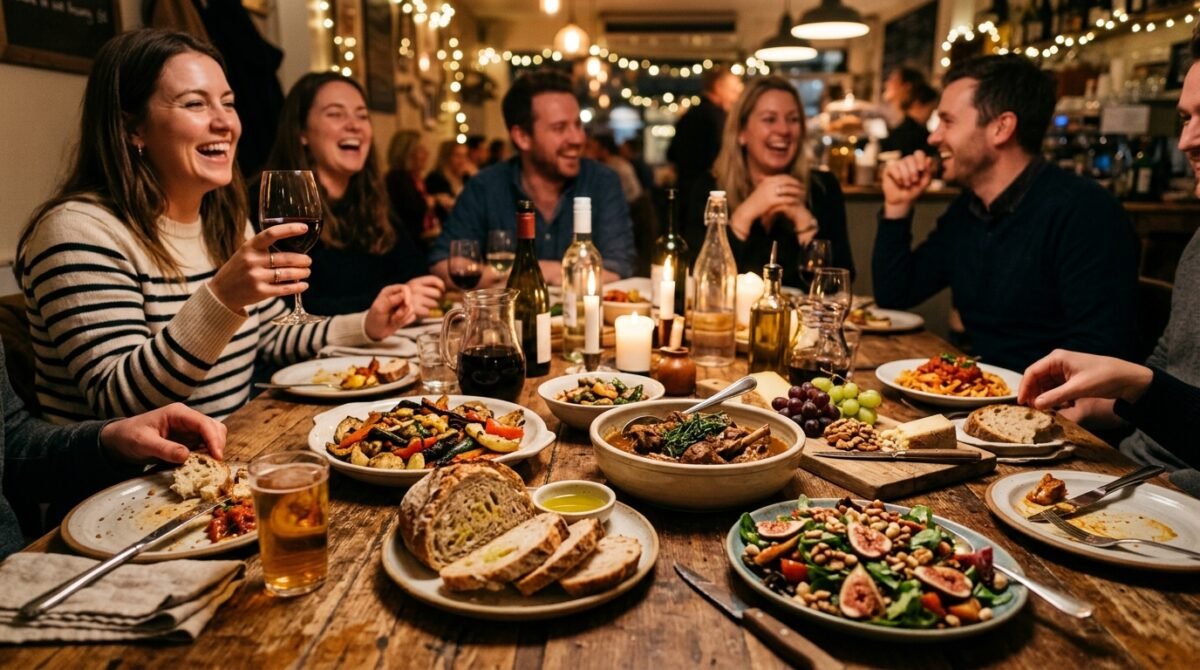
With the group chat still buzzing, we went into high gear. The preparations for our dinner became a ritual of healing. We didn’t need to worry about crystal glasses or matching linens. We focused on comfort and inclusion. Sarah arrived early to help with the prep, her wheelchair gliding easily through our open floor plan. We laughed as we chopped vegetables and sipped wine, the atmosphere light and joyous.
We had a system in place. Since we were hosting more people than expected, we turned the living room into a secondary dining area. We pulled out every chair we owned, mismatched and eclectic, but all of them were occupied by people we actually wanted to see. The contrast to what was happening at Martha’s house couldn’t have been sharper.
As we cooked, we talked about the state of our relationships. We acknowledged the pain of the past but focused on the future. We realized that this dinner wasn’t just about food; it was a statement. We were establishing a new precedent: that we were no longer willing to be treated as props in Martha’s performative lifestyle. If we were to be a family, it would be on our terms, based on mutual respect and genuine care.
“I’ve never felt more at home than I do right now. Thank you for doing this. Not just for me, but for all of us who were too afraid to say anything.”
— Sarah, while helping set the table
The energy in the kitchen was infectious. Every time a new guest arrived, they were greeted with warmth and genuine welcome. There was no inspection of their clothes, no judgment about their contributions. It was a space of radical acceptance, and that was the most nourishing thing we could have served.
By the time the food was ready to be served, the tension of the previous days had evaporated. We were a group of people who had been pushed to the edge and had decided to build our own bridge across the chasm. The smell of roasting turkey and stuffing filled the house, not as a symbol of duty, but as a symbol of the hard work we had put into reclaiming our joy.
The Silence at the Mansion
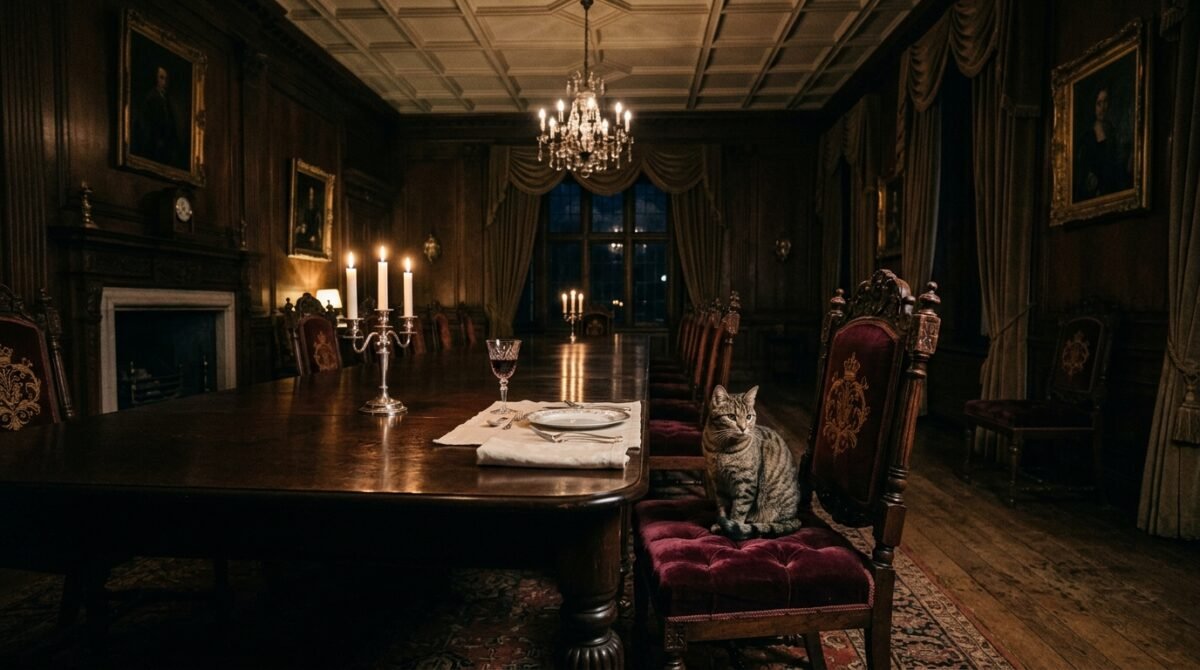
While we were bustling with joy, the scene at Martha’s estate was reportedly a far cry from the lively atmosphere she had expected. My husband, who had been in contact with one of his cousins still attending out of ‘obligation,’ gave me the play-by-play. The house was cold, the dining room was sparsely populated, and the centerpiece of the table was a cat who wanted nothing to do with the environment.
Martha had spent thousands on decorations, floral arrangements that looked more like funeral wreaths than centerpieces, and a catered meal that no one seemed to have an appetite for. She had expected to be the center of attention, the gracious hostess holding court, but instead, she was left with a room full of people who were checking their watches and counting the minutes until they could leave.
The cat, Duchess, had apparently knocked over a glass of red wine within the first ten minutes of the dinner. The spilled liquid had stained the antique lace tablecloth, causing Martha to have a minor breakdown in front of her guests. It was a poetic moment of chaos that underscored the absurdity of her priorities.
“It was so awkward. Half the seats were empty, and Martha was just staring at the cat, trying to act like everything was fine. Nobody wanted to talk because any mention of why people were missing was met with a icy glare. I left as soon as dessert was served.”
— A cousin who attended, via text to my husband
It was a stark realization that power built on control is incredibly fragile. The moment the participants decide they are no longer interested in playing their parts, the entire system collapses. Martha had tried to build a kingdom, but she had ended up as the queen of an empty house, surrounded by symbols of status that provided no real comfort.
I didn’t feel guilty. I didn’t feel a desire to apologize. I felt a profound sense of clarity. The events of the evening weren’t just a win for us; they were a necessary disruption to a toxic pattern that had been stifling us for years. The mansion was quiet, not because of grace, but because of the absence of love.
The Reddit Community Weighs In

The story of the dinner, and the preceding drama, eventually made its way to the internet. I decided to share the experience on a popular subreddit for family conflicts, looking for perspective and perhaps a bit of validation. I was overwhelmed by the response. Within hours, the post had thousands of upvotes and a deluge of comments that ranged from supportive to hilariously brutal in their assessment of Martha.
The consensus was overwhelming: I was ‘NTA’ (Not the Asshole). The community saw through the facade immediately. They identified the behavior as classic narcissistic control and praised the decision to walk away. Many users shared their own stories of dealing with similar ‘matriarchs’ who prioritized image over human dignity.
“The audacity of prioritizing a cat over a disabled family member is just next-level toxic. Good on you for walking away and hosting your own event. You didn’t just save your holiday; you saved your mental health. Stay low contact with her.”
— u/FamilyDramaSurvivor (Top Comment, 18.2k upvotes)
It was validating to see that what I had lived through wasn’t just ‘my interpretation.’ There was a collective recognition of the boundary-crossing behavior that Martha had exhibited. People were especially vocal about the ‘cat-on-the-chair’ incident, pointing out that it wasn’t just a random act, but a deliberate way to keep the seating arrangements exclusive.
Some of the advice was more practical, focusing on how to maintain the distance I had created. Users suggested that I shouldn’t try to ‘fix’ the relationship with Martha, because she wouldn’t see anything wrong with her actions. They advised me to focus on the relationships I had nurtured during our alternative dinner and to continue setting boundaries with anyone who sided with her.
Reading the comments, I realized that I wasn’t alone in this. The dynamics I had been navigating were not unique to my family. They were part of a broader struggle for autonomy in the face of people who used tradition to maintain dominance. The internet, in its own unfiltered way, had given me the roadmap for how to handle the aftermath.
The Fallout: Dealing with the Enablers

While the support was great, the aftermath also included dealing with the enablers—the family members who felt the need to play peacemaker. They contacted me in the days following the event, suggesting that I should ‘just apologize to keep the peace.’ They argued that Martha was ‘just old’ and that I should ‘let it go’ for the sake of the family.
I found these conversations just as draining as the original conflict. It was clear that they weren’t interested in justice or fairness; they were interested in convenience. They didn’t want to deal with the fallout of the feud; they wanted me to revert to being the compliant family member so that their own lives wouldn’t be disrupted.
“I understand you’re upset, but this is your mother-in-law. You need to apologize, even if you don’t mean it, just to smooth things over. It’s not worth the drama.”
— A relative who tried to mediate
I had to set hard boundaries with these individuals as well. I told them that I was not willing to apologize for standing up for myself and for Sarah. I explained that an apology would imply that I was in the wrong for prioritizing a human being over a cat, and that was a moral line I would not cross. If they wanted to continue the conversation, it would have to be on the basis of acknowledging the reality of the situation.
It was a tough process, but it was necessary. I realized that by not setting boundaries with the enablers, I was implicitly giving them permission to continue pressuring me. It was a lesson in how toxic systems rely on the complicity of the ‘middle ground’ to maintain the status quo.
Some of the enablers eventually backed off, and some even came around to my side once they realized I wasn’t going to budge. Others remained distant, which was their choice. I accepted that I couldn’t control their reactions, only my own. It was a significant growth moment for me as an adult.
Reflections on the ‘Perfect’ Family Image
After the dust settled, I took some time to reflect on why Martha was so obsessed with the image of the perfect family. It was clear that for her, the appearance of harmony was the only thing that mattered. If the table looked right, if the guests were acting the way she wanted, then the family was ‘happy’—even if, in reality, everyone was miserable.
I realized that this obsession likely stemmed from her own upbringing, where she was perhaps taught that one’s worth is tied to external validation. The tragedy was that she had passed this down to her children, creating a cycle of performative relationships. My husband had spent years breaking free from this, and our dinner was the final step in his journey toward independence.
We talked about this a lot in the weeks following the event. He told me that he had always felt like an actor in a play where the script was written by his mother. He had never had the chance to define what a family dinner meant for him. Seeing us all come together without the pressure of her rules had changed his perspective entirely.
“I didn’t realize how much the ‘perfect’ look was killing us until we were in your kitchen, laughing and eating food that wasn’t perfect, but was real. That’s what I want for our future.”
— My husband, reflecting on the holiday
This realization was the most profound outcome of the entire saga. We had moved past the petty fight and into a deeper understanding of what we wanted our life together to look like. We were no longer chasing an ideal that was designed to make us feel small; we were creating a reality that made us feel seen and valued.
The ‘perfect’ family image is a trap, and we had finally escaped it. We didn’t have the crystal, we didn’t have the pedigree, and we certainly didn’t have the approval of the matriarch. But we had something much better: we had our own authenticity, and that was something no one could take away from us.
The New Normal: Boundaries and Beyond

Life has, for the most part, returned to normal, but it is a new kind of normal. We are now ‘low contact’ with Martha. We see her for major holidays, but we maintain firm control over the terms. We don’t attend events where we know we will be disrespected, and we don’t allow ourselves to be sucked into the ‘group chat drama’ that still occasionally flares up.
Sarah is, of course, a constant fixture in our lives. We have made sure to host many more gatherings, and we always ensure that the space is accessible and welcoming for everyone. We have even started a tradition of having a ‘no-expectations’ dinner once a month, where anyone can come over and just be themselves without the need for fancy dishes or formal decor.
This shift in our lives has been a catalyst for other positive changes. We are more confident in standing up for ourselves in other areas, like work and friendships. We have learned that saying ‘no’ to something that doesn’t align with our values isn’t just okay; it’s necessary for our well-being.
“You guys really changed things for the better. Seeing you stand up to her gave me the confidence to set my own boundaries with my parents. It’s been hard, but it’s been worth it.”
— A cousin, in a recent text message
I am grateful for the ‘cat incident,’ as strange as that sounds. It was the catalyst that forced us to finally act. Sometimes, you need a shock to the system to realize that you are in an unhealthy situation. It was a painful, stressful, and chaotic experience, but it led us to a place of greater freedom and authenticity.
If you find yourself in a similar situation, my advice is simple: trust your instincts. If something feels wrong—if a person is prioritizing a pet or an aesthetic over the humanity of your loved ones—it IS wrong. Don’t let yourself be gaslit into believing that you are the problem just because you are demanding the basic respect that you deserve.
A Final Message to the Reddit Community

I wanted to address the many people who reached out to share their own experiences. The amount of support was staggering, and I realized that I had only scratched the surface of a much larger issue. Many of you are still navigating these toxic family waters, feeling like you have to choose between your sanity and your family relationships. I want you to know that you are not alone.
The power of the community in this scenario was immense. It showed me that even in the most isolating situations, there is a collective understanding that can help you find your footing. The comments weren’t just advice; they were a lifeline. They provided the validation I needed to stay the course.
“Thank you for sharing this. It gives me hope that I can one day stand up for myself against my own toxic in-laws. Your strength is inspiring.”
— A reader, in a direct message
I am planning to continue being active in these communities, offering the same support that I received. It’s a way to pay it forward. If we can all support one another, then perhaps we can start to shift the narrative away from the ‘toxic matriarch’ trope and toward a culture of mutual respect and kindness.
To those of you who are still in the thick of it, hold on. Set your boundaries, prioritize your peace, and know that you are worthy of respect. You don’t have to be the person who holds everything together if it means losing yourself in the process. Sometimes, the best thing you can do for your family—and for yourself—is to step away and build something better.
This journey has been one of the most transformative of my life. It taught me that I am capable of making hard decisions, of standing by my values, and of creating a space where people feel safe and loved. I hope my story, however small it may seem in the grand scheme of things, helps someone else find the courage to do the same.
Conclusion
Looking back at the entire saga, I realize that the dining chair incident was never just about a cat. It was a litmus test for our self-worth and our willingness to accept the unacceptable. By choosing to walk away and host our own feast, we weren’t just rejecting a seat at a table; we were rejecting a lifelong script of submission. The ‘perfect’ family dinner was a prison, and we had simply chosen to walk out the door.
Life is far too short to spend it in the company of those who view our loved ones as inconveniences. We have learned that family isn’t defined by blood or by who holds the dinner party, but by who shows up for you in your moments of need. My cousin Sarah, my husband, and the rest of the ‘rebel’ faction of our family have become the center of my world, and that is a far more beautiful thing than any perfectly decorated dining room could ever offer.
To our readers: Have you ever reached a breaking point with a toxic family member where you had to walk away to preserve your integrity? What was the moment that finally pushed you to set a boundary? Let us know your stories in the comments below—your experiences of reclaiming your own happiness and standing up to expectations are what help others find the strength to do the same.
What's your verdict on this dilemma?
Vote below to contribute to the official community consensus.

Have a Dilemma Keeping You Up at Night?
Share your real-life feud, wedding chaos, or relationship crossroads anonymously with our editorial team.
What do you think ?
0 Comments🛡️ Comments are moderated to protect community integrity. Your comment will appear once approved by the editorial team.