

Motherhood is a landscape of constant, exhausting decision-making. From the moment my daughter, Maya, was born, my husband Mark and I had agreed on a philosophy of ‘no intervention’ for the first year. We wanted her to grow into her own features without the imposition of adult aesthetics. When it came to piercings, we were staunchly against it, viewing it as a permanent modification on an infant who couldn’t voice her consent. My mother-in-law, Linda, had always been ‘old fashioned,’ a term she used to mask her constant, subtle criticisms of my parenting style.
For months, Linda had dropped hints—comments about how ‘plain’ Maya looked, or how she was ‘missing that feminine touch.’ I had dismissed them as the ramblings of a grandmother who grew up in a different era. I trusted her with my child because she was family, and because I naively believed that blood ties meant a baseline level of respect for parental authority. I was, as it turns out, profoundly mistaken.
The afternoon in question started innocuously enough. I had a dentist appointment, and Mark was stuck in a conference call. Linda had been practically begging for ‘grandma time’ all week, so I finally relented, leaving Maya with her at our house for three hours. I kissed my daughter goodbye, handed over her diaper bag, and gave Linda explicit instructions: ‘Keep her away from the sun, feed her at 2:00 PM, and please, just enjoy some quiet bonding time.’
When I returned, the house was silent. Linda was sitting on the couch, bouncing a slightly irritable Maya in her arms. At first, I thought she was just fussy from a nap. Then, as I reached out to take her, I saw the glint. It was tiny, surgical steel-looking studs embedded in the soft, delicate lobes of my six-month-old. My heart stopped. The air left my lungs as the realization hit me with the force of a physical blow. She hadn’t just babysat; she had taken my daughter to a professional, likely a local mall kiosk, and altered her body without my permission.
This wasn’t just a difference of opinion; this was a violation of bodily autonomy that shattered the foundations of our relationship. As I looked at Linda, who was smiling as if she had just given the child a gift rather than a trauma, I knew that the ‘traditional’ dynamic we had cultivated was dead. This is the story of how a simple babysitting favor turned into a full-scale family war, exposing the toxic entitlement that had been festering beneath the surface all along.
The Initial Confrontation: A Smile That Masked A Betrayal

I didn’t scream, though every nerve in my body was screaming. I stood in the middle of our living room, frozen in place, while Maya whimpered in Linda’s arms. The silence stretched for an eternity, heavy with the weight of what had just occurred. Linda looked at me with a serene, almost smug expression, as if she were waiting for me to thank her for her ‘generosity.’ I finally found my voice, but it was low, trembling with a fury I hadn’t known I possessed.
“Linda, what have you done to her ears? I told you specifically, no piercings. We discussed this at the baby shower, and we discussed it last month. Why would you do this when you knew exactly how I felt?”
Linda’s smile didn’t falter. She adjusted the baby and looked at me with an air of practiced innocence, a performance she had clearly been rehearsing in her head. She spoke with the calm, patronizing tone of a woman who truly believed she was in the right. She didn’t see an act of defiance; she saw a ‘correction’ of my failures as a mother. She looked at Maya’s tiny, bandaged lobes and shrugged as if it were a trivial matter of fashion rather than a permanent change to my daughter’s body.
“Oh, don’t be so dramatic, dear. She looks so much more like a girl now. People kept asking if she was a boy because she wears those plain onesies. I just wanted to save her from the confusion later. It’s a gift, really. You’ll thank me when she’s older and realizes how cute she looks.”
I felt a hot, blinding rage rising in my chest. To her, this wasn’t about Maya’s autonomy; it was about her own comfort and the way she wanted the world to perceive her granddaughter. The ‘looking like a boy’ comment was the ultimate insult, a narrow-minded jab at the modern parenting choices Mark and I had made. I snatched Maya from her arms, feeling the baby’s pulse race against my own, and turned to the door, pointing directly at the exit.
I told her to leave. Not in a week, not after a cup of tea, but immediately. I told her that she had lost all privilege to be alone with my child, and that I would need to speak with Mark before she was ever allowed in our home again. Linda’s face finally changed, shifting from smugness to a sharp, cold indignation. She acted as if she were the victim, clutching her purse and giving me a look of pure, unadulterated contempt. She walked out, but not before delivering one final, stinging remark about how ‘difficult’ I was being.
The Midnight Argument: Where Was My Husband?
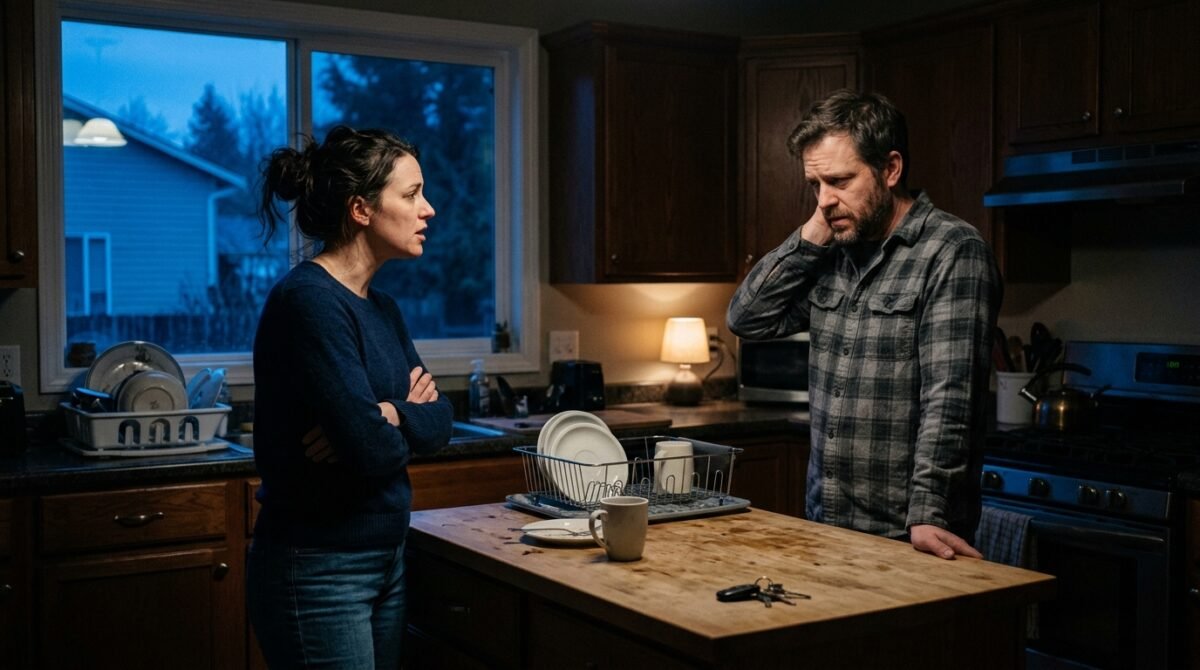
When Mark finally walked through the door two hours later, the tension in the house was thick enough to cut with a knife. He found me sitting in the nursery, rocking a now-asleep Maya, my eyes red and swollen. I didn’t say a word; I just pointed to the baby’s ears. Mark walked over, leaned in, and his entire posture collapsed. He knew. He knew exactly what had happened, and he knew how much I had specifically forbidden it. His first reaction wasn’t anger at his mother; it was shock, followed by a defensive, weary deflection.
“She… she did what? Why would she do that? She knows we said no. I’ll call her, I’ll tell her she was out of line. But can we just calm down? She’s a grandmother, she’s old-fashioned. She didn’t mean to hurt Maya, she just thinks she’s being helpful.”
That response was like a slap in the face. ‘Helpful?’ I asked him, my voice rising. I felt like the ground had been pulled out from under me. Was this how it was going to be? Would he always prioritize his mother’s ‘intentions’ over the blatant disrespect of our boundaries? The argument that followed was the worst we’d ever had. I told him that if he didn’t set a hard boundary now—if he didn’t tell his mother she had crossed a line that could never be uncrossed—then he was effectively agreeing with her actions.
We spent hours in the kitchen, the remnants of dinner forgotten on the table. I laid out the history of Linda’s micro-aggressions, the way she had steamrolled our choices since the engagement. He tried to minimize it, focusing on the ‘tradition’ of her family, but I held my ground. I told him that this wasn’t about a piercing; it was about authority. It was about whether we were the parents of our child, or if we were just secondary caregivers in the shadow of his mother’s opinions.
He finally agreed to call her, but his tone was hesitant, apologetic even. Listening to him on the phone with her, I realized the depth of the problem. He was so afraid of confrontation that he was willing to let his own daughter’s bodily autonomy be sacrificed for the sake of ‘keeping the peace.’ The call ended with him telling her, ‘We just need some space for a while,’ while she went on a tirade about how ungrateful I was. The peace was not kept; it was simply shattered in a different way.
The Leaked Family Group Chat: A Digital Betrayal
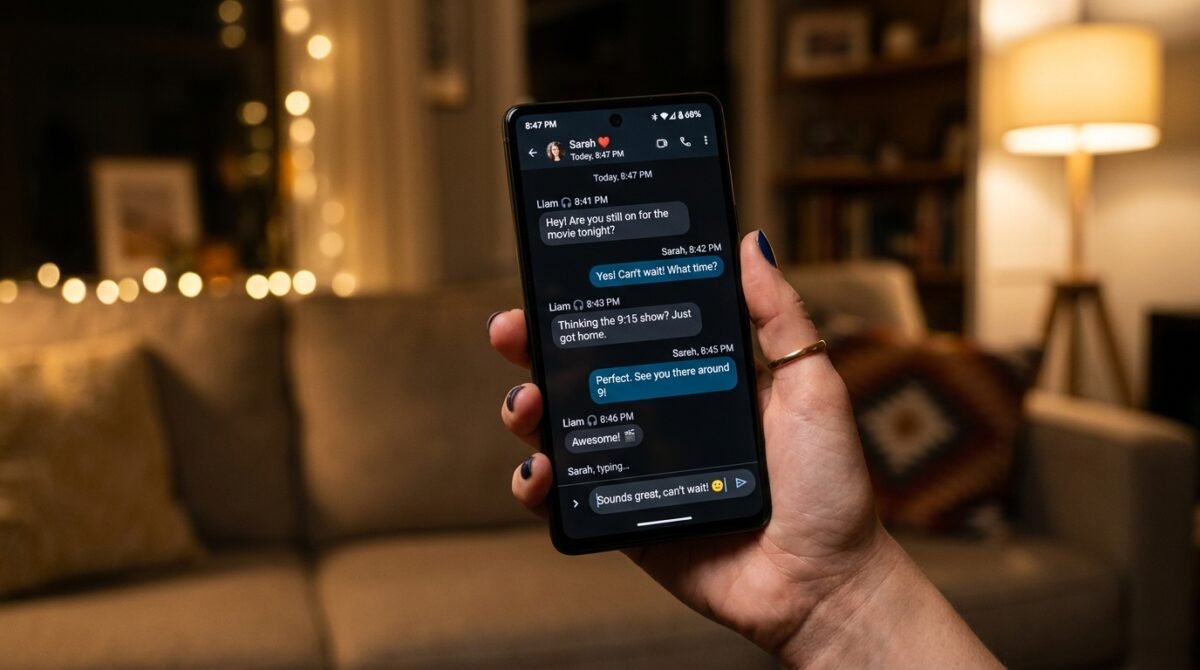
Three days later, I was cleaning out some old photos on the family laptop when I saw a notification pop up from the shared family group chat. I wasn’t supposed to be part of this thread—it was Linda, her sister, and Mark. Curiosity got the better of me, and I opened the message. My blood ran cold. It wasn’t just a discussion about the piercing; it was a character assassination. Linda had been painting me as an ‘unstable’ mother who was preventing her from ‘loving’ her granddaughter properly.
“I had to do it. The poor thing looked like a little boy, and her mother is too obsessed with these new-age ‘autonomy’ concepts to care about how the child looks in public. I’m just trying to save her from the embarrassment. If they want to be angry, let them. She’ll appreciate it when she’s older. Don’t tell them I told you.”
— Linda via Family Group Chat
The replies were even worse. Her sister was agreeing with her, saying that I was ‘controlling’ and that Mark was ‘pussy-whipped.’ I stared at the screen, reading the messages over and over again. This wasn’t just a grandmother making a mistake; this was a coordinated effort to undermine my parenting and isolate me from the family. They were laughing at our boundaries, mocking our values, and treating the physical modification of my daughter like a prank.
I took screenshots of everything. I didn’t want to play the ‘she-said-she-said’ game anymore. I had the evidence of their contempt, the proof that this wasn’t an act of love, but an act of power. I walked into the room where Mark was working and dropped my phone in front of him. I didn’t say a word. I just watched his face as he scrolled through the messages, his expression shifting from confusion to horror, and finally, to a deep, simmering anger.
He finally understood that this wasn’t about ‘old-fashioned’ values. It was about malice. For the first time, he didn’t offer a defense for his mother. He didn’t talk about her intentions. He just closed the laptop and looked at me, his eyes hard. ‘You’re right,’ he said, his voice barely a whisper. ‘I’ve been blind. This ends today. Not just the visits, not just the cooling-off period. This ends completely.’
The Ultimatum: A Line in the Sand
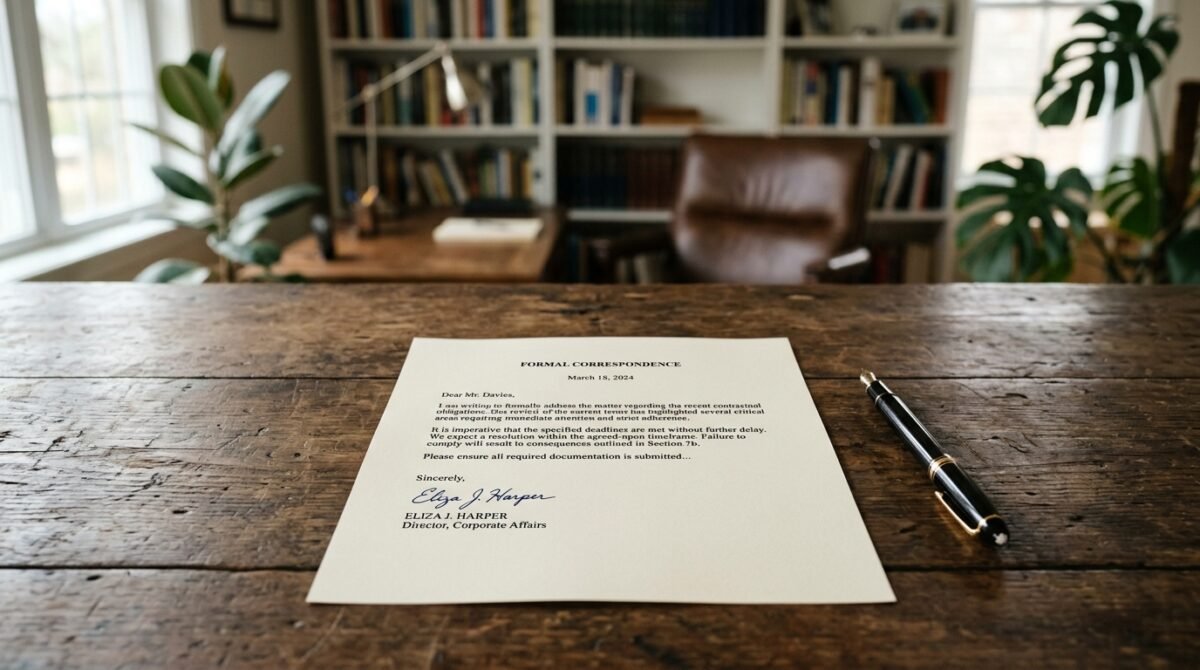
The next morning, we sat down to draft a letter. It wasn’t an angry outburst; it was a clear, cold statement of consequences. Mark insisted on writing it, wanting to make it clear that this was a united front. We laid out exactly what had happened, why it was unacceptable, and what the path forward would look like. We didn’t ask for an apology—we knew we wouldn’t get a sincere one—we demanded a fundamental shift in how they interacted with us.
The letter was sent via certified mail to ensure there was no ‘I never got it’ excuse. We informed them that until there was a genuine recognition of our boundaries and an apology that addressed the specific violation, there would be no contact with Maya. No visits, no photos, no updates. We were cutting the cord, at least for the foreseeable future. I felt a strange sense of relief as we dropped the letter into the mailbox, a feeling of finally taking control of our own narrative.
“The decision to pierce Maya’s ears without our consent was not a ‘grandparental right.’ It was an assault on our authority as parents and a violation of our child’s bodily autonomy. Because you have demonstrated that you cannot respect our boundaries, we are initiating a period of no contact. This is not a punishment; it is a necessity for the health of our family.”
The fallout was immediate. The phone started ringing before the mail was even delivered. Linda was calling, texting, leaving voicemails that started as sweet, manipulative pleas and escalated into vitriolic attacks. She accused me of poisoning her son’s mind, of being a ‘narcissist’ who was holding the baby hostage. She demanded that we ‘get over it’ and stop being so sensitive, as if we were the ones who had committed the transgression.
We blocked the numbers. It was the only way to maintain our sanity. The silence in the house was deafening, but it was a healthy, peaceful kind of silence. For the first time in months, I didn’t feel like I was walking on eggshells. I didn’t feel like I had to justify my choices to someone who saw me as an obstacle to her own desires. We were finally living our own lives, free from the shadow of her disapproval.
The Extended Family Weighs In: Who Is Right?

Word traveled fast through the family grapevine. Within a week, I was receiving messages from aunts, cousins, and distant relatives I hadn’t spoken to in years. Some were sympathetic, having dealt with Linda’s overbearing nature themselves. Others were horrified, telling me that I was overreacting to a ‘harmless’ tradition. The family was split down the middle, and the drama was becoming a full-scale civil war. It was exhausting to be the center of this, to have my parenting dissected by people who had never even met my child.
I found myself defending the most basic concepts of consent. I had to explain to my own aunt why it was wrong to pierce a baby’s ears without permission. It felt ridiculous, like I was explaining why the sky is blue. The sheer absurdity of the situation started to wear me down. I had to create a FAQ document just to deal with the repetitive, uninformed questions I was getting from relatives who thought they were being helpful.
“I understand that in your family, this is just ‘what we do.’ But we are not your family. We are our own unit with our own values. If you cannot respect that, we cannot have a relationship with you. Please stop asking us to ‘get over it.’”
Mark’s cousins were the most vocal. They had all grown up under Linda’s thumb, and many of them had stories of their own boundaries being ignored. They were the ones who finally validated that I wasn’t crazy. They told me that Linda had always been this way—that she saw children as extensions of herself, not as individuals. Hearing these stories made me realize that I wasn’t the problem; I was simply the one who had finally decided to stop the cycle.
I started to see the situation not as a localized event, but as a long-standing pattern of behavior that had been left unchecked for decades. I realized that my refusal to ‘play nice’ was threatening the entire delicate ecosystem that Linda had built, where everyone was expected to fall in line or be ostracized. By standing my ground, I wasn’t just protecting Maya; I was challenging the power structure that had kept the rest of the family in check for years.
The Reddit Verdict: When The Internet Gets Involved

I eventually did what many people in my position do: I posted the story to a popular subreddit for parenting and relationship advice. I needed an outside perspective that wasn’t tied to the family drama. I expected some backlash, but the outpouring of support was overwhelming. Thousands of people shared similar stories of boundary violations, and the consensus was loud and clear: I was not the asshole.
“This is not just about a piercing. It’s about a complete and total lack of respect for you as a parent. If she will do this—a permanent, physical, painful change—without asking, what else will she do? She has shown you who she is. Believe her.”
— u/ParentingExpert (Top Comment, 32.4k upvotes)
There were, of course, the dissenters. Some people argued that I was being too harsh, that family is ‘all we have’ and that I should forgive her for the sake of the child having a grandmother. But the majority of the comments were laser-focused on the autonomy aspect. They pointed out that if you can’t trust someone with a piercing, you can’t trust them with discipline, medical decisions, or the emotional development of your child.
The thread became a repository of horror stories, with people sharing tales of grandparents cutting their children’s hair without permission, feeding them allergens, or teaching them things that went directly against their values. It was a sobering reminder that I wasn’t alone, but it also made me realize how common this specific type of entitlement was. The ‘Grandparents Know Best’ mentality is a pervasive, damaging force in modern families.
Reading these responses gave me a strange sense of vindication. It didn’t make the pain of the betrayal go away, but it made me feel empowered. I wasn’t ‘difficult’ or ‘controlling’ for wanting to protect my child. I was a parent doing my job. The internet had spoken, and while it didn’t change the family dynamic, it gave me the confidence to stick to the decision I had made, regardless of the pressure to cave.
The Lingering Trauma: Why It Still Hurts

Even weeks later, the sting of what happened didn’t fade. Every time I looked at Maya, I was reminded of the violation. The little gold studs were still there—we decided to keep them in to avoid the trauma of letting them heal shut and then potentially needing to re-pierce later, a decision that felt like a compromise I hated but felt forced to make. The studs were a constant, physical reminder that someone had taken something from us that we would never get back: the choice of when and how to modify our daughter’s body.
I started having anxiety about childcare in general. I was paranoid about leaving Maya with anyone, even people I trusted implicitly. I found myself hovering during playdates, checking her clothes for changes, asking questions that made me sound like an interrogator. I was grieving the loss of the relationship I thought I had with Linda, and the loss of the ‘normal’ family life I had envisioned for my daughter.
“It’s not just the piercing. It’s the realization that my own mother-in-law sees my daughter as an accessory. It’s the realization that my trust was misplaced and that I have to be the one to bear the emotional burden of keeping her safe from her own grandmother.”
Mark was also struggling. He was dealing with the guilt of having not seen the signs sooner, and the pain of being estranged from his mother. We spent many nights just talking, trying to process the guilt and the anger. We were a team, but it was a team that had been through a traumatic event, and the healing process was slow and often painful. We realized that the ‘No Contact’ rule wasn’t just a punishment for her; it was a sanctuary for us.
We started seeing a therapist together. It helped to have a neutral third party help us work through the feelings of betrayal and the pressure from other family members to ‘just move on.’ We learned that we didn’t have to justify our boundaries to anyone. We were the parents. Our word was final. And if anyone didn’t like it, they were free to remove themselves from our lives, just like Linda had effectively done by her own actions.
The Rare Encounter: A Coincidence at the Park

The first time I saw Linda again was entirely by accident. We were at a local park, just trying to enjoy a sunny Saturday, when I saw her sitting on a bench across the playground. She was with a friend, and she saw us almost immediately. For a second, I panicked. I wanted to turn around and leave, to avoid the confrontation. But then I looked at Maya, who was happily playing in the sand, and I realized I had nothing to be ashamed of.
Linda stood up and started walking toward us. My heart was pounding, but I didn’t back down. She approached, her face a mask of practiced concern, as if nothing had happened. She reached out to touch Maya’s arm, but I stepped in front, creating a physical barrier. She stopped, her expression hardening instantly. It was the same look she had worn when she walked out of our house, a look of pure entitlement that had been checked.
“I see you’re still holding a grudge. It’s been weeks. Don’t you think this has gone on long enough? I’m her grandmother. You can’t keep her from me forever. It’s cruel to both of us.”
I looked her straight in the eye. I didn’t raise my voice, I didn’t get angry, I just stated the facts. I told her that she hadn’t earned our trust back, and that until she apologized for the specific act of the piercing and acknowledged that she had crossed a line, she would not be seeing Maya. She scoffed, calling me unreasonable, but she didn’t have the room to make a scene in public. She was watching for the social reaction, and for once, she knew she was in the wrong.
She walked away, muttering under her breath about how ‘ungrateful’ and ‘difficult’ I was. I felt a sense of immense pride. I hadn’t broken. I hadn’t caved. I had stood my ground in the face of her manipulation, and I had done it while remaining calm and composed. It was a turning point. I realized that she would continue to try to gaslight me, but that it would only work if I let it. As long as I stood firm, she had no power over me.
The New Normal: Boundaries as a Lifestyle

Months have passed, and our lives have settled into a new, healthier rhythm. We are no longer waiting for the other shoe to drop, no longer wondering what she’s going to do next. We’ve established clear boundaries with everyone in our lives—friends, family, even coworkers—about what we will and will not accept regarding our parenting. It’s become a part of who we are, and it has actually strengthened our relationship with the people who truly respect us.
We still get the occasional comment from someone who thinks we’re too strict, or that we’re missing out on the ‘village’ experience. But we’ve learned to smile and let it slide. We know the cost of the ‘village’ when it’s filled with people who don’t respect your authority. We’d rather be on our own, making our own mistakes, than be under the thumb of someone who thinks they know better than we do.
“Parenting is not a democracy. It’s a job, and it’s a job that we take very seriously. We aren’t looking for approval; we’re looking for respect. If you can’t give us that, then you don’t get a seat at our table.”
Maya is growing up, and she’s a happy, healthy toddler. She has her earrings, and yes, she looks ‘like a girl,’ just like Linda wanted. But she also looks like a human being who is loved, respected, and raised with values that prioritize her as an individual. We’ve moved past the initial rage, and we’ve found a peace that is ours, and ours alone to maintain.
We haven’t seen Linda in a long time. There have been no apologies, no change in behavior, and therefore, no invitation to be part of our lives. It’s a sad reality, but it’s a reality we’ve accepted. We’ve chosen our daughter’s autonomy over the convenience of a traditional family unit, and we would make that same choice a thousand times over again. It’s not a sacrifice; it’s a standard.
The Unsolicited Gift: Another Boundary Test

Just last week, a package arrived at our doorstep. No return address, but we knew who it was from. We opened it with caution, expecting some kind of trap. Inside was a pair of expensive, delicate gold earrings, clearly meant to be a ‘replacement’ or an ‘upgrade’ to the ones Maya already had. It was a classic Linda move—giving a gift that was really a demand for access, a way to keep her influence in our lives despite the silence.
We didn’t call her. We didn’t send a thank you note. We took the earrings to a local jeweler, sold them, and donated the proceeds to a children’s charity that focuses on bodily autonomy and education. It felt like the perfect way to turn her manipulative gift into something positive. It was a silent, firm message that her attempts to buy her way back in were not only ineffective, but counterproductive.
“The gift wasn’t for Maya. It was for Linda. It was her way of saying, ‘I’m still here, and I’m still going to make decisions for you.’ By donating it, we reclaimed the power behind the gesture. It’s a small victory, but it’s ours.”
We didn’t even tell Mark’s extended family what we did. We didn’t need to. The silence from our end was the only response she deserved. We’ve learned that sometimes, the most powerful thing you can do is absolutely nothing. No reaction, no argument, no emotional labor. Just living your life, thriving, and showing that you don’t need them to be happy.
It’s been a long journey, from the day I saw those tiny studs to where we are now. It’s a journey that has taught me more about my own strength than I ever thought I would need to know. I’ve learned that setting a boundary is not an act of hostility; it’s an act of love—love for your child, love for yourself, and love for the life you’re trying to build.
Conclusion
Reflecting on this experience, it’s clear that the issue was never really about the jewelry. It was about the fundamental clash between a generation that views children as possessions to be shaped and a generation that views children as individuals to be nurtured. My mother-in-law wanted to enforce a legacy of tradition; I wanted to create a future of choice. These two worlds, I’ve learned, cannot coexist without a massive, uncomfortable shift in power.
To anyone out there struggling with a similar situation: you are not alone, and you are not wrong for demanding respect. The ‘blood is thicker than water’ narrative is a trap if it requires you to sacrifice your integrity. Protect your boundaries, prioritize your child’s autonomy, and never, ever feel guilty for choosing the health of your family over the convenience of others.
Discussion Question: How would you have handled a boundary violation of this magnitude? Would you have allowed the relationship to continue with strict rules, or was the no-contact approach the only path forward? Share your thoughts below.
What's your verdict on this dilemma?
Vote below to contribute to the official community consensus.

Have a Dilemma Keeping You Up at Night?
Share your real-life feud, wedding chaos, or relationship crossroads anonymously with our editorial team.
What do you think ?
0 Comments🛡️ Comments are moderated to protect community integrity. Your comment will appear once approved by the editorial team.