

Growing up, my sister Chloe and I were always polar opposites. While I spent my early twenties grinding through grad school and building a stable career, Chloe lived in a world of curated aesthetics, filtered photos, and an insatiable desire for the ‘next big thing.’ When she announced she was pregnant, I was genuinely thrilled for her. I wanted to be the supportive aunt, the one who would show up with diapers at 3 AM and handle the heavy lifting. I took charge of her registry, hand-picking items that were practical, sustainable, and high-quality, fully aware of her preference for the finer things.
The trouble began when the gifts started arriving. Chloe’s baby shower was an extravagant affair, funded largely by our parents, where the guest list included high-profile friends who were happy to drop hundreds of dollars on nursery essentials. From a top-tier bassinet to a designer stroller that cost more than my first car, the registry was cleared within forty-eight hours. It felt like a triumph of community support, a beautiful start for a new life. But there was a nagging feeling in the back of my mind—a cold, sinking sensation that something wasn’t quite right when I visited her house a week later and found the nursery strangely empty.
My suspicions were confirmed purely by accident. I had stopped by to drop off a forgotten box of organic swaddles when I saw her in the driveway, loading heavy designer shopping bags into her SUV. When she noticed me, she panicked, her face flushing a shade of crimson I hadn’t seen since we were children. She tried to hide the bags, but the logo on the packaging was unmistakable: a luxury fashion house known for bags that cost as much as a mortgage payment. The realization hit me like a physical blow; she hadn’t been nesting, she had been liquidating.
I felt a surge of righteous fury that quickly gave way to a cold, calculated determination. If she was going to treat the generosity of our friends and family as a personal piggy bank for her vanity, I was going to ensure that the gravy train stopped immediately. I didn’t just walk away; I took action that would eventually divide my entire family. This isn’t just a story about a baby registry; it is about the moment I realized that my sister, someone I had loved and protected my entire life, was a stranger wearing a familiar face.
The Empty Nursery and the Designer Receipts
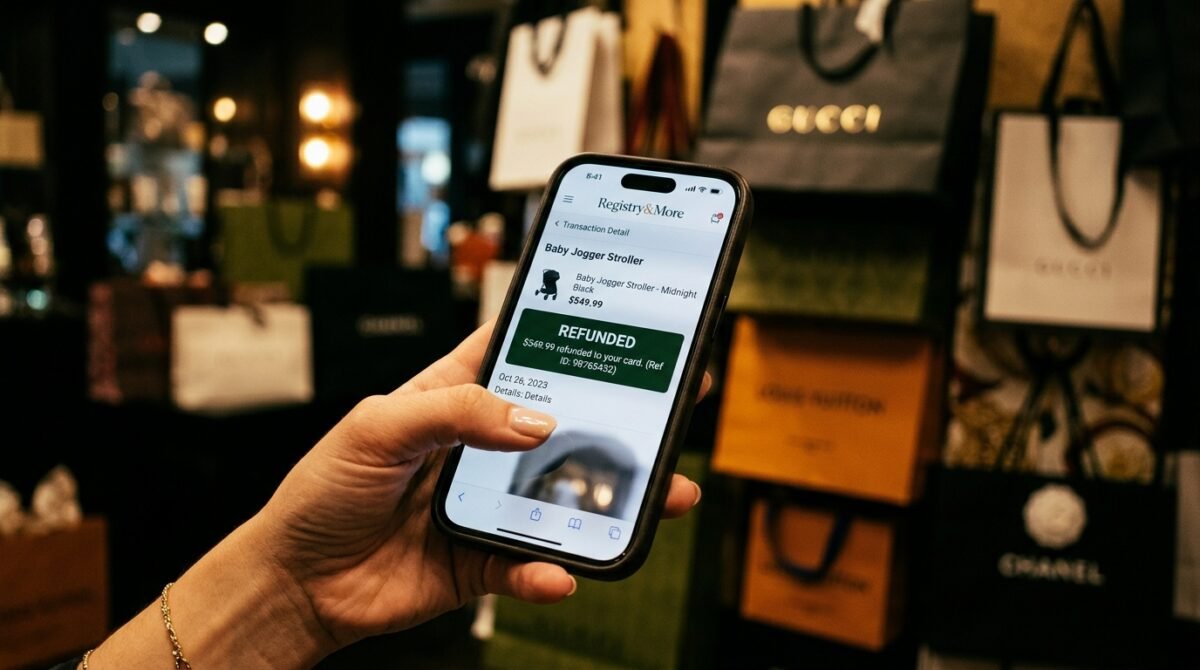
The nursery was meant to be a sanctuary. When I walked into the house, expecting to see the $800 cashmere-lined bassinet and the custom-made mobile, I found nothing but a folding lawn chair and a pile of discarded boxes. Chloe was out, but the evidence was everywhere. I noticed a stack of return slips from a high-end baby boutique sitting on the kitchen island. My heart hammered against my ribs as I picked them up. Each slip showed a refund to a store credit account, but the amounts were being transferred—not to a savings account, but to an app that specialized in luxury reselling.
I checked the registry portal on my phone. Everything marked as ‘purchased’ had been returned within twenty-four hours of arrival. The sheer scale of the deception was breathtaking. She hadn’t just returned a duplicate swaddle; she had returned every single gift that was categorized as ‘high-value.’ She wasn’t just gaming the system; she was stealing from our grandmother, our coworkers, and my own bank account.
When she finally pulled into the driveway and caught me standing there with the receipts, the confrontation was inevitable. She didn’t offer an excuse; she offered a dismissal. She looked at me with an air of superiority that made my blood run cold. She seemed to genuinely believe that her status was more important than the safety or needs of her unborn child.
“You have no right to snoop through my mail or my business, Sarah. It’s my registry. If I want a Birkin instead of a stroller, that’s a creative reallocation of resources. You’re just jealous because you don’t have the taste to appreciate what actually matters.”
— Chloe, during the initial driveway confrontation
I felt sick. The audacity to call theft a ‘creative reallocation of resources’ was the tipping point. I didn’t scream; I didn’t cry. I simply walked to my car, pulled out my laptop, and began the process of dismantling her digital life. I was the administrator of the registry, and I had the power to make it all go away.
Deleting the Registry: The Digital Execution
Sitting in my car, I felt a strange sense of detachment. I logged into the registry management console. With a few clicks, I deactivated her account. I then went through the tedious process of contacting the retailers. I had the order numbers from the confirmation emails I had received as the ‘registry manager.’ I called customer support, explaining that the items were part of a fraudulent return scheme involving a primary user. It was a long, painful afternoon, but by sunset, the retailers had frozen the pending returns and issued gift card cancellations.
The impact was immediate. Chloe’s phone started buzzing incessantly. I watched from my balcony as she paced the front porch, her expression morphing from confusion to sheer, unadulterated rage. She realized what had happened. She knew I was the only one with the administrative credentials to lock the account. The power dynamic shifted in that moment, and for the first time in our lives, she was the one who felt powerless.
She stormed toward my house, but I had already locked the door. I knew I couldn’t face her while my emotions were this raw. I sent a single text message, knowing it would be the spark that ignited the bonfire of our family’s peace. I kept it professional, cold, and factual. I didn’t want to get into an emotional debate because I knew she would twist it to make herself the victim.
“I have canceled your registry access and reported the fraudulent returns to the retailers. The gifts were meant for your baby, not for your luxury bag collection. Do not contact me until you have apologized to the family.”
— My text message to Chloe
The silence that followed was deafening. My phone went dark, and for a few hours, the world felt still. But I knew that in a family like ours, silence is merely a vacuum waiting to be filled with drama. I had committed the ultimate sin: I had held up a mirror to her behavior, and she was going to make sure everyone knew I was the one who shattered it.
The Fallout: When the Family Group Chat Explodes
The family group chat, which usually consisted of memes and mundane updates, turned into a war zone by the next morning. My mother, who had always enabled Chloe’s ‘eccentricities,’ was the first to attack. She didn’t ask what happened; she simply assumed I had overstepped, as I always did in her eyes. The narrative was being rewritten in real-time, and I was being painted as the spiteful, controlling sister.
Chloe had told them that I had ‘stolen’ her baby gifts out of pure malice because I was ‘bitter’ about my own lack of success. It was a classic projection. I watched the messages pour in, feeling the sting of betrayal from people I had trusted. My father remained silent, which was perhaps the most painful part of all. He knew me, he knew my character, but he was too terrified of the fallout to stand in the way of my mother’s wrath.
“How could you do this to your sister? She’s pregnant and vulnerable, and you decided to punish her during the most important time of her life! You need to restore that account immediately or don’t bother showing up for Thanksgiving.”
— Mom, in the family group chat
I felt a strange sense of peace. For years, I had been the ‘good sister,’ the one who picked up the pieces, who paid for dinner, who kept the secrets. By making this move, I had finally broken the cycle. I typed out a response, choosing my words carefully. I didn’t defend myself; I simply presented the truth. I sent the screenshots of the return slips and the receipts for the designer goods. It was the digital equivalent of dropping a grenade.
The Reddit Trial: Public Opinion Shifts
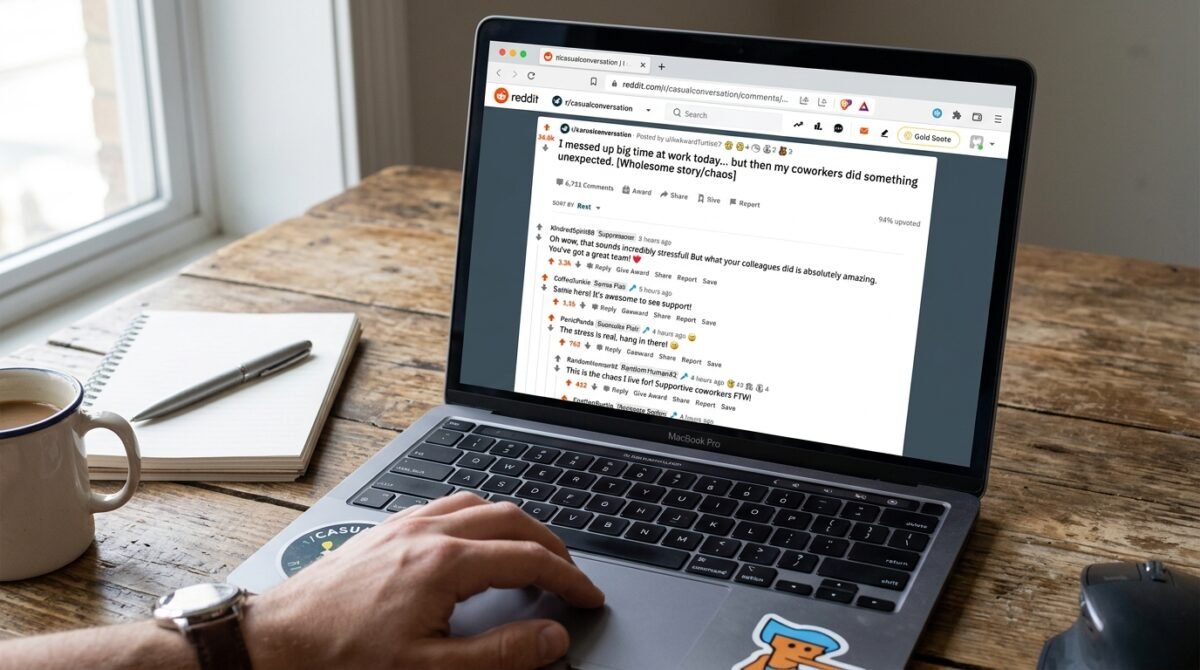
I knew I needed an objective perspective, so I took the story to Reddit. I didn’t expect the response I got. Within an hour, my post had thousands of upvotes. The community was visceral, divided, and deeply invested in the outcome. It was the first time I felt like someone actually understood the sheer absurdity of what I had been dealing with for years. The validation was addictive, but it also served as a stark reminder of how far I had strayed from the ‘normal’ family life I once craved.
The comments were an avalanche of support, mixed with warnings about the legal ramifications of what I had done. Some users called me a hero, others called me a tactical genius, and a few warned that I had just signed my own ‘social death warrant’ in the family. Reading through the threads, I realized that I wasn’t alone. There were thousands of people who had been the ‘responsible one’ in toxic families, and they all had their own stories of the breaking point.
“NTA. You didn’t steal anything; you protected the donors from fraud. She was essentially embezzling baby gifts. The audacity to do that while pregnant is mind-boggling. She needs a reality check, and you just gave her a massive one.”
— u/JusticeSeeker99 (Top Comment, 45.2k upvotes)
The discourse became a lifeline. I spent hours reading through the replies, finding comfort in the consensus that my actions, while extreme, were rooted in a desire to hold her accountable. But the digital support couldn’t change the fact that my mother had blocked my number and my sister had started a smear campaign on social media, claiming I was ‘harassing’ her during her pregnancy.
The Sunday Dinner Confrontation
Against my better judgment, I decided to attend the Sunday dinner. I wanted to see if there was any chance of reconciliation, or at least a path toward understanding. The atmosphere was poisonous from the moment I stepped inside. The house was decorated with high-end baby items—ironically, things she had clearly purchased herself to prove a point. She sat at the head of the table like a queen, and my mother looked at me with open disdain.
The conversation was stilted, filled with passive-aggressive comments about ‘people who don’t know the value of family.’ I sat there, eating my salad, refusing to take the bait. I knew that if I lost my cool, I would lose the high ground. The tension was palpable, a thick, suffocating cloud that made it difficult to breathe. I was the outsider, the villain, the one who had ‘ruined’ the baby shower.
“I hope you’re happy, Sarah. You’ve managed to alienate everyone who loves you. Chloe’s baby deserves a better aunt than someone who treats their own flesh and blood like a criminal.”
— Mom, across the dinner table
I looked at Chloe. She was smirking, waiting for me to break. I stood up, wiped my mouth with my napkin, and looked them both in the eye. I didn’t yell. I spoke with a quiet, firm voice that sounded stronger than I felt. I told them that I wasn’t the criminal, and that a child needs more than designer labels to survive. I walked out before anyone could respond, leaving the silence to settle over the table once again.
The Legal Threat and the Reality Check
The next morning, I received a certified letter. It was from a lawyer representing my sister. They were threatening to sue me for ‘damages’ related to the registry and for ‘intentional infliction of emotional distress.’ It was laughable, but it was also terrifying. I knew that Chloe didn’t have the money for a lawyer, which meant my parents were paying for this. They were willing to spend thousands of dollars to defend her greed, rather than spend a dime on counseling or accountability.
I contacted my own legal counsel, who laughed at the letter. They explained that because I was an administrative user and the items were being returned for personal profit—a clear violation of the terms of service for the registries—I was actually in a very strong position. The legal threat was just another attempt to intimidate me into submission. It was a classic power play, meant to make me feel like I had done something illegal when, in reality, I had simply stopped a fraud.
I felt a strange sense of liberation. By involving lawyers, they had moved the conflict from an emotional argument to a cold, logical one. I had all the evidence, the screenshots, and the communications. They had nothing but empty threats and a sense of entitlement that would not hold up in any court of law. I realized then that the ‘family’ I was trying to save no longer existed.
“If they want to sue, let them. The discovery process will be the worst thing that could possibly happen to your sister. She doesn’t want a trial; she wants to scare you into backing down. Hold your ground.”
— My Attorney
I didn’t back down. I prepared my documentation, organized my files, and sent a single email to my parents’ lawyer, outlining the fraudulent activity and inviting them to proceed with the lawsuit. The silence from their side was almost immediate. The threat was dropped as quickly as it had been made.
The Unraveling of the Grand Facade
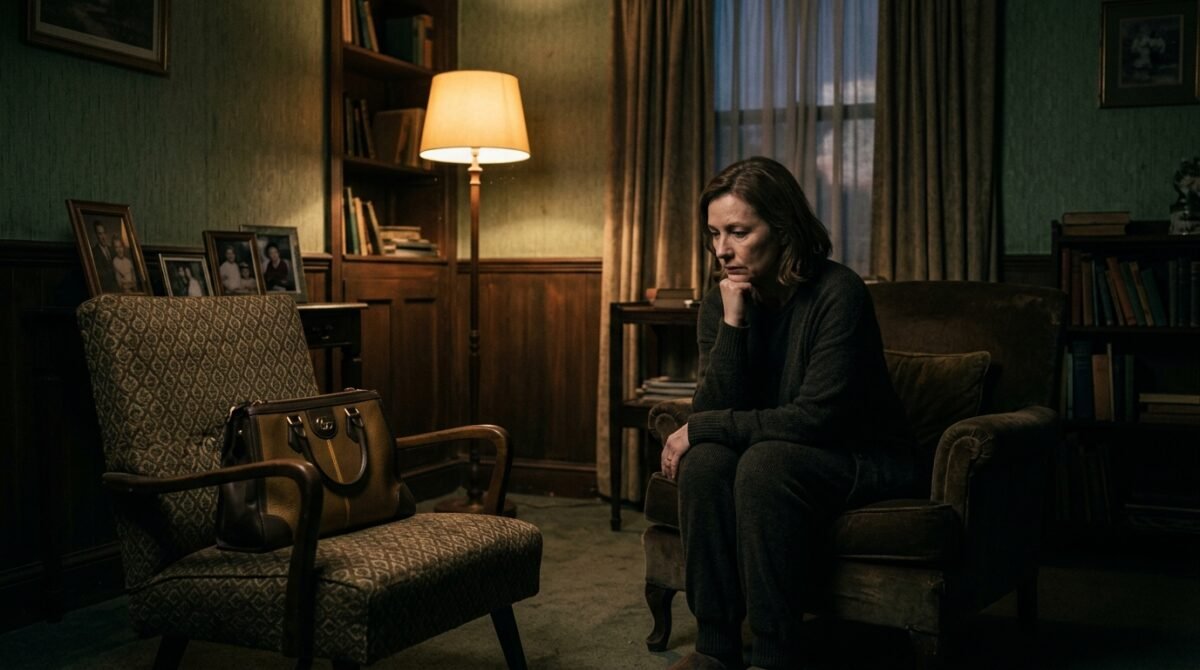
With the legal threat neutralized, the truth began to bleed out into the rest of the family. Aunts, cousins, and distant relatives began asking questions. The narrative that I was a ‘malicious sister’ didn’t hold up when the actual receipts started circulating. My grandmother, the matriarch of the family, finally demanded to know the truth. She was the one who had gifted the expensive stroller, and she was furious that it had been returned for a handbag.
The family dynamic shifted. People started distancing themselves from Chloe. The lavish lifestyle she had been projecting began to crumble. She had been living on credit and the kindness of others, and without the steady flow of registry returns, the debts started to pile up. She had to sell the designer bags she had worked so hard to ‘earn.’ It was a slow, painful process of reality catching up to her.
I felt no joy in watching her struggle. It was a tragedy of her own making, a testament to a life built on superficiality. I stayed in touch with my father, who eventually admitted that he had been wrong to stay silent. It wasn’t an apology, not really, but it was a bridge. It was the beginning of a different kind of relationship, one where I didn’t feel obligated to fix everything for everyone.
“I didn’t realize how far she had gone. I thought it was just a phase, but you were right to stop it. I’m sorry I didn’t stand by you when it mattered.”
— Dad, in a private phone call
It wasn’t much, but it was enough. I learned that you cannot change people; you can only change how you interact with them. I had established a boundary, and while the cost was high, the reward was a sense of self-respect that I hadn’t had in years.
Reflections on Enabling and Entitlement
As I look back on the entire ordeal, I realize that the registry was never the issue. The issue was a lifetime of enabling. We had all, in our own ways, taught Chloe that she could have whatever she wanted, regardless of the cost to others. We had shielded her from the consequences of her actions, and in doing so, we had created a monster. By cancelling that registry, I wasn’t just stopping a scam; I was ending a pattern that had defined our family for decades.
The emotional toll has been significant. Losing contact with my mother and sister has left a void, but it is a void that I am slowly filling with peace. I have learned that family is not just about blood; it is about respect, integrity, and shared values. When those things are missing, the relationship becomes a liability rather than a support system.
I have spent a lot of time in therapy, unpacking the guilt that came with being the ‘responsible one.’ I have learned that I am not responsible for the happiness or the moral failures of my family members. I am only responsible for my own choices. And my choice was to stand up for what is right, even when it meant standing alone.
“Enabling is a form of love that keeps people trapped in their worst selves. By breaking the cycle, you didn’t just save your family’s money; you gave your sister the only chance she had to finally grow up.”
— My Therapist
It is a hard lesson to learn, but an important one. We often think that we are helping by smoothing the path for our loved ones, but sometimes, the most loving thing you can do is let them face the consequences of their own actions.
Lessons Learned in the Aftermath
Today, my life is fundamentally different. I have a small circle of friends who respect boundaries and value integrity. I am no longer the person who feels obligated to attend every family function or fix every crisis. I have learned to say ‘no,’ and more importantly, I have learned that ‘no’ is a complete sentence. The freedom that comes with that is worth more than any designer bag or high-end gift.
Chloe is still struggling. I hear updates through my father, and it sounds like she is finally having to face the consequences of her choices. It is a slow, difficult path, but it is the only one that will lead to any real change. I don’t know if we will ever reconcile, and I am finally okay with that uncertainty. Some chapters need to end so that others can begin.
The most important lesson I learned is that you cannot sacrifice your own integrity to keep the peace. When you compromise your values to appease others, you lose yourself. I have regained my sense of self, and for the first time in my life, I feel like I am living for me, not for the expectations of my family.
“Integrity is doing the right thing, even when no one is watching. Even when it costs you everything. You stood your ground, and that makes you a stronger person than those who chose to look the other way.”
— A close friend
I am grateful for the journey, as painful as it was. It taught me who I am and what I stand for. And ultimately, that is the most valuable gift I could have ever received.
Community Perspectives: The Reddit Verdict

The Reddit community remains active in the thread, with new users sharing their own experiences with family members who treat others like an ATM. It has become a space for people to vent, share advice, and find solidarity. The consensus remains overwhelmingly in my favor, but the nuance is what I find most interesting. People are debating not just the morality of the act, but the psychology of the enablers, the trauma of the ‘responsible’ sibling, and the definition of family in the 21st century.
I have read comments from people who were in my sister’s shoes, people who finally realized they were ‘the problem’ and were trying to change. Those comments are the most impactful. They remind me that even if my sister never changes, there is hope for others. It makes the public nature of the fallout feel a bit more meaningful, as if the pain I endured has served some greater good.
“People always say ‘family comes first,’ but they forget the rest of the proverb: ‘…the blood of the covenant is thicker than the water of the womb.’ You chose the right covenant. You chose integrity.”
— u/WisdomSeeker (12.4k upvotes)
It is a reminder that we are all part of a larger story, and that our choices, however small, ripple out into the world. I am just one person, but my decision to stand up for the truth has touched thousands of lives. That is a weight I am happy to carry.
Conclusion
The journey from the chaotic driveway confrontation to this moment of quiet reflection has been life-changing. I didn’t just cancel a registry; I reclaimed my autonomy from a family system that demanded I be a silent enabler. While the cost—estrangement, legal threats, and public scrutiny—was steep, the gain in self-respect is immeasurable. I have learned that the discomfort of setting a boundary is always preferable to the agony of betraying yourself.
I am curious to hear from you. Have you ever been pushed to the breaking point by a family member who treated your generosity as a given? How did you enforce your boundaries, and what was the fallout? Let’s talk about the complexity of these dynamics in the comments below. Was I too harsh, or was it the only way to finally stop the cycle?
What's your verdict on this dilemma?
Vote below to contribute to the official community consensus.

Have a Dilemma Keeping You Up at Night?
Share your real-life feud, wedding chaos, or relationship crossroads anonymously with our editorial team.
What do you think ?
0 Comments🛡️ Comments are moderated to protect community integrity. Your comment will appear once approved by the editorial team.