

When you sign up for marriage and parenthood, you expect a partnership. You expect that when the world outside is collapsing—literally and figuratively—the person in the driver’s seat is your teammate. But for Sarah, the lines between ‘husband’ and ‘creditor’ blurred in the most terrifying way possible on a Tuesday night that started with a high fever and ended with a demand for reimbursement.
The storm was absolute chaos. Our three-month-old son, Leo, had been fussy all day, but by 11:00 PM, his temperature had spiked to 103 degrees. The pediatrician’s line was busy, the urgent care was twenty miles away, and the rain was coming down in sheets that made visibility nearly zero. My husband, Mark, has always been… meticulous about his finances. He tracks every cent, maintains a spreadsheet for household expenses, and has a habit of splitting costs that would make most accountants blush.
However, I never imagined that his obsession with ‘fairness’ would override his basic human instinct to protect his child. As we scrambled to pack the diaper bag, sobbing and terrified, Mark wasn’t checking the car’s emergency kit or making sure the baby was secure. He was checking the odometer.
It is in the quiet, horrific moments of a crisis that you truly see the foundation of your marriage. Looking back, I realize that the gas money incident wasn’t an isolated event; it was the final, cracking point of a dam that had been holding back years of resentment, control, and a fundamental misunderstanding of what it means to be a family.
The Fever That Sparked the Spreadsheet

The panic was visceral. When you see your tiny, helpless infant struggling to breathe, time seems to stop and accelerate at the same time. I was frantic, grabbing onesies and warm blankets while my husband, Mark, stood in the hallway, looking at his phone with a furrowed brow.
“Are you coming or what?” I screamed, my voice cracking. The sound of thunder rattled the windows, and the wind was howling outside. He didn’t look up immediately. He just kept typing, his thumb moving rhythmically against the screen.
“I just need to finish this expense log entry. If we are taking my car, I need to make sure the trip is categorized correctly for the budget. It’s a 40-mile round trip, plus idling time.”
I stared at him in disbelief. Did he actually just say that? I was trembling, my heart hammering against my ribs, and he was worried about a line item in a spreadsheet. I pushed past him, grabbed Leo, and practically threw myself into the passenger seat of his sedan.
The drive was a nightmare of hydroplaning and blinding rain. Every time I looked back at Leo, who was whimpering in his seat, my heart broke all over again. Mark drove with aggressive precision, his eyes darting between the road and the dash, his silence heavy and suffocating. It wasn’t the silence of someone worried about their child; it was the silence of someone calculating the cost of the fuel he was burning.
When we finally pulled into the urgent care lot, the rain was still torrential. I didn’t wait for him to park perfectly. I jumped out, shielding Leo with my coat, and ran for the double doors. Mark caught up to me, but he wasn’t checking on the baby. He reached out and grabbed my arm, his face stern.
“Don’t forget that this counts as a ‘non-essential’ trip, Sarah. Since you insisted on the urgent care rather than waiting for the morning nurse line, this fuel cost is on your half of the monthly discretionary spend.”
I didn’t answer him. I couldn’t. I just kept walking, the cold rain soaking through my clothes, feeling a chill that had nothing to do with the weather.
The Hospital Waiting Room Breakdown

The urgent care was packed, a reflection of the nasty weather and the flu season. We sat in the hard, plastic chairs for three hours, waiting for a doctor. The entire time, Mark didn’t offer a hug, a glass of water, or a reassuring word. He sat three seats away, tapping away on his phone, scrolling through his banking apps.
I watched him, feeling a deep, hollow ache in my chest. This was the man who had promised to love and cherish me, yet here he was, treating our son’s medical emergency like a transaction. I felt isolated, alone in a room full of people, carrying the weight of our child’s health on my shoulders while Mark treated it like a logistical annoyance.
“Do you want to check his temperature again?” I asked, my voice barely a whisper. He didn’t even look up from his phone screen. He just shook his head, his focus entirely on a graph that showed our projected savings for the next quarter. It was surreal.
When the doctor finally called us back, Mark stood up and followed, but his demeanor didn’t change. He stood in the corner of the exam room, hands in his pockets, looking like a disinterested observer. The doctor was kind, examining Leo and confirming it was just a viral fever, nothing life-threatening, but he needed fluids and rest.
“He’s fine, Sarah. We didn’t even need to come here. I could have saved us the gas if you had just listened to the nurse line earlier. I’m going to need to adjust the spreadsheet to reflect this waste of resources.”
I stared at the doctor, who was looking between the two of us with an expression of confusion. I felt humiliated. Not by the situation, but by the man who was supposed to be my partner. I realized then that my marriage wasn’t a partnership; it was a business arrangement where I was constantly in debt.
The Venmo Request
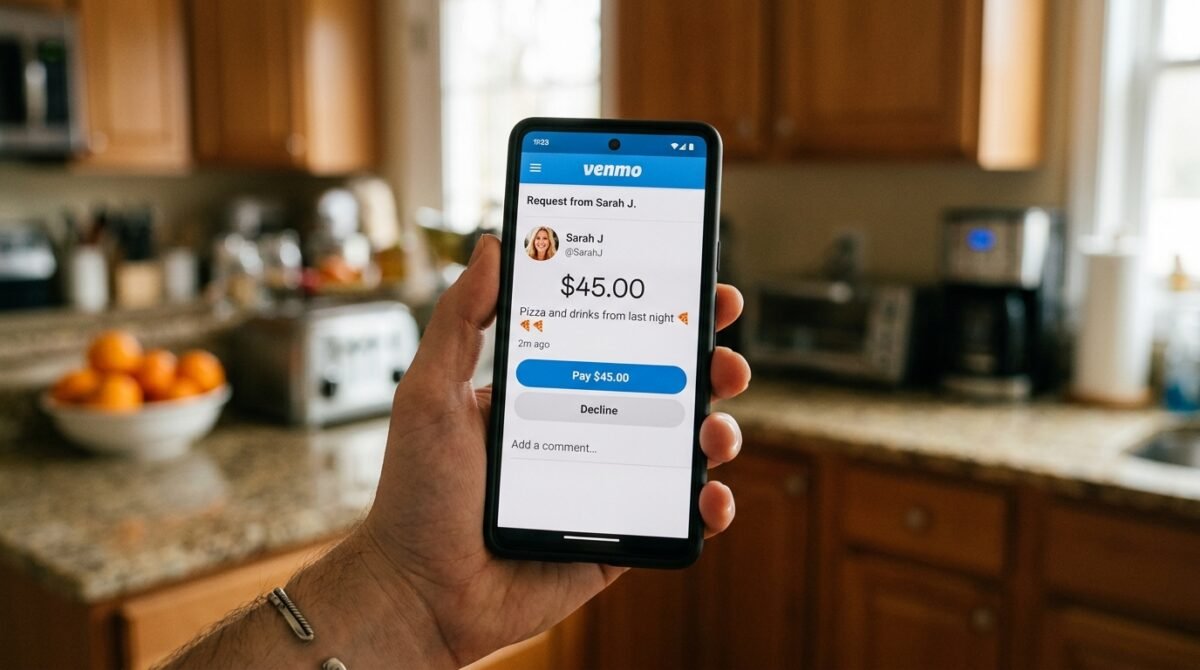
The next morning, the sun was shining, as if the storm hadn’t happened. I was exhausted, having spent the night pacing the nursery, comforting Leo. I made myself a cup of coffee and sat down, staring out the window, trying to process the events of the previous night. Then, my phone buzzed.
It was a notification from Venmo. I opened it, thinking it was a request from a friend for a dinner bill. Instead, I saw a request from Mark. It was for $15.50. The description read: ‘Gas/Mileage for Urgent Care trip – 40 miles at 0.38 per mile’.
I felt my pulse quicken. I stared at the screen, unable to process the sheer audacity of the request. He wasn’t joking. He was serious. He had calculated the cost of the trip, down to the penny, and expected me to pay him back for taking our son to get medical help.
“Mark, are you serious with this? You are asking me to pay you for taking your own son to the doctor?”
He walked into the kitchen, his face completely blank, and poured himself a cup of coffee. He didn’t look at me, didn’t acknowledge the tension. He just checked his watch and adjusted his tie.
“Fair is fair, Sarah. We agreed on shared expenses. If I drive, I incur the cost. If you don’t pay your share, the budget is unbalanced. It’s not about the baby; it’s about the accounting.”
I felt a cold rage settle over me. It wasn’t about the money. It was about the principle. It was about the fact that he viewed our family life as a ledger, where every interaction was a transaction that had to be reconciled. I hit ‘decline’ on the request, and the battle lines were drawn.
A House Divided by Spreadsheets
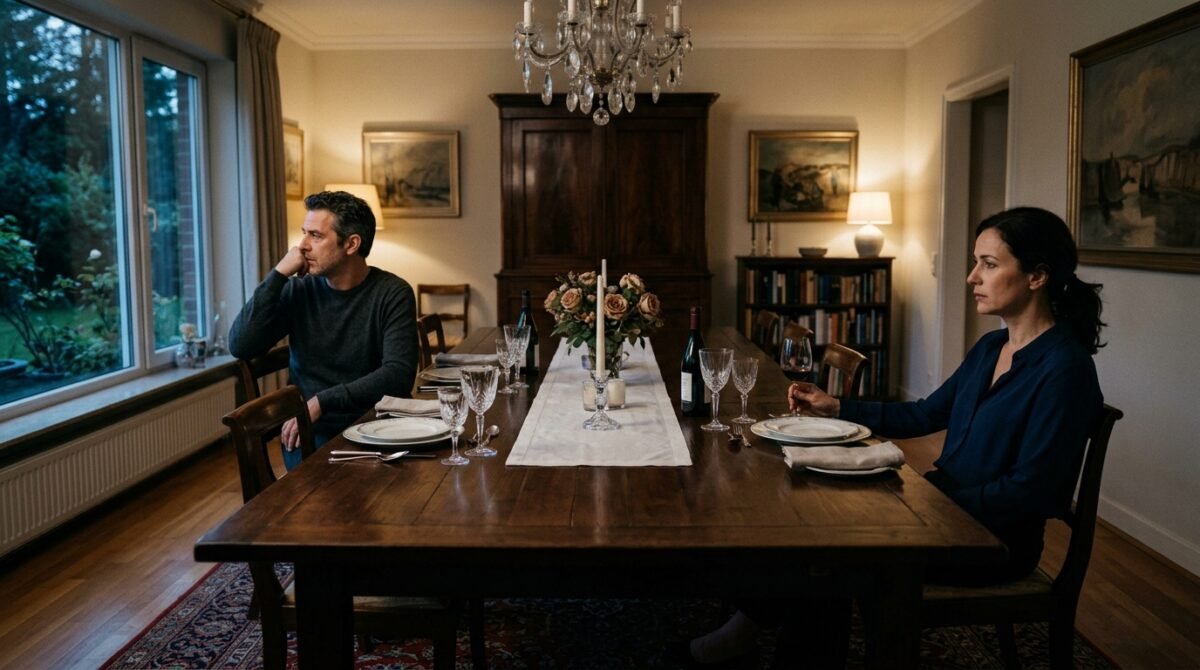
The days that followed were a blur of icy silence and pointed comments. Mark didn’t let the declined request go. He brought it up at dinner, he brought it up while we were watching TV, and he even brought it up while we were trying to care for the baby. He wasn’t just being petty; he was being relentless.
“It’s about accountability,” he said one night while I was trying to fold laundry. “If I pay for everything, you’ll never learn how to manage a household budget. You’re becoming dependent, and that’s a dangerous precedent.”
I looked at him, feeling the exhaustion of being both a mother and an employee in his household. “Mark, we are a family. We aren’t roommates. We share a life, a child, and a home. Why are you treating me like a tenant who is behind on rent?”
“Because that’s how marriages fail, Sarah. People stop being responsible for their contributions. I’m just trying to make sure we don’t end up divorced like your parents.”
That stung. It was a low blow, designed to hit right where it hurt. He knew my parents’ divorce had been a traumatic event in my life, and he weaponized it to keep me in line. I realized then that his financial control was a tool for emotional manipulation. He didn’t want a partner; he wanted someone he could control, someone who would always feel like they owed him something.
The Family Group Chat Intervention
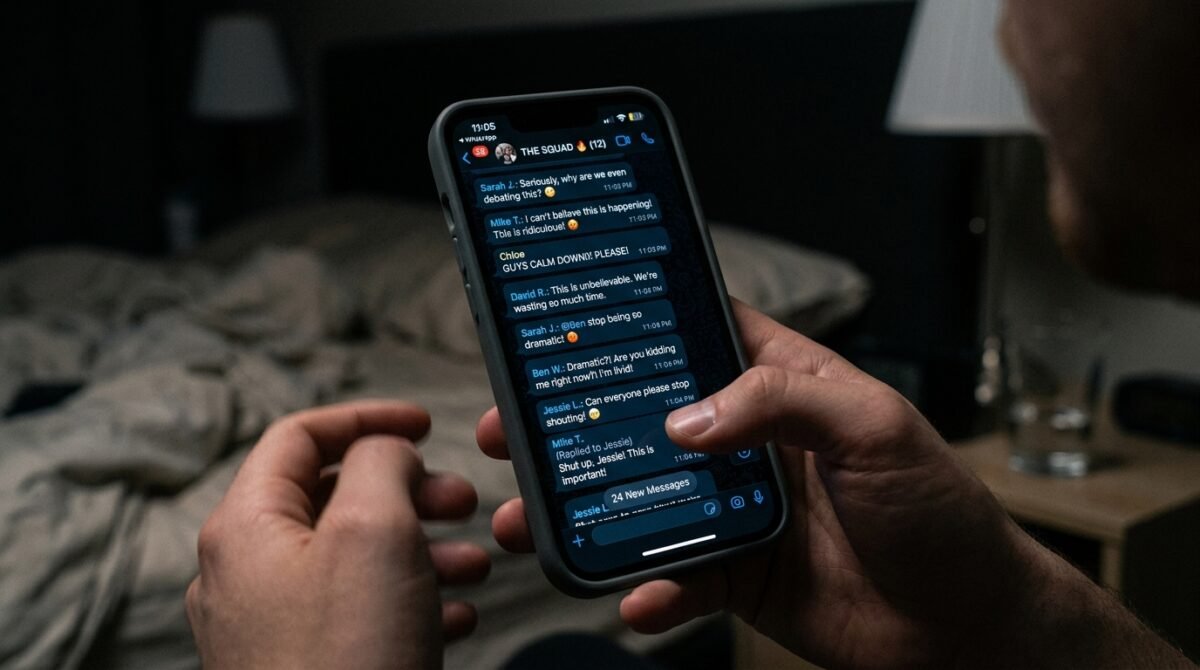
Things reached a boiling point when Mark decided to escalate. He posted about our ‘financial disagreement’ in the family group chat, framing it as a ‘teaching moment’ for his brothers and their wives. He wanted to shame me into submission, to prove that his way of doing things was the ‘logical’ one.
“Hey everyone, quick question. Sarah and I are having a disagreement about shared expenses. I took the baby to the doctor last night, and I asked for a split on the gas. She thinks it’s ‘unfair’. What do you think? I feel like we should keep things equitable.”
— Mark, Family Group Chat
The replies were immediate. Mark’s brother, David, was the first to chime in, followed by his wife, who was clearly horrified by the premise. The chat exploded with opinions, and for the first time, Mark wasn’t the one controlling the narrative. He thought he was going to get validation, but he was getting a lecture on what a marriage actually looks like.
“Mark, are you kidding me? You’re charging your wife for a medical emergency with your son? That is beyond pathetic. You’re a father, not a taxi service.”
— David (Mark’s brother)
I read the messages as they poured in, feeling a sense of vindication. People were calling him out, using words like ‘toxic,’ ‘controlling,’ and ‘abusive.’ Mark went silent, his phone buzzing incessantly as he tried to defend his position, but he was losing the battle. He looked at me, his face red with anger, and threw his phone across the room.
The Financial Audit of Our Life

After the group chat incident, the atmosphere in the house changed. The passive-aggressiveness turned into active hostility. Mark stopped talking to me entirely, communicating only through sticky notes left on the fridge or emails detailing our ‘financial obligations.’ It felt like living in an office building rather than a home.
I started digging into our accounts. I had been so focused on being a ‘good wife’ and following his lead that I had never really looked at the big picture. I realized that for the last two years, I had been paying for half of everything, including the mortgage, while Mark had been putting his money into high-yield investments that were solely in his name.
I was working full-time, taking care of the baby, and doing most of the household chores, yet I was barely saving anything. Meanwhile, Mark was building a small empire, using my income to subsidize his lifestyle while keeping his assets protected. It was a revelation that made me sick to my stomach.
“I want to see the master ledger, Mark. I want to know exactly where my money has been going for the last two years.”
He laughed, a cold, sharp sound. “You wouldn’t understand it, Sarah. It’s too complex. You just need to keep up with your end of the expenses. That’s your role.”
I didn’t argue. I just started saving copies of everything. I was no longer the compliant wife; I was an observer, gathering evidence, waiting for the right moment to make my move. The gas money was just the tip of the iceberg; the real issue was the systemic, calculated way he had been eroding my independence.
The Breaking Point in the Nursery

The end came on a quiet Sunday afternoon. Leo was finally sleeping, and I was sitting in the nursery, holding his hand, thinking about the future. Mark walked in, not to check on us, but to show me a document he wanted me to sign. It was a ‘Marital Financial Agreement’ that basically solidified his control over all shared assets, including the house.
“If you sign this,” he said, his voice calm and patronizing, “we can move past this petty fighting. It will streamline our finances and make sure we’re both protected.”
I looked at the document, then at him. He looked so sure of himself, so convinced that I was still the same woman he had met years ago. But that woman was gone. The storm, the emergency, the gas money—it had all stripped away the illusions. I saw him for exactly who he was: a man who loved his money more than his family.
“I’m not signing this, Mark. And I think we need to talk about separation.”
The silence that followed was deafening. He didn’t look surprised. He looked disappointed, as if I were a failing investment. “Fine,” he said, turning to walk away. “But you realize you’ll have to move out? The house is in my name, and you haven’t been paying the mortgage directly. I have all the receipts.”
He thought he had me backed into a corner, but he had underestimated how much I had learned over the last few weeks. I had already consulted with a lawyer. I knew my rights, and I knew how to protect myself. The fight for my life had just begun.
The Reddit Verdict

I finally shared my story on Reddit, needing to know if I was crazy. I posted about the gas money, the spreadsheet, the control, and the final ultimatum. The response was overwhelming. Thousands of people weighed in, and for the first time, I felt heard, validated, and supported.
“This is not a marriage. This is an abusive financial hostage situation. Get a lawyer, freeze your credit, and get out of there. He’s showing you who he is—believe him.”
— u/LegalEagle88 (Top Comment, 32.4k upvotes)
Reading the comments, I saw so many stories similar to mine. Women who had been trapped in ‘financial partnerships’ where their contributions were ignored and their needs were secondary to their partner’s bank account. It was a wake-up call to the reality of financial abuse, a form of control that is often ignored but just as damaging as physical or emotional abuse.
“My ex-husband did the exact same thing. He’d charge me for groceries and then complain when I bought something ‘outside the budget’. It’s all about control. Get out before he has full legal access to everything you own.”
— u/SurvivorMom (18.2k upvotes)
The Reddit community became my lifeline. They provided resources, legal advice, and the emotional encouragement I needed to take the next step. I realized I wasn’t just fighting for my marriage; I was fighting for my dignity and my son’s future.
The Certified Letter That Changed Everything
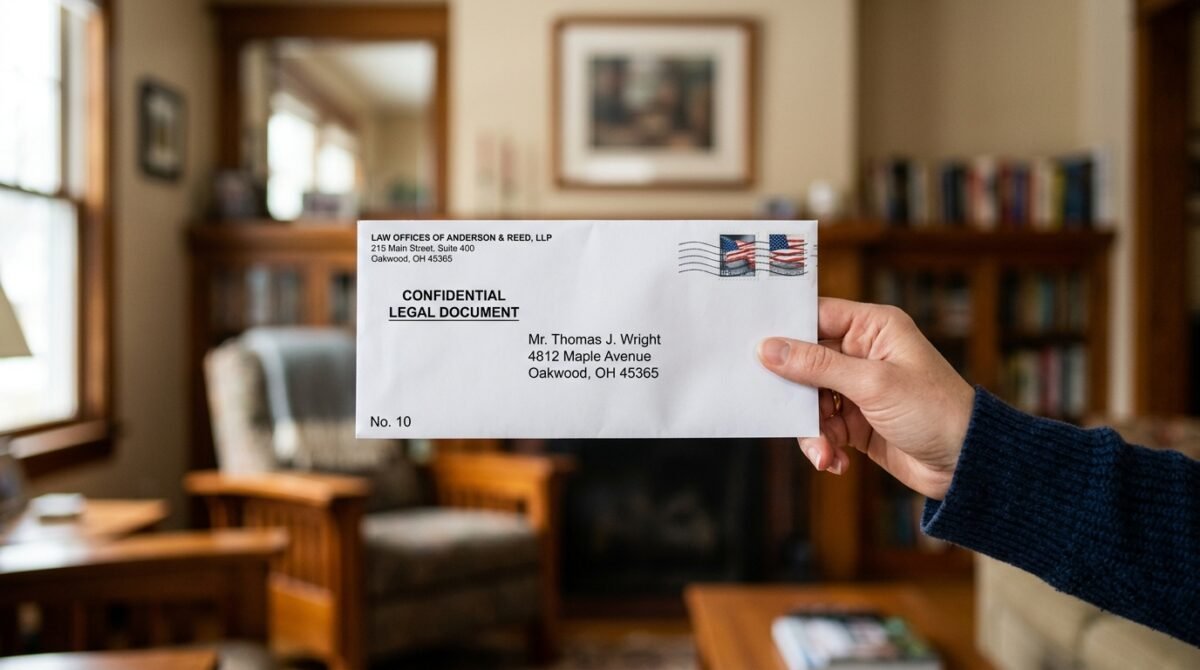
A week after I told Mark I wanted to separate, I received a certified letter in the mail. It was a formal notice from his attorney, outlining the terms of our ‘separation’ and demanding that I vacate the house within 30 days. He was trying to push me out, to make me feel small and powerless.
But the letter also contained something else: a breakdown of every penny he claimed I owed him, including ‘lost opportunity costs’ for the time he spent driving me to the urgent care that night. It was so absurd it was almost funny. He was actually trying to charge me for his time.
“I am not moving out, Mark. And I am definitely not paying you for your time. If you want to handle this, let’s do it through the courts, where everything will be out in the open.”
I sent the letter to my own attorney, who laughed when he read it. He told me that Mark’s attempt to quantify every aspect of our lives would actually be his undoing. In a court of law, this level of obsession wouldn’t look like good financial planning; it would look like psychological abuse.
I stayed in the house, I kept taking care of Leo, and I stopped engaging with Mark entirely. I became a ghost in my own home, focused only on my son and my exit plan. Every day felt like a countdown, and for the first time in a long time, I was the one in control.
The Final Stand

The day I finally left, it was raining again—just like that night at the urgent care. But this time, it was a beautiful, refreshing rain. I packed my things, took Leo, and walked out of that house with my head held high. Mark stood at the door, his face a mask of cold fury, but he didn’t try to stop me. He knew it was over.
“You’re making a mistake, Sarah,” he said. “You’ll never find someone who can manage a household like I can. You’ll be broke within a year.”
“I’d rather be broke and free than rich and owned by you, Mark. Keep your spreadsheet. I’m taking my life back.”
I drove away, not worried about the gas, not worried about the mileage, and not worried about the cost. I was worried only about the future I was building for my son. I was starting from scratch, but for the first time in years, I was the one holding the wheel.
Life is hard, but it is also beautiful. I am learning to define ‘fairness’ not by a budget or a ledger, but by the love, support, and respect that I provide and receive. I am no longer a line item in someone else’s plan. I am a mother, I am a survivor, and I am finally, truly, free.
Conclusion
My journey didn’t end when I left the house. It was just the beginning of a long road of healing, legal battles, and reclaiming my identity. But looking back at the gas money incident, I see it for what it truly was: a blessing in disguise. It was the catalyst that forced me to see the reality of my life and gave me the courage to choose a better path.
If you find yourself in a relationship where every moment is measured in dollars and cents, where your partner values their assets more than your well-being, please know that you are not alone. You deserve a partnership built on love, mutual respect, and trust—not a contract that leaves you feeling like a tenant in your own life.
What about you? Have you ever had a partner who treated your relationship like a business transaction? How did you handle the realization that your partnership was failing? Let’s talk about it in the comments below.
What's your verdict on this dilemma?
Vote below to contribute to the official community consensus.

Have a Dilemma Keeping You Up at Night?
Share your real-life feud, wedding chaos, or relationship crossroads anonymously with our editorial team.
What do you think ?
0 Comments🛡️ Comments are moderated to protect community integrity. Your comment will appear once approved by the editorial team.