
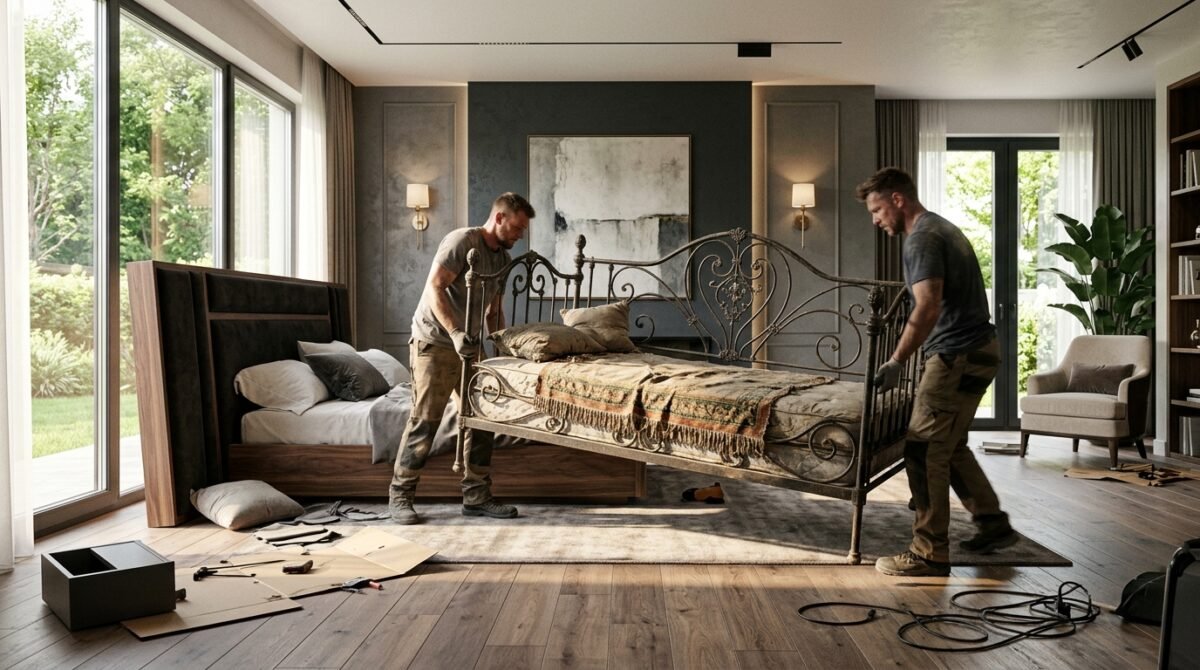
Marriage is supposed to be the beginning of a life built on shared values and mutual respect. My husband, Mark, and I spent months agonizing over the details of our home. We aren’t wealthy, but we are deliberate. We saved for a year to commission a custom, solid walnut headboard for our master suite—a piece of craftsmanship that anchored the entire room and symbolized the stability we were building together.
We left for our honeymoon in Italy, blissfully unaware that back home, the woman who raised my husband viewed our sanctuary as her own private staging ground. We trusted her with a spare key, ostensibly for emergencies—a classic mistake that thousands of Reddit users have warned about, yet one we foolishly felt we were immune to. We were wrong.
When we opened the front door after ten days of Italian sunsets and gelato, the air inside our home felt wrong. It was stale, scented with old mothballs and furniture wax. Walking into the bedroom, I felt a physical jolt. The warmth and modernity of our walnut piece were gone, replaced by a cold, rusted, wrought-iron daybed that looked like it belonged in a haunted attic.
This wasn’t just a redecorating choice; it was a psychological power play. The headboard we had saved for was missing, and in its place sat my mother-in-law’s childhood bed—a relic she had been trying to foist onto us for months. This narrative explores the explosive confrontation, the gaslighting that followed, and the painful realization that some doors should never be opened to family.
The Honeymoon High and the Midnight Notification
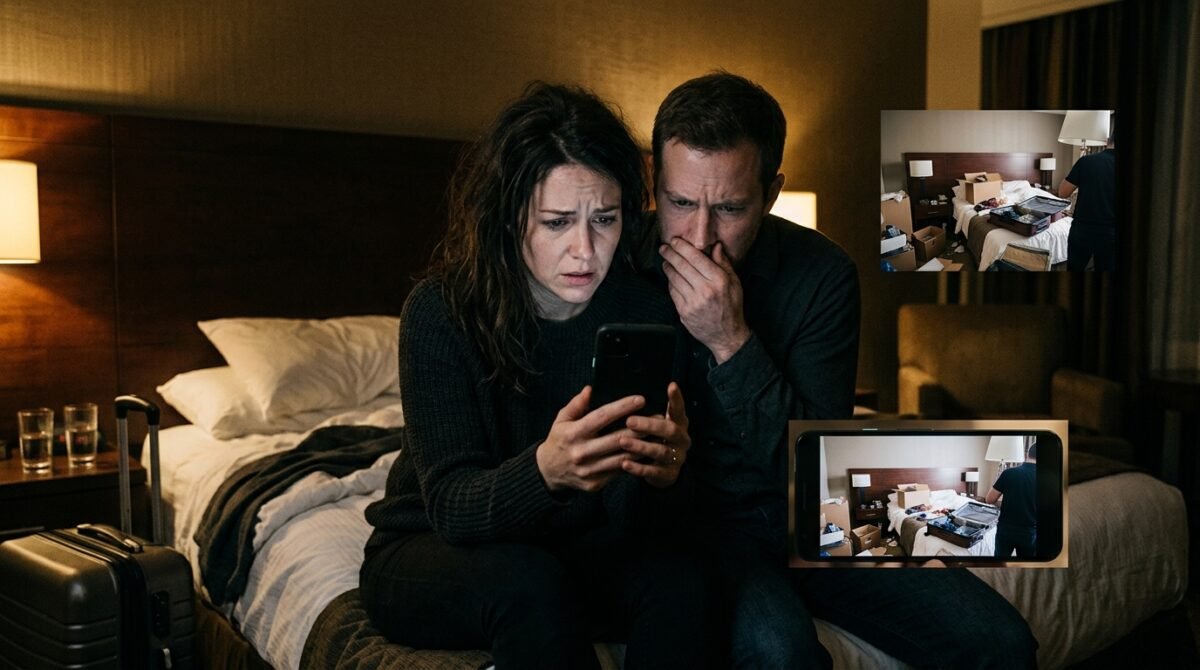
The first four days of our trip were perfect. We were in Amalfi, disconnected from the world, and genuinely happy. Mark hadn’t checked his phone much, but on the fifth night, a notification pinged through the hotel Wi-Fi that shattered the atmosphere. It was a message from his mother in the ‘Family Updates’ group chat, which usually consisted of mundane updates about her cat or local news.
The message was short, clinical, and horrifyingly nonchalant. She had attached a photo of our bedroom in the process of being dismantled. A crew of workers, whom we definitely didn’t hire, were seen carrying the walnut headboard out into a truck. The caption read: ‘Updating your space so you can finally sleep in something with history and grace. You’re welcome.’
Mark went pale. He tried calling her immediately, but the phone just rang. Then it went to voicemail. The panic in his eyes was immediate—he knew his mother’s penchant for ‘improving’ lives, but this was a boundary that felt like a deliberate act of sabotage. He spent the next three hours pacing our hotel balcony, repeatedly texting her to stop, to leave our things alone, and asking where the hell our furniture had gone.
“Mom, stop the movers right now! That headboard is ours, it is not for sale, and you have no right to touch our bedroom. Put everything back exactly as it was or I will report the theft to the police.”
— Mark, sent to the Family Group Chat
She didn’t respond for hours. When she finally did, her message was dripping with performative martyrdom. She claimed she was ‘surprised’ by our ingratitude. She argued that the walnut piece was ‘too dark and masculine’ for a young couple and that her daybed had ‘family energy’ that would bless our marriage. The audacity was suffocating.
We spent the remainder of our honeymoon in a state of hyper-vigilance, frantically trying to contact the moving company through the photos she sent. It turned out she hadn’t sold it; she had ‘donated’ it to a local thrift store, believing she was doing us a favor by clearing out the ‘clutter.’ The realization that our hard-earned investment was now sitting on a showroom floor for two hundred dollars was enough to make me weep.
The Tuesday Morning Confrontation
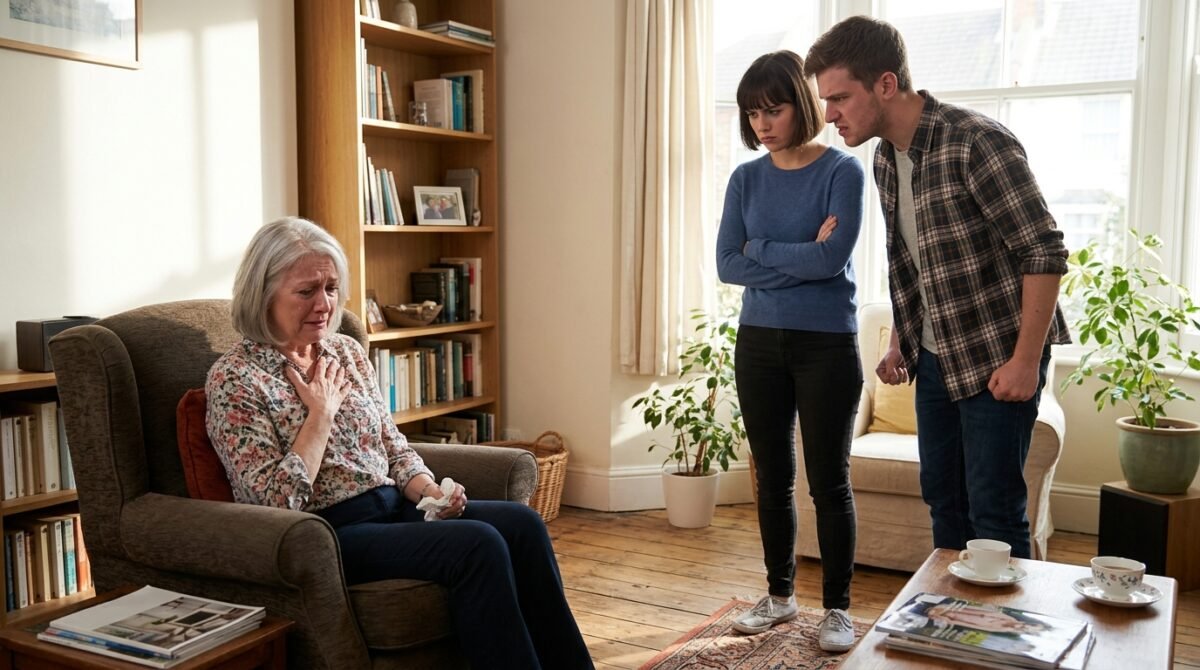
We flew back home, landing at 6:00 AM, and went straight to the house. The sight of the wrought-iron daybed was even more offensive in person. It didn’t fit the frame of the bed, the mattress was sagging, and the smell of old iron and dust was nauseating. My mother-in-law, Susan, was sitting in our living room when we walked in, looking smugly satisfied as if she had just baked us a cake.
She didn’t wait for us to say a word. She stood up, adjusted her cardigan, and gave us a tight, thin-lipped smile. ‘You look tired,’ she said, completely ignoring the fact that our home had been violated. ‘I had the room cleaned and refreshed. I knew you’d thank me once you saw how much better the air flows in here without that heavy, pretentious wood blocking the wall.’
The confrontation that followed was loud, raw, and entirely one-sided. Mark was shaking, his voice cracking as he demanded to know the name of the thrift store where she had taken our headboard. I stood back, recording the audio on my phone, because I knew that if this escalated into a legal issue, I needed proof of her admission.
“This is our house, Susan. You broke into our private space. You took property that we paid for with our own money. You don’t get to have a ‘taste’ in our bedroom. You are never, ever to touch our furniture again.”
— Mark, confronting his mother
Susan’s expression shifted from smugness to pure, unadulterated victimhood. She started crying—not real tears, but the kind of loud, heaving sobs meant to guilt the listener into submission. She claimed that she did this out of love, that we were too young to understand the value of family heirlooms, and that she felt ‘attacked’ by her own son for trying to be a supportive mother.
She refused to give us the name of the store. She claimed she couldn’t ‘remember’ which one she used, despite the fact that she had been bragging about her ‘decluttering’ efforts to her sisters just an hour before. The level of manipulation was staggering. She didn’t want the daybed in our house; she wanted to exert control over our environment, to ensure that every time we slept, we were sleeping on her history, not our future.
The Search for the Missing Heirloom

After Susan left—still playing the part of the wounded matron—we didn’t waste another second. We had a photograph of the truck she hired from the group chat message. It was a local moving service. We tracked them down by late morning. The manager was sympathetic when he realized we were the homeowners and not the woman who had paid for the ‘relocation’ of our property.
He confirmed that yes, they had picked up a large, custom walnut headboard, but they hadn’t taken it to a thrift store. Susan had lied. She had taken it to her own storage unit, intending to keep it there until we ‘came to our senses’ and realized how much better the daybed looked. My blood ran cold. This wasn’t just impulsive meddling; it was calculated theft.
We immediately drove to the storage facility. We didn’t have a key, but because the account was technically under Susan’s name, we had to call the police to explain the situation. The officer was skeptical at first, but once he saw the receipt for our custom furniture and the photos of our bedroom before and after, he understood. The facility manager allowed us to reclaim the item after verifying our ownership.
“You have to understand, sir, this is my wife’s property. My mother took it without permission and is currently holding it at this storage site. We have the original invoices and the custom order confirmation.”
— Mark, speaking to the police officer
When we finally retrieved the headboard, it had scratches along the side—mishandled by the movers because of Susan’s ‘rush’ to get it out of the house. I broke down in the parking lot. It wasn’t just the money; it was the violation. My sanctuary, the place where I felt safest, had been picked apart by a woman who couldn’t stand that I had my own aesthetic, my own life, and my own home.
We loaded the headboard into our own truck, feeling a strange mix of victory and defeat. We had our property back, but the peace of mind was gone. We knew that as long as Susan had a key, we were living in a glass house, waiting for the next stone to be thrown. The drive home was silent, both of us processing the reality that we had to cut someone we loved out of our daily lives.
Reddit Weighs In: The Verdict of the Masses

I posted about the entire ordeal on r/JUSTNOMIL that night. I didn’t change any details. I wanted the internet’s raw, unfiltered take. I was worried that maybe I was overreacting, maybe I was being too harsh on a mother who just wanted to ‘help.’ The replies started pouring in within minutes, and they were anything but ambiguous.
The consensus was overwhelming: This was a flagrant violation of boundaries, and Susan’s behavior was predatory. People pointed out that the ‘donation’ story was a classic gaslighting tactic designed to make me feel crazy. The community didn’t just support us; they demanded that we take drastic action. The comment section became a masterclass in boundary enforcement.
“This is not a ‘mother-in-law’ issue; this is a theft and trespassing issue. Change your locks TODAY. Do not wait. Do not give her a heads-up. She didn’t respect your home, she doesn’t get a key. The audacity to call it ‘family energy’ is just her way of saying she wants to control your life. Go NC immediately.”
— u/BoundariesQueen (Top Comment, 32.5k upvotes)
Another commenter provided a more tactical perspective, focusing on the legal side of things. They warned us that if we didn’t file a formal report, she would continue to think she had ‘ownership’ over our decisions. It was validating to see thousands of strangers agree that we weren’t the ones in the wrong. It gave us the backbone we needed to handle the fallout.
We read through hundreds of comments while sitting in our bedroom, the walnut headboard propped up against the wall, waiting to be re-installed. The humor in some of the responses—calling the daybed a ‘coffin for a doll’—actually made us laugh for the first time in days. It reminded us that while the situation was dark, it was also absurd, and we didn’t have to carry the weight of her madness alone.
The Reddit thread also helped us prepare for the inevitable ‘flying monkeys’—those family members who would inevitably call us to say we were being ‘too sensitive’ or ‘hurting her feelings.’ Having the scripts provided by the community to shut down these conversations was invaluable. We were no longer just a young couple in shock; we were a united front with a plan.
Changing the Locks and the Ultimatum

The next morning, at 8:00 AM, a locksmith arrived. I felt a profound sense of relief as the old hardware was replaced with new, secure locks that Susan had no access to. Mark sent a formal text to his mother, keeping it cold and professional. We weren’t looking for an apology anymore; we were looking for a clean break. We informed her that the key was gone and that if she attempted to enter our property again, we would treat it as a criminal matter.
Her response was predictable. She didn’t apologize. Instead, she went on the offensive, calling Mark a ‘disappointment’ and claiming that I had clearly poisoned his mind. She sent a barrage of texts, each one more toxic than the last, accusing us of being ungrateful for the ‘gift’ of her furniture. We didn’t bite. We didn’t reply to a single one of her personal attacks.
“Susan, your access to our home is permanently revoked. We have retrieved our property. Any further attempts to enter our home or contact us regarding this matter will result in us blocking your number and seeking a restraining order. Do not show up at our house unannounced.”
— Mark, final text message sent to his mother
The fallout within the family was swift. Within an hour, Mark’s aunt called, trying to play mediator. She told us that Susan was ‘sobbing’ and that we were ‘ruining the family dynamic’ over a piece of furniture. It was a classic attempt to minimize our pain and force us back into line. Mark handled it beautifully, simply stating, ‘It’s not about the wood, Aunt Carol; it’s about the fact that she stole our property and broke into our home. Would you like it if someone did that to you?’
She didn’t have an answer. That was the recurring theme: whenever we challenged the behavior directly, no one had a valid defense. They just wanted us to be the bigger person so they didn’t have to deal with the discomfort of holding Susan accountable. We stayed firm. We spent the day re-installing the walnut headboard, making our bedroom ours again, and finally locking the door on our own terms.
That night, we slept through the night for the first time since the trip. The house felt quiet, safe, and, most importantly, ours. The power dynamic had shifted. We were no longer the ‘young couple’ waiting for her approval; we were adults who had drawn a line in the sand. The relief was palpable, even if the sadness of the situation lingered in the back of our minds.
The Sunday Dinner Sabotage

We had a family dinner scheduled for that Sunday, which we had debated canceling. We decided to go, primarily to show that we weren’t hiding and that we weren’t intimidated. The moment we walked into Susan’s home, the atmosphere was thick enough to cut with a knife. She was there, looking perfectly composed, as if she hadn’t spent the last three days screaming at her son over text.
She immediately turned to the rest of the family and said, ‘Oh, I’m so glad you could make it. I was so worried about you after you acted so strangely about the bed.’ The gaslighting was immediate and public. She was trying to frame us as the erratic ones, the unstable ones, in front of the people whose opinions mattered to her. I kept my cool, focusing on my food, while Mark stared her down.
“Strange? Mom, you hired a crew to remove our furniture from our home while we were out of the country. That isn’t strange—it’s criminal. And we aren’t going to sit here and let you rewrite the history of what happened.”
— Mark, during the Sunday dinner
The table went silent. You could hear a fork drop from the other side of the room. Susan’s face flushed red, and she tried to laugh it off, saying, ‘Well, if you take everything so literally, it’s no wonder you’re having trouble settling down.’ She was trying to pivot, but the damage was done. Everyone at that table now knew exactly what she had done, and they could see the look of steel in our eyes.
The rest of the meal was tense, but we didn’t engage in her theatrics. Every time she tried to bait us, we gave short, polite answers or changed the subject to something entirely mundane. It was a strategy of disengagement. By the time we left, she looked frazzled. She couldn’t control the narrative if we refused to play the roles she had assigned us. We walked out of there knowing that we had won the battle for respect.
We didn’t go back for a month. We used that time to focus on ourselves, to talk about what we wanted our future to look like, and to define what kind of boundaries we needed to maintain. It was a period of healing, a necessary buffer between the chaos of the wedding aftermath and the life we were trying to build. We learned that ‘family’ is not a blank check for abuse, and we finally felt comfortable saying no.
The Legal Threat and the Final Message
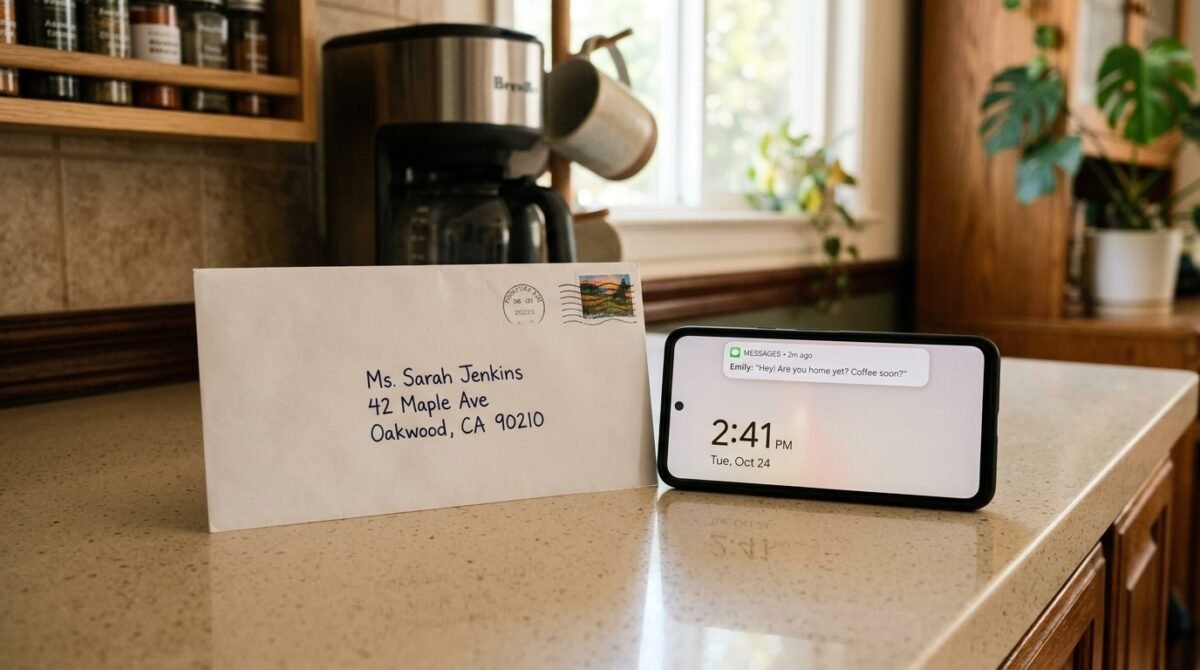
Two weeks after the dinner, we received a letter in the mail. It was from Susan’s attorney—or so she claimed. It was a demand letter, asking for the ‘value’ of the daybed to be reimbursed, and claiming that we had caused ’emotional distress’ to her by being ‘uncooperative’ with her attempts to help. It was a joke, but it was an annoying, expensive joke. We consulted with our own attorney, who laughed as he read the letter.
He explained that she had no legal standing. We hadn’t stolen her bed; she had left it in our house against our wishes, and we had simply cleared it out. He drafted a simple response, stating that any further communication should go through him and that if she continued to harass us, we would move for a formal protection order. That letter effectively ended the legal posturing.
The final message we received from her was a long, rambling email titled ‘My Heart is Broken.’ She talked about how she had ‘sacrificed’ for us, how she had ‘hoped for a better relationship,’ and how she was ‘forgiving us’ for our coldness. It was the ultimate attempt to take the moral high ground while ignoring everything she had actually done. We didn’t reply. We simply archived the email and moved on.
“Your ‘forgiveness’ is not required, as we have done nothing to be forgiven for. We are moving forward with our lives. Do not contact us again, in any form. This is our final word.”
— Mark, final email response, drafted by their lawyer
It felt like a weight had been lifted off our shoulders. We didn’t block her immediately, but we stopped checking her messages. We stopped caring about her reaction. We realized that her unhappiness was a cage of her own making, and we were no longer willing to step inside it to keep her company. We focused on our home, our jobs, and the life we were building together.
The aftermath wasn’t all sunshine and rainbows. There were holidays that were quiet, and family events we skipped to avoid the drama. But there was also a profound sense of peace. We had survived the ultimate test of our partnership, and we had emerged stronger, more united, and more protective of our private space than ever before. We were a team.
Reflecting on the Cost of Boundaries

Looking back, I realize that the headboard was just a catalyst. If it hadn’t been that, it would have been something else—our kitchen cabinets, our nursery decor, or our wedding photos. Susan needed to control our environment to feel secure in her own life. When we took that control back, we were threatening her entire worldview. It was a necessary conflict, but it was a heavy one.
Many people have asked us if we regret the way we handled it. Was it worth the estrangement? My answer is always the same: what is the alternative? To let someone erode your sense of self until you don’t recognize your own home? To let someone gaslight you into believing that your boundaries are an act of cruelty? No. The cost of standing up for ourselves was high, but the cost of giving in would have been our own happiness.
We have learned to cherish the small things that are truly ours. The walnut headboard is still there, and every time I look at it, I see more than just wood. I see a symbol of the hard-won peace we built. We have cultivated a community of friends who respect our space, and we have learned that ‘family’ is something you build, not just something you are born into.
“Boundaries aren’t walls we build to keep people out; they are the fences that keep our own sanity in. If someone is upset by your boundaries, it’s usually because they were benefiting from you having none.”
— A piece of advice from our therapist
We are currently looking into therapy to help process the lingering effects of the manipulation. It’s not an easy journey, but we are doing it together. We are learning to communicate better, to trust our instincts, and to recognize the red flags before they become fires. We are, for the first time, truly living in our own house.
The story of the headboard has become a cautionary tale in our circle of friends. It’s a reminder that even the most ‘well-meaning’ family members can be the most destructive if they don’t respect the independence of the people they love. We are sharing our story now in the hope that someone else might see the signs, hold their ground, and realize that they are worthy of a space that is entirely their own.
Community Echoes: Stories of Shared Betrayal

Since posting our story, we’ve been flooded with messages from people who went through something similar. It’s shocking how common this ‘in-law redecorating’ phenomenon actually is. One person told us that their mother-in-law completely repainted their nursery while they were in the hospital giving birth. Another said their mother-in-law had replaced all their kitchen appliances with her own old ones.
Reading these stories has been both heartbreaking and healing. It made us realize that we weren’t alone in this, and that our reaction—the anger, the confusion, the desire for justice—was a perfectly normal response to an abnormal situation. It validated that we weren’t ‘crazy’ for feeling violated by the intrusion into our private, safe space.
“My MIL did the exact same thing with our wedding photos. She didn’t like the frame I chose, so she swapped them out while we were at work. I felt like I was losing my mind until I realized she just couldn’t handle that I had a different taste than her. Stay strong.”
— A fellow reader from the comments
The community has become a place where people share their ‘battle scars’ and offer advice on how to enforce boundaries. We’ve seen people discussing everything from how to handle toxic in-laws during the holidays to the legal nuances of property rights in family disputes. It’s a support network that we never knew we needed, but one that we are incredibly grateful for.
We’ve also seen people who are still in the thick of it, asking for advice on how to tell their partners that their parents are out of line. It’s a difficult conversation, but it’s one that needs to happen. We try to be a resource for them, sharing what worked for us and what didn’t. It’s a way of turning our negative experience into something positive for others.
Ultimately, the story of the headboard is a story about the transition from childhood to adulthood. It’s about the moment you realize that your parents are just people—people with their own flaws, their own insecurities, and their own agendas. It’s the moment you decide that you are the captain of your own ship, and that you get to decide who is allowed on board.
The Lessons We Carry Forward

If I could give one piece of advice to anyone going through a similar situation, it would be this: trust your gut. If something feels off, if you feel like your boundaries are being pushed, pay attention to that feeling. Don’t let anyone minimize your experience. Your home is your sanctuary, and you have every right to protect it from anyone, regardless of their relation to you.
We also learned that you don’t need to justify your boundaries to anyone. You don’t need to explain why you want your house to look a certain way, or why you don’t want someone in your private space. ‘No’ is a complete sentence. It’s a lesson that took us a long time to learn, but it’s one that has changed the way we interact with the world.
We are also much more deliberate about who we give a key to. We have a rule now: no keys for anyone, under any circumstances. If there’s an emergency, we have a neighbor who holds a key, and that’s it. It’s a small change, but it’s one that gives us an immense sense of security. We’ve taken back the power to define our own lives.
“The most important thing I’ve learned is that I don’t owe anyone access to my life or my home. I get to choose who comes in, and I get to choose who stays. That realization changed everything.”
— A concluding thought from the author
We are stronger than we were before. We’ve been tested, and we’ve proven to ourselves that we can handle the fallout of standing up for ourselves. We are looking forward to a future where we are surrounded by people who respect our boundaries, and where our home is a reflection of our values, not someone else’s.
Thank you to everyone who supported us through this. Your words, your advice, and your shared experiences made all the difference. We’ve learned that we aren’t alone, and that there is strength in numbers. If you’re going through something similar, know that you are not crazy, you are not alone, and you are not in the wrong. Hold your head high, and protect your peace.
Conclusion
The saga of the walnut headboard is officially closed, but the lessons we learned will last a lifetime. We’ve moved from a place of shock and vulnerability to a place of clarity and empowerment. It wasn’t the honeymoon we planned, but it was the one we needed to forge the boundaries that will define our marriage for years to come.
Relationships with in-laws are complex, often balanced on a knife’s edge between connection and control. While we may never have the relationship with Susan that we once imagined, we have something much more valuable: a house that feels like a home, a marriage built on mutual trust, and a voice that we are no longer afraid to use. Our sanctuary is safe, and we intend to keep it that way.
What about you? Have you ever had a boundary so blatantly ignored that you had to make a drastic change to protect your peace? Or perhaps you’ve been the one to cross a line in a moment of misguided ‘help’? Let’s discuss in the comments below. We’d love to hear your stories of boundary enforcement and the lessons you’ve learned along the way.
What's your verdict on this dilemma?
Vote below to contribute to the official community consensus.

Have a Dilemma Keeping You Up at Night?
Share your real-life feud, wedding chaos, or relationship crossroads anonymously with our editorial team.
What do you think ?
0 Comments🛡️ Comments are moderated to protect community integrity. Your comment will appear once approved by the editorial team.