
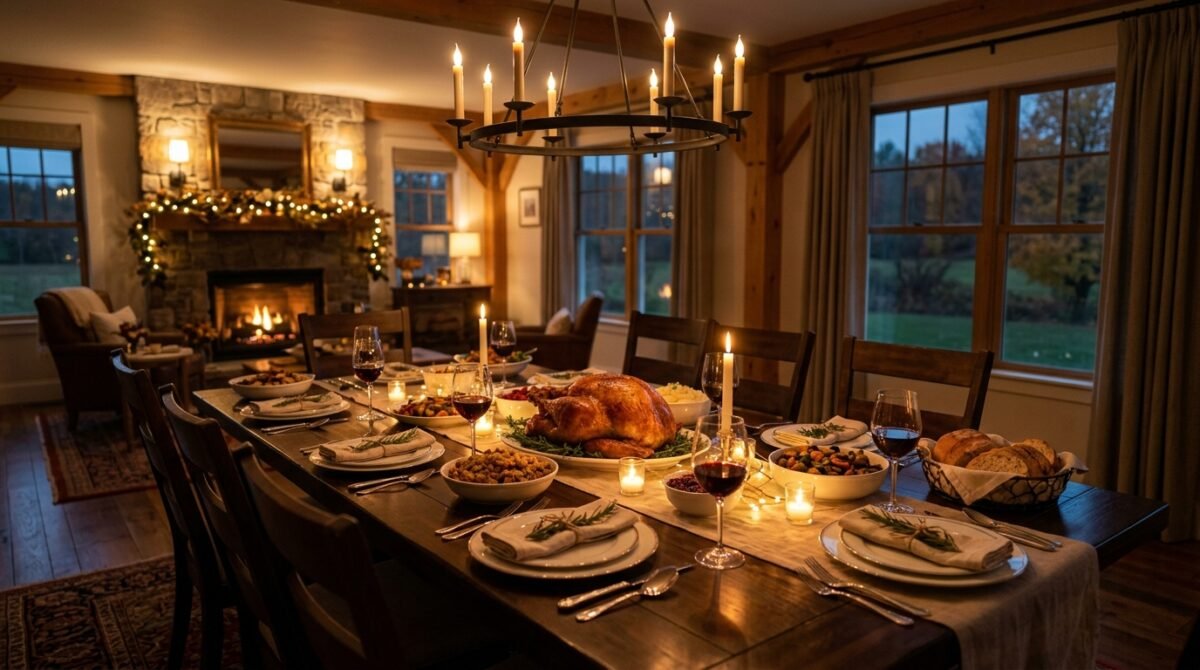
For the past decade, my home has been the unofficial headquarters for the family Thanksgiving circus. Every year, I spend weeks prepping, cleaning, and budgeting, only to watch my living room turn into a war zone of criticism, spilled red wine on heirloom rugs, and backhanded compliments about my life choices. It wasn’t just the mess; it was the psychological toll of hosting people who clearly didn’t respect my space or my efforts.
The catalyst for this year’s decision wasn’t one single event, but rather a slow, painful erosion of my boundaries. From my aunt complaining about the ‘lack of high-end seating’ to my cousins treating my kitchen like a frat house, the entitlement had reached a fever pitch. Last year, the breaking point came when I found my office door unlocked and my private documents sifted through, all because someone was looking for a phone charger.
I realized then that I wasn’t hosting family—I was hosting an ungrateful audience that held me in contempt. The silence in my house after they left last year felt more like a sigh of relief than the post-holiday blues. I knew deep down that if I wanted to survive this season with my sanity intact, something had to change. I wasn’t just tired; I was finished with the performative gratitude.
When I finally sent the text message that broke the tradition, the fallout was instantaneous. My phone didn’t stop buzzing for three days. Accusations of being selfish, cruel, and ‘ruining the family legacy’ poured in from every relative I had. Yet, for the first time in ten years, I felt a strange, quiet sense of power. I had reclaimed my home.
This is the story of how I drew the line, the explosive confrontation that followed, and the unexpected reality of standing up to toxic family dynamics when everyone expects you to just ‘be the bigger person’ for the sake of the holidays.
The Wine Stain on the Persian Rug Incident

The tradition of disrespect didn’t start overnight; it festered through years of small, deliberate transgressions. I remember clearly three years ago, when my uncle, in a fit of drunken bravado, decided to host an impromptu ‘toast’ that involved him pacing across my living room with a full glass of deep crimson Cabernet. I had specifically asked him to keep drinks in the kitchen, a request he laughed off as ‘uptight’.
The inevitable happened within minutes. The glass slipped, the wine saturated the antique rug I had inherited from my grandmother, and instead of an apology, I received a lecture on why I shouldn’t own ‘things too nice to be used.’ The gaslighting was immediate; they made me feel like the villain for caring about my own property.
“Honestly, if you didn’t want it to get stained, you shouldn’t have put it in a room where people are meant to relax. You’re being way too precious about a piece of fabric, don’t you think?”
— Uncle Robert, post-spill
That night, I spent four hours scrubbing the floor on my hands and knees while the rest of them watched football in the den, oblivious to the fact that I was crying. Nobody offered to help. Nobody even checked to see if I was okay. They simply treated my home as a rented venue provided for their convenience.
The incident became a running joke in the family group chat for months afterward. They framed it as me being a ‘hoarder of nice things,’ effectively shaming me for wanting to maintain a clean and respectful environment. It was the first time I realized that they didn’t see me as their equal; they saw me as their servant.
Over the next few years, the pattern intensified. They grew bolder, realizing there were no consequences for their behavior. They would leave trash under the sofa cushions, track mud across the hardwood floors after ‘stepping out for a smoke,’ and even rearrange my kitchen cabinets to suit their own preferences for where the spices should go.
By the time last Thanksgiving rolled around, the tension in my chest was so tight it felt like a physical weight. Every interaction was a test, and I was failing because I refused to be the perfect, silent host any longer. The cycle was unsustainable, and I knew it was only a matter of time before I snapped.
The Secret Group Chat Revelations
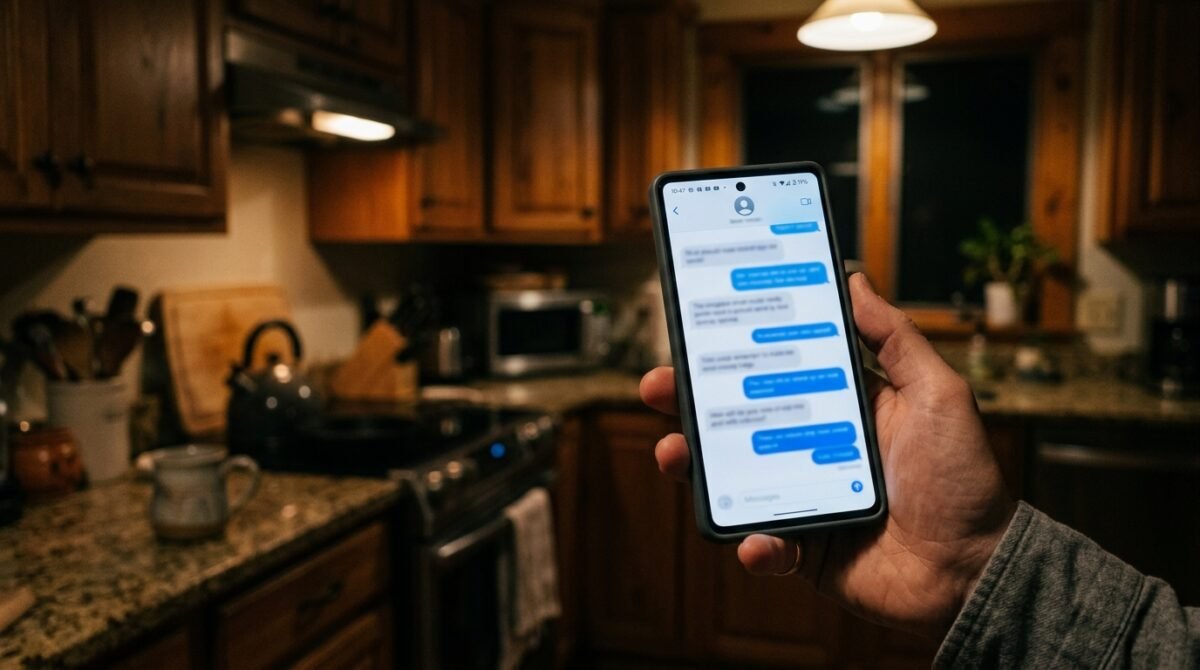
The turning point arrived in a way I never expected: a notification pop-up on my cousin’s phone while it was charging on my kitchen counter. I wasn’t snooping, but the screen lit up with a message from my mother that caught my eye. Curiosity is a dangerous thing, but in this case, it was the clarity I needed to set me free from the guilt I had been carrying.
The group chat, which notably excluded me, was filled with vitriol about my hosting skills, my cooking, and my ‘pathetic’ attempts to make the house feel like a home. They were dissecting my life, laughing at my career choices, and complaining about the fact that they ‘had’ to come to my place for the holiday every year.
“Can we just get through this year and then find someone else to host? I’m so tired of her judging us for just being ourselves. It’s like walking on eggshells in that house.”
— Mother, in the leaked group chat
Reading those words felt like a physical blow. All the years of sacrificing my own comfort to ensure they had a perfect, stress-free holiday were being mocked by the very people I was trying to please. It wasn’t just rude; it was malicious. They didn’t appreciate the effort; they felt entitled to it.
I sat on the floor of my pantry, staring at the screen in disbelief. The woman who raised me was calling me a ‘control freak’ because I asked people not to wear shoes on my cream-colored carpet. It was a complete distortion of reality. I felt my perspective shift from sadness to a cold, calculating anger.
I didn’t confront them right there. I waited. I finished the night with a fake smile, served the dessert I had spent three days preparing, and watched them eat it while they continued their charade of being a loving, grateful family. It was the most difficult performance of my life, but it was necessary to confirm what I already knew.
That night, after they left, I didn’t clean. I left the dishes in the sink. I left the trash on the table. I sat in the middle of my living room and realized that for the first time in a decade, I didn’t want them back. The realization was liberating. I had all the evidence I needed to make the break clean.
The Email That Ended the Tradition

I didn’t do it via phone call. I knew they would try to talk me out of it, to gaslight me into believing I was being ‘dramatic.’ I needed a written record. I crafted an email that was firm, polite, and completely non-negotiable. I didn’t frame it as a question; I framed it as a statement of fact.
The subject line was simple: ‘Thanksgiving Update.’ In the body of the email, I explained that I would no longer be hosting the holiday. I cited the repeated lack of respect for my home and the exhaustion of managing the event as the primary reasons. I didn’t attack them; I simply stated my boundaries.
“After reflecting on the past several years, I have decided to take a break from hosting Thanksgiving. I have realized that our current dynamic is not sustainable for me, and I need to prioritize my own peace of mind. Therefore, I will not be hosting this year, nor in the future.”
— The email sent to the entire family
The response was immediate and nuclear. My phone started vibrating with incoming calls, texts, and emails. My mother was the first to lash out, calling me ‘selfish’ and ‘a traitor to the family.’ She threatened to cut me off, as if my desire for a quiet holiday was a crime against humanity.
Other family members chimed in, claiming that I was ruining the ‘family legacy’ and that I was being ‘incredibly immature.’ They didn’t see the irony in their words. They were upset because their comfort zone was being threatened, and they had no interest in understanding the cost I had been paying for their convenience.
I set my phone to ‘Do Not Disturb’ and spent the day watching old movies. It was the most peaceful day I had experienced in years. The house was quiet, the floors were clean, and there wasn’t a single person in my space telling me how to live my life. I had finally prioritized myself.
The fallout continued for days, with various family members attempting to guilt-trip me. They claimed I was ‘splitting the family apart’ and that I was being ‘vindictive.’ I ignored it all. I knew that if I engaged, they would use my words against me. I had said my piece, and that was enough.
The Aftermath: When the Guilt-Tripping Started
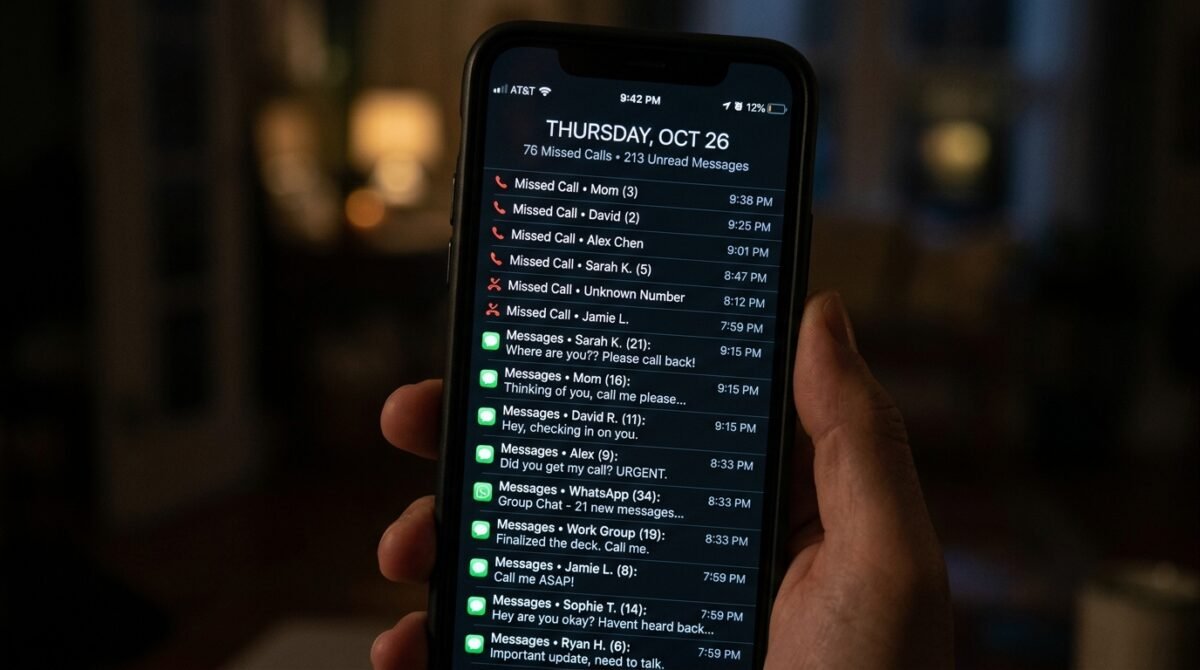
The week following my email was a masterclass in emotional manipulation. My aunt, who usually stayed out of these things, sent me a long, rambling voice note about how ‘family is the most important thing’ and how I would ‘regret this when they were gone.’ It was textbook manipulation, designed to make me feel like the villain for simply asking to be respected.
My siblings were the most vocal. They felt that I had ’embarrassed’ the family by making this public. They didn’t seem to care about the years of disrespect I endured; they only cared about how this made them look to the rest of the extended family. It was all optics, all the time.
“You’re really going to let this ruin your relationship with Mom over some spilled wine and a few comments? You’re being incredibly petty and you know it. Grow up and host the dinner like you always do.”
— My sister, in a text message
I didn’t respond to her accusations. I realized that arguing with them was like playing chess with a pigeon—they would knock over the pieces, poop on the board, and then strut around like they had won. I wasn’t going to give them the satisfaction of a reaction.
The pressure mounted as Thanksgiving approached. People started calling to ask ‘what my plans were’ and ‘who was going to host now,’ as if it were my responsibility to solve the logistical problem I had just created by refusing to be their host. I told everyone the same thing: ‘I don’t have a plan for the holiday, and I’m sure you’ll figure it out.’
Some of the cousins actually reached out to apologize, but it felt hollow. They were only reaching out because they wanted a place to go, not because they actually felt bad about how they treated me. I was polite, but I was firm: ‘I’m not hosting this year, or any year. Thank you for understanding.’
It was a lonely week, but it was the right kind of lonely. It was a solitude I had chosen for myself, not one forced upon me by a family that didn’t care about my wellbeing. I learned that saying ‘no’ is the most powerful tool for self-preservation, even when the people around you fight it with everything they have.
The Reddit Trial: How the Community Reacted

I turned to the Internet for some perspective, posting the situation on a popular sub-Reddit known for dissecting family dilemmas. I expected a mix of opinions, but I was surprised by how overwhelmingly the community supported my decision. It was a validation I hadn’t realized I needed until I read the comments.
Thousands of people shared their own stories of family entitlement. They spoke of the ‘holiday martyrdom’ that so many people, particularly women, are expected to perform. They understood that it wasn’t about the turkey or the stuffing; it was about the lack of basic human decency.
“NTA. You aren’t a hotel, and you aren’t a servant. If your family can’t respect your boundaries, they don’t deserve the hospitality you’ve been providing for free for years. Stand your ground, OP.”
— u/BoundariesMatter (Top Comment, 32.5k upvotes)
The community helped me see that my family’s reaction was a reflection of their own inability to respect boundaries, not a failure on my part. The ‘guilt’ I felt was a conditioned response, a byproduct of years of being the ‘peacemaker’ in a dysfunctional system. Reading the comments allowed me to separate my feelings from the manipulation.
There were some dissenting voices, of course—people who argued that ‘family is family’ and that I should just ‘suck it up.’ But they were quickly drowned out by the majority who understood that family is a two-way street, and that disrespect should not be rewarded with a seat at your table.
The thread became a safe space for people to discuss the toxic expectations of the holiday season. It helped me realize that I wasn’t alone in this. There is a silent epidemic of people who spend their holidays in misery because they are afraid to break the cycle of family obligation.
I felt a sense of relief knowing that the world wasn’t as gaslighting as my family. I had validation that my decision was reasonable, healthy, and long overdue. It gave me the strength to stay the course when the family pressure started to mount again.
The Aftermath: A New Kind of Thanksgiving
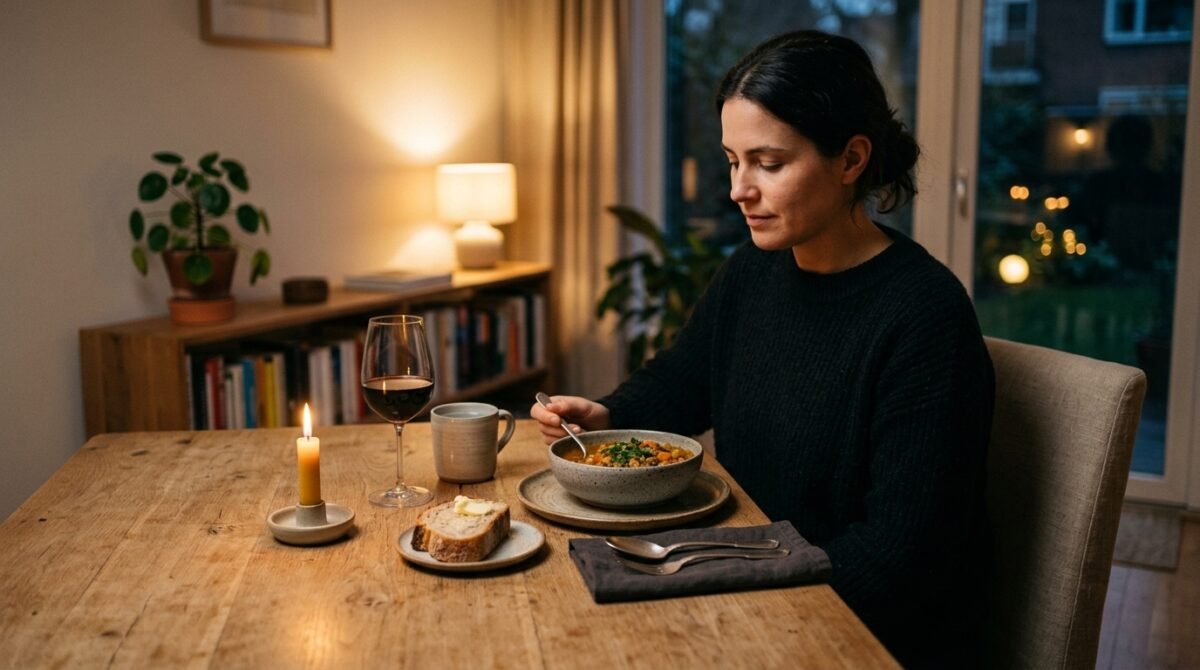
When the actual day of Thanksgiving finally arrived, I woke up without the usual knot of anxiety in my stomach. There was no shopping to do, no cleaning to prepare for, and no dread about who was going to say something mean to me. I made myself a simple, delicious meal—exactly what I wanted, not what everyone else expected.
I went for a long walk in the morning, enjoying the crisp autumn air. I had no phone calls to make, no excuses to offer, and no stress to manage. It was the best holiday I had experienced in my entire adult life. I spent the afternoon reading and listening to music, completely at peace.
Meanwhile, the chaos in the family was apparently unfolding in real-time. My siblings and cousins were scrambling to find a new host, and according to the bits of information that filtered through, it was a disaster. Nobody wanted to take on the responsibility of hosting, and the resentment among them started to bubble over.
“We had to order pizza because nobody wanted to cook, and the house was a mess because we hadn’t planned for it. It really wasn’t the same. We missed you being there to pull everything together.”
— My sister, via text message, later that evening
It was ironic that they missed me—not because they missed *me*, but because they missed the *labor* I provided. They didn’t miss my company; they missed the utility I offered them. The message only solidified my decision. I was a person, not a resource.
I didn’t reply to the text. I just put the phone away. I had no desire to rehash the event or offer sympathy for their poorly planned dinner. I had done my time, and I was officially retired from the role of the family scapegoat and host.
The day ended as quietly as it began. I didn’t feel guilty. I didn’t feel like I had ‘ruined’ anything. I felt like I had finally taken control of my life and reclaimed my home. It was a quiet victory, but a significant one.
The Consequences of Setting Boundaries

Setting boundaries with family is never without consequences. For the next few months, I was the pariah of the family. I was excluded from group texts, ignored at family gatherings that I actually wanted to attend, and treated with a frosty politeness that was almost worse than the outright shouting.
My mother, in particular, struggled to accept the new reality. She would try to ‘forget’ and invite herself over for coffee or suggest that we ‘get past this’ by having a family dinner at my place. I had to be firm every single time. It was exhausting to constantly reinforce the boundary, but I knew it was necessary.
“I love you, but I’ve already told you that I am no longer hosting family events. We can meet for coffee at a cafe if you’d like, but my home is off-limits for gatherings.”
— My response to my mother’s persistent invitations
The experience taught me that people will only respect your boundaries if you enforce them relentlessly. The moment you give an inch, they will take a mile. I had to become the ‘mean’ one, as they called it, to protect my own mental health. It was a difficult transition, but it was worth it.
I started investing that time and energy into my own life—my hobbies, my friendships, and my professional goals. I realized how much of my identity had been wrapped up in being the ‘host.’ Without that label, I had to rediscover who I was, and the process was incredibly rewarding.
Some family members eventually came around, slowly accepting the new dynamic. They stopped asking for favors and started treating me with more respect, if only because they knew I wasn’t afraid to say no. It wasn’t perfect, but it was a step in the right direction.
The ones who didn’t respect it, the ones who kept pushing, were eventually pushed out of my life. I realized that my circle didn’t need to be defined by biology; it needed to be defined by mutual respect and kindness. I was finally building a community that actually cared about me.
The Long-Term Impact on Our Family Dynamic

Looking back a year later, the decision to ban them from Thanksgiving was the best thing I ever did for my family relationships. Yes, it was painful, and yes, there was a period of estrangement, but it forced everyone to re-evaluate their behavior. We aren’t close, and maybe we never will be again, but the interaction is now much more civil.
My cousins and siblings have started to take more responsibility for their own lives and their own hosting duties. They’ve learned that they can’t rely on me to fix their problems or provide the stage for their drama. It has, in a way, made us all more independent.
“I didn’t realize how much of a burden we were putting on you until I had to host my own birthday party. I’m sorry for the way we acted for all those years.”
— A cousin, finally acknowledging the past
That apology was unexpected, but it was appreciated. It took a long time, but eventually, some of them realized that my ‘selfishness’ was actually a defense mechanism against their entitlement. It was a hard pill for them to swallow, but it was necessary for us to move forward.
I still have boundaries, and I still enforce them, but the stakes are no longer as high as they used to be. I am no longer the ‘host’ who is expected to do everything. I am just another family member, and that suits me just fine. The pressure is gone, and the relationship is now on my terms.
I learned that you don’t have to sacrifice your own happiness to keep the peace. In fact, true peace can only be found when you are willing to stand up for yourself and demand the respect you deserve. It’s a lesson that took me a long time to learn, but it’s one I’ll never forget.
If you’re in a situation where you feel used and disrespected by your own family, know that you don’t have to stay. You don’t have to endure it. You have the right to set boundaries, even if it feels like the end of the world. Because sometimes, the end of the world is just the beginning of a much better life.
What I Learned About Self-Worth

The biggest takeaway from this entire experience was the realization that my self-worth was entirely dependent on what I could provide for others. I thought that by being the ‘perfect host,’ I was earning my place in the family. I thought that if I did enough, they would finally see me, appreciate me, and love me.
But the truth was, they only loved what I could do for them. When I stopped doing it, the ‘love’ vanished. That was the most painful, yet most important, lesson I learned. I was not being loved for who I was; I was being utilized for what I was worth to them.
“Your value is not determined by your utility to others. You are worthy of love and respect simply because you exist, not because of what you can give away.”
— A piece of advice from a therapist that stayed with me
Once I accepted that, the guilt started to fade. I stopped trying to please people who were incapable of being pleased. I stopped trying to prove my worth to people who were only looking at the bottom line. I started to focus on things that actually brought me joy.
I started gardening, taking art classes, and traveling. I built a life that I actually enjoyed living, and I surrounded myself with people who cared about me for me. I stopped being a servant and started being a person. It was the most important transition of my life.
I also learned that it’s okay to let go of people, even family, if they aren’t willing to respect you. You don’t owe them your time, your space, or your happiness. You owe those things to yourself. And once you prioritize your own needs, everything else starts to fall into place.
I’m not saying it’s easy. It’s incredibly hard to walk away, especially when it’s your own family. But it’s worth it. You deserve to be in a space where you are treated with kindness and respect. And if you aren’t getting that at home, it’s okay to find it somewhere else.
Final Reflections for Anyone Struggling

If you are reading this and you’re currently in the middle of a similar situation—feeling trapped by family obligations, overwhelmed by the entitlement of others, or just exhausted from being the ‘go-to’ person—please know that there is a way out. You have the power to change the dynamic, but it requires you to be brave.
It requires you to be willing to be the ‘bad guy’ for a while. It requires you to be willing to endure the criticism and the guilt-tripping. It requires you to be willing to stand alone for a period of time. But I promise you, the freedom on the other side is worth every single second of that discomfort.
“The most important boundary you will ever set is the one that says ‘no’ to the people who consistently ask for too much and give too little in return.”
— A reflection on personal growth
Start small if you need to. Say no to one small request. Set one small boundary. Then another. And another. You don’t have to do it all at once, but you do have to start. Because if you don’t, nobody else will do it for you. You are the only one who can protect your own peace.
Remember that you aren’t responsible for other people’s reactions to your boundaries. If they get angry, that’s their problem, not yours. If they try to guilt-trip you, that’s a reflection of their own issues, not yours. Keep your focus on your own well-being and stay true to your own values.
You are worthy of more than just being a host to an ungrateful audience. You are worthy of a life that is full of joy, respect, and genuine connection. Go out there and build that life, and don’t let anyone hold you back—not even the people who claim to love you the most.
We only get one life. Don’t spend it trying to please people who don’t deserve it. Spend it living for yourself, in a space that you love, with people who truly care. That’s the only way to find real happiness.
Conclusion
My journey from being the family’s ‘holiday martyr’ to someone who finally prioritizes their own mental health was far from easy. It involved heartbreak, confrontation, and the painful realization that some people will never change. Yet, it also brought me a sense of peace I hadn’t felt in a decade. I didn’t just reclaim my home; I reclaimed my self-worth.
I want to hear from you. Have you ever had to draw a hard line with your family? Did you have to cancel an event or cut ties to protect your own peace? How did you deal with the fallout, and what advice would you give to others currently struggling with family entitlement? Share your stories in the comments below—let’s keep the conversation going about setting healthy boundaries, even when it’s the hardest thing to do.
What's your verdict on this dilemma?
Vote below to contribute to the official community consensus.

Have a Dilemma Keeping You Up at Night?
Share your real-life feud, wedding chaos, or relationship crossroads anonymously with our editorial team.
What do you think ?
0 Comments🛡️ Comments are moderated to protect community integrity. Your comment will appear once approved by the editorial team.