

Christmas is supposed to be the season of warmth, generosity, and the quiet comfort of family traditions. For years, I had tried to bridge the gap between my husband’s parents and my stepson, Leo. I wanted Leo to feel like a cherished member of the clan, despite the complications that often accompany modern blended families. But as the years ticked by, the subtle jabs and cold shoulders from my in-laws, the Millers, grew increasingly difficult to ignore.
It wasn’t just about the gifts; it was about the visibility of the rejection. While the cousins received the latest gadgets and expensive toys, Leo—the child I brought into this marriage—was often relegated to an afterthought. I told myself it was just old-fashioned stubbornness, something I could fix with more effort and more grace. I was wrong.
The breaking point didn’t come with a shout, but with a piece of crinkled wrapping paper. Christmas Eve at the Miller household had always been high-stakes, a performance of perfectionism that masked a brittle foundation. My husband, Mark, wanted to believe his parents were changing, that they were finally ready to embrace the life we had built together.
I sat at the table, my heart hammering against my ribs, watching as the atmosphere shifted from festive joy to a sharp, chilling silence. What happened next wasn’t just an act of petty favoritism; it was a deliberate, calculated humiliation of a young boy who had done nothing but exist in a space where he clearly wasn’t wanted. In that moment, the illusion of the happy family holiday shattered completely.
The Piles of Technology and Plastic

The living room was a testament to excess. Beneath the towering, twelve-foot tree, the gifts for my husband’s sister’s children were stacked high, glittering with silver bows and designer tags. As we walked in, the air was thick with the scent of pine and expensive cologne. I watched Mark’s face, hoping to see him notice the disparity, but he was busy laughing at a joke his father made.
Leo, only nine years old, stood near the edge of the rug, clutching his coat. He knew the drill. He was the ‘other’ grandchild—the one whose lineage didn’t quite fit the pristine narrative the Millers preferred. I squeezed his hand, trying to inject some confidence into his small, tense frame, but I felt him trembling slightly.
My mother-in-law, Susan, glided across the floor, her velvet dress rustling. She handed out gifts with the practiced air of a queen dispensing favors. ‘For little Timmy, the latest iPad Pro!’ she chirped, handing over a sleek box. Then, ‘For Sarah, the designer headphones she asked for!’ The room filled with the sounds of tearing paper and squeals of delight.
I scanned the floor, looking for something—anything—that might have been meant for Leo. There were no tags with his name. My stomach began to churn. Was it possible they had simply forgotten him again? Or was it worse? I looked at Mark, but he was distracted, showing his dad a photo on his phone, oblivious to the fact that his son was being systematically erased from the evening’s festivities.
“Look, Mom, it’s like they didn’t even notice he’s here. I think we need to say something before this goes any further.”
— My whispered comment to Mark, which he promptly ignored.
I felt a surge of hot, righteous indignation. This wasn’t just a mistake; it was an active exclusion. I realized then that my passivity over the last three years had only signaled to them that their behavior was acceptable. I was tired of being the quiet daughter-in-law who kept the peace while her child was being emotionally starved.
The Wrapped Box of Discarded History
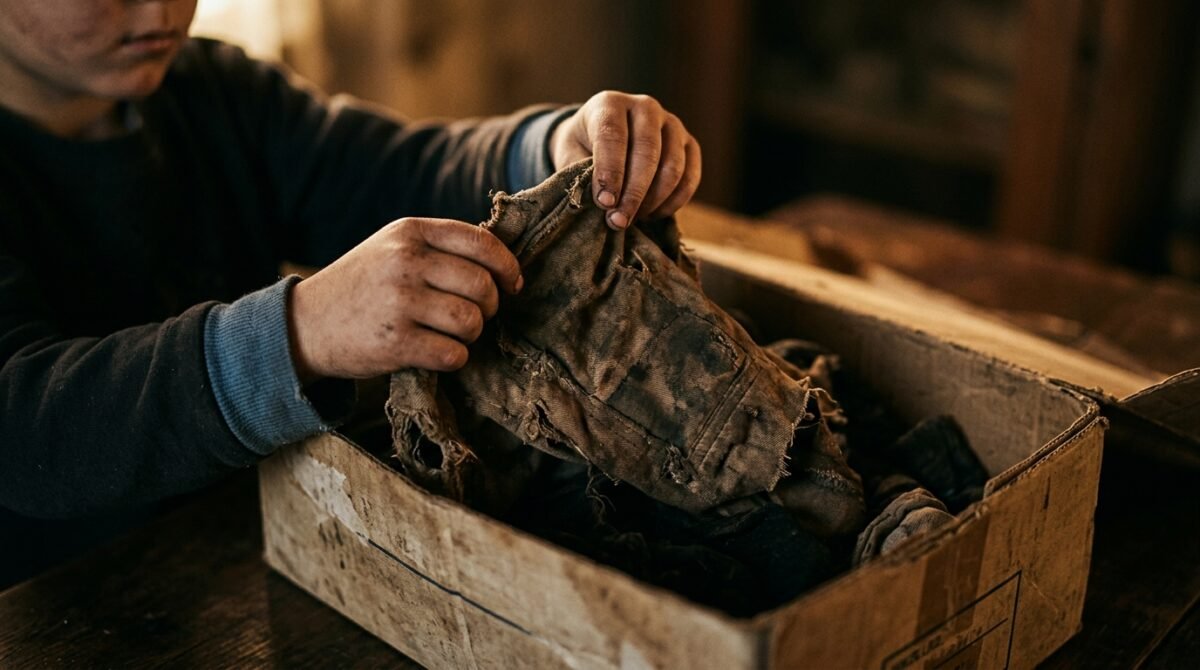
Finally, the gift-giving died down to a trickle. The cousins were playing with their new tablets, the room humming with the sound of digital games. Susan reached behind the sofa and pulled out a small, lumpy package wrapped in mismatched, wrinkled paper that looked like it had been salvaged from a trash bin.
She held it out to Leo with a thin, tight-lipped smile. ‘We didn’t want you to feel left out, Leo,’ she said, her voice dripping with a sugary, insincere sweetness. The room went quiet. Even the cousins stopped their games to watch. The box was light, shifting as if the contents inside were loose.
Leo took the package, his brow furrowed. He sat on the floor and began to peel back the tape, his movements slow and careful. As the paper fell away, he didn’t pull out a game or a toy. He pulled out a pair of stained, worn-out sweatpants and a faded t-shirt that clearly belonged to one of the cousins from three years ago.
The silence in the room was deafening. I felt the breath leave my lungs in a sharp gasp. It wasn’t just that they were ‘hand-me-downs’; they were visibly dirty, the fabric pilling and fraying at the edges. It was a message, plain and simple: You are not worth our effort, and you are only fit for the scraps we have already thrown away.
“I thought he could use these for gym class. Kids grow so fast, don’t you think? It’s so wasteful to buy new things for someone who won’t be around forever anyway.”
— Susan, explaining the ‘gift’ with a cold, glassy smile.
I looked at Leo. He didn’t cry. He just looked at the stained fabric, then up at Susan, his eyes wide and vacant. That, more than anything, broke my heart. He had learned to expect this. He had learned that his existence in their home was conditional, and that he was viewed as a nuisance rather than a member of the family.
The Kitchen Confrontation

I stood up, my chair scraping harshly against the hardwood floor. The sound was like a gunshot in the quiet room. I walked over to Leo, took the stained clothes from his hands, and stood him up. Mark finally looked over, his expression shifting from confusion to alarm as he saw the state of the ‘gift.’
I didn’t yell. I didn’t cause a scene in front of the kids. I simply grabbed Leo’s hand and walked toward the kitchen, where Susan had retreated to ‘check on the turkey.’ I followed her, the sound of my boots clicking on the floor like a drumbeat of war.
‘Susan,’ I said, my voice steady but vibrating with suppressed rage. ‘What exactly was that? You give the other children iPads, and you give my son a box of literal trash? Explain it to me. I really want to hear the logic.’
She turned, holding a wooden spoon, her face hardening into a mask of indignation. ‘It’s a gift, isn’t it? We have plenty of clothes that the other boys have outgrown. It’s practical. I thought you would appreciate the frugality, considering your… situation.’
“Don’t you ever give him trash again. And don’t you dare pretend this is about ‘frugality’ when you just dropped two thousand dollars on gadgets for the others. You hate him, and you want us to know it. Well, mission accomplished.”
— My response to Susan in the kitchen.
The audacity of her gaslighting was breathtaking. She tried to frame her cruelty as a favor, a way of ‘helping’ us out. It was the classic tactic of the bully—doing something cruel and then acting as though the victim is unreasonable for being offended. But I wasn’t playing that game anymore.
Mark’s Frozen Stance

Mark followed me into the kitchen, his face a portrait of agony. He was caught between his mother, who held his childhood memories and his sense of belonging, and his wife, who was currently demanding justice for his child. He looked at the stained clothes on the counter and then at his mother.
‘Mom,’ he said, his voice trembling slightly. ‘Why did you do that? You know he doesn’t wear hand-me-downs. You know how this looks.’
‘Oh, don’t start with me, Mark,’ Susan snapped. ‘You’re just as sensitive as she is. It’s just clothes. Why are you making this a disaster? It’s Christmas Eve! You’re ruining the atmosphere for everyone.’
I watched Mark. I waited for him to defend Leo, to tell his mother that this was unacceptable and that we would be leaving. But he hesitated. That hesitation was the final nail in the coffin. He didn’t want to make a scene; he wanted to smooth it over, to pretend that the insult hadn’t happened so we could get through dinner without a confrontation.
“I just want everyone to be happy tonight. Can’t we just move past this and eat? We can talk about this later, in private.”
— Mark, trying to minimize the situation.
I realized then that Mark’s desire for harmony was a form of complicity. By refusing to confront his mother, he was effectively telling Leo that his feelings didn’t matter as much as the comfort of the family unit. I wasn’t going to let that slide. I grabbed my purse and looked at him. ‘We aren’t staying for dinner, Mark. You can stay if you want to keep the peace, but Leo and I are going home.’
The Walk to the Car

The walk to the front door felt like a marathon. Every eye in the living room was on us. The aunts, the cousins, the father—they all stared, their expressions a mix of confusion and judgment. I didn’t care. I kept my head high, Leo’s hand firmly in mine. He was looking down at his shoes, his face flushed with embarrassment, but he walked with me.
As we reached the door, Susan called out, ‘Where do you think you’re going? The roast is almost ready!’ She sounded genuinely offended, as if my departure was a personal attack on her culinary skills. I turned around, my hand on the doorknob.
‘I’m going somewhere where my son is treated with respect,’ I said clearly. ‘You made your feelings very clear tonight, Susan. You don’t have to worry about us anymore. We won’t be coming back for these little displays of yours.’
The silence that followed was absolute. I stepped out into the cold night air, the transition from the stifling heat of the house to the crisp winter wind feeling like a physical release. Leo didn’t say a word until we were in the car and I had the heater blasting. ‘Are we really not going back, Mom?’ he whispered.
“No, honey. We aren’t. And I promise you, you will never have to sit at that table again.”
— My promise to Leo as I drove away.
I felt a strange sense of peace. For years, I had been trying to force a connection that didn’t exist, all for the sake of ‘family.’ But family isn’t blood; it’s the people who show up for you, the people who love you unconditionally. The Millers were just people who shared a name with my husband. They were strangers in every way that mattered.
The Midnight Text Storm
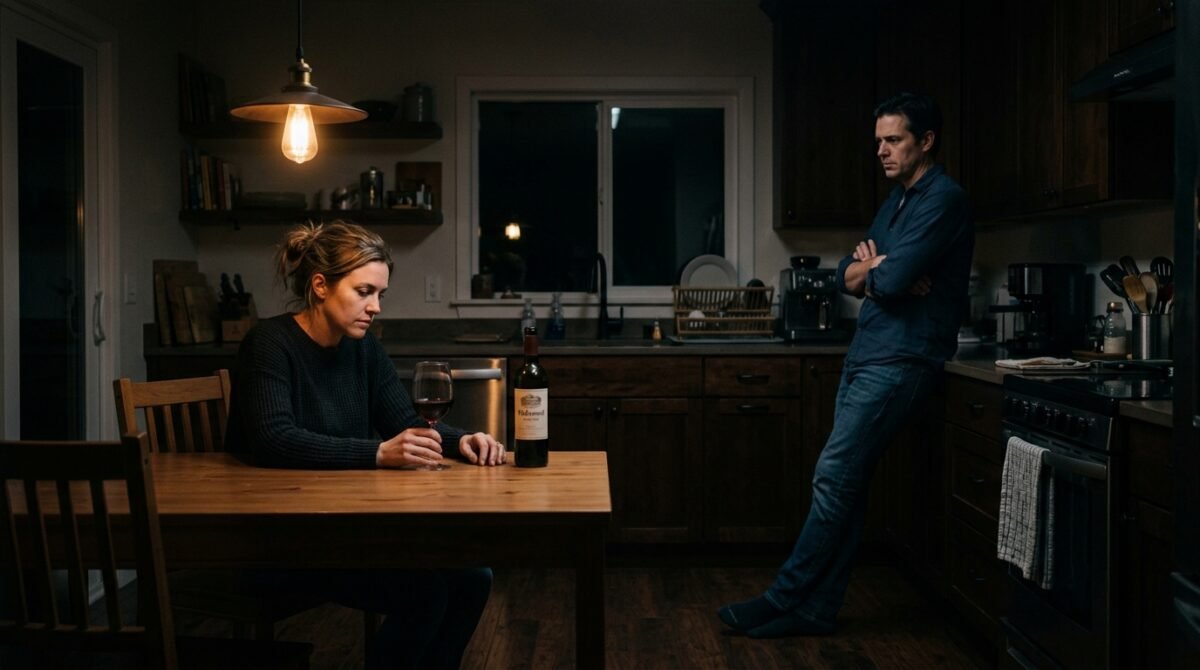
By the time we got home, my phone was blowing up. There were missed calls from my husband, angry texts from his sister, and a long, rambling paragraph from Susan about how I was ’emotionally unstable’ and ‘ruining the family Christmas.’ I didn’t open them right away. I made Leo hot cocoa, we watched a movie, and I let him pick out a treat from the cupboard.
Mark finally arrived home around midnight. He looked exhausted, his tie undone and his face haggard. He came into the kitchen where I was sitting, nursing a glass of wine, waiting for him. He didn’t say anything at first, just leaned against the counter, closing his eyes.
‘They’re furious,’ he said, his voice barely a whisper. ‘My dad says if we don’t apologize by morning, we aren’t welcome at the New Year’s party. My sister says you’re dramatic and that you embarrassed them in front of the neighbors.’
I looked at him, my expression cold. ‘And what did you say, Mark? Did you tell them that they gave your son a box of garbage? Did you tell them that you were embarrassed by *their* behavior, not mine?’
“I told them it was a misunderstanding. I told them you were just stressed. Please, just text them an apology. It’ll make everything go away.”
— Mark’s plea to me at midnight.
I laughed, a sharp, bitter sound. ‘An apology? I’m not apologizing for protecting my son from your toxic parents. And if you think that’s what I’m going to do, you’ve got another thing coming. You have a choice, Mark. You can be a husband and a father, or you can be their little boy. You can’t be both anymore.’
The Reddit Verdict

I knew I needed perspective, so I posted the story on r/AmItheAsshole. I didn’t sugarcoat anything. I laid out the history, the gifts, the incident with the clothes, and the fallout with my husband. I hit ‘post’ and went to sleep, not expecting much. When I woke up, the post had exploded.
The support was overwhelming. Thousands of people commented, most of them telling me that I had done the right thing. There were stories of similar family dynamics, of people who had spent years trying to please toxic in-laws only to realize that the ‘peace’ they were keeping was destroying their own children.
“NTA. Your husband is the biggest problem here. He watched his parents humiliate his son and then asked you to apologize to them? He is prioritizing his parents’ comfort over his own child’s dignity. That is a massive red flag. You did the right thing by leaving.”
— u/FamilyFirstWarrior (Top Comment, 45.2k upvotes)
Reading the comments helped me realize that I wasn’t crazy. I wasn’t being ‘dramatic.’ I was reacting to a pattern of abuse that had been ignored for far too long. The validation from strangers—people who didn’t owe me anything—was the final piece of the puzzle. I wasn’t going to back down.
The Ultimatum

The next morning, I sat Mark down. I had printed out the most relevant, insightful comments from the thread—not because I wanted to win a debate, but because I wanted him to see that his behavior was objectively wrong. He read them in silence, his face pale.
‘They’re just internet strangers, they don’t know my parents,’ he said, but his voice lacked conviction. He knew they were right. He had seen the way his mother looked at Leo, the way she made him feel small. He had just been too afraid to acknowledge it.
‘Mark,’ I said, ‘this is the last time. We are going to family therapy. We are going to set firm boundaries with your parents. If they cannot treat Leo with the respect he deserves, we will not see them. Period. No exceptions, no excuses.’
“If you can’t stand up to them, I will. But I will do it by cutting them out of our lives completely. I’m not going to watch you sacrifice Leo for the sake of your mother’s ego anymore.”
— My ultimatum to Mark.
He looked at me, and for the first time in our marriage, I saw him really look at me. He saw the fire, the resolve, and the heartbreak. He finally nodded. ‘Okay,’ he said. ‘I’ll do it. I’ll call them today.’
The Letter to the Millers

Mark didn’t call them. He wrote them a letter. He was better at writing than speaking, and he wanted to be clear. He detailed exactly what they had done—the favoritism, the gift, the gaslighting—and he spelled out the consequences. We were going no-contact until they apologized, and even then, things would never be the same.
We sent it via certified mail. I wanted a record of it. I wanted them to know that we were serious. A week later, we received a reply. It wasn’t an apology. It was a tirade about how we were ungrateful, how they had provided so much for us, and how we were ‘poisoning’ the family with our ‘divisive’ behavior.
I read the letter and tossed it into the fireplace. It was exactly what I expected. They were incapable of change because they were incapable of reflection. They had built their entire identity around being the perfect, wealthy, ‘good’ family, and any challenge to that narrative was seen as a personal attack.
“They didn’t even mention Leo. Not once. They talked about us, our ‘rudeness,’ and our ‘ingratitude,’ but they didn’t even acknowledge the hurt they caused him. That tells you everything you need to know.”
— Mark after reading his mother’s letter.
It was the final closure we needed. We didn’t need to argue anymore. We didn’t need to hope for a change that would never come. We had our family, and they weren’t part of it anymore.
The New Tradition

That next year, we spent Christmas on our own terms. We went to a mountain cabin, just the three of us. No gifts from people who didn’t love us, no pressure to perform, no walking on eggshells. We hiked, we baked, and we just existed. It was the best holiday we had ever had.
Leo was different, too. He seemed lighter, more confident. He wasn’t constantly looking over his shoulder, waiting for the next snub. He had learned that his parents had his back, and that was enough to change his entire world. The trauma of that Christmas Eve began to fade, replaced by new, happy memories.
Mark and I grew closer, too. The therapy was hard—painfully hard—but it forced us to confront the patterns that had nearly destroyed our marriage. We learned how to communicate, how to support each other, and how to put our family unit above all else. We weren’t perfect, but we were real.
“I’m sorry it took me so long to see it. I thought I was protecting us by keeping quiet, but I was just letting them hurt the people I love the most.”
— Mark during one of our therapy sessions.
We still get the occasional message from them—a ‘thinking of you’ text on a birthday, a ‘why are you doing this’ email on an anniversary. We don’t reply. We don’t need to. We’ve found our peace, and that is worth more than any fancy gift under any tree.
Conclusion
Looking back, that Christmas Eve dinner was the hardest night of my life, but it was also the most liberating. It stripped away the pretenses and forced a confrontation that was long overdue. It taught me that setting boundaries isn’t an act of aggression; it’s an act of love—love for yourself and love for your children.
The Millers didn’t change, and perhaps they never will. But they don’t have to. Their inability to love my son for who he is doesn’t define him; it only defines them. We are better off without them, and for the first time in years, our family is truly whole.
What about you? Have you ever had to walk away from a family gathering because of blatant disrespect? Have you ever had to choose between keeping the peace and protecting your own children? Share your thoughts and experiences in the comments below—let’s talk about how to navigate these impossible choices.
What's your verdict on this dilemma?
Vote below to contribute to the official community consensus.

Have a Dilemma Keeping You Up at Night?
Share your real-life feud, wedding chaos, or relationship crossroads anonymously with our editorial team.
What do you think ?
0 Comments🛡️ Comments are moderated to protect community integrity. Your comment will appear once approved by the editorial team.