
Grief is a strange, quiet roommate. When my mother passed away three years ago, she left behind very few physical items, but the one thing she finished—a hand-stitched, intricate quilt made from her own childhood dresses—became my North Star. It was the item I envisioned my first child sleeping under. It wasn’t just fabric; it was a tangible connection to a woman I still feel the urge to call every single time I find a good recipe or see a beautiful sunset.
My mother-in-law, Diane, never understood this. To her, things are either ‘useful’ or ‘trash.’ From the moment I announced my pregnancy, she started treating my nursery like her personal design project. She had opinions on the paint color, the crib brand, and, most offensively, the ‘aesthetic’ of the items I had carefully curated for my baby. I thought she was just being difficult in that quintessential grandmother-to-be way, but I didn’t realize she was actively orchestrating a replacement.
The incident happened while I was at a routine prenatal appointment. I had returned home to find my nursery transformed. Not in a ‘surprise, I cleaned’ way, but in a ‘I have decided your memories are inferior’ way. The quilt was gone. In its place, draped over the crib with a smug, intentional carelessness, was a disgusting, moth-eaten pet blanket she claimed belonged to their family dog from the 90s.
I stood in the center of the room, the air suddenly thick and hard to breathe. The betrayal felt physical. It wasn’t just about the blanket; it was about the erasure of my history in favor of her own. That was the moment I realized that being polite wasn’t just failing to protect my boundaries—it was allowing my past to be discarded like actual garbage.
What follows is the timeline of how I went from a patient daughter-in-law to the woman who changed the locks on her house, effectively excommunicating her mother-in-law from the sanctity of my child’s future. This isn’t just about a quilt; it’s about the boundary that, once crossed, can never be uncrossed.
The Subtle Erasure of My Family History

Long before the nursery incident, there were warning signs. Diane was a woman who lived for hierarchy, and she made it clear from day one that her traditions were the only ones that mattered. When I first brought the quilt to our home, she made a comment that should have been my first red flag. She looked at the intricate, hand-sewn patterns and tilted her head, her smile not reaching her eyes.
“It’s a bit… dusty, isn’t it? I’m sure it’s sentimental, but for a newborn, you really want something synthetic. Something you can bleach. Dust mites love those old fabrics, dear. It’s actually quite dangerous,” she told me over coffee. I brushed it off, attributing it to her being an over-anxious grandmother, but the frequency of these comments grew.
She started bringing ‘replacements’ over. First, it was a mass-produced, polyester swaddle blanket that felt like sandpaper. Then, it was a set of plastic-heavy nursery accessories that clashed with the calming, soft theme I had spent months planning. Every time I said ‘no’ or ‘we already have something,’ she would laugh it off as me being ‘young and inexperienced’ with health standards.
The tension began to manifest in our conversations. I found myself becoming defensive, hiding my mail from her, and even double-checking the locks after she left. I wasn’t just annoyed; I was being slowly conditioned to doubt my own judgment as a mother, all while she positioned herself as the arbiter of what was ‘safe’ and ‘good’ for my unborn child.
“I just think you’re being a bit precious about things that aren’t really meant to last, honey. You need to focus on the future, not what’s rotting in a closet somewhere.”
— Diane, during a Sunday lunch
The disregard for my late mother wasn’t an accident; it was a campaign. She knew exactly how much that quilt meant to me. I had told her the story of how my mother finished the final square while in hospice. Diane had listened, sighed, and then immediately pivoted to talking about her own nursery days. It was clear that my grief was an inconvenience to her narrative of being the ultimate matriarch.
By the third trimester, the house felt like a battlefield. She had a spare key—a decision my husband, Mark, had insisted on for ’emergencies.’ Little did I know that to Diane, an ’emergency’ was simply a moment where she felt the urge to rearrange my furniture or curate my living space to her liking.
The Six-Hour Absence and the Nursery Intrusion
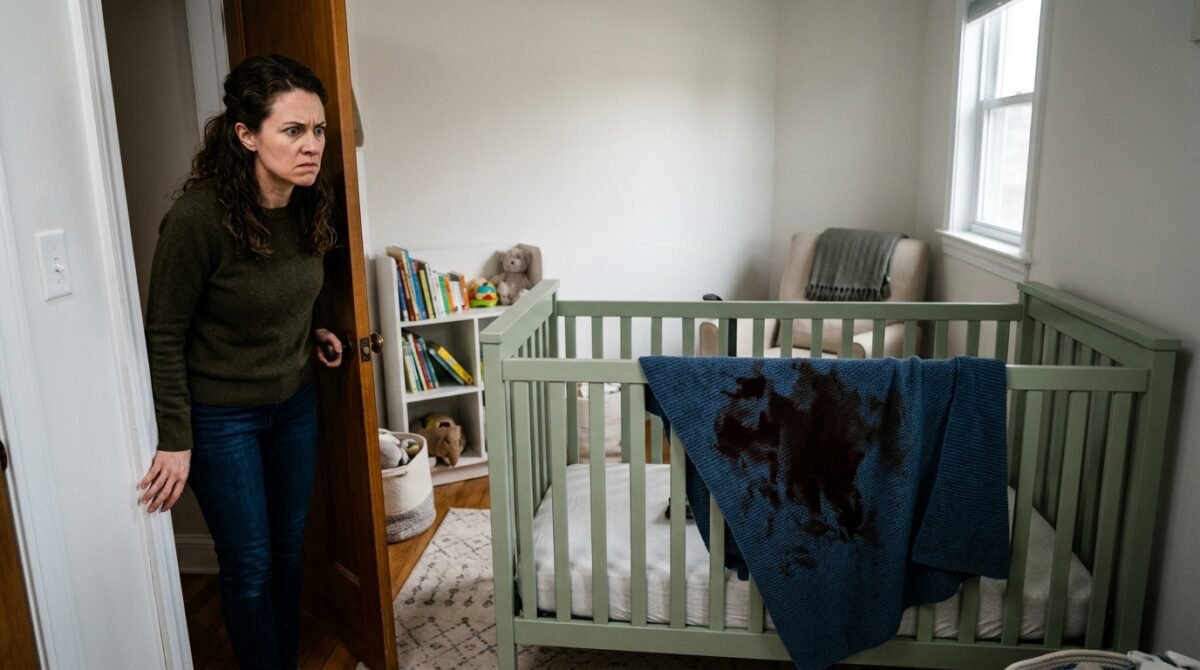
The day of the incident was a Tuesday. I had a long OB-GYN appointment followed by some errands that took longer than expected. Mark was at work, and the house was empty. It was the perfect window for someone who felt entitled to trespass. When I pulled into the driveway, I felt a strange sense of unease. The front door was locked, but the air felt heavy, as if the energy in the house had been shifted.
I walked straight to the nursery. It was my sanctuary. I had spent hours painting the walls, organizing the tiny clothes, and folding the quilt over the edge of the crib. It was the centerpiece of my joy. As I pushed the door open, my heart sank into my stomach. The crib was different. The quilt—the only thing I had left that still smelled faintly of my mother’s perfume—was gone.
Draped over the crib was a yellowed, stained, and frankly disgusting piece of fabric that looked like it had been salvaged from a dumpster. It had that distinct, musty odor of a basement that hadn’t seen daylight in decades. I stood there, frozen, trying to process the visual. My mind raced: Had I moved it? Did I wash it? Then, I saw the note left on the changing table.
“Found this in the back of my attic. It’s Buster’s old security blanket from 1994. It’s much more ‘lived-in’ and comforting than that old, scratchy thing you had. I did you a favor and put the other one in the donation bin. Don’t thank me!”
— Note left by Diane on the changing table
I felt the color drain from my face. She hadn’t just moved it; she had thrown it away. My mother’s final gift, discarded to make room for a literal dog blanket. The rage that surged through me wasn’t a hot, screaming anger; it was a cold, surgical determination. I didn’t cry. I didn’t scream. I simply grabbed the phone and called Mark. My voice was shaking, but my resolve was solid as steel.
“Mark, get home now. If you don’t, I am changing the locks and you are finding a hotel. Your mother has gone too far.” The shock in his voice was palpable, but he knew when I reached this tone, there was no negotiating. I spent the next hour documenting the room, taking photos of the pet blanket, and searching every corner of the house to see if she had actually thrown my quilt away.
She hadn’t just insulted my mother; she had violated my home and my child’s space. The sense of safety I had built for my baby had been shattered by the woman who was supposed to be part of the village. I knew then that there was no going back to the way things were. The ‘grandmother’ privileges were officially revoked, and I was just waiting for the confrontation.
The Confrontation That Shook the Foundation
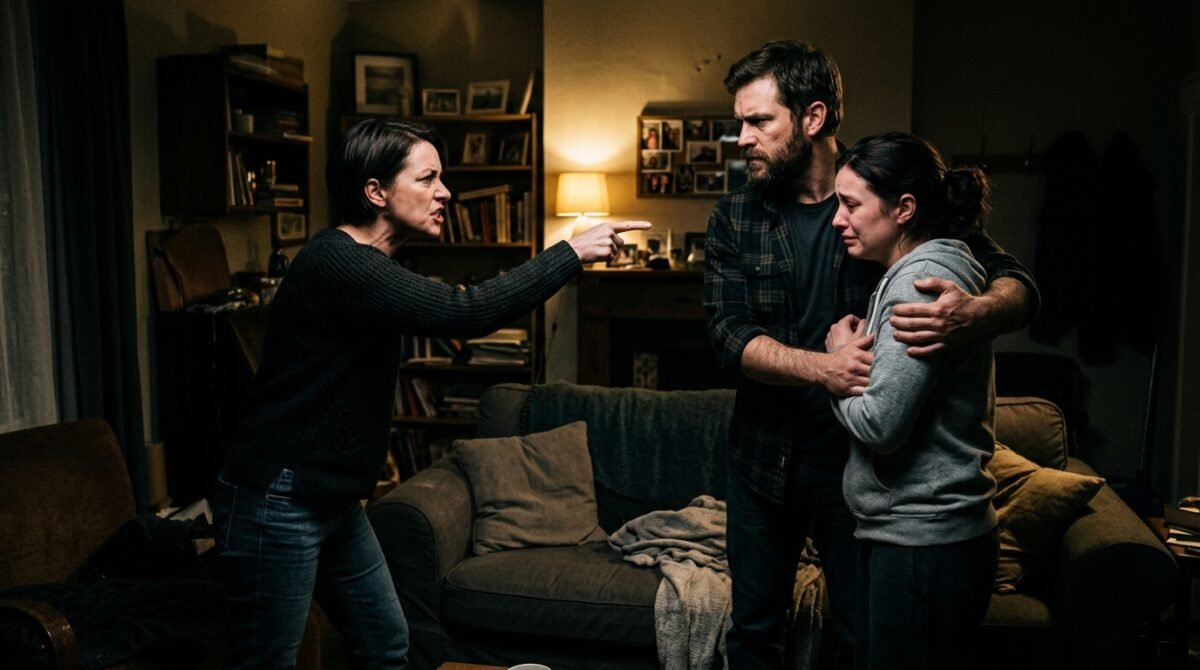
Mark arrived home within thirty minutes, pale and clearly frightened by the intensity in my voice. When he saw the nursery, his face went from confusion to pure, unadulterated shame. He knew his mother was overbearing, but even he hadn’t imagined she would go this far. We waited for her, because I knew she’d show up—she was the type to demand a thank-you for her ‘kindness.’
Sure enough, at 5:00 PM, the sound of her key in the front door signaled the arrival of the storm. She walked in carrying a bag of baby clothes, humming to herself, looking like a woman who had just done a good deed. She stopped short when she saw us both standing in the living room, waiting for her. The silence was deafening, a vacuum where the air felt like it was being sucked out of the room.
“Oh, look at you two! Serious faces? Did you see the surprise I left in the nursery? It’s much more sanitary than that dust-collector you had,” she said, trying to breezily walk past us. I stepped into her path, my hands firmly at my sides. I didn’t want to touch her. I didn’t want to be in the same zip code as her, but I needed her to know exactly what she had done.
“Where. Is. My. Mother’s. Quilt.” My voice was low, controlled, and vibrating with a level of intensity I didn’t know I possessed. “You have exactly one minute to tell me which donation bin it is in, or I am calling the police for theft and trespassing.”
— Me, confronting Diane
Diane laughed, a sharp, brittle sound that tried to mask her fear. “Don’t be ridiculous. It was literally falling apart. I did you a favor. The dog blanket is vintage, it has character. You should be thanking me for clearing out the clutter so you can focus on the baby.” Mark stepped forward then, his voice booming in a way I had never heard before.
“Mom, you walked into our house and threw away something you knew was precious to her. That quilt was the only thing she had left of her mother. You didn’t do her a favor; you committed a malicious act of disrespect. We are not talking about ‘clutter.’ We are talking about our home, our boundaries, and our child.”
She looked between us, realizing that for the first time in their lives, the dynamic had shifted. She wasn’t the matriarch here; she was a guest who had overstayed her welcome by a decade. Her face twisted into a mask of indignation. “You’re both being hysterical! It’s just fabric! If you’re going to be this sensitive, how are you ever going to handle real parenting? I’m leaving, and when you’ve calmed down and realized I was right, you can call me.”
The Digital Fallout and the Group Chat Explosion

The next morning, the fallout began in earnest. Diane didn’t apologize. Instead, she took to the family group chat—the one that included my husband’s siblings, their spouses, and his father. She didn’t recount the incident; she curated it. She framed herself as the victim of my ‘irrational, hormone-driven rage’ and complained about how I was ‘keeping her from her grandchild’ because of a simple disagreement over nursery decor.
I watched the notifications pop up on my phone, my thumb hovering over the ‘mute’ button. The messages were coming in fast. My sister-in-law, Sarah, was the first to chime in, clearly having been fed a version of the story where I was the villain. It was a masterclass in manipulation, designed to make me look unstable and ungrateful. I realized then that Diane was not just trying to win the argument; she was trying to isolate me.
“Guys, please don’t engage. I just tried to help with the nursery and [OP] blew up at me, claiming I ‘stole’ some old rag she had in the crib. Now they’ve changed the locks! I’m so worried about the baby if they’re this volatile.”
— Diane, in the Family Group Chat
I didn’t reply to her directly. Instead, I sent a single message to the entire group. It was a photo of the note she left, next to the photo of the stained, filthy dog blanket sitting in my nursery. I didn’t add any commentary. I let the visual evidence do the talking. The silence that followed in the group chat was long, heavy, and delicious.
Then, my brother-in-law, David, responded. “Mom, are you serious? That’s Buster’s old blanket? It’s been in the attic for twenty years. And you threw away [OP]’s mom’s quilt? That’s insane, even for you.” The tides had turned. One by one, the other family members started questioning her. She had banked on my silence, but I had chosen transparency instead.
Diane immediately tried to backpedal, claiming it was a ‘misunderstanding’ and that she didn’t realize the significance of the quilt. But the damage was done. The reality of her actions—the audacity of entering our home and replacing a memorial heirloom with trash—was laid bare for everyone to see. She had tried to paint me as the villain, but she had only succeeded in unmasking herself.
I muted the chat after that. I didn’t need to see her excuses. I didn’t need to see her trying to justify the unjustifiable. I had established the boundary, and for the first time in my marriage, the family was actually seeing the truth of who Diane really was. The isolation she tried to impose on me had backfired, and it was her who found herself on the outside, looking in.
The Search for the Lost Heirloom
While the family was busy debating the morality of the situation, I was on a mission. I needed that quilt. I called every donation center in the city, describing the quilt in minute detail, crying to managers, begging them to check their intake logs. It was a desperate, exhausting search, but I couldn’t let it go. My husband, Mark, was just as determined, taking time off work to drive to the local centers in person.
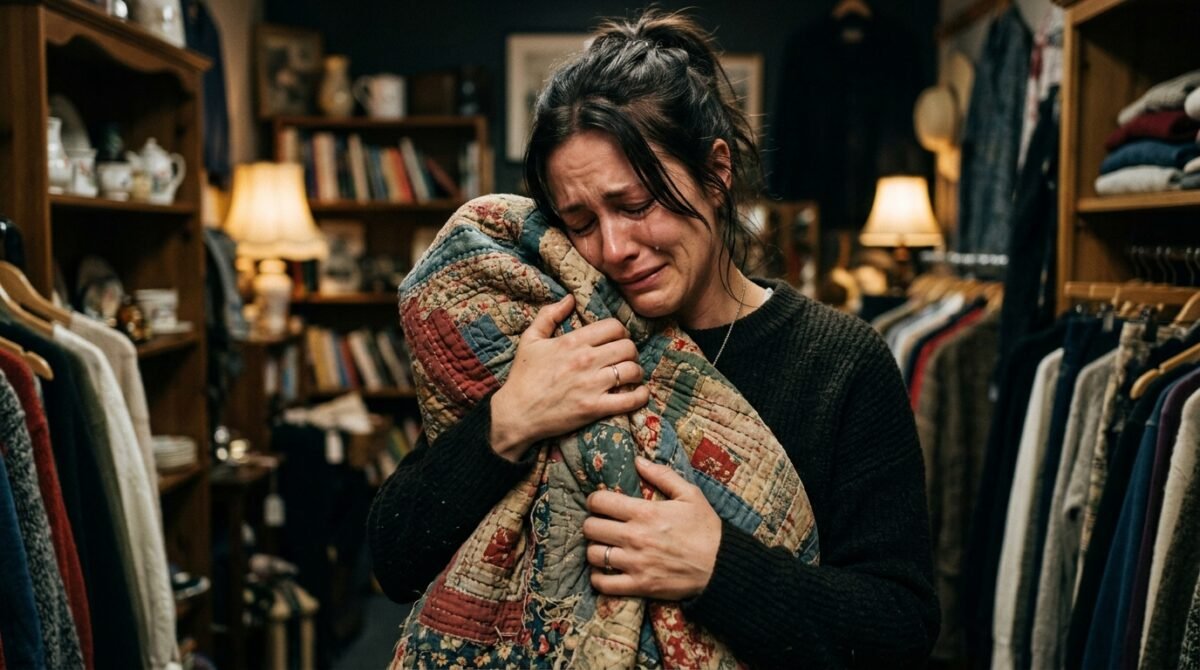
It was three days later that we got a call. A small, independent charity shop about five miles away had received a bundle of items that matched my description. When we arrived, the shop was closing, but the manager had kept the bag behind the counter. My heart was pounding so hard I thought it would shatter my ribs. She pulled out the bag, and there, amidst a pile of winter coats and old towels, was the quilt.
It was wrinkled and smelled faintly of the donation bin, but it was safe. I clutched it to my chest and started sobbing. It wasn’t just a piece of fabric; it was the symbol of my mother’s love, the thing I was going to wrap my child in to tell them about the grandmother they never got to meet. The manager looked at me with such empathy that I knew she understood exactly what I was feeling.
“I don’t know who dropped this off, but they didn’t even look at what was inside. It’s a beautiful piece of work. I’m so glad you found it before it was put out on the floor.”
— Charity shop manager
We paid for the items as a ‘donation’ and headed home. On the drive back, Mark didn’t say a word. He just kept glancing at me, his hand resting on my knee. We were both processing the trauma of the last week. The quilt was a victory, but it didn’t change the fact that my mother-in-law had actively tried to destroy it. The physical object was recovered, but the trust in our relationship was gone.
When we got home, I washed the quilt in the delicate cycle, watching it spin, feeling a sense of immense relief. That night, I placed it back in the nursery. But this time, I added a new security measure: a keyed lock on the nursery door, and a security camera facing the entryway. I wasn’t going to be caught off guard again. The sanctuary was protected, and the intruder was officially banned.
Why I Locked the Nursery Forever

Many people asked me why I went as far as changing the locks. ‘She’s just a grandmother,’ they’d say. ‘She made a mistake, she’s old-fashioned.’ But they weren’t the ones standing in their own home, looking at a piece of their history replaced by a filthy relic. They didn’t see the smirk on her face when she talked about ‘clearing the clutter.’ To them, it was an overreaction; to me, it was a necessary survival tactic.
Locking the nursery wasn’t about the quilt anymore. It was about the future. If I let her get away with this—if I allowed her to dictate what belonged in my baby’s room, what was ‘safe,’ and what was ‘trash’—where would it stop? Would she replace my baby’s formula with something she preferred? Would she decide which toys were acceptable? The boundaries were not just being tested; they were being bulldozed.
I sat down with Mark for a long, painful discussion about what our future looked like. We realized that Diane’s behavior wasn’t a sudden onset of ‘grumpy old age’; it was a lifelong pattern of entitlement that had finally hit a wall. We decided on a firm No-Contact policy for the immediate future. No visits, no unsupervised time, and absolutely no access to the house.
“I love my mother, but I cannot let her dictate the terms of our life. You are my partner, and this is our home. If she can’t respect the sanctity of our space, she doesn’t get to be in it. Period.”
— Mark, during our evening talk
The lock on the nursery door is a physical reminder of the boundary. Every time I open it, I’m reminded that I have the power to protect my family. It’s not about being mean or spiteful; it’s about creating a safe environment where my child can grow without being subjected to the toxic expectations of a woman who values ‘vintage’ over human connection.
Some family members have taken her side, calling me ‘unforgiving.’ I tell them the same thing: If you don’t respect someone’s home, you don’t get the privilege of being invited back. My child will know their grandmother through stories, but they will never know the woman who tried to erase their heritage in favor of a dirty blanket. That is my promise to them, and to my late mother.
The Internet Weighs In: A Viral Dilemma

When I finally posted the full story on Reddit, the response was instantaneous. My inbox flooded with messages of support, horror, and shared trauma. Thousands of people weighed in on the ‘quilt versus blanket’ debacle, and the consensus was overwhelmingly in my favor. It wasn’t just about the blanket; it was about the fundamental violation of respect.
The thread became a hub for people to share their own ‘boundary-crossing mother-in-law’ stories. From mothers whose wedding photos were framed over to ones whose kids’ names were ignored, the stories were endless. It made me realize that I wasn’t alone, and that the guilt I felt for being ‘harsh’ was actually just societal conditioning telling me to be a ‘nice’ daughter-in-law.
“NTA. You aren’t just protecting a quilt; you are protecting your autonomy as a mother. If she can steal an heirloom, she can steal your parenting authority. Keep those locks changed and don’t look back.”
— u/FamilyBoundariesFan, 32.4k upvotes
Others, however, provided a more nuanced take, warning me about the long-term implications of going no-contact. They advised me to keep the communication lines open with the rest of the family while maintaining a strict firewall around myself. It was solid advice. I wasn’t trying to blow up the whole family; I was just trying to protect my own piece of it.
“She’s looking for a reaction. By going No-Contact, you are denying her the ‘drama’ she craves. Stay quiet, stay firm, and let her stew in her own consequences. The silence will kill her faster than any argument.”
— u/PeaceKeeper_99, 15.2k upvotes
The community reaction acted as a mirror, reflecting my own strength back at me. I hadn’t realized how much I was internalizing the ‘you’re being difficult’ narrative. Seeing thousands of strangers validate my decision allowed me to finally let go of the guilt. I wasn’t being difficult; I was being a mother. And that, I decided, was the most important job I would ever have.
The Aftermath: Finding Peace in the Nursery
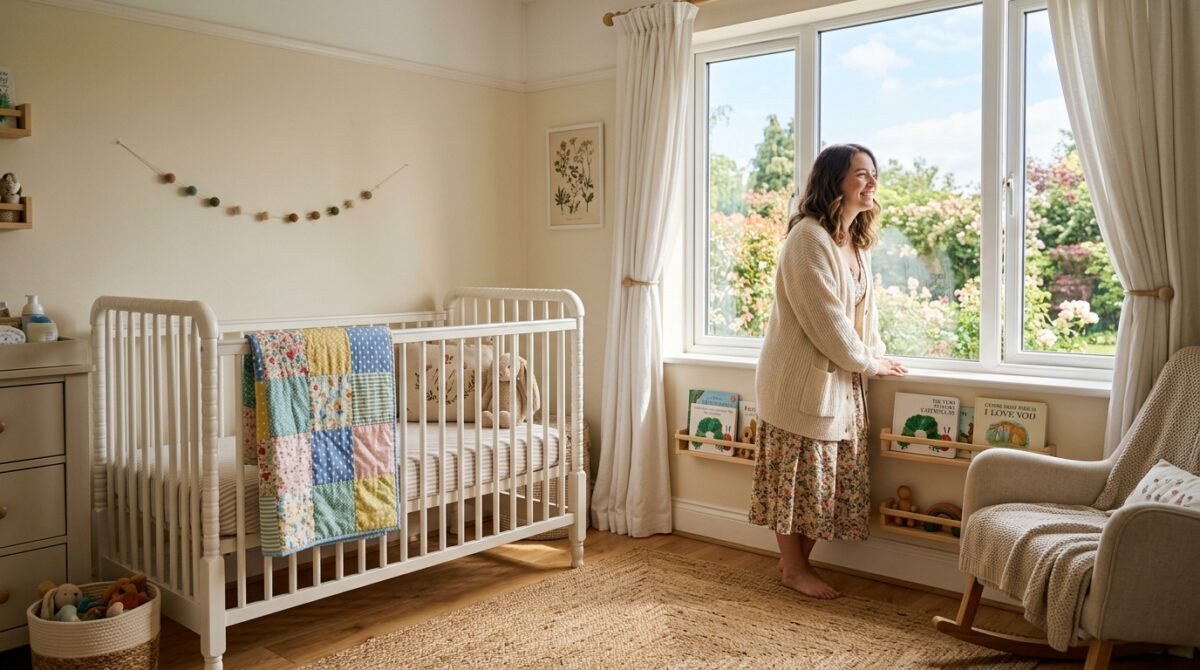
Months have passed since the ‘Quilt Incident,’ as we now call it. The nursery is finished. The quilt is safely tucked away in the crib, waiting for the day our little one arrives. The room has a sense of peace that I never thought I’d achieve. It’s no longer a project for my mother-in-law to critique; it’s a space where I feel connected to my mother, and excited for the future.
Diane has reached out a few times. The messages started as angry demands for ‘her rights as a grandmother,’ then shifted to fake, hollow apologies about how she ‘didn’t mean to upset me.’ I haven’t responded to any of them. I don’t need her apology, and I certainly don’t need her version of reconciliation. My peace is worth more than her validation.
Mark and I are closer than ever. This experience tested our marriage in ways I didn’t think possible, but it brought us onto the same page. We have a solid, unbreakable union, and we know exactly where our priorities lie. The ‘village’ we are raising our child in is one we get to curate ourselves—and it’s a village where respect is the baseline requirement.
“I don’t miss the tension. I don’t miss the anxiety of wondering what she was going to change next. I just feel… light. For the first time in years, I feel like I’m actually the one living my life.”
— Me, reflecting on my current state
I’ve learned that setting a boundary is not an act of aggression; it’s an act of love for yourself and your family. If the price of peace is being ‘the villain’ in someone else’s story, then I’m happy to play that part. I have my baby, I have my quilt, and I have my sanity. In the end, that’s all that really matters.
Lessons from the Nursery Door

Looking back, the most important lesson I’ve learned is that you cannot negotiate with entitlement. If you try to reason with someone who believes they are the center of the universe, you will always lose because they aren’t playing by the same rules of empathy and respect that you are. They are playing a game of power, and the only way to win is to stop playing.
I used to think that ‘family’ meant enduring whatever behavior was thrown at you because of the blood connection. I’ve learned that family is a choice. It’s made of the people who respect you, support you, and hold you up. It’s not defined by DNA, and it’s certainly not defined by the ability to force your way into someone’s home.
To anyone else going through a similar situation: Trust your gut. If you feel like your boundaries are being crossed, they are. Don’t wait for a ‘smoking gun’ or a ‘big enough’ incident. The moment you feel disrespected is the moment you should start protecting yourself. You don’t owe anyone access to your life, your home, or your child.
“The hardest part is accepting that you can’t change them. Once you accept that they are who they are, the freedom to walk away is the greatest gift you can give yourself.”
— A piece of advice I read during the struggle
I am currently focusing on the final preparations for the baby. Life is too short to spend it arguing with people who don’t care about your happiness. I’m moving forward with a sense of clarity and purpose that I never had before. My mother’s quilt is the first thing our child will see when they wake up, and that is exactly how it should be.
The Final Verdict of the Family

The family dynamic has permanently shifted. While some of the extended family still think we are ‘too harsh,’ the inner circle has come to realize that we made the right call. The lack of access to our home has forced them to confront the fact that our time is a privilege, not a right. Diane is still bitter, but the power dynamic has entirely evaporated.
We spent the holidays without her, and it was the most peaceful season we’ve ever had. No passive-aggressive comments, no forced gift exchanges, no walking on eggshells. We spent time with friends who truly care about us, and we felt more like a family than we ever did when we were trying to appease the ‘matriarch.’ It was a stark realization that our life was actually better without her.
I realize now that she was an anchor, dragging us down into a sea of her own unresolved issues. By cutting that anchor, we were finally able to set sail. We have our own traditions now, our own rules, and our own version of what it means to be a family. It’s not perfect, but it’s real. And it belongs to us, and only us.
“If you want to be part of our lives, you have to be able to respect our boundaries. It’s not a high bar to clear, but apparently, it’s one that some people just can’t reach.”
— Mark, summing up our current philosophy
I don’t regret a single second of the conflict. The pain of the past was necessary to build the foundation of the future. I am no longer that quiet, accommodating daughter-in-law. I am a mother who will defend her home, her history, and her child with everything I have. And that is a version of myself I am finally proud of.
Conclusion
Ultimately, this story isn’t really about a quilt. It’s about the moment we realize that we are the final arbiters of our own lives. We often spend so much time trying to be ‘good’ people that we forget we also have the right to be protected people. The quilt was the trigger, but the boundary was the goal. I didn’t lock her out of the nursery to be mean; I locked her out to be safe.
The journey from victim to boundary-setter is a painful one, but it is one that leads to true freedom. I have my life, my husband, and my home back, and I refuse to let anyone else compromise that again. The nursery door remains locked, the camera remains active, and my peace remains mine.
I’m curious to hear from you—have you ever had to draw a hard line with a family member that changed your life forever? Did you struggle with the ‘guilt’ of setting boundaries, or did you find it empowering? Share your stories below; let’s discuss the reality of protecting our peace in a world that often demands we sacrifice it for others.
What's your verdict on this dilemma?
Vote below to contribute to the official community consensus.

Have a Dilemma Keeping You Up at Night?
Share your real-life feud, wedding chaos, or relationship crossroads anonymously with our editorial team.
What do you think ?
0 Comments🛡️ Comments are moderated to protect community integrity. Your comment will appear once approved by the editorial team.