

Weddings are meant to be a celebration of two lives merging, but for many, they become a high-stakes battlefield where boundaries are tested and control is fought for behind closed doors. My own journey toward the altar felt like a dream until my future mother-in-law, Linda, decided that the guest list was her personal plaything. What started as a simple request for help with our rehearsal dinner quickly devolved into a nightmare of manipulation and covert operations.
Linda had always been the type of woman who preferred to ask for forgiveness rather than permission, a trait I found charming in our early dating life but absolutely suffocating during wedding planning. I trusted her with the logistics of the rehearsal dinner because she claimed to have a ‘knack for hospitality,’ but that trust was shattered the moment I discovered my own parents—the people who were paying for half the wedding—had been quietly uninvited from the event.
The audacity of the move wasn’t just in the exclusion; it was in the calculated secrecy. She didn’t just tell them they weren’t invited; she fabricated an elaborate story about ‘venue capacity constraints’ while inviting her own distant cousins from three states away. When the truth finally surfaced, the air in our home changed. I knew that if I didn’t take immediate, decisive action, this pattern of disrespect would define my entire marriage.
This isn’t just a story about a wedding dinner; it’s a story about the breaking point. It is about the moment you realize that being ‘polite’ is no longer an option when your family’s dignity is at stake. I had to make a choice: play the victim in Linda’s narrative or reclaim the narrative entirely. I chose the latter, and it cost me a caterer, a lot of sleep, and a permanent shift in my relationship with my in-laws.
As I sit here now, looking back at the wreckage, I see the threads of a much larger power struggle. From the hidden group chats to the final, silent standoff at the dinner table, the experience taught me everything I needed to know about standing my ground. Let’s unravel the timeline of this disaster, because sometimes, you have to burn the bridge to see who is actually standing on your side of the river.
The Illusion of Help and the Hidden Agenda

When Linda first offered to host the rehearsal dinner, it felt like a weight lifted off my shoulders. Wedding planning is an exhaustive series of compromises, and offloading one major event to a mother-in-law who claimed to love hosting seemed like a tactical win. She was glowing with excitement, promising to handle the catering, the floral arrangements, and the seating chart. I was naive enough to believe she had our best interests at heart.
The cracks began to show when she insisted on keeping the guest list ‘exclusive’ to keep costs down. She argued that the venue had strict limits, and that we needed to prioritize ‘the people who actually mattered’ to the family dynamic. At the time, I didn’t think twice about it, assuming she meant avoiding unnecessary drama by trimming the guest list of casual acquaintances. I had no idea that my own parents were at the top of her chopping block.
I remember sitting in her kitchen, sipping tea while she clicked away on her laptop, finalizing the ‘final draft’ of the list. She was jovial, laughing about how much money we were going to save by cutting out ‘the excess.’ I trusted her. That was my first mistake. I didn’t realize that in Linda’s world, ‘excess’ was just a code word for anyone she didn’t personally control.
“Don’t worry about the guest list, darling. I have everything under control. It’s going to be an intimate, sophisticated evening that reflects our family values.”
— Linda, during the planning phase
The weeks that followed were marked by a strange silence from my parents regarding the dinner. When I finally asked them if they’d received the details, the confusion in my mother’s voice was enough to make my stomach turn. They had been told the venue was overbooked and that the event was being restricted to ‘immediate family only’—a category that apparently excluded the bride’s own parents.
I was livid. I didn’t confront Linda immediately; I wanted to gather the facts first. I went back to the venue’s website and looked up their capacity charts. They could easily accommodate the number of guests we had discussed. The ‘capacity constraint’ was a lie. Linda hadn’t just made a mistake; she had staged a deliberate exclusion to center the event around her own social circle.
The Smoking Gun in the Group Chat

The realization that I had been lied to sent me into a spiral of investigative mode. I knew Linda was sloppy with her digital security, often leaving her tablet logged into shared accounts. I didn’t feel proud of snooping, but the betrayal was so profound that my sense of privacy had long since evaporated. What I found in the family group chat was worse than I could have imagined.
There, plain as day, was a thread between Linda and her sisters. She wasn’t just uninviting my parents; she was bragging about it. She referred to my parents as ‘the outsiders’ and ‘the ones who don’t understand our traditions.’ She had essentially rebranded my parents’ absence as a necessary sacrifice for the ‘sake of the family’s comfort.’ It made me physically ill to read the dismissive way she spoke about them.
“I’ve successfully cleared the space for the cousins. The bride’s parents won’t be attending, and honestly, the atmosphere will be much more relaxed without them hovering. Let’s keep this between us until after the wedding.”
— Linda in a private group chat with her sisters
The rage I felt was cold and sharp. This wasn’t a misunderstanding; it was a power move designed to establish hierarchy. She was testing the waters to see how much she could rewrite the script of our wedding without me noticing. The fact that she planned to hide it until after the event showed she knew exactly how wrong it was.
I took screenshots of everything. I didn’t need to yell or scream; I had the proof. The question was, what was I going to do with it? My partner, her son, was caught in the middle, still clinging to the idea that his mother was just ‘eccentric’ and ‘well-meaning.’ It took showing him these messages for him to finally see the toxicity for what it was.
He was silent for a long time after reading the messages. He didn’t want to believe his mother was capable of such cold-blooded exclusion. We spent the night talking, not about the wedding, but about the future we were building. We agreed that if we didn’t set a hard boundary now, this behavior would only escalate once we had children or hit other major life milestones.
The plan began to form. We weren’t going to just yell at her. We were going to hit her where it hurt: her reputation and her control. She wanted to ‘host’ this event? Fine. We would take the event back, and the first thing to go would be the centerpiece of her ‘sophisticated evening’—the caterer she was so proud of.
The Calculated Strike on the Catering Contract
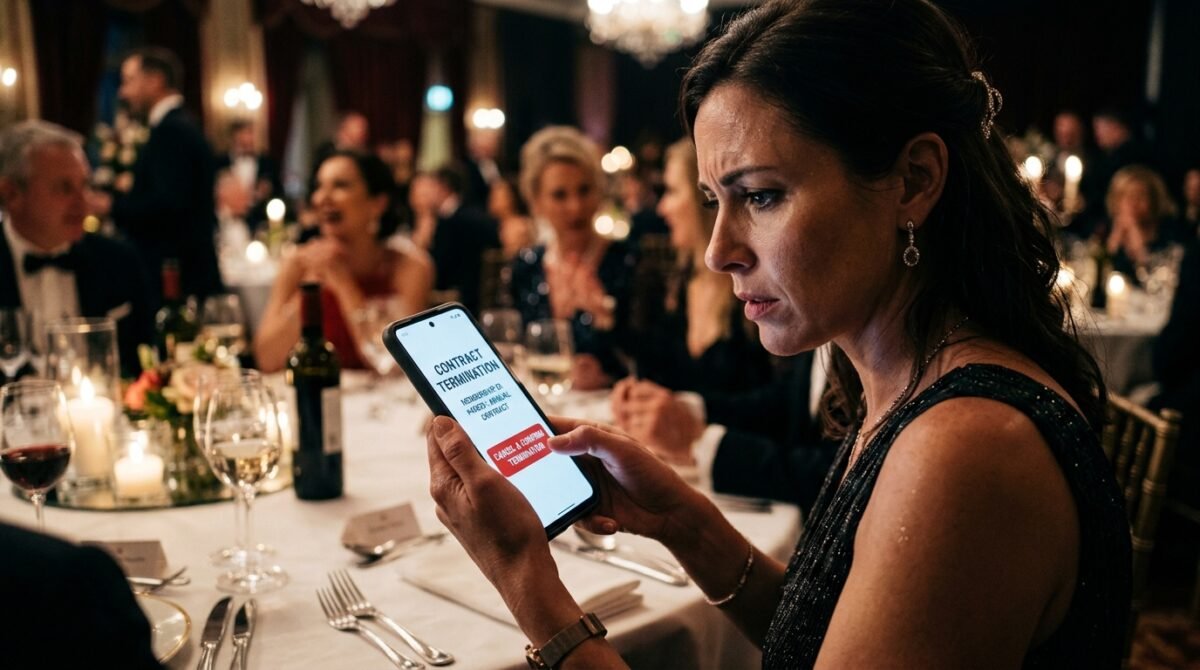
Linda had hired a high-end, boutique catering service that she wouldn’t stop talking about. She treated the caterer like a status symbol, constantly mentioning the ‘bespoke menu’ and ‘artisanal pairings.’ It was the one thing she felt she had completely nailed. I knew that if I canceled the caterer, it would signal the beginning of the end of her control over the event.
Since the contract was technically in my name—because I had to provide the initial deposit—I had the legal standing to make changes. I called the caterer the next morning, acting as the primary client. I told them there had been a ‘drastic shift’ in plans and that the event was being moved to a different, more casual venue that wouldn’t support their service style. I made sure to apologize profusely and offer them a small ‘cancellation fee’ just to make the contract break official.
The caterer was actually relieved. Apparently, Linda had been a nightmare client, constantly changing the menu and demanding extra services for free. They were happy to take the out. By noon, the contract was null and void. The centerpiece of Linda’s ‘sophisticated evening’ had been pulled out from under her, and she had no idea.
“I am so sorry for the inconvenience, but we’ve decided to move in a completely different direction for the rehearsal dinner. The current arrangement no longer suits our needs.”
— Me, on the phone with the catering company
The next step was informing Linda. We decided to do it in person, at her house, so we could see her reaction. We didn’t lead with the catering cancellation; we led with the discovery of the guest list tampering. We laid out the screenshots of the group chat on her coffee table and watched the color drain from her face.
She tried to deflect, claiming it was all a ‘misunderstanding’ and that she was just trying to manage the space constraints. But when I told her that I knew exactly what she had said to her sisters, her defense crumbled. She went from being the ‘gracious hostess’ to a cornered animal, snapping back at us about how ungrateful we were for her hard work.
Then, the final blow: I told her that since she clearly wasn’t capable of hosting an inclusive dinner, we had taken the liberty of cancelling the caterer. The look on her face was priceless—a mix of shock, embarrassment, and pure fury. She realized in that moment that she had lost all leverage.
The Fallout and the Family Standoff

The fallout was immediate and catastrophic. Linda called her sisters, who called my partner’s father, who called us. The house turned into a whirlwind of accusations. Everyone had an opinion, and most of them were centered on how ‘rude’ it was to fire a caterer without consulting the ‘organizer.’ They completely ignored the fact that the ‘organizer’ had uninvited my parents.
We held firm. We didn’t apologize for the cancellation, nor did we apologize for the confrontation. My partner was a rock, standing by my side throughout the entire ordeal. It was the first time he had truly stood up to his mother, and you could see the shift in his own confidence. He finally understood that protecting our relationship was more important than preserving his mother’s ego.
The family drama reached a fever pitch when my mother-in-law tried to threaten us with the ‘social repercussions’ of having a wedding without a proper rehearsal dinner. She acted as if we were social pariahs in the making. We simply told her that we were going to order pizza for our parents and call it a night. The simplicity of that plan infuriated her even more.
“You are making a huge mistake. People will talk. A wedding rehearsal dinner is a milestone, not a pizza party! You’re humiliating this family.”
— Linda, mid-rant
The rest of the family was divided. Some of the younger cousins reached out, saying they thought it was hilarious that we had taken back control. The older generation, however, was scandalized. They viewed the caterer cancellation as an act of war. It was fascinating to see the generational divide in real-time.
We spent the evening in silence, watching the texts fly in on our phones. We didn’t reply to any of them. We had said our piece, and we had acted on it. There was nothing more to be gained by arguing with people who refused to see the injustice of the situation. The air of tension in the house was thick, but for the first time in months, I felt clear-headed.
This was the moment of no return. We were no longer the ‘obedient couple’ who would bend to her will to keep the peace. We were an autonomous unit, and if that meant being the ‘difficult’ ones, so be it. We had established that our boundaries were non-negotiable.
Reddit Weighs In: The Verdict of the Internet

I decided to post my story on a popular wedding advice subreddit, keeping the names anonymous but detailing the specific events. The response was overwhelming. Within an hour, I had hundreds of comments, and by the end of the day, it was one of the top posts on the platform. The internet had no shortage of opinions, and to my surprise, the vast majority were firmly on my side.
The Reddit community was ruthless toward Linda. They picked apart her behavior, calling it everything from ‘narcissistic’ to ‘calculating.’ It was validating to see so many strangers point out the exact same red flags that I had been trying to ignore for months. It reminded me that I wasn’t crazy; I was reacting to a genuinely hostile environment.
“The moment she tried to exclude your parents from a wedding event, she lost the right to have any input on that event. You didn’t just cancel a caterer; you restored the balance of power. NTA.”
— u/WeddingWarrior99 (Top Comment, 32.1k upvotes)
There were, of course, the contrarians. A few people argued that I should have handled it with more ‘grace’ or ‘diplomacy,’ but they were quickly drowned out by users who pointed out that grace is a luxury afforded to those who aren’t being actively betrayed. The consensus was clear: when you play dirty, don’t be surprised when you get hit back.
Reading the comments helped me process the emotional turmoil. It gave me a sense of perspective. Many people shared their own stories of nightmare mothers-in-law, and their advice on how to maintain low contact helped me prepare for the months ahead. It turned a personal trauma into a collective learning experience.
Some of the most helpful comments were from those who had gone no-contact with their own in-laws. They warned me that the ‘caterer incident’ would likely be the start of a long-term conflict, and that I needed to be prepared for the ‘guilt trips’ and ‘gaslighting’ that would follow. It was sobering advice, but I was ready for it.
The community also helped me realize that my partner’s growth was the most important part of this entire ordeal. They celebrated his transition from ‘momma’s boy’ to ‘supportive husband,’ which made him feel incredibly proud and validated. We weren’t just winning a battle; we were building a stronger foundation for our marriage.
The Aftermath: A New Era of Boundaries

The weeks leading up to the wedding were, surprisingly, the most peaceful ones we had experienced. By setting such a firm boundary with the rehearsal dinner, we had effectively signaled to Linda that we were no longer playing by her rules. She seemed to retreat, perhaps realizing that she couldn’t push us as far as she had hoped. It was the calm after the storm.
We ended up hosting a very intimate, stress-free rehearsal dinner with just our immediate families at a favorite local restaurant. It was exactly what we needed: no drama, no hidden agendas, just good food and genuine conversation. Seeing my parents there, laughing and celebrating with us, was all the validation I needed that we had made the right choice.
Linda attended, of course, but she was subdued. She didn’t try to take over the planning or the conversation. She seemed to be playing the role of the ‘persecuted mother-in-law,’ but we didn’t give her the stage. We treated her with polite distance, which seemed to confuse her more than anything. She didn’t know how to handle a couple that wasn’t seeking her approval.
“I just wanted to make sure everyone was comfortable. I’m sorry you felt the need to change the plans so drastically, but I hope you had a nice time.”
— Linda, attempting a hollow reconciliation
The shift in our relationship was permanent. We moved to ‘low contact’ for a few months following the wedding, focusing on ourselves and our new life together. We stopped sharing intimate details of our lives with her, treating her like a distant relative rather than a central figure in our day-to-day existence. It was liberating.
Looking back, I don’t regret a single thing. Not the cancellation, not the confrontation, and certainly not the ‘scandal’ it caused. It was the necessary cost of our independence. We learned that a wedding is just one day, but the boundaries you set during that time can dictate the quality of your life for years to come.
I’m writing this now from our own home, far away from the influence of people who think they can control our happiness. We are happy, we are together, and we are free. And most importantly, we know that no matter what comes our way, we have each other’s backs.
Reflecting on the Cost of Compliance

The most profound lesson I took away from this whole ordeal was the realization of how much we lose when we try to be ‘accommodating.’ For years, I had been conditioned to prioritize the comfort of others over my own needs. I believed that by being the ‘bigger person,’ I was building a better relationship, but all I was really doing was teaching people that they could treat me poorly without consequence.
The rehearsal dinner was a microcosm of that dynamic. By letting Linda take the lead, I gave her permission to ignore my values. When she took it a step further and tried to erase my parents, she was just following the precedent I had already set. I realized that my own lack of boundaries had been the fuel for her fire.
It wasn’t just about the caterer or the guest list; it was about the fundamental respect I was owed. When you allow someone to compromise your integrity, you become a participant in your own exploitation. I had to learn to say ‘no’—firmly, clearly, and without apology—before I could ever expect to be treated as an equal.
“You have to be willing to lose the approval of people who don’t respect your boundaries. It’s the only way to gain your own self-respect.”
— A thought that carried me through the toughest days
This experience changed my identity as much as it changed my relationship with my in-laws. I became more assertive in my career, more honest in my friendships, and more protective of my personal time. I stopped trying to please people who were never going to be satisfied anyway. It’s a weight off my shoulders that I can’t even begin to describe.
I also learned the importance of having a partner who is on the same page. Without my spouse’s support, this would have been an impossible fight. We became a team in the truest sense of the word, learning to communicate and coordinate our responses to external pressures. It was the best pre-marital counseling we could have ever received.
If you find yourself in a similar situation, remember that you are the architect of your own life. Don’t wait for someone else to grant you permission to be respected. Take the reins, set your boundaries, and don’t look back. The right people will respect your resolve, and the wrong people will reveal themselves to be exactly who you thought they were.
The Anatomy of a Toxic Relationship

When I look back at the pattern of behavior leading up to the rehearsal dinner, I can see the signs so clearly now. It was never about the wedding. It was about testing our limits. Linda had a history of making ‘small’ decisions for us, which eventually grew into larger intrusions. I had ignored the small ones because I didn’t want to make a big deal out of nothing.
But there is no such thing as ‘nothing’ when it comes to boundaries. Every small compromise is a brick in the foundation of your relationship. If you let people ignore your preferences on dinner plans, they will eventually ignore your preferences on your life plans. I had to learn this the hard way, but I hope my story serves as a warning to anyone currently in the ‘small compromises’ phase.
It’s important to recognize the difference between a helpful suggestion and a controlling directive. A helpful suggestion respects your right to say ‘no.’ A controlling directive assumes you don’t have a choice. Linda’s suggestions were always wrapped in the language of help, but they were always directives in disguise.
“The most dangerous form of manipulation is the one that poses as a favor. Always look at the cost of the ‘gift’ before you accept it.”
— My therapist, during our post-event sessions
I also realized that I had to stop fearing the ‘family drama.’ I had spent so much energy trying to avoid it that I was willing to sacrifice my own happiness. But the truth is, the drama was going to happen regardless of my actions. The only choice I had was whether to be a victim of the drama or a participant in my own defense.
Choosing to be a participant changed everything. I stopped waiting for the other shoe to drop and started preparing for the walk. I became the driver of my own narrative rather than a passenger in someone else’s. And surprisingly, the ‘drama’ was much more manageable when I was the one who had initiated it for the right reasons.
Being ‘difficult’ is often just a label used by controlling people to keep you in line. Don’t be afraid of that label. If standing up for yourself makes you ‘difficult’ in the eyes of people who want to control you, then you are doing something right. Wear the label like a badge of honor.
Lessons in Financial Leverage

One of the biggest lessons I learned was about financial leverage in wedding planning. The ‘who pays, gets to decide’ rule is a myth that many use to exert control, but it’s not a legal obligation. Even if Linda had paid for the entire dinner, she wouldn’t have had the right to exclude my parents. But because I had put my own money into the deposit, I had the leverage I needed to force the situation.
Never underestimate the power of your own financial contributions. If you are paying for any part of your wedding, you have a seat at the table. If someone tries to take that seat away from you, you have the right to take the table with you. My experience with the caterer was a stark reminder that money is a form of influence, and you should never give that influence to someone who doesn’t respect your values.
We also learned to be more selective about who we accept financial help from in the future. We realized that ‘strings-attached’ money is never worth it. From now on, we prefer to pay for things ourselves so we can maintain complete control over our decisions. It might be more expensive in the short term, but the emotional cost of ‘free’ money is much, much higher.
“If you can’t afford to lose the money, don’t pay for the wedding. And if you can’t afford to lose the control, don’t accept the money. It’s that simple.”
— Advice from a friend that stuck with me
I see so many couples trapped by the money their parents provide for their weddings. It’s a common trap, one that I almost fell into. My advice to anyone reading this is to prioritize your autonomy. If you have to scale back your wedding to keep control, do it. The memories of a wedding should be about love and celebration, not resentment and compromise.
We have since started a ‘independence fund’ that we use to pay for all our own major events. It’s a modest fund, but it gives us the freedom to make our own choices without having to answer to anyone. It’s one of the best financial decisions we’ve ever made.
The freedom to say ‘no’ is the most valuable asset you can have in any relationship. By choosing to pay our own way, we ensure that our decisions are based on our own desires, not the expectations of others. It’s a level of peace that money truly can’t buy.
Moving Forward: Building a Life of Our Own

Today, we are living a life that is truly our own. We have defined our boundaries, we have protected our peace, and we have learned that we are stronger together than we ever thought possible. The ‘caterer fiasco’ is now just a distant memory, a story we tell to our friends when we talk about the importance of standing your ground.
Our relationship with Linda is what it is—distant and cordial. We don’t go out of our way to interact with her, and we don’t share details of our lives that could be used against us. It’s a balance that works for us, and I’ve come to accept that we may never have the ‘ideal’ mother-in-law relationship. And that’s okay.
We’ve learned that family isn’t just about blood or obligation; it’s about respect and mutual support. We’ve built a ‘chosen family’ of friends who value us and respect our boundaries. It’s a group that we cherish, and it’s a group that has made our lives so much richer.
“The most important boundary you will ever set is the one you set with yourself: the refusal to be anything less than your authentic, respected self.”
— A final reflection
I hope that my story helps someone else out there who is currently struggling with their own wedding drama. You are not alone, and you are not wrong for wanting to be treated with respect. Your wedding is your day, your life is your own, and your boundaries are your right.
If you take anything away from this, let it be the courage to stand up for yourself. It might be scary at first, and it might come with a cost, but the peace of mind you get in return is worth every cent. You deserve to be happy, and you deserve to be respected.
Thank you for reading my story. If you’ve ever had to take a stand against an overbearing family member, I would love to hear your experiences in the comments below. Let’s keep the conversation going and support each other in setting the boundaries we all deserve.
Conclusion
The story of the canceled caterer is more than just a wedding anecdote; it is a testament to the power of self-respect in the face of manipulation. By reclaiming our event, we didn’t just save a dinner; we established the boundaries that would define the rest of our marriage. It serves as a reminder that we are the final authorities on our own lives.
We invite you to share your own stories of setting boundaries or handling family conflict. Have you ever had to take a drastic step to protect your peace? How do you handle the pressure of family expectations? Let’s talk about it in the comments below.
Poll: What would you have done?
A) Confronted her and tried to fix the guest list while keeping the caterer.
B) Cancelled the rehearsal dinner entirely and done something private.
C) Taken back control, including the caterer cancellation, just like the OP.
D) Let it go to keep the peace, even if it meant my parents weren’t invited.
What's your verdict on this dilemma?
Vote below to contribute to the official community consensus.

Have a Dilemma Keeping You Up at Night?
Share your real-life feud, wedding chaos, or relationship crossroads anonymously with our editorial team.
What do you think ?
0 Comments🛡️ Comments are moderated to protect community integrity. Your comment will appear once approved by the editorial team.