
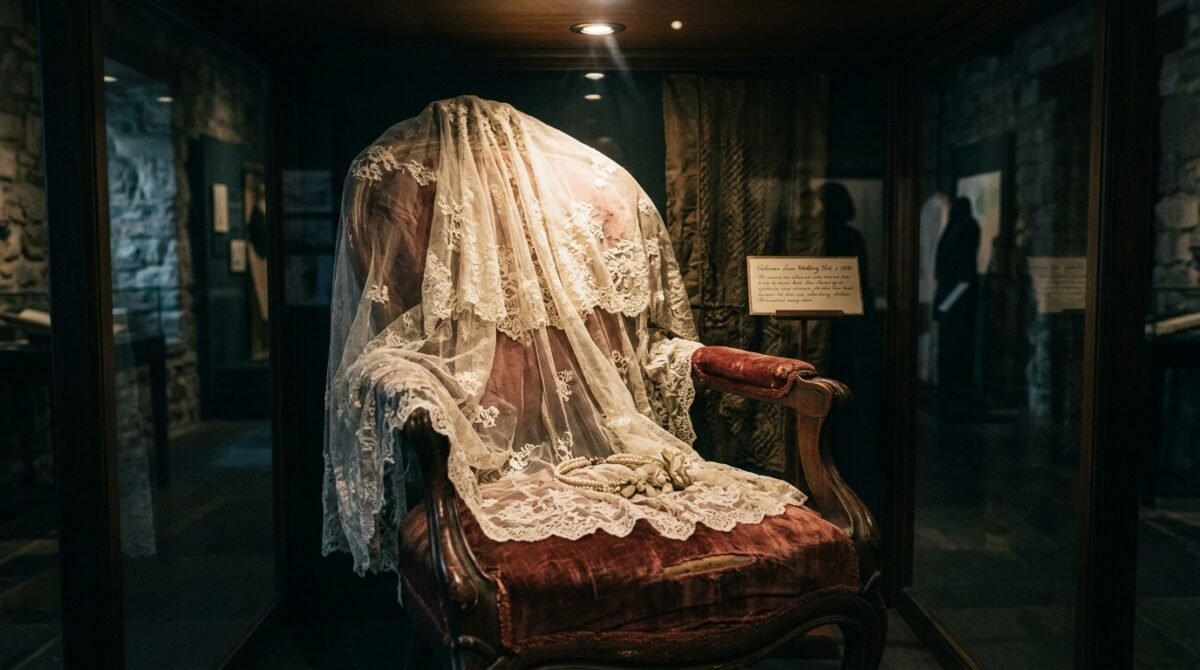
Grief is a strange, non-linear companion. For years, I kept my mother’s 1950s hand-stitched lace veil in a climate-controlled archival box, a silent testament to a woman I barely remembered but deeply revered. It was the only tangible piece of her wedding day that survived the frantic years following her passing, and to me, it represented a sacred connection to her history.
My stepmother, Sarah, entered our lives three years after my mother died. For a long time, the dynamic was civil, if distant. She was a woman of social climbing ambitions and a desperate need to curate a perfect, polished image for her own daughter, Chloe. I never begrudged them their happiness, until that happiness began to infringe upon the few remains of my own family identity.
The demand didn’t come as a request; it came as a decree. During a humid July brunch that felt more like a boardroom interrogation, Sarah decided that the veil was ‘wasted’ in my closet. She insisted it would be the ‘perfect finishing touch’ for Chloe’s upcoming nuptials, completely disregarding the fact that the veil had never been meant for anyone else.
The moral dilemma here wasn’t just about a piece of fabric; it was about the erasure of my mother. Sarah viewed the veil as a commodity—a vintage accessory to be leveraged for aesthetics. I viewed it as a soul-bound heirloom. When she wouldn’t take no for an answer, I realized that protecting my mother’s memory required a level of permanence that a simple bedroom closet could no longer provide.
This is the story of how a seemingly petty family dispute escalated into a legal and emotional crusade, leading to a decision that sent shockwaves through our family and forever altered the trajectory of our relationships. It is a tale of setting boundaries, reclaiming agency, and the cold, hard satisfaction of ensuring that some things are simply not for sale—or for borrowing.
The Unsolicited Brunch Negotiation

The brunch started with the clinking of silverware against fine china, a sound that usually signaled a pleasant family outing but, in this case, felt like a countdown to a collision. Sarah had been eyeing my apartment’s storage closet for months, but today, she had finally cornered me. She spoke with a rehearsed casualness that didn’t quite hide the predatory gleam in her eyes.
“You know, dear,” Sarah began, sipping her mimosa with calculated grace, “Chloe is struggling to find the right headpiece for her dress. Something vintage, something authentic. Your mother’s veil is just sitting there in a box, doing nothing. It’s a shame, really.”
I felt a cold prickle of defensiveness rise in my chest. “It’s not ‘doing nothing,’ Sarah. It’s being preserved. It’s my mother’s veil. It’s not an accessory for Chloe.”
Sarah laughed, a sharp, dismissive sound. “Don’t be sentimental. It’s a piece of lace. Chloe is family now. Isn’t it better that it’s seen, that it’s celebrated, rather than moldering in a dark box? I’ve already told her she can borrow it. It’s settled, really.”
“I am not asking for your permission, I am telling you what is happening. We are picking it up on Saturday. Don’t make this a scene, it’s just a piece of fabric.”
— Sarah, during the brunch confrontation
I sat there, stunned by her audacity. She hadn’t just asked; she had already promised it to her daughter as if she had the right to dispose of my inheritance. The entitlement was suffocating, a physical weight that made it hard to breathe in the crowded restaurant.
I looked at my father, who was busy buttering his toast, pointedly ignoring the conversation. He had spent years avoiding conflict, and his silence was the loudest betrayal of all. In that moment, I realized I was entirely on my own in this fight.
The 6:00 AM Tactical Retreat

By the time I left the restaurant, my mind was racing. I knew Sarah. If she said she was picking it up on Saturday, she would be at my doorstep, likely with my father in tow to ensure compliance. I didn’t sleep that night. I spent the early morning hours pacing my apartment, watching the sun rise over the city skyline, feeling a strange, cold resolve crystallize in my gut.
I had to get the veil out. Not just to a friend’s house, but somewhere beyond their reach. Somewhere where ‘borrowing’ would become an impossibility. I pulled the archive box from the back of my closet, the scent of lavender and old paper filling the room. It was fragile, beautiful, and completely mine.
I called a local textile museum I had visited during college. I remembered their curator mentioning an interest in mid-century couture accessories. I sent a frantic, early-morning email, hoping against hope that they might be open to a donation, or at least a temporary, secure exhibition.
The reply came at 7:30 AM. They were interested. In fact, they were thrilled. The provenance—a documented, single-owner, pristine 1950s piece—was exactly the kind of history they wanted for their upcoming ‘Bridal Traditions’ exhibit. I booked a courier immediately.
“I don’t care how you do it, just get it here before the weekend. If it’s as pristine as you say, we can finalize the permanent donation paperwork by Monday.”
— Email from the museum curator
When the courier arrived at 9:00 AM, I handed over the box with trembling hands. As the elevator doors closed, I felt a massive surge of relief. It was safe. It was no longer a pawn in a petty family power play. It was an artifact, protected by institutional policy and legal contract.
The Saturday Morning Doorstep Collision

Saturday arrived with the subtlety of a wrecking ball. At 10:00 AM sharp, the doorbell rang. I watched through the peephole to see Sarah, Chloe, and my father standing on my porch. Sarah looked expectant, her hand already reaching out to knock again. I opened the door with a polite, practiced smile that I knew would infuriate her.
“You’re early,” I said, leaning against the doorframe. Sarah swept past me without an invitation, her eyes already scanning the living room. Chloe hovered behind her, looking slightly uncomfortable but clearly excited.
“Where is it?” Sarah demanded, turning to me. “We’re on a schedule. The alterations person is waiting for us at noon. Don’t tell me you haven’t even pulled it out yet.”
I watched as she opened the closet door, tossing aside coats and boxes. When she realized the shelf was empty, she turned, her face a mask of mounting fury. “Where is it? I told you to have it ready. This is ridiculous behavior.”
“I don’t have it, Sarah. It’s no longer in my possession. It’s being taken care of by people who actually understand its historical value.”
— My response to the stepmother
My father finally spoke, his voice thin and hesitant. “What do you mean, it’s not here? You didn’t sell it, did you?” The accusation hung in the air, heavy and sharp. I didn’t bother to answer them. I just pointed to the door.
The scene that followed was a masterclass in entitlement. Sarah screamed about ‘family obligations’ and ‘spiteful behavior,’ while Chloe stood there, mortified. I didn’t raise my voice. I simply told them that if they didn’t leave, I would call the police for trespassing. The look on Sarah’s face—a mixture of disbelief and pure, unadulterated rage—was worth every second of the stress.
The Group Chat Explosion

The fallout was instantaneous. Within an hour of their departure, my phone started buzzing with messages from the family group chat. Sarah had clearly been busy painting a picture of me as the villain, the ‘bitter stepchild’ who had destroyed a family tradition just to spite her step-siblings.
My aunts, who rarely weighed in on anything, were suddenly experts on ‘family legacy’ and ‘sharing.’ It was a barrage of notifications, each one more toxic than the last. I sat on my couch, reading through the insults, my heart rate steadying. I had expected this. I had prepared for this.
“I can’t believe you would do this to your own family. That veil was meant to be passed down. You are being selfish and cruel, and frankly, I’m ashamed to be related to you right now.”
— Aunt Martha in the Family Group Chat
I took a deep breath and typed a calm, calculated response. I didn’t justify my actions; I simply stated the facts. I told them that the veil was donated to a museum where it would be preserved for future generations, not subjected to the whims of someone who viewed it as a temporary fashion accessory.
The silence that followed my text was deafening. Most of them didn’t know what to say. The moral high ground, which Sarah had tried so desperately to claim, was suddenly slippery. How could they argue against ‘museum preservation’ without sounding like they just wanted to own a piece of property they had no claim to?
By evening, the chat had gone quiet, but I knew the war was far from over. I blocked a few of the more aggressive relatives and put my phone on silent. I had crossed a line, and there was no going back now. The veil was safe, and for the first time in years, I felt a strange sense of ownership over my own life.
The Legal Reality Check
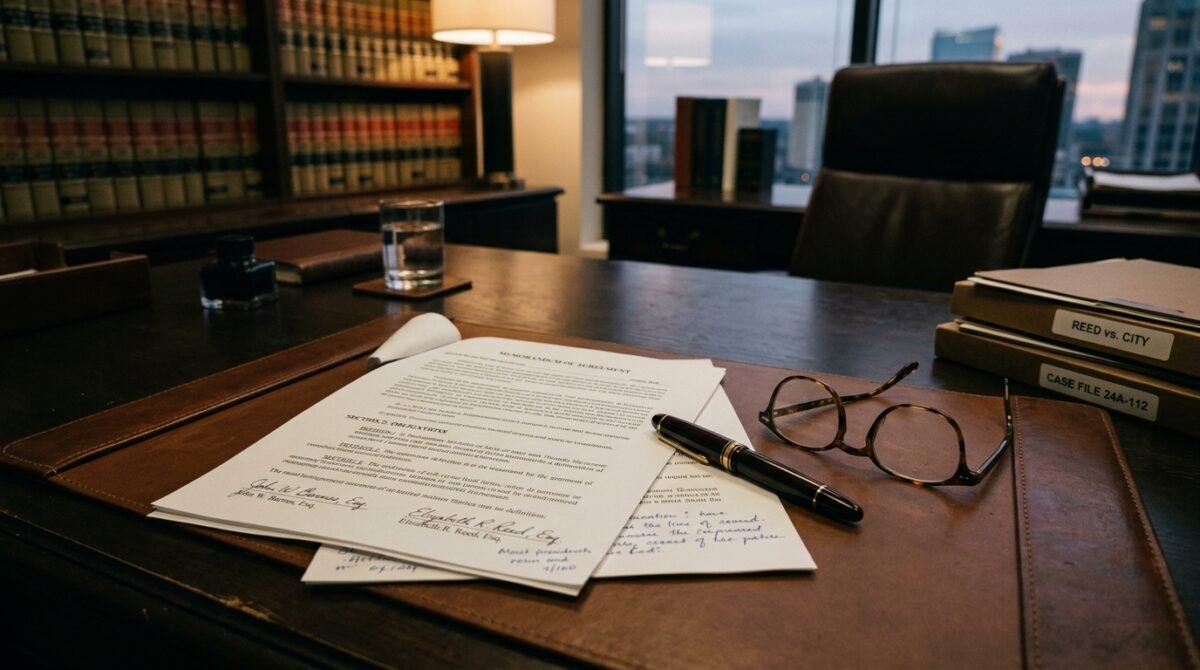
Three days later, I received a formal letter from a law firm. Sarah wasn’t playing around anymore. She was claiming that the veil was ‘marital property’ of my father’s previous marriage and that, as his current wife, she had some legal standing to decide its fate. It was a laughable argument, but it was designed to intimidate.
I spent the afternoon at a local attorney’s office. He read through the letter and chuckled. He explained that since the veil was a pre-marital heirloom passed down through my maternal line, it was my sole property. There was no ‘marital claim’ for a stepmother, regardless of her delusions.
“She’s trying to scare you,” my lawyer said, leaning back in his chair. “She wants you to feel like you’re doing something illegal so you’ll panic and try to get the veil back from the museum. If you do that, she wins. But you won’t, right?”
I smiled. “It’s already been processed into their collection. The transfer of title is complete. It’s no longer mine to give back, even if I wanted to.”
“You have absolute ownership, and the museum has a clear title. She has no case, not even a weak one. Ignore the threats, and let me handle the correspondence.”
— My Attorney
Knowing that I had the law on my side changed everything. The fear that had been gnawing at me—the fear that I had made a reckless decision—was replaced by a cold, hard certainty. I was protecting my mother’s legacy from those who would exploit it. The letter was just paper. The veil was, and would always be, history.
I left the law office feeling lighter than I had in years. Sarah’s attempt to use legal intimidation backfired, leaving her looking foolish and grasping. The finality of the museum contract was my ultimate shield, a fortress of policy that no amount of shouting or lawyers could breach.
The Sunday Dinner Cold Shoulder
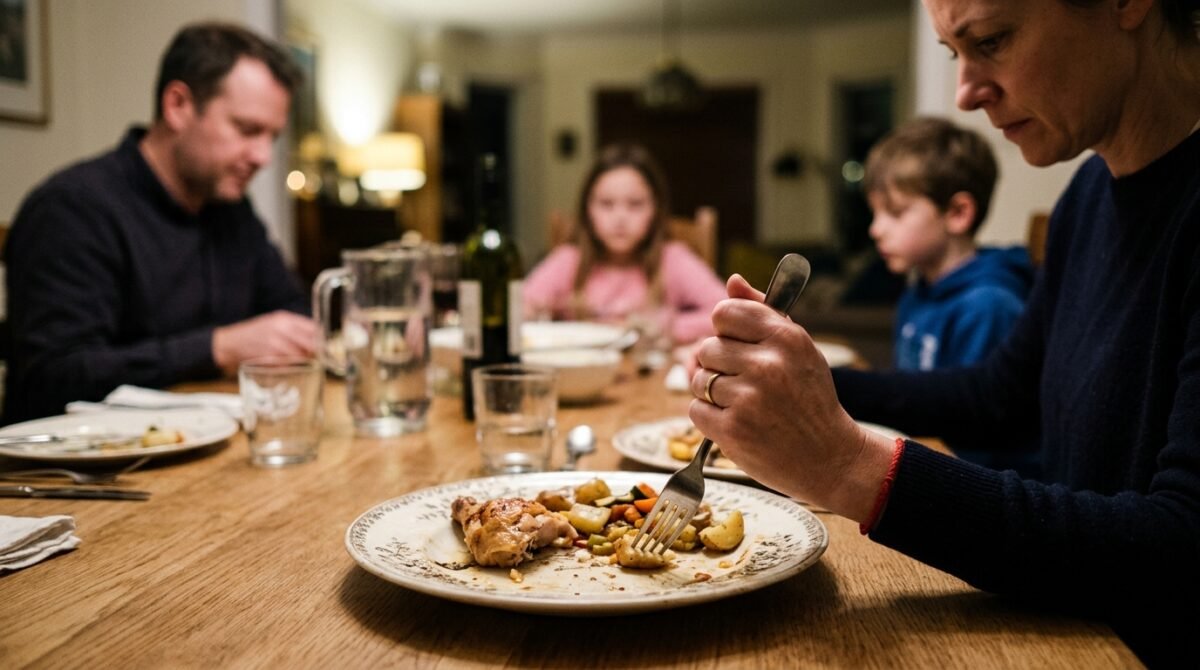
The monthly Sunday dinner was a tradition I had considered skipping, but I decided to go. I wanted to see the look on their faces. I wanted them to know that I wasn’t hiding, and I wasn’t ashamed. I arrived to find the atmosphere thick with tension. The usual chatter was replaced by a strained, performative silence.
Sarah didn’t even look at me when I entered. She was busy fussing over the table setting, her movements jerky and aggressive. My father looked tired, his eyes darting between us as if waiting for the other shoe to drop. Chloe sat in the corner, staring at her phone, clearly wishing she were anywhere else.
“So,” I said, breaking the silence as we sat down to eat. “How is the wedding planning going? I assume you’ve found a suitable replacement for the headpiece?” My question was a direct challenge, a way to signal that I was fully prepared to discuss the incident.
Sarah snapped, her fork clattering against the plate. “You have some nerve showing up here after what you did. You ruined a beautiful moment for Chloe, all because you’re spiteful and possessive. Do you have any idea how much you’ve hurt this family?”
“I protected a legacy. You just wanted a costume piece. There is a fundamental difference, Sarah, and I think we both know which side of that line you’re on.”
— My response during the dinner
The table went absolutely silent. My father finally looked up, his expression pained. “Can we please just have dinner without this? You’ve made your point, and she’s made hers. Can’t we just move past this?”
I realized then that my father would never stand up for me, not because he didn’t care, but because he was too weak to confront the chaos Sarah brought into his life. It was a sad, pathetic realization. I finished my meal in silence, enjoying the taste of my own resolve, and left shortly after, leaving them to their stewing resentment.
Reddit Weighs In: The Verdict of the Masses

I posted my story on a popular forum under a throwaway account, desperate to see if I was truly the villain in this scenario. The response was overwhelming. Within hours, the thread had thousands of upvotes and comments that ranged from supportive to wildly enthusiastic.
The consensus was clear: I had done the right thing. The top comment, with over 24,000 upvotes, articulated exactly how I felt. It was a validation I hadn’t realized I needed until I saw it in writing, from thousands of strangers who understood the sanctity of family heirlooms.
“NTA. Your stepmother isn’t entitled to your mother’s belongings. She tried to bully you into giving up an heirloom for her daughter’s aesthetic. By donating it, you ensured it stays protected forever. You didn’t ruin a moment; you prevented a theft.”
— u/FamilyDramaExpert (Top Comment, 24.3k upvotes)
There were other perspectives, of course. Some argued that I could have been ‘kinder’ or ‘more diplomatic,’ but the overwhelming majority saw the situation for what it was: a boundary violation that needed a hard stop. Reading the comments made me feel less like a ‘spiteful child’ and more like a guardian of my own history.
The thread became a repository for similar stories of entitlement and inheritance battles. It was comforting to know that I wasn’t alone in facing this kind of pressure. The internet, for all its toxicity, provided a mirror that helped me see the sanity in my actions.
I stopped checking the thread after the second day. I didn’t need the validation anymore. The decision was made, the veil was safe, and the drama was becoming just a chapter in a story that was finally mine to write, not theirs.
The Museum Invitation
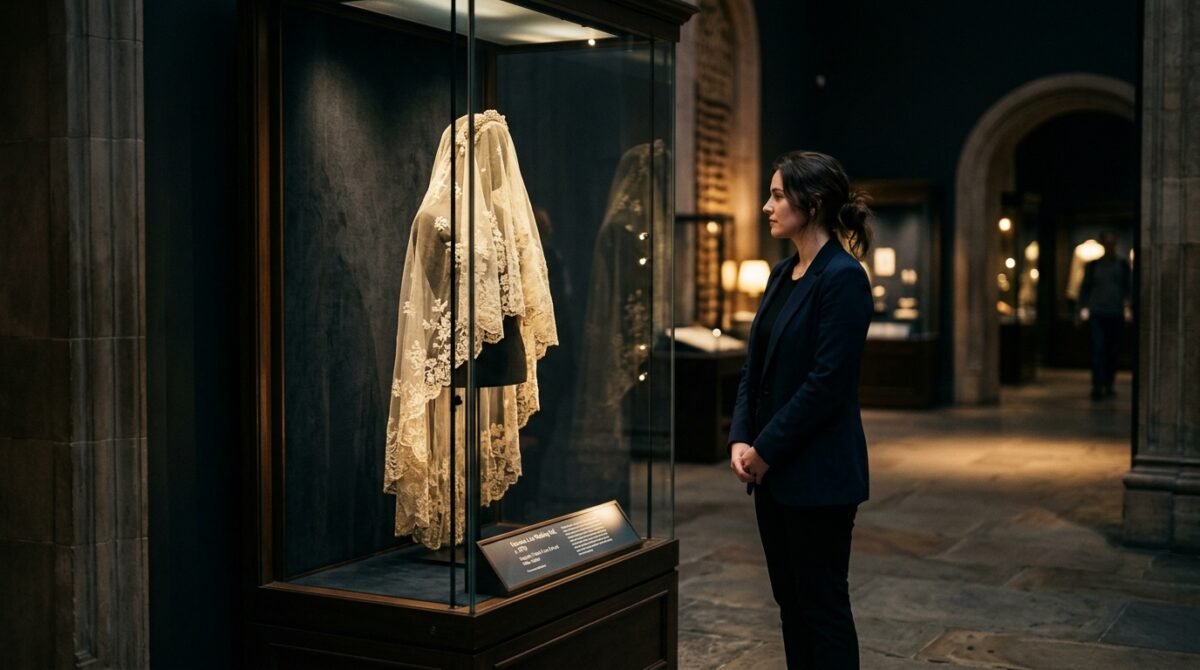
Six months later, I received an official invitation from the museum. The ‘Bridal Traditions’ exhibit was opening, and they wanted me to be their guest of honor. My mother’s veil was the centerpiece of the 1950s section, beautifully displayed with a plaque detailing its history and my generous donation.
Walking into the exhibit was a surreal experience. There, under the soft, controlled lighting of the museum, was the veil. It looked more radiant than I had ever seen it. It wasn’t being worn; it was being honored. It was a piece of art, a symbol of a time and a woman I was finally beginning to understand.
I stood there for a long time, just looking at it. I realized that by donating it, I had actually saved it from the very thing I feared: being forgotten. In the museum, it would be seen by thousands of people. It would be studied, appreciated, and protected for decades, maybe centuries.
“It’s beautiful, isn’t it? We’ve already had dozens of inquiries from researchers interested in the lace pattern. You’ve done a wonderful thing for history.”
— The museum curator during the opening night
Sarah would never understand this. She would never see the beauty in preservation. She only understood acquisition. And that was fine. I didn’t need her approval. I had the satisfaction of knowing that my mother’s legacy was in the right place, safe from the petty, grasping hands that tried to claim it.
The museum staff treated me with such respect, acknowledging the story behind the veil. I felt a profound sense of closure. The drama, the shouting, the legal threats—all of it felt like a distant, irrelevant noise. This was the reality, and it was better than anything I could have hoped for.
The Final Severance

I didn’t attend the next family gathering. I sent a short, polite note saying I had other plans. I knew that Sarah would interpret it as a slight, but I didn’t care. I had realized that the ‘family’ dynamic was toxic and that my father would never change. It was time for me to step back, for my own peace of mind.
Sarah didn’t take the absence well, of course. My phone blew up with messages, but I stayed firm. I didn’t block them, but I didn’t respond, either. Silence, I discovered, was a much more powerful tool than arguing. It gave them no ammunition and no satisfaction.
I found myself focusing on my own life—my career, my friends, my hobbies. The obsession with the veil, with Sarah, with the family drama, slowly faded. I was becoming my own person, independent of the labels and expectations that had been forced upon me for so long.
“I hope you find the peace you’re looking for in your own life. I’ve found mine, and it doesn’t include being the target of your entitlement.”
— The last message I sent to Sarah before going low-contact
My father called me once, pleading for me to ‘just apologize so things can be normal again.’ I told him that ‘normal’ was just another word for ‘tolerating abuse,’ and I wasn’t interested in that kind of normal anymore. It was the hardest thing I’d ever said to him, but it was also the most liberating.
I walked away from the drama, not because I was afraid of it, but because I had transcended it. My mother’s veil was a relic of the past, and my future was something I was building on my own terms, free from the shadow of people who didn’t deserve a place in it.
Reflecting on the Cost of Heritage

Looking back, I realize that the veil was never really about the veil. It was about who gets to define the value of our history. Sarah tried to rewrite the value of my mother’s legacy, to commodify it for her own gain. I refused to let that happen, and the cost was a fractured family dynamic.
Was it worth it? Absolutely. I would trade a thousand Sunday dinners for the peace of mind I have now. I learned that some heirlooms are better off in the public trust than in the hands of those who don’t respect the stories behind them. I learned that boundaries are not just suggestions; they are the walls that protect our sanity.
I still think about my mother sometimes when I look at photos. But I don’t feel the same ache of loss I once did. I feel a sense of pride—not just in the veil, but in myself. I stood up for something that mattered, and I won.
“Heritage is a responsibility, not a resource. When people forget that, you have to be the one to remind them, even if it costs you everything.”
— My internal reflection on the entire ordeal
The lessons I learned weren’t just about wedding etiquette or inheritance law. They were about the integrity of the self. By refusing to compromise, I defined who I was, and I made it clear to everyone around me that my life, my history, and my values were not for sale.
I am at peace now. The museum still sends me updates about the veil, and I love reading them. It’s part of the world now, and I’m just glad I played a part in making sure it stayed that way. My life is quiet, calm, and entirely mine.
Conclusion
The story of the vintage veil is more than just a tale of family drama; it is a reflection on the value we place on the things we inherit. In a world that often treats sentiment as a commodity, asserting the boundaries of what is sacred—and what is not—becomes a radical act of self-preservation.
By choosing to donate the veil, I chose to preserve history over convenience, and integrity over empty familial harmony. It was a difficult path, but it led to a place of clarity and independence that I wouldn’t trade for anything. Sometimes, the most important thing you can do for your family is to set the boundaries that prevent them from destroying the best parts of your history.
What about you? Have you ever had to fight to protect a piece of your history from someone who didn’t understand its value? Let’s talk in the comments below. Do you think I was too harsh, or was this the only way to save a legacy?
Poll: What would you have done?
1. Kept the veil and stood my ground at home.
2. Donated it to a museum to ensure it was safe.
3. Relented to keep the peace and just let her borrow it.
4. Sold it and cut ties with the family entirely.
What's your verdict on this dilemma?
Vote below to contribute to the official community consensus.

Have a Dilemma Keeping You Up at Night?
Share your real-life feud, wedding chaos, or relationship crossroads anonymously with our editorial team.
What do you think ?
0 Comments🛡️ Comments are moderated to protect community integrity. Your comment will appear once approved by the editorial team.