
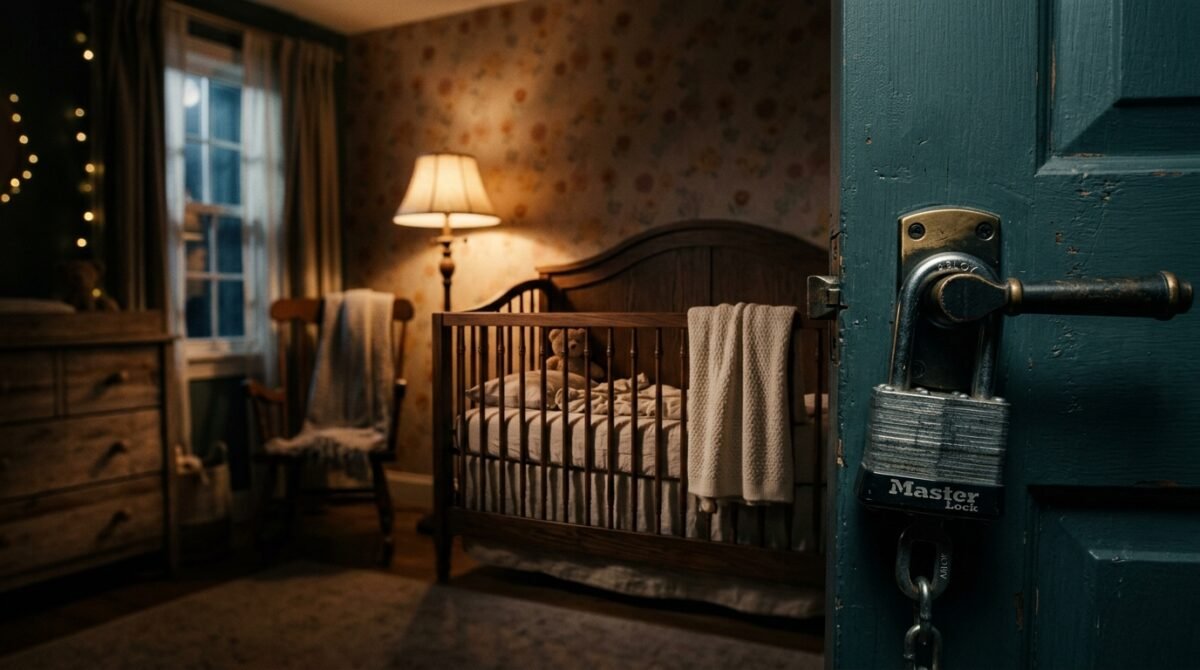
Becoming a parent is meant to be a time of overwhelming joy, a whirlwind of sleepless nights, and the quiet awe of witnessing a tiny human grow. For me, the journey was supposed to be defined by the nursery I spent months preparing—a sanctuary built around a handcrafted cherry-wood crib, a masterpiece commissioned by my late grandfather before he passed. It wasn’t just furniture; it was a promise of lineage, a piece of art intended to cradle his first great-grandchild.
But for my sister, Sarah, that crib was never an heirloom—it was an object of desire, a “luxury item” she felt entitled to simply because her own pregnancy happened to coincide with mine by a matter of months. What started as a casual comment about how much she ‘loved’ the wood grain quickly spiraled into a campaign of entitlement that tested every boundary I had built to protect my family’s peace.
The dilemma reached a fever pitch when I found Sarah inside my home, uninvited, while I was out at a prenatal appointment. She wasn’t just admiring the room; she was measuring it. The realization that she saw my child’s nursery as a shopping catalog for her own was the cold bucket of water I needed. I didn’t yell. I didn’t beg. I went to the hardware store, bought a heavy-duty padlock, and installed it on the nursery door that very afternoon.
This isn’t a story about a petty argument over furniture. It’s a story about the breaking point of familial obligation, the suffocating weight of ‘family first’ rhetoric, and the moment I finally decided that my child’s security was more important than maintaining a fragile, one-sided peace. This is the chronicle of the week my family went to war over a piece of wood, and why I haven’t looked back since.
The Blueprint of an Entitled Claim

It began during a Sunday brunch, a tradition that had historically been a pillar of our family stability. Sarah had been six months pregnant, glowing and vocal about every aspect of her upcoming nursery. I was eight months along, quiet and focused on the final touches of my own. When the conversation turned to the nursery, Sarah’s eyes lit up with a predatory sort of curiosity that I should have recognized immediately.
“I still don’t have a crib,” Sarah sighed, swirling her mimosa with an air of martyrdom. “Everything online looks so cheap. I just don’t know where I’m going to find something that fits the aesthetic of our house. Everything is either mass-produced plastic or tacky nursery themes. I need something timeless, something that actually has a soul.”
I smiled politely, unaware of the trap being set. “The market is tough right now, I know. Maybe check out local woodworkers? I know a guy who does amazing custom work.” I foolishly thought I was being helpful, offering a solution that kept my own sanctuary private. But Sarah wasn’t looking for a resource; she was looking for a handout, and she had already set her sights on the cherry-wood crib sitting in my spare room.
The audacity wasn’t immediate; it was a slow, creeping erosion of my boundaries. She began asking if she could ‘borrow’ the crib after my baby grew out of it, then switched to asking if she could ‘share’ it. When I explained that the crib was specifically constructed to be a permanent heirloom for my children, her tone shifted from conversational to accusatory. It was clear that in her mind, my ‘no’ was merely a suggestion that she hadn’t yet browbeaten me into overturning.
“It’s just wood, Claire. You’re being incredibly selfish. I’m family, and I’m in a bind. Why would you want it sitting empty in a spare room when my baby needs a place to sleep?”
— Sarah during our ‘Sunday Brunch’ intervention
The conversation ended with a cold silence that hung over the table like a leaden sky. My mother, ever the peacekeeper, gave me that look—the one that meant ‘just give in and stop the drama.’ But for the first time in my life, I didn’t feel the pressure to cave. The crib was my grandfather’s final gift, and the idea of it being dragged through Sarah’s chaotic lifestyle felt like a betrayal of his memory.
The 6:00 AM Intrusion
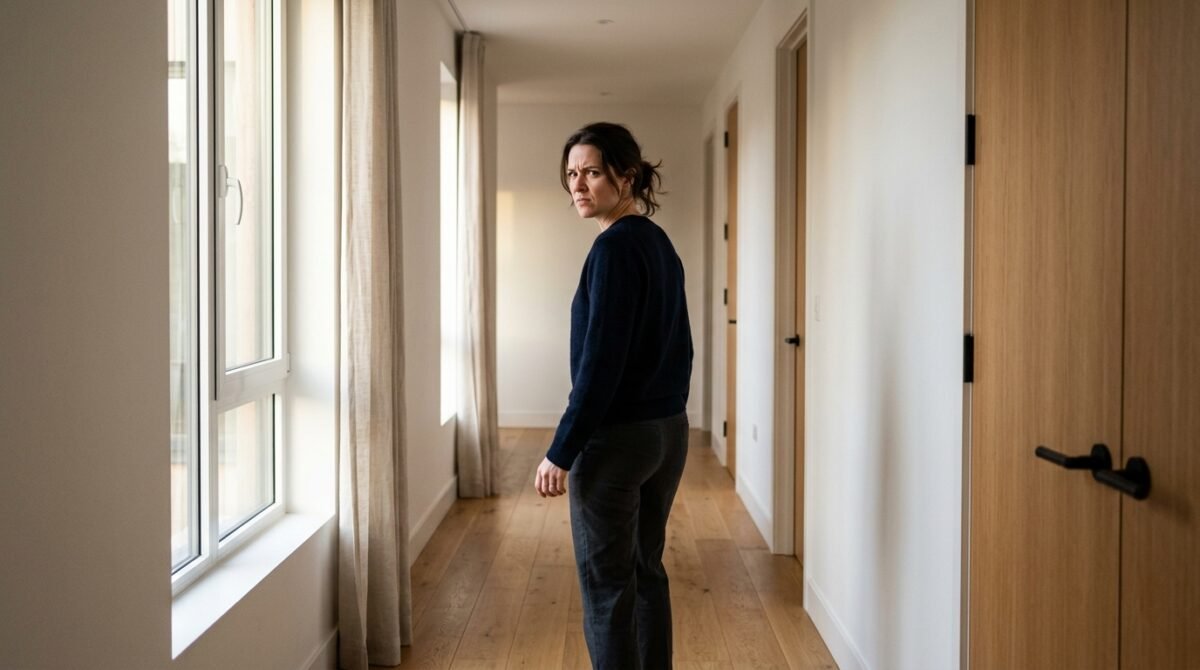
I woke up to the sound of a key turning in my front door lock. It was 6:00 AM on a Tuesday. My husband, Mark, was already at the gym, and I was nursing a cup of tea in the kitchen, feeling the heavy exhaustion of late-term pregnancy. I froze, my heart hammering against my ribs as I realized it was Sarah. She had a key because she had been the one to watch our dog during a weekend trip months ago—a key she was supposed to have returned weeks ago.
She walked into the living room as if she owned the place, her eyes scanning the hallway toward the nursery. When she saw me standing in the kitchen, she didn’t apologize. She didn’t look startled. She simply marched toward the nursery, her hand reaching for the doorknob. My instincts kicked in, a primal surge of protectiveness that I hadn’t known I possessed. I dropped my mug—luckily, it was on the counter—and sprinted toward the door, intercepting her just before she could turn the handle.
“What are you doing here, Sarah?” I demanded, my voice shaking with a mix of adrenaline and pure, unadulterated rage. She looked at me, her face a mask of faux innocence. “I just wanted to see if the crib would fit the space I’m planning. I’m having a custom mattress made and I needed the exact dimensions. You aren’t using the room right now, so why are you acting like this?”
She tried to push past me, but I planted my feet. The sheer lack of respect for my personal space was staggering. She wasn’t just asking for the crib; she was treating my home like a showroom. She felt entitled to the space, the furniture, and the very air I was breathing. She had convinced herself that because we were sisters, there were no boundaries, only shared assets. She was dead wrong.
“Get out of my house, Sarah. Do not ever walk into my home uninvited again. The crib is not yours, it was never going to be yours, and you are never going to touch it.”
— Me, during the kitchen standoff
She scoffed, letting out a sharp, incredulous laugh. “You’re acting like a lunatic. It’s a piece of furniture. When mom hears about this, you’re going to be the one apologizing for being so dramatic.” She turned and left, but the damage was done. The sanctity of my home had been breached, and I knew that if I didn’t act immediately, she would be back the moment my back was turned.
The Hardware Store Solution

I didn’t wait for Mark to come home. I didn’t wait for my husband to ‘consult’ or ‘discuss’ the situation, because I knew he would try to mitigate the conflict, and I was past mitigation. I drove straight to the local hardware store, my head spinning with a mix of betrayal and resolve. I walked down the aisles of locks and security hardware, feeling like a soldier preparing for a siege. I settled on a heavy-duty, commercial-grade hasp and a high-security padlock that would require a bolt cutter to bypass.
The installation was messy, far from professional, but it was effective. I spent an hour drilling into the door frame, the screech of metal on wood sounding like a siren in the quiet house. When I clicked the lock into place, I felt a strange sense of relief wash over me. The nursery was no longer just a room; it was a fortress. No one could walk into my home and walk out with my heritage, not my sister, not her husband, and certainly not the ‘family peace’ that had been used to manipulate me for years.
When Mark returned home, he stared at the door for a long time. I braced myself for the lecture—the ‘Sarah is family’ speech, the ‘you’re overreacting’ dismissal. But he looked at the lock, then looked at me, and saw the raw, shaking state of my nerves. He didn’t say a word about the door. He walked over, hugged me tightly, and whispered, ‘I’ll change the locks on the front door tonight. She doesn’t need to have a key anymore.’
The validation was the missing piece I hadn’t realized I needed. For years, I had been the one making excuses for Sarah’s behavior, the one smoothing things over when she crossed lines. Having my husband stand firmly on my side, rather than trying to play mediator, was the turning point. We were no longer playing the ‘good daughter’ and ‘good sister’ roles. We were parents, and we were done with the theater.
“I don’t care if it looks insane. If she wants to act like a thief, she gets treated like one. That door stays locked until the baby arrives, and frankly, I don’t care if she ever steps foot in this room.”
— Me, explaining my decision to Mark
That evening, the silence in our house felt different. It wasn’t the silence of neglect; it was the silence of protection. I realized that setting a boundary wasn’t just about the physical lock; it was about reclaiming the space Sarah had been slowly colonizing for months. The nursery, once a source of anxiety, became the most peaceful room in the house.
The Group Chat Explosion
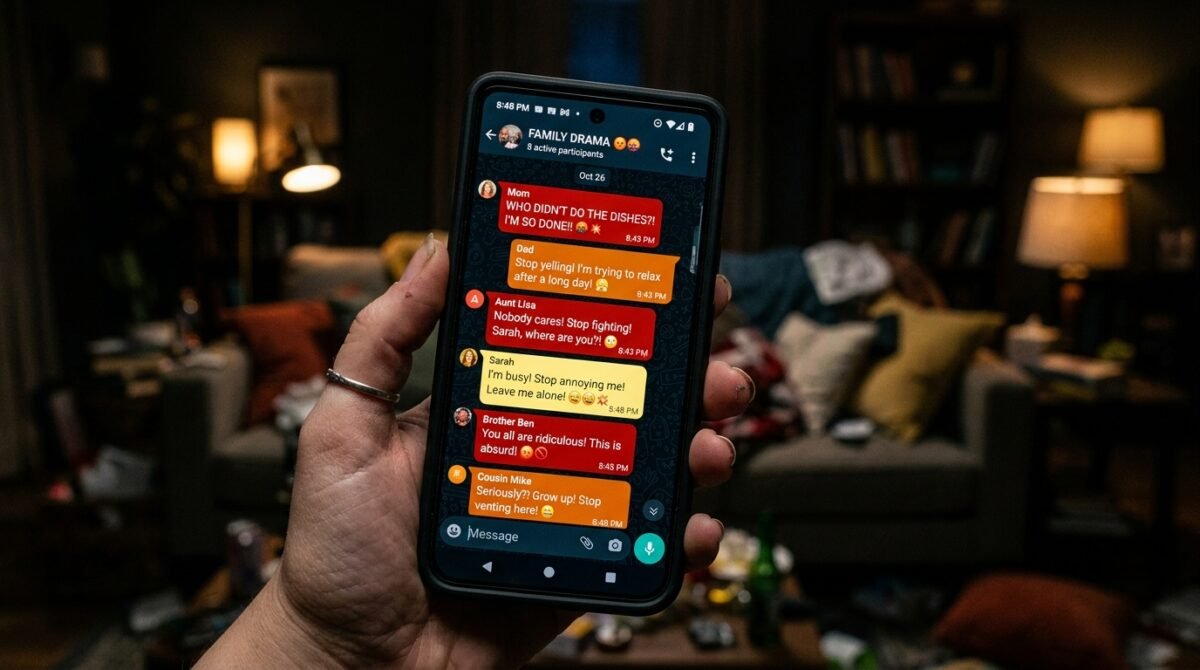
The inevitable fallout didn’t happen in person. It happened in the family group chat, a digital battlefield where passive-aggressiveness reigned supreme. It started with a screenshot Sarah had taken of my locked nursery door—she must have come back while I was at the grocery store and found the door impenetrable. She posted it without context, a simple image of the lock with the caption: ‘So this is what it’s come to? Locking family out?’
The responses were immediate. My mother, ever the fire-starter, chimed in with, ‘Claire, what is this? Sarah said you wouldn’t even let her into the house to look at the nursery. Is there really a reason to be this hostile?’ It was a classic redirect. Sarah had framed herself as the victim of my ‘unhinged’ behavior, conveniently omitting her 6:00 AM unauthorized entry.
I didn’t try to explain myself to the group. I didn’t want to engage in a back-and-forth that would only validate their outrage. Instead, I kept it brief. ‘Sarah tried to enter my home uninvited this morning while I was alone. I no longer feel safe with her having a key. The lock stays.’ The silence that followed was deafening. Even my mother had no immediate retort to that particular truth.
But the private messages followed, of course. My aunt, my cousins, even Sarah’s husband—everyone had an opinion. The common thread was that I was being ‘petty’ and ‘unforgiving.’ They all seemed to think that because we were sisters, I owed her access to my life, my home, and my belongings. The entitlement was systemic, a deep-seated belief that my boundaries were optional.
“She’s pregnant, Claire! She’s hormonal and stressed. You’re being a total diva. Just let her use the crib and be the bigger person. It’s just stuff, for heaven’s sake!”
— A message from my cousin in the family group chat
I realized then that ‘being the bigger person’ was just a code for ‘being the doormat.’ Every time I had been the ‘bigger person’ in the past, it had only resulted in me being smaller, my needs pushed further to the side, and my family’s expectations growing. I chose to stay silent, watching the notifications pile up without letting them pull me back into the emotional vortex.
The Unannounced Sunday Dinner
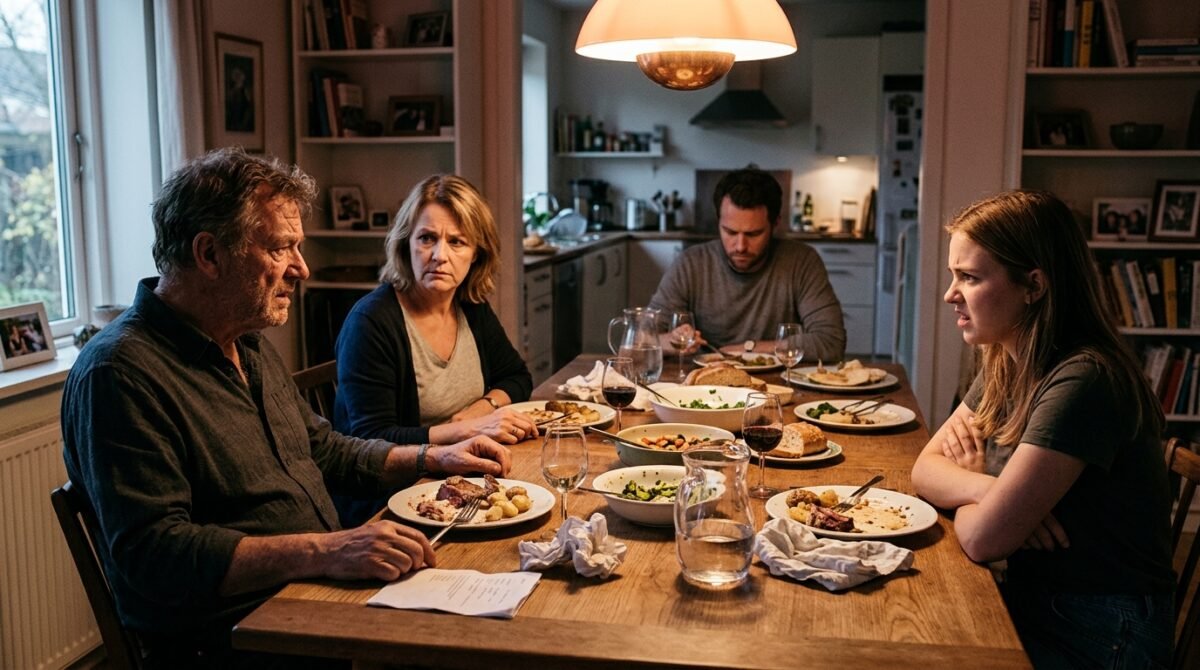
Despite the digital tension, the tradition of Sunday dinner remained, though the air was thick with unspoken hostility. Sarah arrived with my mother, their expressions mirroring each other—a mixture of performative hurt and simmering resentment. Sarah was wearing a maternity dress that clearly emphasized her ‘condition,’ a silent plea for sympathy that I found increasingly transparent.
We sat at the dinner table, the clinking of silverware the only sound. Sarah made sure to comment on everything—the food, the lighting, the temperature of the room—all with that biting, edge-of-the-voice tone that signaled she was ready for a fight. My mother kept trying to steer the conversation toward ‘reconciliation,’ which, in her language, meant ‘Claire, give Sarah the crib.’ She kept mentioning how much Sarah’s baby needed a ‘comfortable’ start in life.
I kept my head down, focusing on my plate, until the topic finally shifted directly to the elephant in the room. ‘I just don’t understand,’ Sarah said, her voice dripping with artificial sweetness, ‘why you’re making this into such a huge thing. It’s a crib. It would be different if you were using it, but you don’t even know if your baby will sleep in it. You could be depriving my child of something they really need.’
The sheer gall of it took my breath away. She was framing her desire to own my heirloom as an act of altruism, as if I were being cruel for not handing it over to a child who wasn’t even born yet. I looked up at her, meeting her gaze for the first time that evening. I didn’t raise my voice; I didn’t get angry. I spoke with the calm, steady voice of someone who had already made their decision.
“Sarah, it isn’t about the crib. It’s about the fact that you think you have the right to my home, my things, and my life. You don’t. That crib is staying exactly where it is. If you want a crib, go buy one.”
— Me, at the dinner table
The table went silent. My mother gasped, a performative sound that she hoped would make me feel guilty. But I didn’t feel guilty. I felt empowered. For the first time, I had clearly stated the boundary, and I hadn’t left any room for negotiation. The dinner ended shortly after, with Sarah leaving in a huff, and my mother giving me a look of pure, unadulterated disappointment. It was the most liberating night of my life.
The Reddit Trial

I knew I needed a sounding board, and in the modern age, that meant turning to the court of public opinion. I posted my story on a popular relationship advice subreddit, omitting names and locations, just laying out the facts of the crib, the intrusion, and the padlock. I expected a mix of responses, but the sheer volume of support caught me off guard. It wasn’t just ‘NTA’ (Not The Asshole); it was a flood of people sharing similar stories of entitled family members.
The community analyzed every aspect of my post. They pointed out the red flags I had missed for years—the pattern of boundary-crossing, the enabling behavior of my mother, the assumption that my property was ‘family’ property. It was like reading a mirror of my own life, written by strangers who saw the situation with a clarity I had been denied by my own emotional proximity to the drama.
The most eye-opening part was reading the ‘legal’ and ‘practical’ advice. People suggested I check if she had stolen anything else, change all my banking passwords, and document every interaction. It wasn’t just about the crib anymore; it was about protecting my household from a person who had proven they didn’t respect the concept of privacy. The validation was immense, and it gave me the strength to maintain the no-contact period I had been considering.
“This isn’t about the crib. It’s about power. Your sister is a narcissist who feels threatened by your independence. The crib is just the symbolic item she’s using to test how much she can control you. Stay firm. The padlock is the best investment you ever made.”
— u/FamilyDramaExpert (Top Comment, 32.5k upvotes)
Reading these comments, I realized that I wasn’t the ‘difficult’ one. I was the one who had finally woken up to a dynamic that had been skewed since childhood. The ‘family peace’ I had been sacrificing my dignity to maintain was a mirage, and by locking that door, I had finally shattered the illusion. I wasn’t just a sister; I was an individual with a right to my own life.
The Certified Letter
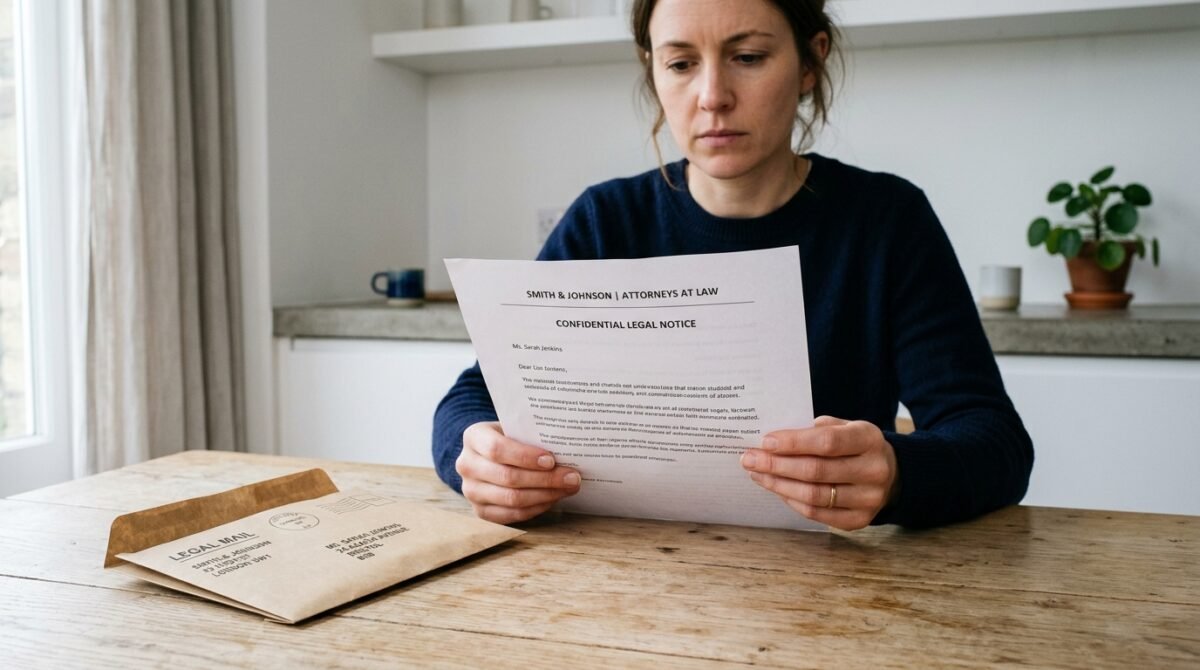
The next surprise arrived in the form of a certified letter. I almost didn’t sign for it, thinking it was just more junk mail, but when I saw it was from a law firm, my blood ran cold. I opened it with shaking hands, expecting a lawsuit or a formal demand. It was a letter from Sarah’s husband, acting as a ‘representative’ for their household, demanding that I turn over the crib or pay for a ‘comparable’ alternative, citing ’emotional damages’ caused by my ‘unreasonable behavior.’
I laughed. It was such a preposterous, over-the-top reaction that it actually helped me process the absurdity of the whole situation. They were threatening me legally over a piece of cherry wood? It was clear that Sarah had convinced her husband that I was somehow legally obligated to provide for their nursery needs. I contacted a lawyer of my own, who took one look at the letter and told me to ignore it—it was a bluff, a tactic to intimidate me.
I sent a very brief response, stating that the crib was my private property and that any further attempts to harass me would be met with a request for a restraining order. It felt strange to speak to my sister through the medium of legal threats, but it was the only language she seemed to understand. The power dynamic had shifted; I was no longer the one on the defensive, apologizing for my boundaries.
My mother, of course, was horrified. She called me, sobbing, saying that I was ‘tearing the family apart’ by involving lawyers. I told her that if Sarah hadn’t tried to break into my house and then demand my property, we wouldn’t be in this position. The realization that my mother would rather see me submit than see Sarah held accountable was the final nail in the coffin of our relationship.
“I am not tearing the family apart, Mom. Sarah is. She’s the one who decided my home was hers for the taking. If you can’t see the difference, that’s your problem, not mine.”
— Me, during the final phone call with my mother
That call was the last one. I blocked her number, not out of malice, but out of necessity. I needed to protect my peace, and that meant cutting off the sources of the chaos. The house felt lighter, the silence more peaceful. I had finally prioritized my child, my husband, and my own well-being over the hollow demands of ‘family.’
The Aftermath of the Lock
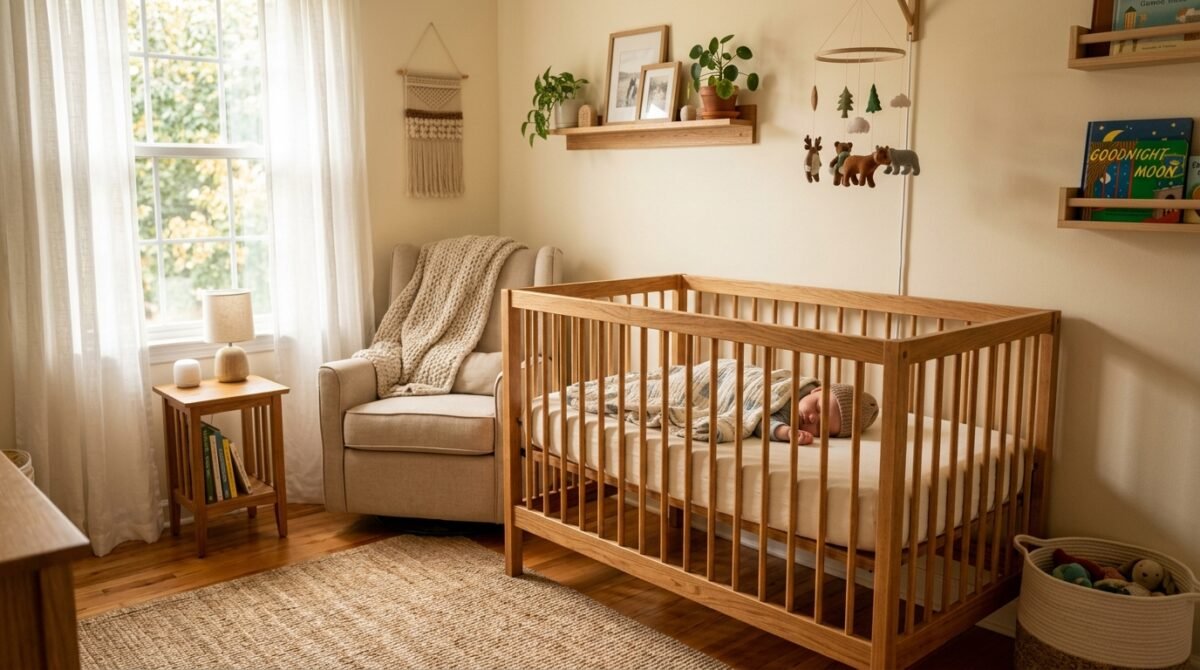
Months have passed since the ‘Crib Incident.’ My baby is here now, and he sleeps soundly in the cherry-wood crib every night. It was a beautiful, handcrafted piece, and every time I look at him sleeping, I think about how close I came to losing it—not just the crib, but the feeling of safety in my own home. The padlock is still on the nursery door, though I rarely lock it anymore; the boundary has been set in stone, and Sarah hasn’t dared to set foot on my property since.
We are currently low-contact, which is a massive improvement over the constant, suffocating drama of the past. I don’t miss the Sunday dinners, the passive-aggressive comments, or the feeling of being a supporting character in Sarah’s life. I’ve realized that ‘family’ is not a bloodline that gives someone the right to trample over you; it’s a group of people who respect your boundaries, support your growth, and value your happiness.
I’ve spent time in therapy, untangling the years of conditioning that made me believe I was responsible for Sarah’s emotions. It’s been a long, sometimes painful process, but it’s been worth it. I’ve learned that saying ‘no’ is a complete sentence and that I don’t owe anyone an explanation for protecting my life and my child’s future. The crib is just a symbol, but it represents the most important lesson of my adult life.
My husband and I have created a new tradition—Sunday dinners at our house, with friends who actually respect us. It’s a different kind of family, one built on mutual respect and genuine affection. We don’t have the history, but we have the harmony, and that’s a trade I’ll make every single day of the week. The drama is behind us, and we are finally free.
“You didn’t just lock a door, Claire. You unlocked your life. That’s something you can never put a price on.”
— My husband, during our quiet evening in the nursery
If you’re out there, dealing with someone who thinks your life is theirs to curate, take this as your sign: install the lock. Not necessarily a literal one, but a firm, unbreakable, non-negotiable boundary. It might not fix the person, but it will fix your peace, and that is a victory worth fighting for.
Reflecting on the ‘Family First’ Myth

Looking back at the whole ordeal, it’s easy to get caught up in the details of the crib, the lock, or the text messages. But the core of the issue was always the ‘family first’ myth—the toxic idea that because you share DNA, you owe someone access to your life, your home, and your agency. It’s a narrative used to keep people in line, to make sure the ‘difficult’ ones (the ones who dare to have boundaries) are shamed into compliance.
I’ve seen this pattern in so many other families. It’s the cousin who asks for your savings, the sister who demands your home for her wedding, the parent who insists you forgive the unforgivable. They all rely on the same mechanism: shame. They make you feel like you are the villain for simply asking for your own space. But I’ve learned that the villain is never the one who sets the boundary; the villain is always the one who forces you to set it.
There is a unique kind of liberation that comes from realizing that you do not owe anyone a piece of your life. Not your time, not your money, and certainly not your peace. When you finally stop trying to please the people who are determined to be displeased, you find an incredible amount of energy opening up for the things that truly matter. I’ve found that energy in my son, in my relationship with my husband, and in the work I do every day.
It’s important to acknowledge that this path isn’t easy. There is grief involved—grief for the relationship you thought you had, grief for the person you wish your sister could be. I still have days where I feel sad that my son won’t know his aunt, but then I remember the alternative: a life where his mother is constantly being undermined and used. I chose the better path for him, and for me.
“Boundaries aren’t walls to keep people out; they’re filters to keep the right people in. If someone keeps trying to break through them, they aren’t the right people.”
— A thought from my therapist, which I live by now
So, to everyone dealing with a similar situation: don’t wait for the breaking point. Don’t wait until you’re forced to install a padlock. Start small. Say no to the ‘small’ requests. Set the boundary before it becomes a battle. Your life is yours alone, and that is the most precious thing you own.
The Community Weighs In: Lessons Learned

Since I posted my story, the response has been overwhelming. I’ve received thousands of messages from people who have been through similar struggles—the ‘crib-snatchers,’ the ‘nursery-invaders,’ the family members who view your life as a resource to be managed. It turns out, I wasn’t alone. I was part of a silent legion of people who had been pushed to their breaking point by the people who were supposed to love them the most.
The common theme in all these messages is the relief of being told that it’s okay to say no. Many people described feeling like they were ‘going crazy’ because their family members were gaslighting them, making them feel like they were the ones who were unreasonable. The community analysis has been a masterclass in psychological health and boundary-setting. We’ve built a space where we support each other in reclaiming our agency.
One of the most profound lessons I’ve learned from this community is that you don’t need permission to protect yourself. You don’t need a committee to decide if your boundaries are ‘fair.’ You get to decide what is fair in your own life. And if someone disagrees, that is their business, not yours. You are allowed to be happy, even if it means someone else is disappointed.
I’ve also learned the importance of transparency. When I was going through the worst of the drama, I felt so isolated. I thought that if I talked about it, I would be ‘airing dirty laundry.’ But the moment I started being honest about what was happening—to my husband, to my friends, and eventually to the internet—the power the drama had over me evaporated. Secrets thrive in the dark; truth is the light that kills the manipulation.
“I was in your shoes five years ago. My sister tried to take my car when I got a new one. I didn’t say no, and I regretted it every day for a year. You saved your sanity, and your child’s heirloom. You’re a hero in my book.”
— u/SupportiveSoul (15.2k upvotes)
I hope that by sharing my story, I’ve given someone else the courage to set their own boundaries. It’s not easy, and it’s not always pretty, but it is necessary. You are worth more than the chaos others try to bring into your life. Stand your ground, keep your locks, and never apologize for protecting your peace.
Conclusion
The story of the padlock on the nursery door is ultimately a story about self-respect. It was never about a piece of wood or a piece of furniture; it was about the fundamental right to exist in one’s own space without the threat of intrusion or entitlement. By locking that door, I wasn’t just securing an heirloom; I was securing my own life and my right to define my own boundaries.
We are often told that family is unconditional, but I have learned that love must be unconditional, not access. When someone uses the title of ‘family’ to bypass your boundaries, they aren’t honoring the relationship—they are exploiting it. I am no longer that person who feels the need to apologize for her own life, and I am grateful for the ‘Crib Incident’ for forcing that change.
As I sit here today, watching my son grow, I feel a sense of peace that I wouldn’t trade for anything. I’ve learned that the most important lessons are often the hardest to learn, and the most necessary boundaries are the ones that cause the most resistance. I hope you find the courage to set your own boundaries, to protect your own peace, and to live a life that is truly your own.
What do you think? Was I too harsh with the padlock, or was it the only way to deal with a boundary-crossing relative? Share your own stories of family drama and boundary-setting in the comments below.
What's your verdict on this dilemma?
Vote below to contribute to the official community consensus.

Have a Dilemma Keeping You Up at Night?
Share your real-life feud, wedding chaos, or relationship crossroads anonymously with our editorial team.
What do you think ?
0 Comments🛡️ Comments are moderated to protect community integrity. Your comment will appear once approved by the editorial team.