
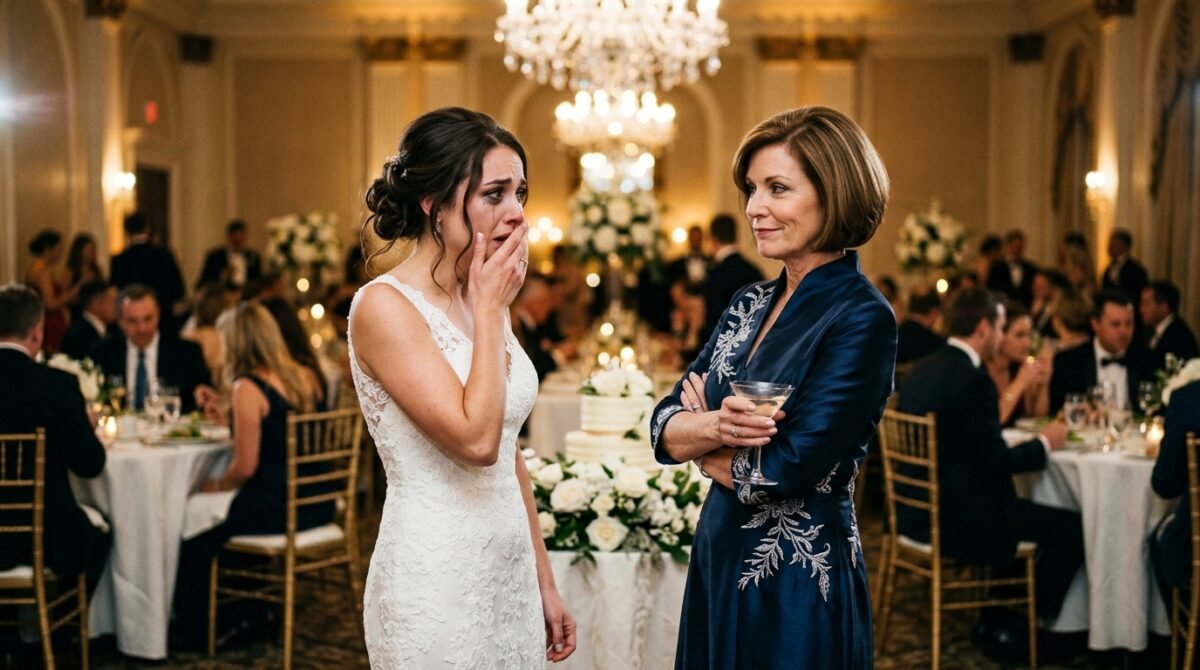
When people tell you that your wedding day will fly by in a blur, they usually mean it in the context of joy, laughter, and champagne. They don’t typically mean that the day will be cut short by a bizarre, boundary-shattering demand that leaves you questioning the sanity of your new family. My wedding to Mark was supposed to be the culmination of three years of careful planning, budgeting, and dreaming. We wanted a night that celebrated our commitment, not a night that would haunt my memories for the wrong reasons.
My mother-in-law, Linda, had always been a ‘presence.’ She wasn’t just a guest; she was a force of nature who viewed every family gathering as a stage for her own performance. During the months leading up to the wedding, she made small comments about ‘traditions’ I had never heard of, but I brushed them off as eccentricities. I was so focused on the logistics—the flowers, the catering, the seating charts—that I failed to see the warning signs of an impending emotional tsunami.
The morning of the wedding, the air was thick with tension. Linda had already caused three minor panics before noon. She didn’t like her corsage, she felt the color of the bridesmaids’ dresses washed her out, and she kept whispering to Mark about how ‘stiff’ the ceremony felt. I should have stood my ground then, but I was determined to be the ‘cool bride.’ I didn’t want to start my marriage by fighting with his mother, so I kept swallowing my frustration, hoping that once the music started and the drinks were poured, she would relax.
Little did I know, Linda had been nursing a specific, deeply disturbing idea for our first dance. She felt that because she had been the only woman in Mark’s life for so long, she deserved a symbolic ‘passing of the torch’ moment. But this wasn’t a standard mother-son dance. This was something that would change the trajectory of our relationship—and our marriage—forever. It wasn’t just about a dance; it was about asserting dominance in a way that left me with no choice but to walk away.
The Rehearsal Dinner Warning
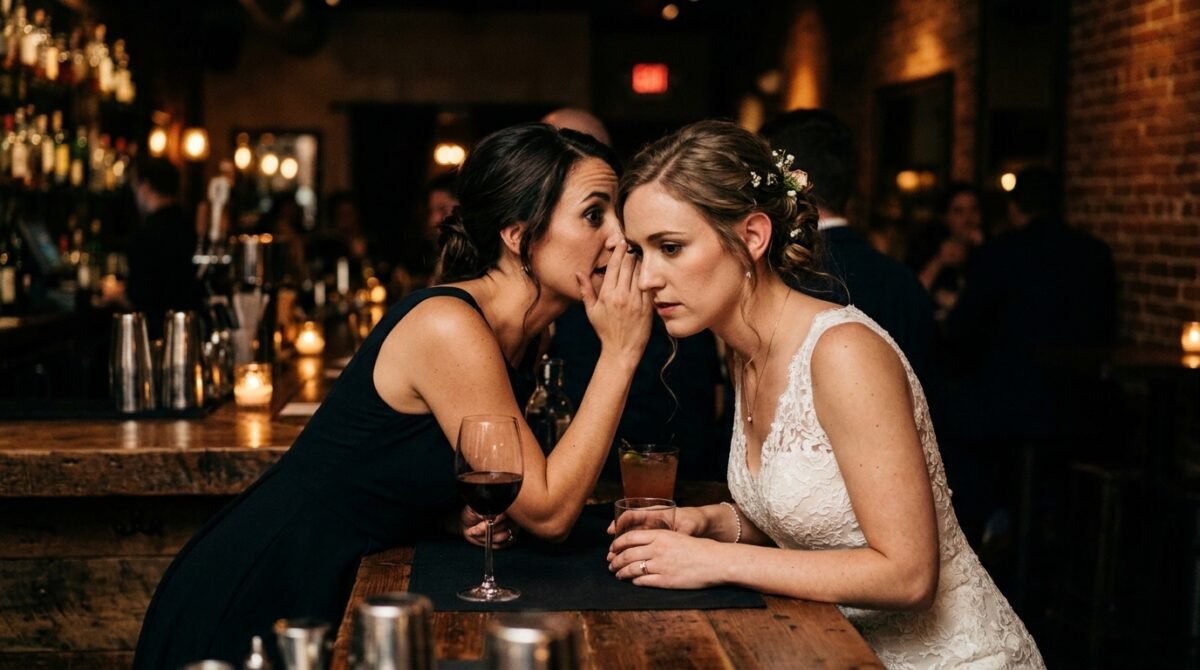
The night before the wedding, we hosted a casual rehearsal dinner at a local Italian bistro. The mood was supposed to be lighthearted, but Linda was already hitting the wine quite hard. She cornered me near the bar, her eyes glassy and intense, and started talking about the ‘sanctity’ of the dance floor. I tried to make polite small talk, but she wasn’t interested in small talk. She was interested in setting the stage for her debut.
She leaned in close, the smell of cheap chardonnay wafting toward me, and whispered, ‘You know, dear, in our family, the first dance is a special moment of unification. Since Mark didn’t have a father to guide him, I have to be the one to ensure he knows who really holds his heart. I have a surprise planned that will show everyone exactly how close we are.’
I felt a chill run down my spine, but I laughed it off, thinking she was just being overly sentimental. I told her, ‘Linda, the first dance is for Mark and me. It’s our moment to be alone on the floor.’ She gave me a tight, thin-lipped smile that didn’t reach her eyes and replied, ‘We shall see what the night brings, won’t we?’ I went back to my table, but my stomach felt knotted. I told Mark about the conversation, but he just patted my hand and said, ‘Mom is just dramatic. Ignore her. She’s had a bit too much to drink.’
“She is just being her usual self, honey. Don’t let her weird, wine-fueled sentimentality ruin your mood tonight. Focus on us.”
— Mark, during the rehearsal dinner
I tried to trust Mark, but the feeling in my gut persisted. I spent that night staring at the ceiling, wondering why I felt so uneasy. It wasn’t just ‘mother-in-law drama’; it felt like a deliberate encroachment. I was preparing to marry the man I loved, yet I felt like an interloper in his relationship with his own mother. I should have pressed him further, but I was exhausted and desperate to wake up to a perfect wedding day.
Looking back, I realize that the rehearsal dinner was the prologue to a disaster I was entirely unprepared for. I was so focused on being the ‘perfect bride’ that I ignored the red flags waving right in front of my face. I thought if I ignored her behavior, it would just fade away. Instead, I was merely giving her the space to amplify it until it became impossible to ignore. The stage was set, and the players were in position, even if I was the only one who didn’t know the script.
The Unveiling of the Bizarre Request
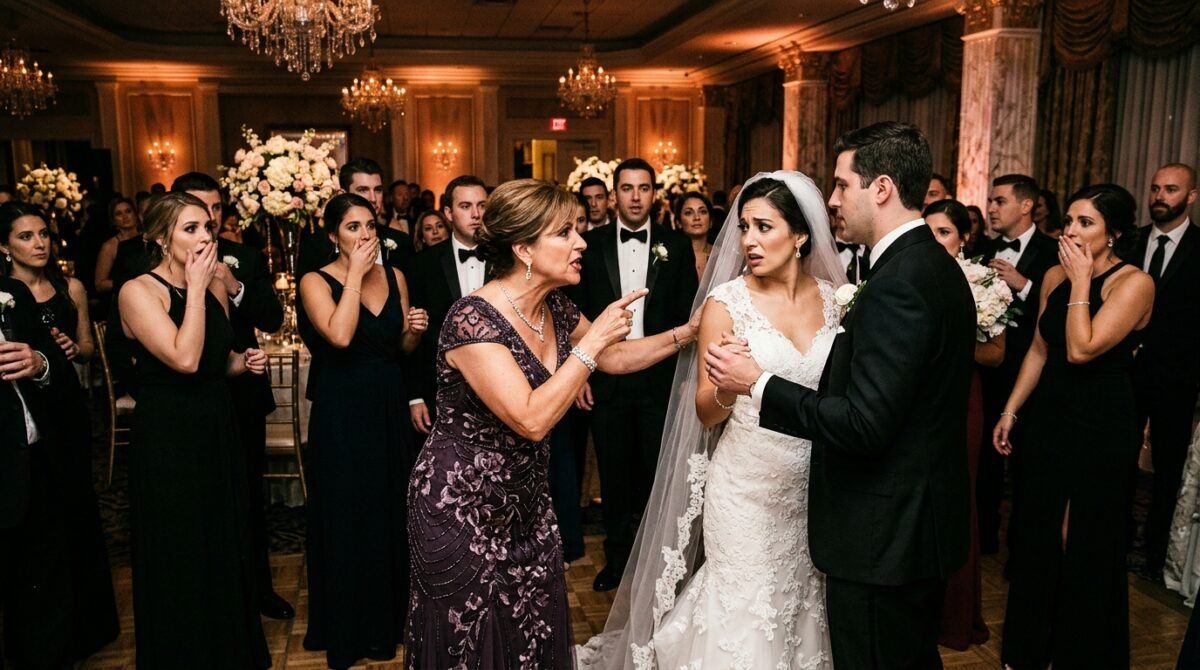
The reception was in full swing, and the DJ had just announced our first dance. I was feeling light, happy, and genuinely in love. Mark took my hand, and we walked onto the floor to the opening notes of our song. The guests were clapping, and everything felt like a fairy tale. Suddenly, Linda swooped onto the dance floor. She wasn’t just walking; she was marching with a purpose, a look of serene entitlement on her face.
She tapped Mark on the shoulder, and for a moment, I thought she was just going to give us a hug or offer a quick toast. Instead, she pushed her way between us and gestured toward a chair that one of the staff had inexplicably moved to the edge of the dance floor. She looked at me with a sickeningly sweet smile and said, ‘Since this is such a special moment, I’ve decided to participate. I’m going to sit on your lap, Mark, for the first part of the dance, so I can whisper some advice into your ear as you hold your new wife.’
The music didn’t stop, but the energy in the room shifted instantly. The silence from the guests was deafening. I stopped moving, my hands still in Mark’s, staring at her in complete disbelief. I waited for Mark to tell her that this was absolutely unacceptable. I waited for him to usher her off the floor, to protect our moment, to protect my dignity. But he just stood there, looking between his mother and me, frozen in indecision.
“Mom, what are you doing? This is our time. Please, go back to your seat. This is not the right time for this.”
— Mark, during the wedding reception
Linda didn’t even acknowledge his words. She just moved closer to the chair, her dress rustling in the quiet hall. ‘It’s a tradition, Mark. You don’t understand the bond we have. Do you want to insult your mother on your wedding day? Do you want to start this marriage with bad luck?’ She reached for his arm, her eyes pleading with him to submit to her will. The audacity of the moment was breathtaking. She was effectively trying to perform a public power move on my wedding floor.
I looked at the crowd. My mother was standing by the table, her mouth agape. The bridesmaids were whispering behind their hands. The photographer was capturing every second of this humiliating spectacle. I realized then that if I stayed, I would be setting the precedent for the rest of my life. I would be the woman who let her mother-in-law climb into her husband’s lap during their first dance. I would be the woman who apologized for existing in her own marriage.
The Moment Everything Changed
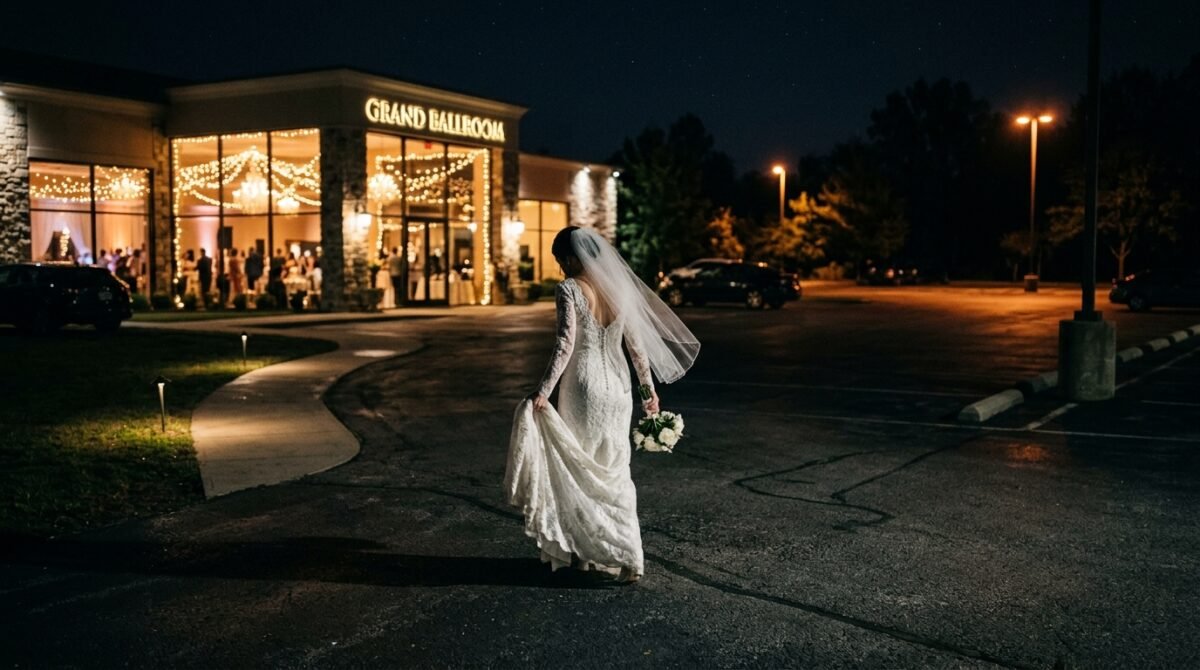
I didn’t scream, and I didn’t cry. I simply let go of Mark’s hands. The silence was so heavy it felt like it had physical weight. I turned toward the crowd, smoothed out my dress, and then looked directly at Mark. His face was a mask of confusion and embarrassment, but he still hadn’t physically moved his mother away from the vicinity of our dance. He was waiting for me to be the ‘bigger person,’ which I knew meant ‘let her have her way so we don’t cause a scene.’
I walked off the floor. I didn’t run; I walked with deliberate, measured steps. I could hear the murmurs of the guests swelling like a tide. Someone started to say something, but I didn’t care. I headed straight for the exit. I needed air. I needed to escape the suffocating presence of a woman who thought she owned my husband. I reached the doors, and the cool night air hit my face, providing a sharp contrast to the stifling heat of the reception hall.
Mark finally realized I was leaving and jogged after me, his tuxedo jacket flapping behind him. ‘Where are you going? You can’t leave! The guests are still here! What will people think?’ He was panicked, but not because he had hurt me—he was panicked because the social contract of the wedding was being violated. He was more worried about the optics than the fact that his mother had just tried to physically insert herself into our intimate dance.
“I am not doing this, Mark. I am not going back in there to let her make a mockery of our marriage. You choose: it’s her or me, right now.”
— OP to Mark at the wedding entrance
I stood there in the parking lot, my heels digging into the asphalt, my heart pounding in my ears. The sound of the music from inside was muffled, a distant beat that felt like it belonged to another world. I realized that my life had just split into two paths: the path where I accommodated his mother’s insanity, and the path where I reclaimed my autonomy. I didn’t want to be the victim, and I certainly wasn’t going to be the punchline of a story about a wedding-crashing mother-in-law.
He looked at me, his eyes wide, and he started to stammer, ‘She’s just… she’s eccentric, you know? She didn’t mean any harm. Can’t we just go back and finish the song? We can ignore her after.’ That was the moment I knew he wasn’t ready to be a husband. He was still a son, first and foremost, and he was terrified of the power his mother held over him. I turned my back on him, got into my car, and drove away from the life I thought I was building.
The Aftermath: Silence and Speculation

The next few days were a blur of unanswered calls, desperate texts from Mark, and a flurry of messages from his family members. Some were sympathetic, but many were demanding that I ‘come back’ and ‘stop acting like a child.’ It was as if the entire family had conspired to make me feel like the aggressor. They weren’t concerned about why I left; they were concerned about the fact that I had disrupted the status quo.
I went to my sister’s house, where I stayed for three days, refusing to look at social media. I knew the pictures had already been posted—the ones where the incident happened, the ones where the guests were looking on in horror. I could only imagine the gossip mill at work. ‘Did you see the bride?’ ‘She just walked out!’ ‘Poor Linda, she just wanted a sweet moment with her boy.’ The narrative was being spun without me, and I was being cast as the villain.
Finally, I checked my phone. It was flooded with messages from the family group chat that I had been added to shortly after the engagement. The tone was vitriolic. My sister-in-law, who had always seemed nice, was now calling me ‘dramatic’ and ‘self-centered.’ Even Mark’s aunt was weighing in, suggesting that I had ruined the family’s reputation. It was a masterclass in gaslighting, and I was the primary subject.
“You have caused a massive scene and embarrassed the entire family. Mark is devastated. You owe his mother an immediate, public apology for your outburst.”
— Sister-in-law, via Family Group Chat
I didn’t reply to any of them. I started to see the situation with a cold, detached clarity. If they were all willing to pile on me for walking away from an insane situation, then they were all part of the problem. Mark hadn’t defended me once. He hadn’t told his family that his mother was the one who had crossed the line. He was letting them believe that I was the one who was unhinged. That realization hurt more than the actual event.
I realized that I didn’t owe anyone an explanation. My truth was my own. I had left for a reason, and if they couldn’t see that, it wasn’t my responsibility to teach them. I started packing my bags, not to go back to Mark, but to move into a studio apartment I had looked at weeks ago, just in case things didn’t work out. I was effectively starting over, and for the first time in months, I felt a sense of relief wash over me.
The Reddit Verdict: Total Support
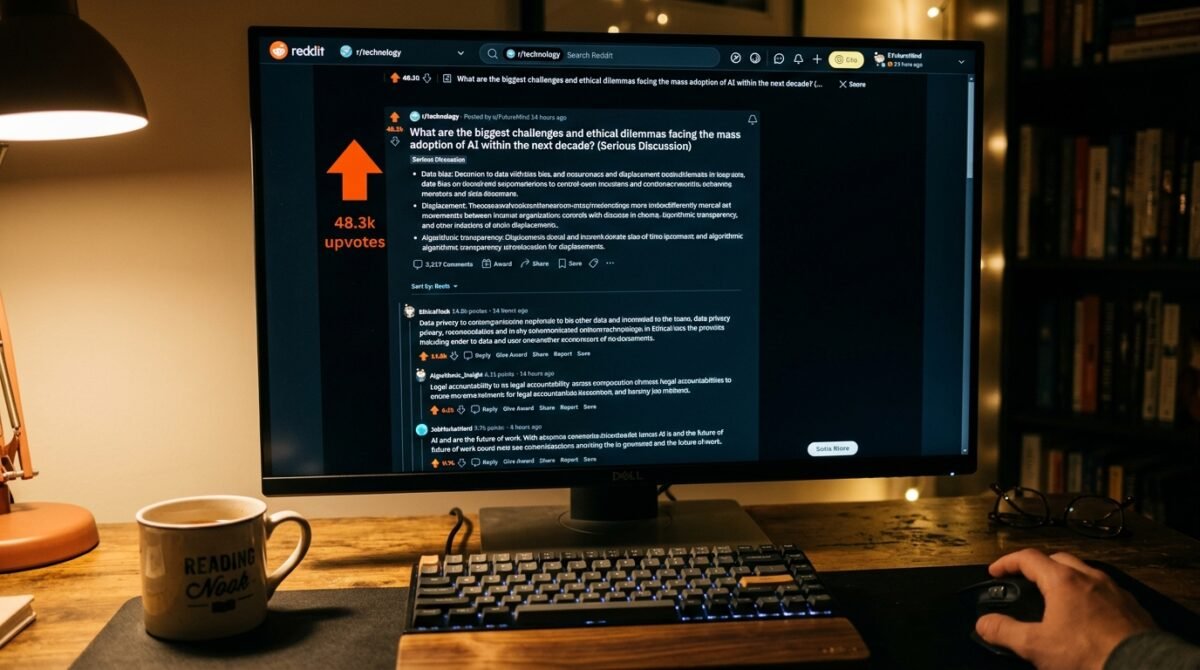
I eventually decided to share my story on a popular forum, needing to know if I was actually insane. I expected some backlash, but the outpouring of support was overwhelming. The community didn’t care about the ‘tradition’ or the ‘family reputation.’ They saw the incident for exactly what it was: an egregious boundary violation that deserved a swift, decisive exit. It was validating to read that I wasn’t the one who had lost their grip on reality.
The comments sections were filled with people sharing their own horror stories about overbearing in-laws. It was like I had tapped into a collective vein of suppressed trauma regarding wedding disasters. The consensus was clear: I was not the asshole. If anything, I was the hero for standing up for myself when so many others would have withered under the pressure. The ‘NTA’ (Not The Asshole) votes were unanimous.
“This is not a ‘tradition,’ this is a power move. The fact that your husband didn’t immediately pull her off the floor and kick her out is the real tragedy here. Run, OP, and don’t look back.”
— u/Reliable_Redditor (Top Comment, 32.4k upvotes)
Reading these comments helped me realize that the ‘family dynamics’ I had been worried about were just a form of systemic abuse that had been normalized over generations. It wasn’t about love; it was about control. Mark was a product of that control, and unless he decided to break the chain, he would always be a puppet to his mother’s whims. The reddit community helped me see that I was mourning the loss of a relationship that was never really mine to begin with.
I saw comments from people who had been in similar marriages, people who had let the ‘small things’ slide until they were completely erased. They urged me to maintain my distance and to prioritize my own mental health. It was like having a thousand strangers on my side, telling me that it was okay to be angry, okay to walk away, and okay to demand respect. I felt less alone than I had in years.
The thread became a viral sensation, with people arguing about the definition of ‘enmeshment’ and ’emotional incest.’ It was a heavy conversation, but it was necessary. I didn’t participate in the comments much; I just read them, letting the words sink in. Each upvote felt like a small piece of my dignity being restored. The story wasn’t just about a failed wedding anymore; it was about the resilience of a person who refused to be broken.
Mark’s Attempted Reconciliation
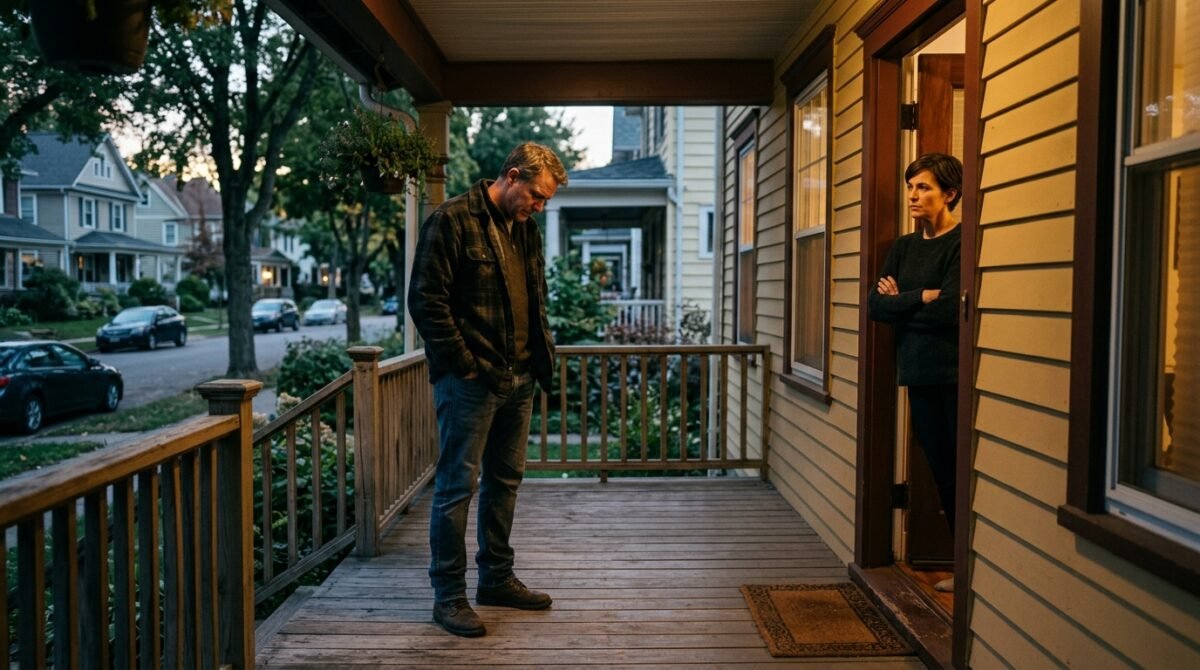
Two weeks after the wedding, Mark showed up at my sister’s house. He looked exhausted—dark circles under his eyes, his hair unkempt. He stood on the porch, looking like a lost puppy, holding a box of chocolates. I didn’t want to see him, but I knew I had to have the conversation so I could finally close this chapter. I stepped outside, closing the door behind me, and looked at him with an expression I’m sure was ice-cold.
He started immediately, ‘I’m so sorry. I know it was weird. I talked to my mom, and she agrees that she shouldn’t have done that. Can we just move past this? We have a life to build, and we’re missing our honeymoon.’ He spoke as if the wedding disaster was just a minor scheduling conflict that could be smoothed over with an apology from his mother.
I didn’t take the chocolates. I didn’t invite him inside. I looked at him and said, ‘Mark, it’s not just about what she did. It’s about the fact that you allowed her to do it. You allowed her to humiliate me on the most important day of our lives. And then you allowed your family to harass me. You never once stood up for me. That is who you are when things get difficult.’
“I don’t need an apology from her. I need you to realize that our marriage starts with us, not with your mother. And right now, there is no ‘us’ if she is the third person in our bed.”
— OP to Mark during their final meeting
He tried to argue, claiming that I was being ‘too sensitive’ and that ‘family is family.’ That phrase—’family is family’—was the nail in the coffin. It was the excuse used to justify every violation, every boundary breach, and every toxic behavior. I realized then that he would never change because he didn’t see the need to. To him, his mother’s behavior was an inconvenience, not a systemic problem that threatened our marriage.
I told him that I needed space, not just a few days, but a long time to think about whether I could ever trust him again. He left, clearly frustrated that I hadn’t just accepted the apology and moved on. As I watched his car drive away, I didn’t feel sad. I felt liberated. I had finally stopped looking for him to be the man I wanted him to be, and I had started accepting him for the man he actually was.
The Legal Reality of the Split
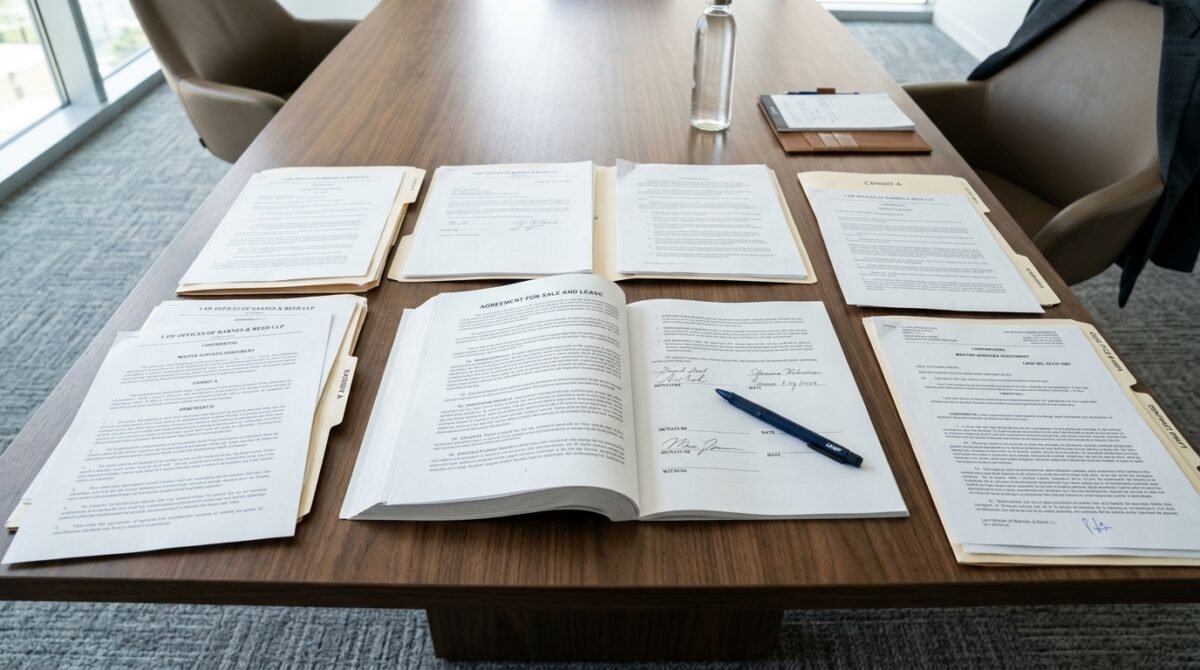
The process of unwinding a wedding that never really happened is a strange, bureaucratic nightmare. We hadn’t technically been married for long, but the logistics of the event—the deposits, the vendors, the gifts—were all tangled up in a mess of expectations. I had to consult a lawyer to make sure that I wasn’t going to be held liable for the costs of a reception that I had walked out of. It was a cold, hard dose of reality that distracted me from the emotional pain.
The lawyer, a sharp woman named Sarah, looked at my case with a mixture of amusement and professional concern. ‘You wouldn’t believe how many of these I see,’ she said, flipping through the contracts. ‘The weddings that fail are almost always about the families, not the couple.’ She helped me draft a letter to the venue and the caterers, explaining the situation without getting into the gory details, just focusing on the breach of contract and the circumstances.
I had to deal with the gifts, too. Some people wanted them back; others told me to keep them. I decided to donate most of them to a local women’s shelter. It felt right, somehow, to give away the things that were meant for a life I was no longer living. It was my way of reclaiming the joy of those gifts and turning them into something positive for someone else who was in a far worse situation than mine.
“We have successfully recouped 40% of the deposits. The rest is tied up in the contracts, but I believe we can avoid any further financial fallout for you personally.”
— Sarah, the divorce attorney, via email
I felt a strange sense of satisfaction as I checked off each item on my to-do list. Every call to a vendor, every return of a gift, every signature on a legal document was a step toward my independence. I wasn’t just ‘the bride who left’; I was a woman taking charge of her own narrative, one administrative task at a time. It wasn’t the honeymoon I had planned, but it was a journey of self-discovery that I wouldn’t trade for anything.
The hardest part was the silence. The days when I wasn’t dealing with lawyers or family drama were the days when the reality of the situation hit me. I had lost the vision of my future, but I had gained something much more valuable: my own agency. I was no longer a person who had to justify her decisions to a committee of in-laws. I was finally, truly, my own person, and that realization was the most empowering thing I had ever felt.
Reclaiming My Own Identity

Months later, I found myself sitting in a coffee shop, looking at a reflection in the window. I looked different. Not just because I had changed my hair or because I was wearing different clothes, but because there was a new steadiness in my eyes. The woman who had run out of that reception hall was scared, hurt, and confused. The woman sitting in this cafe was confident, resolved, and entirely at peace with the path she had chosen.
I started going to therapy regularly, working through the patterns that had led me to that relationship in the first place. I learned about ‘fawning’—the trauma response where you appease people to keep yourself safe. I had been doing that for years, not just with Linda, but in other areas of my life. I had learned to be quiet, to be compliant, to be the person who took the blame to keep the peace. That was no longer who I was.
I started pursuing hobbies that I had long ago set aside because they weren’t ‘practical’ or didn’t fit into the vision of the life I was ‘supposed’ to have. I took a pottery class, started reading books again, and reconnected with friends I hadn’t spoken to in years. It was like I was waking up from a long, dreamless sleep. Every day was an opportunity to be authentic, to be honest about my boundaries, and to say ‘no’ without feeling the need to apologize.
“You seem so much lighter now. It’s like a weight has been lifted off your shoulders, and you’re finally starting to breathe again.”
— A friend during a lunch catch-up
I still occasionally hear news about Mark, usually through mutual friends who don’t know the full extent of the drama. He’s reportedly still very close to his mother. They take trips together, they go to dinner, and they continue to act like the unit they were always meant to be. Hearing that no longer makes me sad. It just makes me feel a profound sense of gratitude that I am no longer part of that equation.
I don’t regret walking out. If I had stayed, I would have been miserable, slowly eroded by the constant demands of a woman who didn’t respect me and a husband who didn’t protect me. My life would have been a long, slow surrender. By choosing to walk out, I chose myself. And in the end, that is the only choice that ever really mattered. I am free, and that is a beautiful thing.
Lessons in Boundaries and Self-Worth

The biggest lesson I took away from the whole ordeal is that boundaries aren’t just suggestions; they are the foundation of any healthy relationship. Before the wedding, I thought that being ‘flexible’ was the same as being ‘kind.’ I thought that accommodating others was the highest form of love. I was wrong. True love isn’t about erasing yourself to make someone else comfortable; it’s about standing in your truth and expecting that same truth from the people who claim to care about you.
I learned that when someone shows you who they are, you should believe them the first time. Linda showed me her entitlement long before the wedding day, but I kept making excuses for her. Mark showed me his lack of support long before the altar, but I kept making excuses for him. I was ignoring the reality of the situation because I was so fixated on the outcome I wanted. I was more in love with the idea of a wedding than I was in a healthy, sustainable partnership.
I also learned that it is okay to be ‘difficult.’ In our society, women are often expected to be ‘easygoing’ and ‘accommodating.’ If you speak up, you’re labeled as ‘dramatic’ or ‘unreasonable.’ But I would rather be labeled as those things and keep my integrity than be ‘easygoing’ and lose my autonomy. I’ve realized that the people who call you ‘difficult’ are usually the ones who are benefiting from you being ‘easy.’
“Boundaries aren’t walls to keep people out; they’re gates that tell people how to love you. If they can’t respect the gate, they don’t deserve the access.”
— OP reflecting on her journey
My advice to anyone facing a similar situation is simple: trust your gut. If something feels wrong, it is wrong. You don’t need a committee to validate your feelings, and you don’t need to stay in a situation that makes you feel small or unsafe. You are the protagonist of your own life. Don’t let someone else write the script for you, especially on the day that is supposed to be about your joy.
Today, I am a different person. I am stronger, wiser, and much more protective of my energy. I’ve learned to recognize the signs of manipulation before they escalate into disasters. Most importantly, I’ve learned that I am enough, all on my own. I don’t need a wedding, a ring, or a husband to validate my worth. I have myself, and that is more than enough.
Moving Forward: The Final Chapter

As I look back on that day, I don’t see it as a tragedy. I see it as a turning point. It was the day I stopped living for the approval of others and started living for myself. It was the day I realized that my voice mattered, my dignity mattered, and my happiness mattered. It was a expensive lesson, to be sure, but it was one that I needed to learn to become the person I am today.
I’ve started dating again, but the dynamic is entirely different. I’m not looking for someone to fill a void; I’m looking for a partner who respects my boundaries as much as they respect their own. I ask direct questions, I set expectations early, and I don’t apologize for my needs. If someone doesn’t like that, they aren’t the person for me. And that’s perfectly okay.
My relationship with my own family has also shifted. They’ve seen how I handled the crisis, and they’ve started to treat me with more respect, too. It’s funny how, when you start standing up for yourself, the world starts to treat you differently. People stop trying to push you around because they know you’ll push back. It’s a liberating way to live, and I wish I had discovered it years ago.
“I am no longer the person who lets others dictate the rhythm of my life. I am the one holding the baton, and the melody is mine.”
— OP’s final reflection
If you take anything away from my story, let it be this: you are allowed to walk away. You are allowed to say ‘no.’ You are allowed to prioritize yourself, even when everyone else is pressuring you to do the opposite. Your wedding day, your marriage, and your life belong to you. Protect them with everything you have, because in the end, you are the only one who has to live with the decisions you make.
I’m finally at a place where I can look back on that day and laugh, just a little. Not because the situation wasn’t serious, but because the absurdity of it is so clear from this distance. A mother-in-law on a lap? It’s almost a caricature of a toxic in-law. And I am the woman who walked away from the punchline. And I’ve never been prouder of myself for that decision.
Conclusion
My experience is a stark reminder that we are often socialized to tolerate the intolerable under the guise of tradition, politeness, or ‘keeping the peace.’ We are taught that being a ‘good’ bride, daughter, or partner means swallowing our discomfort and smiling through the madness. I spent months being that person, and it nearly cost me my sense of self. Walking away wasn’t just a reaction to a singular, bizarre event; it was a reclamation of my life.
I often think about the wedding guests who watched me walk out. I wonder if any of them were in similar situations, watching me and wishing they had the courage to do the same. I wonder how many people are sitting in uncomfortable chairs, literally or figuratively, because they are too afraid of the fallout if they dare to stand up. I hope that sharing my story provides even a small spark of courage for anyone currently trapped in an enmeshed, disrespectful, or controlling relationship.
We have to stop normalizing the idea that family members have a free pass to disrespect our boundaries. Your wedding is not a public performance for their benefit; it is a private commitment between you and your partner. If that commitment is compromised by someone else—no matter who they are—you have the right, and perhaps the obligation, to protect it. Choosing yourself is never the wrong choice.
What would you have done? If you found yourself in the middle of a moment that violated everything you believed in, would you stay to ‘save the day,’ or would you walk away to save yourself? Join the conversation in the comments below and share your own experiences with setting boundaries in the face of family pressure. We are all learning, and your perspective might just be the one that changes someone else’s life.
What's your verdict on this dilemma?
Vote below to contribute to the official community consensus.

Have a Dilemma Keeping You Up at Night?
Share your real-life feud, wedding chaos, or relationship crossroads anonymously with our editorial team.
What do you think ?
0 Comments🛡️ Comments are moderated to protect community integrity. Your comment will appear once approved by the editorial team.