
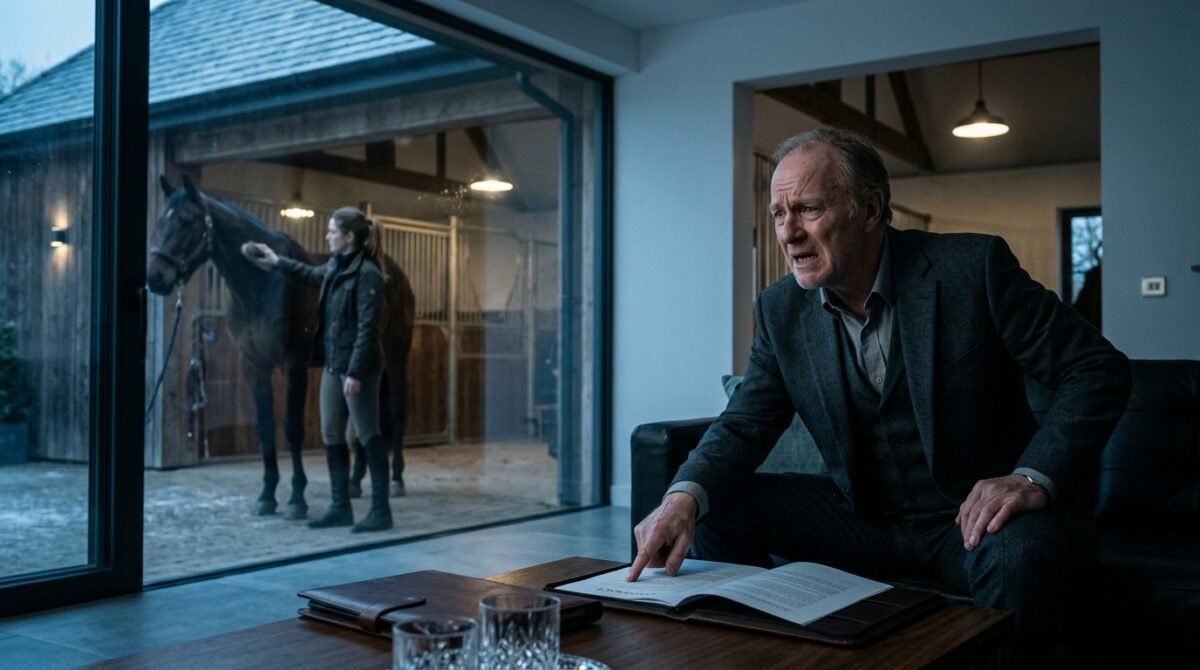
Grief is a thief, but greed is an assassin. When my mother passed away six years ago, she left behind a carefully curated trust—a financial safety net intended to fund my graduate education and provide a modest cushion for my future. It was meant to be a reminder that even in her absence, she was looking out for me. My father, a man I once idolized for his steady work ethic and quiet strength, was named the executor. It was a role he held with a performative air of responsibility, at least until he met Chloe.
Chloe is twenty-two. She is younger than I am, loves show jumping, and has a taste for luxury that my father—whose income was comfortable but not infinite—began scrambling to satisfy almost immediately after their whirlwind wedding. The shift happened slowly at first: fancy dinners, designer bags, and exotic trips. Then, the silence began. The trust fund I had been planning to access for my upcoming doctoral program suddenly became ‘entangled in market volatility,’ or so he claimed.
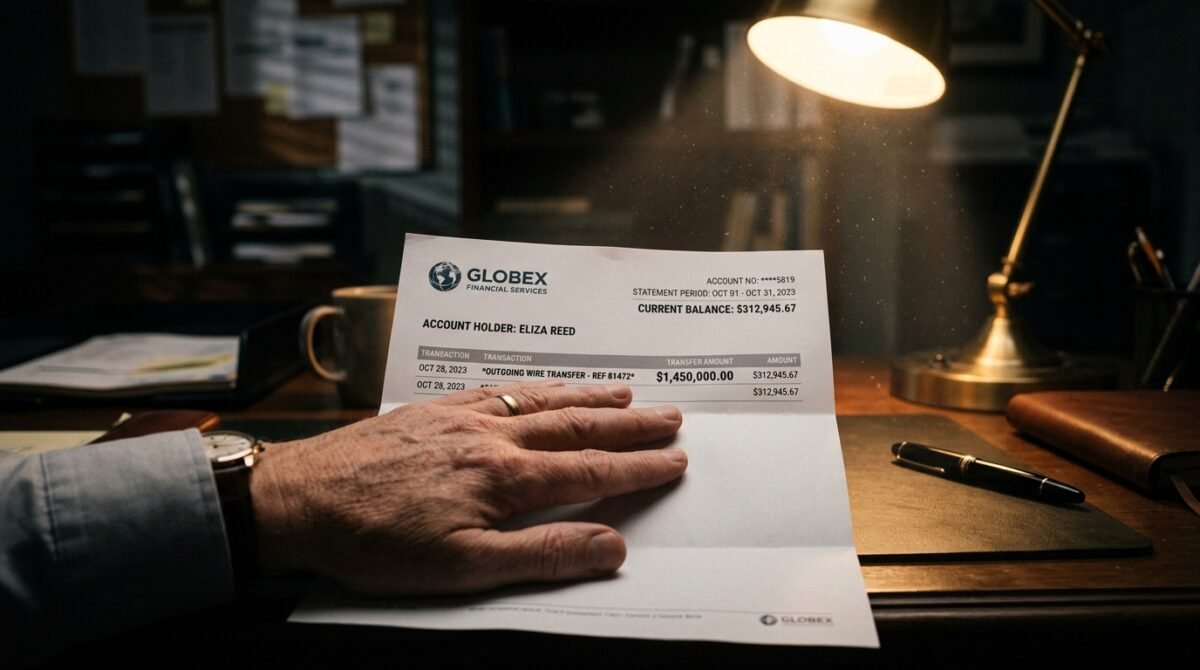
The truth didn’t come from my father. It came from a bank statement I accidentally discovered while visiting his house to clear out my remaining childhood boxes. The trust was gone. Liquidated. Every penny had been funneled into an equine investment firm specializing in elite show horses. Chloe had her champion jumper, and my father had a new life to maintain. I thought the audacity ended there, but the true insult was yet to come.
Last Tuesday, I received an invitation to dinner. I should have known better. When I arrived, the house was filled with the scent of expensive steak, but the atmosphere was suffocating. My father sat at the head of the table, his eyes darting toward Chloe, who was scrolling through her phone, seemingly oblivious to the seismic shift in our family dynamic. He didn’t ask about my life. He didn’t ask about my work. He cleared his throat, placed a thick stack of papers on the table, and uttered the words that would shatter our relationship forever.
He wants me to co-sign a new mortgage for their dream home. He claims his credit is ‘temporarily impacted’ by his recent investments. He is asking me to bet my entire financial future on a man who effectively stole my mother’s dying wish to buy a horse for a woman who wasn’t even born when my parents were married. This is not just a story of greed; it is a story of betrayal, the death of a parent-child bond, and the desperate, cold-blooded final act of a man who lost his way.
The Disappearing Act of a Legacy
I remember the day my mother handed me the folder. ‘It’s not a fortune,’ she had said with that trademark gentle smile, ‘but it’s enough to ensure you don’t have to struggle the way I did.’ That trust was the foundation of my adult life. It represented security, stability, and the hard work of a woman who never wanted her daughter to worry about a roof over her head. My father’s duty as executor was simple: keep the accounts stable until I turned twenty-five, then hand over the keys to the kingdom.
When I reached the milestone, I expected a celebration. Instead, I received a phone call. His voice sounded thin, strained. He spoke of ‘unforeseen tax liabilities’ and ‘bad investments’ that had required him to shift funds around. He assured me it was just a temporary setback, a blip in the radar. I believed him because that was what I was raised to do. I respected him, and more importantly, I trusted him.
The deception was methodical. He didn’t just drain it all at once; he skimmed it, hiding the withdrawals behind complex brokerage statements that looked official enough to pass a cursory glance. I was finishing my master’s degree, blinded by the stress of academic deadlines, and I didn’t push back hard enough. I assumed the man who sat by my mother’s hospital bed was incapable of such profound betrayal.
“I just need a little more time. The market is volatile, and I had to protect the principal. You’ll have what you need when the time is right, I promise.”
— My father, during a phone call six months ago
I feel like a fool now, looking back. The red flags were there, disguised as his ‘new lifestyle.’ When he married Chloe, I assumed he had some secret inheritance or a massive bonus. I never considered that he was funding his new life with the blood and sweat of his first one. It wasn’t until I found that bank statement tucked into a ‘Miscellaneous’ folder in his study that the reality hit me with the force of a physical blow.
The statement showed a massive, one-time transfer to a high-end equestrian brokerage. I didn’t know much about horses, but a quick Google search for the company name revealed exactly what they specialized in: elite-level show jumpers. I checked the date. It was three days before Chloe’s twenty-second birthday. The numbers were staggering. It was everything. It was my future, my mother’s memory, and my security, all traded for a creature that eats oats and jumps over fences.
I didn’t confront him that day. I couldn’t. I was shaking so hard I had to sit on the floor of his office, clutching the paper until my knuckles turned white. My mother’s legacy was gone, converted into a trophy for a woman who called my dad ‘papi’ in public. The sheer, sickening absurdity of it made me want to scream, but instead, I folded the paper, slipped it into my bag, and walked out of the house, feeling like a ghost.
Dinner at the House of Lies
When the dinner invite arrived, I knew it wasn’t about catching up. The invitation had come via a calendar notification, clinical and devoid of warmth. I arrived at the house at 7:00 PM. The exterior was as pristine as ever, a suburban fortress of middle-class success. Inside, the decor had changed. The warm, lived-in aesthetic my mother had cultivated was replaced by a sterile, ‘modern luxury’ look that felt more like a hotel lobby than a home.
Chloe met me at the door. She looked every bit the influencer she was, wearing a silk robe that probably cost more than my first car. She gave me a tight, rehearsed smile that didn’t reach her eyes. ‘So glad you could make it,’ she said, her tone dripping with a condescending sweetness that made my skin crawl. My father was in the kitchen, obsessing over a bottle of wine that I knew he couldn’t actually afford.
The dinner itself was an exercise in psychological torture. We talked about nothing—the weather, my job, his ‘consulting work.’ It was as if they were performing a play for an audience of two. My father was constantly checking his watch, his foot tapping rhythmically under the table. He was waiting for something, and the tension was so thick I could practically feel it pressing against my chest.
“You know, your father has been working so hard lately. It’s been so stressful, but we’re finally moving toward something truly special for our future. We’re so close to closing on the new property.”
— Chloe, mid-meal, with a smug look at my father
My father didn’t even look at me when she said that. He kept his eyes focused on his steak, his fork clicking against the china. I didn’t say a word. I just waited. I knew the pivot was coming. I knew that the mention of the ‘new property’ was the precursor to the ask. The air in the room seemed to go stagnant, the sound of the air conditioning unit buzzing in the corner becoming deafeningly loud.
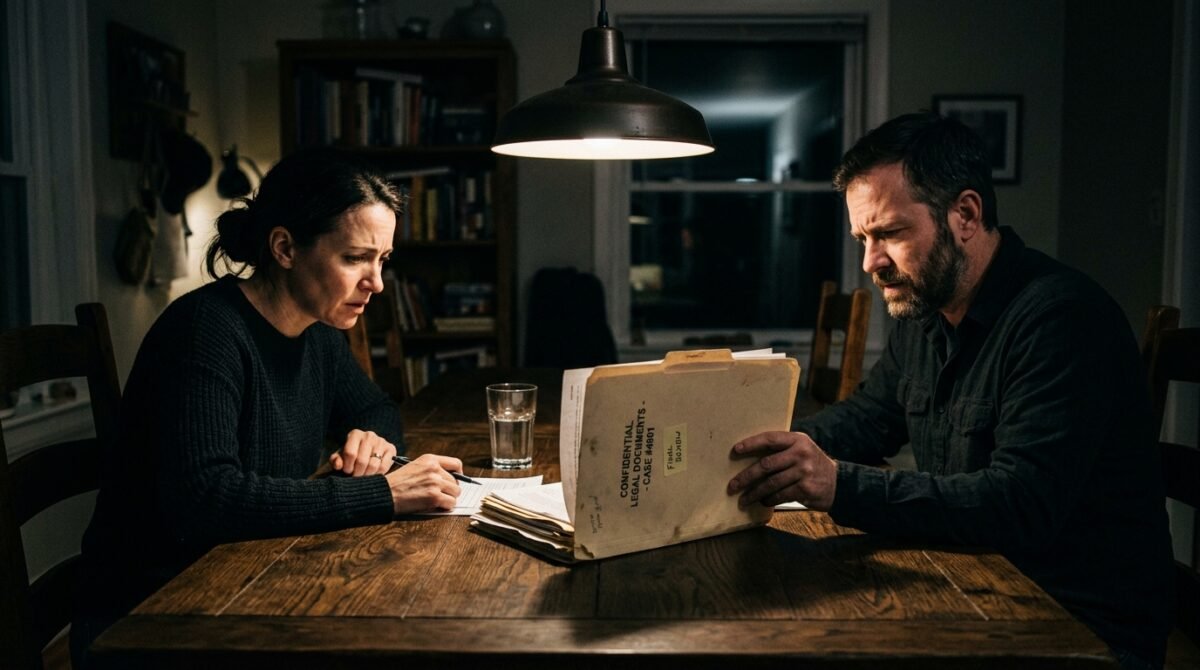
When he finally placed the stack of papers on the table, he didn’t look like a man asking for help; he looked like a man delivering a summons. He pushed the folder toward me with a flourish. ‘I need you to look these over,’ he said, his voice dropping into that fake-serious register he used when he wanted to sound authoritative. ‘I’m buying a new property, but the bank needs a co-signer to get the rate I want. It’s a formality, really. Just a signature.’
I looked at the papers. I didn’t need to read them. I knew what they were. They were a death warrant for my credit score and a permanent attachment to his financial instability. I looked up at him, then at Chloe, who was now watching me with an expectant, predatory gaze. I felt a cold, hard clarity settle over me. This wasn’t just a request; it was the final, pathetic attempt to bleed me dry of whatever loyalty I had left.
The Moment of Reckoning
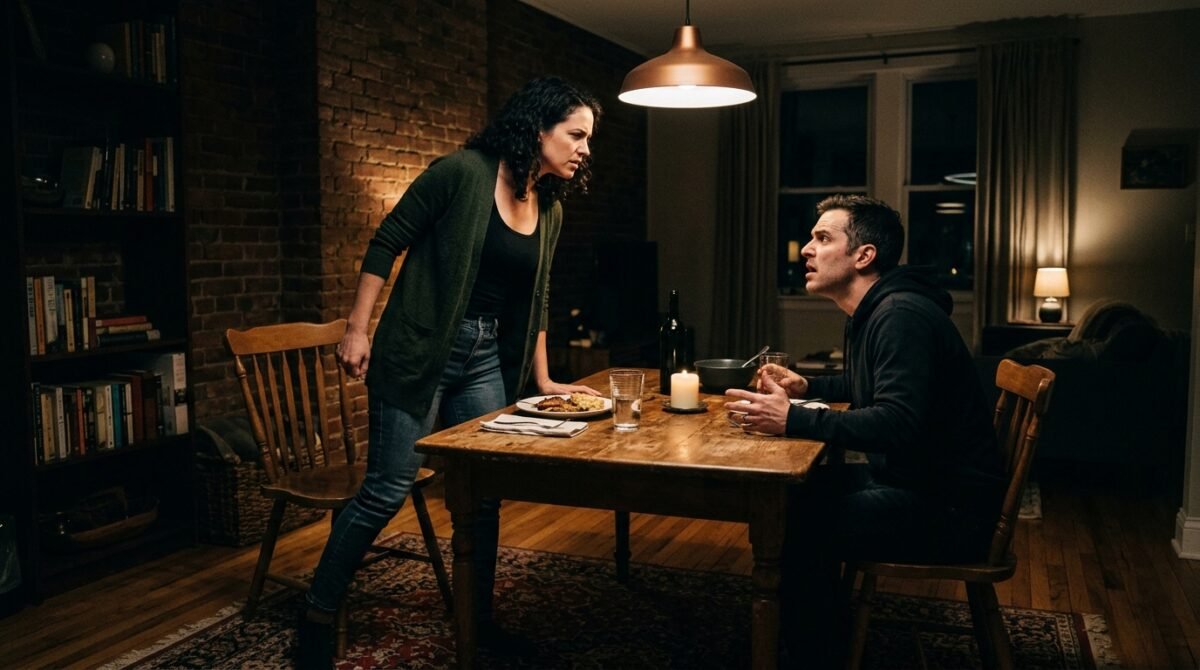
I let the folder sit there for a long time. I wanted them to stew in the silence. I wanted them to realize that their charm offensive had failed before it even started. My father’s hand started to twitch near his wine glass. He clearly expected me to sign it without a second thought, the same way I had signed off on his ‘management’ of the trust for years. He had built his world on the assumption that I would always be the compliant, grieving daughter.
I stood up slowly, not even touching the folder. ‘Do you know what’s in this folder, Dad?’ I asked, my voice steady, though my heart was hammering against my ribs. He looked confused, his brow furrowing. ‘It’s the mortgage application, we talked about this. It’s a great opportunity, the horse property has so much potential for rental income, and—’
I cut him off. ‘I’m not talking about the mortgage. I’m talking about the trust. The one you emptied to buy that animal. The one you stole from me to fund a lifestyle you clearly can’t afford.’ The silence that followed was absolute. Chloe’s mouth fell open, and my father’s face drained of all color. The mask of the doting, successful father dropped, revealing a man who looked small, desperate, and incredibly pathetic.
“How dare you? I gave you a life! I put a roof over your head for eighteen years! You think you’re entitled to that money? It was my work that earned it, not yours!”
— My father, snapping after I confronted him
It was the classic defense of the narcissist. When cornered, blame the victim. He wasn’t even denying it anymore; he was justifying it. He believed that because he had provided for me as a child, he was entitled to anything that came after. He didn’t see the trust as my inheritance or my mother’s legacy; he saw it as his own personal piggy bank that he had been forced to share with me temporarily.
I laughed. I couldn’t help it. It was a cold, humorless sound that seemed to shock them even more than the accusation. ‘You didn’t give me that life, Dad. Mom did. And you didn’t just spend my inheritance; you stole it. You committed fraud in the name of a twenty-two-year-old who probably won’t be around in two years when the money finally runs out.’
Chloe turned to him, her eyes flashing. ‘Is that true? You told me the money was yours! You told me we were fine!’ The discordance in the room was palpable. They weren’t a team; they were two people standing on a sinking ship, fighting over who was to blame for the hole in the hull. I watched them, feeling a strange sense of detachment. The bond I had with my father wasn’t just broken; it had never really existed, or at least, it had been a fantasy I had nurtured at my own expense.
The Digital Fallout

I didn’t stick around for the fireworks. I grabbed my purse and walked out, leaving the mortgage papers sitting on the table like a discarded relic of a life I would never be part of. By the time I reached my car, my phone was blowing up. Notifications were pinging in rapid succession, a mix of frantic apologies from my father and venomous accusations from Chloe. I didn’t open them at first; I just drove, needing to put distance between myself and the wreckage of my family.
When I finally pulled into a parking lot at a local park, I opened the messages. My father was trying the ‘I did it for us’ angle, shifting from anger to a pathetic, weeping apology. He begged me to think about the ‘family legacy’ and how I was ruining everything by ‘bringing up the past.’ He seemed to genuinely believe that I had no right to be angry about the theft of my trust.
“You’re being so selfish. I needed that money to keep us afloat, and you’re acting like I committed a crime. Just sign the papers and we can move past this. Don’t throw away our relationship over some money.”
— Text from my father
Then there were the messages from Chloe. She wasn’t subtle. She was angry that she had been lied to, but even angrier that I had embarrassed her in front of ‘her’ husband. She blamed me for the ‘instability’ in their home, as if my knowing about the theft was the reason their marriage was built on a foundation of lies. It was a classic projection of their shared insecurity.
“You have no idea what it’s like to be with him. He told me he was a millionaire. If you don’t sign those papers, he’s going to lose the farm. And if he loses the farm, I’m leaving. Do you really want to be the reason he has nothing?”
— Text from Chloe
It was almost funny. She was trying to guilt-trip me into saving her lifestyle by threatening to leave him, as if I cared whether or not she stayed. It confirmed everything I suspected: their marriage was a transaction, and that transaction was about to go bankrupt. I blocked both of them. Not just for the night, but for the foreseeable future. The digital silence was the first step in reclaiming my own agency.
I went back to the house the next day, not to talk, but to retrieve the few items I had left in storage. I didn’t enter the main living area. I stayed in the garage, moving with purpose. My father tried to come out, but I didn’t even look at him. I just loaded my boxes into my car and left. The look on his face—a mixture of shock and dawning realization that he had actually lost his leverage—was the only closure I needed.
The Reddit Trial

I felt the need to vent, so I posted the story on a popular forum. I needed to know if I was crazy. I needed someone to tell me that I wasn’t the bad guy for refusing to participate in a fraudulent mortgage application. The response was overwhelming. Thousands of comments poured in within the first few hours, most of them validating my anger and warning me about the legal implications of what my father had done.
It wasn’t just validation; it was a wake-up call. Many commenters pointed out that my father had likely committed a crime. As the executor of my mother’s trust, he had a fiduciary duty to manage that money for my benefit. By liquidating it for his own personal gain, he had crossed a legal line. The ‘mistake’ he claimed to have made was starting to look like a prosecutable offense.
“Run, don’t walk, to a lawyer. Your father didn’t just ‘spend’ your money; he embezzled it. He is asking you to co-sign a mortgage because his credit is ruined, and he wants to use your signature to hide his tracks. Do not sign anything. Report him.”
— u/LegalEagleEye (Top Comment, 32.1k upvotes)
Others focused on the interpersonal dynamics. They pointed out the absurdity of the horse investment and the toxicity of his relationship with Chloe. The thread turned into a collective therapy session, with people sharing their own stories of family betrayal. It made me realize that I wasn’t alone, and more importantly, that the ‘family obligation’ I had been taught to respect was a lie used to keep people trapped.
“The audacity of asking you to co-sign a mortgage after he stole your inheritance is peak narcissism. He’s looking for a victim to bail him out of his own poor choices. Stay strong. You owe him nothing.”
— u/BoundaryWarrior (15.2k upvotes)
The community support was a lifeline. It gave me the courage to look into legal options. I contacted a probate attorney the next day. When I explained the situation, the look on her face confirmed what the Reddit commenters had said. This was a classic case of fiduciary malfeasance. She told me that I had a strong case, not just for the recovery of some of the funds, but for a full investigation into his handling of the trust.
It felt surreal. I was no longer the grieving daughter trying to save her father’s ego. I was a plaintiff. The power dynamic had shifted entirely. I had spent so long feeling like a child in his world, and now, I was an adult standing on my own, demanding accountability. The ‘fear’ I had felt at the dinner table was being replaced by a cold, sharp resolve to see justice done.
The Legal Pivot

The meeting with the attorney lasted three hours. We went through everything—the initial trust documents, the bank statements I had managed to photograph, and the timeline of his ‘investments.’ She was methodical, patient, and completely unimpressed by my father’s excuses. She explained that even if the money was gone, there were assets we could potentially target. He had equity in the current house, and there was the horse. Yes, the horse.
The horse, it turned out, was a significant asset. A high-end show jumper could be worth a small fortune. If he had used the trust money to purchase it, we might be able to place a lien on it or force a sale as part of a restitution settlement. The thought of Chloe having to sell her prize possession because my father had stolen my money was almost poetic justice. The legal process would be long and expensive, but it felt like the right thing to do.
My father didn’t expect a legal challenge. He expected me to cave, to sign the papers out of a misplaced sense of ‘family.’ When he received the formal letter from my attorney, the tone of his communication changed immediately. The pleading texts stopped. The threats started. He called me, leaving voicemails that ranged from incoherent rage to desperate attempts to ‘work things out’ without involving lawyers.
“How could you do this to me? I am your father! You are destroying this family over money! You’re just like your mother—always so cold, always so calculating. I need you to drop the lawyer, now!”
— Voicemail from my father
I didn’t listen to the voicemails. I handed them over to my attorney. The fact that he was calling me directly, despite being told not to, only strengthened our case. It showed he was desperate and unhinged. The attorney told me that his reaction was typical. When people like him are faced with the consequences of their actions, they don’t look for redemption; they look for a way to intimidate the person holding them accountable.
I felt a strange sense of liberation. For years, I had been under his thumb, terrified of disappointing him or causing ‘drama’ in the family. Now, the drama was already here, and I was the one who had finally decided to play the game on my own terms. I wasn’t just protecting my future; I was stripping away the façade that he had spent years constructing. It was terrifying, yes, but it was also the most honest I had felt in a long, long time.
The Confrontation at the Stable

I knew I shouldn’t have gone, but I needed to see it for myself. I went to the equestrian center where Chloe kept the horse. It was an elite, gated facility, the kind of place where people spent thousands of dollars a month just for board. I stood by the fence, watching as she put the animal through its paces. It was a beautiful, powerful creature, and the irony was not lost on me. It was, quite literally, my graduate school education in the form of a jumper.
Chloe noticed me after a few minutes. She stopped, the horse skidding to a halt, and walked toward the fence. She looked annoyed, her brow furrowed with irritation. ‘What are you doing here?’ she asked, her voice sharp. ‘Are you stalking us now? I told you, if you don’t sign the papers, we’re going to lose everything. Is that what you want? To see your father destitute?’
I looked at the horse, then at her. ‘He’s not going to be destitute because of me, Chloe. He’s going to be destitute because he’s a thief. You don’t need a co-signer; you need to leave before the lawyers start seizing your assets. Because that horse? That’s going to be the first thing to go.’
“You think you’re so smart, don’t you? You think you’re winning. You’re just a bitter daughter who can’t let go of the past. He loves me. He’d do anything for me. And he doesn’t love you anymore.”
— Chloe, sneering at me from across the fence
Her words were meant to hurt, to strike at the deepest part of my insecurities, but they didn’t. They just confirmed what I had known for months. She was a narcissist’s perfect mirror, and they deserved each other. I didn’t get angry. I didn’t yell. I just smiled, a small, sad smile that seemed to confuse her more than an outburst would have.
‘If he loved you,’ I said softly, ‘he wouldn’t have lied to you about where the money came from. And he wouldn’t be using your lifestyle to manipulate his daughter. Good luck with the legal proceedings, Chloe. I hope the horse was worth it.’
I turned and walked away, leaving her standing by the fence. I didn’t look back. I didn’t care if she told my father I was there. In fact, I hoped she did. Let them wonder what else I knew, what other evidence I had. The power had shifted, and for the first time in my life, I was the one walking away from the confrontation with my head held high.
The Final Ultimatum

The final showdown wasn’t a shouting match; it was a letter. My attorney sent a formal demand for the restitution of the stolen funds, backed by a detailed accounting of the trust’s assets and the evidence of the unauthorized transfers. It was a document that stripped away all the pretense and laid the fraud out in plain, cold language. If he didn’t comply, we would proceed with a civil lawsuit and a criminal complaint for embezzlement.
My father tried one last time to reach out. He showed up at my apartment building, waiting for me in the lobby. He looked tired, his clothes disheveled, his eyes bloodshot. He didn’t look like the man who had sat at the head of the table a few weeks ago; he looked like a man who had finally realized that the walls were closing in. He tried to take my hand, but I pulled away, my body language screaming ‘don’t touch me.’
‘Please,’ he whispered, his voice trembling. ‘Just talk to me. We can fix this. I’ll pay you back, I swear, I just need time. Don’t do this to me. Think about your mother. She wouldn’t want this.’
“Don’t you dare bring my mother into this. She trusted you, and you betrayed that trust the moment you decided your new wife was worth more than her legacy. This isn’t about me anymore, Dad. It’s about accountability.”
— My response to his final plea
I saw the realization dawn on him. He saw that the version of me he had known—the daughter who would sacrifice her own happiness to keep the peace—was gone. He realized that I wasn’t just angry; I was finished. He didn’t have any more cards to play. He had tried the emotional manipulation, the guilt-tripping, and the intimidation, and none of it had worked.
He walked away, his shoulders slumped, looking like a ghost of the man I had once known. I went up to my apartment and didn’t look out the window. I didn’t feel a sense of triumph, exactly. I felt a sense of profound, heavy sadness. I had lost my father, not because he was dead, but because he had chosen a life of lies and greed. It was a grief all its own, a mourning for a person who was still walking around, but who I knew I would never truly see again.
The legal process began in earnest the following week. It wasn’t the end of the story, but it was the end of his power over me. I had taken the first step toward reclaiming my future, and for that, I was grateful. The trust might be gone, but the lesson—that I am responsible for my own path, and that I owe nothing to those who violate my boundaries—was a lesson I would carry for the rest of my life.
The Aftermath and My New Reality

It has been six months since I filed the lawsuit. The process is slow and grinding, but we have made progress. The house is on the market, and the horse has been sold. It wasn’t the full amount I lost, but it was enough to cover a significant portion of my graduate education. My father has moved into a smaller rental, and I hear from the grapevine that he and Chloe are on the rocks. I don’t follow the news closely, but the schadenfreude is hard to completely ignore.
I have started therapy to deal with the fallout of the betrayal. It’s not just about the money; it’s about the fundamental trust that was broken. I am learning to set boundaries, to recognize when someone is trying to manipulate me, and to understand that ‘family’ is not a blank check for abuse. It’s been a long, difficult journey, but I feel stronger, more independent, and more sure of myself than I ever have before.
I’ve also reconnected with my mother’s side of the family. They were devastated to hear what he had done, but they have been an incredible source of support. They’ve helped me navigate the legal hurdles, but more importantly, they’ve reminded me of the woman my mother was, and the values she stood for. They’ve filled the hole that his absence left, and I am finally beginning to feel like I have a foundation again.
“You are the daughter of a woman who valued integrity above all else. Your father lost his way, but you found yours. Don’t let his greed define your capacity for trust. You are worthy of so much more.”
— My aunt, during a recent visit
I still think about my mother every day. I miss her, but I don’t feel the weight of her death the way I did when I was trying to protect her legacy from my father. I realize now that her legacy wasn’t just the money in the trust; it was the person she raised me to be. By standing up to my father, by demanding accountability, I am honoring her more than I ever could have by staying silent.
I’m finally starting my doctoral program in the fall. It’s going to be a lot of work, but I’m ready. I have a sense of purpose, a clear goal, and the knowledge that I survived the worst that my family could throw at me. I’m not the same person I was before, and that’s a good thing. I’m stronger, sharper, and completely unapologetic about the boundaries I’ve set. The past is behind me, and for the first time in a long time, the future looks bright.
Lessons From the Wreckage

If there is one thing I have learned from this nightmare, it is that you must always pay attention to the money. It sounds cold, but money is the ultimate barometer of someone’s priorities. When my father started talking about ‘market volatility,’ he was telling me he was in trouble. When he started buying expensive things he couldn’t afford, he was telling me he was desperate. I chose to ignore those signals because I wanted to believe in the best version of him.
Never ignore your gut. I knew something was wrong long before I found the bank statement. I felt the tension, I saw the changes in his behavior, and I sensed the shift in our dynamic. But I told myself I was being ‘paranoid’ or ‘ungrateful.’ That internal voice is there for a reason. It is your mind’s way of protecting you from people who do not have your best interests at heart, even if those people are your parents.
Don’t be afraid to break the mold of the ‘perfect family.’ We are taught that family is everything, that we must support them no matter what, and that ‘family loyalty’ is the highest virtue. But loyalty is a two-way street. If someone is exploiting you, stealing from you, or manipulating you, they have already broken that loyalty. You are not the villain for ending the relationship; they are the villain for making it necessary.
“True family doesn’t ask you to destroy your future to save theirs. True family respects your boundaries, even when it’s uncomfortable. If they don’t, they aren’t your family—they’re just people you happen to be related to.”
— A thought from my therapist that changed my perspective
I also learned that accountability is a powerful tool. By holding my father accountable, I wasn’t just trying to get my money back; I was demanding that he take responsibility for his own choices. Even if he never actually apologizes—which I know he won’t—the act of holding him to account was a crucial step in my own healing process. It shifted the power dynamic from ‘me vs. him’ to ‘me vs. the truth,’ and the truth is a much easier ally to have.
Finally, I learned that you can survive anything. The prospect of losing the trust, losing the relationship with my father, and going through a legal battle seemed impossible at first. But I took it one step at a time, one day at a time, and I made it through. I am still here, I am still standing, and I am still building the life I want for myself. And that, more than any amount of money, is the real victory.
Conclusion
In the end, this wasn’t about the horse, or the mortgage, or even the money. It was about the realization that the people we love can sometimes be the ones who hurt us the most. It was about learning that the ‘legacy’ of a parent isn’t just a financial cushion; it’s the strength, the resilience, and the integrity they instill in us. My father may have taken the money, but he couldn’t take that.
The legal battle is ongoing, and there are days when the stress feels overwhelming. But I know I’m on the right path. I’ve reclaimed my agency, I’ve set the necessary boundaries, and I’m looking forward to a future that I’ve built on my own terms. My father is no longer the person who defines my life, and that is the greatest freedom of all.
If you have ever been through something similar, or if you are currently facing a difficult family dilemma, know that you are not alone. It is easy to feel isolated when you are standing up to someone who is supposed to love you, but the truth is that your boundaries are valid, and your right to protect yourself is absolute. Do not sacrifice your future for someone else’s past mistakes.
What would you have done in my position? Would you have signed the mortgage to ‘keep the peace,’ or would you have walked away and pursued the legal route? I’d love to hear your thoughts and experiences in the comments below. Your stories might just help someone else who is currently struggling with their own difficult family situation. We are all in this together, and sometimes, the best thing we can do is share our truths.
What's your verdict on this dilemma?
Vote below to contribute to the official community consensus.

Have a Dilemma Keeping You Up at Night?
Share your real-life feud, wedding chaos, or relationship crossroads anonymously with our editorial team.
What do you think ?
0 Comments🛡️ Comments are moderated to protect community integrity. Your comment will appear once approved by the editorial team.