
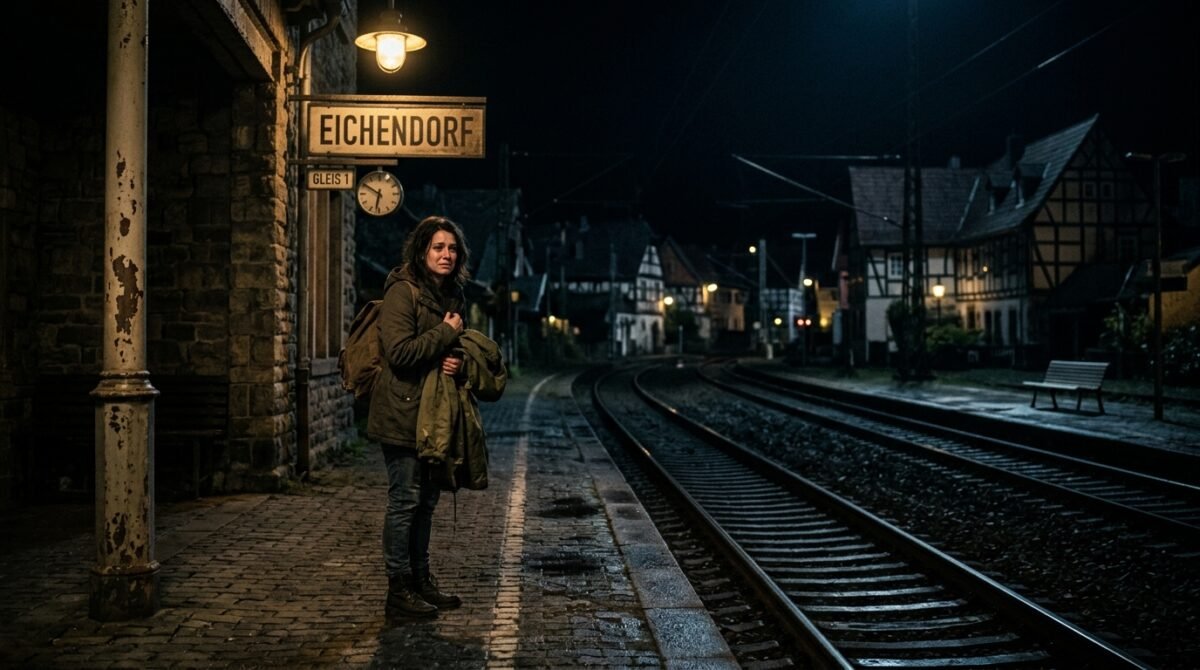
We had spent months planning our dream European summer. It was supposed to be the trip that defined our two-year relationship—memories of cobblestone streets, shared gelato, and sunset train rides. I never expected that the defining moment of our journey would be a cold, lonely train platform in a town whose name I couldn’t even pronounce, while my boyfriend, Mark, prioritized his collection of heavy, hard-shelled designer luggage over my actual physical safety.
It wasn’t just about the bags. It was about the cold, calculated choice he made in a moment of stress. When we realized our connection was tight and the station platform was crowded, Mark panicked. He decided that since his suitcases exceeded the weight limit and the train conductors were being strict, I was the variable that had to be cut. He told me, with a straight face, that I should wait for the next train—which he knew was three hours away—while he secured his ‘valuables’ on the earlier departure.
The moral dilemma here isn’t just about travel etiquette or being a good partner; it’s about the fundamental way he views people in his life. Am I a partner, or am I a piece of secondary luggage that gets checked when things become inconvenient? The betrayal didn’t end at the station. It continued as he silenced my calls, gaslighted me about the ‘seriousness’ of the situation, and now, weeks later, expects me to welcome him back with open arms as if nothing happened.
This story is a deep dive into the realization that some people don’t grow up, they just get better at finding excuses for their selfishness. As I navigated that foreign station, watching his train pull away, I didn’t just see a ride leaving; I saw the exit of my illusions. The following account explores how a seemingly perfect romance can collapse under the weight of one man’s vanity and the audacity he holds in believing he is entitled to forgiveness without repentance.
The Packing List That Should Have Been A Warning
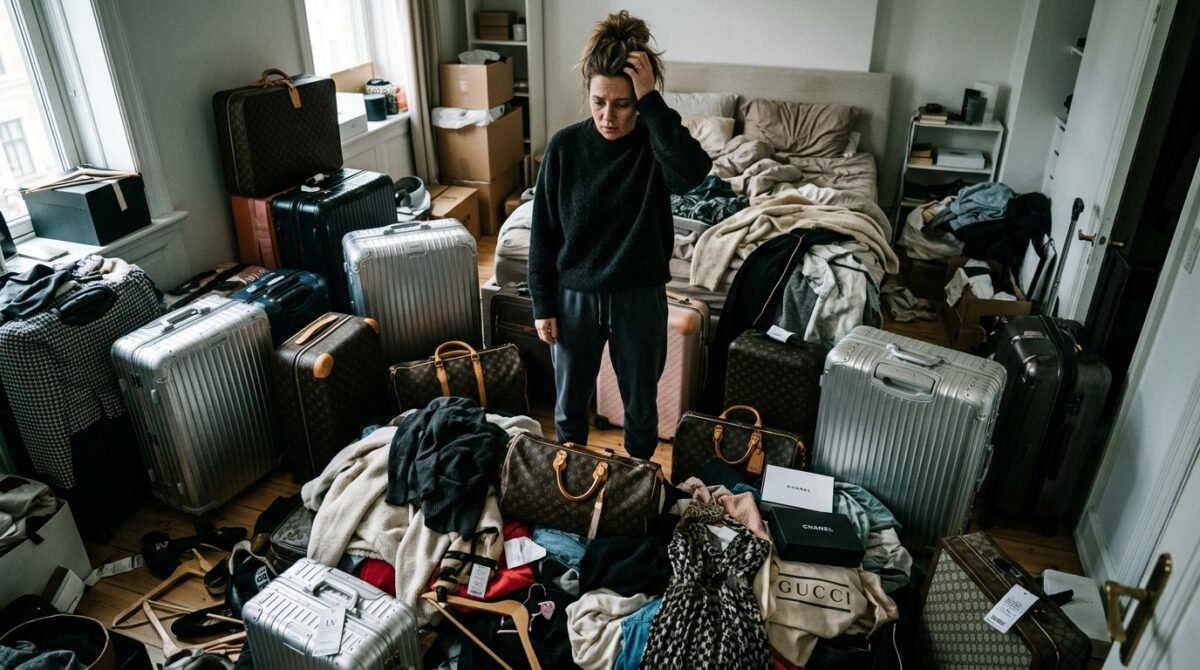
Looking back, the signs were buried in the chaos of pre-trip preparation. Mark insisted on taking three massive, oversized suitcases for a ten-day trip. When I suggested we pack light to facilitate easy movement through train stations, he scoffed, calling my minimalism ‘unrefined’ and ‘impractical’ for the lifestyle he intended to maintain abroad.
He spent hours curating his wardrobe, ensuring he had multiple outfits for every conceivable scenario—including a heavy winter coat we didn’t need and a pair of dress shoes that required their own dedicated protective casing. I tried to suggest that we were going to be moving between cities frequently, but he was dismissive, assuming that we would just ‘find ways’ to manage, which in his language meant that I would be the one managing his extra load.
The arguments started even before we boarded the plane. He expected me to handle my own carry-on and one of his medium bags, while he took the two largest ones. The physical labor was already being distributed unfairly, but I was blinded by the excitement of the trip. I wanted everything to be perfect, so I took on the extra physical burden without complaint, which set the dangerous precedent that his convenience was my responsibility.
“You’re acting like this is manual labor. It’s a vacation, Sarah. Just drag the bag, it’s got wheels for a reason. Stop making everything a discussion about equity when it’s just about being prepared.”
— Mark during our final packing night
The night before we left, he was still adding items. He insisted on bringing a specialty blender because he ‘couldn’t trust’ hotel breakfasts. I laughed it off then, but the absurdity of it should have been a red flag that he didn’t care about the logistics of our travel, only his comfort. He was constructing a bubble around himself, and I was merely the person tasked with keeping that bubble rolling through airports and train stations.
The Station Platform Ultimatum
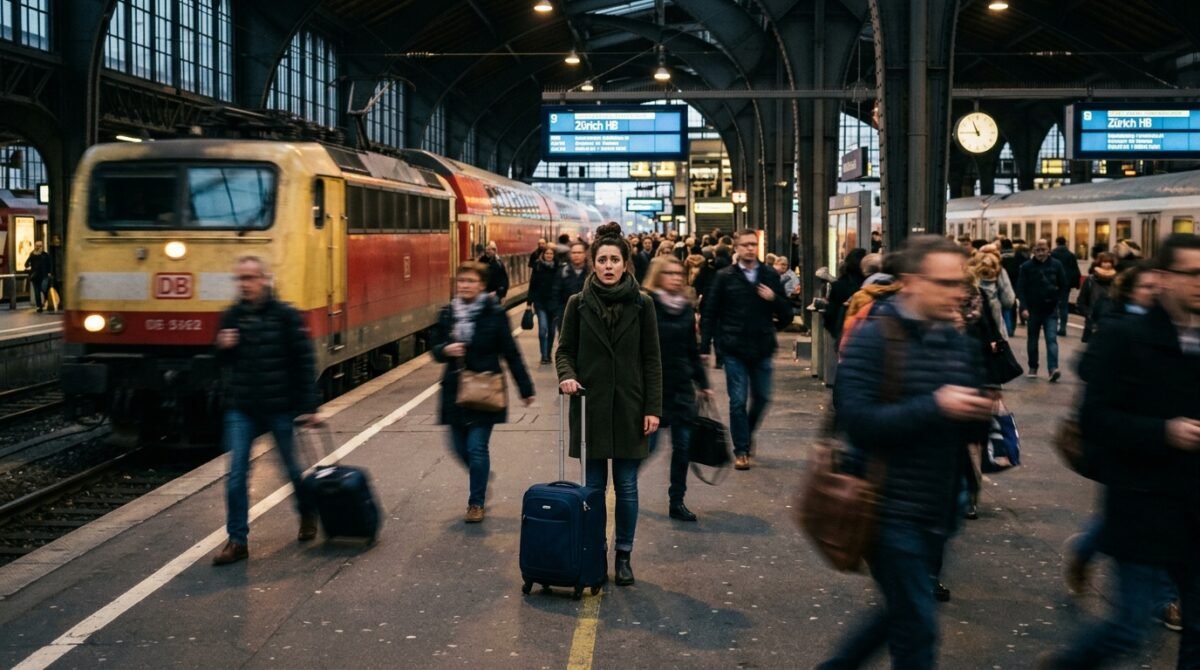
The chaos truly erupted at the Gare de l’Est connection. We were running late, and the platform for our regional train was on the far end of the station. Mark, struggling with the weight of his bags, became increasingly agitated. He started sweating and cursing the floor tiles, the crowd, and eventually, me. When we reached the boarding gate, the conductor informed us that there was only room for two bags in the luggage compartment and that the rest would have to be gate-checked—a process that would take fifteen minutes.
Mark didn’t hesitate. He looked at the clock, then at me, then at his precious bags. He told me that there was no way he was going to wait for the next train and risk losing our seat reservations. He insisted that I take the next train while he went on ahead. I was stunned. I looked at him, waiting for the punchline, for him to admit he was joking, but his eyes were cold and focused entirely on his gear.
“I’ve worked too hard for this vacation to sit in a waiting room because you can’t keep up. Just take the 4:00 PM train, Sarah. It’s not a big deal. You have a phone, you have GPS. Don’t be dramatic.”
— Mark, moments before boarding the train without me
He shoved the handle of the third bag toward me, effectively abandoning me on a foreign platform with no knowledge of the language and no clear idea of where the next station stop was. He didn’t ask if I was safe, he didn’t offer to pay for a taxi to the next connection point, and he certainly didn’t show an ounce of remorse. He just turned, hauled his bags onto the train, and disappeared into the carriage, leaving me standing there in the middle of a bustling crowd.
The feeling of abandonment was visceral. My heart was pounding, and my hands were shaking as I tried to process the fact that the person who claimed to love me had just treated me as an obstacle to his personal convenience. I stood there as the train pulled away, the sound of the wheels on the track echoing my sudden, jarring realization that our relationship was built on a foundation of sand.
Three Hours of Silence in a Foreign Town
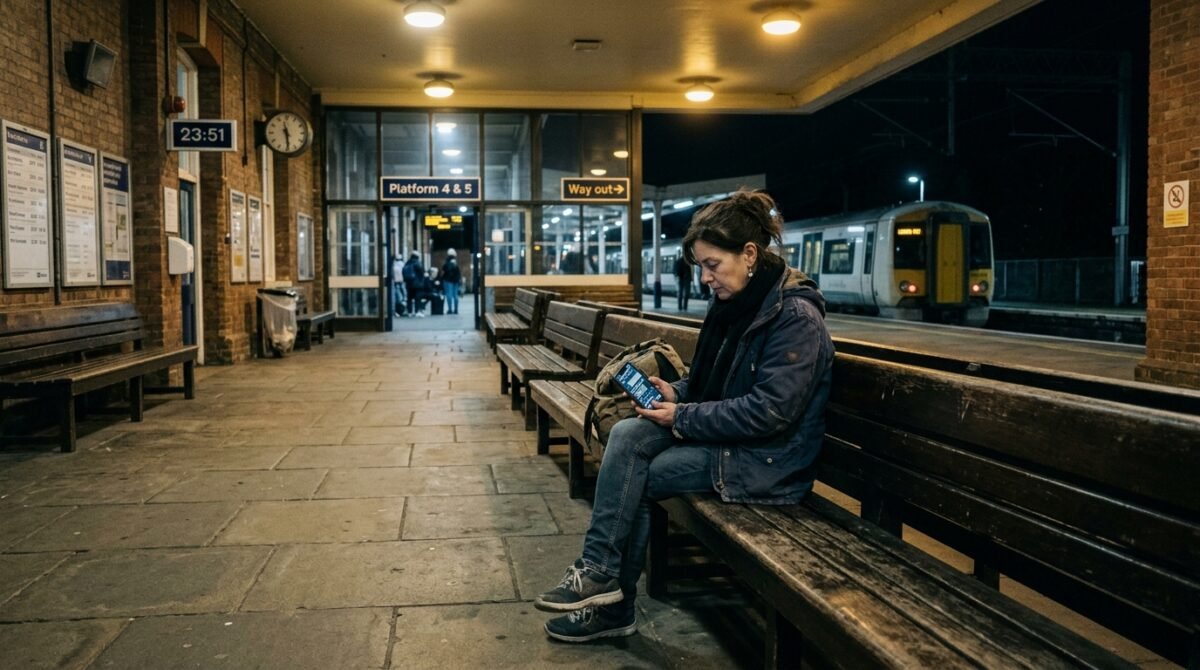
The hours that followed were a blur of anxiety and adrenaline. I had to figure out how to navigate the ticket machines, which, unsurprisingly, were in a language I didn’t speak. I felt exposed and vulnerable. Every time a train pulled into the station, I scanned the crowd, irrationally hoping Mark would be there, having had a change of heart, but I knew deep down that he was likely already at our hotel, checking the Wi-Fi speed and complaining about the pillows.
I sent him several texts, none of which were returned. I checked my location, realized I was in a town that was essentially a transit hub with little to offer, and tried to find a quiet corner of the station to wait. The fear of being alone in a foreign place, combined with the sting of his betrayal, was overwhelming. I wasn’t just angry; I was deeply saddened by the realization that his ‘love’ had a very clear price tag, and apparently, it was lower than the cost of a train ticket.
“I’m at the station. It’s cold and I have no idea where you are. Why won’t you answer your phone? This is incredibly cruel.”
— My message to Mark
I spent the time thinking about our entire relationship. How many times had I smoothed over his rough edges? How many times had I apologized for his temper or made excuses for his lack of consideration? I realized that I had been doing the emotional labor for two people for a very long time. This wasn’t a singular event; it was the inevitable conclusion of a pattern where my needs were always secondary.
When I finally arrived at our destination, three hours later, the contrast was jarring. I walked into the hotel lobby, exhausted and tear-stained, to find him lounging in a leather chair, checking his emails. He didn’t even look up at first. When he finally noticed me, his greeting wasn’t an apology; it was a criticism of my tardiness and the fact that I hadn’t brought the specific bag he wanted.
The Hotel Lobby Confrontation

“You’re late,” he said, looking at his watch as if I had simply popped out for a coffee. I stood there, still wearing my travel gear, my eyes burning with unshed tears, and felt a surge of pure, cold rage. The audacity was breathtaking. He had stranded me in a foreign country and he was acting like I had inconvenienced him by taking three hours to navigate a foreign rail system.
I didn’t hold back. I let everything out right there in the hotel lobby. I talked about how he had treated me like luggage, how he had prioritized his belongings over my safety, and how his lack of empathy was a symptom of a much larger, more toxic problem in our relationship. People were staring, and for the first time in our relationship, I didn’t care about keeping the peace or saving face.
“I don’t care about the bags, Mark! I care that you looked at me and decided I was the one to stay behind. You are selfish, and you have no idea how lucky you are that I’m even still talking to you right now.”
— My response in the hotel lobby
He tried to interrupt, to use his usual tactics of minimizing my feelings or calling me ‘over-sensitive,’ but I shut him down. I told him that if he wanted to continue this trip, he was going to be doing it alone, or he was going to start treating me like a partner instead of an assistant. He looked shocked—not because he realized he was wrong, but because he realized he had finally lost control of the narrative.
He spent the rest of the evening trying to ‘explain’ his side, claiming that he was just ‘stressed’ and ‘not thinking clearly.’ He offered a weak apology that was really just a justification, claiming that he thought I would be ‘fine’ because I was ‘capable.’ It was the classic manipulator’s move: framing his neglect as a compliment to my independence.
The Viral Internet Verdict
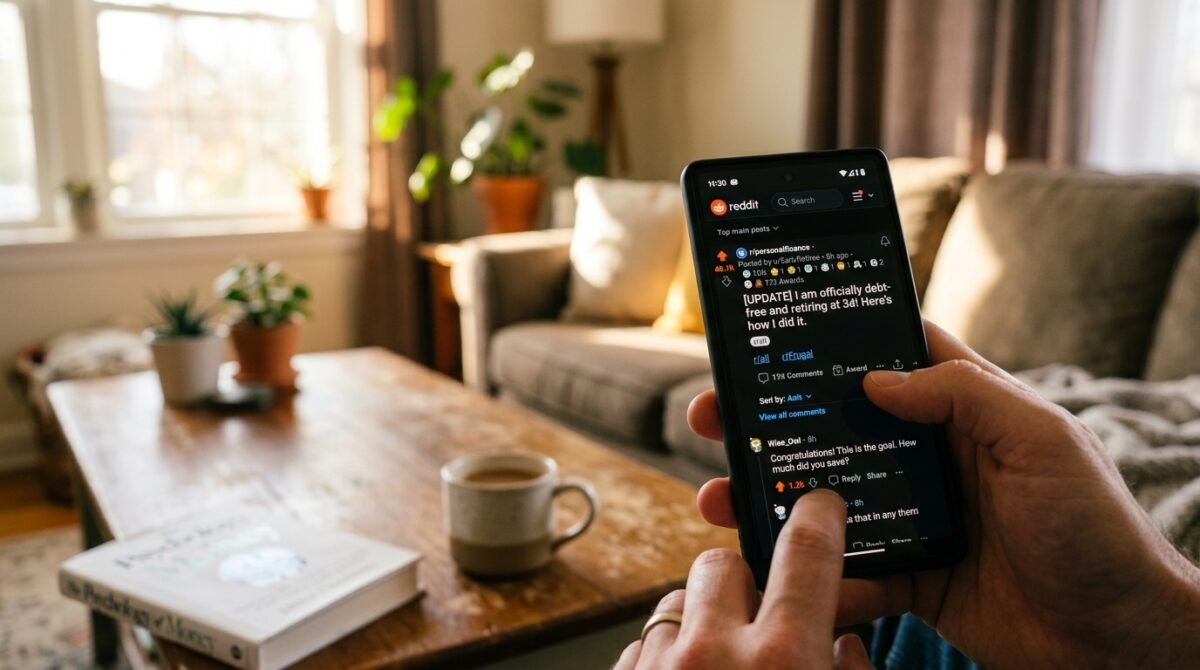
I didn’t keep this to myself. After the trip ended—in a series of cold, detached interactions—I posted about the experience on a popular relationship subreddit. I needed to know if I was crazy. Was I really being too sensitive, as Mark suggested, or was this as monstrous as it felt? The response was immediate and overwhelming. Thousands of people chimed in, and the consensus was loud and clear.
“This isn’t about luggage. This is about who he is when things get tough. He chose his belongings over your safety. That is a massive red flag. Please run, don’t walk, away from this man.”
— u/RelationshipGuru101 (Top Comment, 32.4k upvotes)
The thread became a repository of people sharing their own stories of partners who prioritized convenience over connection. It was validating to see that I wasn’t alone, but it was also chilling to realize how common this behavior was. People pointed out the ‘soft abandonment’ that happens in relationships, where one partner gradually offloads all the difficult tasks onto the other until the other is completely drained.
“He didn’t just leave you at a station; he showed you your place in his life. You are a convenience tool to him. If you stay, you are accepting that you will always be secondary to his comfort. Is that the life you want?”
— u/TruthSeeker_88 (15.2k upvotes)
The Reddit comments were a wake-up call. I spent hours reading through them, seeing my life reflected in the stories of strangers. It was like looking at a mirror that had been shattered and finally, I could see the cracks for what they were. The internet gave me the permission I didn’t think I needed: the permission to stop making excuses for a man who didn’t respect me.
The Desperate Attempt to Make Up
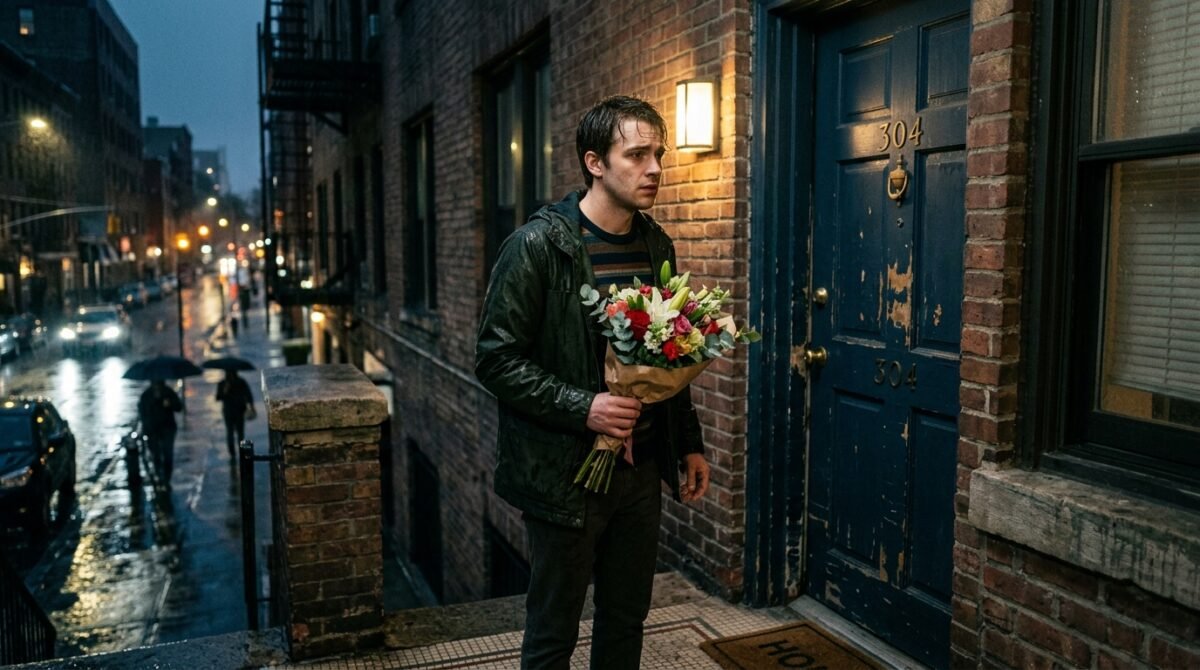
Mark, sensing that he was losing his grip, suddenly shifted gears. He started texting me, leaving voice notes, and even showing up at my apartment with flowers—a move that felt like a cheap script from a bad romantic comedy. He wanted to ‘talk,’ to ‘get past this,’ and to ‘rebuild the trust’ we had lost. He kept using words like ‘partnership’ and ‘understanding,’ but he never once addressed the core issue: he didn’t respect me.
He tried to frame the entire event as a ‘misunderstanding.’ He claimed that if I just let him explain his ‘logic’ at the time, I would see that he didn’t mean any harm. He even suggested we go on another trip—a short weekend getaway—to ‘make new memories’ and ‘erase the bad ones.’ The sheer audacity of suggesting more travel after what he did was almost impressive in its delusions.
“I know I messed up, but can we please just move past this? I miss us. I’ve been thinking about that train station every day and I promise it will never happen again. Can we just have dinner and talk?”
— A text from Mark
I didn’t answer right away. I let the silence sit, letting him feel the weight of what he had done. He wasn’t used to being ignored. He was used to being the center of attention, the one whose needs dominated every conversation. By withdrawing, I was taking back my power, and he didn’t know how to handle it. He kept calling, his messages getting progressively more desperate and then more angry as the reality set in.
When I finally did agree to talk, it wasn’t to forgive him. It was to tell him that the relationship was over. He couldn’t believe it. He thought that because he was ‘sorry’ and because he was ‘trying,’ that it should be enough. He failed to understand that some actions are so fundamental in their betrayal that no amount of apologies can fix the broken trust.
The Anatomy of a Narcissistic Apology
During our final conversation, I analyzed his ‘apology’ with a new set of eyes. It was a masterclass in deflection. He never actually said, ‘I was wrong to leave you.’ Instead, he said, ‘I am sorry that you felt abandoned.’ This is a classic tactic; he was taking ownership of my feelings, not his actions. He was trying to frame my reaction as the problem, rather than his decision to leave me at a train station.
He also kept bringing up how ‘stressed’ he was, as if stress is a get-out-of-jail-free card for mistreating the person you claim to love. He wanted me to empathize with his plight—the plight of a man who had too much luggage—while he completely ignored the reality of my experience. He was incapable of seeing me as an individual with my own needs and fears.
“I just need you to understand that I was under a lot of pressure. It’s not like I wanted to leave you there. I just didn’t see another option. Why are you making this into such a big deal?”
— Mark during our final conversation
I realized then that he would never change because he didn’t see anything wrong with his fundamental character. He saw himself as the protagonist of his own life, and everyone else—including me—was just a supporting character whose job was to make his journey easier. There was no ‘we’ in his world, only ‘me’ and the people who served his ‘me.’
This realization was the final nail in the coffin. I didn’t feel angry anymore. I felt pity. I felt pity for a man who could have everything he wanted but still be so lonely because he didn’t know how to care for anyone but himself. I walked away, not in a fit of rage, but with a quiet, firm sense of peace.
The Aftermath: Reclaiming My Space

In the months that followed, I had to completely re-orient my life. I had become so accustomed to managing Mark’s life that I had forgotten what it was like to just look after myself. I started small. I traveled again, this time with a single backpack, keeping my own schedule and making my own decisions. It was liberating. There was no one to please, no bags to carry for anyone else, and no one to leave me behind.
I started focusing on my career, my friends, and my hobbies—things I had neglected while I was busy being the ‘support staff’ for Mark’s ego. I realized that the relationship had been a cage, and I had been the one holding the door shut from the inside. Breaking free wasn’t just about ending a relationship; it was about reclaiming my identity.
“I finally realized that I am not an accessory to someone else’s life. I am the lead in my own. And that means I don’t settle for anyone who treats me as an inconvenience.”
— My personal journal entry after the breakup
I still occasionally think about that train station. But now, when I think of it, I don’t feel the fear or the cold. I feel empowered. I see that moment as the catalyst that allowed me to escape a life of quiet subservience. It was the moment I realized that my worth is not determined by how well I can serve someone else’s comfort, but by the standards I set for how I am treated.
I’ve learned that the people who love you will never make you feel like a burden. They will carry the load with you, or they will help you find a way to make the load lighter together. They will never, ever leave you behind because they value their own comfort more than your safety. And that is the lesson I’m taking into every future relationship.
Lessons from a Disastrous Journey

If I could go back and talk to my past self, I would tell her to listen to the whispers of doubt that she kept suppressing. I would tell her that the small acts of disrespect are just as important as the big ones, because they all point to the same thing: a lack of fundamental respect. I would tell her that it’s okay to prioritize herself, and that wanting to be treated with care is not ‘being difficult’ or ‘over-dramatic.’
I would also tell her that a partner who doesn’t respect your boundaries is not a partner you can build a future with. The foundation of any healthy relationship is mutual care, and if that’s missing, no amount of ‘love’ or ‘history’ can make up for it. It’s better to be alone than to be with someone who makes you feel lonely when you’re standing right next to them.
“Never mistake someone’s convenience for their love. If they can leave you behind when it gets hard, they never really had your back in the first place.”
— A note I keep on my mirror
I’ve also learned that forgiveness is a choice, but it’s not a mandate. You don’t have to forgive someone just because they say they are sorry. You don’t have to give someone another chance to hurt you. Sometimes, the most powerful thing you can do is to walk away, close the door, and never look back. And that is exactly what I did.
The journey was a disaster, but it led me to the most important destination of all: a place where I am respected, valued, and loved for who I am, not for what I can do for others. It was a high price to pay, but in the end, it was worth every single cent.
The Final Word on Boundaries

As I reflect on the past year, the biggest change hasn’t been my travel habits, but my internal boundaries. I’ve become much more attuned to the way people interact with me. I no longer feel the need to apologize for my existence or to justify my needs. When someone shows me who they are, I believe them. And when someone shows me that they don’t value me, I don’t try to change them—I just remove myself from the equation.
It’s a powerful way to live. The ‘stranded at a station’ incident was the final, brutal lesson in a long-standing curriculum of self-neglect. I’m grateful for it, in a strange way. It gave me the clarity I needed to stop living for others and start living for myself. I’ve found that when you set high standards for how you are treated, the people who aren’t capable of meeting them naturally fall away, leaving space for the ones who actually care.
“I don’t look for partners anymore. I look for teammates. And if you aren’t on my team, you have no place in my life.”
— My new approach to dating
So, to anyone out there who is currently in a relationship where they feel like they are constantly carrying the load for someone else: look at your life. Are you being treated with the respect you deserve? Is your partner there for you when things get tough, or are they only there when it’s easy? You deserve more than that. You deserve a partner who would never, ever leave you behind, no matter how heavy the luggage gets.
And remember: the right person will never make you feel like you are an inconvenience. They will always make you feel like you are the priority. Don’t settle for anything less than that, because you are worth so much more than a ticket on a train.
Conclusion
Looking back at the entire saga, I realize that the train station wasn’t the beginning of the end, but the beginning of my new life. It forced me to confront the uncomfortable reality that I had been auditioning for a role that didn’t serve me. The internet’s reaction, while sometimes harsh, served as the much-needed mirror that allowed me to see the toxic dynamics I had been conditioned to accept as ‘normal’ relationship tension.
Relationships are not just about shared experiences; they are about character. When the pressure is on, who is standing beside you? If the answer is ‘no one,’ then you are already alone, even if you think you have a partner. My journey taught me that boundaries aren’t walls we put up to keep people out; they are the gates that keep our self-respect intact.
I am curious, dear readers, have you ever had a moment where a single action by a partner completely changed your view of them? Was it a small, seemingly insignificant thing, or a grand, dramatic betrayal? How did you respond? Let us know in the comments below.
What's your verdict on this dilemma?
Vote below to contribute to the official community consensus.

Have a Dilemma Keeping You Up at Night?
Share your real-life feud, wedding chaos, or relationship crossroads anonymously with our editorial team.
What do you think ?
0 Comments🛡️ Comments are moderated to protect community integrity. Your comment will appear once approved by the editorial team.