

Childbirth is supposed to be one of the most intimate, vulnerable, and private moments of a woman’s life. It is a time for focus, endurance, and the quiet introduction of a new life into the world. For Sarah, the arrival of her first child was meant to be shared only with her husband, Mark. They had discussed it at length, creating a birth plan that emphasized peace, medical necessity, and a strict ‘no visitors until we are ready’ policy.
However, Sarah’s mother-in-law, Linda, had an entirely different vision. To Linda, Sarah’s pregnancy was not a personal family journey but a social media spectacle, a performance art piece for her own ego. Despite months of requests to keep the details private, the encroachment on Sarah’s boundaries reached a boiling point that culminated in a scene that would eventually divide an entire extended family.
The tension had been building for months. From unsolicited advice on baby names to the unannounced ‘nursery inspections’ that left Sarah feeling like a guest in her own home, the friction was constant. But nothing could have prepared Sarah for the day she went into active labor—a day that would shift from the most joyful event of her life to a battle for basic human dignity.
When the contractions became unbearable, Mark and Sarah rushed to the hospital, hoping for the solace of the sterile, quiet environment they had been promised. But as they pulled into the parking garage, the sight of a familiar van—decorated with gaudy, hand-painted banners—was the first sign that the sanctity of their birth plan was about to be obliterated.
What followed was an act of boundary violation so egregious that it left hospital staff stunned and Sarah feeling like a stranger in her own birthing suite. This is the story of the day the cameras came out, the privacy died, and the security team finally had to step in to restore order.
The Neon-Pink Warning Signs in the Parking Garage
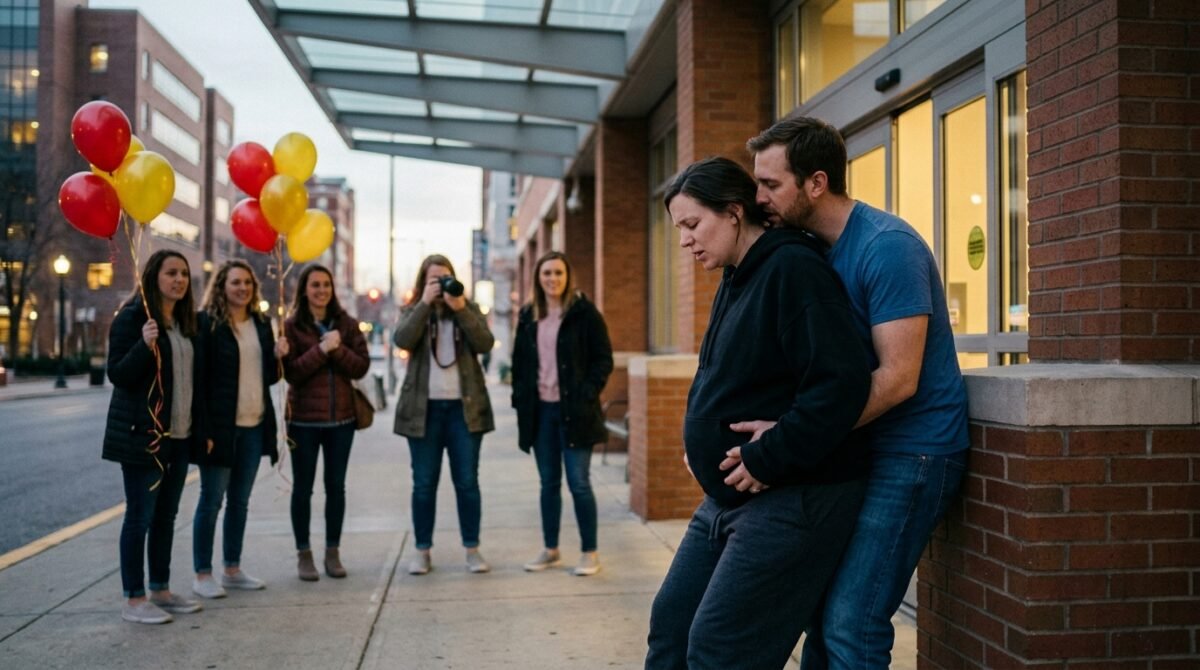
When we arrived at the hospital, I was already three centimeters dilated and in significant discomfort. Mark was focused on getting me to the triage unit as quickly as possible. We were exhausted, running on very little sleep, and just looking forward to the medical care we had been meticulously planning for months. My birth plan was explicit: no visitors, no photography, and no social media updates until we were settled in the recovery wing.
As we rounded the corner to the hospital entrance, I saw them. A group of six women, all dressed in bright, matching ‘Team Grandma’ t-shirts, were standing near the ambulance bay. They were holding large balloons and a professional-grade video camera was already mounted on a tripod. My heart sank into my stomach. I knew exactly who these women were: Linda’s ‘book club’ and her church prayer circle. My mother-in-law was standing in the center, directing them like a film set producer.
I gripped Mark’s hand so hard my knuckles turned white. I was in a haze of pain, but the realization of what was happening cut through the fog. ‘Mark,’ I gasped, ‘tell them to leave. Tell them right now.’ He looked horrified, his face pale as he realized his mother had ignored every single request he had made over the phone earlier that morning. We hadn’t even told her we were going to the hospital yet—she had clearly been tracking our location.
‘Look at them, Mark! She didn’t just come alone. She brought an audience. My birth is not a spectator sport, and I am not a character in her social media feed. Get them out of here before I lose my mind.’
— Sarah, during the initial confrontation
Mark stepped forward, his voice trembling but firm. He walked up to his mother, who was currently checking the lighting on her phone. The rest of the group was chatting loudly, seemingly unaware that a medical emergency was unfolding just a few feet away. The sheer absurdity of the scene made me feel like I was in a fever dream. How could anyone think that a hospital labor ward was an appropriate place for a cheering squad?
I watched from the curb, doubled over during another contraction, as Mark tried to explain that we were not accepting visitors. Linda’s response was immediate and dismissive. She waved her hand at him, her attention already shifting back to the camera. It was clear that in her mind, the event was already happening, and she was the star of the show. The lack of empathy was chilling, a sign of the entitlement that had defined our relationship for years.
The Infiltration of the Birthing Suite
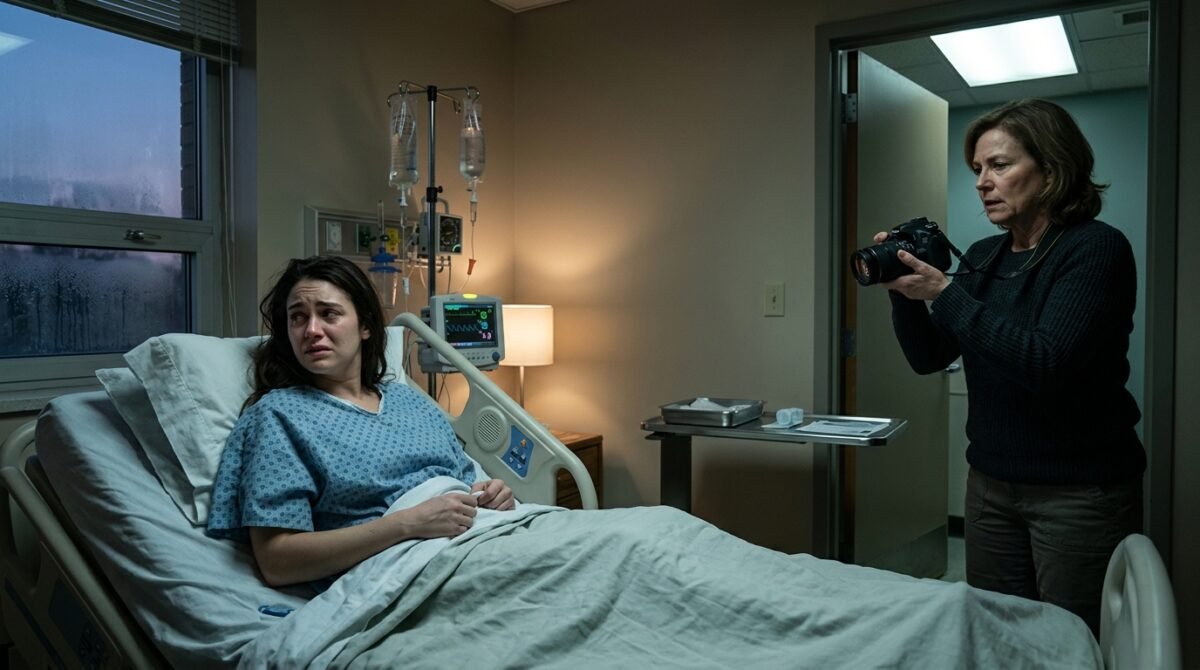
We managed to get inside the hospital and into our private suite, but the chaos had only just begun. I assumed that the security desk would keep Linda and her entourage out, but somehow, they had bypassed the front desk by claiming they were ‘essential support staff’ for a medical emergency. By the time I was being hooked up to the fetal monitors, the door to my room burst open.
Linda didn’t knock. She didn’t announce herself. She walked in with the video camera held high, capturing my every grimace and every desperate breath. Behind her, the six friends crowded into the room, filling the space with noise and perfume. It was claustrophobic and utterly violating. I was in a gown, vulnerable, and suddenly, I was being filmed for a Facebook Live stream without my consent.
‘Linda, stop!’ Mark shouted, stepping between his mother and the bed. ‘You have no right to be here! This is a medical area. Turn that camera off right now!’ The room fell into a tense, heavy silence, broken only by the rhythmic beeping of the monitor. The nurses looked as shocked as I felt, hovering in the doorway, unsure how to handle a situation that was escalating into a full-blown confrontation.
‘This is my grandchild, Mark! I have a right to be here for this miracle. Do you know how many people are watching this stream right now? They are all waiting for the big moment!’
— Linda, addressing her son in the labor room
The audacity of her statement was staggering. She wasn’t thinking about the health of the baby or the physical state of her daughter-in-law. She was thinking about ‘likes,’ comments, and the validation of her online followers. I felt a surge of adrenaline, my pain temporarily eclipsed by a white-hot, blinding rage. I looked at the nurse, who had finally regained her composure and was now walking toward the door to call security.
The friends, realizing that the atmosphere had shifted, began to retreat slightly, but Linda stood her ground. She was adjusting the camera angle, trying to get a better shot of my face. The disconnect between her behavior and reality was absolute. It was as if she had detached herself from the world around us, existing only in a digital dimension where my suffering was merely content to be consumed by strangers.
The Security Intervention
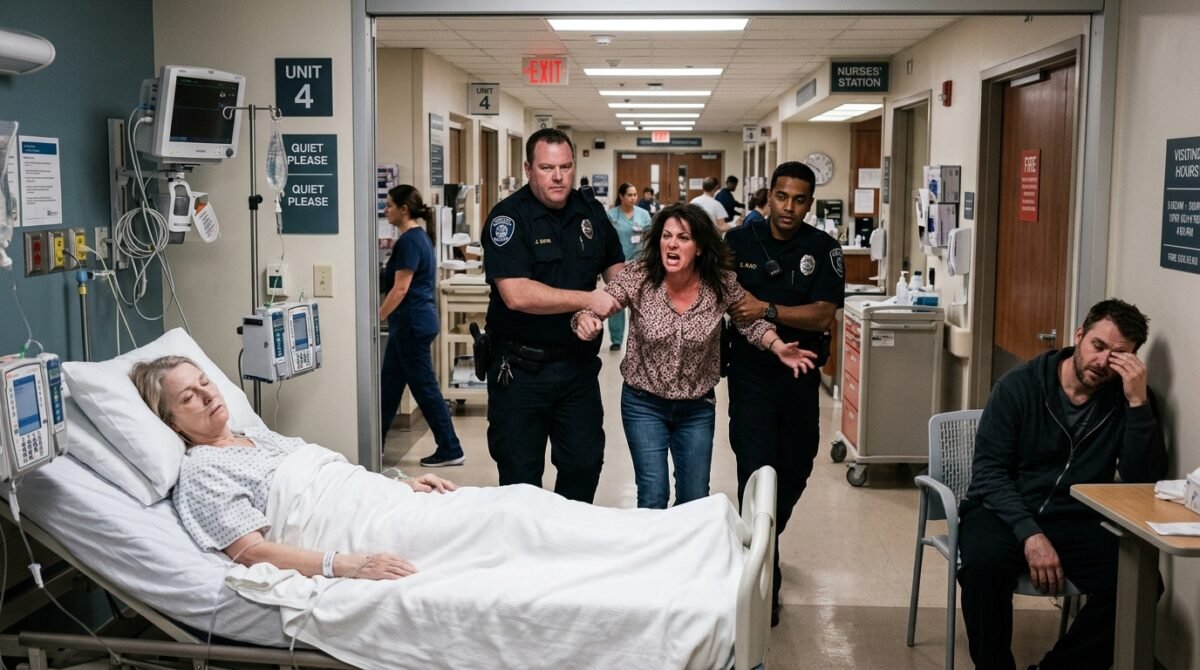
Within minutes, two hospital security guards appeared in the doorway. They were calm, professional, and entirely unfazed by the hysterics of the grandmother-to-be. One of them, a tall man with a stern expression, looked at the crowd in the room and then at the nurses. ‘We have a policy regarding unauthorized guests and recording devices,’ he stated. ‘This is a private, medical environment. You are all required to leave immediately.’
Linda attempted to argue, claiming she was ‘family’ and that we were being unreasonable. She even tried to invoke the ‘grandparents’ rights’ argument, which the guard shut down instantly with a polite but firm explanation of hospital policy. The nurse, who had been my primary advocate throughout the morning, pointedly turned to Linda and told her that her presence was actively hindering the medical team’s ability to perform their duties.
The removal was not subtle. As the guards began to usher the six friends out, Linda clung to the doorframe, trying to get one last shot of the room. It was a pathetic, desperate display of entitlement. Mark finally stepped up and firmly took the camera from her hands, powering it off and placing it on the hallway table. The look on his mother’s face was one of pure, unadulterated venom. She knew she had lost, but she wasn’t going to go quietly.
‘You are ruining your son’s life! You are making a huge mistake! I will never forgive you for this, and your father will hear about this behavior! This is a public event, and you have no right to hide him from his family!’
— Linda’s parting words while being escorted out
As the door clicked shut, the silence that returned to the room was profound. I felt my shoulders drop, the tension slowly draining out of my body. The nurse apologized profusely, checking on me and making sure I was okay. For the first time all day, I felt like I could actually focus on the work ahead. I was still shaking, but for the first time, I felt like I was in control of my own story.
Mark sat by my bed, holding my hand and apologizing for his mother’s behavior. We didn’t speak about it for long; we didn’t have the energy. The focus shifted back to the baby, back to the heartbeat on the monitor, and back to the quiet, sacred reality of the moment. We had won the battle, but as I would soon discover, the war was far from over.
The Fallout on Social Media
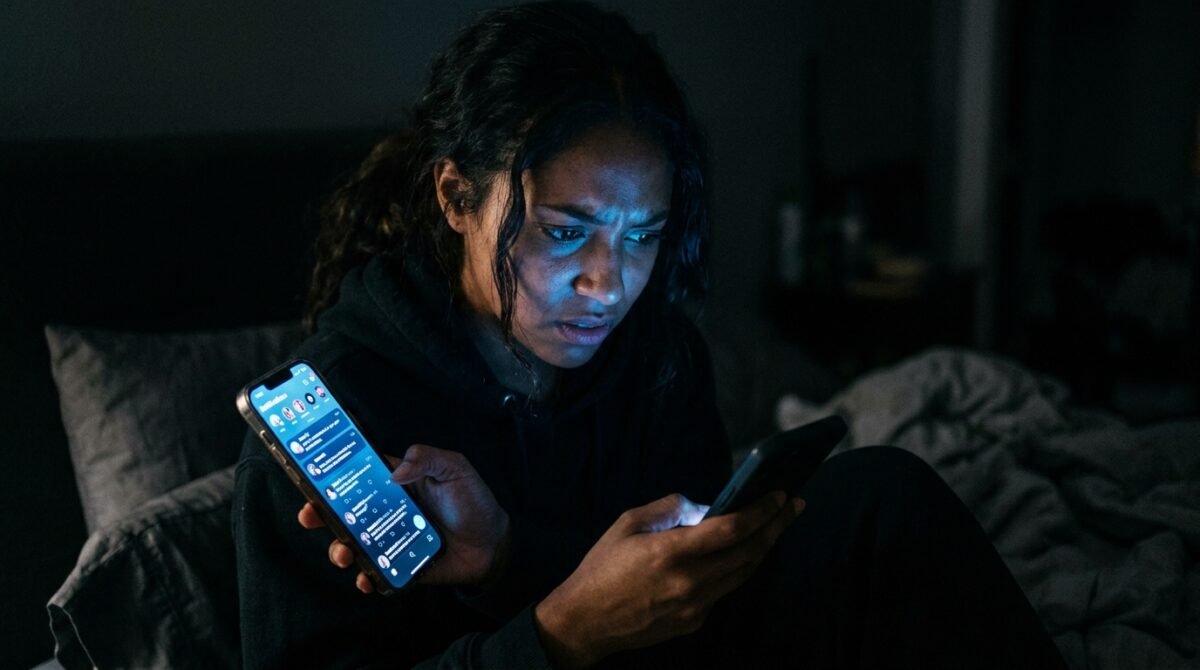
While I was in the early stages of recovery, the digital world was exploding. By the time I picked up my phone the next morning, I had dozens of notifications. Linda had gone home and posted a long, tearful rant on her Facebook page, painting herself as the victim of ‘heartless, controlling people’ who were keeping her from her own grandchild. She had even included a screenshot of the hospital’s ‘No Visitor’ policy with a caption about how rules were ‘meant for people who don’t have family values.’
The comments section was a battlefield. There were people who blindly supported her, calling me selfish and cold, while others who knew me were defending our decision, pointing out the clear violations of privacy. It was a surreal experience, reading arguments about my life and my labor experience from strangers who had no idea what had actually happened. I felt a deep sense of nausea as I scrolled through the toxic threads.
Mark decided to take the high road. He didn’t engage in the comments. Instead, he made a single, clear post on his own page explaining the situation: ‘My wife was in labor. We had a birth plan that was ignored by my mother. She arrived with an unauthorized group of people and a camera. We were forced to involve security to keep the room safe for our child. This is a private matter, and we will not be entertaining any further public discussion.’ It was direct, honest, and stripped away all of Linda’s manufactured drama.
‘Everyone is entitled to their privacy, especially during childbirth. You owe that woman nothing. The fact that she brought an audience to a medical procedure is beyond disturbing. That is a massive boundary violation.’
— u/SupportiveStranger (Top Comment, 15.2k upvotes)
Despite the clarity of his post, the harassment continued. Private messages, phone calls at 3:00 AM, and even a visit from an aunt who wanted to ‘mediate’ the situation. It was exhausting. I was trying to bond with my newborn, trying to heal from a traumatic birth, and yet I was constantly being pulled back into the orbit of my mother-in-law’s narcissism. I realized then that my relationship with her had fundamentally changed; there was no going back to the way things were.
The family group chat, usually reserved for birthdays and holidays, became a hotbed of tension. My sisters-in-law were divided, with some sympathizing with me and others telling me to ‘just let it go for the sake of the baby.’ It was clear that the family dynamic had been shattered, and I was the one being blamed for the shards. I realized that setting boundaries is easy; enforcing them is where the real work begins.
The Failed Mediation Attempt
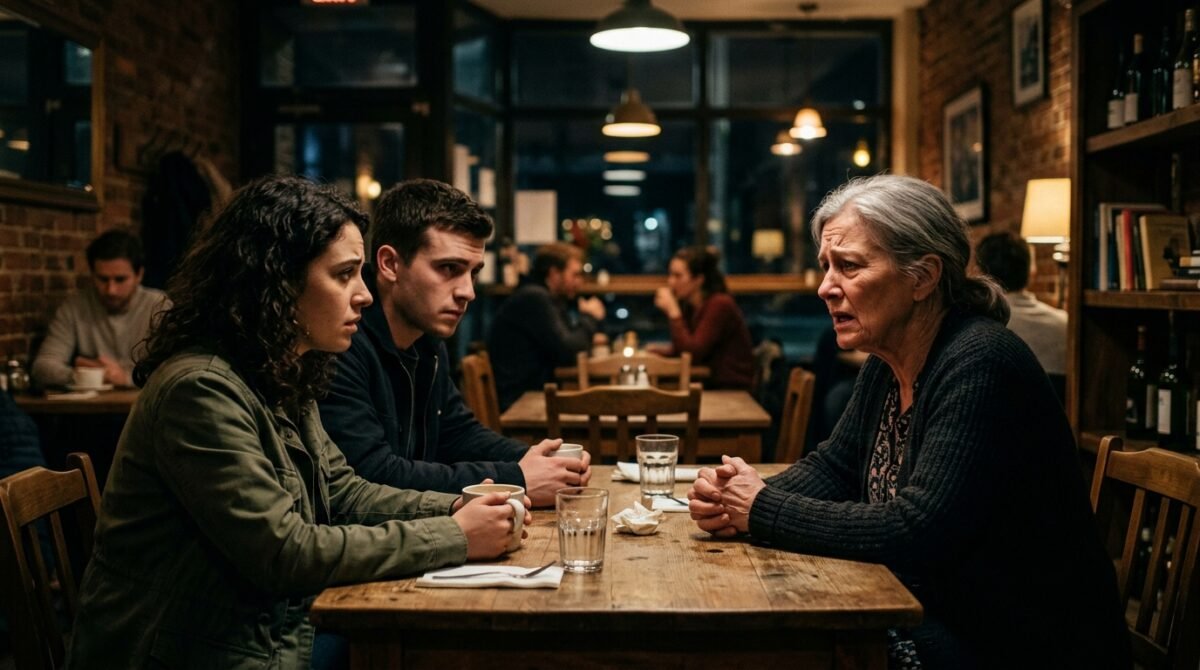
A week after the birth, we received a call from Mark’s father. He was, surprisingly, not calling to scream at us. He was calling to suggest a ‘calm sit-down’ at a local coffee shop to ‘clear the air’ and ensure that the baby would have a relationship with his grandmother. I was hesitant, but Mark felt it was worth a shot to at least put a stop to the public venting and the constant, nagging pressure from the rest of the family.
We met them on a Tuesday afternoon. Linda arrived wearing a long, dramatic scarf and dark sunglasses, looking like she was attending a funeral rather than a family reconciliation. She didn’t offer a congratulations on the baby’s health. She immediately launched into a speech about how ‘disrespectful’ we had been to her and how she was ‘publicly humiliated’ by being escorted out of the hospital.
I listened quietly for a few minutes, letting her vent. I wanted to see if she would acknowledge even a fraction of her wrongdoing. She didn’t. She framed her actions as ‘coming to support’ and ‘being a loving grandmother.’ She completely glossed over the cameras, the six extra people, and the fact that we had specifically told her no visitors. It was a masterclass in gaslighting.
‘I did it for the family history! You are so young, you don’t understand the importance of documenting these milestones. You will regret keeping me away when you look back on these years and realize you have no photos of your child’s first hour.’
— Linda, during the attempted mediation
I finally spoke up. I told her, as calmly as I could, that the photos she wanted were not worth the stress, the intrusion, or the violation of my autonomy. I told her that if she wanted to be in our child’s life, she had to follow the rules that we set, and that the ‘support’ she provided had to be what we asked for, not what she wanted to give. She looked at me with pure, cold indifference.
The mediation ended when Mark stood up, thanked his father, and told his mother that if she couldn’t respect us as parents, she wouldn’t be seeing our child. She didn’t cry. She didn’t apologize. She simply stood up, adjusted her scarf, and walked out of the coffee shop without saying a word. We sat there for a long time, the weight of the moment hanging in the air between us. We had stood our ground, but the cost was becoming clear.
The Silent Treatment and Hidden Agendas
For the next three months, we heard absolutely nothing from Linda. No texts, no cards for the baby, no inquiries about how we were doing. It was a bizarre, jarring transition from the constant, suffocating attention to total radio silence. At first, it was a relief. We enjoyed our time as a new family, focusing on the milestones, the sleepless nights, and the quiet joy of our little one’s first months.
However, I knew Linda too well to believe that her silence was genuine. It was a tactic, a way to make us feel guilty and wonder what she was planning next. I started hearing rumors from the extended family. Apparently, she was telling everyone that we were ‘withholding’ the baby to punish her, and that she was ‘suffering’ from our cruelty. She was positioning herself as the martyred grandmother, a role she played with practiced perfection.
The real reveal came when an aunt sent us a series of screenshots from a private group Linda had started. It wasn’t just for family; it was for people in her social circle, and she was sharing photos of our baby. But these weren’t photos we had given her. She had been scouring our private social media accounts—which were supposed to be locked down—and she had found a way to access posts from distant relatives who hadn’t updated their privacy settings.
‘Look at how beautiful he is! Too bad his parents are so difficult. I’m just trying to keep his memory alive for the family who aren’t allowed to see him because of his mother’s jealousy.’
— A screenshot from Linda’s private group chat
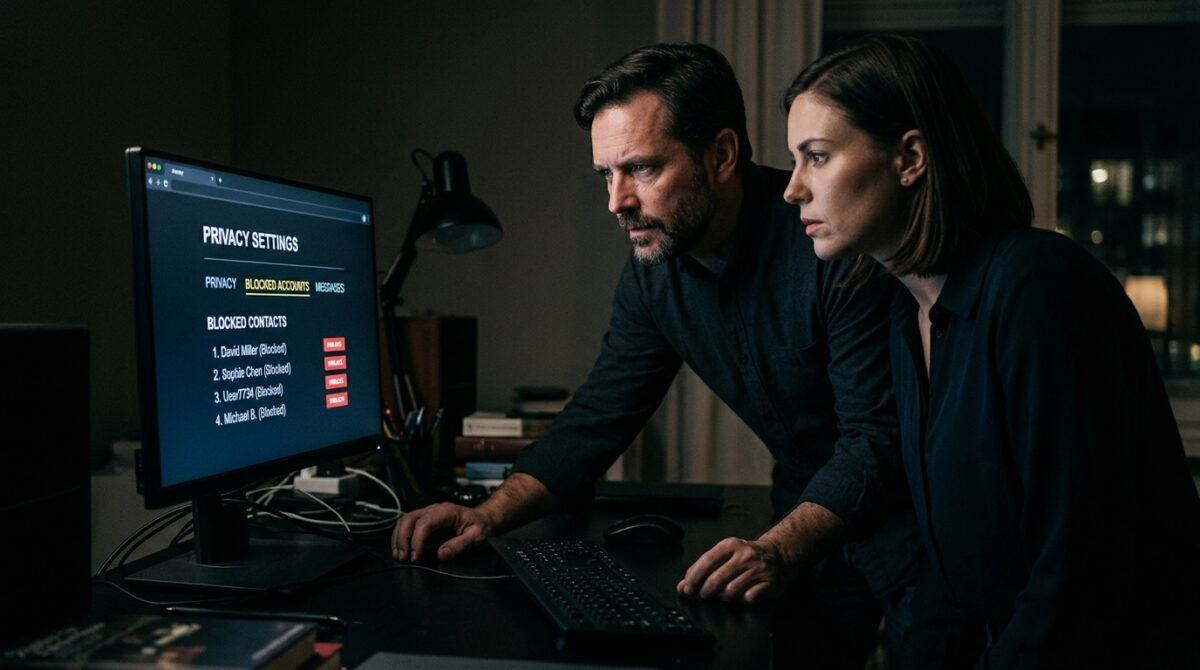
The violation felt deeper this time. She was weaponizing our child’s image to garner sympathy and support. It wasn’t about love; it was about control. Mark was livid. He spent the entire night going through every single account, every privacy setting, and every connection we had, blocking everyone who had any association with his mother. It was a systematic purge of her influence from our digital lives.
We realized that we couldn’t trust anyone in that side of the family with information or photos. We had to treat them like a security risk. It was a sad, exhausting necessity, but we had no other choice. Every time we let our guard down, she found a way to strike, and we had to be ready. The paranoia was starting to take a toll on our mental health, but we knew we were doing the right thing.
The Certified Letter of No Contact

The final straw came when we received a certified letter in the mail. It was from a family lawyer, claiming to represent ‘the interests of the minor child’ and demanding a visitation schedule. It was a bluff, and a poorly constructed one at that, but the intent was clear: she was trying to escalate the conflict to a legal level to intimidate us. She wanted us to be so afraid of losing our child that we would just cave in and give her what she wanted.
We contacted a lawyer of our own, who laughed at the letter. There were no grounds for such a demand, and the lawyer advised us to send a formal, written Cease and Desist, effectively cutting off all contact. It was a heavy, emotional decision, but it was the only way to stop the constant harassment and the legal threats. We spent the day drafting the letter, carefully detailing every violation, every boundary crossing, and every attempt at intimidation.
Sending that letter was one of the hardest things I’ve ever had to do. It felt like the final severing of a tie that had been fraying for years. I cried for hours after it was sent, not because I missed her, but because of the grief of losing the vision of a supportive, healthy relationship that I had hoped for. I realized that my child would never have a ‘normal’ grandmother, and that was a loss I had to grieve.
‘You have chosen to escalate this to a legal matter, and therefore we are taking all necessary steps to protect our family. From this point forward, all communication must go through our legal representative. Any further attempts to contact us, our child, or our workplace will be treated as harassment.’
— An excerpt from the legal notice sent to Linda
The relief that followed was immense. We knew that we had done everything in our power to resolve the situation peacefully, and that the escalation was entirely her fault. We were now in a position where we could legally defend our boundaries. We weren’t just parents; we were protectors. And for the first time in a long time, I felt like we were safe.
The family on her side finally stopped reaching out to ‘mediate.’ Some of them were angry, some were disappointed, and some were actually relieved that we had taken a firm stand. The drama quieted down, the public posts stopped, and we finally had the space to raise our child in the way we had always planned. It wasn’t the path we expected, but it was the path we had to take.
Reddit’s Verdict on the Labor Room Siege
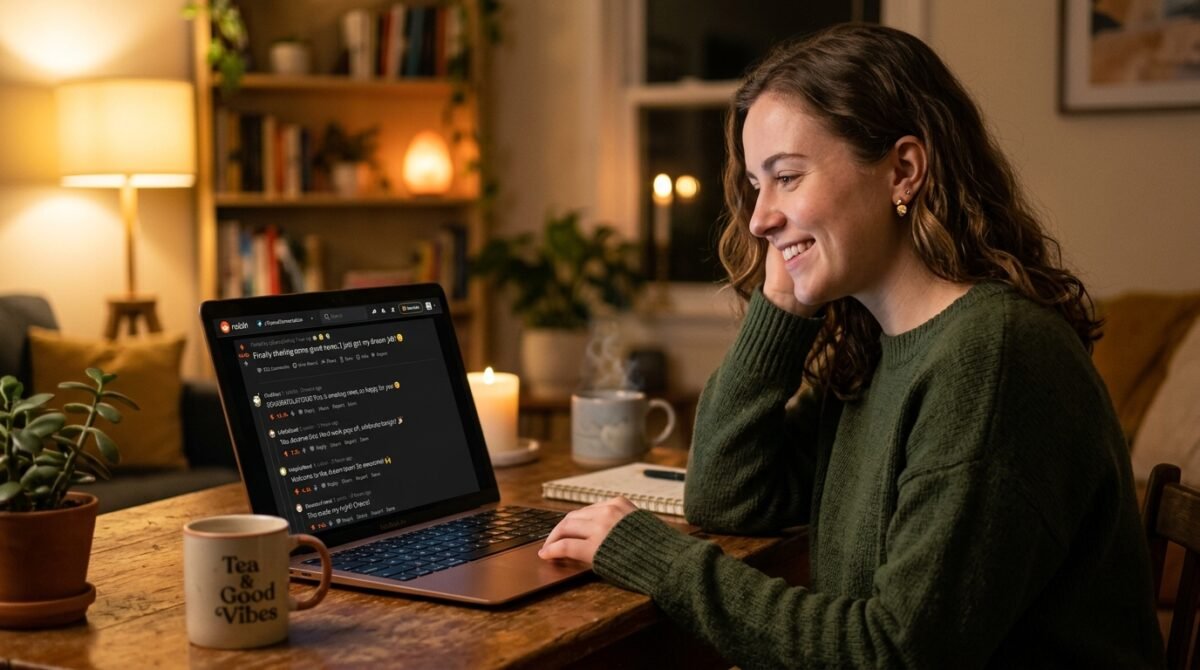
When I finally posted the full story on an anonymous subreddit, I wasn’t expecting the outpouring of support. The post went viral, reaching the top of the ‘relationships’ and ‘justnomil’ boards within hours. Thousands of people shared their own horror stories, their own battles with overbearing in-laws, and their own advice on maintaining boundaries. It was a testament to how common this kind of behavior is, and how important it is to stand up for yourself.
The consensus was overwhelming: I was ‘Not The Asshole’ (NTA). The community was horrified by the idea of a camera crew in a labor ward, and they were universally supportive of my decision to have her escorted out. They pointed out that childbirth is a medical procedure, not a social media opportunity, and that my MIL’s behavior was a massive, dangerous entitlement.
‘I work in labor and delivery, and I have seen this exact scenario play out. You did the right thing. The stress she was putting on you was a legitimate health risk to you and your baby. Security did their job, and you protected your family. Never feel guilty for that.’
— u/LaborNurseHero (Top Comment, 24.3k upvotes)
The discussions in the comments were incredibly insightful. People talked about the ‘missing missing reasons’ that toxic family members use, the importance of ‘the unified front’ between parents, and the emotional toll of cutting off toxic relatives. It felt like a massive, collective validation of everything I had been through. I wasn’t alone, and I wasn’t crazy for wanting privacy.
There were some dissenting voices, of course, mostly from people who believed that ‘family is everything’ no matter how abusive they are. But they were quickly drowned out by the hundreds of people who had lived through similar experiences and had come out the other side stronger. The sheer volume of support made me realize that I had done the right thing for my family, and that the guilt I was feeling was just a lingering artifact of the manipulation I had been subjected to.
I kept the post up, and it became a resource for others. People would private message me asking for advice on how to set boundaries or how to deal with the aftermath of going no-contact. It was a strange, unexpected way to find community, but it was exactly what I needed. I realized that my story wasn’t just a drama; it was a lesson, and I was proud to share it.
Finding Peace in the Silence

It has been a year since the ‘Labor Ward Incident,’ and my child is growing, happy, and healthy. We have learned to enjoy the quiet, the privacy, and the freedom of being the ones who decide what our family looks like. We don’t have the stress of constant monitoring, the pressure of expectations, or the fear of a surprise intrusion. It has been the most peaceful year of my life.
We have also learned a lot about each other. Mark and I have become an even stronger team. We have developed a language of boundaries, a shorthand for when things feel off, and a deep, unspoken trust that we are both committed to protecting our child from anyone who would put their own ego above our needs. We have grown together, and that growth has been the greatest gift of this experience.
I look back on the day I went into labor not with the pain of the trauma, but with a sense of pride in the woman I became in that room. I stood up for myself. I stood up for my baby. I didn’t let the pressure of ‘tradition’ or ‘family expectations’ keep me from doing what was right. I was the protagonist of my own story, and I am proud of the choices I made.
‘The day I was escorted out of the hospital was the day I realized that my child’s health and my wife’s peace of mind were the only things that mattered. We haven’t looked back, and we don’t regret a single decision we’ve made.’
— Mark, reflecting on the experience one year later
The lesson I’ve learned is that family is not just about blood; it’s about respect, safety, and mutual support. If those things are missing, you have every right to step away. You don’t owe anyone access to your life, especially at your most vulnerable moments. The peace that comes from setting those boundaries is worth every bit of the struggle it takes to establish them.
I am no longer the person who feels like they have to ask permission to be an adult. I am no longer the person who feels like they have to apologize for their existence. I am a mother, I am a partner, and I am the architect of my own family’s joy. And that, more than anything else, is the best outcome I could have asked for.
The Lessons Learned and Moving Forward

Moving forward, we have committed ourselves to a life of intentionality. Every decision we make as parents is carefully weighed against the values we want to instill in our child. We prioritize honesty, respect, and emotional intelligence. We have replaced the drama of the past with the consistency of the present, and the difference in our quality of life is night and day.
We have also learned to be much more discerning about who we let into our lives. We have a smaller, more intimate circle of friends and family who truly support us and respect our boundaries. It’s a group that we have curated, a group that values our child’s well-being above their own entertainment. It’s a wonderful, safe environment to be in.
We have also made sure to keep our digital presence completely private. We don’t post pictures of our child on social media anymore, and we don’t share details about our personal lives with people we don’t fully trust. It’s a different way of living, but it’s a way that feels right for us. We have reclaimed our privacy, and it is a treasure we will not give away lightly again.
‘Boundaries are not walls; they are gates. You get to decide who enters, when they enter, and under what conditions. If someone treats your gate like it’s a suggestion, then they don’t deserve to enter at all.’
— A piece of advice from our therapist, which we live by today
The journey has been long, and it hasn’t been easy, but we are in a place of peace. We are living our lives on our own terms, and that is a victory that no amount of drama or manipulation could ever take away from us. We are, at last, truly free.
To anyone out there who is dealing with similar boundary issues, remember that you are not alone. You have the right to set your own rules, and you have the right to enforce them. Don’t let anyone make you feel guilty for protecting your family. Your life, your labor, and your children are yours and yours alone. Take the lead and don’t look back.
Conclusion
Looking back, the confrontation at the hospital was the catalyst for everything that followed. It was the moment that the facade finally cracked, forcing us to choose between our own mental health and the toxic demands of others. Choosing ourselves was the hardest—and most rewarding—decision we ever made.
We are now living a life defined by peace, respect, and mutual love. We’ve learned that the ‘family drama’ isn’t something that happens to you; it’s something you choose to engage with, and we have chosen to step out of the arena. Our child is growing up in a home where boundaries are respected and love is given without a price tag attached.
We invite you to share your thoughts. Have you ever had to draw a hard line with family during a major life event? How did you handle the fallout, and what advice would you give to others currently struggling to set boundaries? Join the conversation in the comments below.
What's your verdict on this dilemma?
Vote below to contribute to the official community consensus.

Have a Dilemma Keeping You Up at Night?
Share your real-life feud, wedding chaos, or relationship crossroads anonymously with our editorial team.
What do you think ?
0 Comments🛡️ Comments are moderated to protect community integrity. Your comment will appear once approved by the editorial team.