
Living with someone often feels like a delicate dance of unspoken rules and shared spaces. You hope for a partner who respects your boundaries, understands the weight of your possessions, and treats your home as a sanctuary. For two years, I thought I had found that in Sarah. We split the rent, shared the utility bills, and occasionally ordered takeout on lazy Sundays. It seemed like the perfect roommate arrangement until the day she decided to take creative liberties with the one thing I told her—repeatedly—was off-limits.
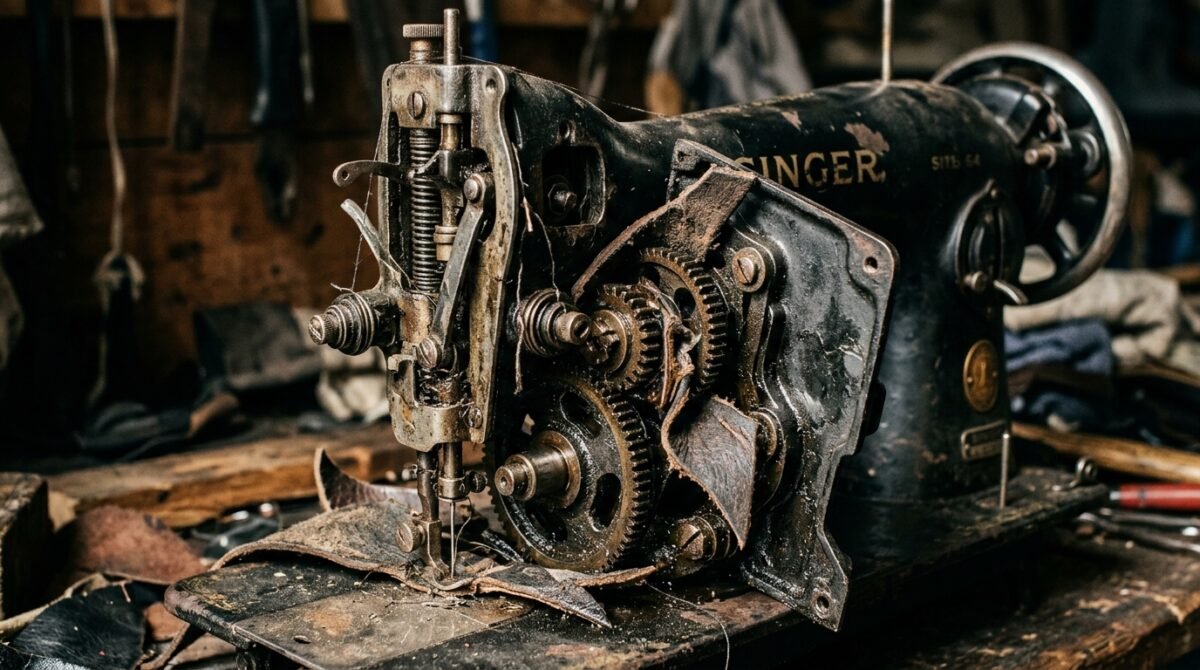
My grandmother’s 1940s Singer sewing machine wasn’t just a piece of furniture; it was a testament to a lifetime of craft. It was kept in pristine condition, a centerpiece of my creative workspace, and a relic of a time when things were built to last. I had been extremely clear: this was not a toy, and it was certainly not an industrial tool for her burgeoning ‘upcycling’ business. But entitlement has a way of blinding people to the sanctity of others’ property.
The morning I walked into the living room to find the machine covered in oil, metal shavings, and thick, stubborn industrial leather scraps, the world didn’t just stop; it fractured. The smell of burnt motor and forced metal was enough to turn my stomach. This wasn’t just an accident; it was a profound, calculated violation of trust that left me reeling. As I stood there, staring at the ruin of an heirloom, I realized that some bridges aren’t just burned—they are dismantled, piece by mechanical piece.
The moral dilemma that followed was swift and brutal. Do you forgive a roommate who shows no remorse? Do you allow someone who views your possessions as communal resources to continue occupying your space? The ensuing confrontation wasn’t just about a machine; it was about the fundamental incompatibility of our worldviews regarding respect, ownership, and the basic decencies of living together. I made the choice to end the tenancy, and the fallout was more complex than I could have ever imagined.
The Morning of the Mechanical Massacre
I woke up at 7:00 AM, intending to finish a delicate embroidery project I had been planning for weeks. The house was quiet, save for the faint, rhythmic ticking of the kitchen clock. As I made my way to the sunroom, which doubled as my studio, a strange, metallic scent hit me instantly. It was sharp, chemical, and distinctly wrong. I pushed the door open, my heart sinking into my stomach before I even processed the visual evidence of the disaster.
The sewing machine, a beautiful machine that had survived two world wars, was buried under a pile of thick, black industrial leather. Sarah had clearly been attempting to sew a heavy-duty tote bag, a project completely beyond the capabilities of a vintage domestic machine. The needle was snapped in half, bent at a grotesque angle. The feed dogs were jammed with leather dust, and the internal tension mechanism sounded like it was filled with gravel when I gingerly touched the handwheel.
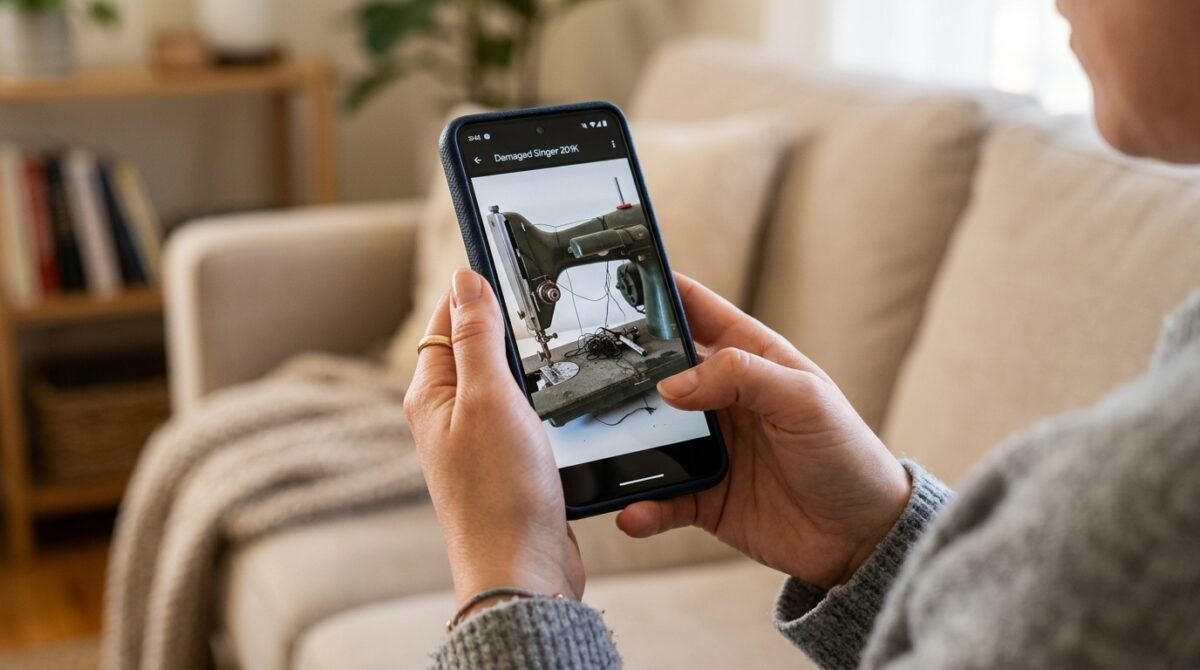
I felt a hot, blinding rage that I had never experienced before. I retreated to the kitchen, clutching my phone, my hands shaking. I didn’t want to scream; I wanted to be calculated. I took photos of the mess—every angle, every piece of debris, the ruined leather still stuck in the machine—and then I waited for her to wake up. The silence of the house felt heavy, suffocating, and loaded with the impending confrontation.
“I don’t care if you think it looks cool. That machine is an antique. You had no right to touch it, let alone force heavy leather through it. Look at what you’ve done.”
When Sarah finally emerged at 10:30 AM, coffee in hand, she looked at the photos I displayed on my phone with a mix of annoyance and dismissal. She didn’t look horrified. She didn’t apologize. She looked like I had just inconvenienced her morning routine by complaining about a minor household issue. Her reaction was the first sign that this was going to be a long, ugly road.
The Philosophy of Shared Property

The argument that ensued was a masterclass in gaslighting. Sarah’s argument centered on the idea that ‘it was just a machine’ and that as roommates, we should ‘share resources to grow together.’ She argued that because I wasn’t using it every single day, it was ‘gathering dust’ and she was putting it to ‘productive use.’ Her entitlement was staggering, and her lack of understanding regarding the mechanical limits of the machine was almost as infuriating as her attitude.
I tried to explain the history. I told her about my grandmother, about the specific delicate parts that were no longer manufactured, and about how this machine was a family heirloom. She laughed, a dismissive, short sound that made my blood boil. She kept insisting that I was being ‘petty’ and ‘materialistic’ because I cared more about a ‘piece of iron’ than our friendship. It was the classic move: make the victim feel like the aggressor for protecting their own boundaries.
“It’s a tool, not a holy relic. If you’re not using it, why should it just sit there? You’re acting like I committed a crime, when I was actually trying to make something useful for us both.”
I realized then that this wasn’t an isolated incident of ignorance. It was a pattern of behavior. I thought back to the times she had ‘borrowed’ my expensive skincare, the times she had used my high-end kitchen pans for burning experiments, and the times she had invited friends over without asking. I had been too lenient, too accommodating, and my kindness had been mistaken for weakness.
The conversation spiraled. She started comparing the value of her own time to the value of the machine. She demanded I pay for the ‘wasted time’ she spent setting up the project. I didn’t even know how to respond to that level of audacity. It was as if we were living in two different realities. In hers, the world was a communal bin for her to pick through; in mine, there were clear lines of ownership and respect.
The Formal Notice of Eviction
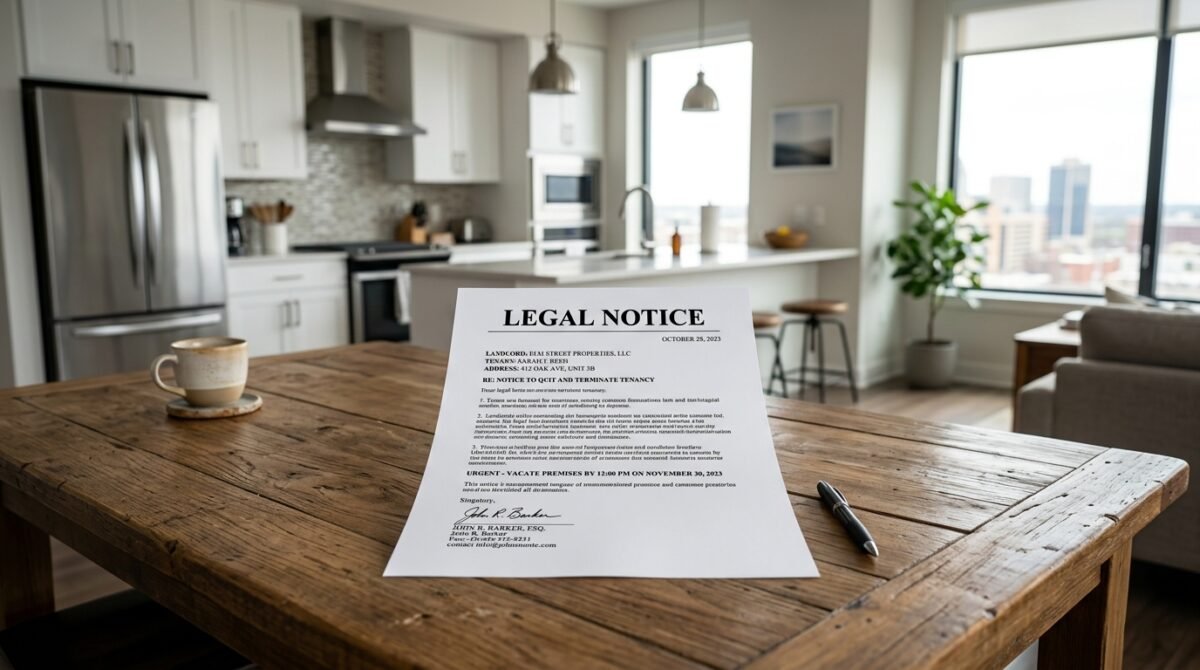
By the time the sun set, the decision was made. There was no going back to the way things were. I spent the afternoon researching landlord-tenant laws in my jurisdiction. Since I was on the lease as the primary and she was a sub-letter, I had the legal standing to terminate her tenancy, provided I gave the appropriate notice. I didn’t want to make it an eviction in the court-ordered sense, but I wanted her out of my space, and I wanted her out immediately.
I typed up a formal document. It wasn’t just a letter; it was a detailed breakdown of the machine’s repair costs, which I had estimated after a frantic call to a vintage sewing machine restorer. The repair was going to be significant, and the parts were rare. I printed it, along with the lease termination notice, and laid them on the kitchen table. When I handed it to her, the look on her face shifted from annoyance to genuine shock.
“You’re actually kicking me out over a sewing machine? You’re insane. You’re going to ruin my life because of a hobby project? I have nowhere to go by the end of the month!”
She tried to bargain. She tried to cry. She tried to pull the ‘we’re like sisters’ card, but the well of empathy had dried up. I pointed to the broken machine in the next room and told her that the machine was a symbol of the trust she had repeatedly violated. I wasn’t just evicting her for the machine; I was evicting her for the lack of respect that had permeated our entire living situation.
The house was dead silent for the rest of the night. She retreated to her room, slamming the door, and I spent the night in the living room, listening to the hum of the refrigerator. It was the most peaceful I had felt in months, despite the underlying stress of the situation. I knew she would try to mobilize friends, family, or social media to turn the narrative, and I prepared myself for the incoming storm.
The Digital Campaign Begins
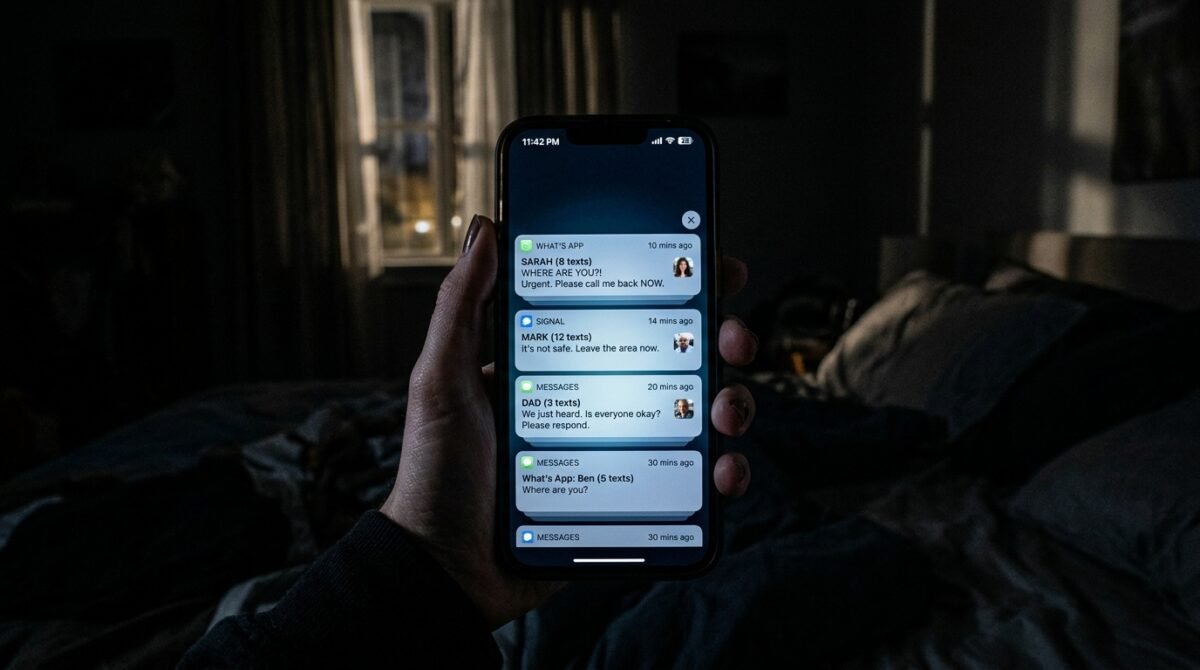
True to form, the messages started the next morning. It wasn’t just her; it was her friends, her boyfriend, and even some mutual acquaintances who had only heard her side of the story. My phone began to vibrate incessantly with notifications. They ranged from ‘You’re being way too sensitive’ to ‘I hope you know you’re ruining her life over a piece of scrap metal.’ The vitriol was immediate and surprisingly coordinated.
“Hey, I heard about the situation with Sarah. Don’t you think this is a bit extreme? She said you’ve always been obsessed with your ‘stuff’ and that you were just looking for an excuse to get rid of her.”
— Text from a mutual acquaintance
I realized then that she had been laying the groundwork for this narrative for a long time. She had been complaining about me to everyone, painting me as the ‘uptight, materialistic roommate’ while she was the ‘free-spirited, creative one.’ It was a calculated effort to isolate me, and she had succeeded in turning several of our mutual friends against me before I had even uttered a word.
I chose not to respond to the bait. I blocked the people who were being unnecessarily aggressive and set my social media to private. I knew that arguing with her supporters was a losing game; they were already poisoned by her version of the events. I focused on documenting everything—every text, every conversation, every piece of evidence of the machine’s damage. I was building a case, not just for the eviction, but for my own peace of mind.
It’s strange how quickly a living situation can become a battlefield. I started locking my bedroom door when I left the house, not that it mattered much since she was supposed to be leaving. The trust was entirely gone, replaced by a cold, clinical distance. I felt like a stranger in my own home, waiting for the clock to run out on her tenancy.
The Professional Appraisal
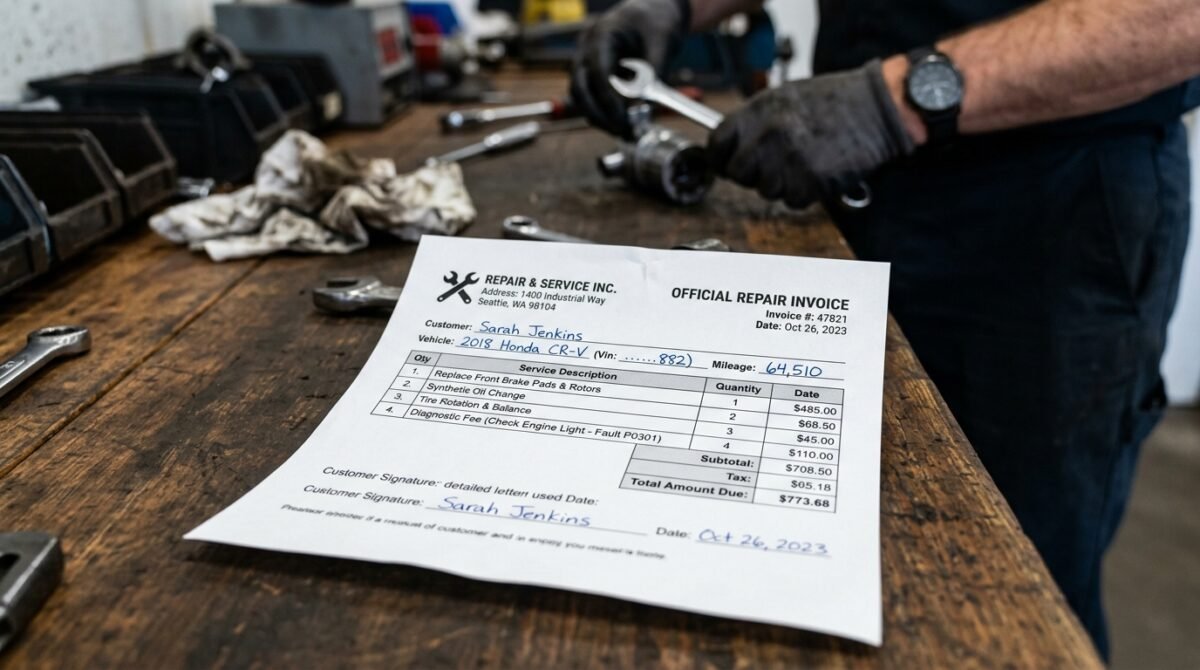
I knew I needed more than just ‘I’m mad’ to justify my stance to the world, so I took the machine to a professional restorer in the city. When he looked at the damage, he didn’t even have to open it up to know the extent of the disaster. He pointed out the bent drive shaft, the cracked needle plate, and the ruined motor—all caused by the sheer torque Sarah had applied while forcing the machine to sew heavy, non-fabric material.
The estimate was staggering. Including the cost of sourcing rare, original 1940s parts and the labor required to re-calibrate the entire timing mechanism, the total was well over $800. I had him write it down on an official invoice. Having that piece of paper made everything feel so much more real. It was proof that this wasn’t just my feelings being hurt; it was real, quantifiable, financial damage.
“This wasn’t a mistake. This was abuse of a delicate mechanism. Whoever did this clearly had no idea what they were doing, and frankly, they shouldn’t be allowed near machinery like this again.”
— The Restoration Specialist
Armed with the invoice, I went back home. Sarah was in the living room, talking on the phone, clearly venting to someone else about the ‘unreasonable tyrant’ she lived with. When she saw me walk in with the invoice, she went quiet. I didn’t say a word. I just placed the paper on the table in front of her and walked away. The look on her face was a mix of genuine confusion and, for the first time, a hint of realization.
She looked at the dollar amount, and then back at me. She started to stutter, trying to find words to minimize the cost, but for once, she had no comeback. Money is a funny thing; it has a way of cutting through the emotional fluff and forcing people to confront the reality of their actions. I didn’t ask her for the money yet—I wanted her out first—but I wanted her to know that I had the receipts.
The Escalation at the Dinner Table

The final week of her residency was a psychological game of chicken. She stopped talking to me entirely, which was a relief, but she began hosting ‘goodbye’ dinners that felt specifically designed to be as loud and intrusive as possible. I would come home from work to find four or five of her friends in the kitchen, cooking, laughing, and pointedly ignoring me when I walked through.
One night, I reached my breaking point. I was trying to cook my own dinner, and there wasn’t a single clean pan left. Sarah had used them all to prepare a feast, and they were all piled in the sink, caked in grease and food residue. I stood there, looking at the mess, and I just started cleaning. I didn’t say anything, but my presence was a silent rebuke. One of her friends, a guy I barely knew, decided to speak up.
“Hey, maybe you should just relax? We’re just having a good time. It’s not like you own the kitchen, right? You’ve been acting like a prison warden all week.”
I turned around, the sponge still in my hand, and looked him straight in the eye. I didn’t raise my voice; I just stated the facts. I told him about the machine, about the cost, and about the complete lack of respect for my property that had led to this point. The room went dead silent. Even Sarah looked uncomfortable, as she hadn’t told her friends the full truth about how the machine was destroyed.
The friend looked at Sarah, then back at me, his bravado clearly fading. He didn’t know how to respond to the reality of the situation. It was a small victory, but it felt significant. I continued cleaning the kitchen, not leaving until every pan was spotless. The atmosphere in the room remained tense, but the taunting stopped. They realized that I wasn’t going to be the caricature they had created; I was a person with boundaries, and I was holding them firm.
Packing Under Pressure
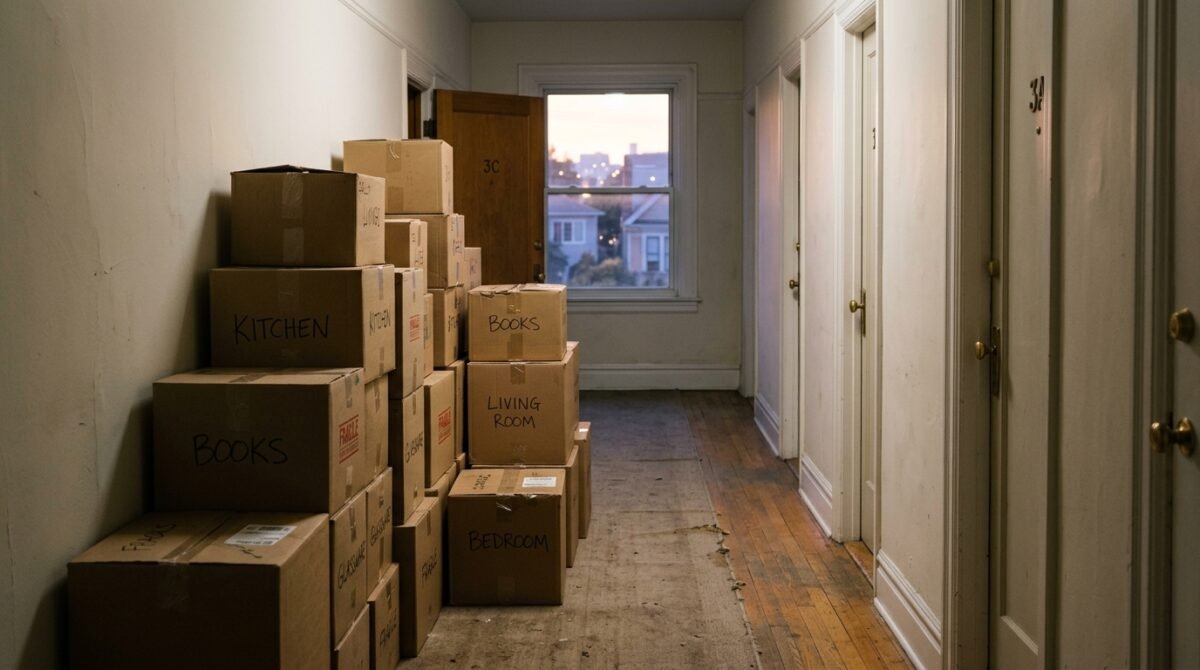
The day before she was scheduled to move out, I decided to stay out of the house. I didn’t want to be there for the emotional display or the accusations. I spent the day at a park, just reading and enjoying the silence, trying to decompress from the weeks of stress. When I returned, the house was a disaster. There were boxes everywhere, trash left in the corners, and several of my own items were missing.
I checked my room, my closet, and my studio. Sure enough, there were missing supplies—fabric remnants, needles, and a specific set of high-end thread that I had explicitly told her never to use. My temper flared again, but I forced myself to take a deep breath. I walked into the living room where she was finishing her packing. I didn’t yell. I just stood in the doorway and waited for her to look up.
“I notice a few more things missing. You need to return them, Sarah. Right now. Or I’m calling the police. I’m done with the games.”
She tried to deny it at first, claiming she had ‘accidentally’ packed them, but I stood my ground. I watched as she opened her bags, pulling out the items one by one. It was humiliating for her, but I didn’t care. I felt like I was reclaiming my life, one item at a time. It was a small, petty moment, but it was essential for me to feel like I had regained control over my own space.
After she left, I didn’t feel a sense of triumph. I felt exhausted. The house felt empty, quiet, and finally, my own again. I spent the rest of the evening deep-cleaning every single surface, trying to scrub away the last remnants of her presence. It was a cleansing ritual, a way to move on from the nightmare of the past few weeks.
Reddit Weighs In

When I finally posted my story on a popular forum, I didn’t expect the level of support I received. I laid out the facts, the repair bill, and the series of events, and within hours, the post had thousands of comments. The community, often known for its brutal honesty, was overwhelmingly on my side. They saw the pattern of entitlement that I had been too close to see clearly.
“This isn’t about a sewing machine. This is about a person who views your home as their resource and your boundaries as suggestions. You did the right thing. Never let someone walk all over you in your own home.”
— u/RoommateTruthTeller (Top Comment, 32.5k upvotes)
There were, of course, the dissenters. Some people argued that ‘friends shouldn’t treat each other like this’ or that I should have just ‘forgiven and forgotten.’ But the vast majority understood the principle of the matter. They shared their own stories of roommates who had destroyed their property, pushed their limits, and gaslit them into thinking they were the problem. It was validating to know I wasn’t alone in this experience.
I spent hours reading the comments, realizing that this was a common problem. Many people suggested legal action to recover the costs, which I was already considering. Others warned me to change the locks and secure my belongings before she even moved out, which I had already done. The community provided a sense of solidarity that I hadn’t realized I needed.
I also saw some really interesting perspectives on how to handle similar situations in the future. Advice on setting clear, written boundaries before a roommate moves in, how to handle ‘shared’ spaces, and even how to write a roommate agreement that includes specific clauses about personal property. It was a crash course in adulting, and I was learning from the mistakes I had made.
The Aftermath and Reflection
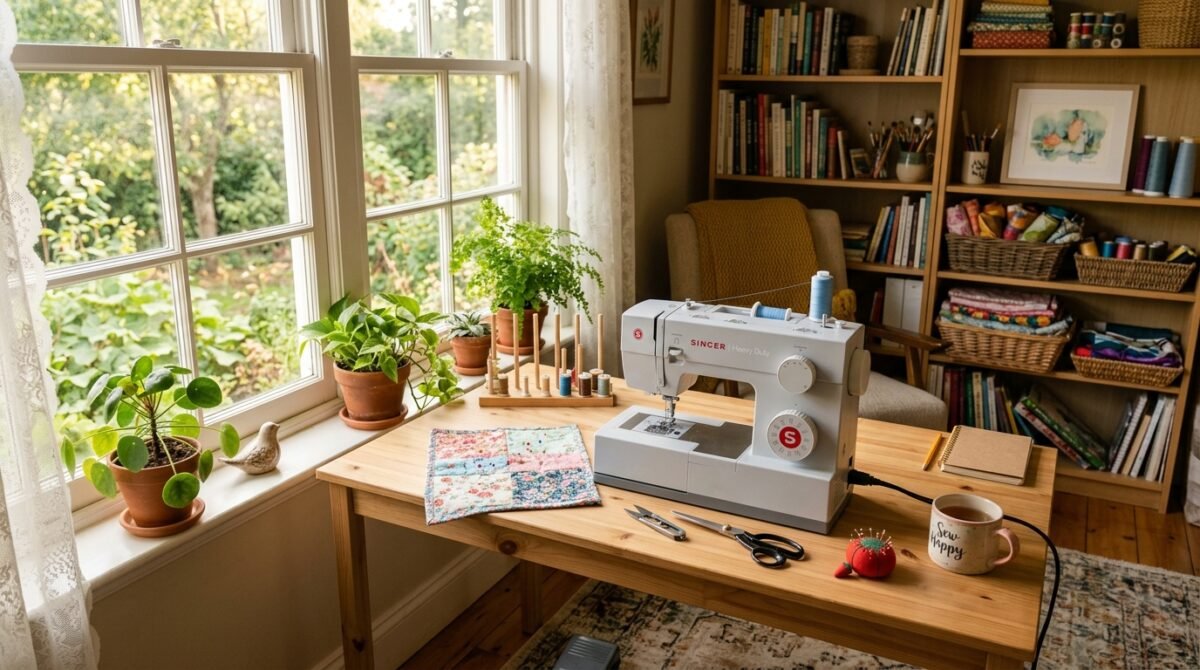
A month later, the house is peaceful. I’ve replaced the sewing machine, and I have a new, very clear set of rules for anyone who comes into my home. I don’t look back on the experience with anger anymore; I look back on it as a necessary lesson. I learned that I have to be more assertive about my boundaries, and that sometimes, ending a friendship is the price of keeping your sanity.
I’ve also started doing some research into small claims court. While I haven’t filed yet, I have all my documents organized—the repair bill, the photos, the text messages, and a timeline of events. It’s not about the money as much as it is about the principle of accountability. I want to see this through to the end, not for revenge, but for the satisfaction of knowing I did everything I could to hold her accountable.
The most important thing I’ve learned is that my home is my sanctuary. I have the right to curate my space, to protect my belongings, and to choose who I allow in. I don’t have to apologize for being ‘materialistic’ when it comes to things that have sentimental or financial value. My things are a part of my history, and I owe it to myself to protect them.
I’ve also found a new appreciation for my craft. I’ve started working on the project I had planned before the incident, and every time I sit down at the new machine, I’m reminded of how far I’ve come. I’m more confident, more protective, and more in tune with what I need to feel safe and happy in my own home.
Community Perspectives: The Verdict

Looking back at the discussions on Reddit, it’s clear that the ‘roommate dilemma’ is universal. Many people shared similar stories of ‘upcycling’ gone wrong, borrowed items destroyed, and the ensuing tension that tears friendships apart. The consensus was clear: property boundaries are essential to any healthy living arrangement, and when those boundaries are repeatedly disrespected, the relationship is already on life support.
“I once had a roommate who used my cast iron skillet for a science experiment. Never again. You learn quickly that people who don’t respect your stuff don’t respect you. Good on you for kicking her out.”
— u/CastIronDefender (12.4k upvotes)
The community also highlighted the danger of ‘mutual friend’ pressure. When someone feels they have the ‘public opinion’ on their side, they become even more entitled and less likely to apologize. The key, according to the top commenters, is to stay objective, keep evidence, and never feel obligated to justify your boundaries to people who haven’t walked in your shoes.
It’s a powerful realization. The internet can be a place of toxic debate, but when you share a story of genuine personal boundary violation, it can also be a place of deep validation. I’m grateful for the people who took the time to read my story and offer their support. They helped me realize that what I was feeling wasn’t just ‘me being difficult,’ but a perfectly reasonable reaction to a deeply disrespectful act.
I hope that by sharing my story, I’ve given someone else the courage to stand up for their own boundaries. It’s not easy, and it’s often lonely, but it’s worth it. You deserve to live in a home where your things, your peace, and your boundaries are respected. Don’t settle for less.
Conclusion
Reflecting on this ordeal, I am reminded that our personal items are often physical anchors for our memories, our hard work, and our identities. When someone shows a total disregard for these things, they aren’t just breaking objects; they are ignoring the values we hold dear. The path to setting boundaries is rarely smooth, but it is necessary for maintaining personal integrity and emotional health.
I have moved forward, but I have also become more intentional about my relationships. I no longer feel the need to be the ‘easygoing’ roommate if it means compromising my values. The peace I now enjoy in my home is worth the cost of the conflict, and I would make the same decision again in a heartbeat.
What about you? Have you ever had a roommate or friend who crossed a line you thought was impossible to ignore? How did you handle the fallout when your property or your peace was threatened? Let’s discuss in the comments below—I’m curious to hear your stories and your take on where the line should be drawn.
What's your verdict on this dilemma?
Vote below to contribute to the official community consensus.

Have a Dilemma Keeping You Up at Night?
Share your real-life feud, wedding chaos, or relationship crossroads anonymously with our editorial team.
What do you think ?
0 Comments🛡️ Comments are moderated to protect community integrity. Your comment will appear once approved by the editorial team.